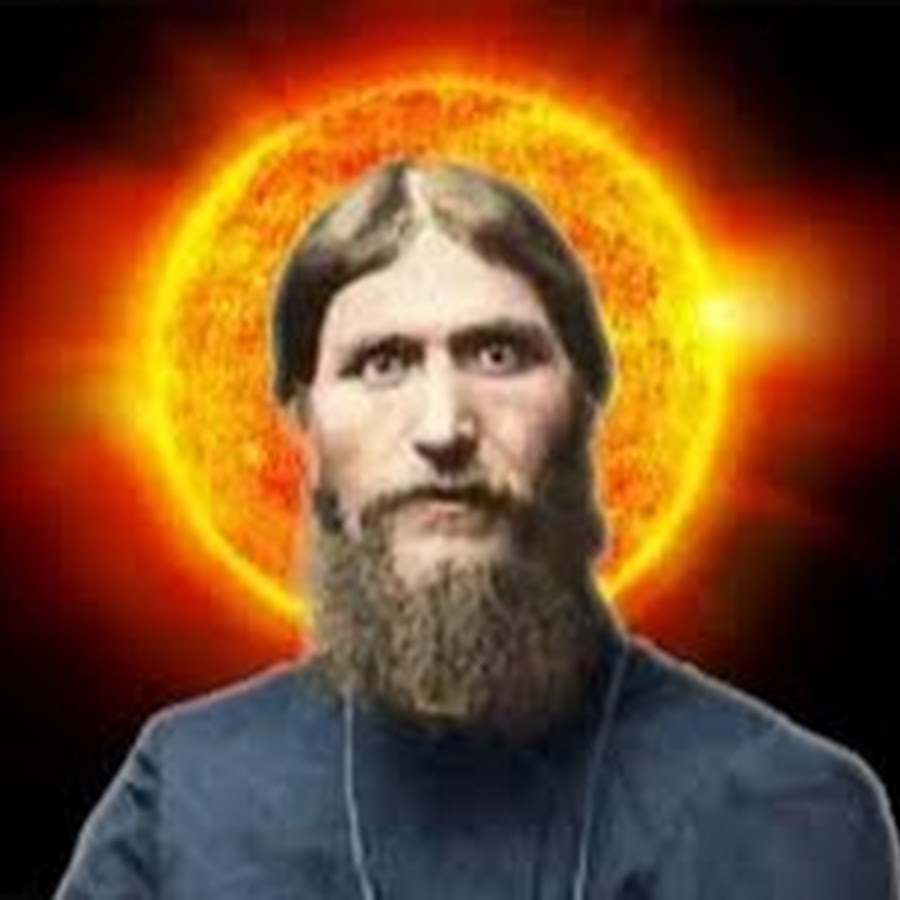
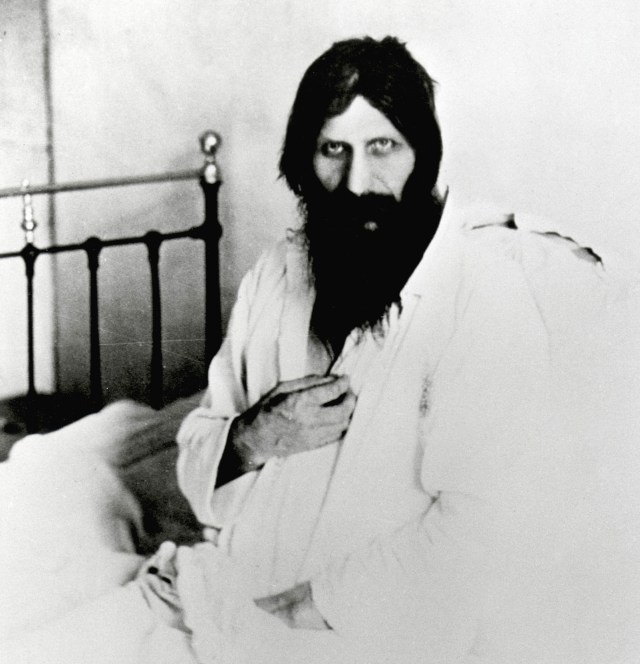
Grigori Rasputin V: Sorcerer or Charlatan?


“Was Gregori Rasputin really an occult mystic who used treacherous sorcery to ingratiate himself to Tsar Nicholas II by performing miracles on and curing the pain of the Tsar’s son? Or was he, no less impressively, a most gifted Counter-Agent who disarmed his country’s most powerful rulers through sheer charisma and manipulative charm?” –asks Adam Lehrer in the Safety Propoganda

“No!” say some historians. “Rasputin wasn’t any of those things. He was nothing more than a right time, right place charlatan.” Anytime one accuses another of absolute fraud, deceit or corruption, their first responsibility is to prove that the provocateur knowingly deceived. We can all read the conditions of the Russian empire at the time and see that they were susceptible and vulnerable to a charlatan. We can read through the health conditions of Tsar Nicholas II’s son, Tsarevich Alexei Nikolaevich, and know that the Romanovs were desperate for a miracle worker to spare him the pain and possible death of hemophilia. We can take one look at Rasputin, the ill-educated peasant from nowhere, Russia and know that if he didn’t do something spectacular, he was doomed to a life of anonymity, but there is ample evidence to suggest that Rasputin believed he had an ability, if not the otherworldly powers, to cure the Tsar’s son. To believe otherwise is to suggest that Rasputin knowingly deceived his family since birth, and the friends and neighbors who surrounded him in the early part of his life. There’s an old line on subterfuge that it’s not really a lie if you believe it. When we say this, we usually do so tongue in cheek, but Rasputin’s bio suggests that he truly believed he had God-like powers? “Christ in miniature,” Rasputin often said when asked to characterize himself. Was he a deceptive person? Did he attempt to deceive the Empress Alexandra, Tsarevich Alexei Nikolaevich’s mother, to weave a way into the empire, or did he attempt to prove to himself as “The Chosen One!”

At the moment of his birth, Rasputin’s mother believed he was the chosen one, and we can guess that she told him as much on a daily basis throughout his youth. We might cut her some slack for this fantastical notion, seeing as how Rasputin may have been her only child of seven, or eight, to survive childhood. (Evidence suggests she had a daughter who may have also survived for a time.) Anytime a mother has a child, they consider that child special, but in Rasputin’s Serbian village of Polrovskove death among children was so common that the miracle we know as childbirth was increased tenfold in that world of peasants. The idea that Rasputin was special may have grown in her mind as he did, until she was convinced that Grigori was a gift from God, and she eventually made a crossover to the idea that her son was the chosen one. 

What would we think if our mother told us we were God’s messenger throughout our youth? What if she bolstered her claim by telling us that at the moment we were born a rare celestial event occurred to mark the occasion of our birth. “A shooting star of such magnitude that had always been taken by the God-fearing muzhiks as an omen of some momentous event,” she said.

What if everyone we knew and loved growing up believed, as our mother did, that we were gifted with the ability to read minds, and/or “see things that others could not”. Rasputin grew up in a climate where everyone he encountered on a daily basis, and presumably throughout his life, believed he had divine powers. If we marinated in the thoughts of our own divine nature throughout our youth, how many of us would end our believing it? Our parents are powerful influences on our lives, and how we think, but as we age, we begin to see the errors of their ways. If Rasputin went through this natural course of maturation, his friends and neighbors in Polrovskove only bolstered his mother’s claims. Rasputin was also involved in a death-defying accident that took the life of his cousin. He spent years wondering aloud why he was spared and his cousin wasn’t. His conclusion, one which we can assume that his friends and family encouraged, was that divine intervention spare him, so he could go out and spread God’s message. 

When historians say Rasputin fell into a right place, right time era, they’re talking about an era that followed executions for anyone who attempted the heretical notions Rasputin espoused to a time when minds were just beginning to open up to the idea that man could manipulate his surroundings for the purpose of massive technological advancement. Those from the era also learned, mostly secondhand, of some of the advancements made in medicine that suggested man could wield God-like powers over life and death in a manner deemed heretical in previous eras. The early 20th century Russian citizen was likely more amenable than ever before to the belief that man could now manipulate the bridge between life and death, and generally make life better for his fellow man without necessarily being a heretic. Based on that, we could say that Rasputin was a right time, right place charlatan, or we could say he, more than any other, took advantage of this window in time. Those who call him a charlatan, however, must still address the notion that Rasputin knew he wasn’t the chosen one, and that he was lying to the vulnerable, desperate Empress Alexandra Feodorovna (Alix of Hesse) to convince her that he was. 

How did Rasputin discover that Tsar Nicholas II’s son, Tsarevich Alexei Nikolaevich was sick? The Russian empire, in the era of the Romanovs rule, was a vault. No state secrets, or leaks, found their way out, and the illness of the Tsarevich was one of the most guarded secrets. The Romanovs had nothing to gain by announcing their only male heir’s illness and everything to lose. Through the connections he made, as a man “known to possess the ability to heal through prayer” Rasputin was called upon to heal the Tsarevich by Anna Vyrubova, the empress’s best friend. Did Rasputin struggle with this newfound information, did he consider it his patriotic duty to try to save the young heir to the throne, or did he see this as an opportunity to finally prove himself to himself? If he failed to convince his family, friends and neighbors of his special powers, there was nothing lost. If he was a fraud, and he knew it, he would surely have a list of excuses he could use to explain it. If he failed the Empress, the embarrassment of trusting the health of her only begotten son to a lowly peasant could lead the Empire to try to silence any fallout by imprisoning Rasputin or executing him, and needless to say, this empire had no moral qualms executing peasants. Failing the empire, at the very least, would ultimately reveal to Rasputin and everyone else in the empire that he was a fraud and a charlatan. This presumed struggle goes to the heart of this article, because Rasputin eagerly accepted the invitation to try to heal Alexei. 

The arguments about what Rasputin did to eventually calm the conditions of Alexei Nikolaevich are wide and varied, but most historians agree that Alexei was never cured of his case of hemophilia, because there is no cure. To this date, modern medicine has yet to find a cure. Alexei had hemophilia the day he was born, and he had it when he was murdered, a month before his fourteenth birthday. The very idea that he almost made it to fourteen, and he could’ve lived well beyond that, had he not been murdered, was viewed as one of a series of Rasputin’s miracles. The fact that Alexei was relieved of his pain, and many of the symptoms of hemophilia, was also viewed as one of Rasputins’ miracles.

Some argue that Rasputin may have been so familiar with hemophilia that he knew certain techniques he could use to help calm the Tsarevich down, and thus give the illusion that he was cured. We still consider it something of a miracle that our body often manages to heal itself. Some call it the power of the mind, others call it the power of prayer, and still others call it the mysterious power of the miraculous machines in the human body to heal itself. No matter what we believe, it appears that in some cases, if our mind believes we are being cured, it can go a long way to encouraging us that we are. 

No matter the arguments, details, and conclusions, Rasputin did it. Rasputin did what the most brilliant minds of medicine in Russia, in the early 20th century, could not, and when he advised Alexandra on how to maintain Alexei’s health, and that advice proved successful, Alexandra fell under Rasputin’s spell. She thought he, more than any of the other men of medicine in the empire, could cure her son of a malady to which her side of the family was genetically susceptible. The idea that she believed Rasputin could cure her son, led her to convince her son of it, and that presumably led Alexei calming to the point that his hemophilia was not as debilitating as it would’ve been otherwise. So, Rasputin did help provide what Alexandra considered a miracle, but our modern understanding of the relationship between body and mind suggests that it was not as mystical or unprecedented as Alexandra and those who love the narrative want us to believe.

The interesting nugget here, and the import of this story, is that Alexandra may have followed Rasputin’s advice on how to cure her son so often that she may have also followed his other advice on greater matters of the Russian Empire, and she may have whispered that same advice into Tsar Nicholas II’s ear as if it were her own. 

“What was he?” “Who was he?” “What exactly did he do to spare the life of the Tsarevich?” “Was he the most gifted sorcerer the world has ever known?” How great was his influence over Alexandra? Reports suggest he had no influence over Nicholas II, but Alexandra did. Did Rasputin whisper things in Alexandra’s ear that she whispered into Nicholas II’s, as if they were her own ideas. British intelligence believed this, and some suggest that the Britain commissioned Rasputin’s murder, because they feared his influence in the Romanov Empire might prevent Russian entry into World War I?

We’ll probably never know the truth of any of this, because the Romanovs had a situation in their empire where they were able to control their narrative. They had very little in the way of leaks, and no one from the empire wrote a tell-all after the empire collapsed to detail what really happened within the confines of its walls. It was a situation modern politicians would salivate over, but historians, not so much. As a result of the tight Romanov ship, most of the literature written about this Russian era and the relationship between Rasputin and the Romanovs involves a great deal speculation. That’s the fun part for the rest of us, because we can use the base details of what happened and submit our own subjective beliefs into the story for fantastic and fantastical conclusions. One of us can speculate that Grigori Rasputin was a sorcerer with otherworldly powers, another can say he was an absolute charlatan, and the rest of us can say that the man landed in the perfect time and place for nature of his actions are almost impossible to prove or disprove. The one thing we can state without fear of too much refutation, is if we took all of these ingredients and threw them into a big stew of rhetorical discussion, is that Grigori Yefimovich Rasputin was one of the most enigmatic figures in world history.   
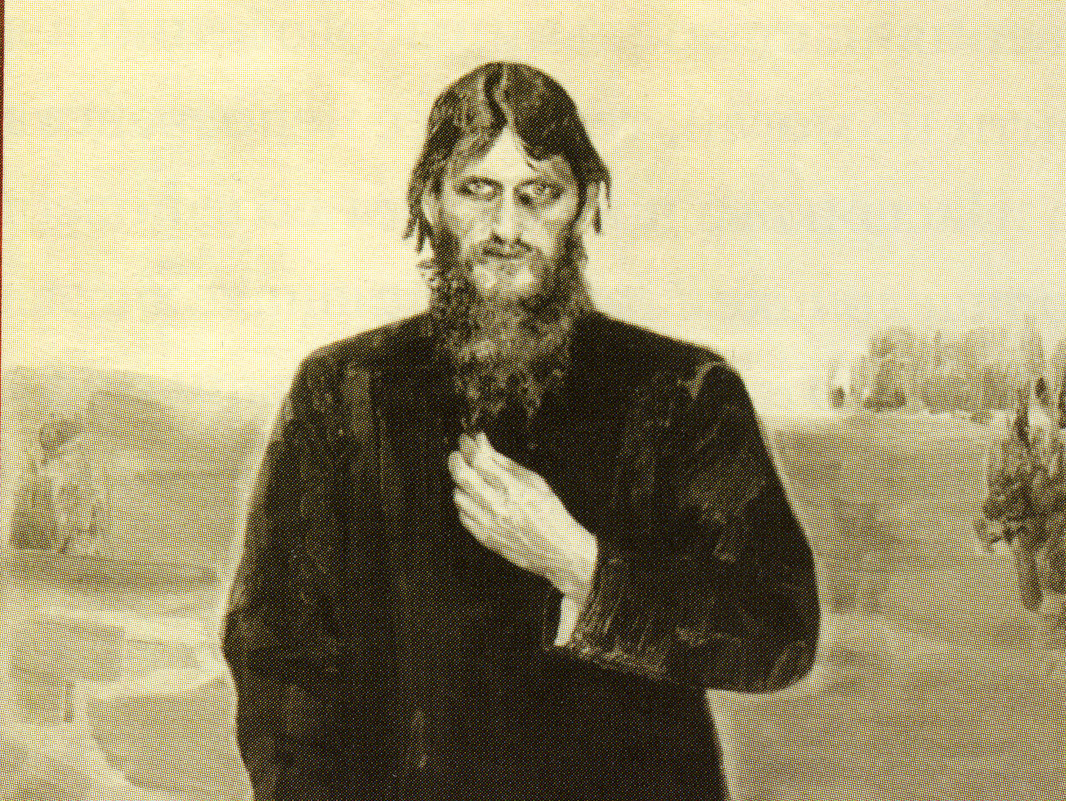
 

Rasputin III: The Murder of Rasputin


“They stabbed him, poisoned him, beat him, shot him five times, and they even tried drowning him,” our History teacher said to start class, “yet Grigori Rasputin, also known as the Mad Monk, refused to die.”

That intro silenced an otherwise rowdy class of sixteen-year-old boys. He was a decent teacher for most of the semester, but he never showed such dramatic flair before this presentation. The pause that followed showed us all how effective a pause can be in an oral presentation, and he followed it up with a thorough rundown of the Russian Empire. I don’t remember anything he said after that intro, I don’t think anyone did, but that intro reached us. No one was whispering jokes to one another, sitting with glazed eyes, or even doodling while he spoke. We were on the edge of our seats awaiting the dramatic conclusion to the cinematic, “The Man who Couldn’t be Killed” intro.

We had no idea that World History could be this compelling. Some of us realized, for the first time, that in the hands of a gifted storyteller, the stories of history could be riveting. As soon as our teacher concluded with the bullet points of this chapter in World History, he returned to the tale of “The Man who Couldn’t be Killed”, and his conclusion did not disappoint.

“After Rasputin’s assassins believed they finally murdered Grigori Rasputin, they rolled his body up in a carpet. They tied this carpet up with chains, connected to concrete blocks that they hoped would bound him to the bottom of the Malaya Nekva River when they threw him in. Due to the weather, Russian officials were not able to search the river for the body for some time. When they were finally able to search it, they found the carpet, the cinder blocks, and the chains, but they found no body.” “Is he alive today?” one of my fellow students asked.    “They never found a body,” our teacher answered.
Soon after he dropped that line on us, the silence of the sixteen-year-olds ended. Some of us looked at each other with “Holy Crud!” faces on, but the rest of us immediately began speculating about what happened. Is he dead? How could he not be, it’s been over 100 years? Well, what if he was evil incarnate? “You can’t kill something that was never alive,” someone said to fuel the fire. Was this The Man who Couldn’t be Killed theme the real life influence for Dracula, Halloween, Friday the 13th, and A Nightmare on Elm Street? As horrifying as those movies were, this thing really happened, and we didn’t hear about it from some crackpot on a late night radio show. We heard this from an esteemed World History teacher. “If you doubt me,” we would later tell our friends, “take it up with my History teacher.” Most teachers will try to lower the volume in their classroom in the aftermath. He didn’t. He knew he just gave birth to some History geeks. He sat back and enjoyed the looks on our faces, the excited tones of our discussion, and all of the other results of his pitch-perfect presentation on Grigori Yefimovich Rasputin, “The Man who Couldn’t be Killed”.

The Truth of Raputin’s Murder

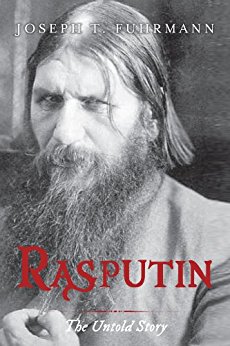
“The truth of Rasputin’s murder,” Rasputin: The Untold Story author Joseph T. Fuhrman suggests, “was not as amazing as the mythology that has surrounded it.”

RasputinWhile it may be true that all of the attempts to kill Rasputin occurred in the manner our History teacher detailed, it is not true, as our History teacher’s verbal commas suggest, that they all occurred on separate occasions.

It is true that Rasputin was stabbed on one occasion, by a prostitute without a nose, but that did not prove fatal. He was shot at five times in the course of one night by a team of nobles led by Felix Yusupov, the richest man in Russia, but two of those shots missed, and two of them penetrated locations that would not prove immediately fatal to any other mortal. It is also true that the conspirators, who would take his life on this fatal night, tried to poison Rasputin, by lacing his tea and cake with cyanide, but it’s conceivable that they failed give him a lethal amount of the poison. When Rasputin showed no signs of succumbing to the cyanide, they upped the dose they put it in his wine. As with every other poison, varying factors can cause cyanide to act differently. The effect of cyanide on a person is so relative and unpredictable that it can cause anywhere from hours to days to take effect. We can imagine that once the assassins began trying to put their plan into effect, and it did not produce immediate results, they panicked. They began shooting Rasputin, and he did survive, but it wasn’t the real life Freddy Krueger/Michael Meyers-style resurrection my classmates and I imagined. It was more about the location of the shots in Rasputin’s body, than anything supernatural, or mystical. One of the bullets, Fuhrmann notes –citing autopsies performed on Rasputin’s body– passed through Rasputin’s stomach and liver, and another passed through his kidney. Neither of those bullets proved immediately fatal, as they wouldn’t have on any other mere mortal, but they would’ve … given enough time.

In the intervening minutes that occurred after the first shot –that went through his stomach and liver– Rasputin did manage to regain his feet and make a move on his assailant, but all Rasputin ended up doing, was grabbing his assailant’s shoulder and tearing an epaulet off his uniform. He did not, as some speculate, reach up and begin choking his assailant. He grabbed his assailant’s shoulder, tore the epaulet off, began grumbling the assailant’s name, and fled into the snowy night.

While attempting to flee, Rasputin was shot at four more times, two missed, one struck him in the back and traveled through the kidney, and he dropped. The other, the fifth and fatal shot, went through his forehead. Some have it that that final shot occurred from a distance, but the autopsies suggest it was delivered execution-style, due to the gun residue located at the entry point on Rasputin’s forehead. Some autopsies suggest that there was water in Rasputin’s lungs to suggest that he was alive when he hit the water, as his assailants attempted to drown him after the shooting. Fuhrmann suggests that the greater evidence disputes that notion and suggests that Rasputin was, in fact, dead before he hit the water. 

As for my History teacher suggesting that they tried beating him to death, the evidence derived from the post-mortem examination suggest that the bumps and bruises Rasputin received all occurred as a result of the beating his body received after death. The execution-style gun blast to the forehead ended the story of Grigori Yefimovich Rasputin, but the mythology surrounding the man was just beginning. 

The shock we experience when we hear how difficult it was to kill Rasputin speaks to our fears of how easy we think it is to kill a person. Our modern movies and TV shows leave the impression that when the good guy shoots at a bad guy, the bullet always hits, and it almost always finds their most delicate and vulnerable locations. That bad guy is then dead within milliseconds. The good guys then run behind bunkers, amid a flurry of bad guy bullets unharmed. The good guys then reload and take out eight more with eight shots. This happens so often, in the movies and TV, that we’re almost conditioned to believe that good guys are hard to kill and bad guys aren’t. When a story, such as Rasputin’s, show that a bad guy displays that they are just as capable of surviving an errant shot, we immediately assign supernatural qualities to them.  

Our teacher also told us that Rasputin’s presumed dead body was thrown in the water, with a stone tied to him, and that the Russians dragged the lake and found the ropes and the stone, but they never found Rasputin’s body. This is not true, as it turns out, but it added a necessary ingredient to the “he who never lives can never die” narrative our History teacher was building. I still don’t know if my teacher was such a great storyteller that he wanted to avoid the facts of his narrative, or if he believed what he was telling us, but the captivating details he laid out, in the manner he did, have led me to be almost obsessed with this story ever since.

To those of us who love great stories, and the mythology that grows around them, it was disappointing to learn that Rasputin’s body was as vulnerable to foreign agents as anyone else’s. We consider it much more interesting to speculate about the differences between history’s good guys, and bad guys, and how history’s bad guys escape that which the rest of us are more susceptible. On a certain level, we all know that none of this is true, but it’s more interesting, and fun, to speculate and mythologize an otherwise normal, albeit brutal tale regarding one’s demise by leaving out key details.

The Parables of History

“Those who don’t study history, are doomed to repeat it,” George Santayana said to give history teachers a gift that keeps on giving. 

“All right, but I wouldn’t have fallen for that,” a cynical student of history might say, when learning of Santayana’s quote, in conjunction with some of history’s greatest failings. They might use this mindset in response to the Romanovs’ involvement with Rasputin. “We’re not as hyper-religious as those in the Russian Empire were at the turn of the century, so we’re not going to be as vulnerable to a charlatan who states that he knows scripture backwards and forwards, who states he has God’s ear, and thus gains a Svengali-like hold on the minds of the citizens.”

“As opposed to the messages in modern media, history is replete with charlatans, both religious and non,” that History teacher might respond. “It’s also replete with victims who fail to learn from the mistakes made in history and proceed to repeat the same mistakes when the next charlatan comes along with a different set of promises of something bigger and better. If your takeaway from this lesson is that a charlatan follows a uniform code of conduct, or that you can locate a charlatan by spotting a cross in their ensemble, you’re more likely to become one of history’s next victims.”

“How could they have been so stupid?” will still be on the lips, and in the minds, of these cynical students reading through the history of the Romanov Empire, just as it will be when they learn of the lead up to the Japanese attack on Pearl Harbor. Now that we know the outcome, we can’t help but feel superior to those who ignored, or misread, the tea leaves that led up to one of the great deceptions in history.

Are we superior now, after learning history’s lessons, or will future students of history be shaking their heads, and condemning our generation, for missing all of the undeniable signs of inevitability that led to the terrorist attack on 9/11/01? “How did your generation’s leaders fall for all that?” these future students may ask. “There were so many signs. How could they have been so stupid?”

“All I can tell you,” we may say to that member of another generation studying our history, “is that you have the advantage of hindsight. You weren’t there.”

Other than the rise to influence that Grigori Rasputin attained in the Russian Empire, and the healing of Alexis Romanov at the miracle at Spala, Rasputin’s name is etched into history by the manner in which he was murdered, and the mythology that surrounds it.

The Mythology of the Mad Monk

The lone mythology of the murder of the “Mad Monk” that Fuhrmann willingly entertains is the idea that the British Secret Intelligence Service (the BSIS) either organized the plot to kill Rasputin, or they encouraged it. He states that what lends this speculation plausibility is the idea that Britain may have believed that Rasputin was influencing Russian Tsar Nicholas II to end Russia’s participation in World War I (WWI).

“Rasputin was not doing this,” Fuhrmann writes, “but Britain may not have known this, and Britain needed [WWI adversary] Germany concentrating at least some of their forces on Russia, until the United States would enter the war.” Fuhrmann further states that “Britain’s Military Intelligence, Section Six, [MI6], promised to publish its files on Rasputin’s murder, but it decided to delay it, we can assume, to avoid cooled relations between Moscow and London.”

Those who portray Rasputin as a towering figure that loomed over the Russian Empire may be putting too much weight in the characterizations put forth by Rasputin fans, and those who seek to characterize the man as a monster for the benefit of their monster stories.

In our mind’s eye, we project Rasputin as a looming figure 6’5” in height with broad shoulders, but objective reports state that Rasputin was 5’9” and relatively thin. We might also project some scintillating and overpowering intellect with the Svengali-like powers of manipulation to Rasputin, but while reports suggest he was not an illiterate peasant his whole life, he died having never achieved what observers would call a well-educated background, even for his era. Those same reporters concede that he did make the most of that limited education however.

Romanticized notions suggest that Rasputin had an artist’s disregard for earthly possessions, and that he had no need for status. Secondhand reports suggest that he not only accepted gifts from the Romanovs and their loyalists, but he showed them off with child-like glee. Witnesses characterized this glee as similar to that which a dog may display after receiving treats for performing tricks, and like that dog Rasputin failed to see that the treats were laced with unintended condescension.

These attempts at objective reporting, also suggest that if Rasputin ever towered over the Russian Empire, in the manner some historians suggest, it was dealt a hefty blow when the girl without a nose stabbed him. Favorable renditions claim that Rasputin recovered quickly, and they leave it at that to further the mythology surrounding him. Rasputin did recover physically, but it took a considerable amount of time during which Rasputin could be found wounded, sick, and frail. Mentally, they suggest, he was so wounded by the attack that he was paranoid from that point forward. In that state of mind, these reports suggest, he lost whatever influence he may have had at one time. Even if all of these objective reports are true, it could still be stated that Rasputin achieved a position that was light years above the station his friends and family in Pokrovskoye ever knew.

The Politics of Grigori Rasputin

Reflecting on the life of Grigori Rasputin, some historians suggest that he was nothing more than a “right place, right time” opportunist who wasn’t as proactive in shaping his story as others suggest. Fuhrmann refutes that, to some degree, by writing that Rasputin “exhibited a politician’s ability to make connections,” and that he was unusually adept at choosing those connections that would prove most conducive to advancing him into an influential position.

He also managed to persuade those in power, in a political manner, to change his name from Rasputin to Rasputin-Novyi, or “New Rasputin”. The modus operandi for doing this, according to Fuhrmann, was that the name Rasputin carried some negative connotations within the Russian Empire of the day. Rasputin further managed, as some “more adept” modern politicians have done, to persuade those in the Empire to deem it “unethical” for anyone to use his true name. Rasputin later stated that it was never his idea to change his name, but Fuhrmann states that the name change was made as a result of Rasputin’s petition to Tsar Nicholas II. Rasputin also managed to have the Tsarista Alexandra refer to Rasputin, in the letters she wrote of him, with a capital ‘H’ on the pronoun him, a convention of the English language most reserve only for God. Thus, it could be said, Rasputin did have some hand in manipulating the legacy we know today, in that he knew how to manipulate his perception in ways the modern culture will when they attempt to soften perceptions of criminals and terrorists with more pleasing terms, even if those calculated manipulations tend to appear inconsequential at the time.

“If I die, or you abandon me,” Rasputin is reported to have told Nicholas II, “you will lose your son, and your crown in six months.” 

This has been regarded as an ominous prophecy by Rasputin, based on the fact that the Romanov rule would end seventy-five days after Rasputin’s murder. If one dissects the timeline, however, they realize that once the one that plagued the empire was out of the way, the excuses for the failures of the ruling family would be gone too, and the Romanovs would then become the center of the focus for any of Russia’s failures.

Rasputin’s Legacy and the Clash of History with Subjectivity

As fascinating as our History teacher’s provocative “The Man who Couldn’t be Killed” intro was, those of us who did our own research on Rasputin in the years that followed learned that speculation and uncertainty looms over just about every event that occurred in the life of Grigori Rasputin, including his death. Interested parties can now read numerous books, watch numerous documentaries on the Bio Channel and Discovery, and learn different perspectives on just about every story told about the man on the internet. Some stories contradict all prior stories and others contradict the contradictions. My personal favorite resource, as should be obvious to the reader at this point, is Joseph T. Fuhrmann’s excellent book Rasputin: The Untold Story. Fuhrman approaches each tale with what I view as detailed, and well-sourced, skepticism that is more measured than the typical contradictory biographer who claims, “Everyone else is wrong, and my book should, heretofore, be regarded as the preeminent source.” Fuhrman chose to synthesize archival sources with published documents, memoirs, and other studies of Rasputin into a single, comprehensive work. Should we regard Rasputin: The Untold Story the preeminent source of all things Rasputin, or is it just another in a long line of books about the man? We don’t know. You don’t know, and I don’t know, but Fuhrman did go to great pains to avoid speculation, and many of what I believe are his fact-based theories are as negative as they are positive. We don’t know how many copies of this book he sold, but we can speculate that a Rasputin: The Mad Monk, the Monster title probably would’ve sold better. Fuhrman chose what I view as a more fact-based approach to answer the questions, was Rasputin truly evil, or was he an innocent pawn used by the monarchy as a scapegoat? How much influence did he have on the Russian empire? Was Rasputin an opportunist who seized upon a vulnerable empire with a level of political savvy that allowed him to manipulate some of the most educated, most influential people of his day as well as any manipulator in history has? Fuhrman’s book on Rasputin does contain salacious material, but it is delivered in a rational manner that does not involve the type of subtext one normally associates with an agenda, a marketing gimmick, or an approach other than the search for truth. Having said that, as Colin Wilson states, we’ll never know if Fuhrman, or anyone else at this point, can know with 100% certitude the facts regarding what Rasputin did or did not do in his involvement with the Russian Monarchy, or his eventual murder.   

“No figure in modern history has provoked such a mass of sensational and unreliable literature as Grigori Rasputin,” writer Colin Wilson states. “More than a hundred books have been written about him, and not a single one can be accepted as a sober presentation of his personality. There is an enormous amount of material on him, and most of it is full of invention or willful inaccuracy. Rasputin’s life, then, is not ‘history’; it is the clash of history with subjectivity.”

Some Rasputin historians suggest that while the Romanovs weren’t successful at much, but one thing they were successful at was keeping state’s secrets secret, and they were so successful that we’ll never know the 100% bona fide, no questions asked, truth about Grigori Rasputin, the Romanovs, or the Russian Empire of that era. Thus, we must come to the conclusion that no matter how interested we are in learning the truth, we’ll never know, but that doesn’t stop us from considering “the truth” we do know as of the most interesting and intoxicating stories in history. It’s so interesting and intoxicating that it trained the focus of a perpetually, and perhaps medically, distracted classroom of raging hormones and testosterone for one day of one year, and gave birth to at least one history aficionado.  

This article is part three of a series of articles on Rasputin, the first two are: Part I: Rasputin Rises and Part II: A Miracle at Spala

Rasputin II: A Miracle at Spala


“How could they have been so stupid?” students of history say when they learn of the conclusion of some of history’s greatest stories, and her victims. “How could they not have known?”

Hindsight is a wonderful thing, it can lead us to consider ourselves smarter than the greatest minds in the histories of science, math, and geopolitics. Hindsight can lead us to call the brightest minds and most celebrated figures of history stupid, incompetent, and inept.

“How could the Romanovs fail to see Rasputin for what he was?” students of history will ask as they page through the fall of the Russian Imperial family, the Romanovs, and their association with the “Mad Monk” Grigori Yefimovich Rasputin. “All the signs were there. Why did they ignore, or fail to grasp the totality of what Rasputin was on about?” 

There may be some moments in their brief history together, when a student of history sympathizes with the Romanovs, but for the most part, they will key in on those moments when the Romanovs proved most vulnerable to the “Mad Monk’s” displays of “other worldly” powers of healing to launch himself into a powerful, and influential, position in the Russian Empire and say, “All right, but I wouldn’t have fallen for that.”

As stated in the previous entry Rasputin I: Rasputin Rises, most historical figures are “right place, right time” opportunists defined by their ability to take advantage of windows of opportunity in their era, and for those who would go on to achieve infamy, the ability to take advantage of people in their most vulnerable moments. How many tyrannical leaders would’ve never risen to power if their country was not in dire straits? How many insurrections were put down by countries that proved more stable than previously thought? Adolf Hitler might have never risen to power were it not for the vast vulnerabilities in Germany, in the aftermath World War I and The Depression, and an illiterate peasant from Pokrovskoye, named Grigori Yefimovich Rasputin, may never have risen to historical status were it not for a sick, young child.

A Sick, Young Child

In Joseph T. Fuhrmann’s book Rasputin: The Untold Story, we learn that Rasputin’s window of opportunity occurred when Tsar Nicholas II’s son Alexis suffered a serious attack of hemophilia that began at a hunting preserve in a Russian village called Spala on October 2, 1912.

“This particular attack,” Fuhrmann writes, “was not life-threatening, and Rasputin never “cured” or “healed” the Tsarevich (son of the Tsar) of his hemophilia on this, or any other, occasions. The Tsarevich Alexis Romanov had hemophilia the day he was born, until the day he died.” 

In the space of all of the men of medicine attempting to alleviate Alexis of the pain of the symptoms of this particular attack, however, a peasant from Pokrovskoye stepped forward and did something to provide the boy some temporary relief, and that something that he did would eventually enshrine the name Rasputin in history.

As the author writes numerous times throughout the book, it’s impossible to know with absolute certitude what that something was. We can speculate from accounts witnessed and recorded by friends of the empire, and we can sort through the accounts put forth by family members, and others in the empire, but for the most part we are left to speculate, because the Romanovs were so isolated from even the surrounding communities of the Empire, that all historical accounts of this era can only be characterized as speculative. The very idea that Alexis was sick was a state secret that the Romanov family kept hidden from the rest of the country. It is the speculation of what Rasputin did, however, that has made the story of Rasputin so intriguing for so many, for near one-hundred years.

How Did He Do it?

Did Rasputin drug the young Tsarevich to health? Was it an hypnosis technique that Rasputin is purported to have studied throughout the course of his life? Was there some form of auto-suggestion that Rasputin used to manipulate Alexis’ mind in a manner that no one in the age knew, so they assigned supernatural, and/or mystical qualities to Rasputin’s actions? Or, did he, in fact, possess the mystical powers that he claimed to have since childhood, and that he ended up using on the young Tsarevich?

Some claim that Rasputin may have had a friend inside the empire who administered drugs to the young Tsarevich, and that Rasputin knew enough about the effects of the medicine to have its effects coincide with Rasputin’s arrival.

Some claim that an auto-suggestion technique employed by Rasputin, calmed the notorious nervous mother of Alexis, Alexandra, and that she conveyed such assurances to Alexis, who then calmed to a degree that his blood calmed and the temporary issue temporarily passed. Modern science also talks about how the power of prayer, the placebo effect, and meditation can calm a person and lead the patient to believe that they are healing. If Alexandra believed Rasputin could cure Alexis, and she conveyed this belief onto Alexis, Rasputin’s ability to heal Alexis could prove to be greater than those of all the other doctors involved.

Others suspect that Rasputin benefited from some other form of incidental coincidence, or intended coincidence. Those that suspected Rasputin of intentional coincidence, claim that he may have known more about the illness hemophilia than anyone else in the empire, doctors included, and that he knew the precise time to make an appearance in accordance with a lessening of pain to have “the cure” attributed to his presence.

Others claim that the time Rasputin spent mourning the death of his cousin Dmitry led him to ostracize himself from those in his village, and that he sought the comfort of horses. While gaining the favor of horses, and their owners, Rasputin learned what we now call horse whispering techniques to calm horses, and that he employed these techniques to calm the Tsarevich Alexis, and thus relieved him from some of the more painful symptoms of hemophilia.

For his part, “Rasputin never claimed to have worked miracles on the boy.” He kept what modern readers would term a political distance from self-aggrandizement, and he allowed those around the incident to fill in the blanks for him. “He claimed that God, alone, could perform miracles. He insisted that his healings were nothing more than manifestations of God’s will,” and by saying such things Rasputin remained in good stead with the Tsar Nicholas and his wife, Alexandra, who never stated that Rasputin was a saint, or anything more than human, but Alexandra did believe that he had spiritual gifts that were made apparent during the miracle at Spala. They also, we can only assume, asked the question what’s more important engaging in the debate of Rasputin’s role in the health of their son, or the health of their son? The one thing they knew was that when Rasputin was near their son, he suffered less.

Why was Rasputin Chosen?

The Romanovs met Rasputin on a number of occasions prior to the incident at Spala, and as Fuhrmann points out they were afforded a number of opportunities to see “the real” Rasputin firsthand. If that’s true, why did they keep him around? Why was Rasputin afforded the chance to “heal” or “cure” Alexis in the first place? If there were that many men vying for the position of Holy Fool in the Empire, how did a semi-literate peasant from Pokrovskoye rise to the top? Some speculate that by the time that the incident at Spala occurred, the Romanovs reached a point of desperation, and that they viewed Rasputin as their last, best hope. Then, when Rasputin proved to be a healing agent in the years that followed, they felt they had little choice but to keep him in the empire and close to the young Tsarevich. 

As stated in the previous entry Rasputin I: Rasputin Rises, Rasputin was characterized as an illiterate to semi-literate peasant, with no formal attachments to religion, or formal education, and some would suggest that these characteristics would forever lead Rasputin and the Romanovs down separate paths. Others would suggest that it was these very characteristics that led Rasputin to gain entrance into the Empire.

As with every aspect of this story, some of the answers of why the Romanovs continued to have some faith in Rasputin lies in conjecture, some in speculation, but knowing human nature the way we do, we can speculate that a “more normal” citizen of St. Petersburg, with “equivalent mystical powers” but a more sensible haircut, and a normal temperament, may not have been regarded for this particular position in a serious manner. We can assume that the Romanovs wanted someone who had a mysterious air about them, someone who looked a little more bedraggled, and wild. They wanted someone who fit their perceptions of what it took to fit the role of Holy Fool in the empire.

Rasputin, as witnesses suggest, often smelled like a goat, his hair was famously unkempt, he did not bathe often, picked his nose in polite company, criticized and seduced women in public, and often had food in his beard, but he also had a “Blazing gaze in his magnetic light colored eyes,” and people stated that he could dilate his eyes at will. Rasputin, it could be said, fit the mold of the “Holy Fool” the Romanovs sought, as if by central casting.

One can also guess that the Romanovs chose Rasputin to stick around, to “heal” their son based on the same unintended condescension that leads some to believe that the uneducated are superior in spiritual mediums, and more in tune with God than those focused on more formal training. The Romanovs were given to the very natural speculation that those not attuned to standardized measures of intelligence, are attuned to something different, something greater, and something their more normal citizens would never be able to understand. One can also guess that some degree of privileged guilt caused Alexandra, and Rasputin’s eventual followers, to assign superhuman, spiritual qualities to Rasputin in the same manner the modern day American attaches exotic and spiritual characteristics to children, the indigent, and those with characteristics deemed foreign to our experience. It’s an unintended form of condescension that derives from the guilt of the haves when dealing with the have nots, and if the have nots play it in a strategic manner, as Rasputin did, the process can provide benefits to both parties involved.

Fuhrmann provides the impression that had Tsar Nicholas II been in total control of the interaction between Rasputin and the empire, Rasputin may never have achieved influence he did in the Empire. Nicholas’ philosophy of life, Fuhrmann writes, was guided by the “Classic Russian acceptance of fate (sudba), God’s will, or the force that ruled the cosmos.” Nicholas saw to it that Alexis’ fate was not unnecessarily precipitated, but Nicholas was not one to believe that he, nor any other human, could control fate in any manner. Tsarista Alexandra, however, was not guided by the same beliefs. She was more prone to believe in what she saw as proactive measures. She believed that fate could be controlled, and altered, through prayer, and she believed that what God needed to work his miracles was a spiritual conduit, in the manner she believed a illiterate, bedraggled peasant could best provide, and it was probably Alexandra’s belief that Rasputin fit this somewhat unintended, unspoken, and condescending mold.

Most readers who have had a near-death experience with their child will find some sympathy with Alexandra’s desperation to save, or at least relieve her only son of pain. Readers might extend further sympathies when they learn that Alexandra knew her genes caused her son, the Tsarevich Alexis, the heir to the throne, this severe case of hemophilia. They might further sympathize with Alexandra’s desperation after the Empire’s doctors informed her that there was little they could do to ease her son’s suffering. They might sympathize with Alexandra’s desire to keep Rasputin around after the “Miracle at Spala”, and they might forgive her for being so grateful to the man for what she believed he did for her son that she ended up allowing Rasputin to influence her mind on matters of grave importance in the empire to the point that she allegedly shared Rasputin’s opinions with Tsar Nicholas II and compelled him to follow through with them. There will be great sympathy for the Romanov family when the reader finds out how their story turned out, but when it comes to the subject of Rasputin, they will still say, “All right, but I wouldn’t have fallen for that.” 

Previous: Part I: Rasputin Rises

Next: Part III: Rasputin III: The Murder of Grigori Yefimovich Rasputin

Source: Fuhrmann, Joseph T. Rasputin: The Untold Story. Hoboken, NJ: John Wiley & Sons.  2013. Print.