The Primal Instincts of Dog and Man


We love our kids unconditionally, and we would love to love our dogs just as unconditionally, except for one nagging asterisk, the dog-eat-poop thing. “Why does he do it? How do I get her to stop?” It’s so gross that it’s tough to watch, tough to stomach, and even tougher to get over when it’s over, and we smell it on his breath. We’ve tried shaming them, using our words and those tones, and we’ve even reached the last resort of inflicting pain as punishment. No one I know wants to strike their pet, but it’s so gross that we’re desperate. Two minutes after we do that, we know that wasn’t the solution, but what is? The answers for why they do it are so wide-ranging that it’s safe to say no expert has a definitive answer, nor is there a definitive answer on how we can stop it. The best answer I’ve heard for why they do it is that their wild ancestors ate their puppy’s poo to prevent predators from knowing where they were, and if that’s the answer then the answer to the second question is that it’s almost impossible to get them to stop. It’s bred into them by their ancestors to protect their young. 

Even if we had one definitive answer everyone agreed on, and we knew how to train them to stop doing it, it wouldn’t change the fact that it’s just gross. When long-time dog handlers are asked what’s the one drawback to their job, they’ll almost immediately go to the dog-eat-poop thing. They might go on to list other matters that are just as difficult and more challenging, but most of them will say that the poop-eating thing is still, after decades of working with dogs, something they cannot get passed. 

“The grosser the better,” does seem to be the answer for the general practice of dogs sniffing material on the ground. If they spot an old, white and mostly crumbly piece of excrement in the grass, they might give it a whiff and move on, but a fresh, steaming pile flips some sort of an ignition switch in the need-to-know aisle of their brain. Their desire to learn every little nugget of information possible about that turd can require a muscular tug on the leash to get them away from it. Depending on the size of our dog, it might alter our preferred ninety-degree angle with the earth when they find a rotting, maggot-infested opossum corpse nearby. Our beloved little beasts can’t help it, it’s the way they were wired, but our hard wiring leads us to find the act of sniffing, sometimes licking, and even eating excrement so repulsive that it can temporarily alter our perception of them.

The Scene of a Car Accident

Most of us won’t sniff, lick, or eat the steaming carcass of a car accident victim, but we will slow our roll by the scene of the most horrific car accidents to satisfy our sense of sight and curiosity. Coming to a complete stop is beyond the pale for most of us, but how slow do we roll by, hoping to catch a little glimpse of something awful? The grosser the better.

To curb our enthusiasm, first responders assign some of their personnel to traffic control. They have to to prevent oblivious drivers from hitting the personnel on the scene, of course, but they also know that our desire to see something awful will cause traffic jams and accidents.

“I could put together a book of some of the things I’ve seen drivers do, some of the dumbest things, to see the horrors of a car accident,” a friend of mine, often assigned to traffic control, said. “I’m not talking about a top ten list either. I’m talking about a multi-layered, illustrative, instructional, and sad-but-true comprehensive book on the things I’ve seen.”

I realize that 20-30 minutes is a relatively minor traffic jam, compared to most cities, but the reason some of us live in big towns and small cities is to avoid the perils of over population. So, when we incrementally creep up on the scene of an accident, and we see no other obstructions in our lane, or the other three to our right, we realize that the sole reason we’re going to be twenty-to-thirty minutes late is that every other driver ahead of us had to slow roll their way by the scene to see if they could see something awful.

We get so frustrated with all the drivers driving so slow that it’s obvious that they hope we misconstrue their slow roll with a respectfully cautious approach to an accident. They just want to see something, and they hope they time it just right to see the first responders pull the bloody and screaming from the wreckage. 

As with the quick sniff in passing that dogs give a hard, mostly white and crumbly piece of excrement in the grass, we might give a “Nothing to see here folks, everyone’s fine” fender bender a glance, but we won’t even slow to survey for carnage. We won’t, because in our drive up to the accident, we saw no evidence of twisted metal, plastic shrapnel on the street, and no spider glass. We pass by without slowing, knowing that it’s not worth our time.  

When we see evidence of a catastrophic accident, we become what my great-aunt used to call lookie-loos. Lookie-loos feed this morbid curiosity so often, that we’ve developed a term for it, rubbernecking. Rubbernecking, the term, was developed in America, and the strictest definition of the term involves the straining of the neck to feed a compulsive need to see more of the aftermath of an incident.

A 2003 study in the U.S., suggested that lookie-loos rubbernecking was the cause of 16% of distraction-related traffic accidents. If you’ve ever been involved in a major accident, you know the scene attracts a wide variety of lookie-loos. Some of them do everything they can to assist, but most pull to the side of the road just to look, just to see. They, in their own strange way, want to be a part of the worst day of somebody else’s life. If you’ve ever witnessed this, you’ve seen some similarities between them and the information-gathering dog sniffing poo on a neighbor’s lawn.

I’m going to go out on a limb and say almost no one wakes up in the morning, hoping to see something awful, and we don’t purposely put ourselves in position to block emergency vehicles, or get so close to an incident that we run the risk of being a part of the carnage if the fire hits a gas line. We just sort of drift into a position for the best view of something tragic. These moments help us feel fortunate, because it isn’t happening to us, and how often do we have the opportunity to feel grateful and fortunate? 

Intra-Office Drama

On a much lower scale is the “Did you hear what Jane did to Jim last night?” intra-office drama. Until I saw the damage this gratuitous grapevine could cause, I must confess that I was a conduit of such salacious information. I heard it, I lifted an eyebrow, and some element of my storytelling nature couldn’t wait to pass it along. It’s embarrassing to admit now, but we’re all tempted by the siren of salacious information that someone doesn’t know, and we strive to have others view us as as a font of fun and interesting info. We have all heard people say, “I’m not one for the drama.” Yet, they’re often the first ones to pass these stories on. I love it, you do, and we all love a little drama in our lives. It’s sort of like our own little reality show in which we intimately know all of the players involved.

Then it hits us. We have to work with these people. We have to see, hear, and feel the aftermath of spreading this information, and the drama we so enjoyed yesterday can make the next forty hour work week so uncomfortable it’s almost painful. They can’t look us in the eye, and we have to live with the fact that we played a role in damaging their reputation. We realize that we inadvertently diminished our work space to feed into this need to know too much information about our peers.      

The Need to See

We also “need to see” videos of others doing awful things to others. As with the dog that is innately attracted to the steaming pile, we want grosser-the-better videos. Even our most respected journalists, in major and minor broadcast fields, feed the need, and they know they have to, but they dress it up with “a need to see it.” Why do we need to see it? “We’ve deemed it important to keep you informed,” they say. I read the article, I got the gist of it, someone did something awful to someone. I get it. “But it’s news, and it’s important.” This is a complete crock, I say as a person who has never worked in a news room. My guess is that they go behind closed doors to discuss the video of an atrocity. They weigh the business need to feed our desire to sniff the steaming pile of humanity against the journalistic code to not stoop so low as to air something just to get clicks or ratings, and the compromise they reach is to dress it up with a “need to see” tagline. Nobody is saying we should try to put the genie back in the bottle on this unfortunate side of humanity, but how about the broadcasters and podcasters be a little more honest. “Tonight, in our Feed the Need segment, we have the latest stranger doing awful things to other strangers video.”

Those of us who enjoy being happy, content, and feeling some semblance of safety don’t understand the “need” we all have to sniff the steaming pile of humanity. We understand that some of the times ignorance is bliss, but most of the time we don’t need to whiff of the worst of humanity to know it exists. Yet, I will concede that there are some who need to see it because they say, “It didn’t happen the way. Not the way they say it did.”

The dog can be a surprisingly complex animal, both intellectually and emotionally, we’ve all witnessed some inspiring feats in both regards, but they still have that primal wiring and structuring that define their needs. The human might be the most complex and intelligent animal in the animal kingdom, but we’re still animals. We have complex needs, desires, and thoughts, but no matter how much we’ve evolved, modernized, and advanced, we still have some primal needs and wants that we’ll never be able to rid ourselves of no matter how advanced we become. Some humans have achieved some incredible things over the course of human history, but one has to imagine that if a genius the likes of Leonardo da Vinci were alive today, he would be a lookie-loo if he saw a horrific, yet visually appealing car accident, and he would probably rubberneck the scene to the point that he delayed all of the drivers behind him. We can be the greatest species ever created, but in other ways, we’re no better than the chimpanzee, the dolphin, or the dog.  
It’s Just Gross to Say it’s Gross


“You’re just gross,” Sheila said.

“I’m gross? Me?” I asked. Sheila confirmed she was talking about me, and she went through her assessment in detail, and I … I was not insulted.

“How could you not be?” How could I be? Had Sheila called me disgusting, revolting, repellent, or even stomach-churning, my shades of embarrassment might have blossomed, but gross? Gross is gone. It just is. Overuse and abuse have drained it of all value. Everything is gross now. In the ever-changing and relative world of the new and improved hygienic standards, everyone and everything is gross now, and if everyone is gross no one is.

“If you don’t do this, you’re gross.” “Doing that is just plain gross?” “And if you do that without doing this first, you could become absolutely gross.” Some of you might find it gross, but the rest of us don’t understand how all of these this and that’s not only fail the new hygienic standards but they’re gross. How is it gross? Define gross. 

“I’m glad you asked,” an arbiter of gross once responded. “If you do this without knowledge, you’re a little icky, but we’ll withhold judgment, because you might just be ignorant, and we’ll be happy to teach you. If we teach you, and you continue to do it, you’re gross my friend, and I won’t want to be around you anymore.”

Gross, thanks to the new and improved hygienic standard, is now the most used and abused word in the English language, and we’re all scrambling to develop exciting and new uses of it. One would think that someone might step up and say, ‘Okay, I understand he failed to abide by your prescribed steps to achieving hygienic excellence in a manner you’ve defined, but he’s not gross. How is he gross?’

We all thought we had a pretty firm grasp on gross, decades ago, but something happened. There are some very insightful and well-researched explanations of the word’s evolution, but I wanted to know what influenced my friends and my generation to start using and abusing this word. I don’t know if it started in the once-ubiquitous “As Seen on TV” infomercials depicting the absolutely miserable black & white, “Before” man using a traditional mop, but I think they contributed. Before the advent of cable, there used to be shows we were “forced” to watch. Check that, we were never “forced” to watch anything, but our antidote to insomnia was mindless TV, and nothing was more mindless than those 30-minute “As Seen on TV” infomercials. To enshrine their latest and greatest product in the halls of gloriousness, the marketing teams displayed for us a reasonable facsimile of us in black and white “before” videos. We knew the anguish of the traditional mop firsthand, but we had no idea that it was the bane of human existence that might, might have been have been the second worst infliction beset upon man, behind the gods subjecting Prometheus to the sentence of having a eagle eat his liver out for the rest of time. As chilling and horrific as those “before” videos were, they were not a condemnation of man, but an invitation to join the “after” woman, in her bright, colorized visage. On this woman’s face, we could see the science behind the land of milk and honey through her incredible, beaming smile. Her beaming smile didn’t intimidate us, but it led us to believe we could join her in the land the gospels promised for living a moral life.

On another note, in the same lane, government bureaucracies informed the marketing agencies trying to develop the next, great beer commercials that they could not depict the actors  actually drinking beer in their commercials, the adjustments those teams made revolutionized marketing. It may not have been the first time a marketing team sold a lifestyle over a product, but few commercials beat you over the head with this concept as often as beer commercials. The “As Seen on TV” infomercials followed suit by selling the glorious lifestyle their product could offer by resetting the base of the traditional, laborious task of mopping to gross.

Those of us who regularly worked with traditional mops, never found them gross or that laborious, but we fell for their punctuation-free pitches that only paused for applause, and after we purchased their “As Seen on TV” mops, we found that they were not that much better. They were just different, but how do you sell ‘just different’? You can’t, so you don’t, so the only tool at your disposal is to exaggerate the differences to gross to get a reaction. The marketeers decided to go so far over-the-top that it bordered on hilarious, but somewhere deep inside your psyche, you repeated their “it doesn’t have to be this way” mantra the next time you worked with a traditional mop. You pictured yourself in black and white, and no one wants to be depicted in black and white, so you dialed that 1-800 number, because you didn’t want to be gross in the manner your black and white mothers and grandmothers were. It was such a gross exaggeration of something that was ‘just different’ that we bought it, and we’ve tried to sell ever since. We might be giving these companies too much credit for influencing the culture, or too much blame, but if there were hundreds of seeds that affected this change, this was probably one that hit fertile soil and blossomed into everything else becoming so gross. 

The origin of gross began a rather solitary existence as a term we used to describe size. A friend of mine informed me that he just purchased “a gross” of our favorite fireworks. I could tell that Mark had no idea what gross meant in this context. There was just something about the way he said it that made it sound exciting and new. It was as if he couldn’t wait to start using this word in this manner, going forward.

I laughed, but my laughter was born of confusion. He saw my confusion and clarified that gross was a term used to describe big. “There’s big, big and fat, and then there’s a gross!” he explained. I didn’t know, and neither did he, that retail fireworks shops sold their products by the gross, meaning a dozen of a dozen, or 144 items.

Gross then made its way into accounting, and if an accountant called some level of our finances gross, they were talking about our take home pay before anything else was taken out. Our gross paycheck, for example, is what our employer paid us before the government reached in and took a huge chunk of it out, so they could spend our hard-earned money on what they wanted. Net, by contrast, is what we take home after taxes and various deductions.

At another point in its evolution, gross was a superlative to describe something greater than great, but not tremendous. That’s right, according to a version of the Oxford English Dictionary, gross used to be something short of a tremendous compliment. The progression of the compliment went from good >>>to great >>> to gross >>> to tremendous. So, if someone said, “You’re just gross!” at this point in its evolution, it was almost a tremendous compliment. So, how did we take this French word to describe big, large, and fat, or the Latin word grossus, which means thick, evolve to describe something that is just short of disgusting and grotesque? Based on this context, we can only guess that when someone saw someone else who was large and fat, and they called him gross, a third party probably misinterpreted that to mean he was messy, disgusting, and all the things that are now gross.

The exact timeline on the various evolutions, or devolutions, of a word like gross are almost impossible to define, as most deviations occur in casual conversations, but we can always count on hipsters to redefine a word, such as bad being good, as in “He’s a bad man!” but who did this to gross and why? If you do any research on it, you’ll find some blame directed at everyone from Shakespeare to the movie Valley Girls. Whatever the case, we all gathered together and decided to mangle, wrangle, and tangle gross to describe everything from big, and big and fat, to crude and unsavory behavior >>> to poorly cooked food >>> to what the cat leaves in the litter box >>> to the utterly unsavory man who doesn’t use a hand towel to open a bathroom door.

“He’s just gross!” 

“Oh, I know it, and he doesn’t even seem to care.”

We all use the subtle art of manipulation, or if manipulation is too harsh a term, how about coercion to influence our peers. We know certain words elicit better reactions than others. We see this most often in the teenage world. Everything is a superlative to them. Everything has at least two audio exclamation points behind it!! We know this, because we knew it in our teens. When we hit that vulnerable valley between youth and adulthood, we do everything we can to impress our peers with our opinion. We didn’t have a firm grasp on language at the point to form quality expressions, so we substitute words to colorize our attempt to master the art of persuasion. Most of us get better at that with age, and this ardent need to impress might subside, but it never dies.

The need to get reactions and impress in the teen world can overhaul everything we’ve learned about the psychology of language, or psycholinguistics. We speak, almost exclusively, in superlatives in our teens. Everything is classic, sick, lit, and the best thing to happen to humanity and the worst. These words get reactions, and we rarely turn away from them, no matter how old we are. Even though the average adult learns 40,000 words by age 24, we cling to the teen words awesome, sucks and gross for most of our lives, because they are time-tested and peer-reviewed.   

Something awful happened to gross, on its path to overuse and abuse, but at its worst, it never made it to disgusting. As we see in the progression from yesterday, bad >>>to worse >>> to awful >>> to gross >>> to disgusting, we once had a scale by which we could rein gross in, but some of us decided to render all other adjectives obsolete. Listening to this abuse, the listener might think the founders of our language didn’t provide us with any other adjectives to describe something beyond bad, or if they did, they didn’t do a very good job to it. 

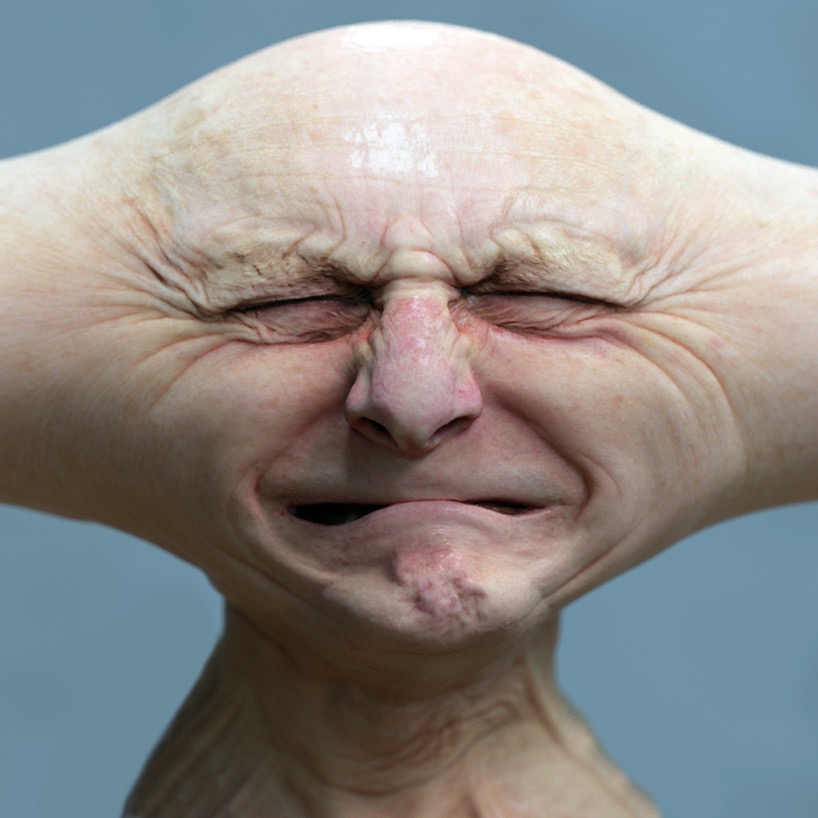
If someone says, “You know what, I think my lima beans are slightly undercooked.” Our reaction would be, “Oh man, I’m sorry to hear that?” and everyone goes back to their meal. I mean, what’s the difference between a slightly undercooked lima bean and a fully cooked one? If she says that her lima beans are gross, however, what do we do? We don’t require further description, and we don’t need to interrogate the witness. We crinkle the nose. 

The crinkled nose now plays a prominent role in the conditional social compacts we share with one another, as the purveyor of gross might deem the conspicuous absence of a crinkled nose a personal insult. When someone says their lima beans are gross, we are to offer sincere, sympathetic, or empathetic, apologies followed by a crinkled nose to punctuate that apology. We offer them this to validate their complaint and offer real, material substance to their exaggeration of a slightly undercooked lima bean. Then, if she offers further description, and it can be anything, we know this requires us to go beyond the crinkled nose to some derivative of the empathetic, “Ewww!” 

We all know the laws and bylaws of our unspoken compacts that are expected of us on a certain level, but we may not ever see them for what they are, until we experience an exaggeration. 

***

“Best onion rings in the Southwest!” a restaurant submitted in their ad. In her attempts to convince us that we should go to this restaurant, Laura told us about that ad. She knew the price of onion rings, and she knew these were overpriced, but if they were the best onion rings in the Southwest, Laura was willing to pay that price for them. 

I only knew Laura on a superficial level, but dined with her often enough to know that there was no way that those onion rings would achieve the “Best onion rings in the Southwest!” in Laura’s after-bite report. The moment she ordered those onion rings, I could feel the barometric pressure in the restaurant drop, as the complaint cloud loomed over us. I correctly predicted the precipitation cycle from Laura’s first bite to the server coming over to check on us after we received our orders. I’m not a meteorologist, but I didn’t have to be to know what happens when dark, foreboding clouds begin to form. 

As if on cue, the complaints rained down on the server after Laura took her first bite. There’s nothing wrong with a complaint of course, but Laura could’ve limited her complaint to, “I paid for the best onion rings in the Southwest, and these are not that.” She could’ve sent them back and received another plate, or another item as a substitute, but Laura opted to display her standards of excellence by putting on a show. 

In her report to the server, Laura could’ve described her plate of onion rings as room temperature, but that term has no attention-grabbing exclamation points, so what did she say? She said, “These onion rings are ice cold!” to superlative her way to the crinkled nose. The onion rings were not ice cold. We could see no ice crystals hanging off them, and there was no dry ice-like smoke wafting off them. Yet, when she finished displaying her mastery of provocative adjectives, we feared touching her onion rings the way we do dry ice, because we all know the physics behind something being so cold that it could burn. 

To further bolster her characterization, and the resultant sympathy that naturally, and contractually, follows, she added that her slightly above room temperature onion rings were, “Gross!” Was it a gross exaggeration to call them gross? Yes, yes it was, but that didn’t stop her from saying it. It doesn’t stop any of us, because we want/need those reactions. No, when Laura declared her onion rings gross, we crinkled our noses and sympathetically “Ewww’ed!” her, because we wanted to form some level of solidarity with Laura and her complaints, so she would continue to be our friend. No one would dare challenge her gross assessment, because how do you challenge another person’s subjective opinion, and why would you want to interrupt a perfectly enjoyable meal with friends by saying, “They’re not gross, Laura, they’re just a little undercooked. Send them back to the line, have the chef cook them a little longer, or get some new ones, and shut your trap!” 

Another thing we know without knowing is that gross assessments carry an unspoken quid pro quo. If we offer Laura’s gross exaggerations visual and audible support, we expect her to offer her support of our complaints if they should ever come about. Most complainers, in Laura’s league, don’t. They refuse to abide by the unspoken tenets of our social compact, or our quid pro quo, because they don’t view our complaints as significant, as germane, or as informed as theirs. We all know someone like this. They say everything from an undercooked lima bean to finding a stray French fry in their pasta is gross, or absolutely gross, and we support her to fulfill our obligations in our shared compact. When we complain about something that we might later admit is relatively inconsequential, such as, let’s say, slightly undercooked red meat. They dismiss our complaint. 

“It happens when you order red meat,” a Laura-type might say. “When you’re ordering food, particularly red meat at a restaurant, you’re allowing someone else to cook it for you, and chances are,” the Lauras of the world say, emphasizing those two words sardonically, “chances are, they’re not going to cook it to your satisfaction. Just eat it, or send it back and have them cook it more and shut your trap.” The crinkled nose we give that is not a gross one, but one of insult and confusion. 

“She doesn’t see it,” we whisper to ourselves in wonderment. “She doesn’t know that she’s one of the biggest complainers in the Southwest.” Is it that, or is her dismissal fueled by the fact that if she allows us to complain and call everything gross, unimpeded, that might somehow diminish her assessments?

If you’ve ever gone this deep into the social compact we have with others, an exaggeration like this makes it apparent to us. Yet, when we recognize it, most of us sit in silent stupor and comment on it later to those close to us. Few of us would be so bold as to say, “Hey, I crinkled my nose for you when you complained about your onion rings, and I even said “Eww!” when you wouldn’t shut up about it. I think I’ve at least earned a crinkled nose from you woman.” Not only does their very public dismissal of our complaint violate our social compact and the quid pro quo we thought we had with them, but they’re totally oblivious to all of their complaining over the years. If we wonder how oblivious some of them can be, they’ll add an “I’m sorry, I just hate complainers” atop the pie, and if that don’t crack your dam, then you have far more control of your facilities than I do. 

After hearing Laura-types use and abuse the word gross for years, I briefly considered it my prime directive in life to mount a personal campaign against the power the word wields over our public discourse. I started small and polite, but at some point, I started trying everything I could think up to limit the use of the word in my social circles, for the purpose of giving it some of its power back. My modus operandi was that if we could all get together and limit the supply, it might have a corresponding effect on its demand. I didn’t do it for self-serving reasons. I did it for the word. Even though I knew that was a self-serving lie, I made some strides in my battle against the ‘ly words, literally and actually, in my social circles, and I thought my experience in this arena might translate to some success on the battlefield against the word gross. I lost. I lost so badly that … Have you ever heard of the infamous Battle of Little BigHorn? Yeah, like Lieutenant Colonel George Custer, I severely underestimated my opponents. I was bull rushed at times, and outflanked by others. It was a bloodbath. As with Custer, my troops abandoned me, all my Captains and Majors, retreated when they saw out how outnumbered we were in our initial skirmishes, and my fight proved pointless and pitiful, even among my closest friends and family.

The word is gone, I say to you now in my after-action report (AAR). I didn’t think anyone still used the musket, and when I saw that they did, I grew over-confident, but when so many use it, it leads even the best of leaders to acknowledge that some of the times even the best laid plans should, for the sanity and happiness of everyone involved, end in retreat.