Youth is Wasted on the Young


“Youth is wasted on the young,” a famous old person, who is now dead, once said. If they have the opportunity to see us now, I wonder if they say, “Life is wasted on the living.”

We can do just about anything and everything we want, but we don’t because everything is “SO BORING!” When we’re younger, we have the health and energy to do more, but we don’t because there is this “Is that all There Is?” mentality to doing extraordinary things. There are some exciting people to meet, places to go, and things to encounter, but most of what we experience in life could be characterized as mundane, trivial and meaningless to those with experience in such characterizations. To those who no longer have the energy of youth or the health necessary to do a number of things, they view youth as wasted on the young.  

Remember brooding in the corner, because that comically weak chin strap on your birthday hat snapped, while everyone else was running around laughing, screaming with joy, and just having a whale of a good time. Wouldn’t you love to redo that day and all of the other fun and frivolity that you missed because you thought life was “SO BORING!”   

I used to look forward to birthdays. I used to count the days until a bunch of people screamed “Happy Birthday!” to me with hats on, kazoos in their mouths, and party favors all around. I remember Batman-themed birthday parties, Scooby Doo parties, and a Shazaam! birthday party. My seventh birthday stands out, because I played my best friend, and biggest rival, in the most popular football video game of the era, and I beat him! It was such a great birthday party that it set a precedent that no future birthday could match. Every birthday after that “Sucked!” because they were “SO BORING!” Not even the “Welcome to the roads!” 16th birthday, the “Happy Bigenoughtobarday!” 21st, the dirty thirty, or the still-fun@40 birthday party could match that seventh birthday party. At some point, we all stop looking forward to birthdays, and we start to look back. No one knows what specific age this starts happening, but we lose our jubilant “This is my day!” smiles as our odometer clicks by.

The older I get, the colder I get. I’m freezing all the time now.

The older I get, the bolder I get. I used to pretend to love things they told me to love, “You don’t love The Lone Ranger?” they asked. I pretended I did, because I was a kid, and a boy, and they expected every boy to love their brand new, The Lone Ranger toys. Now that I’m old and bold, I want to go back in time and tell everyone I knew that I never loved The Lone Ranger. I was told to love it, and I was taught to like it, because every good boy does. I tried to like his horse Silver and his buddy Tonto, but everything they did was “SO BORING!” to me. I pretended to love Cheech and Chong later, because everyone expected me to love their risque, naughty brand of humor. Now that I’m old and bold, I can finally say they only had one joke that they did over and over in as many ways as they could think up, but it was one joke, and I never considered that joke that funny. Everyone expected me to love Animal House when I was in college, because laughing at that movie is what college-aged students do. Now that I’m older and bolder, I no longer have to pretend to like the guitar-smashing, the zit-popping mashed potato joke, or the uncomfortable in the blues bar joke that I’m expected to remember so fondly that I still get a tear of laughter whenever I think of it. I didn’t dare say any of that before, because everyone expected me to coat my love all over of it. I pretended that I did, because I wanted to fit in.   
One of the few joys of getting old is that we no longer have to play pretend. We don’t have to say we love things to fit in, to spare someone’s feelings, and we no longer feel that need to constantly prove ourselves. I no longer feel the need to enter into that crucial, seminal argument on the issue of the day, because I want everyone to know how well informed I am. I no longer consider it my mission in life to change minds. I now see it as pointless. “You think you’re going to change her mind today at lunch?” I ask. “You’re going to battle against thirty-five years of conditioning. She’s been dying to prove her bona fides on this issue, and so have you. You’re not going to get anywhere if you sincerely hope to change her mind.” 

They no longer expect us to love inconsequential matters now. They expect us to grumble about food portions, the cost of living, how much better things were in “my day”, and something about kids getting off my lawn. 

I never thought I’d reach an age when I cherished life, but I never expected to be this old either. I didn’t expect to die young of course, but I didn’t expect I’d get this old either. I never thought I’d actually be grateful for decent health, because I thought that’s what old people did. I never thought I’d be happy to be alive, and greet each morning with a new-day smile. I never thought I’d try to make today better than yesterday, but I never expected to be this old either. “Youth is wasted on the young,” because they have the energy to live life and love it, they just don’t. 

We watch clocks when we’re young, because we can’t wait to get out of one place to get to another. We watch clocks to escape the great “youth-thief” we call school, and then we watch clocks until it’s time to get off work. When we finally get out of those places, we go to other places with the same faces, because everything is overrated, overhyped, and eventually, “SO BORING!” Do clocks move slower in youth and faster in our senior years? I don’t know, but I was never happier in life than I was when complaining about it. 

I remember when an old person told me that “We should be grateful for our health.” I was polite, and I said something like, “We do take good health for granted,” but I didn’t mean it. I thought good health was “SO BORING!” Now that my body is no longer the incredible, recuperative machine it once was, I appreciate moments of good health. 

Some moronic celebrity was going on and on about a late-in-life career choice they made, and I didn’t hear most of what they said. The late-in-life characterization stuck with me though, so I looked the idiot up and learned we were the same age? I’m late-age now? I’m over-the-hill? What’s the hill? What age is the crest of that hill? My boss confessed, “My better years are behind me now, I know that.” He was 40 at the time. If my better years are behind me, why do I enjoy life now more than I ever did? Why didn’t I enjoy my better years more? You don’t. We don’t. No one does. It’s natural, human nature, and the way of life. “Youth is wasted on the young.” You can mourn the lost years, regret that you didn’t do more, or you can try to live the best life you can live now to try to make up for it. 

“Life is what you make it,” an old stranger once told me. 

“Uh huh! Now, could you move aside!” I wanted to say. “I’m not going to appreciate my life or my good health, stranded outside Walgreens like this, where the weather is suboptimal. I can’t make it better, until my dad finally picks me up, and he’s already forty-five minutes late!” When I finally get to the place where I’m supposed to be I’m probably going to say, “This is SO BORING.”

I Hate Working Out!


“I hate working out!” Jack LaLanne once said in an interview I heard him give before he passed.

I remember when I was young, and I didn’t have to workout. I could look good, feel good, and my body was a well-honed machine without it. I call those days the glory days. I didn’t workout as often as I should’ve, because it was boring. It was also painful. If you do it right, you should experience a little pain. “Who told you that?” workout fanatic John Johnson asked. “That might be the dumbest thing I’ve ever heard.”

“It sounds dumb on the surface,” I said, “but if you finish working out without some pain, what some call a small, satisfying amount of pain, you know that you didn’t do it right that day.” John Johnson refused to concede the point, but when he finished he gave one of those thousand yard stares that told me he was thinking about what I said.  

There were times when I went through runs. I’d work my way into a 2-3 times a week workout week, but it wasn’t biologically required. Now that I’m old, I work out as much as I didn’t when I was young, and I hate every minute of it. 

I know, I know, you love it, but that’s probably because you’re not doing it right now. You love the effects of it, and I feel you, because I know how great it makes me feel, how energetic I feel, and how great peak, physical health feels, but while you’re doing it? C’mon! We do it, because we know we have to do it, but that doesn’t mean we have to like it. 

I hate it, you hate it, we all hate exercising, and now we find out that Jack LaLanne, the guy who gained fame for reportedly working out two hours a day, every day of his life, hated it. “Every minute of it,” he said. LaLanne went on to talk about why he did it anyway, and all of the benefits of doing it anyway, but the soundbite remains. He didn’t go into details on why he hated working out, but we can all guess that it had something to do with the fact that it’s painful, and painfully repetitive and boring.

A good book, a podcast, or an energetic heavy metal album can make working out less tedious, but physical fitness experts tell us that doing that is a mistake. “If you want the optimum results from a workout,” they say. “You need to mentally and physically maintain a focus on the muscles, or the muscle groups, that you’re working on. If you seek optimum results, you’ll workout without distraction.” My guess is that they’re talking about weight training exclusively, because what difference does it make if we’re distracted on a treadmill?  

I also consider working out relatively unrewarding. I see the benefits in my mood, my energy levels, and on my health, but I’m in a good mood today, and I’m in good health, as I write this. Good health is the norm, we don’t appreciate it, and we take it for granted. While we’re experiencing our relative definition of peak physical conditioning, it can prove difficult to keep it going. After a while, we realize there is no higher peak, there’s only sustaining the peak, and that can be relatively unrewarding. Even though it’s completely logical to want this to last longer, we begin to consider this feeling the new norm, and we don’t have the urgency to keep it going. I think we all experience this to varying degrees, but I didn’t comprehend the totality of it, until I ran into an old friend at my gym. 

“Have you ever had a bad back?” Imelda asked me at the gym. “It goes away, right? What if it didn’t? What if you experienced the worst back pain every day of your life for years? What would you do if you saw every expert, in every field you could think up, and they couldn’t help you? I am not a suicidal person, but I was in such horrible pain, for so long that I thought this was my life now. I just didn’t see how I could go on like that.” Imelda said, alluding to the fact that the idea of suicide crossed her mind. She eventually found a savior, a massage therapist who informed her that there were limits to what she could do for her. “You need to learn how to help yourself?” this message therapist told her. The message therapist put her on a workout plan at the gym. “It took a while,” Imelda informed me, “and when I say a while, I mean a while for me to endure the excruciating pain of working those muscles out to find some relief, and it took a while after that to achieve something close to normalcy.” After seeing those benefits, Imelda began working out every day, and she informed me that she hadn’t missed a day in about three years. “I live in fear that if I miss a day, I’ll be back on the floor screaming in pain, and I’m not going back. I’m never going back.”

Imelda informed me that I knew nothing about pain, real painI only made it to the gym when I was feeling particularly sluggish. To Imelda, it was about improving her quality of life, and she was either so grateful for the benefits, or fearful of returning to ground-bound pain that she was afraid to miss a day for years. The rest of us can’t help but take good health for granted. 

How long does a physical peak from an excellent workout last? About as long as our workout sabbatical? Peak physical condition, for most of us, usually follows some sort of health scare, or at least a moment of concern. We beat and abuse our body until it hurts, and we workout to recover. When we get back into peak, physical form, we start the cycle all over again.  

“See, to me, you go to the health club, you see all these people, and they’re working out, and they’re training, and they’re getting in shape, but the strange thing is, nobody’s really getting in shape for anything. The only reason that you’re getting in shape is so you can get through the workout.” –Jerry Seinfeld.

Those of us who hate working out on a regular basis love jokes like these, and we repeat them as often as we can. We also love articles that state, “No one really needs to undergo intense weight training four days a week. Some of the times, all we need is a low impact, low stress, long walk.” It’s true, but how true is it? Is it a convenient truth that we use to avoid stressful, rigorous workouts that can prove painful. Depending on our age, we need to stress and strain our muscles a little, maybe as little as two times a week for fifteen minutes a day. “That’s it?” That’s it, but they need to be intense workouts. They should involve some strain and some pain. 

We also don’t workout as often as we should because we’re lazy, undisciplined, and we can think of about 10,000 other things we’d rather do. I’m not on restart day. Restart day is not always on a Monday, but let’s just call it Monday. When Monday rolls around, I enter full workout mode. I listened to all of my excuses last week, and I just got tired of hearing all of that complaining. One of the first things that happens on restart day, soon after I lift that first barbell, I begin thinking about how often I will be working out this week. Even though this is the first time I’ve worked out in weeks, I immediately think that I’m actually, finally going to break my lifelong record of working out four different times in one week. I’m excited, because I’m actually working out, and I think the streak I really haven’t started yet will never end. I buy into the notion that this time it will all be different. When Tuesday rolls around though, I’m just a little too sore to work out again. It’s not a lie, but it’s not really the truth either. We don’t lie to ourselves, but we do fib. It’s more of a convenient truth. On Wednesday, I have something else to do, but that’s all right, because I still have Thursday and Friday, and I have all of that free time on Saturday and Sunday. Before I know it, I haven’t worked out in weeks again, and I have to start the dreaded restart.  

The restart is embarrassing and shameful, because we know we didn’t really do anything during those weeks when we could’ve been working out. We lost the discipline we showed that Monday, and we’re a little mad at ourselves for giving all that up. So, how do we get that discipline back? We buy it in the form of a gym membership. By buying that membership we’ll be putting our money where our mouth is. Making that financial commitment will surely up our personal level of commitment.

“I can’t tell you how many people buy gym memberships on January second, and they don’t show up again after about January twenty-second,” a friend and former gym employee once told me. “Our gym was always packed in January. We had to teach loyal customers the policies our gym has for time spent on machines and wait times, because they never had to learn them throughout the prior year. This was not much of a problem by February, as most of the crowds thinned out, and by March it was pretty much back to the same faces we saw throughout the previous year.”  

If we are one of the few honest enough to cancel the gym membership we’re no longer using, we might supplant it with an in-home machine or gym.

“Yeah, be careful what you spend on those,” he said, “because you can’t buy discipline.”

These at-home machines are a physical showcase of our discipline, and we’re not afraid to parade our friends around them, but the only exercise they offer us, after the initial push, pedal, and pull, is when we dust them off before our friends arrive. These machines and home gyms are also not only expensive, they take up a lot of space in our homes, because we’ll never resell these products for that would be an admission of failure beyond cancelling a gym membership.

The reward of a good workout is not the workout, as most of us hate every minute of it. No, we look forward to the end. We do everything we can think of, while in the midst of it, to occupy our mind and time until the end, but if we don’t start, we don’t have to long for the end. I know once I start, I won’t be able to end for hours, so why start? Well, how old are you?

If we’re not yet forty, that beautiful machine we call our body is still an incredible machine. For most of us, it’s still resourceful, adaptive, and able to recover from just about anything we put into it. Depending on our lack of activity, we may not see much diminishment until the big 44 hits. According to the scientists at Stanford University and Nanyang Technological University in Singapore when an individual hits forty-four-years of age, they will experience a serious drop off in physical ability. It’s the first age, they say, when we’ll experience the first number of effects of age. At age forty-four and then sixty, we will see two huge drop-offs in physical ability, they observe.

“Aging is no longer viewed as the gradual, linear regression we’ve all believed for so long,” they conclude, “it happens in two huge drops.”

“So, if I’m not yet forty-four-years-old,” you say, “I have nothing to worry about?” You are correct, if you believe the study, but there’s that stubborn, little asterisk labeled routine. As I wrote earlier, most of us will not establish a bona fide workout routine, until we experience a health scare. If those scientists are correct, that health scare will probably occur somewhere around our 44th birthday. That’s right, the day of reckoning that so many talk about will hit, and you might want to do everything you can now to prepare for it.  

Are you going to wake on the morning of your 44th birthday with a barbell in hand? Of course not, you’re going to do what you did on your 24th and 34th birthday. You’re going to continue to do what you do. It’s what we all do. You’re best proactive measure is to develop a routine that incorporates some weight training, and I’ve read that some can mean, depending on the person, as little as two workouts a week for as little as fifteen minutes a day. You are also correct, again according to the study, that if you pick up a weight on your 44th birthday, and you develop a healthy relationship with it going forward, you might be just fine. Are you that disciplined? Can you turn it on and off, like a light switch. If you can, you’re a better man than I am.

I don’t care who you are, or what age, working out just plain sucks, and anyone who says different is either lying or so disciplined that I just cannot relate with them. Check that, if we’re talking in hypotheticals, most people talk about the glories of a rigorous workout, how they feel so alive after a great workout, and they do it so often that it’s almost a competition. “I work out four days a week, and I work out with various weights, leg, arms, chest, and back alternately. I’d rather be on an elliptical or under a barbell than anywhere else in the world. It makes me feel so alive!” Are they lying or exaggerating? Hard to tell, but if they were as alive as they claim to be, they’d probably look more alive. If they were more honest, they’d say, “I hate working out, it’s boring, but I do it for all of the health benefits, and the effects it has on my mood, but I can think of about 10,000 things I’d rather do than lay on another bench, pick up a barbell for the umpteenth time in my life, or walk on a treadmill to watch the hundredths of a mile pass by in agonizingly slow progressions.”

My Proustian Moments


“Scent, emotion, and memory are intertwined,” experts say. 

“Smell and emotion are stored as one memory.” —Dawn Goldworm, co-founder of “olfactive branding company” 12.29

There was nothing extra ordinary about the ham sandwich I ate, but I thought it was extraordinary! Every ingredient was store bought from leading brands, and it was one thin slice of ham, with a thin layer of mayo on it, between two slices of ordinary bread. When I say I enjoyed that sandwich, I’m not talking about a “This tastes good” reaction. I’m talking about “Holy crap, this is so good that I forgot how great the ham sandwich can be.” If I said all that aloud, I probably would’ve received some looks, some long hard looks that measured my seriousness against my sanity. Years later, I had a similar experience with a piece of KFC chicken. Prior to that experience, I denigrated the unhealthy food from that chain for years, perhaps decades. That piece of chicken led me to rethink everything I thought about their original recipe. I tried them both again, days after those moments, and I realized I probably just had a moment, but it was quite a moment, a moment some call a Proustian moment.

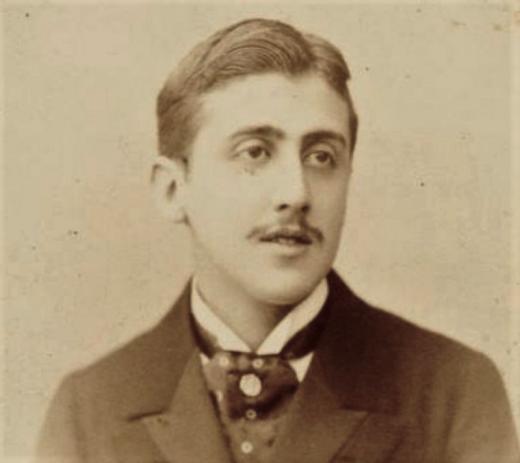
A Proustian moment, based on the writings of author Marcel Proust, occurs “when a sensory experience triggers a rush of memories often long past, or even seemingly forgotten”. The nature of Proustian moments suggest that we do not seek these moments so much as they find us. We cannot create Proustian moments, in other words, they just happen. They are similar to the tool a writer uses to set a joke up. The writer foreshadows the payoff with a subtle, unusual moment that has no conclusion. The writer then moves the narrative to a seemingly unrelated matter and combines it with that subtle unusual moment to form a rewarding payoff for the audience.  

If someone told me about the concept of the Proustian moment, I probably would’ve considered it so obvious that it was hardly worth discussing. If they defined it for me to further its alleged profundity, I would’ve said, “So, you see, hear or taste something that sparks a memory of something else? And someone developed a literary term for it to make it seem more profound? It’s called a flashback, and I probably have about one a month.” As a writer, I may have considered it a fascinating idea to use a ham sandwich to spark a distant, fond memory for one of my characters, but I would’ve dismissed it as a real-life profundity. The whole concept sounds like something overly complicated people do to add complicated intrigue to their otherwise simplistic lives. 

The Proustian moment in Marcel Proust’s novel Remembrance of Things Past involves the character experiencing a moment with a soupçon of cake in tea: 

“… I carried to my lips a spoonful of the tea in which I had let soften a bit of madeleine. But at the very instant when the mouthful of tea mixed with cake crumbs touched my palate, I quivered, attentive to the extraordinary thing that was happening inside me.”

Yeah, that ain’t me. I enjoy the sensory experiences involved in eating and drinking as much as the next fella, and I appreciate what they have done to help me sustain life for all these years, but if a ham sandwich caused me to “quiver, attentive to the extraordinary thing that was happening inside me,” I probably would’ve considered it a sign of gastro-intestinal turmoil. 

Those who seek literary terms to define their quivers are often complicated, dramatic types seeking spiritual connections, and they often define their creativity by doing so. To the rest of us:

“It’s a ham sandwich,” Gil Burkett said. “Let’s not over-complicate this.” Gil Burkett often said things like this to rein me in when I attempted to assign literary value to the mundane, and minds like mine need Gil Burketts to remind us that some ham sandwiches just taste better than others for real world reasons. A slice of ham of higher quality than we’re accustomed to make the sandwiches taste better, for example, an expert sandwich maker can perform their magic on the ingredients, and there are time and place situations that can influence the taste of anything. We might be hungrier than we were the last time we had a ham sandwich, and everything tastes better after a rigorous workout. I could’ve ended this debate by letting Gil try my sandwich, but that would’ve been such a violation of my constitution that I was willing to be wrong and allow his “It’s a ham sandwich” to be the final word. 

Ham is an overly salted meat, and salt makes everything taste better, but it is really unhealthy. I spent most of my life railing against the purveyors of what’s healthy, and I based my personal definition on how it affected me. For most of my life, I could eat and drink whatever I wanted, and the incredible machine that is my body helped me overcome most of what I put into it. As we age, that incredible machine begins to lose some of its superpowers, and the unhealthy nature of food or drink becomes more obvious. My body began reacting very poorly to these unhealthy foods, and I responded by not consuming them.

Thus, when I tried my first bite of a KFC chicken leg after years of abstaining, it was glorious. Why was it so glorious? Did I consider that KFC chicken leg, and that ham sandwich so delicious, because absence makes the palette grow fonder? Did I need more salt in my body to counter all the gallons of water I now pour into it now to try to stay in alliance with modern health edicts, or did their taste and smell remind me of something so long since passed that I didn’t even know that memory existed? After these experiences, I tried eating them both a couple more times before the unhealthy effects of eating them outweighed whatever caused me to enjoy them in those moments, and I realized, there was nothing special about them. I still don’t know why they tasted especially good on those occasions, but I didn’t try to make any connections, until my cousin threw out an offhand comment:

“Do you remember when your dad used to buy a bucket of KFC and take you and your mom to the city park, before they married,” she said. “He did that all the time. He did it in an attempt to win your heart.” (She was referring to my step-dad.) 

I was so young that I don’t remember the particulars of those days in the park, but I’ve always felt some kind of weird connection to the red and white stripes that KFC has on their buckets and signs. I initially thought it might have something to do with my fascination, bordering on obsession, with the colors, red, white, and black. This near-obsession goes so far back that I just assumed that it had something to do with the colors of my favorite college football team, the Nebraska Cornhuskers. (Side note: Psychologists suggest that our favorite colors can have a relationship with our favorite teams, as green cars sell better in Wisconsin than anywhere else in the nation, purple cars sell better in Manhattan, Kansas, and red, white, and black cars sell better in Nebraska.) My favorite album covers, my other favorite football team, and every car I’ve purchased are red, white, and black. I have always assumed that my affinity for these colors developed in the years I spent cheering on the Huskers, and I still think that, but I now consider it a possibility that some part of my associations with these colors developed much earlier, because they may have reminded me, on some subconscious level, of the time my step-dad stepped in to rescue me from a fatherless maturation. If you posed this notion to me as a possibility, before my cousin said that, I probably would’ve been laughing louder than anyone else in the room

I was so young when catastrophe struck that I can’t remember the catastrophic circumstances firsthand, but I wonder if those red and white stripes signaled some sort of salvation, or hope, in some way that a two-year-old couldn’t recognize at the time, articulate, or appreciate as a seminal moment. I think I just knew, on some level, that I was being saved by a generous man, and the strong, very distinctive smell of KFC chicken might have reminded me of a moment buried so deep in the recesses of my psyche that it took a period of abstinence to rekindle it.

When all that happened, and I dug through my psyche to try to connect the associations I made to the red and white stripes, I remembered that extraordinary ham sandwich.

When my step-dad eventually became my only parent, I grew to despise the ham sandwich. The ham sandwich was his answer to all my needs. When I was hungry, and I was always hungry as a teen, my step-dad said, “Make a sandwich.” The sandwich became a symbol for my dad’s insistence that I was going to have to learn to resolve every problem myself. In a rational world, that makes sense. We all raise our children to help them become self-serving adults. I was a teenager at the time, however, an irrational and emotional teen trying to make sense of the world, and in my world a parent not leaping to their feet to feed a child was a crime against humanity, and his desire to help me help myself sounded like an excuse for him to avoid doing anything. The ham sandwich, the bologna sandwich, and sandwiches in general became a symbol for my dad’s refusal to do anything to satisfy my greater needs. I was being unfair to my step-dad, but isn’t that the nature of being a teenager?

Toward the end of his life, my dad and I managed to bridge the many gaps that divided us, and I stopped negatively associating the ham sandwich with him by the time I ate the extraordinary one. Those connections are admittedly loose, but I wouldn’t have made them were it not for my cousin telling me about the through line I had with my step dad and KFC, and this idea I must’ve had that everything was actually going to be ok in my life. 

My recognition that I might have had a Proustian moment involved a series of click backs that occurred over years, perhaps five-to-ten-years. I’m a skeptic who is generally skeptical of all who play this game of connect the dots, and I reserve some skepticism for my own experience with this concept. I am intrigued with it as a writer, but I reject it as some sort of real-world explanation of something that might have happened to me. My primary influencers instilled in me the instinct to reject the idea that occurrences in life can be commingled with complicated and dramatic literary references, and they convinced me that it’s my creative mind that assigns that level of significance to coincidences. They taught me that most of us live such relatively boring lives that we seek complication and drama, but there are moments when we have small but significant flashbacks that are almost impossible to define in the moment.

“Wait a second, what did you say a Proustian moment was again?” I asked those who introduced me to the term, clicking back. “Now that I think about it, I might have had one of those.” That click was preceded by my cousin’s offhand comment, which clicked me back to my KFC experience that ended up clicking me back to my unusually enjoyable ham sandwich. I knew there was something noteworthy about that ham sandwich, but I didn’t go around telling anyone about it. It wasn’t that special, but when my cousin unlocked the KFC question, I remembered that ham sandwich. I write that to illustrate that I’m not the type who seeks connections to physiological memories. I am usually satisfied with ordinary explanations that align with the term coincidences. There is a reason, however, that smells and scents have an unusual effect on our brain, and it has everything to do with the nose and the olfactory senses proximity to the brain. Scents and smells affect taste, of course, but when we smell something it washes over the brain. As quoted at the beginning of this article, “Scent, emotion, and memory are intertwined,” and “Smell and emotion are stored as one memory,” as Ms. Dawn Goldworm asserts. They can trigger a memory of a situation in our lives, so completely, that we’re there in every way but physical. We might not know where we are, or where we were if we never clicked back, but there is a confusing, almost palpable feeling that for one fleeting moment we’re somewhere else in time. If you’ve ever seen the incredible movie Somewhere in Time, you’ve seen a man convince himself that he was back in time. Was it nothing more than a powerful and surreal dream he had as the film alludes, or was he really there? I’m not saying physical time travel is possible, but I’ve now had two Proustian moments that lead me to think that when a particularly distinctive smell washes over our brain it can take us back in time in a way that seems, and feels, so real that it can provide a “sensory experience triggers a rush of memories often long past, or even seemingly forgotten” that leads us to believe that we are there in all ways but physical, if only for one brief and very pleasant moment in time.