“It’s Hell Getting Old”


“It’s hell getting old,” was my dad’s answer to questions about how he was doing. “How you doing Hank?” they would ask. “It’s hell getting old.” He wasn’t trying to be funny, and he wasn’t changing the subject. He believed this was the answer to questions about his well-being. If age is a state of mind, my dad was old his whole life, or at least as long as I knew him. He was old in his eighties, but I remember him saying, “It’s hell getting old,” in his forties. We believed him too, because we were kids, and anyone who is older is old when you’re a kid. This response was the end of the discussion for him. It was his ‘learn it, live it, love it’ meaning of life. If he wrote an autobiography, he would’ve titled it It’s Hell Getting Old. 

I met a person his age, later, and she was quick, fiery, and alive. She was the type you just knew wouldnt be put down for eons. When we broke down the borders of our co-worker relationship and became friends, I violated the rules of social decorum and asked her how old she was. When she told me that she was the same age as my dad, I was stunned. How could she act so young? When I gained a different perspective, as I neared my fifties, I realized the forties aren’t hell or even old, and I asked him about it. “Well it’s hell now,” he said, in his eighties.
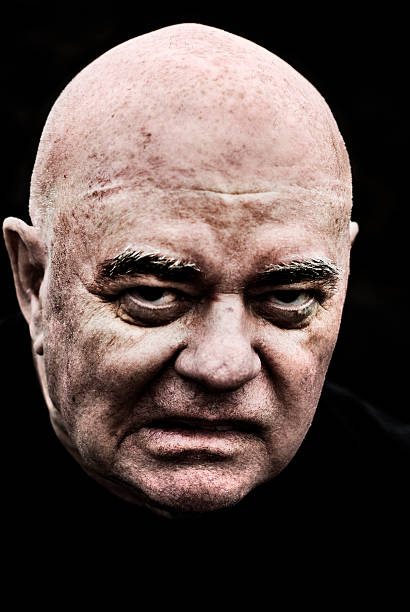
Friends and family were sympathetic to my dad’s “It’s hell getting old!” rants … in his eighties. They would nod, sympathize, and back up and give him the room necessary to develop his rant. I write the word develop, because he talked about his advanced age so often that it almost seemed like he was working out material for an act. He’d repeat lines and phrases so often that I could say them with him, as he delivered them to friends and relatives. I heard him provide different emphasis and strategic subtlety to his pleas, over the years, and I heard him employ different ways and means of convincing them of his plight. I don’t think there was anything artificial about my dad’s pitch, as I know he believed every word of it, but he did get better at it after practicing this presentation over the course of forty years.

When I told he might be able to defy the aging process, by some measure, with physical exercise, he dismissed me before I could finish the sentence. “I own a weight set,” he would say.

“I know you own it, Dad, but you have to use it.”

“Ok, Mr. Smarty Pants.” He often switched between Mr. Smarty Pants and wise guy to anyone stating the obvious, but no matter what he called us, he always concluded his argument with something about his age. “Old people aren’t supposed to work out with weights.”

“How about a walk then?” we said, and he silently gave us some points here, but what does a person do on a walk? My dad walked when he had a specific destination in mind. The idea of walking just to walk seemed dumb to him. What if someone saw him doing it? “Where you heading Hank?” 

“Nowhere. Just walking for the exercise.” My dad would never subject himself to such a revealing and vulnerable Q&A. 

Some cherish their youth, and the telltale signs that it’s slipping away freak them out. Some of us look forward to getting old, because while we know that while the physical side will falter, greater levels of clarity, sanity, and stability await us on the other side. I suspect my dad couldn’t wait to get old for all of those reasons, but he also knew that getting old grants one the freedom to talk about their “gross” and “funny” bodily functions without being called out for violating societal norms. When my dad would attempt to enjoy his newfound freedom, over the course of forty years, with our friends and family, we would try to rein him in. “No one wants to hear about your bodily functions.”

“Oh, grow up!” he’d say.

***

“What comes out of the rectum can be used an indicator of health, but it’s not the indicator,” I said when he provided me a particularly detailed update on the state of his health. “It shouldn’t be used in place of a handheld pulse oximeter, an ECG monitor, or a glucose monitoring device.” Unless his daughter-in-law, a nurse, administered these in-home tests, the devices his doctor sent home with him were never used. My dad thought that what came out of the rectum was a better indicator of health than all of those medical devices combined. Either that or he just enjoyed talking about them.

Knowing that his diet consisted of baked beans, Oscar Mayer Bologna, butter brickle ice cream, and Swanson’s Mexican TV dinners, it was no surprise to us that he began to face gastrointestinal issues, but knowing inevitability doesn’t make hearing about it any easier. 

“How you doing today Dad?”

“It was like pounding concrete today.” That was his favorite analogy. He’d replace the word “concrete” with “bricks” at times, just to keep it fresh. I don’t know where he picked it up, or what it meant, but I didn’t waste any calories trying to uncover the true meaning of his analogy. I understood what I needed, and more than I wanted.

My dad was a former military man who spent most of his life in a factory. I write that to note that he didn’t waste his time or effort in life on creative pursuits. Creative descriptions of his daily doody, to my knowledge, were his only forays into artistic expression, and he displayed such a rich, provocative vocabulary in this arena that the imagery was almost impossible to block. I write almost impossible, because my mind has chosen to forget the trauma of many of his vivid descriptions, but the “pounding of concrete” stubbornly clings to a place to my soft tissue. I thought of jackhammers destroying concrete.

When we hear people talk about jackhammers destroying concrete, or bricks, in an analogy to what happened that day in their alimentary canal, we might say, “I didn’t know whether to laugh or cry.” We say such things, some of the times, because we hear others use it to describe their uncomfortable moments of confusion. There are moments when we mean it. I saw this on the faces of those who heard Dad’s prognosis of the day. Few cried, of course, though I suspect that some of the third parties he and I sat with in diners may have considered it to try to get him to stop. I stepped in to solve their dilemma by saying, “Dad, that’s gross.” I’m quite sure he wanted to tell me to grow up, but whatever he saw on our third party’s face told him they agreed. Our third party companions didn’t know him like I did, of course, so they’d laugh uncomfortably. I suspect that they laughed, because they enjoyed our father-son interplay, and they might have falsely believed that he was tweaking me in some way for their entertainment. 

He tried his hand at more conventional ways of entertaining people, and it didnt go well, but those of us who struggle in this arena learned a lot about what not to do from him. That isn’t to say that he wasn’t entertaining, because he was one of the funniest people I’ve ever met, unintentionally and in his natural state. Friends and family found him just as entertaining as we did, and we flirted with taking our show on the road, but we knew it would be impossible for him to maintain a natural state. Anytime he thought he was funny or entertaining, he put forth effort, and he subsequently lost his audience. Smiles turned to confusion and confusion turned to polite laughter when they saw how hard he was trying.

The difference between an occasionally humorous person and an entertaining person is complicated and multi-faceted. One way to achieve short-term laughs is to repeat a joke. Achieving the vaunted title “entertaining”, requires the subject to know what everyone else knows so well that it challenges our understanding, our foundation, and everything we believe in. It requires us to examine ourselves, others, and others’ views of us so well that we briefly imagine an alternative universe if just for the moment it takes us to find laughter. We could even say that attempting to be entertaining asks us to be a little phony for as long as it takes to get a laugh. We might have certain beliefs, certain hard-core, concretized beliefs, but its considered entertaining to let our hair down and analyze from a partially fictitious, self-deprecating angle to challenge those beliefs.  

My dad was many things, but he was not phony. I’m not sure if he had that code in his DNA necessary to be a little phony even on those rare occasions when he probably should’ve been. If he did have the code the rest of the human population does, he didn’t use it often enough to hone its capabilities. I called him many awful, mean, and regrettable things in my tumultuous teens, but phony was not one of them. If one of my friends suggested that I might want to try the name out on him, I wouldve rejected them. He was a man of simple truths that he developed in life, and he could not waver on them, even to poke holes in them for comedic effect. 

He spent his whole life believing he was inferior, and he might have done some things in life to prove that he was not, but my definition of phony involves someone who acts in an artificial manner to convince others that he is superior. To those who stubbornly insist that the term phony refers to someone who tries to be something they’re not, then perhaps he acted in artificial ways in some instances, but my dad did everything he could to fit in so he didn’t stand out. 

When he got older and sicker, I suggested I interview him to provide his legacy a transcript. I suggested that his young nephews might never know who he was otherwise. He rejected me saying, “When I die, I want to be forgotten.” It’s illustrative, a little funny, and very frustrating to those of us who wanted others to remember him, but it’s not phony. Try to dissect that sentence for a trace of phoniness. To me, that sounds like a genuinely strange character who felt he was not fit for our world. 

He was a fundamentally flawed human being, stubborn, and one of the weirdest human beings I’ve ever met, but he did not put on airs to impress anyone. Anyone who suggests otherwise need only look to the shoes and socks he wore in life. They were not what a man, built to impress, wears.

*** 

“I don’t understand how you and your brother view the world so clearly,” he once said. “It’s always been so cloudy to me.” He was skeptical to the point of denigrating, regarding his abilities in life. Driving, for example, was such an “awful responsibility” to him. In many instances, Dad talked about the difficulties of life, the “horrible responsibilities” the “accountabilities” and the “misery of life” that he said we’d fully understand once we became responsible adults who were responsible for others. Some of it involved lessons he used to lift our eyebrows and prepare us for the “awful responsibilities” that awaited us, but the anxiety he experienced while driving was very real to him. 

We couldn’t play turn on his car stereo, for example, because that would’ve distracted him from his concentration on the road before him. We could talk and stuff, on most trips, but we didn’t have to “get so carried away” with it. If we laughed too hard, he put the kybosh on that, because it diverted his attention from the road too much. He didn’t care for uproarious laughter, in general, because he thought it made the laugher look foolish. 

Whenever we tried to divert him from 90-degree angled driving, my dad rejected that outright, as he feared he wouldn’t make it to our proposed destination. “You could take A street to 130th and take a right, but if you take Stonybrook, it cuts straight through.” Dad did not care for bisecting an angle. He was a tried and true 90-degree man. 

“We could get lost,” he said with tones that asked us to appreciate his predilection. We didn’t. “We could get so lost that we don’t know where we are,” he added in a fearful tone that suggested there is a point of getting lost that could lead a traveler to never being able to return to the existence they once knew. We didn’t understand the severity of our dad’s anxiety, until someone relayed a story to us of Dad being so lost one time that one of his commanders informed him that his actions could’ve started World War III.  

He was in charge of the map for a tank battalion. We all suspect that one of the great attributes of a military’s boot camp is to determine a soldier’s strengths and weaknesses. Why else would the military put a person through six weeks of intense physical and mental challenges. They want to see what we’re made of, and they want to how they can use our natural talents and gifts. How the military could put a man who lived his whole life in one city and didn’t know his way around it, in charge of leading a tank battalion with a map challenges my perception of the men in charge of the military at the time. Whatever the case, they obviously didn’t know my dad’s preference for neat and tidy 90-degree turns, because they put him in a position to fail, and fail he did. He led the tank battalion into enemy space, Russian enemy space, and he could’ve, in the words of his sergeant, started WWIII. 

I didn’t know any of that as a kid, of course, but I knew that the only time I saw my parents’ fights devolve to screaming matches occurred soon after the map was unfolded. Thanks to GPS apps, I no longer experience the deep seated anxiety I used to when someone pulled a map out. 
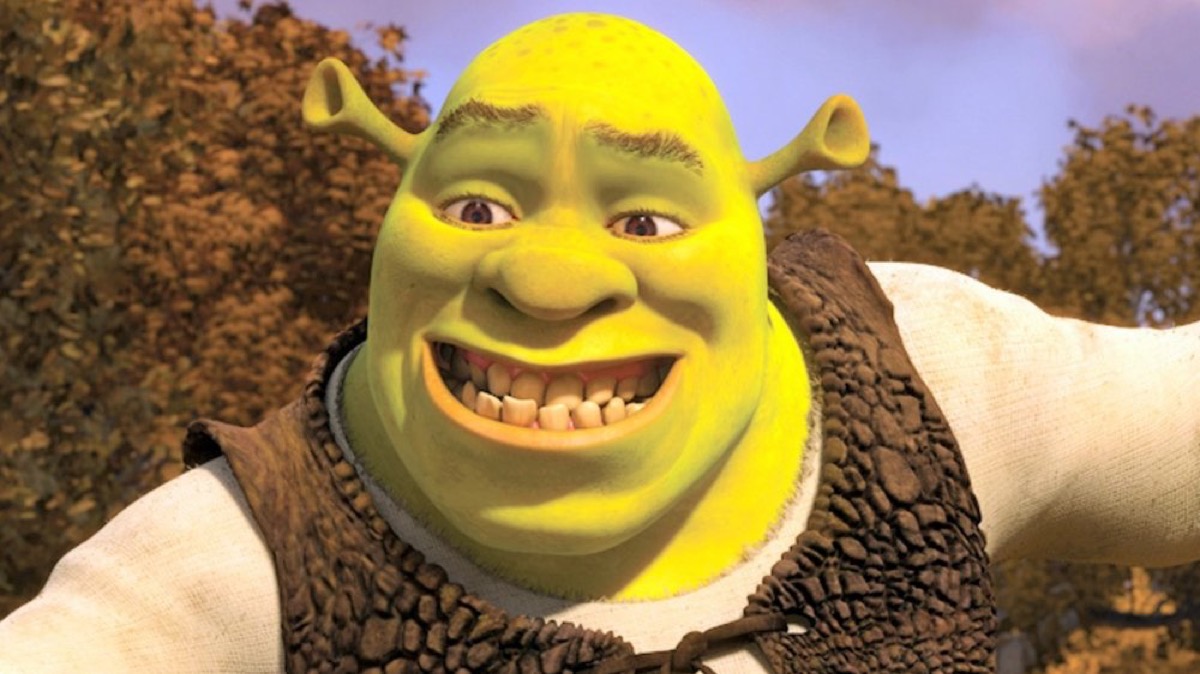
The first time I saw Shrek I enjoyed it with a strange sense of familiarity that I couldn’t put my finger on. Shrek was a lovable loser with huge ears, a large belly, and he could be unintentionally and habitually gross in ways he didn’t understand, because he spent too much time in solitude. Shrek also had a strange yet simple philosophy of life that could prove humorously wise at times. I couldn’t shake the sense of familiarity during the movie, and I couldn’t pinpoint it for many years, until someone said, “Shrek’s your dad.” I didn’t laugh, and I found it a little insulting at the time, but when I watched the movie again, in that frame, I realized that the writers of Shrek might owe my dad a  royalty for at least some tangential influence.

The History of Bloodletting by Mark Twain


“The change from reptile to bird was not as tremendous, it just took longer.” –Mark Twain on bloodletting

In 1890, the satirist Mark Twain published an essay called A Majestic Literary Fossil. In it he detailed “public reverence for old ideas and hostility to new ones” as it pertained to a medical procedure called bloodletting. Bloodletting was a medical practice that began in the age of antiquity, in Egypt. The logic behind the practice, then spread to the Greeks and Romans, the Arabs and Asians, and eventually throughout Europe during the Middle Ages and the Renaissance, and it remained atop prevailing wisdom for the next 3,000 years, until studies, performed in the 19th century showed that bloodletting could have harmful effects. Twain’s A Majestic Literary Fossil, details the life of those trapped in what we could call is one of historys first medical findings, findings that the most brilliant minds of medicine theorized could cure all that ailed us.

The theory behind bloodletting can be condensed in one succinct sentence: “A body’s “humors” (fluids) have to be in proper balance to sustain health.” That was the initial, old world translation. A modern translation would be that bloodletting involved the withdrawal of blood from a patient to prevent or cure illness or disease. That’s pretty much it, all of the theories that followed either supported, or contributed to that theory. Although Galen of Pergamon made some important discoveries regarding blood, he also contributed to this theory with the belief that blood “was created and eventually used up.” Galen did not know that blood circulated in the manner we do today, and as a result, he believed that some blood could stagnate in the extremities and cause ill health. Thus, he believed that the vagaries inherent in humoral balance were the basis for health and illness. He believed that blood was the dominant humor and the one in most need of control. In order to perpetuate this balance of the humors, a physician would have to either remove excess, or stagnant, blood from the patient, or give them an emetic to induce vomiting, or a diuretic to induce urination. A more modern interpretation of the theory, with less jargon, is that they believed there was “bad blood” and “good blood”. Bad blood caused various ailments, and it had to be drained periodically, or proactively, to signal to the body to start creating good blood, or fresh blood. When the body encountered ailments, their theory suggested, it was because the blood hadn’t been let out sufficiently, or proactively, and reactive bloodletting measures were required to address the ailment sufficiently.   

We can all laugh at the “brilliant minds” of medicine who developed and enhanced these theories now, Mark Twain included, for believing that bloodletting was ahead of its time as a medical marvel, and a cure for what ails you, in those first 3,000 years of modern medicine. Twain believed it too, however, for much of his life, because he was captive to his era, and a man of letters as opposed to medicine. It was only when his modern medical minds corrected the theories behind bloodletting that Twain saw the light, and began mocking the miracle minds of medicine for taking so long to modernize. 

Twain joined hands with those who helped his era see the light on bloodletting, and that’s when he lamented that “The change from reptile to bird was not as tremendous [as the change from bloodletting], it just took longer.” Yet, we might mock Twain’s 1890 definition of “modern medicine” 100 plus years hence, as much as he mocked the archaic practices of his past, and how many future readers will mock our definition 100 plus years from now? Will they be laughing at us for our prolific use of antibiotics to cure so much of what ails us? Will they be looking back at our use of chemotherapy as an archaic treatment of cancer? Are these the best of times in medical knowledge and technology, or will future readers consider our advancements in medicine as laughable as we do those in Twain’s time did with archaic idea of bloodletting as a cure-all?

***

Twain’s essay focuses much of its scorn on the bloodletting theories of the prominent physician, surgeon, and philosopher Galen of Pergamon from Rome (circa 129-216 A.D.). Historians considered Galen the father of Humorism, or bloodletting, and he based his theories on dissections of monkeys.

Twain writes that Galen would’ve been welcomed into his father’s home, but that Galen might have been left waiting, because “our family doctor didn’t allow blood to accumulate in the system.” [Author’s Note: Writings from the era detail that optimum use of bloodletting’s preventative measures required that a proactive doctor bleed his patients at least once a month.] Twain then added, with some spite for Galen and his theories on bloodletting, Whereas, if Galen should appear among us to-day [in the era after bloodletting], he could not stand anybody’s watch; he would inspire no awe; he would be told he was a back number, and it would surprise him to see that that fact counted against him, instead of in his favor. He wouldn’t know our medicines; he wouldn’t know our practice; and the first time he tried to introduce his own, we would hang him.”

The commentary provided in this essay focuses on what Twain knew in his modern age (circa 1890), versus what they thought they knew yesteryear. It focuses some scorn, some objective looks, and some hilarity on the prevailing wisdom of the previous eras. In their “modern era” of medicine, they saw how ridiculous collective wisdom could be, when viewed in the reflective “glare of the open day”. The essay details, without actually stating it, how much deference we offer doctors, their theories, and authority figures in general. The essay also focuses on how scientific theory can appear groundbreaking and miraculous in one era, until the “knowledge of the moderns” reveals the serious flaws of the previous era.   

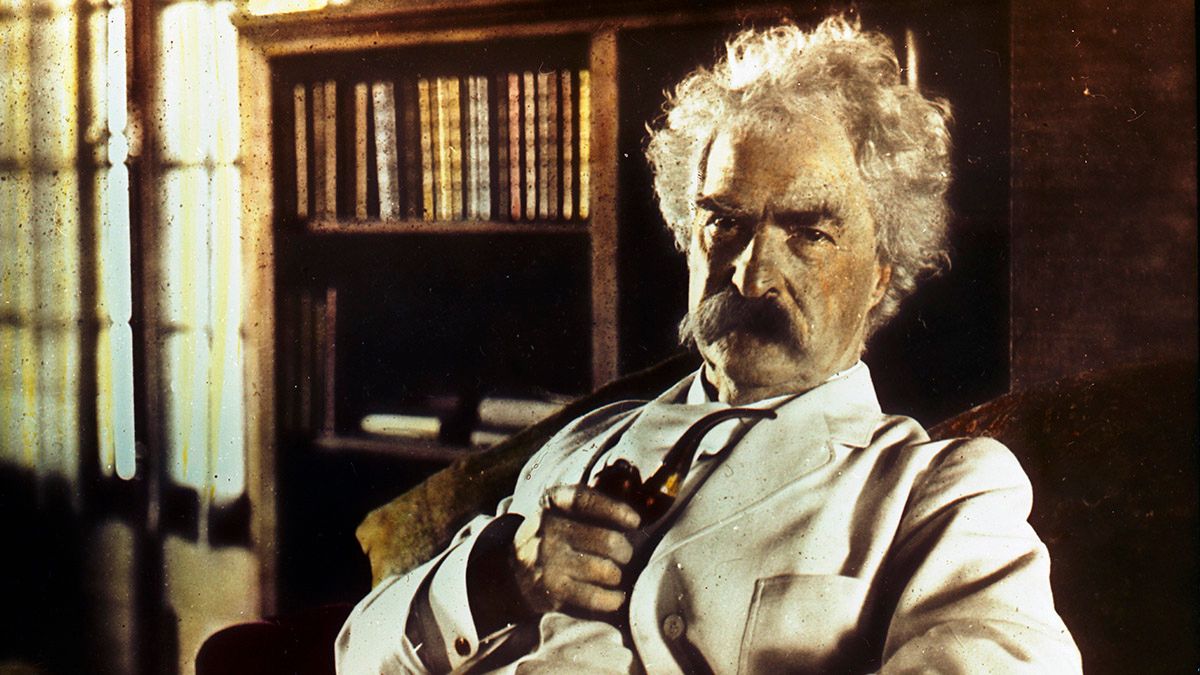
Mark Twain, also known as Samuel Langhorne Clemens, was an American writer, humorist, satirist, and essayist who critiqued everything from the past to his definition of the present. Before going through the list of Twain’s hilarious documentation of the manner in which bloodletting was alleged to cure everything from the common to the severe, we should note the qualifiers author Thomas Morris added before “gently mocking” the medical cures of a bygone era in his book The Mystery of The Exploding Teeth.

“The methods [doctors] used were consistent with their understanding of how the body worked, and it is not their fault that medical knowledge has advanced considerably since then.”

It’s not their fault, I would add, and it’s wasn’t their doing. The doctors, family practitioners, or ear, nose, and throat specialists of the era were handcuffed by the constraints of knowledge at the time, and as Morris adds they performed admirably under such constraints.  

“One thing that these case histories demonstrate,” Morris adds, “is the admirably tenacious, even bloody-minded, determination of doctors to help their patients, in an age when their art left much to be desired.” 

Whenever we critique or complain about the constraints of modern medicine, we do so without considering how much time, effort, and concern occurred at every level of the modern medical pyramid. Their goal, no matter what defined their drive, was to redefine what was consider modern medicine for our health and prolonged life. Those at the bottom of this pyramid, our doctors, use that information, technology, and everything at their disposal to treat us. When we look back at what the “most brilliant minds of medicine” and their modern medical pyramid, we just laugh at them for being so foolish without considering how frustrating and agonizing it must’ve been for them to do everything they could, using everything at their disposal, only to lose a patient. They were their patient’s representative of modern technological advancement and knowledge, and when they came up short, their patients blamed them for their failures. How many parents sent their sons and daughters to these “brilliant minds of medicine” desperately seeking a cure, and those doctors desperately sought to satisfy their concerns? The narrative is funny when painted with a broad brush, but when we take a step back, we see the “admirably tenacious, even bloody-minded, determination of doctors to help their patients, in an age when their art left much to be desired.” 

No matter what era we live in, our family doctor, or our ear, nose and throat (ENT) family practitioner is our face of modern medicine, and we expect them to know every nugget of information our current modern medicine has at its disposal, and we expect them to have the latest, greatest technological assistance at their disposal, but they sit at the bottom of the medical community’s pyramid. They read the latest medical journals to learn what modern marvels and research might take away the pain, or cure us of what ails us. Yet, they play no role in the research that goes into the articles they read. They read it to help them make determinations on what courses to follow with treatment or prescriptions to write. They also use the technological innovations created by others to pinpoint our ailment, so we could say they are both the beneficiaries and captives of their era’s definition of modern medicine.

Thomas Morris’ qualifiers illustrate that as interesting, informative, and entertaining as Twain’s essay is, it is annoying to read an author assume some level of authority with a hint of intellectual superiority directed at the most brilliant minds of another era without similar qualifiers. It is so easy to criticize the past, and authors like Twain and others, critique past knowledge and technology from the pedestal of modern research, acquired knowledge, and technology as if they had something to do with it. Few of these authors acknowledge that they, like the rest of us, are the beneficiaries of modern advancements, even though they have not personally contributed anything to the difference between the eras. 

As low as the ENT sits on the pyramid of modern medicine, the writer and satirist is one step lower, just above us, as the purveyor of such information. Yet, there’s nothing wrong with a skilled satirist, on the level of Mark Twain, ridiculing the past in an entertaining manner, because it cements the George Santayana quote, “Those who don’t learn from the past are condemned to repeat it.” We all learn in different ways, some are visual learners, some have brains that need to hear information, but we all know comedy, humor, and mockery. Twain knows this, and he presents his information in an entertaining manner, but he still should’ve added some elements of humility as it pertains to the constraints of his knowledge and expertise in this arena.  

Even after placing Twain’s critiques and complaints of a bygone era in what I find proper context, I still find Twain’s drill down to the bloodletting cures of common ailments entertaining.

“[The change from the practice of bloodletting] is the utter reversal, in a couple of generations, of an attitude which had been maintained without challenge or interruption from the earliest antiquity. It amounts to creating man over again on a new plan; he was a canal boat before, he is an ocean greyhound to-day. The change from reptile to bird was not more tremendous, and it took longer.”

Headache: “One could die of a headache in the age of bloodletting,” Twain writes. “For bloodletting was listed as the proper cure of a headache back then. One such victim “seized with a violent pain in the head” required bloodletting in the arms, the application of leeches to the nostrils, the forehead, the temples, and behind the ears.

“Alas,” observed the doctor, named Bonetus, who was focused on this particular patient, “These procedures were not successful, and the patient dy’d (sic). Had the patient not dy’d, and a surgeon skilled in Arteriotomy been present, that procedure would’ve been called upon.” [Author’s note: Arteriotomy, as defined by Twain, “Is the opening of an artery with a view of taking away more blood” when the opening of the veins proved insufficient to cure what ailed the patient.]

“Here was a person being bled from the arms, forehead, nostrils, back, temples, and behind the ears,” Twain adds, “and when none of this worked the celebrated Bonetus was not satisfied, and he wanted to open an artery for a view of the cure. Now that we know what this celebrated Bonetus did to relive a headache, it is no trouble to infer that if he had a patient that suffered a stomachache, he would disembowel him. Bonetus labels his writings as “observations”. They sound more like to confessions to me.”

Frostbite: Twain cites several remedies listed in the 1745 Dictionary of Medicine by Dr. James of London and Samuel Johnson. According to this book, “One can cure frostbite by mixing the ashes of an ass’s hoof with a woman’s milk” and “Milk is bad for the teeth, for it causes them to rot, and loosens the gums.”

Dentures: “They did apparently have false teeth in those days,” Twain writes, “But they were lashed to neighboring teeth with wires or silk threads. Wearers of these teeth were encouraged not to eat with them, or laugh with them, as they usually fell out when not at rest. You could smile with them, but you should not do so without practicing first, or you may run the risk of overdoing it. These false teeth were not for business, just decoration.”

Malaria: The cure for malaria, according to a man named Paracelsus, is a spider, a spider’s web, or water distilled through a spider’s web. As evidence of their homeopathic properties, Paracelsus, notes that when he gave a spider to a monkey for consumption, “That monkey is usually free of the disorders from which they normally suffer.” Paracelsus then backs this up with the case of a dying woman who was bled dozens of times a day without response. When these constant bleedings failed to yield satisfactory results, the desperate doctors forced this woman to swallow several wads of spider web, and the results were immediate. “She straight-way mended,” Paracelsus wrote. “So,” writes Twain, “The sage (Paracelsus) is full of enthusiasm over the miracle cure that the spider web presented while mentioning, in only the most casual way, the discontinuance of the dozens of daily bleedings she had to endure. Paracelsus never suspected that this had anything to do with the cure.”

***

Twain’s essay, and all of the more modern books that followed with documented historical references to archaic medical practices of a bygone era, come equipped with two messages: be grateful for the time you live in, and if you ever achieve a method of time travel, make sure you can get back. Be grateful to all of the minds of medicine who have compiled information, through countless hours of testing and research, for giving you better health and a longer life through better medicine, greater technology, and improving the knowledge doctors have to treat us. We can all enjoy looking back at the procedures and prescriptions with a laugh, but don’t forget to be grateful. And if that ingenious mind ever comes along and figures out a way to thwart the seemingly impossible logistics of physics and achieves time travel, they should heed the warning: make sure you can get back. 

The eventual creator of the time machine should read all of these stories on archaic medical practices and procedures very carefully, and they should note that getting back might be just as important, if not more important than getting there. Before setting the world on fire with your physics defying version of the DeLorean, you might want to delay your incredible adventure a year or two to check and recheck your ability to get back. Going back to Ford’s Theater to see Abe and Mary Todd might be everything you hoped it would be, as everyone on the planet and presumably everyone in the history of man, will know your name as the one who cracked the code, but if you can’t get back, you could be subject to everything Twain, Morris, and others detail in their narratives about the relative definitions of modern medicine. If you are so brilliant that you’ve conquered the final block of physics preventing time travel, and you are able to visit your great grandfather, make sure you have enough gas, electrical power (through atomic fusion), or whatever elements, chemicals, or variations of energy you need to get back, because if you get stuck in his era, and if you’re not immune to everything they have traveling around in their sphere, you might fall prey to a doctor who knows that all they need to do is properly balance your humors.   

Humors of the body were broken down to four basic components by Galen: blood, phlegm, yellow bile, and black bile. “The theory of the four humors arose out of a Hellenic philosophy that attempted to relate all things to universal laws.” Another component of the theory was that bloodletting could produce beneficial and countering effects on the body that was subjected to deleterious effects incurred as a result of the effects changing seasons could have on humors, how a person’s dietary habits could affect these fluids, the zodiac, a person’s age, and even the compass directions’ effects. The theory held that any, and all, of these exterior forces could shake up a body’s humors and cause a body to produce more of one humor (fluid) than was necessary in that body. By releasing the blood from the body, the body could then re-regulate the humors better in regeneration.

Twain also takes some other cracks at the “home remedy” market of his day. He cites “Alexander’s Golden Antidote” that contains over one hundred ingredients, some of them common, others too complicated to mention, or attain over the counter. Twain concludes the lengthy description of this antidote, “Serve with a shovel,” but, he corrects, “We are only to take an amount that is the quantity of a hazelnut” according to the instruction on the listing. He then mocks the “Aqua Limacum” antidote that lists the “homeopathic” qualities of the garden snail when properly prepared by washing in beer, baked in fires contained in a cleaned chimney until “they make a noise”. “And with a knife and a coarse cloth to wipe away any green froth that develops; then combining those snails with a quart of saline scoured earthworms; which should then be laid on a bed of herbs and combined with two handfuls of goose dung, and two handfuls of sheep dung, then put in three gallons of strong ale, and fixed on the head and refrigeratory until distilled according to art.”

“The book does not say whether this is to be taken in one dose,” Twain writes, “or if you should split it and take a second shot at it … in case you live through the first one. The book does not specify what ailment this concoction is good for,” Twain continues, “But I have found that it is a formidable nostrum for raising good flatulencies from the stomach. It appears as though the advocates of this antidote sought to empty a sewer down the throats of those with malady so as to expel it. It is equivalent to dislodging larva from cheese with artillery fire.”

Most readers of this essay, yours truly included, would infer that Twain stood tall against homeopathy as a cure for anything, but he credits homeopathy for helping advance modern medicine beyond bloodletting and other archaic forms of medicine. He states, “When you reflect upon the fact that your father had to take such medicines as those listed above, and that you would be taking them today yourself but for the introduction of homeopathy, which forced the old-school doctor to stir around and learn something of a rational nature about his business, you may honestly feel grateful that homeopathy survived the attempts of the mainstream medical proponents to destroy it, even though you may never employ any homeopath but a mainstream medical proponent in your life.”

The takeaway from this essay, as I see it, harkens back to the Dickens’ quote: “It was the best of times. It was the worst of times…” Are we living in the best of times in regards to medical technology and advancement, or have we “advanced” to the worst of times where we run the risks of foregoing the natural, homeopathic, and organic cures of our forebears?

Twain writes that the collective brains of modern medicine might still be bleeding us if it hadn’t been for homeopaths injecting some sense into the conversation, but such a statement leads us to a confusing fork in the road that asks whether we should continue to follow homeopathy or the advancements in modern medicine, or as Twain seems to suggest a healthy combination of the two?

In our more modern era, there is a move toward advancements in modern medicine that is just as strong, in some quarters, as the movement against it. There is a common sentiment, among those against, that states that proponents of modern medicine are relatively neglectful of the consequences of modernity. An old biology teacher of mine captured this when he said, “Any time you put a foreign substance into your body; there will be other ramifications.” When a patient puts something foreign in their body, this theory states, something else might fall out as a result. When the patient repeatedly takes a foreign, synthetic substance to solve an ailment of the left eye, it might deplete the stomach of bile, or they might not be able to hear out of their right ear in a year. We’ve all read the research, heard the disclaimers, and experienced horror stories, but which side of medical knowledge do we trust more? Did the relative scarcity of medicinal techniques force our forebears to brilliantly, if simplistically, derive more natural –and in some opinions more effective– methods of survival in their age? Does our suspicion of advancement and technology cause us to reference old world, home remedies, and those remedies used by Native Americans, the Ancients, or any of those generations who preceded us, because they were forced to be more attuned to natural, more organic, and thus healthier cures?

Most of us are not students in the field of medicine, and we don’t understand how some guy in a lab can synthetically create some substance that makes our body work better, and what we don’t understand, we don’t trust. We’d much rather put our trust in the time-honored tradition of homeopathic remedies. Or, as my Biology teacher alluded, we’d much rather not introduce foreign, synthetic substances into our biology if we can avoid it, for fear of something else falling out. What if, as the idiot states, the cure is worse than the disease? What if it works? What if the medical marvel procures a cure with acceptable side effects? Will we trust it, or do we prefer nature’s natural products, because that just makes more sense than taking something, some egghead developed in a chemistry lab?

How many of us have watched those commercials promising cures that are so laced with disclaimers that the disclaimers take up the majority of the commercial. It’s almost laughable. It’s so ridiculous that we might want to put out a call on the Federal Drug Administration (FDA) to up the average twelve to twenty-four years of testing on medicinal drugs before they hit our shelves. “I don’t trust them,” we say when the Big Pharmaceutical Company puts another drug on the market, and we resort to the antidote that calls for snails, worms, goose dung, and lamb dung for a cure. “I just prefer the natural cures that we’re learning so much about nowadays,” we say, and that does sound more intelligent than those who seek modern, Western advancements in medical technology. “They’re only in it for profit.” Fair enough, but if one of those Big Pharmaceutical puts a drug on the market that leads to negative nationwide headlines, the effect those stories can have on the company stock, and the resultant effect on their quarterly profit statements are such that they want to do everything in their power to prevent it. They may not care about their customers in the sense that they only care about their stock price, their profit margin, and their corporate bottom line, but the results are often the same.

Bottom line for those who look back to a more natural, less synthetic era for their cures may want to consider the science that informed bloodletting and other cures and preventative measures that they considered sound science. Much of the science that informed those more traditional cures led to a 42.5 life expectancy, whereas modern science and medicine have our current life expectancy at 78.7. For every Eastern, homeopathic remedy that worked in Twain’s era, and could work now, there are also about one hundred, bloodletting type cures listed in the 1745 Dictionary of Medicine by Dr. James of London and Samuel Johnson that did not. Or, as the old saying goes, be careful what you ask for, because you just might get it.