Ozzy Osbourne is “That Thing at the Door”


“There’s this thing at the door asking for you?” the brother of Terence Michael Joseph “Geezer” Butler informed him.  

“What do you mean this thing?” Geezer asked. 

“You’ll see.”  

Geezer didn’t get the joke, until he answered the door, and he saw a rain-drenched man with no hair on his head standing on his family’s doorstop. The man at the door had no shoes or socks on his feet, and he was wearing a gown that Geezer assumed was a pair of overalls that the man’s dad probably wore at a factory job. The man also had a chimney brush over his shoulder and a single sneaker on a dog leash. “I’m Ozzy,” the man at the door said. Geezer would later say he thought the man “was not the full shilling. (AKA off his rocker/crazy)” Yet he invited him in anyway — and changed rock history forever.

We can only guess how this interaction proceeded from there, as the two men tried to feel each other out, but Geezer was intrigued enough to invite this disheveled man into his rock band Rare Breed. The thing standing at Geezer’s door posted an ad in the Birmingham musical instruments store that read “Ozzy Zig Needs a Gig.” Geezer saw the ad, went to Ozzy’s house, Ozzy wasn’t home, so Geezer left his home address — and John “Ozzy Zig” Osbourne, or as we now know him Ozzy Osbourne, showed up later as that thing at Geezer’s door. 
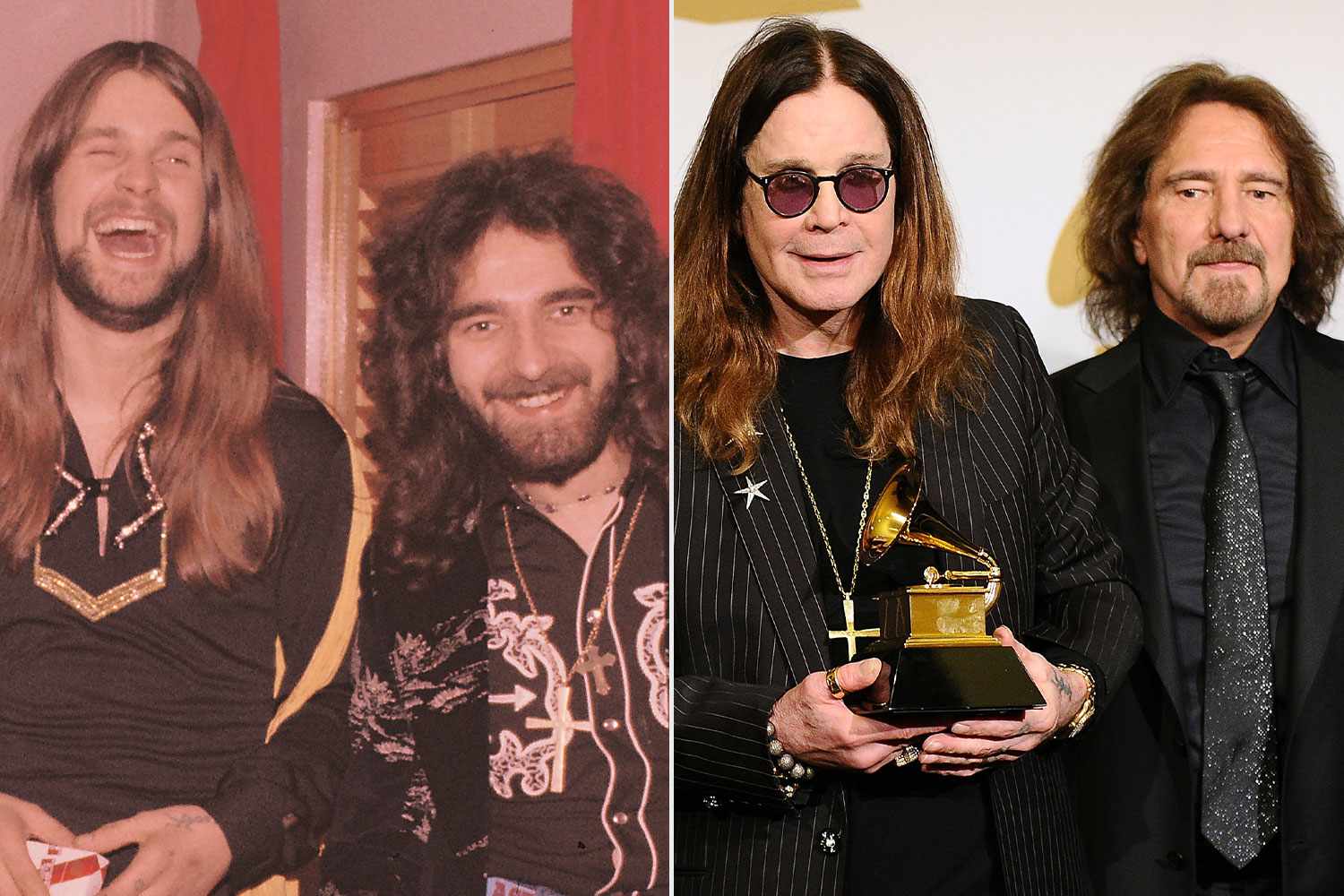
Geezer, like Ozzy, grew up in a low income, working class neighborhood, and they both had six siblings, but the Butlers did not experience the level of poverty the Osbourne’s had. Those of us who grew up in similar neighborhoods know that we don’t meet many who are lower on the socioeconomic totem pole, and when we did, we looked down on them. Geezer and the Butlers were poor, but Ozzy grew up without basic comforts like indoor plumbing, and he and his siblings often used coats for bedding. As Geezer’s brother alluded, the Butlers probably viewed Ozzy as a lower life form. His appearance suggested he couldn’t even afford a decent pair of shoes.

When Geezer met Ozzy, he had a predicament. He had always been an avid reader with a strong background in English literature, especially Shakespeare, so writing song lyrics came easily for him, but he was not a strong, confident singer. He needed someone to deliver his lyrics to an audience. He had a message, in other words, but he needed a messenger to sell it properly. When Geezer imagined his messenger, he probably dreamt up a Robert Plant, Rod Stewart rock-god type who could seduce listeners into falling in love with Geezer’s lyrics. Every songwriter who cant sing, dreams up bullet points for the singer of their songs, and we have to imagine that an overwhelming majority of them would’ve rejected “that thing at the door” on appearance alone. Is that what intrigued Geezer? As we now know, Geezer was not what we call a conventional songwriter, so Geezer may have thought that this thing at the door might have been able to attract an audience in the manner the lobster boy and the bearded lady attract an audience to the county fair? 

We could say that Geezer was desperate, but by historical accounts, Geezer only had one other lead singer prior to Ozzy, and that man quit Rare Breed once he heard how bad the band was. So, Geezer didn’t exactly exhaust all possibilities before meeting Ozzy. Geezer dresses this decision up by saying he was blown away by Ozzy’s audition, and that might be a fact, but it’s more likely that Geezer didn’t think he’d find a better lead singer in Birmingham, and his aspirations likely didn’t extend beyond the city at the time. He probably enjoyed seeing Ozzy’s unfiltered confidence and he suspected that Ozzy’s economic limitations and resultant gratitude meant that Ozzy would show up and help Geezer build and grow, regardless how bad the rest of the band was. Geezer’s suggestion that he could see Ozzy’s talent from the very beginning not only compliments his lifelong friend, but it suggests Geezer was gifted at spotting talent. My guess is Geezer wasn’t lying, but he’s rewritten this memory in his mind so thoroughly that this is how he genuinely remembers it. We can speculate further, but at the end of that debate we’d be forced to acknowledge that Geezer obviously made the right choice, as the two of them joined forces to create something no one else tried before, and it worked so well that we still talk about them almost sixty years later. 

Within two years of meeting the “thing at the door”, Geezer and Ozzy would be joined by two members of a band called Mythology, a guitarist missing the tips of his middle and ring fingers, named Tony Iommi, and an anatomically complete and relatively well groomed drummer named Bill Ward. They would change the band name from Rare Breed to Polka Tulk Blues Band, Polka Tulk, then Earth, and then Black Sabbath.  

In case you don’t know the four of them would go on to sell roughly 60–68 million albums (including pure sales, streams, etc.) when they were all in Black Sabbath together. The music of Black Sabbath would also influence the creation of heavy metal and later the heavy, sludge side of the Seattle sound sometimes called grunge. They’ve also been called one of the influential rock bands of all time, and it all started with Geezer meeting “this thing” at the door. 

“So, this Geezer Butler fella got lucky,” you might say. “He had one of the most influential front men in rock music history just show up at his door one day. That’s luck.” It’s true, undeniably true, that luck and/or chance played a role, but how often do these chance meetings happen in music? We could also say that it wasn’t exactly a chance meeting, as Ozzy posted an ad, and they both met before as fanatical fans of The Beatles. Still, it can be frustrating to learn that luck, and right place/right time elements play a role in defining history, but it happens. The counterpoint to this argument is that we have to be good to get lucky.
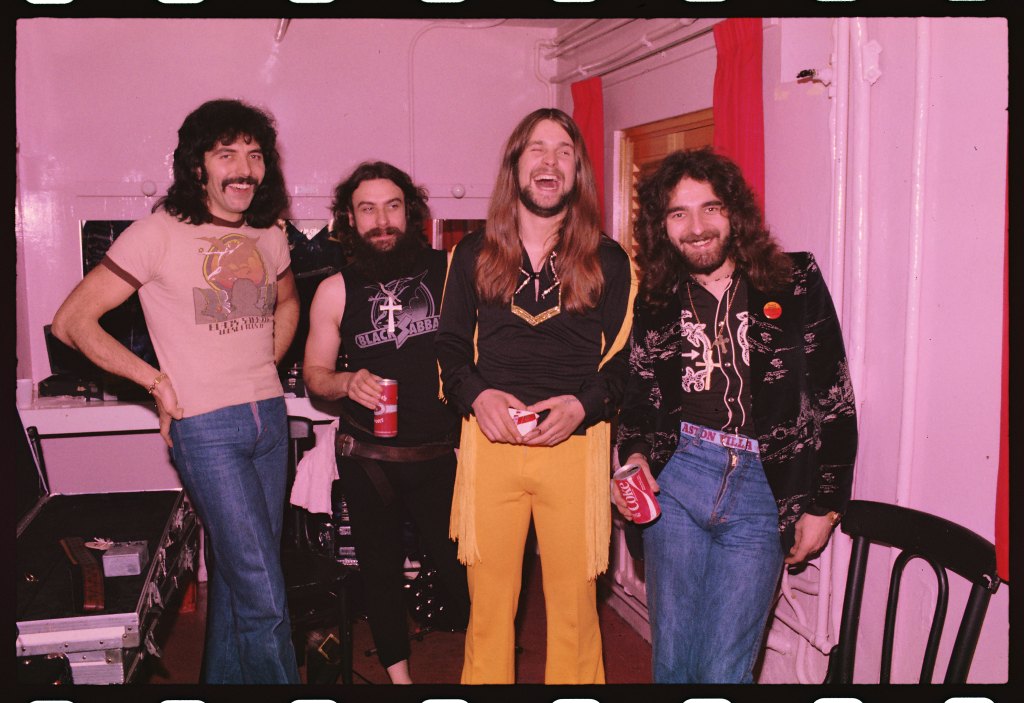
They, Ozzy and Geezer, also got lucky that their band, Rare Breed, broke up when it did, because another band named Mythology broke up at around the same time. The guitarist and the drummer, of that band, Tony Iommi and Bill Ward, were looking for another band to join at the same time that Ozzy and Geezer were looking for a guitarist and a drummer. (Geezer switched to bass when he saw how talented Iommi was.) Ozzy and Geezer just happened to find a guitarist who is now considered a master of riff‑craft, creating heavy, memorable guitar lines that became the blueprint for metal, and they happened to land a drummer who was a jazz‑trained, gig‑tested drummer whose unique style became a core part of the band’s identity. 

For all of the talent that existed in Black Sabbath, Geezer Butler was the conceptual architect and the primary lyricist behind the dark themes that defined early heavy metal. His style was heavy and melodic at the same time, and he was considered unusually expressive for the era. His bass lines often acted as a second lead instrument, weaving around Tony Iommi’s riffs rather than simply following them. Geezer also developed a rhythmic partnership with drummer Bill Ward to create the distinctive “swing” that underpinned many of the early Sabbath classics.

As Geezer described the relationship that would develop between he and Ozzy, Ozzy created vocal melodies during the band’s jam‑based writing sessions, and Geezer would write the lyrics to those vocal melodies. So, they used their talents, gifts, and creative energy to land in the right place and right time of music history.

If we examine Black Sabbath on an historical timeline, we could also say they got lucky to land in a right time/right place hole in time where no one had ever tried to make gloomy and depressing, as opposed to sad, music before. Yet, when we read the quotes from the members, they didn’t seek out a different form of music to carve out their own niche in the industry, and they didn’t plan on being pioneers, it was just who they were, where they came from, and what they knew. (All of the members of Black Sabbath grew up in the aftermath of WWII, and the war-torn, devastation influenced the gloomy themes of their sound and music that just happened to appeal to a large contingent in war-torn Brits of that era.)

In the era of upbeat harmonies, sunny melodies, and that breezy optimism sunshine pop, sunny melodies, and harmony‑rich 60s pop of The Beach Boys, The Monkees, and The Mamas & The Papas, Black Sabbath was viewed as a dumb idea by the fourteen labels who rejected them. The market is so stratified that we usually accept the idea that there’s no such thing as a dumb idea, but those labels all agreed that the gloomy, bleak, slow, and depressing music of Black Sabbath was a stretch too far. The basic sales pitch behind Geezer Butler’s presentation was that in a world that wants to listen to music that makes them smile, we have created a form of music that is so depressing we might lose a percentage of our fanbase to manic depression. In a world of feel-good music, we’ve created feel-bad. So, whaddya think?

For all of the luck, the right time/right place elements, and everything else that defined them, Black Sabbath shouldn’t have worked, not to the degree that some relatively anonymous writer would be writing about them nearly sixty years later. Even a qualified, quality writer would have trouble properly capturing how unlikely their success was. These were four kids who grew up in various levels of poverty who believed that the pinnacle of success would involve them playing in local pubs that would hopefully pay them enough for them to be able to afford a decent meal and a couple of beers to follow. These guys had no formal musical training, absolutely no industry connections, and they decided to play a style of music that didn’t exist yet — slow, heavy, ominous, and socially bleak and depressing.

We can imagine that their immediate success shocked the 14 major labels who rejected Black Sabbath before their first album was recorded and everyone else who worked with Sabbath before their first album was completed, but no one more surprised than the four members of the group. They knew they worked well together, and they gelled to create the type of sound they were seeking, but the idea that it clicked and/or appealed to listeners to the point that it reached #8 on 13 on the UK Albums Chart and #23 on the US Billboard Top LPs shortly after its US release stunned the four fellas. They didn’t really have to “pay their dues” in a relative sense. They compiled a selection of five songs for their first album Black Sabbath, recorded them in one 12-hour session, and they released it. They were just happy that a label signed them, and they were actually able to record an album. That, to that point, was beyond their expectations. The idea that it would chart with no radio play, combined with the critics dismissing it as a crude, simplistic, or derivative effort was beyond their comprehension. Another source notes that Black Sabbath remained on the charts for over a year and sold one million copies in its first run (US + UK combined).
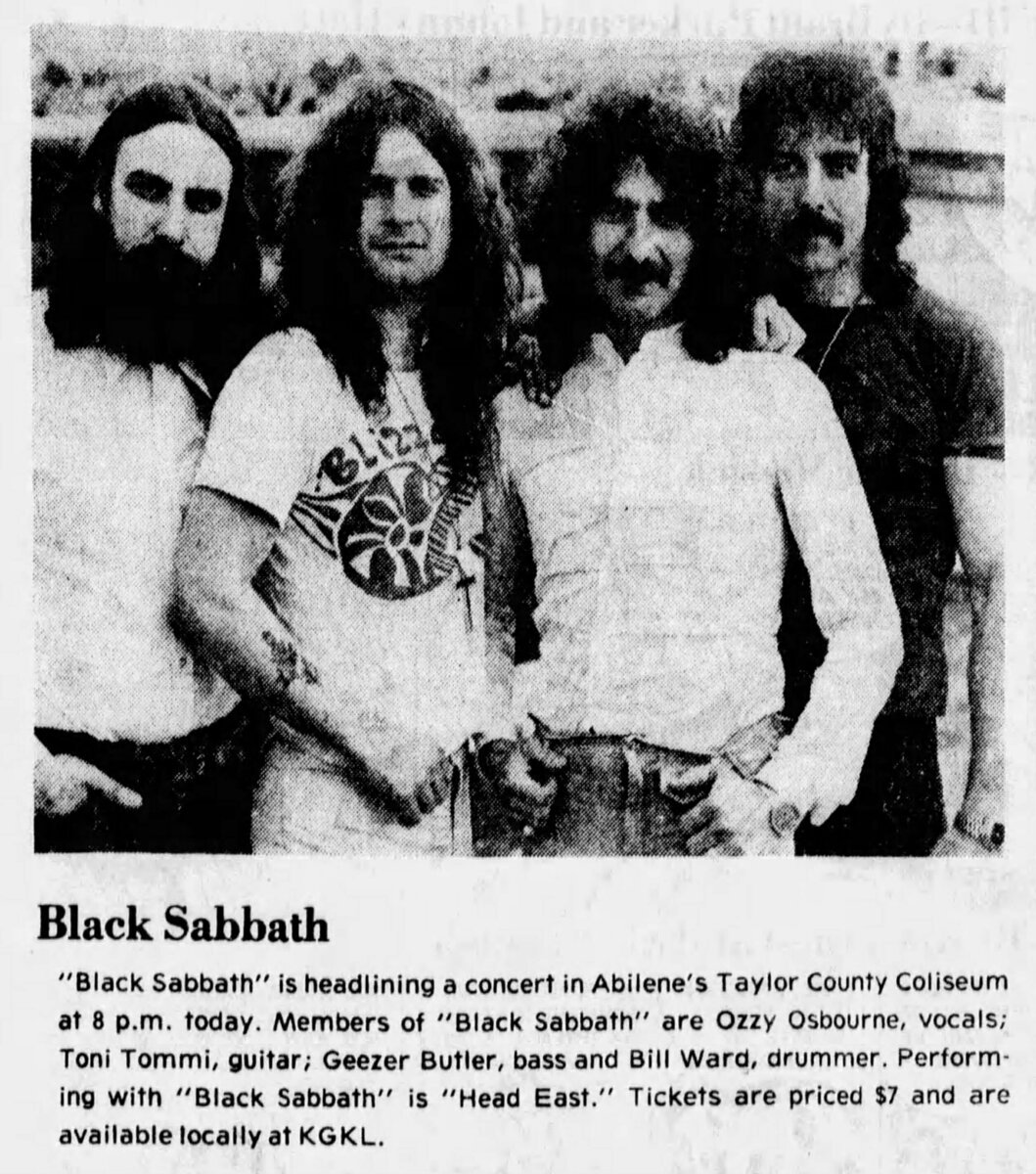
All four members have said, in various ways, that they couldn’t believe it when some people initially started treating them like a real band, then when their album charted it scared them a little, because they didn’t know what to do with that. When they were asked to tour the United States of America, it wasn’t mild surprise, as none of them knew enough to know logical progressions of this sort. They were genuinely stunned. Ozzy described his genuine reaction to this insanity by saying he was constantly waiting for someone to tap him on the shoulder and say “There’s been a mistake, a huge mistake.” Tony Iommi said, “We never thought it would go anywhere. Our goal was to avoid factory work, and we thought we could do so with a few gigs here and there.” Ozzy said that their goal was to eventually get in pubs, so that the pubs would pay them enough to drink their beer. We never thought we’d get out of Birmingham,” Ozzy added. Bill Ward said, “We didn’t know what we were doing — and suddenly it worked.” Geezer said, “We were just four poor kids. We didn’t think it would last.” All four members were from lower class to absolute poverty, as Geezer said, and that probably led to the level of desperation necessary to make whatever they did work.

Anyone who has ever read anything about the recording industry of this era, knows how this chapter of the Black Sabbath saga ends. As poor and uneducated as the four fellas who comprised this band were, in general, they probably knew less about the recording industry, recording industry contracts, and the manner in which their management team should be handling their financial matters. They wanted to focus on creating the music and let management take care of the financial matters, and their creations 4.9 million copies of the first album, and the second album, Paranoid, sold between 10-12 million copies, by global sales estimates, they were almost as broke as they were before they recorded their first album. They signed a horrible contract, because they were so elated that someone wanted them to sign them that they probably thought if they haggled over the details of the contract, the management team might not sign them.

“We were one of the biggest bands in the world,” Geezer said, “and we were penniless.” One example cited stated that Black Sabbath were paid $250,000 to play at a 1974 California Jam festival, and each member ended up receiving $1,000. As stated, management teams and recording labels ripped off most of the artists of the era, including the Rolling Stones and The Beatles, but music historians suggest that Black Sabbath’s management disputes were some of the ugliest and most damaging in rock history. When the fog cleared, the members discovered that not only were they almost as broke as they were when they started, but their cars, homes, and other personal possessions weren’t theirs. In the most crushing blow, they then discovered that their music, that which they worked their tails off to create, hone, and perfect wasn’t even theirs. After years of litigation and lawsuits, it is suspected that the four members may have recovered 10-20% of the money their manager stole.
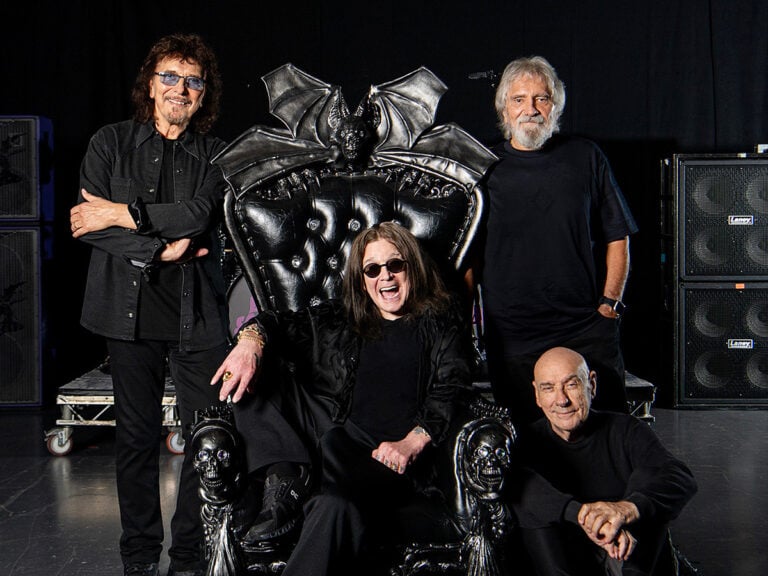
Black Sabbath worked for a whole host of reasons, of course, but they were dumb enough and desperate enough to make it work on a certain level. They had a Beatles-obsessed lead singer, who learned the art of melody from his beloved mop tops, a Shakespeare-obsessed lyricist, a guitarist who was missing the most important finger tips required to play guitar, and a jazz drummer who helped develop a new form of musical expression. Their eventual success suggest that some ideas are such a load of crap that if it’s gathered together, it could be used as fertilizer. The four members didn’t know enough about the system to know how to succeed in it, and they got lucky. The fact that they got so lucky that they’re unicorns, should not be discounted here. Most of us should spend most of our young life trying to figure out the system works to see how we can succeed in it, but some of us weren’t built like that, and some of the ideas we have might appear like “that thing at the door” to others, but the question that we should ask ourselves, is a question I’m sure Geezer Butler asked himself on the day he met Ozzy Osbourne, ‘what would happen if I invited this man in?’ What would happen if we invited that weird, strange, and just plain different idea in and explored the possibilities? If we drop an adamant no to all of that, we’ll never know. The story of Black Sabbath teaches us that some of the times it’s better to say no, unless...
Dead and Gone: The Rock Stars of Yesteryear 


Some of my favorite artists are dead now, and some of them are just gone. What do we do when one of our favorite artists die. When they die at twenty-nine-years-old, it’s a time for mourning, and a time to think of what they could’ve been. When they’ve already been, and they haven’t been relevant for over forty years, and we learn that they had grandchildren, and in some cases great-grandchildren, it feels a little odd to mourn their passing. They gave us some great music, and perhaps the greatest homage is to simply listen to what they did and appreciate it for what it was way back then. It’s also weird to go back to their catalog and realize they haven’t come out with new music in thirty years. When we listen to them often enough, or they manage to keep their name out there is various ways, it can seem like they were putting out music as far back as a couple years ago.

Before dying, or finally leaving the stage after their fourth or fifth reunion tour, some of them braved “the age thing” and put out a new album. We went to their concert, because we loved them so much at one time, and we knew they were going to play their new songs, because they wanted to sell their last gasp album, but we wanted to hear their classics … until we heard them, and saw them sing that song we loved so much forty years ago. The reason that song was so compelling is that it was fun, obviously immature, and a rock-your-buns off classic. After the euphoria of hearing our favorite song from them died out, we realized that the man onstage is a seventy-year-old trying to recapture what made them “special” in their twenties. 

***

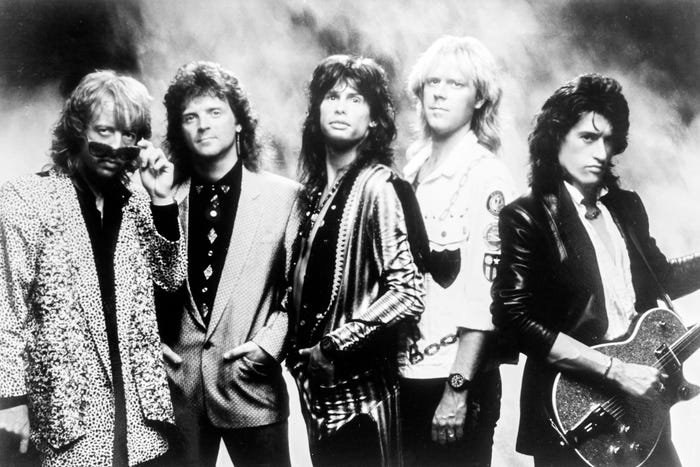
Dating back to an era so long ago that I now feel so old writing about it, I played the song Toys in the Attic in my car so often that my girlfriend’s three-year-old daughter could sing the refrain. She probably had a vocabulary of less than 300 words, but she knew those lyrics from that song. I also named my first dog Tyler. Seeing as how this was between their creative peak, the Toys in the Attic and Rocks era, and their Permanent Vacation commercial peak, I might have been one of the few who had Aerosmith in his tape deck nonstop. Now that they’re done as artists, we can look back and think they should’ve been so much more. Would their creative output have doubled if they decided not to experiment with drugs? That’s impossible to know and probably unfair. Even if they stayed clean throughout, they probably would’ve experienced creative highs and lows, and how many relatively clean artists came out with five straight top-to-bottom incredible albums? I can think of two. There was a time when I thought Aerosmith might be one of them, the elite of the elite. They weren’t, but I still think they could’ve been so much better if they didn’t fall prey to chasing the dragon. Yet, that was the nature of the beast, back then.  

*** 

Was there a rock artist who did more with less than John Michael “Ozzy” Osborne? We all know the icon that Ozzy became, the charismatic frontman who could put on some theatrical shows, but when we strip those elements away, we have a relatively untalented man who ruled rock music for over 50 years. He didn’t have great vocal range. Even his most ardent fans would admit that while Ozzy could sing, and he had one of the most distinctive voices in rock, his vocal range was extremely limited. His appearance, though suited for the role of a “Prince of Darkness”, was not what anyone would call pin-up material. According to his primary lyric writer early on in his solo career, Bob Daisley, Ozzy Osborne came up with melodies, but he didn’t write lyrics. Even with all that, I had friends and family who were diehard fans, and they said, “There’s Ozzy, and then there’s everyone else.”

There was no one quite like Ozzy Osbourne before he became “Ozzy!” He basically created this character, embellished it, and built it into something that no one will ever try to do again.   

He was a one-of-a-kind, charismatic showman who could dwarf just about anyone who stood on stage with him, but if we strip away the legendary aura that surrounds him, we have a giant in the industry who wasn’t very talented.

As a young man, Ozzy met a gifted lyricist named Terence Michael Joseph “Geezer” Butler, and they invited a guitarist named Tommy Iommi to join them in a band they eventually called Black Sabbath. Tommy ended up writing the music for the band, and Geezer Butler wrote 95% of the lyrics for the Black Sabbath songs. Ozzy did, according to those who’ve worked with him, have a gift for creating melodies for the songs that others wrote, and some say these melodies were often one of the reasons the songs and albums proved so successful. He’d often hum to the music, and his writers would write accordingly. So, John Michael “Ozzy” Osborne didn’t have dynamic vocal range, he couldn’t write lyrics, and wasn’t very good looking, but he ended up playing a prominent role in music that sold over 100 million albums. He was inducted in the U.S. and UK Hall of Fame, and he was honored with stars on the Hollywood Walk of Fame, and the Birmingham Walk of Stars. No one will deny that Ozzy was charismatic and a great showman, but he and his wife Sharon’s greatest talents may have involved spotting talented individuals and collaborating with them. To this day, I look at the man, listen to him talk, and consider his oeuvre, and I still cannot believe that he succeeded to the degree he did.  

*** 

One of Ozzy Osbourne’s writers, Ian Fraser Kilmister, AKA Lemmy, would go onto form his own bands, Hawkwind and Motorhead. Lemmy Kilmister was another shouldn’t have been. As he proved with Ozzy, Lemmy could write lyrics. Other than that, he may have been further removed from pin-up boy than Ozzy. Those of us who try to figure out what women find an attractive man are often incorrect, but my guess is that few women would ever find Lemmy Kilmister an attractive man. 

The music of Motorhead had harmonies, but they would never be confused with the pleasing harmonies of The Beatles or an Air Supply. When we hear him sing, we imagine that that’s probably what zombies would sound like, if they existed. This is probably the sound that vocal cords, damaged by death, might sound like. If the listener prefers the pleasing sounds of a David Bowie or Thom Yorke harmoniously developing a relationship with the music, they probably wouldn’t understand how others could prefer Lemmy. 

He has the type of voice, similar in some ways to Tom Waits, though Waits found a way to make his gravel, growl, and guttural vocals harmonious and beautiful. We could also compare Lemmy’s gargling motor oil vocals with Captain Beefheart’s fragmented expressive vocal stylings, but Lemmy was more about brutish attitude and utter defiance than artistic technique.

“What is that?” is our reaction to hearing Lemmy sing for the first time. We might even consider it so bad as to be a joke, but Lemmy carved out an ever-expanding fanbase that put him in a relatively successful level that I doubt anyone would’ve predicted at the nascent of his career. He was also not a great interview for the softhearted types who favor artists that say wonderful and nice things.

There were no A&R guys in Lemmy’s camp early on in his career, and he had to almost do it all himself. I’m sure he had some undocumented assistance throughout his career, but by almost all accounts, Lemmy had to do it all himself. He was a self-made man. He expressed his disappointment in this regard when his career was eventually commemorated, and company men lined his audience. Lemmy did the opposite of thanking them for being there. “Where were you guys?” he asked them. We have to have some sympathy for those A&R guys though, because how could they sell this man to the public? If Lemmy wasn’t the most original and unique musical artists you’ve ever heard/seen, then you know far more about this world than I do. If Lemmy wasn’t an original, he gave new meaning to the Oscar Wilde quote, “Be yourself, everyone else is taken.” 

***

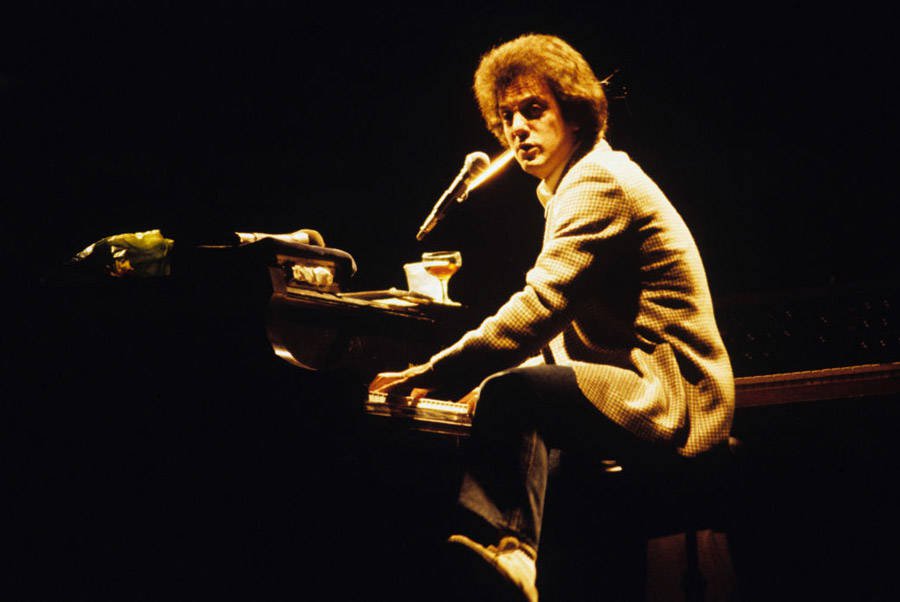
Billy Joel was Billy Joel for those of us who were young in the 70s and 80s. He was so ubiquitous that we never really considered him a man who just happened to be an artist. We’ve all heard about how many records the man sold, and we just kind of yawned. Every time he cranked out another song, we all heard too often on the radio, it was but another Billy Joel song that we loved, but it left you with a “What do you want me to do with this?” response. When we’re there, in the moment, we don’t recognize how hard it is to keep creating great songs. We all thought it was just something Billy Joel did. Some men wash dishes for a living, others prepare taxes for others, and Billy Joel writes songs that stick in your head like peanut butter.

Seeing these songs chronicled in the And So it Goes documentary on Billy Joel, as opposed to hearing it in yet another greatest hits compilation, gave us a new perspective on this man. We watched it with a “I forgot about that song” and “That’s right, he wrote that one too” reaction that struck me as if I never considered that he wrote all of those songs. Billy Joel was so prolific for about twenty-two years, at a near album a year pace, that he defined a generation.  

Billy Joel was also trapped in the 70s and 80s when we could say there were so many great artists coming out with new music nearly every year. Even in that vein, Billy Joel was one of the few pillars of commercial dominance. He is the fourth bestselling solo artist in U.S. history, his Greatest Hits I and II still ranks as one of the bestselling albums of all time, and he’s in the Rock and Roll Hall of Fame.  

The market was so stratified back then that we were all satisfied; the pop fans, rock fans, punk rockers, new wavers, etc., all had their favorite artists. It was such a prolific era that we can only appreciate in hindsight. I loved it at the time, but it also felt like it was just that way, and it always would be. At the risk of sounding like an old man, I think it’s just different now.   

Even after watching And So It Goes, I still wouldn’t put Billy Joel in my personal pantheon of greatest musical artists of all time, but the magnitude of his discography, as displayed in And So it Goes, makes a compelling argument that he was one of the best of his generation, and if you told me you thought that before I saw this documentary, I probably would’ve scoffed at you. My biggest takeaway from this documentary was that this 70s/80s era was just packed with so many great artists coming up with song after song and album after album that we thought this was just the way things would be forever. It hasn’t worked out that way, but what an incredible time it was to be a kid listening to all of that incredible music for the first time. Those artists seemed like machines, but documentaries like this one, and others, remind us that real humans did this, and that we should cherish them for what did for us back then. 

The Frivolous Fun of 80s Hair Metal


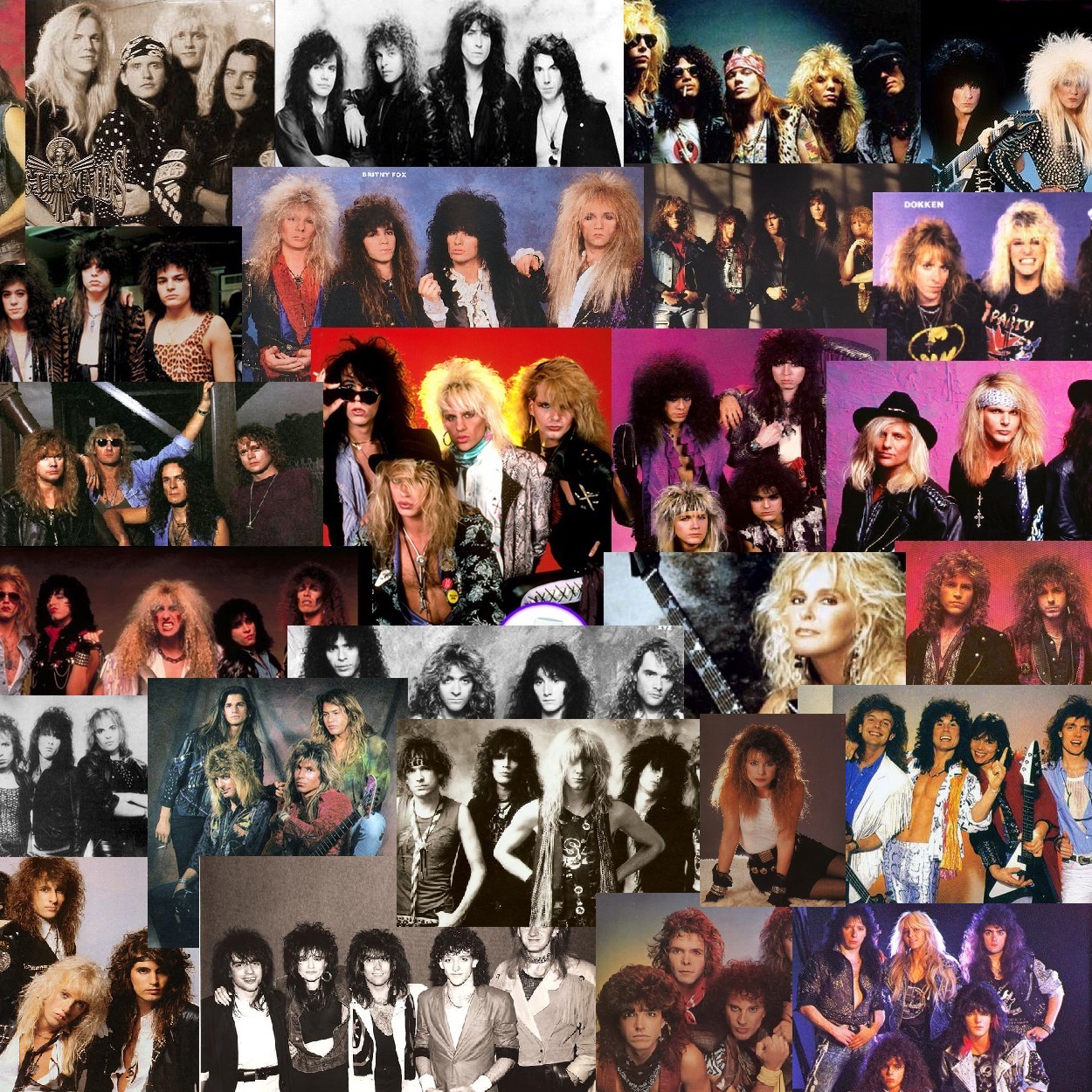
They were hairy and kooky, obnoxious and a little spooky, the metal bands of the 80s. As fashionable as it was to love these (mostly) L.A.-based heavy metal in the 80s, it became just as fashionable to openly despise them in the 90s.

I loathed them too, until a young co-worker, who was discovering them for the first time, said, “Hey, they’re not [Bob] Dylan, or [John] Lennon, I get that, but c’mon, they’re fun.” I immediately dismissed that line, because the guy was a doofus. His musical tastes did not define his doofosity, but it was everything else that led me to dismiss just about everything that came out of his mouth. Yet, to my amazement this simple line, from such a simpleton, fundamentally changed the way I listen to music today. I went through a they’re-not-this-that-or-the-other-thing phase, until I eventually turned into a “C’mon, they’re fun” guy too.

I’d love to write, right here, that the self-indulgent critics’ call for important, meaningful music, never got to me, but the pressure to denounce hairy metal from the 80s came from every “cool kid” corner of my life. Prior to loathing them, I went through a long and expensive heavy metal phase when I was a teen. I spent almost all of my minimum wage paychecks on cassette tapes of every major, and many minor Los Angeles-based, hair, glam metal band out there.

When I aged out of it, I sought serious, brilliantly complex music, but when doofus said what he said, I realized that I was trying to make myself into a serious adult, because I wanted adults else to take me seriously. Doofus reminded me that we can all seek complex arrangements in our music from artistic musicians, but let’s not forget to keep it fun. 

With his succinct condemnation of my self-importance and self-indulgence, doofus reminded me of the simplistic brilliance of all those years ago. The book Nothin’ but a Good Time also reminded me, more recently, that the hairy, glam metal music of the 1980s never claimed to be anything more than what it was. Say what you want about the bands of this era, and the music they wrote, but they never tried to be vital or important. They never wrote a seven minute opus on the Fall of the Roman Empire and how it might correlate with the modern rise of technology. The music of the Los Angeles-based hair bands were all about having a party, abusing their body with whatever substances they could find, having random and consensual, conjugal visitations, and any other forms of excess they could find to have a good time. The book also pointed out that they didn’t mind practicing what they preached.    

Shortly after I grew out of my love of hairy metal, I sought clever and complex music, but I’ve never enjoyed deep songs with meaningful lyrics. This might be a result of listening to so many thousands of hours of metal music in my teens, but I have always considered deep, meaningful songs so silly. They do nothing for me. Most of the time, when I hear a lyricist attempt to write deep, profound lyrics, I think of Fredo from The Godfather, “I’m smart! Not like everybody says… like dumb… I’m smart and I want respect!” 

We’ve all read critics pour through lyrics for the deep meaning the author intended, but most of them either have something to do with something political or social, or they contain some oblique, or over the top, reference to drug use. I listen to that music, and I repeat it numerous times, but the lyrics don’t affect me in anyway. Vocals, and vocal inflections, should be used as another instrument in a song. If they do it well, I’ll listen, but I don’t understand why we should care what Thom Yorke of Radiohead has to say about his view of the world any more than we do Bret Michaels of Poison. In this vein, Michaels’ lyrics might be more respectable, because he doesn’t engage in any of the “look at me, ain’t I smart?” type of the self-indulgent lyrics we find in Yorke’s work. 

Most of the “vital and important” music critics of the era loathed heavy metal, but we didn’t really care. We didn’t need Nothin’ But a Good Time, and that served to undermine the power of the music critics. The critics knew that most of the hairy metal bands didn’t know how to play their own instruments, and they panned them for not only ignoring socially significant issues but damaging some. They loathed these bands for thumbing their nose at consequential issues, and they deemed them inconsequential. No one I knew cared. We wanted to play heavy metal music at our parties, and we wanted to play that same music in our cars on the ride home from work to remember those parties. The book Nothin’ But a Good Time reminded those of us who loved it that there was a time when we didn’t take ourselves so seriously, and we knew we weren’t vital and important. We were silly and stupid, because we were kids, and we wanted our music to be silly and stupid too. We didn’t want to hear what critics said we should be.  

How bad were the hairy metal bands of the 80s? How good were they? It depends on who you ask and when you asked them. As the book points out, the era was all about timing. Those who were in a Los Angeles-based heavy metal band between 1984 and 1988 learned how the other half lives for a while, and they indulged in every excess they could think up. If a heavy metal, glam band had all of the above and they released an album as late as 1989 to 1990, a major record label probably signed them, but every album they made went straight to the $.99 bin. The idea that sales are all about timing is not a novel concept of course, but was any rise-and-fall of a musical genre as stark as what happened to heavy metal in the 80s? Disco? maybe. 

Were Motley Crue (‘83), Ratt (’84), Poison (‘85) that much better than Bang Tango (’89), Junkyard (’89), or Dangerous Toys (’89)? When we listen to classic rock radio today, which bands do we hear? How many of us even know the latter three? One would think that if the latter bands had music that was just as good that they would eventually rise to some levels of prominence. They didn’t, in part, because the more prominent bands of the era tapped into a time and place of the zeitgeist that will presumably never die in some quarters. 

What happened in the intervening years, some of those band members interviewed in Nothin’ but a Good Time say the dynamic in the industry experienced a subtle shift when Guns N’ Roses changed it a little in 1987. Others not in the book, say the industry tilted further away from the “Rock and Roll all nite and party every day” rock theme when the funk-rap hybrid bands Faith No More (’89) and Red Hot Chili Peppers (first noteworthy album ’89) arrived on the scene, but most acknowledge that the Seattle, grunge movement led by Nirvana’s Nevermind in 1991 sounded the death knell of the hairy metal of the 80s.

To read about 98% of most modern critics, the modern reader might believe that Kurt Cobain single-handedly killed ‘80’s hairy metal. The critics write this, I think, because they loved everything about Cobain, Nirvana, and the single Smells like Teen Spirit. They love the narrative that ten minutes after Smells like Teen Spirit aired on Mtv, everyone knew the heavy metal movement was over. Some of the artists interviewed in this book, however, suggest that Slash might’ve done more to end the mid-80s version of hair metal than Cobain. I consider that an intriguing notion, considering that most put the heart of heavy metal’s reign over the music industry between ’84 and ’89, and that it began to wane two years before Nevermind was released. As factual as that statement appears to be, according to record sales and Mtv plays, it’s not as compelling as the narrative that suggests one band, one man, and one song ended it all. Others claim that other Seattle artists Mother Love Bone, Alice in Chains and Soundgarden did something so different in the years preceding Nevermind that they laid the times-they–are-a-changing groundwork to pave the way for Nevermind. Some musicians claim that the King’s X 1989 album Gretchen Goes to Nebraska laid the groundwork for what some call the Seattle sound, and others call grunge. Regardless the who, what, and whens of the argument, most agree that Nevermind did put the final stake in the heart of the dying carcass that was the hairy metal of the 1980s.

***

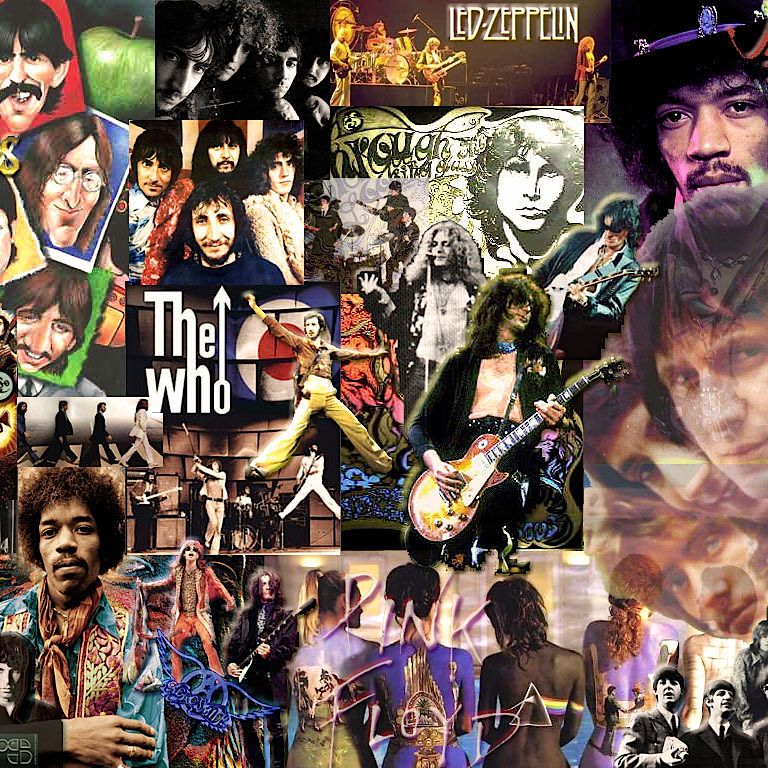
As compelling as the argument of the death of heavy metal is, the tale of the birth of heavy metal might be as interesting. Almost every artist of the era lists Aerosmith and Led Zeppelin as the forefathers of their sound, and others state that the first Black Sabbath album, AC/DC’s Back in Black, and Quiet Riot’s Metal Health, and Twisted Sister’s Stay Hungry all played a role. The over-the-top looks, the stage theatrics, and the simple, arena, sing-a-long rock songs intended for nothing but fun, however, belong to KISS. Put simply, if KISS didn’t rule the airwaves of the 70s, the early hair metal movement of the 80s probably doesn’t happen. 

Nothin’ But a Good Time mentions KISS a couple of times, but for the most part this book strives to cover the scene in this era, and it provides little backdrop for who (other than Quiet Riot and Twisted Sister) might have inspired it. Yet, if KISS inspired the early years of the movement, it would be a stretch to say they were the catalyst for the entire era. KISS came out in ’73, and they hit their peak commercial value between ’75 and ’77. Why did it take seven years for bands like Poison and Motley Crue to take their influence to platinum success?   

The missing link, in my humble opinion, arose from a subtle shift the British band Def Leppard made away from their more traditional heavy metal sound from the KISS, AC/DC sound to the more polished, David Bowie, T. Rex catchy pop-metal sound that proved more radio friendly when they made the relatively successful High N’ Dry in ’81. In ’83, Def Leppard took that concept up a notch with the release of Pyromania. That album’s success did not happen overnight, but in my world, no one I knew had ever heard of a group called Def Leppard on Thursday, but by Monday, everyone I knew was wearing the Def Leppard Union Jack sleeveless T-shirt. The groundswell was almost that immediate.

The primary difference between Def Leppard and KISS, in my world, was defined by every teenaged girl I knew. I knew teenage girls who liked KISS, especially the song Beth, but when Def Leppard put Pyromania on the shelves, every girl I knew suddenly loved a rock band. When the songs from Pyromania hit the radio, it was the closest thing to Beatlemania that I’ve ever experienced. Every teenage girl I knew listened to Pyromania and when teenage girls love something that much, teenage boys pay attention, and they eventually learn to love it. 

The success of Def Leppard’s Pyromania (’83) led to Poison’s success (in ’85), and Motley Crue’s shift from their KISS-inspired (’83) album Shout at the Devil to the more female friendly Theater of Pain (in ’85). The formula Def Leppard set (by selling 6 million albums at the time) was to release a hard rock single followed by a more radio friendly ballad led every 80s heavy metal act who followed, to include a more female friendly ballad. (This formula started before Def Leppard, but they appeared to reignite it.)

The book Nothin’ But a Good Time begins right about here. The book doesn’t mention the integral role that I think Def Leppard played, but after the success of Pyromania, every major label tried to sign their own version of Def Leppard/KISS between 1984 and 1988. Most metal bands signed during this era went gold (selling 500,000 units sold), and some went platinum (1,000,000 units sold) to multi-platinum. As evidence of how crazy this signing spree became, a member of a band called Bang Tango said, “We weren’t even a real band when we were signed, and we had to learn quickly.”

Were most of the 80s hair metal bands ridiculously excessive? Were they politically incorrect? Did they have the lyric “baby” in every song, at least once? Were they everything critics loathe? The answer is D, all of the above. No one cared. When I write that we didn’t care about the critics, that shouldn’t be limited to the “who cares what the critics think?” trope that bands drop about critics. I’m talking about genuine, almost total obliviousness. We may have dropped a “You know the critics hate these guys right?” To which, the other guy would say, “Really? No, I didn’t know that.” And that was the end of the discussion in the non-cerebral and non-political party we teenagers were all having for a majority of the mid-80s.    

At some point, the party we were all having with the L.A.-based, hair metal, glam bands had to end. The definitions of when and how this happened differ, but it did end. Some bands were still being signed to major record companies, and in this book those bands said that they paid their dues, and they felt like they wrote a decent album, but the record company didn’t promote them the way they might have just two years prior. They claimed that they were just as talented, or more so, than other bands who made millions two years prior. They missed the signing spree, and the multi-platinum awards for any band who could string together a halfway decent heavy metal ballad. They missed the crucial money making part of the era by about two years.

For those of us who were young and easily-influenced teenagers during this era, the polished pop metal to heavy metal music they produced will always be “ours”. It seduced us into believing life could be fun, and that it could be one big party that doesn’t have to end. Logic dictates that everything must end, however, and there came a point when glam metal needed to die. An era defined by excess eventually became so excessive that it became a parody of itself, and those of us who once loved it developed a love/hate relationship that eventually came to an end when young, rock enthusiasts reminded us how fun the music from the era used to be. Even with that, however, some of the artists interviewed in the book Nothin’ But a Good Time now admit that it became obnoxiously excessive, and it had to die under its own weight. Someone had to come along and burn the field to prepare for the harvest of something different and new. These facts about life and art can be as hard to accept as they are to deny, but as the book states a number of the top-tier bands of that era have experienced a certain rebirth from younger crowds who missed it the first time around and older crowds who seek the nostalgia of the acts. 

“Write jokes, get paid,” was the philosophy Jay Leno followed throughout his career in comedy. He also preached this to his fellow comedians who thought they could and should use comedy to change the world. “Thats all such nonsense.” Leno reportedly replied. “It’s all about write jokes, get paid.” The glam metal of the ’80s followed this philosophy. They wrote fun, little meaningless songs that they hoped young people would enjoy so much that they might run to their local record store and buy, and we did, by the millions. The music was not important, vital, or consequential, but those of us who lived through the era thought it as a lot of fun. When we comb through music timelines, with critics who write such things, we’ll never see them list our favorite artists on the “most influential artists of the eras” lists they write. Those of us who lived through the era know what a ridiculous time it was in music, in terms defined by music critics, but if we were to write a eulogy on the time period, we might say something like, “Was it a meaningless era that focused on a lot of dumb, superficial stuff? It was, but that was the kind of party we were having back then. Sorry, you missed it.”