The Killing Kind: Caligula


The most powerful man in the world wasn’t just mad, he was raging. His furious anger stemmed from the fact that Roman law prohibited him from killing whomever he pleased. The law stated that he could only murder non-citizens, prisoners of war, and slaves, and he had Romans saying he wasn’t just wrong, but corrupt. He didn’t think the most powerful man in the world, at the time (AD 37-41), should have to put up with that. To right this wrong, the emperor of Rome, Gaius Julius Caesar Augustus Germanicus, better known as Caligula, created a law that would allow him to kill whomever he damn well pleased.

After issuing this law, Caligula didn’t just want to kill dissenters, detractors, and other enemies, he wanted to send a message. He commissioned the purchase and shipment of five of the largest lions that his minions could find to be shipped from North Africa to Rome. They found five five-hundred-pound lions. Reports suggest he ordered lions, based on what his advisors called “Their unique dietary habits. Tigers and panthers kill before consuming flesh,” they informed him. “Lions prefer devouring their prey while it is still alive.” We’ve all watched these scenes play out on TV, a tiger stalks their prey, and after catching them, they go for the throat to suffocate their victims before gorging on them. They do this, for the most part, to prevent getting injured during the skirmish. Caligula’s advisors informed him that Lions don’t have such concerns. They informed him lions “prefer devouring their prey while it is still alive.” While this is not necessarily true, the promise of excruciating agony thrilled Caligula, and he wanted that scene, and that amplified message, sent to all future opponents.

We can speculate that Caligula’s opponents informed some elements of the historical record, as often happens in the years following the end of a world leader’s rule. Some of it might be 100% true, some of it might be based on the truth but exaggerated, and some of it might be hearsay and outright fiction. If this characterization is even close to the truth, however, we can guess that Caligula also chose lions, because he thought they would provide great theatrical value. The record states, in numerous places, that Caligula had a particular fondness for blood and all of the screaming that comes from long and intense torture.

Caligula chose five lions for the five most pesky, annoying and frustrating dissidents who challenged his authority on a routine basis. He alleged that they were engaged in a plot to depose him. Caligula also knew that anytime we deal with nature, they’re unpredictable. He was probably advised that there is the possibility that these lions might do nothing when they see humans, and that his show could fall flat. To assure maximum entertainment for himself, and his audience, Caligula ordered the lions’ handlers to avoid feeding them for the three days preceding the event.

For all the theatrical torture Caligula planned, there were no public mentions of bloody carnage he planned. There were no mentions of it on the billboards Caligula commissioned scriptores (professional sign painters) to create, or in the pitches heralds were commissioned to shout in forums or streets. There was also no mention of whether this was a pay-per-view event, as Caligula carried on the tradition of making entry free for all audience members.

The billboard and heralds did not advertise violence for violence’s sake, as historians like Suetonius portray Caligula as craving chaos in the arena, such as beating a gladiator manager to death slowly or burning a playwright alive mid-performance. They characterize Caligula as someone who preferred spontaneity when it came to the violent scenes involved his shows. Did it make him feel more powerful to order a playwright to be torched in the middle of his reading, or did he just get bored? The historians characterize most of the violence occurring during Caligula’s events as those resulting from impulsive orders to liven matters up a little, as opposed to any form of proactive promotion to attract crowds.

When the event Caligula planned since the day he put the law in place finally took place, the five dissidents who dared speak out against Caligula were given short swords in defense, but as with most brutal sports, the purpose of giving them short swords was to prolong the event. They proved more ineffective than Caligula imagined, as the five starved, five-hundred-pound lions devoured the dissidents in twenty-five minutes, not as long as the average situation comedy of the modern era.

Caligula found the sight of the ferocious power of the lions, blood, and all the screaming, thrilling, but after all of the planning and work he put into the event, he was disappointed that it was all over so fast. As a man who enjoyed theatricality, we can only guess that he was divided over being personally bored and worried that his audience may have found his event boring.

During the intermission, Caligula summoned the arena guards to his private suite, and he ordered them to invite individuals in the packed, 15,000 capacity amphitheater to participate in a second act with the lions. (The record does not clarify if Caligula selected the individual audience members to invite, or if he allowed the guards to select them randomly. It does state that at times, he ordered entire sections to participate in events.)

How random was random might be the first question the invited asked. Did random mean that the arena guards selected some who were loyal to the emperor, others who weren’t, and everyone in between? If random is truly random, did the guards choose women and children? We don’t know. No matter who those first randomly chosen participants of the second act were, we guess that they had some questions for the guards, as they were being led through the chambers to the floor of the amphitheater. We can guess that they probably thought that they were all a part of Caligula’s wild and crazy sense of humor. They probably guessed that he would stop the proceedings at the last second and have a laugh at their expense. They may have flirted with the notion that this was a test of their loyalty to the emperor, and they probably tried to outmatch each other in displays of loyalty. Whatever the case was, they realized they were wrong when the lions began encircling them.

When they began screaming and pleading for mercy, Caligula found that as entertaining, if not more than the first act. He probably tried to remain stately, but as the lions began ripping them apart, he couldn’t control his laughter anymore, as they cried and screamed. Did the audience laugh cheer at the spontaneous spectacle of this second act, according to the record they did. The question is why? Did they have a bloodlust that enjoys any and all bloodsport, or did they fear if they didn’t cheer, they could be next?

If this is all true and not exaggerated, we could say that TV has saved countless lives since its invention, because an overwhelming majority of us just love violence. We have a need for violence coursing through our veins. It’s a part of our primal nature. We might watch it and cheer it on from our couch with some reservations, but we still cheer it on.

We have a couch, they had a sedes (Latin for seat) in an amphitheater. They watched Caligula’s show from a distance, we watch a TV programmer’s show from a distance. What’s the difference? Well, there’s fiction versus non, but what happens when a fictional shows’ creators fail to produce a realistic murder scene? We’ve all seen graphics that were a bit hokey, and an actor who failed to properly simulate the pain involved in their death scene. It’s a cheat, right? We say things like, “There’s ninety minutes of my life I’ll never get back!” We don’t mind it when creators use computer-generated-imagery (CGI) if it adds to our experience. If a creator can make it more real for us and provide us the satisfactory, vicarious experience of murdering someone, we’re all in. If the actor “Flopped like a fish out of water!” after being riddled with bullets, we might laugh in the same manner Caligula laughed at the screams and cries of the victims of the creative ways he found to cure boredom. And we may have both said, “Now that’s entertainment!” at the end of the show. If we say that and laugh in the company of someone else, they might say, “That’s just wrong on so many levels!” We might agree, but we both know that no one was actually harmed during this production, and we had our bloodlust for bloodsport satisfied. How many of us have left an excessively violent TV show or movie so satisfied that we no longer felt the need to commission the purchase of five, five-hundred-pound lions to rip our enemies apart? How many lives has TV saved?

When we hear people say we live in the best of times and the worst, the ‘yeahbuts’ talk about how they’d love to visit historical figures from the past. We get that, but what would we say to those historical figures? Would we inform a Caligula that history will not be kind to him? Would you tell him that that has a lot to do with his impulsive rage and the carnage that follows? Fortune telling and prophecy were so deeply woven into Roman life during Caligula’s reign that he might have viewed our claims as a visitor from the future as nothing more than a new branch of the whole fortune teller circuit. As evidenced by the historical record, Caligula did not deal with negative news in a rational manner, and our fact-based information about his legacy “from the future” could’ve landed us in the center of his show screaming and pleading our case with five, five-hundred-pound lions looking at us as an ideal way to curb their hunger.

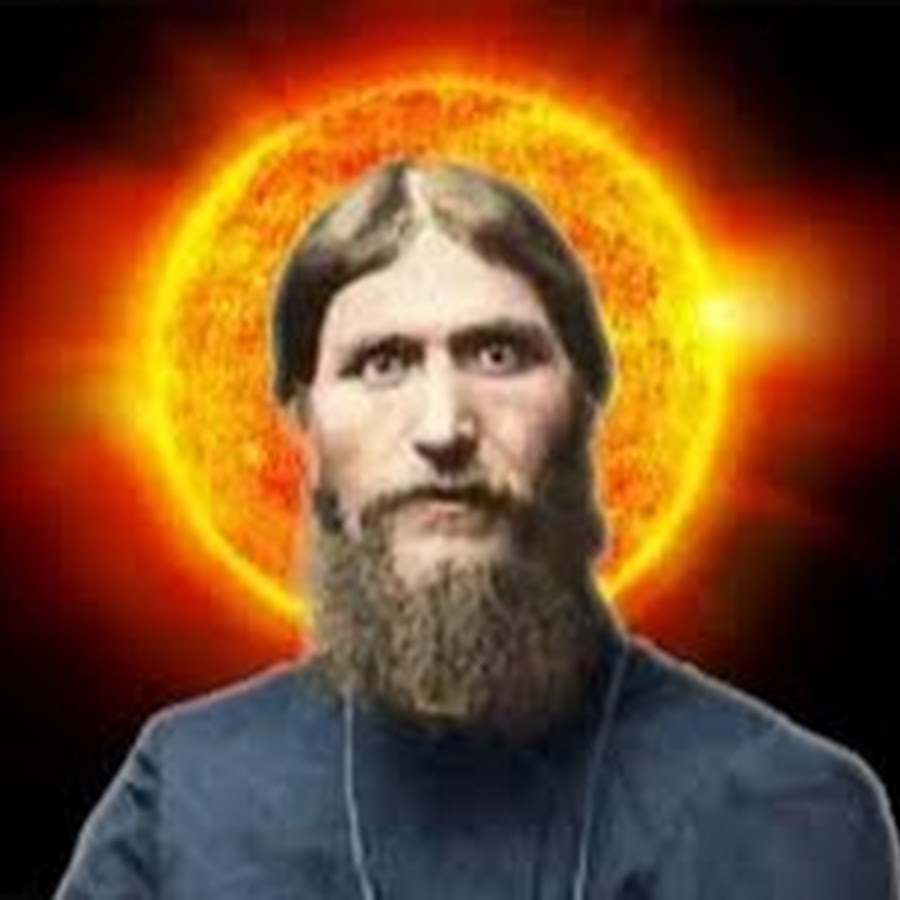
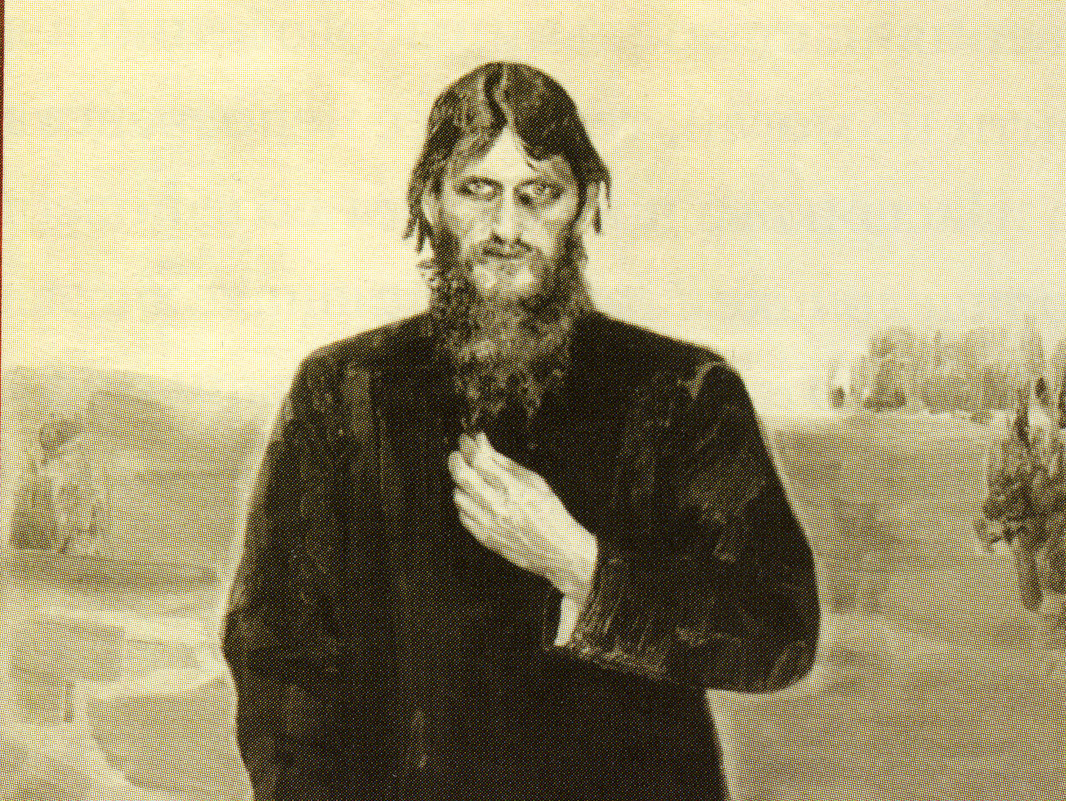
Grigori Rasputin V: Sorcerer or Charlatan?


“Was Gregori Rasputin really an occult mystic who used treacherous sorcery to ingratiate himself to Tsar Nicholas II by performing miracles on and curing the pain of the Tsar’s son? Or was he, no less impressively, a most gifted Counter-Agent who disarmed his country’s most powerful rulers through sheer charisma and manipulative charm?” –asks Adam Lehrer in the Safety Propoganda

“No!” say some historians. “Rasputin wasn’t any of those things. He was nothing more than a right time, right place charlatan.” Anytime one accuses another of absolute fraud, deceit or corruption, their first responsibility is to prove that the provocateur knowingly deceived. We can all read the conditions of the Russian empire at the time and see that they were susceptible and vulnerable to a charlatan. We can read through the health conditions of Tsar Nicholas II’s son, Tsarevich Alexei Nikolaevich, and know that the Romanovs were desperate for a miracle worker to spare him the pain and possible death of hemophilia. We can take one look at Rasputin, the ill-educated peasant from nowhere, Russia and know that if he didn’t do something spectacular, he was doomed to a life of anonymity, but there is ample evidence to suggest that Rasputin believed he had an ability, if not the otherworldly powers, to cure the Tsar’s son. To believe otherwise is to suggest that Rasputin knowingly deceived his family since birth, and the friends and neighbors who surrounded him in the early part of his life. There’s an old line on subterfuge that it’s not really a lie if you believe it. When we say this, we usually do so tongue in cheek, but Rasputin’s bio suggests that he truly believed he had God-like powers? “Christ in miniature,” Rasputin often said when asked to characterize himself. Was he a deceptive person? Did he attempt to deceive the Empress Alexandra, Tsarevich Alexei Nikolaevich’s mother, to weave a way into the empire, or did he attempt to prove to himself as “The Chosen One!”

At the moment of his birth, Rasputin’s mother believed he was the chosen one, and we can guess that she told him as much on a daily basis throughout his youth. We might cut her some slack for this fantastical notion, seeing as how Rasputin may have been her only child of seven, or eight, to survive childhood. (Evidence suggests she had a daughter who may have also survived for a time.) Anytime a mother has a child, they consider that child special, but in Rasputin’s Serbian village of Polrovskove death among children was so common that the miracle we know as childbirth was increased tenfold in that world of peasants. The idea that Rasputin was special may have grown in her mind as he did, until she was convinced that Grigori was a gift from God, and she eventually made a crossover to the idea that her son was the chosen one. 

What would we think if our mother told us we were God’s messenger throughout our youth? What if she bolstered her claim by telling us that at the moment we were born a rare celestial event occurred to mark the occasion of our birth. “A shooting star of such magnitude that had always been taken by the God-fearing muzhiks as an omen of some momentous event,” she said.

What if everyone we knew and loved growing up believed, as our mother did, that we were gifted with the ability to read minds, and/or “see things that others could not”. Rasputin grew up in a climate where everyone he encountered on a daily basis, and presumably throughout his life, believed he had divine powers. If we marinated in the thoughts of our own divine nature throughout our youth, how many of us would end our believing it? Our parents are powerful influences on our lives, and how we think, but as we age, we begin to see the errors of their ways. If Rasputin went through this natural course of maturation, his friends and neighbors in Polrovskove only bolstered his mother’s claims. Rasputin was also involved in a death-defying accident that took the life of his cousin. He spent years wondering aloud why he was spared and his cousin wasn’t. His conclusion, one which we can assume that his friends and family encouraged, was that divine intervention spare him, so he could go out and spread God’s message. 

When historians say Rasputin fell into a right place, right time era, they’re talking about an era that followed executions for anyone who attempted the heretical notions Rasputin espoused to a time when minds were just beginning to open up to the idea that man could manipulate his surroundings for the purpose of massive technological advancement. Those from the era also learned, mostly secondhand, of some of the advancements made in medicine that suggested man could wield God-like powers over life and death in a manner deemed heretical in previous eras. The early 20th century Russian citizen was likely more amenable than ever before to the belief that man could now manipulate the bridge between life and death, and generally make life better for his fellow man without necessarily being a heretic. Based on that, we could say that Rasputin was a right time, right place charlatan, or we could say he, more than any other, took advantage of this window in time. Those who call him a charlatan, however, must still address the notion that Rasputin knew he wasn’t the chosen one, and that he was lying to the vulnerable, desperate Empress Alexandra Feodorovna (Alix of Hesse) to convince her that he was. 

How did Rasputin discover that Tsar Nicholas II’s son, Tsarevich Alexei Nikolaevich was sick? The Russian empire, in the era of the Romanovs rule, was a vault. No state secrets, or leaks, found their way out, and the illness of the Tsarevich was one of the most guarded secrets. The Romanovs had nothing to gain by announcing their only male heir’s illness and everything to lose. Through the connections he made, as a man “known to possess the ability to heal through prayer” Rasputin was called upon to heal the Tsarevich by Anna Vyrubova, the empress’s best friend. Did Rasputin struggle with this newfound information, did he consider it his patriotic duty to try to save the young heir to the throne, or did he see this as an opportunity to finally prove himself to himself? If he failed to convince his family, friends and neighbors of his special powers, there was nothing lost. If he was a fraud, and he knew it, he would surely have a list of excuses he could use to explain it. If he failed the Empress, the embarrassment of trusting the health of her only begotten son to a lowly peasant could lead the Empire to try to silence any fallout by imprisoning Rasputin or executing him, and needless to say, this empire had no moral qualms executing peasants. Failing the empire, at the very least, would ultimately reveal to Rasputin and everyone else in the empire that he was a fraud and a charlatan. This presumed struggle goes to the heart of this article, because Rasputin eagerly accepted the invitation to try to heal Alexei. 

The arguments about what Rasputin did to eventually calm the conditions of Alexei Nikolaevich are wide and varied, but most historians agree that Alexei was never cured of his case of hemophilia, because there is no cure. To this date, modern medicine has yet to find a cure. Alexei had hemophilia the day he was born, and he had it when he was murdered, a month before his fourteenth birthday. The very idea that he almost made it to fourteen, and he could’ve lived well beyond that, had he not been murdered, was viewed as one of a series of Rasputin’s miracles. The fact that Alexei was relieved of his pain, and many of the symptoms of hemophilia, was also viewed as one of Rasputins’ miracles.

Some argue that Rasputin may have been so familiar with hemophilia that he knew certain techniques he could use to help calm the Tsarevich down, and thus give the illusion that he was cured. We still consider it something of a miracle that our body often manages to heal itself. Some call it the power of the mind, others call it the power of prayer, and still others call it the mysterious power of the miraculous machines in the human body to heal itself. No matter what we believe, it appears that in some cases, if our mind believes we are being cured, it can go a long way to encouraging us that we are. 

No matter the arguments, details, and conclusions, Rasputin did it. Rasputin did what the most brilliant minds of medicine in Russia, in the early 20th century, could not, and when he advised Alexandra on how to maintain Alexei’s health, and that advice proved successful, Alexandra fell under Rasputin’s spell. She thought he, more than any of the other men of medicine in the empire, could cure her son of a malady to which her side of the family was genetically susceptible. The idea that she believed Rasputin could cure her son, led her to convince her son of it, and that presumably led Alexei calming to the point that his hemophilia was not as debilitating as it would’ve been otherwise. So, Rasputin did help provide what Alexandra considered a miracle, but our modern understanding of the relationship between body and mind suggests that it was not as mystical or unprecedented as Alexandra and those who love the narrative want us to believe.

The interesting nugget here, and the import of this story, is that Alexandra may have followed Rasputin’s advice on how to cure her son so often that she may have also followed his other advice on greater matters of the Russian Empire, and she may have whispered that same advice into Tsar Nicholas II’s ear as if it were her own. 

“What was he?” “Who was he?” “What exactly did he do to spare the life of the Tsarevich?” “Was he the most gifted sorcerer the world has ever known?” How great was his influence over Alexandra? Reports suggest he had no influence over Nicholas II, but Alexandra did. Did Rasputin whisper things in Alexandra’s ear that she whispered into Nicholas II’s, as if they were her own ideas. British intelligence believed this, and some suggest that the Britain commissioned Rasputin’s murder, because they feared his influence in the Romanov Empire might prevent Russian entry into World War I?

We’ll probably never know the truth of any of this, because the Romanovs had a situation in their empire where they were able to control their narrative. They had very little in the way of leaks, and no one from the empire wrote a tell-all after the empire collapsed to detail what really happened within the confines of its walls. It was a situation modern politicians would salivate over, but historians, not so much. As a result of the tight Romanov ship, most of the literature written about this Russian era and the relationship between Rasputin and the Romanovs involves a great deal speculation. That’s the fun part for the rest of us, because we can use the base details of what happened and submit our own subjective beliefs into the story for fantastic and fantastical conclusions. One of us can speculate that Grigori Rasputin was a sorcerer with otherworldly powers, another can say he was an absolute charlatan, and the rest of us can say that the man landed in the perfect time and place for nature of his actions are almost impossible to prove or disprove. The one thing we can state without fear of too much refutation, is if we took all of these ingredients and threw them into a big stew of rhetorical discussion, is that Grigori Yefimovich Rasputin was one of the most enigmatic figures in world history.   


Historical Inevitability


The idea that history is cyclical has been put forth by numerous historians, philosophers, and fiction writers, but one Italian philosopher, named Giovanni Battista Vico (1668-1744), wrote that a fall is also an historical inevitability. In his book La Scienza Nuova, Vico suggested that evidence of this can be found by reading history from the vantage point of the cyclical process of the rise-fall-rise, or fall-rise-fall recurrences, as opposed to studying it in a straight line, dictated by the years in which events occurred. By studying history in this manner, Vico suggested, the perspective of one’s sense of modernity is removed and these cycles of historical inevitability are revealed.

To those of us who have been privy to the lofty altitude of the information age, this notion seems impossible to the point of being implausible. If we are willing to cede to the probability of a fall, as it portends to a certain historical inevitability, we should only do so in a manner that suggests that if there were a fall, it would be defined relative to the baseline of our modern advancements. To these people, an asterisk may be necessary in any discussion of cultures rising and falling in historical cycles. This asterisk would require a footnote that suggests that all eras have creators lining the top of their era’s hierarchy, and those that feed upon their creations at the bottom. The headline grabbing accomplishments of these creators might then define an era, in an historical sense, to suggest that the people of that era were advancing, but were the bottom feeders advancing on parallel lines? Or, is it possible that the creators’ accomplishments might, in some way, inhibit their advancement?

“(Chuck Klosterman) suggests that the internet is fundamentally altering the way we intellectually interact with the past because it merges the past and present into one collective intelligence, and that it’s amplifying our confidence in our beliefs by (a) making it seem like we’ve always believed what we believe and (b) giving us an endless supply of evidence in support of whatever we believe. Chuck Klosterman suggests that since we can always find information to prove our points, we lack the humility necessary to prudently assess the world around us. And with technological advances increasing the rate of change, the future will arrive much faster, making the questions he poses more relevant.” –Will Sullivan on Chuck Klosterman

My initial interpretation of this quote was that it sounded like a bunch of gobbeldy gook, until I reread it and plugged the changes of the day into it. The person who works for a small, upstart company pays acute attention to their inbox, for the procedures and methods of operation change by the day. Those of us who have worked for a larger company, on the other hand, know that change is a long, slow, and often grueling process. It’s the difference between changing the direction of a kayak and a battleship. 

The transformational changes we have experienced in technology, in the last ten years, could be said to fill a battleship, occurring with the rapidity of a kayak’s change of direction. If that is true, how do we adapt to them at such a breakneck pace? Those 40 and older can adapt to change, and we incorporate those changes into our daily lives at a slower pace. Teens and early twenty somethings are quicker and more eager to adapt and incorporate the latest and greatest advancements, regardless the unforeseen, and unintended consequences.

Some have suggested that if the technological changes we have encountered over the last 10 years occurred over the course of 100 years, we might characterize that century as one of rapid change. Is it possible for us to change as quickly, fundamentally, or is there some methodical lag time that we all factor in?

If we change our minds on an issue as quickly as Klosterman suggests, with the aid of our new information resources, are we prudently assessing these changes in a manner that allows us to examine and process unforeseen and unintended consequences before making a change? How does rapid adaption to technological change affect human nature? Does it change as quickly, and does human nature change as a matter of course, or does human nature require a more methodical hand?

These rapid changes, and our adaptation to them, reminds me of the catch phrase mentality. When one hears a particularly catchy, or funny, catchphrase, they begin repeating it. When another asks that person where they first heard that catchphrase, the person that now uses the catchphrase so often now that it has become routine, say they don’t remember where they heard it. Even if they began using it less than a month ago, they believe they’ve always been saying it. They subconsciously adapted to it and altered their memory in such a way that suits them.  

Another way of interpreting this quote is that with all of this information at our fingertips, the immediate information we receive on a topic, in our internet searches, loses value. One could say as much with any research, but in past such research required greater effort on the part of the curious. For today’s consumer of knowledge, just about every piece of information we can imagine is at our fingertips. 

Who is widely considered the primary writer of the Constitution, for example? A simple Google search will produce a name: James Madison. Who was James Madison, and what were his influences in regard to the document called The Constitution? What was the primary purpose of this finely crafted document that assisted in providing Americans near unprecedented freedom from government tyranny, and rights that were nearly unprecedented when coupled with amendments in the Bill of Rights. How much blood and treasure was spent to pave the way for the creation of this document, and how many voices were instrumental in the Convention that crafted and created this influential document?

Being able to punch these questions into a smart phone, and receive the names of those involved can give them a static quality. The names James Madison, Gouvernor Morris, Alexander Hamilton, and all of the other delegates of the Constitutional Convention that shaped, crafted, and created this document could become nothing more than answer to a Google search. Over time, and through repeated searches, a Google searcher could accidentally begin to assign a certain historical inevitability to the accomplishments of these otherwise disembodied answers. The notion being that if these answers aren’t the correct answers, another one could be.

Removing my personal opinion that Madison, Morris, Hamilton, and those at the Constitutional Convention the composed the document, for just a moment, the question has to be asked, could the creation of Americans’ rights and liberties have occurred at any time, with any men or women in the history of our Republic? The only answer, as I see it, involves another question: How many politicians in the history of the world would vote to limit the power they wield, and any future power they might attain through future endeavors? How many current politicians, for example, are likely to vote for their own term-limits? Only politicians who have spent half their life under what they considered tyrannical rule would fashion a document that could result in their own limitations.   

How many great historical achievements, and people, have been lost to this idea of historical inevitability? Was it an historical inevitability that America would gain her freedom from Britain? Was the idea that most first world people would have the right to speak out against their government, vote, and thus have some degree of self-governance inevitable? How many of the freedoms, opportunities, and other aspects of American exceptionalism crafted in the founding documents are now viewed as so inevitable that someone, somewhere would’ve come along and figured out how to make that possible? Furthermore, if one views such actions as inevitable, how much value do they attach to the ideas, and ideals, created by them? If the answers to these questions attain a certain static inevitability, how susceptible are they to condemnation? If an internet searcher has a loose grasp of the comprehensive nature of what these men did, and the import of these ideas on the current era, will it become an historical inevitability that they’re taken away in a manner that might initiate philosopher Vico’s theory on the cyclical inevitability of a fall?

I’ve heard it theorized that for every 600,000 people born, one will be a transcendent genius. I heard this quote secondhand, and the person who said it attributed it to Voltaire, but I’ve never been able to properly source it. The quote does provide a provocative idea, however, that I interpret to mean that the difference between one that achieves the stature of genius on a standardized test, or Intelligence Quotient (IQ) test, and the transcendent genius lies in this area of application. We’ve all met extremely intelligent people in the course of our lives, in other words, and some of us have met others who qualify as geniuses, but how many of them figured out a way to apply that abundant intelligence in a productive manner? This, I believe, is the difference between the 1 in 57 ratio that some have asserted is the genius ratio and the 1 in 600,000 born. The implicit suggestion of this idea is that every dilemma, or tragedy, is waiting for a transcendent genius to come along and fix it. These are all theories of course, but it does beg the question of what happens to the other 599,999 that feed off the ingenious creations and thoughts of transcendent geniuses for too long? It also begs the question that if the Italian philosopher Vico’s theories on the cyclical nature of history hold true, and modern man is susceptible to a great fall, will there be a transcendent genius who is able to fix the dilemmas and tragedies that await the victims of the next great fall?