Comfortably Vague 


“If you want to be hilarious, someone has to get hurt,” is something I used to say. “You can be slightly humorous with a knock-knock joke, and quick comebacks might earn you the title clever, but if you want to be truly hilarious, your goal should be offending people and grossing them out.” I used to think that, believe it, and say it all the time, because I thought it was provocative and so true, until I saw someone go after another. They were so savage that I realized causing someone actual pain was not as funny as the theoretical idea of it. I amended my theory by adding, “As long as you’re the victim, because there’s nothing better than a well-timed mean-spirited, self-deprecating joke.”

“And the comedy is in details,” I would add when I heard people keep their stories comfortably vague. “Why would you even tell me this great story about an embarrassing part of your life and leave out the details? That’s like going out to a restaurant and ordering potatoes with a side of broccoli. I like broccoli as much as the next guy, but what’s the difference between broccoli at a restaurant and broccoli at home? No one I know goes out on the town for a head of broccoli. We want the meat.”

When I say stories, I’m talking about those casual, fun stories that two fellas share while sitting in the stands at a baseball game. I’m talking about those tales that are so embarrassing that you may not know the comedic value of them until you say them out loud. They’re the funny ones that get the other fella laughing. Some of us leave out the details of those stories, because they reveal our vulnerabilities. Once we lay those tails out, and the other guy starts laughing his tail off, it can be strangely liberating. The two of us are there, mentally, picturing you in the moment while you remember all of the finer details of your truly embarrassing moment in life, and if you deprive us of those details, it’s the literary equivalent of slamming the door on the best room of your house as you give us a tour.

If you’re anything like me, and you’re in the midst of hearing one of these stories, we don’t want it to end, so we ask them leading questions. Not only do we want to be with them, in the moment, but we want to help them help us find their story entertaining. So, we ask leading questions, such as, “Really? What did you think of that?” or “How did that affect you?”

We ask specific, situational questions that specifically pertain to the other’s story, and some of us have asked these questions for so long that that’s just kind of who we are. We ask active listening questions that some might confuse with those from a psychotherapist, an investigator, or that incredibly annoying person who can’t let someone finish a story without asking five-to-ten questions while they’re trying to tell it. Unlike most quality professionals, however, we only ask such questions to serve the comedy of the story, as opposed to anything that serves a purpose. Were not tracking our subjects through the trials and tribulations of their life to help them find their core, so they might find their way back to greater mental health. We just want the funny.

If you’re anything like me, you crave funny tales about foibles and failures, because there’s something so interesting about a person who is not afraid to let their guard down and tell you who he really is. We do have to be careful, or if careful isn’t the right word, and it usually isn’t when it’s just two fellas telling each other what a foible he is, how about strategic. We need to qualify such questions by saying, “We’ve all done stupid stuff. Trust me, we’ve all done what it takes to go from idiot to a total idiot.” When we drop a line like that, and we mean it, we develop a temporary bond that can lead our storyteller to test the parameters of that line. 

The only thing I love better than a story full of failure and foibles, is an in-depth exploration of those failure and foibles, and if you’ve read any other articles on this site, you know that I’m not the type to just sit there and feed on another’s carcass. I lead the charge and set the template. In doing so, I make the other person feel more comfortable talking about their own failures and foibles.

Once the two of us lay the groundwork of our hilarious misadventures, we spend the rest of the evening trying to top the stories we’ve both told thus far, and neither party cares why we’re trying to do that as long as they’re funny. This builds until somewhere around the second inning, we start to make a thematic connection. Then, somewhere around the fourth inning, after the second beer is partially consumed, the stories become a little more personal as we become a little more vulnerable, and we achieve the next plane of funny together. Shortly after that second round, we’ve also established the idea that we’re not just good listeners, we’re actively engaged in the other’s stories. The two of us become so good at it that we breed a level of trust and confidence in one another, until the competitive desires set in, and we try to make the other guy laugh harder than we did before. We don’t care if the details prove somewhat embarrassing at this point, so we dig deep into our story bank to find the most entertaining nuggets of our life so far. When they laugh, we know we’re really onto something. Neither of us knows what that something is, but we know it’s something worth exploring.

As much fun as these baseball nights can be, age and experience has taught me levels of restraint. I offer some of the details that I require of others, but I refrain from offering details that could prove so embarrassing that the next day at work is a little uncomfortable, and I expect them to do the same. I get as caught up as anyone else in these moments, but experience has taught me that there are details and there are details. Details are funny, as I’ve written, and they’re crucial to the quality story, but some details provide irreversible images that our audience will remember the next time they see us.

I’ve also learned firsthand, the hard way, to avoid too much poking and prodding, because once we convince a fella how entertaining he can be, some of us have trouble stopping. They’re not accustomed to someone finding them so interesting and entertaining, and their competitive desire to top their last story, or ours, can lead them to taking a step off that comfortably vague cloud and accidentally imprint an irreversible image in our brains.

When I’m in one of those conversations with a fella, and he’s dropping details of his failures and foibles on me, I’m so engaged that great plays and key moments in the baseball game we’re attending only serve to interrupt our fascinating discussion.

Roy and I talked about personal details from our lives, but we kept our details comfortably vague, because that’s just what fellas do at a baseball game. No one wants to lay out detail-oriented, personal problems at a baseball game, because we know no one wants to hear about all that at a baseball game. No one wants to go so deep that they end up with tears in their eyes at a baseball game, because as Tom Hanks said, “There’s no crying in baseball.”

Yet, most people can’t stop themselves. They have no governors on content, in the manner automobiles have governors on speed to prevent the vehicle from accelerating faster than programmed thresholds. They dig for more provocative details, because provocative details aren’t just funny, they’re hilarious, and what’s more provocative, embarrassing, and hilarious than misadventures in the bathroom?

Some people just love a great story about what happened to them during the waste removal process. The moment I start to hear them go down this road, my stop sign reflexively pops us, in the manner a stop sign automatically pops us when a train bypasses an indicator in its destination. I instinctively stop poking and prodding, and I try to change the subject, because I’ve learned that some men have no problem discussing their gastrointestinal issues (GI), as long as they’re funny, and they’re always funny to some. “Oh, c’mon, it’s nature!” they say. “Deer poop, dogs poop, even your beloved octopus has to excrete what its body can’t use.”

“That’s true, undeniably true, but for most of us their byproducts are not the reason we hike through nature preserves and swim in oceans,” I return. I say most of us, because I’ve met the exceptions on more than one occasion. I don’t know if it’s a talent, skill, or a preoccupation, but some men are wired in such a way that they can take any topic and turn it into a discussion of misadventures with waste removal.

Tommy Spenceri proved to me how pervasive his talent in this arena was when he told me about the highlight of a relatively expensive whale spotting cruise he attended. These cruises have become so popular that they’ve become an industry in some locales, generating over $100 million a year, and creating thousands of jobs for locals. Some of these tourists are almost spiritually moved at the very sight of the beast, others find the geyser of misty spray bursting skyward from its blowhole an almost religious experience, but Tommy’s wiring led him to find the size of the whale’s excrement the most memorable experience of that vacation. “You should’ve seen it, it was larger than my whole body,” he said with restrained excitement. “I’m serious, I could’ve dove into it Vitruvian Man and still not touched its outer rims.”

As the son of a man with such wiring, Tommy and Roy’s unusually obsessive preoccupation with the products of our biological functions was not new to me, but that didn’t mean I wanted to hear about it. So, the moment these discussions pop up, my stop sign follows suit. I switch my active listening skills into the off position, and I put the picks and shovels of my poking and prodding away. 

I’ve been relatively successful in this endeavor over the years, unless I’m at a baseball game drinking beer, and when I talk about beer I’m not talking about the standard beer that everyone drinks just to tie a buzz on. I’m talking about the delicious craft beer designed by master craftsmen who are so good at what they do that the results of their brainstorming, testing, and hard work go down so smooth that we miss all of the indicators that tell us to stop.  

I wasn’t drunk when the generally unappealing discussion of food poisoning began, but those delicious craft beers dulled my senses just enough that I accidentally ushered him on with my laughter. In a completely sober state, I know that the food poisoning discussion is a war story. It spawns the competitive, “You think you had it bad? Well, get a load of what happened to me,” as the two of us try to top one another with our experiences. Two beers in, and a discussion of food poisoning becomes a part of the funny conversations two fellas have at a baseball game. In that moment, Roy introduced the food poisoning discussion with an innocuous, comfortably vague version of his worst case, but I made the mistake of topping him with my story of an eighteen-year-old, living on his own for the first time.

“I was on my own for the first time, and I knew nothing about the proper ways to preserve meat.” I said. “No one effectively warned me that meat is basically poison when you leave it uncovered in a fridge for a couple days. The meat had little white spots on it, but I thought that the gallon of milk I had a shelf higher sprung a leak again. That happened about a week earlier, with a different gallon, and I just thought it happened again. I basically poisoned myself. The pain I felt from that bout of food poisoning was something I never experienced before or since. Not only did I question whether I was going to live through this, I kind of questioned if I really wanted to.”

That was it from my end, comfortably vague. I could’ve gone into detail, embarrassingly specific detail, but I didn’t want to go down that road. I didn’t want to go down that road, because that’s not what you do when you’re talking to a fella, over beers, at a baseball game, during an otherwise beautiful Friday evening.

Roy saw my move, and he decided to checkmate me with his “You think you had it bad …?” plank. My guess is Roy thought that the best way to top a relatively entertaining story that remained comfortably vague was to go into detail. The humor, Roy must’ve thought, is in the details. Roy must’ve thought that my story was the culinary equivalent of a potato with a side of broccoli, and to top mine, he brought the meat.

“Mine was coming out both ends, you know what I’m saying?” he began. I knew what he was saying, and while the image I had in my head was cringe-worthy, it wasn’t completely irreversible. I don’t know if Roy was feeling ultra-competitive in the war story arena, but he decided that he needed to put an exclamation point on his story by adding one final, irreversibly disturbing nugget, “You know that point where you have to change your underpants three times in a day …”

I’m all for my storytellers telling me about their epic fails, but when this grown man told the tale of his inability to make it to a facility on time, I wasn’t sure how I could help him restore his credibility. To my mind, unless you’re medically declared incapable of doing so, failure to make it to the facility on time might be the most humiliating and embarrassing moment in a grown adult’s life. The one proviso is that if it happens, it happens behind a closed, locked door, and with some diligent effort devoted to the cause, we can destroy any and all evidence until no one will ever find out that our streak of not soiling ourselves since that embarrassing moment in second grade is now over. The only thing that can make that ultimately embarrassing and humiliating moment in life the second most humiliating moment in life is by going public with it.  

My new rule: if we’re having such a discussion, and we’re both grown adult males, at a BASEBALL GAME, keep it vague. I know that goes against everything I wrote earlier, and it goes against my personal constitution to say that, but everything is relative and situational. When we’re sitting at a baseball game, I don’t want to hear excruciating details about an emotional moment from your life that leaves tears rimming your eyes, and I don’t want to picture you, my adult, male friend, with dirty underpants around your ankles, and a look of shame and disgust on your face, as you bear witness to the consequences of your inability to make it to the facility on time. 

As a storyteller who values “The Funny” so much that I don’t care who gets hurt, as long as it’s me, I understand that it’s all about our vulnerabilities, and I understand that comedy is confessional, but we’re smashing some valuable signposts that warn us against going further. We do this, because our standup comedians, podcasters, and our Facebook friends are now saying some of the most awful, embarrassing and incriminating things about themselves. We laugh at/with these boundary smashing and taboo tweaking comedians, because they’re brand of funny feels so new that it feels transcendent, and  we all want to be the guy who tops the other guy and breaks on through to the other side of conventional storytelling and conventional comedy. Before we break through, though, I think we should all ask ourselves what we will look like on the other side? I might be an endangered species now for overthinking such matters, but Roy, Tommy, and my dad taught me that garnering intrigue, eliciting sympathy, and getting the laugh isn’t a gumbo that means so much to me that I’m going reveal an ultimate humiliation that contains irreversible imagery around my ankles. They’ve taught me that there’s nothing wrong with keeping it comfortably vague.

Bill Murray is Funny


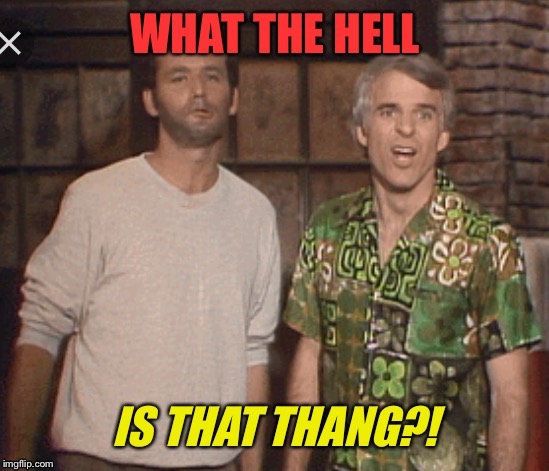
“It can’t be that easy for him,” Steve Martin is reported to have said about friend and fellow actor Bill Murray. “It just can’t.”

Some guys are just funny. We hated them in high school, because they could effortlessly do, what the rest of us worked so hard to do: Make people laugh. Was there a super-secret formula to their success? Not that we could see. They could just lift an eyebrow in a particular situation, or smirk in a somewhat sarcastic, somewhat serious way, and put everyone on the floor. It was frustrating to those of us who’ve had to work our way through the dark and mysterious halls of funny to find that which they just had sort of attached to them at birth. Everyone wanted to be around them to hear what they might say next, and they hoped that he liked them half as much as they liked him. Why? Because he was funny, naturally and effortlessly, funny. “Some guys just are,” we might tell our kids facing similar circumstances, “and there’s nothing you can really do about it.”

Bill Murray, I have to imagine, was one of those guys we all hated in high school. He was the fifth of nine kids in the Murray family, and we can imagine that some of his comedy came from striving for some attention in such a crowded home, but we also have to imagine that comedy was a way of life in that Irish, Catholic home. Regardless how it came about, Bill Murray became one of the best comedic actors of his generation, and as his stint on Saturday Night Live shows displayed, he had great improvisational skills too, but I’m sure if we saw him attempt to do standup, we might see through his otherwise bullet-proof veneer. We’ve heard man-on-the-street stories of him engaging in improvisational acts that prove hilarious, but those are based on his good guy graciousness as a well-known celebrity. If we could somehow remove his status, and read through these stories, would he still be funny? Impossible to know, because they’re built on his iconography, as well as adding to it. Bill Murray movies, however, are almost all funny, some hilarious, and others are enshrined in our personal hall of fame of funny. 

What is the super-secret formula to Bill Murray’s success? My guess is that there isn’t one, and that might be his secret. Bill Murray does have an undeniable everyman appeal in that he’s not gorgeous, he doesn’t have great skin or hair, and while he’s not fat, no one would say he’s fit and trim. He is just a funny man. He is the embodiment of the annoying “It is what is” principle. I go to see his movies, because he’s funny. Why is he just as funny, or funnier, than his peers? “I don’t know, he just is.” 

Anytime we discuss the merits of one actor over another, there is always the question of presentation. Everyone from the lighting guy to the director and the editor plays some role in the way Bill Murray is presented to the audience. Murray, as has been reported, can be difficult to work, because he doesn’t feel like certain people know how to do their jobs. Does this have anything to do with the idea that Bill knows how all the players need to work together to form this presentation, because he’s seen quality players do it? If that’s the source of his reported obnoxiousness, then he obviously knows how to cultivate and foster his presentation, which is more effort than that which we accredited to him.

To everyone from the frustrated peer to the casual fan, it appears as though Bill Murray just coasts through his movies, and he isn’t even trying to be funny or dramatic, depending on the role he’s playing in a movie. He’s just Bill Murray in the way Tom Cruise is just Tom Cruise and Clint Eastwood is just Clint Eastwood. Bill Murray is also so consistently Bill Murray that we know what to expect from the productions he participates in, in the same manner we know what to expect in a Starbucks franchise or an AC/DC song. 

Now we have Steve Matin, one of Murray’s peers and colleagues, a man who began around the same time, has attempted to do as almost as many comedic and dramatic movies, and TV shows saying he basically agrees that it doesn’t appear as though Bill Murray is even trying. Regardless the actual number of movies, or the debate over comedic quality, the two can be viewed as colleagues in many ways, and he views Murray’s career as so effortless that it’s almost frustrating to him. 

It’s not our intention to belittle Steve Martin’s brilliant and influential career, as we think it speaks for itself, but he’s obviously worked very hard to achieve everything he has. Bill Murray, on the other hand, has achieved similar heights without seeming to try near as hard. We’re sure that Murray does his due diligence, research, mental preparation, and everything else it takes to make a quality production, but it doesn’t appear that way. In terms of perception alone, it appears as though Bill Murray rolls out of a hammock shortly after someone yells, “Action!” delivers his lines, and goes back to his hammock funnier than the rest of us will ever be no matter how much work and effort we put into it. 

If you have to try that hard, you’re probably not very funny, you might counter, and you’d be right, but we have all had to learn how to be funny. Learning the beats, rhythms, and everything else it takes to be funny is often done by osmosis. We don’t learn how to be funny in the same way we learn math, how to play baseball, or how to be an electrician. We pick up various elements of our presentation from our peers, that crazy-funny uncle, and our TV shows and movies. If you were around during the Seinfeld/Friends era, you saw how they influenced what it takes to be funny, and you picked up some tips and copied the actors’ mannerisms, their tones, and sometimes we stole the lines their writers wrote for them. They, and numerous others of course, defined funny in our era. Other eras had Abbot and Costello, The Honeymooners, and The Lucille Ball Show define funny. We’ve also had others tell us “That’s not funny!” and we adapted and adjusted to the current cultural norms of funny, and in some ways, it took some definition of work to do so. Others, it seemed, didn’t have to go through all those trials and errors. They just seemed to fall into funny, because that’s who they were.     

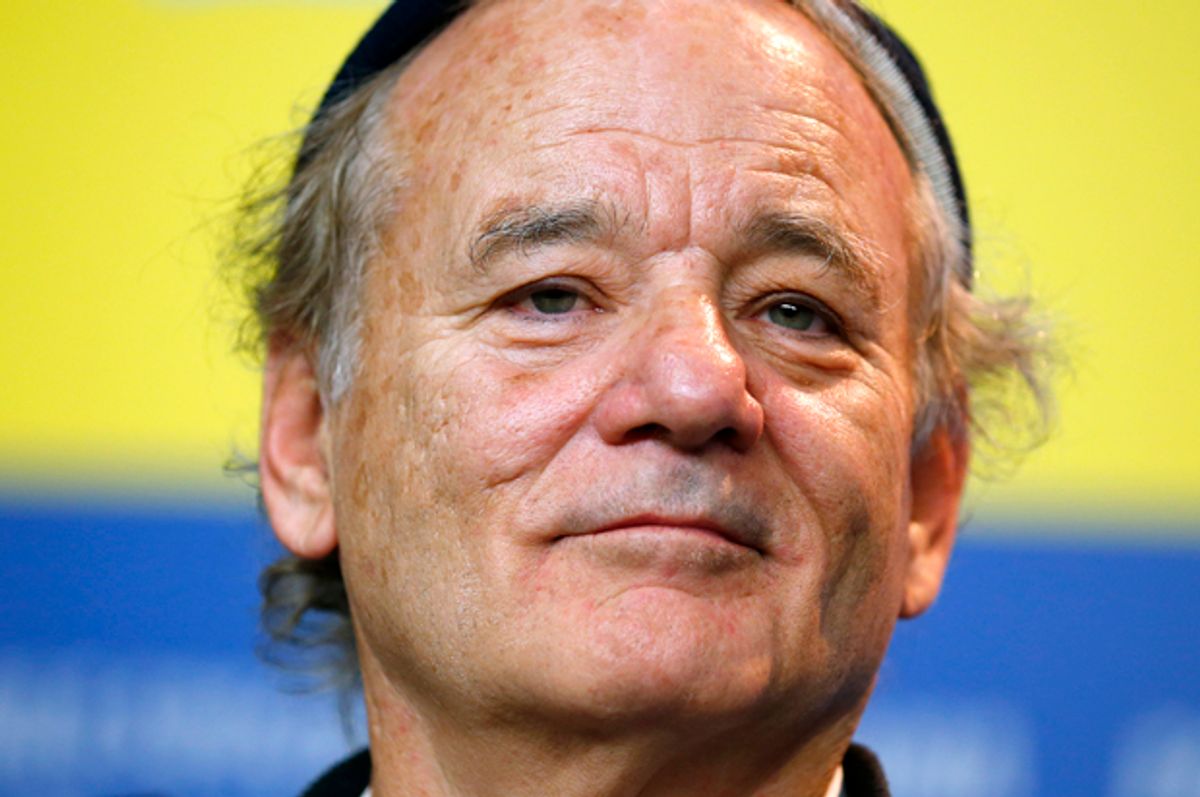
These funny people weren’t great looking either. Bill Murray, for example, does not have what we consider “leading man” looks. I’m not trying to diss the man, as he’s probably better looking than I am, but if we were to take headshots and show them to citizens of another culture, with the headshots of a couple of great looking character actors and ask them to, “Pick out the leading man in movies in our country,” Bill Murray might be the last chosen. I don’t know if he’s ugly, but he has an unmade bed look about him. He doesn’t have great skin, and he barely has any hair left, and he rarely changes facial expressions in the course of his movies, but movie directors flood his 1-800 number to try to get him to lead, or at least appear, in their movie.   

Most of us worked hard to be funny, shortly after we realized we didn’t have anything else going for us, and it was so frustrating for us to see someone roll out of bed funny. We can all identify with Steve Martin’s complaints, because we all know someone who achieves what we worked so hard for with such apparent effortlessness. If you’ve ever watched camp counselors, teenagers, try to MC an event, you’ve seen them try to work the audience (of camp goers and their parents), you’ve seen them try to act crazy, nuts, and fun, and you’ve walked away thinking, they could really use a natural speaker with some unusual levels of charisma, a Tripper (Bill Murray’s character in Meatballs). If you’ve ever seen a grown man sing with a full stage show, with dancers, pyrotechnics, and anything and everything to entertain an audience, you know that there are just some men and women who, armed with nothing but a microphone, can sing a song called Star Wars, and produce one of the funniest things ever seen. How does he do it? No one, not even one of the other funniest men of his generation, knows. He just does. When we watch it, we send out Steve Martin’s “It can’t be that easy!” complaint sent out to the unfairness of the universe.   

Seinfeld’s Unfrosted was … Not Bad


Jerry Seinfelds Unfrosted was … not bad. Screech! Spit coffee! Swear word! Screams! Car Crash! It is shocking, I know, to hear that coming from a Jerry Seinfeld fanatic. If you’ve read any of the articles on this site, you know how often I source him as one of the greatest comedic minds alive today. I consider him one of the best standup comedians of his generation, and his observations on what makes us weird have had a huge influence on this site. The show Seinfeld was my favorite sitcom of all time, I loved Comedians in Cars Getting Coffee, and I even enjoyed his Bee Movie. I didn’t love it, but I really liked it for what it was. Oh, and I laughed so hard during one of his standup shows that Jerry Seinfeld looked over at me with a look that suggested he was comedically concerned about my health. If the difference between fanatic and fan is excessive and intense, uncritical devotion, I am a fanatic. I never wrote to him, collected dolls, scripts, or took tours, but if there’s a hip term I don’t know for a passive fanatic, that’s me. I’m probably his idea of the perfect fan, a guy who quietly buys and watches anything to which he attaches his name. Which is why it pains me to write these five words: “Unfrosted is not as funny as I thought it would be.”

Watching the movie reminded me how we all want more of everything we love. We want more from our favorite artists, athletes, politicians, and plumbers, until they give us so much that we realize it probably would’ve been better if they left us in a state of wanting more. That’s the advice seasoned entertainers often leave young upstarts, “Always leave them wanting more.”  

And Seinfeld warned us, numerous times, that more is not always better. He’s said it in relation to why he decided to prematurely end his show Seinfeld, but he’s applied that principle to his career too. He’s informed us on so many days, and in so many ways, in the numerous interviews he’s done throughout his career, that he’s learned that he’s best when he stays in his lane, his lane being standup. He’s learned what he’s good at, and what he’s not, and he has proven to be the opposite of what makes some comedians so great, in the sense that he’s not daring, risky, or experimental.

If I were to pitch him a project, I would say he and Larry David should develop a sketch comedy in the Mr. Show vein, but we can only guess that he’s had hundreds of similar pitches from friends, fellow writers, and corporate execs, and he’s turned them all down. Some of those projects may have proved embarrassing, some may have been so far out of his lane that he didn’t even consider them, but we have to guess that some projects that were so close that he had a tough time turning them down. He did it all, because he knows who he is, what he’s good at and what he’s not, and he’s learned how to stay in his own lane.   

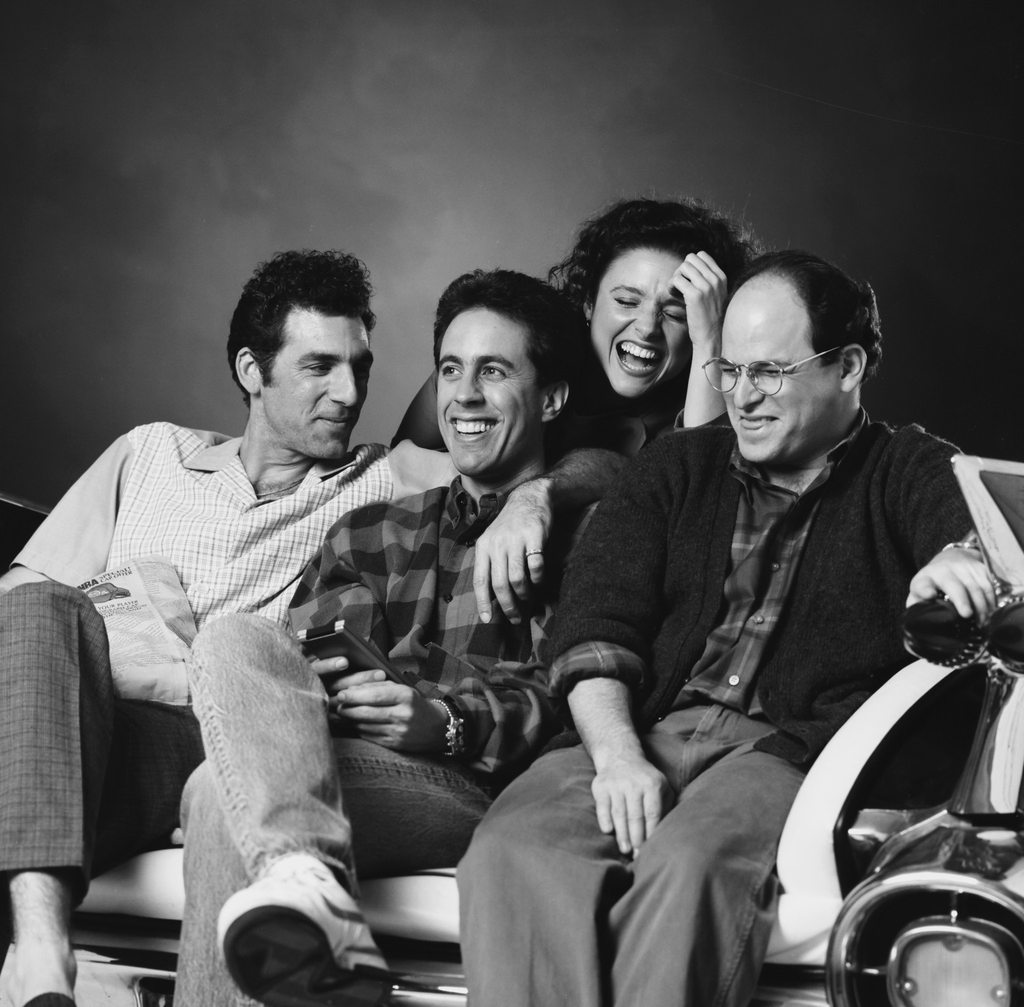
On the greatest sitcom of all time, Jerry Seinfeld surprisingly (to me anyway) credited the three actors (Julia Louis-Dreyfuss, Michael Richards, and Jason Alexander) for making the show so brilliant. He does not shy away from the idea that the writing on the show, of which he played a huge role, was great, but he admits that the actors brought that writing to the next level.  

“I did get caught in a beautiful, cyclonic weather event,” he said in an interview. “The actors, Larry David, the thirteen phenomenal comedy writers, and everyone on both sides of the camera was a killer. You know when you’re a part of it, but you know it’s not you. You’re a part of it, but if you’re smart, you know it’s not you. It’s not all you.”   

On Seinfeld, Jerry played the Alex Rieger of Taxi, the Sam Malone of Cheers, the center of the storm. He’s always been great at adding that final comment, lifting that eyebrow to exaggerated levels, and saying, “ALL RIGHT!” at the end of another character’s hilarious rant. He knows how to put a cherry atop the pie in other words. As long as that pie, or the acting required to nuance it, was filled in by someone else. He can write funny, he can deliver a short, crisp line deliver as well as anyone, but the nuances in the acting craft required to build to Seinfeld’s punctuation were always best left to others. I heard him say this so many times that I saw it, until I accepted it, but I always thought there was a bit of humility attached to it. Some of us were so blinded by enthusiasm that we never learned how to curb it completely.

When he decided to end Seinfeld after the ninth season, it felt similar to an athlete retiring at the downside of their peak, not the prolonged, sad tail end, just the other side of the peak. There were hints in seasons eight and nine, after Larry David left, that the show was on the downside of its peak, but it was still the best show on TV. Why would an athlete, or a successful showrunner, quit prematurely? I understand not wanting to outstay your welcome, or allowing us to see glaring levels of diminishment and not wanting to go out like that, but if you’re lucky, you might still have forty years on this planet. What are you going to do in the rest of your life to top that? Some of them, I think, are too worried about what we think. They don’t want us to see their downside, or because they love the game so much that they can’t bear playing at anything less than their peak. They can’t bear someone saying, “If you just called it quits after season nine, it would’ve been a great show beginning to end. Season ten was probably one season too many.” They, some of them, don’t want us to remember them as someone who stayed around too long.

When we were kids, we ached for another Star Wars movie, then we got one later, much later, and it ruined the legacy of Star Wars. After the second trilogy was complete, the almost unanimous opinion among those I know is they probably should’ve left us wanting. As Led Zeppelin did. Zeppelin broke up after the untimely death of their drummer John Bonham, in 1980. We spent our teens and early twenties talking about the possibility of a reunion and another Zep album. I understand they said it wouldn’t feel the same without Bonham, but the remaining band members were still in their early-to-mid thirties when they broke up. How do you leave a juggernaut like Led Zeppelin in your early thirties? The Beatles were in their twenties when they broke up. As Theodore Roosevelt said of being president so young, “The worst thing about being president of the United States so young, is that there’s nothing you can do to top that for the rest of your life.” Led Zeppelin left us wanting, and it was probably for the best. What could they have done to top those first six albums? They most likely, and in all probability, would’ve only disappointed.

In a career studded with comedy gold, Gold Jerry! Gold! Unfrosted has the feel of a sequel. It’s not a sequel, but how many of us walked out of a killer comedy, talking about how that movie just screams out for a sequel. We didn’t talk about how great that comedy was, we instantly wanted more. Then, when the sequel came out, it was, “That wasn’t bad, but it wasn’t as good as the first one.” That was the impression Unfrosted left on me. It felt like all the players were trying to recapture something that used to be really funny, and we were all prepared with our preparatory smiles on our faces, until the smiles slowly faded away.  

The characters have this feel of trying to repeat something that worked before, but it just doesn’t for all the mysterious reasons that some movies work and some just don’t. The jokes have a feel about them that suggests to us that they’re brilliant, but they’ve been done so many times before that we no longer need to figure them out. As someone who doesn’t know one-one hundredths of the knowledge Jerry Seinfeld has about comedy, I think the figuring out part is the reward of comedy. 

Unfrosted seeks the opposite tact. It goes for familiarity, and we all love familiarity. Familiarity with actors, themes, concepts, and all that. Unfrosted displays this level of familiarity in the beginning, to establish a through line to the audience, but it never branches out into that unique spin that kind of shocks us into laughter. The setting of the movie is the 60s, and what a foolish time that was, and even though this has been a million times before, we still think it could be great in the minds of geniuses.

It’s a mystery to us why some movies don’t work, because we don’t make movies, but you’ll often hear moviemakers, actors, and all the other players say, in interviews, that they don’t know why either. “We thought it was funny, but we had no idea how huge it would get.” We don’t often hear the players involved say, “We thought it would be huge, but we had no idea people would consider it a little boring.” What works and what doesn’t is a mystery to us, and it’s a mystery to them. Generally speaking, dramas and action movies are probably a lot easier to predict for those involved, especially when the star actor signs on to the vehicle. Comedies and horror have a super secret formula that even those involved in the finer details of the production involved don’t know whether it will hit or not.  

Unfrosted gave us all a be-careful-what-you-wish-for feel, because you just might get it. As much as we cried out for a movie, or any project, from Jerry Seinfeld, we walked away from it thinking that Unfrosted, unfortunately, should never have been made. What could they have done to make you feel better about it? “I don’t know, I don’t make movies, but they probably should’ve left me wanting more instead of giving it to me.”

Watching Unfrosted, reminds us of that elite athlete who retired on the downside of a peak, not the bottom, just the downside, and we clamored for his return. How can he retire at 37? He still had what two-to-three years left? If he lives to eighty, he’ll spend the next 43 years reminiscing and thinking he should’ve played two-to-three more years at least. Then he comes back, and we see how much his skills have declined. He didn’t do it for the money, I can tell you that much. He did it, because he loves the game, and what’s wrong with that?

The point some people make on various websites is that athletes and entertainers run the risk of ruining their legacy by staying too long. This line right here makes me almost fighting mad. So, you’re telling me that the athlete who made so much money for the league, the city, and the franchise shouldn’t be able to sell his wares to anyone who will take them? He shouldn’t try to get another paycheck for the punishment he put his body through for your entertainment, because you want to remember him the way you want to remember him? Isn’t that a bit myopic, even selfish? He wanted to get paid for his efforts, of course, but he didn’t necessarily do it for the money? Seinfeld, and most modern athletes, have so much money that that’s not why they’re doing it. They’re doing it for the love the game so much that they want to play at least two more years? What’s wrong with that, and what’s wrong with you for wanting to deny him that?

Did Seinfeld ruin his legacy by doing Unfrosted? No, first of all, it wasn’t that bad, but, then again, I never expected to say that a Seinfeld project “wasn’t that bad”. I don’t remember any of the elite athletes who “stayed one year too long” for those latter years, and I don’t begrudge them for taking as many paychecks as they could before they called it a career. I also don’t begrudge them the idea that they loved the game so much that they couldn’t walk away, until it was obvious to them that they truly couldn’t play the game anymore. I actually respect it, as I say it was for the love of the game. I respect the fact that Seinfeld’s friend pitched him on the idea of Unfrosted, and not only did he like the idea, but he didn’t think he was done yet. He thought he had one more big project in him, because he loves doing the things he does so much that he wanted to try it at least one more time. Good for you, Mr. Seinfeld, I say, and if he feels like doing another project, or projects, I’ll be there on the first day it’s released.  

Jerry Seinfeld has admitted that he doesn’t expect to be remembered after he’s gone, and he’s even gone so far as to say he doesn’t care, or that’s not his driving force. I’ll remember Jerry Seinfeld as a great, almost perfect standup comedian, the cocreator of one of the greatest sitcoms in TV history, and as a gifted natural when it comes to observational humor, but Unfrosted doesn’t do much to either lift or damage his legacy. It was just a marginally entertaining movie that they probably won’t list in his very lengthy resume when that final wave off arrives.