Rilalities XII


Story, Harrowing Story

“Our son overdosed on Tylenol,” a mom and dad said entering a hospital’s emergency department. When they were directed to a room, they informed the nurse that the family experienced a dispute in their home. Their teenage son didn’t deal with it well. “He overdosed to teach us a lesson,” the parents informed the nurse. The argument, it turned out, was based on a huge misunderstanding. After emotions subsided, the three put the missing puzzle pieces back in place and realized what happened. (The author doesn’t know the particulars.) The parents and their son concluded their Q&A with the nurse by telling her they were in the emergency room that day to get their son’s stomach pumped.

“Okay,” the nurse said after the parents explained what happened in their home. “When did he take the Tylenol, and how much?”

“It’s been a couple days,” the mother said, “and he took almost an entire bottle.” She had the near empty bottle with her, and she informed the nurse that it was full before the incident. The mother finished that explanation with a compassionate smile directed at her son, and she mouthed, ‘It’s okay,’ to him.

The nurse made a mental note that she later shared with the doctor “that the three appeared almost happy, or maybe relieved in some odd way.”

The doctor agreed, and he said, “I think they were relieved that the heated argument was over, and they were just happy to have their son back.” 


“The treatment for an acetaminophen overdose is a drug called acetylcysteine,” the doctor informed them when he sat in the emergency room, about a half an hour after the nurse left, “but it only shows maximum effectiveness within an eight hour window of the overdose. We will use acetylcysteine, and we will also perform a gastric lavage or nasogastric tube suction, or what you call a stomach pump, but there are similar time constraints on the maximum effectiveness of those procedures too. The problem with ingesting so much acetaminophen and leaving it in the system for so long, is that it has been absorbed by the liver.”

“So, so, what does that mean?” the family asked.

“Our medical team is going to do everything at our disposal today,” the doctor said, “but my job is to make sure you are well aware of the facts of the situation here.”

“And the facts are?” the mother asked.

The doctor had sympathy for the patient and his parents inability to grasp the severity of the matter, and he tried to describe the ramifications as delicately and with as much sympathy as he could. He chose his words carefully while repeating everything he said about the effectiveness of acetylcysteine and stomach pumps after a couple of days, and he repeated what he said about the medical team at that hospital doing everything they could do to help their son, “But if your son took as much Tylenol as you’ve described here today, this is going to be as difficult a situation as you can imagine.”

We can only imagine how difficult this was for the doctor, and we can imagine that the parents put the doctor through it over and over in excruciating detail, asking questions we might regard as obtuse, but what was, in fact, a couple of parents and a son having a difficult time digesting the grim reality of the situation. We have to imagine that they interrogated the doctor, until he finally broke down and said, “In cases such as these, the normal life expectancy is around two-three-days.”

After the initial hysteria broke down, we can also imagine that the parents and their child enjoyed their final moments together. The reports suggest that this is a painful way to die, but if the son was able to manage the pain to a certain degree, we can imagine that the three of them did everything they could to celebrate his last days on earth. 

The team of medical professionals tried acetylcysteine, they performed the stomach pump, and anything and everything at their disposal. The teenage boy died two days later. 

I heard this story decades ago, and it still haunts me. It’s the da Vinci of stories. It doesn’t matter the angle, or perspective, it stares back at you as hard as you stare at it. How could the parents not know their child overdosed? For a couple of days? Was the argument so intense that they were not on speaking terms? I don’t know much about overdoses of this nature, but how was he not showing concerning symptoms, concerning to him in particular? We can only imagine that the parents have dreams where they spot something and do something sooner.

As much as the parents probably went through, and still go through, we have to imagine that no one involved in this situation will ever forget it. Everyone from the nurse, to the doctor, to anyone else involved still have nightmares about it. It’s also a harrowing reminder that no matter how bad the fight, or how profound the disagreement, get it out, get it all out, speak to the ones you love, and straighten it all out before it’s too late. 

Heart Attack

Those who were there know that I had a rocky relationship with my dad. We were two stubborn, ornery, Irish roosters butting heads. He kept me in check by threatening to kick me out of the house. I didn’t want to leave my home, and I didn’t want to be known as the kid who got kicked out of the home. My plan, once I got out on my own, was to never forgive him and never forget what he did to me. Years into the plan, my dad had a massive heart attack. His chances of survival were slim. I visited him and saw him hooked up to a variety of machines, and I realized that no matter how awful he was to me, he was the last parent I had left in life. He survived, barely.

We spent the next eleven years rectifying everything that happened during my youth. During these eleven years, I thanked him for assuming the role of step-father for me when I was two-years-old. That was so hard. It was difficult to avoid qualifying it, and placing “But you did this to me” type of asterisks. I left it as a standalone thank you. 

It was the best thing I ever did. I wish he would’ve lived for another ten to twenty years, but he didn’t. When he eventually passed away, however, I said goodbye to him with a heart free of anger, without the need for some sort of retribution, and hatred. If he died after the first heart attack, I would’ve been an absolute wreck. The moral of the story is, no matter how bad the fight between you and your loved ones is, get it out, speak to one another, and straighten it out before it’s too late.

Why I Write

Ever drive down the road and see a bumper sticker with exclamatory statements on their car? How about that guy who wears a T-shirt, in public, that says something meaningful? And what about that guy we all know who debates his friends on a variety of topics, with a palpable sense of frustration. “No one will listen to me,” he shouts. Everyone who talks to that guy feels his underlying sense of frustration, and they know how angry he is. We begin to interact with him less and less, because we know he can turn everything from a discussion on geopolitics to whether or not the snap pea is a delicious food into an uncomfortably confrontational argument. Every time I meet that guy, I’m so glad I’m not him anymore. That guy has no venue. He needs to express himself all over you. Whether you deem the material I discuss valuable or not, I found my venue. 

I always valued friendship over the temporary feelings one can derive through defeating another in an argument, but I felt a certain sense of frustration when no one would agree with me. When I expressed some anger and frustration, people would give me that extra look. If you’ve seen that look, you know it. That look follows you, and it says something uncomfortably revealing about you. It’s a double-take that precedes most rational, sane people just walking away. Others, who care about you, say, “Maybe you need some counseling.” Tried it, didn’t work for me. I wouldn’t say the counselor was stupid, or I am more intelligent, but she didn’t understand me. I didn’t understand me, until I found an outlet. I wouldn’t say I was complex, or anything extra ordinary, but there was no question that I needed to do something to get everything that was in me, out. 

“Music sets the sick ones free,” Andrew Wood, lead singer of Mother Love Bone, once wrote. That was me. I didn’t just love music, I needed it. I could drop the cliché that I needed music, like some people need oxygen, but it wasn’t that severe. I prefer to think of my need for music to help balance my mental stability as one might view a farmer living out on the prairie with little-to-no law enforcement. I needed music the way those farmers need to be armed to protect their land, their livestock, and their family. The only issue was I never wanted to be anything more than a music listener. I didn’t know how to play an instrument, and I didn’t have the patience to learn one. Yet, I was in desperate need of some form of self-expression in some sort of artistic manner. 

If “Music sets the sick ones free,” and I believe it does, writing was directed neurological therapy for me. Music was equivalent to a neurologist prescribing necessary over the counter pain medication. Writing, would prove the directed neurotherapy a neurologist might prescribe after repeated visits and extensive study of my reactions to everything prior.  

I was never ill, compromised, or depressed in any substantial manner, but I had an internal itch that ruined days. Writing felt substantial to me. I wanted it all, but when it didn’t come, I kept writing. I was no prodigy. I wrote some awful stuff, but I loved it, needed it, and I kept wanting to do it no matter what. Writing anything and everything I could think up is what has led me to the definition of sanity I now know.
No Hugging and No Learning

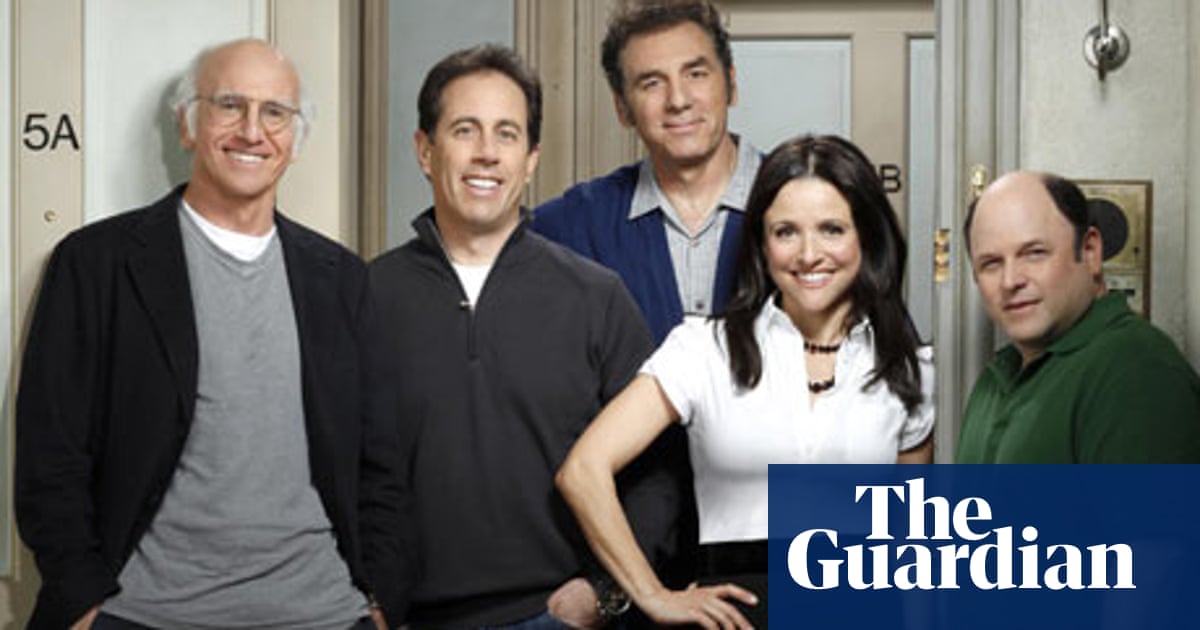
When I watched Seinfeld, I had no idea why it appealed to me so much. It was funny, of course, but there were dozens of situation comedies on the air at the time, and hundreds of them throughout history. Seinfeld was special to me, and I had no idea why. When I learned that the writer’s room had a “no hugging and no learning” thematic approach, I said, “That’s it” to myself.

Seinfeld was special, because it wasn’t “special”. Everyone from the creators, writers, on down to the actors made no effort to be special, nor did they add special ingredients into the mix. The special ingredients for most writers on most situation comedies involved the “very special episodes”. These episodes made special connections to the audience through special issues. A character, in their narrative, discovers that they’ve been so wrong for so long that they now question their foundation, and the audience understands, agrees, cries, hugs, and leaps to their feet in “clapture”. Clapture is a framing technique used by comedy writers to get the (Emmy!) audience to clap with laughter, or to agree with them more than laugh. I didn’t realize, until Seinfeld, how cringeworthy those special, meaningful messages were. The Seinfeld writers maintained that there would be no hugging, no learning, and if I might add, no special understandings in their show. They just tried to be funny. When we watch such shows, we always wonder if they reflect our values, or if we begin to reflect theirs. I think Seinfeld, more than any other sitcom I’ve watched, reflects my values. I prefer a good steak with very little seasoning and nothing else! Unless steak sauce is used to cover up the quality of the meat, I want nothing else on my steak. If you’re going to come at me and tell me what you really think of me, I prefer that you come bold with no qualifiers. I also prefer music that is complicated, fun, interesting, creative, relatively brilliant, unique, and utterly meaningless. Don’t tell me what you think of the domestic economy of Istanbul, the mating habits of the emu, or anything else that you wished you put in your college thesis. Just write lyrics that fit the music and be done with it. Seinfeld, in my opinion, met all of those standards.  

Scat Mask Replica VI


Turtle and Tiger

My son has a very healthy imagination, and I encourage it in every opportunity I can. We play all sorts of imaginary games, some involving his stuffed animals. We put these animals through various life scenarios. I am in charge of developing these stories, but he will often spider web these stories into other side stories. In one of these sessions, he gave his stuffed turtle an unusual name. Playing the role of the tiger in this production, I asked the turtle if his parents were weird. “If they gave you such an unusual name,” Tiger said, “your parents must be weird people.” I was not testing my son, or playing any type of psychological game. The reader might flirt with such notions, because it was an odd thing for a dad to say to his six-year-old son. My only defense is that we play so many of these games that he wears me out.

Tiger pressed turtle for an answer on this question, and the turtle refused to denounce his parents in anyway, saying, “No, I have great parents who love me and don’t let me get hurt.” That was all turtle said, and we moved into other areas of the turtle’s life story. Months prior, someone suggested that my son’s lack of displays of affection could suggest that he might be on the spectrum. Boulderdash, I say. I say his lack of displays of affection means that his parents are doing one hell of a bang up job. I’ve seen my son’s six-year-old friends worry when they can’t see their parents at the park. ‘Shouldn’t that be the other way around?’ I wonder. I know my son doesn’t worry about such things. I know he considers every minute we can’t see him a momentary minute of freedom. I’ve witnessed other boys appreciate their parents. I’ve seen other kids his age, kiss their parents without them having to ask for one, and my reaction is 180 degrees different from envy. I think if a six-year-old voluntarily displays affection for their parents, it suggests there might be some deficiency in their home. It’s a guess, and it’s probably wrong. Some six-year-old boys are just more affectionate than others are, but that just seems so unnatural to me. If my six-year-old boy says, “Leave me alone”, and he hates hugs and kisses, it means he takes me for granted. He takes it for granted that I’ll always going to be there for him, and he knows that I will always “protect him from getting hurt”. As a person who has never had a parenting job before, it strikes me that if you’re doing your job, your child should be surprised to learn that other kids like you and think you’re fun to be around you, because he thinks you’re one of the most boring people on earth. Then, if you’re doing one hell of a bang up job, you might eventually reach a point when you’ll hear how much he appreciates what you do from his turtle.

The Death of a Gregory

A forty-something man on our block died recently. It’s a sad thing when any person dies young, but I didn’t know this guy as a man. I knew him as a rival when we were in our early teens. One could go so far as to say we “hated” each other in the harmless way young, testosterone-driven teenage males hate each other. We did whatever mean, harmless territorial peeing things that two teenage boys do to each other. I tee peed his house, he egged mine, I threw an M-80 in his yard, and he shot a bottle rocket under my car. I sidewalk chalked something awful about him on his driveway, and he lit firework snakes on the sidewalk leading up to our house (some of those stains are still there some 35 years later). I spotted him on our old block some 35-years later, and I waved at him. He did not wave back. He apparently believed that our teenage rivalry should extend into our forties, and I found this out soon after I waved at him. I was driving into our old neighborhood, and he was driving out when I stuck that hand up. He gave me the nastiest look he could. That look said, “I don’t like you, and I never will!” That’s fine, I guess, but how about I wasn’t asking if I could come over for dinner, or if I could play with his Star Wars figurines. I was putting my hand up in the air to him as nothing more than a momentary, symbolic greeting. It’s your job, sir, to put your hand up in the air back at me! You don’t have to smile when you put your hand in the air, and a wave is not a promissory note on future conversations. You just wave back, and everyone moves on with their lives. It’s what we adult humans do when we somewhat, sort of recognize each other. If you can’t forget the things I did to you at 13, well, that’s kind of on you. If he was still alive, I’m sure he could give you a laundry list of things I did to him, but I don’t remember them, and none of them would post date 1983. If anyone suspects that I bullied him, and it affected his personality in such a way that he could never forgive me, I can only say this in my defense, this kid gave as well as he got. When my family would drive onto our block, he would have a special twinkle in his eye when he spotted me, knowing that we would be spotting his latest bit of carnage. When I saw how much he enjoyed this, I realized what I was up against, and I stopped. He didn’t, and he apparently didn’t want to let it go 35 years later.  

He Stuck a Foot Out!

Yesterday I realized that sports announcing is a cutthroat business. The candidates for a top job in sports announcing must be knowledgeable, and interesting, but they must also have an extraordinary ability to make the mundane exciting if they want to win the job. That’s not an earth-shattering revelation, I know, but when I hear a hockey announcer almost lose his lunch when a goalie sticks their foot out, I see the profession for what it is.

“HE STUCK A FOOT OUT! HE STUCK A FOOT OUT!” the announcer screams.

As we watch the replay about seven times, the analyst describes the command a person playing goalie must have of his body, as if it’s something he’s never seen it before. “I hope the viewers at home recognize how brilliant this save was,” the analyst says with reverence as we watch it. “The goalie is in the zone, and he’s just playing on another level. To have the wherewithal to know not only how, but when, to stick a foot out, you just can’t teach that.”

As one who has never played hockey, I have to imagine that teaching kids who want to play goalie when and how to stick a foot out is one of the first things they teach. It is not our intent to diminish the athleticism it takes to play goalie in this piece. When a puck is traveling at a high rate of speed and the goalie has a center in front of him, trying to block his view, and that goalie gloves the puck, it’s impressive. Those of us at home know we probably couldn’t do that on a regular basis. When a wing flicks a puck to the goal and a goalie sticks his foot out to stop its progression, however, that’s just what we call sports.

The key to most sports, (spoiler alert!) is to cross lines. The defense doesn’t want the offense to do that, so they use various parts of their body to try to prevent that from happening. This conflict can provide some noteworthy achievements, but most of the time it’s just a guy doing what they practice to prepare for such moments. If an announcer can convince a viewing audience that the results are a brilliant display of athleticism, they will win the job.

Creativity in Tight Spaces

Some of my favorite moments of inspiration arrived in tight spaces. My manager put me on suspension. “Get your numbers up, in 90 days, or you’re gone!” he said. With my little world crashing down around me, inconvenient flashes of inspiration bombarded me. Some were so good that I felt required to write them down. A guy interrupted me with a question, and I thought his mannerisms were perfect character-driven piece. The inspiration for another piece arrived when another fella said goodbye to me. My mind was on fire when I heard a set of lyrics from a Sufjan Steven’s song, and those lyrics inspired a novel I would spend the next two years writing. These were all inconvenient interruptions that took time away from the moments I should’ve spent trying to get my numbers up, but I couldn’t stop them from pounding into my brain.

It wasn’t a great novel, it turned out, but the inspiration for it struck me during a very inopportune moment of my life. I’ve had these moments before, I think we all have. They’re the “You’re not supposed to think about that now” moments when creativity seems to flourish. I had an “in-class” friend one time. We engaged in “what you’re not supposed to do” fun in class, when the teacher wasn’t looking. We developed a temporary, very real bond misbehaving, but when we ran into each other in the hallway, we had nothing to say to one another, other than a conspiratorial “there he is” point. I used to love to make my brother laugh in church, with stupid, little in-jokes that would not have been funny anywhere else. We were having naughty, “You’re not supposed to do that here” fun that required subtlety and a deft hand to avoid getting caught. Was that what my brain wanted, with my job on the line and my boss watching every move I made? Regardless, my mind was on fire with naughty, “You’re not supposed to be thinking that now” thoughts that I would spend the next two years completing.  

I did manage to quiet the inspirations long enough to survive the suspension, and I spent the next five years juggling my need to be creative and the need to be productive for the company. I wouldn’t say that these tight spaces always resulted in creative inspiration, but I was never come that close to losing my job again, and I would never have that much inspiration flooding my brain either. 

How to Succeed in Writing part IV: Steal your Way!


“Where do your ideas come from?” has to be the dumbest question a reporter/interviewer can ask an author.  If they asked the author where did your idea for this particular novel come from, that might be a question that could yield some interesting results, but if an author were to give an honest answer it might take some of the mystique away from the piece their trying to promote in the interview.  The honest answer, most assuredly, would be that these stories had humble and inconsequential origins.

The more general question is a dumb one, because no writer has a personal vault of ideas from which they draw inspiration.  They’re just making stuff up as they go along like the rest of us.  They’re no different than us, they’ve just focused their energy in one particular area for so long that some ideas popped out. I don’t know what the interviewer expects, but the answer they receive is usually vague and long.  The author usually doesn’t know anymore what to do with the question than the interviewer.

Some authors use the question to mystique their piece up a bit, but most of these mystique oriented answers are as fictional as the writer’s pieces.  Hemingway liked to tell interviewers that he traveled to exotic hotels in Paris, France to write his novels.  It could, quite possibly be true, but I’m thinking that the birth of these novels was a lot more mundane.  I’m thinking that the truth is that his novels were born in dark, dusty basements where he sat alone thinking about all of his adventures.  I’m thinking that most of his grand ideas came from the same place most authors’ ideas come from: long, laborious hours spent doing nothing but writing–only to have some little gem pop its little head out of all of the clutter that he’d written through the years.  He did, after all, say that 99% of what he’d written was wastebasket material.  The truth, that is not as mysterious as most writers want to admit, is that great writing leaks out the cracks of laborious hours spent alone, reading and writing, and crafting, editing, and editing again.  That’s how it’s happened for me, anyway, and I think if you stripped away all of the promotion and mystique writers try to add to their productions, most writers would agree, but writer Austin Kleon doesn’t agree.  He says that all ideas come from other people’s ideas, and if you’re not stealing them now, you probably should be.

Originality is dead, Long Live Creativity

Austin KleonAuthor Austin Kleon has a book out called Steal Like an Artist.  The book declares there is no way to be original anymore.  It’s all been done before, so why is everyone climbing all over themselves trying to be original?  “Get over yourself,” he says, “and this idea that you’re a creative genius, and get busy writing something good.”

Author Christopher Booker’s book “The Seven Basic Plots: Why we Write Stories states that there are only seven basic elements to stories: 1. Overcoming the monster.  2. Rags to Riches.  3. The Quest.  4. Voyage and Return.  5. Comedy.  6. Tragedy.  7. Rebirth.

The Internet Public Library lists seven different types of conflict:  1. Man vs. nature. 2. Man vs. man. 3. Man vs. the environment.  4. Man vs. machines/technology.  5. Man vs. the supernatural.  6. Man vs. self.  7. Man vs. god/religion.   Some have listed addendums to these basic plotlines and conflicts, but the gist is that all of the basic plots and conflicts that can be dreamt up have already been dreamt up hundreds of thousands of times before, dating back to Homer.  Your voice should be in great supply in your novel, of course, but you can stop driving yourself up a wall trying to be brilliantly original.   It’s almost impossible.

Austin Kleon’s method of stealing is to take single words from newspapers or Google.com and use them as idea building blocks.  He chooses a word, at random, and he blocks out the rest.  He then tries to build an idea from a series of these words to try to create an image.  The incredible and Bowieincomparable Thin White Duke, David Bowie, used this method, as did William S. Burroughs.  You can get visuals, and a more thorough explanation, of this method on Kleon’s website in the link below.{1}

Have you ever read a novel, a plotline, or a scene that you thought you could do differently?  Have you ever thought:  “I loved that scene, but I wish they would’ve done this…”  We’re not trying to do the author one better when we do this, we’re just trying to personalize a scene that touched us in some manner, and every author that we steal from should be complimented by our theft.  Their brilliance inspired thought in us after all, and if someone stole from us in this manner, we know we’d feel complimented.  While it’s not important that we avoid our influences in this manner, we should do everything we can to conceal them.  We do want to edit them out as much as possible, so that they might not even be able to spot the influence

Where do my ideas come from?  My favorite brand of fiction involves idiots doing stupid things, and in that regard, I have found that I am a font of inspiration.  My friends also provide me great material, as most of them are as stupid as I am.  We all do stupid things.  TV shows have capitalized on this.  YouTube went from being a video-sharing site to a staple in our daily life based on this principle.  Phillip Roth once considered retiring from fiction with the idea that even his creative mind couldn’t top the non-fiction out there.  We can still write great fiction though, we can steal great fiction, and lift from life.  We just need to see it when it smacks us in the face.

I’ve stolen stories from the water cooler at work, from within the walls of my humble abode, and the bar where I sat trying to escape the walls of my home and the water cooler at work.  They’re dumb stories that no one wants to read.  They’re senseless stories that no one will care about, because they’re so senseless that no one can follow them.  They’re accidental stories, that no one will want to read unless we put enough pluck and circumstance into them to make them illustrative, intelligent, and hilarious stories about human nature and life in America today.

SeinfeldThese little stories are everywhere in life, they’re the minutiae that Larry David and Jerry Seinfeld opened up for the world.  Those two weren’t the first to do this, and they obviously won’t be the last, so we all need to jump on board and tell the world how stupid we are.  Stupid, little stories like “The Leans”{2} are the stories I’m talking about that we ignore in our attempt to write the next The World According to Garp.  There isn’t much to them, and they don’t necessarily feed the ego that writers have of being the next great writer, but there are times in our writing careers where we need to walk softly with our big stick.

You have to feed the female dog if you ever want her to fatten up is what I’m saying.  Creating fictional accounts of what “really” happened (my definition of creative non-fiction) taught me more about storytelling than crafting original stories did.  Crafting original stories is, of course, the goal, but if you can juggle the two you may be on your way to a behemoth.

But how many original ideas strike us in one month?  How many times do we have flurried inspiration that leads us to twenty pages of excellent fiction, and how many of these stories hit the proverbial brick wall after twenty pages?  Aspiring writers need to learn how to hone that muscle that will eventually get struck by lightning.  We need to learn how to flesh out ideas.  Is there a better way to hone that muscle than stealing another author’s idea and making our own, or fleshing out our foibles and our friends’?  If there is, I haven’t found it yet.

I’m all about getting over humps.  I’m all about writing anything and everything that is entertaining.  I don’t believe in writer’s block.  When I hear someone complaining about a block that has slammed down in front of them, my first thought is why don’t you just walk around it?  It’s not like it’s the great block of China or anything that has created a border to completion.  It’s just a block, and there are hundreds of ways around it if you just settle down and look at them for what they are.

{1}http://www.austinkleon.com/2011/09/24/steal-like-an-artist-at-the-economists-human-potential-summit/

{2}https://rilaly.com/2010/01/27/the-leans/