Investment advisors suggest that if we only worked half as hard trying to figure out how and where to invest our money as we did to earn it, we would be better off. It’s sound advice, but how much quality homework can we do when our resources in the media and watchdogs in the government are either inept or in awe of financial “genius”? Some reports suggest that the SEC sent second rate investigators to examine the books of books of Bernie Madoff, and that they may have accepted Madoff’s excuse that his trading strategies involved “proprietary information”. As we all know now, his proprietary strategies involved not making trades. How could anyone in the media, or the SEC, know that? Well, as the man who “discovered” the fraud, Harry Markopolos said, “They could’ve called people. They could’ve called the people in banks and the traders Bernie claimed to have trading relationships.” Why didn’t they make a few calls? As Shortform.com suggests, concerned parties defaulted to the truth when they examined Madoff, and the truth suggested that a fund worth around $3-$7 billion just couldn’t be fraudulent.
Madoff also sold educated insiders responsible for money in charities, pension funds, and hedge funds digging through his numbers and asking numerous questions, saying, “If you have to ask, maybe this isn’t for you,” which surely elicited a “Hold on, hold on, we’re just trying to do our due diligence for out customers here. Please, get insulted” type response. This pitch appealed to numerous banks and financial firms including, The Fairfield Greenwich investment Group, Sonja Kohn, Thierry Magon de La Villehuchet, and many other esteemed luminaries in their field. These pitches led to a mysterious enigma that gained Madoff a reputation as a guru of Wall Street, and he used it to intimidate the referees in the SEC to avoid investigating him, and when they eventually did investigate him, they did so with the same truth-default. The only person who wasn’t duped, and tried to get the SEC to shut it all down was the could’ve been, should’ve been hero of this tale, Harry Markopolos, who “discovered” the Madoff swindle nearly a decade before Madoff’s Ponzi scheme folded under its own weight.
Harry Markopolos was an expert at analyzing and managing quantitative data (a quant), a math nerd, an obscure financial analyst, and a fraud investigator who worked for Rampart Trading Management, one of Bernie Madoff’s competitors. His entry into the unfolding drama began when his Rampant boss, Frank Casey, learned that one of their firm’s biggest investors, Access International Advisors (AIA) was pulling their money out of Rampart and putting it all into a hedge fund headed up by respected financial guru Bernie Madoff. AIA CEO Thierry Magon de La Villehuchet informed Casey that he was doing so based on the incredible returns Madoff’s fund was producing. Upset that he couldn’t prevent Villehuchet from leaving, Casey instructed Markopolos to reverse-engineer Madoff’s trading strategy and revenue streams so Rampart could duplicate his results.
“It took me five minutes to know that [Madoff’s hedge fund] was a fraud,” Harry Markopolos said, after conducting his own investigation. “It took me another almost four hours of mathematical modeling to prove that it was a fraud.”
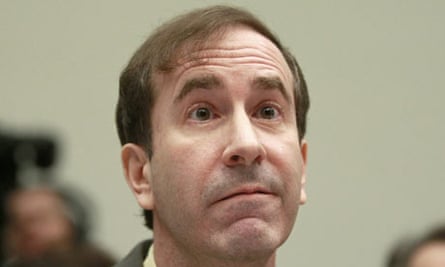 Markopolos wasn’t the first to “discover” Madoff’s fraud, but he pursued the SEC for an investigation when no one else could? The question is why? If you watch the YouTube video of Markopolos “Assessing the Madoff Ponzi Scheme and Regulatory Failures”, it will take you about five minutes to know Harry Markopolos is a nerd. We can probably all beat a nerd to the women, and we might be able to make them look foolish in sports, but don’t try to beat a nerd at math. Markopolos has confessed many times, in roundabout ways, that when he set about trying to reverse-engineer Madoff’s incredibly consistent returns, he took it personal.
“[Madoff] was stealing from me, he was stealing customers from me, and if you steal from a Greek, we will come after you,” Markopolos said in an interview. He didn’t say geek, he said Greek, but the rule still applies: “If you try to beat a geek, at their geeky games, they’ll come after you.”
Some might view this characterization of Harry Markopolos as disparaging, but it’s not intended that way. A true math nerd doesn’t care about success, wealth, imperiousness, a reclusive nature, or any of the mysterious characteristics that the rest of find so alluring. The rest of us can be duped by narratives, sex appeal, and charisma, but to a math nerd the universe doesn’t make sense, until we insert numbers and mathematical equations. If someone in the media, and the SEC, was brave enough to heed Markopolos’ detailed findings, 37,000 individuals from 136 different countries they could’ve spared a lot of pain and suffering in the world.
“I’ve taken all the calculus courses, from integral calculus through differential calculus, as well as linear algebra. And statistics, both normal and non-normal,” Markopolos said. Madoff didn’t care for Harry Markopolos-types poking around in his “proprietary” investment strategy, “and look at the results the man produces,” the uninformed probably argued, “you can’t argue with results.” Harry Markopolos could, in his numbers world, and in that world, Madoff’s success in the options trading market made no sense to him.
“As we know, markets go up and down, and his only went up. He had very few down months. Only four percent of the months were down months. And that would be equivalent to a baseball player in the major leagues batting .960 for a year. Clearly impossible. You would suspect cheating immediately.”
“Maybe he was just good,” CBS’ Steve Kroft remarked in a 60 Minutes interview.
“No one’s that good,” Markopolos said.
In his opening statement before a Subcommittee on Capital Markets, Insurance, and Government Sponsored Enterprises, Harry Markopolos assessed the Madoff Ponzi scheme and the regulatory failures by the SEC that contributed to the Madoff scheme amassing more than $43 billion dollars of innocent victims’ money between his first report to the SEC and the scheme eventually falling due to the 2008 financial crisis.
Markopolos also stated that if the SEC followed through on his report on Madoff’s scheme in May of 2000 with a thorough investigation, the SEC would’ve found fraudulent activity in the range of $3-$7 billion dollars of investors’ money. He submitted another report to the SEC in October 2001, when the damage to investors would’ve been in the $12-$20 billion dollar range, and in 2005 he submitted a report with a detailed listing of 29 red flags that occurred when the Madoff fund was worth $30 billion. He submitted two more reports in 2007 and 2008. Markopolos concludes this portion of his opening statement, saying, “A fraud that should’ve been stopped at in May 2000 at under $7 Billion has now grown to $50 billion.” (Some have since listed the fraud as high as $65 billion.)
“In your first letter to the S.E.C. back in 2000, you’re a little tentative. You say, ‘Look, I have no hard evidence, no smoking gun,’” CBS News Steve Kroft observed in the 60 Minutes interview.
“In 2000, it was more theoretical. In 2001, it was a little bit more real. By 2005, I had 29 red flags that you just couldn’t miss on. By 2005, the degree of certainty was approaching 100 percent,” Markopolos explained.
As the 60 Minutes interview between Steve Kroft and Markopolos further reveals there were a lot more insiders who knew, or suspected, Madoff was not completely on the level. As the CBS News article states, “Over time and with some simple math calculations, Markopolos concluded that for Madoff to execute the trading strategy he said he was using he would have had to buy more options on the Chicago Board Options Exchange than actually existed, yet he says no one he spoke to there remembered making a single trade with Bernard Madoff’s fund.”
“I would talk to the people I had trading relationships with and ask, ‘Did you have a trading relationship with Mr. Bernard Madoff?’ And they all said, ‘No. We don’t think he’s for real,’” Markopolos said.
“Markopolos said he found no one who ever had traded with Madoff. “And I traded with some of the largest equity derivatives firms in the world.”
“And that’s because Madoff’s investment fund never actually made any trades, at least going back to 1993, and probably further – a fact confirmed at a meeting of Madoff investors by the trustee charged with liquidating Madoff’s assets. No one knew the depth of the fraud but a lot of people had questions.”
“Who else figured this out besides you?” Kroft asked.
“I would say that hundreds of people suspected something was amiss with the Madoff operation. If you look at who the victims were not, you’ll notice that the major firms on Wall Street had no money with Mr. Madoff,” Markopolos said.
“I’m quoting from the letter to the Securities and Exchange Commission, red flag number 20. ‘Madoff is suspected of being a fraud by some of the world’s largest, most sophisticated financial services firms.’ And then you list some of the firms,” Kroft said. “The biggest firms on Wall Street. And conversations with people high up in those firms.”
“That is correct. And the SEC ignored that,” Markopolos said. “All the SEC had to do was pick up the phone. They never did.”
“If you had executives at the biggest investment houses on Wall Street that knew something was wrong, why do you think they didn’t go to the SEC?” Kroft asked.
“Because people in glass houses don’t throw stones. And self-regulation on Wall Street doesn’t work,” Markopolos said.
In January 2006 the New York office of the Securities and Exchange Commission finally opened a case file to look into Markopolos’ allegations about Bernie Madoff. Despite uncovering evidence that Madoff had mislead them about his investment activities, the SEC closed the case 11 months later without ever opening a formal investigation. The staff said there was “no evidence of fraud.”
“What I found out from my dealings with the SEC over eight and a half years is that their people are totally untrained in finance; they’re unschooled; they’re un-credentialed. Most of them are just merely lawyers without any financial industry experience,” Markopolos said.
“Well, if the people there aren’t trained in securities work, what are they trained in?” Kroft asked.
“How to look at pieces of paper that the securities laws require. They can check every piece of paper perfectly and find misdemeanors, and they’ll miss all the financial felonies that are occurring because they never look there,” Markopolos replied. “Even when pointed to fraud, they’re incapable of finding fraud.”
No one at the SEC would talk to 60 Minutes on the record about Markopolos’ allegations. But one person who seemed to have had a high opinion of the agency was Bernie Madoff.
“I’m very close with the regulators so I’m not trying to say that what they do is bad. As a matter of fact, my niece just married one,” Madoff said in 2007.
Besides his niece’s husband, who left the SEC last year, Madoff had longstanding ties to agency and was called upon to give advice. At a 2007 meeting of a non-profit group called The Philoctetes Center, he seemed to think the SEC was doing a great job.
“In today’s regulatory environment, it’s virtually impossible to violate rules. This is something that the public really doesn’t understand. But it’s impossible for a violation to go undetected, certainly not for a considerable period of time,” Madoff said.
No one other than Bernie Madoff and some members of his executive staff, should be blamed in the beginning. In the beginning of his fraudulent activity, which Madoff stated began in the 1990’s, we can forgive the media and the SEC for not investigating his activity, but at some point the truth-default should’ve faltered. At some point, and go ahead and take Harry Markopolos and all of his detailed reports out for a moment, those suspicious of Madoff’s documented 20-year history of nonstop gains should’ve prompted reverse-engineer inspections from members of the media, the financial community, and our employees in the SEC should’ve dropped their views of the Chairman of the Nasdaq and investigated him properly. We can only guess that when competitors and regulators went through Bernie Madoff’s books, they kept looking up at the name on the masthead. We can also guess that if any of their underlings spotted some level of chicanery, the higher ups in the office decided against risking their reputations on uncovering a man considered the genius of Wall Street. For varying reasons, including the competitive nature of losing one of their most profitable and most loyal clients, the higher ups at Rampart Investment Management decided to let Markopolos go to the SEC with his findings. As we’ve witnessed with what happened at FTX, a certain level of financial chicanery keeps happening in this country, and the media and government agencies are constantly caught with their pants down.
 Rilaly