Klosterman’s 90’s: Nevermind the 90’s 


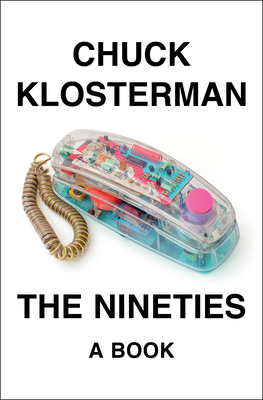
When I first saw Charles John Klosterman had a new book coming out about the The Nineties. I knew he would devote space, for too much space, to Nirvana’s album Nevermind. Klosterman’s essays and books cover a wide array of topics, but his primary focus has always been music. As such, we can call him a music critic without feeling too much guilt about limiting his curriculum vitae (or CV). As a music critic, Klosterman is professionally required to one superlative per every one hundred words. His awareness of this is quota is illustrated by various attempts to qualify his superlatives with qualifiers. The problem with this exercise is that he uses superlatives in conjunction with qualifiers so often that reading a Klosterman book can become a literal exercise in the form of mental jumping jacks.  
Some readers might view an Klosterman’s excessive use of superlatives as silly, but others might view the practice as the author making bold statements. If, that is, the author can back them up, and Klosterman does. Most readers, whether they agree or not, also view it as better reading when an author litters his narrative with bold statements. As my 8th grade teacher once told me after failing an opinion piece of mine, “If you’re going to be wrong, be wrong with conviction.” The problem with superlatives is that most authors feel compelled to address subjective tastes with qualifiers. I write this for those readers who might have a tough time making it through their jumping jacks.  

The best way to call Nevermind the greatest album of all time, as Klosterman does, is to say everything but. This literary device allows the author to load their but with supporting evidence to allow the reader to reach their own conclusions. Yet, those of us who read music critics, like Klosterman, on a regular basis, can’t help but think Nevermind is overrated. Most of us think it was a fantastic and transcendent album (I can’t remember meeting anyone, even those in the “sellout” crowd, who told me they thought the album sucked, but I’m they’re out there). Reading music critics, however, Kurt Cobain walked up Mt. Sanai and came down with these thirteen songs.  

Klosterman qualifies his superlatives in his first essay on Nevermind, saying, “The video for Smells Like Teen Spirit was not more consequential than the reunification of Germany. But Nevermind is the inflection point where one style [heavy metal] of Western culture ends and another begins.” Once he gets that humorous qualifiers out of the way, Klosterman writes that “In the post Nevermind universe, everything had to be filtered through the notion that this specific representation of modernity was the template for what everyone wanted from everything, and that any attempt to understand young people had to begin with an understanding of why Nirvana front man Kurt Cobain looked and acted the way he did.”   

This theory reminded me of a conversation I had with my uncle’s friend on the weekend after John Lennon was killed. I was not yet a teen, and this guy was well into his forties. As such, he had his finger on the pulse of the culture surrounding John Lennon far better than I did. When he said, “The man changed the world,” he said that to defend Lennon against the charge I made that Lennon was nothing more than a rock star. Even at that young age, I knew Lennon was a significant figure in our culture, but I thought the media attention devoted to the man was a bit over the top. “We were all asleep before John Lennon,” he added. “He woke us up.”  

Really?” I asked. “He affected your life that much?” He maintained it did. 

I lost a lot of respect for my uncle’s friend when he said that, for even then I had a tough time understanding how a rock singer, or any entertainment figure, could alter an individual’s philosophy to such a degree that it changed how they react with people, and the way they lived their life. As I’ve grown older, I realized some people read too many music critics and watched too many retrospective shows with cultural doyens dropping such bromides. The latter often occurs after the tragic death of a cultural icon, and we all rewrite our past to fit that narrative.  

As if to address this issue, Klosterman quotes Larry McMurtry’s Walter Benjamin at the Dairy Queen. “I suspect that [Walter Benjamin] would be a little surprised by the extent to which what’s given us by the media is our memory now. The media not only supplies us with the memories of all significant events (political, sporting, catastrophic), but edits these memories too.”  

The media permits us to touch the touching sentiment of the moment, so that we might become part of it. We remember where we were when we first heard the news. “I was eating a chili dog at the Dairy Queen that was just three blocks from my home, when a fella in knit cap told me that John Lennon was shot. I’ll never forget that cap. It was blue with a yellow line on it. He also had a beard similar to the one Lennon wore in his solo years. It was almost eery.”  

We repeat the lines media figures and figurines say and write with their king of the mountain characterizations of iconic figures and figurines to impress their peers, because we want to be their audience. We also want to be the writer writing to other writers, and we do so by speaking in superlatives to suggest we understand profound greatness. Common, every day people turn to their friends and say things like, “The voice of a generation, he woke us up, and I think about him every day.” We talk about his music changed our life, and how we’ll never be the same. These are touching sentiments that we might mean in the moment, but they’re enhanced by the media, and ultimately untrue.  

I tried to establish a link with an impressive individual I met. The best way to do that, I thought, was to relay whatever information I had about his hometown, Dublin, Ireland. I mentioned that I read most of Ulysses, and I added the joke, “I’ve probably read as much of that book as anyone has.” That joke played on the Larry King quote, “Everyone I know owns Ulysses, but no one I know has finished it.” The impressive individual looked confused, but I didn’t realize how confused he was, until he said:  

“Is that a book?” 

“Well, yeah,” I said completely thrown off, “by James Joyce?”  

“Never heard of him,” he said. 

“The author,” I said. He shrugged. “You’ve never heard of James Joyce?! I thought he was the most famous Dubliner this side of Bono. Don’t they have statues built for him in the town square?” Nothing.

This lifelong resident of Dublin had never heard of someone I considered one of his city’s top five most famous residents. After all my reading on Joyce, I considered it impossible that a Dubliner had never heard of him. I considered it the cultural equivalent of an American never hearing the name Babe Ruth. I realized that I fell prey to cultural insiders writing to impress fellow insiders. I love reading Klosterman, but this, too, is his motif. 

To Klosterman’s credit, he does qualify his superlatives at the beginning of the essay, writing, “The songs on Nirvana’s Nevermind did not tangibly change the world. There are limits to what art can do, to what a record can do, to what sound can do.”  

After submitting that qualifier, he writes, “Nevermind changed everything.” (Perhaps in an intangible way?) He focuses this thesis on advertising, specifically an ad that involved Subaru’s introduction of the Impreza. Klosterman concludes that Subaru’s spokesman in the ad had to “talk about Nirvana without talking about Nirvana,” because “Nirvana would have never participated in a car advertisement.” Klosterman basically admits that the pairing would’ve been disastrous if it happened, but he doesn’t explain why. He simply contributes to the narrative Cobain parlayed with the “corporate magazines still suck” T-shirt he wore on a Rolling Stone cover.  

I have no doubt that if Subaru approached Cobain, he would’ve laughed it off. Cobain gave us no reason to believe he was into the whole corporate sphere, and for the most part, he never wavered from the punk ethos. (Though he did force his bandmates to sign over most of the writing credits for Nirvana’s music. We should have no problem with that, since by all accounts Cobain wrote the lyrics and most of the music, but that action doesn’t align with the “One for all and all for one” Three Musketeers, punk ethos.)       

What if the Subaru proposal hit Cobain’s desk at Nirvana Inc., and Cobain was all about it. “Punk ethos be damned, look what they’re offering to pay me for a couple hours of work.” His business partners would’ve informed him that this move would not only irreparably damage Cobain’s image, but everyone involved and the legacy they were creating. “This will force your fans to defend the Subaru ad for the rest of time,” a member of his management team, probably named Todd, would say, “and I don’t care how much they’re paying you, your bottom line will be affected long-term.”  

Klosterman does admit that Nirvana (without singling Cobain out) made “conscious choices in order to become the most popular band in the world,” but Klosterman still feels the need to write “Nirvana would have never participated in a car advertisement.”    

One particularly obnoxious and useless complaint I have is Klosterman repeating the line, [Kurt Cobain] “didn’t know” about a company putting out a deodorant called Smells Like Teen Spirit. By writing this open-ended line, Chuck Klosterman contributes to a fable on par with “I cannot tell a lie. I did chop down that cherry tree” or every president in the last thirty years telling a reporter, “I haven’t read the report in question.” 

Klosterman relays the story of how a girlfriend (Kathleen Hanna) of one of Kurt’s girlfriends wrote, “Kurt smells like teen spirit” on his wall in lipstick. This was her note to Kurt and the girlfriend that informed them she was onto the fact that they were involved romantically. Now, it’s plausible that Kurt thought the lipstick message referred to the general smells of sex, but Kurt was a writer, and her message obviously inspired him. If he was so inspired to write a song about it, wouldn’t he say, “That’s hilarious, but what did you mean by it?” to Kathleen Hanna. If that didn’t happen, wouldn’t his friends ask him what it was about? If he told them what he thought it meant, wouldn’t they correct him, if he thought it was about the smell of sex? “No, what Kathleen Hanna was saying was your girlfriend uses a deodorant with the brand name Smells Like Teen Spirit, and the fact that you smell like that deodorant means she knows you’re having sex with her friend.”

If the origin of the message managed to escape his friends, family, and all of the small venues he played in to test the material out, wouldn’t someone in his band or any of the teams of people involved in the production process of the album inform him of the name of the deodorant before they released it?

Michael Azzarad writes Cobain claimed that he thought Kathleen Hanna’s message was in reference to “the conversation we were having, but … I didn’t know the deodorant spray existed until months after the single came out.” I’ve never been involved in the process of a song, granular to final press, but I can only guess that in the 90’s, a song passed through hundreds to thousands of ears before final production.

My thoughts, for what they’re worth, are that so many people hit Cobain from so many quarters that he asked for help. I imagine Cobain saying something like. “I love the name of the song so much, and I’ve tried to come up with other titles, but none of them feel as right. How do we escape this unfortunate tie-in that everyone goes on and on about? I can’t play it anywhere without someone telling me about that damned spray.”  

To which, a friend or a management type, probably said, “Just feign ignorance.” 

“But they’re not going to stop asking about it.”  

“They’re not, but when they do, just maintain that you didn’t know. Don’t include a timeframe. Just leave that comment open-ended, because it’s true, you didn’t know for a time. No one is going to ask a “What did he know, and when did he know it?” question about the name of a song. Nobody’s going to care that much.” 

Did George Washington chop down a cherry tree, did Led Zeppelin sell their souls to the devil, did Kurt Cobain know about the similarities between the name of his most famous song and a deodorant’s brand name, and did he seek fame and fortune?

On the latter, I suspect that Cobain wanted to make the best album possible, and he allowed some corporate guys to do whatever they had to do to make Nevermind as great as it could possibly be. Some, including Cobain, say that something was lost in the mixing process. So, why did he do it? Why did Cobain succumb to the pressure from label execs and permit Andy Wallace to master it with what some call an “airplay-inviting varnish”? I’ve read that many in his inner circle were against it, and Cobain later regretted it. To understand why he did it, we probably need sort through some deep psychoanalysis of Kurt’s past and present, but that would likely be so far off base that it’s not even worth trying. Some of those who were close to Kurt in the present tense of Nevermind’s pre-production and production, suggest he wanted it more than they will ever tell you. What is it? We don’t know, but I believe Kurt when he said he never wanted to be famous, and I don’t think he ever strove to be rich beyond his wildest dreams, but I have to imagine that he wanted greatness bestowed upon him by his peers first and foremost, rock critics and journalists, and us. I don’t think he necessarily wanted or needed the spoils that come with it however. 

All theory and analysis is autobiographical, as I wrote, and most of it is probably wrong, but the one thing we do know is Kurt Cobain, and Nirvana, wrote one hell of an album. Did the iconography of Kurt Cobain lead to rock critics, like Chuck Klosterman, using so many superlatives that Nevermind is now overrated? Perhaps. If Cobain’s worldview didn’t align so well with most of the rock critic world, they might have had a different take on his music. If the timing of the release of Nevermind was different, and it didn’t change the face of music (allegedly, single-handedly), would it have been regarded with such superlatives? Ifs and what if are for children, however, and when we wipe away all of it, and the myths, the narratives, and iconographic worship of Kurt Cobain, we still have to admit he and Nirvana wrote one hell of an album. On that note, Chuck Klosterman wrote one hell of a book, containing essays on Nirvana, 911, and other matters. His book on The Nineties is chock full of deep, entertaining insight into what made that decade what it was, and the reverberations that the decade sent down (or up?) to the modern era.

James Joyce: Incomparable or Incomprehensible?


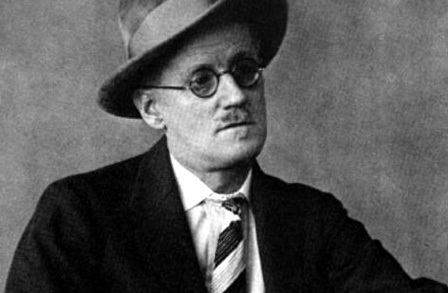
Those of us who are always on the lookout for edgy, racy content have heard the term “Joycean” thrown about with little discretion over the years. If you’ve heard this term as often as I have, you’ve no doubt asked, what does it mean to be “Joycean”? To listen to critics, it can mean whatever you want it to mean? They appear to be more interested in using the term than using it properly, but how do we use it properly? What does “Joycean” mean? If James Joyce were still alive, we would love to ask him if his last two books were two of the most erudite, most complicated pieces of fiction ever written, or were they a great practical joke you played on the literature community to expose reference makers and elitist, scholars for who they are?

James Joyce
James Joyce

Readers who seek to up their erudite status by reading “difficult” books, have all heard of Joyce’s final two works of fiction: Ulysses and Finnegans Wake, as literary scholars list these books as some of the most difficult, most complicated works of fiction ever created. Those of us who were intrigued, decided to pick them up that as a challenge of the mind, others attempt to read them to gain entrance into their subjective definition of elite status. Most are confused and disoriented by the books, but some have the patience, the wherewithal, and the understanding of all of the references made, and languages used, in these books necessary for comprehension. Those readers either deserve a hearty salute, or the scorn and laughter that Joyce provided, as a gift to the havenots, who are honest enough to admit that they don’t know what was going on in them. Was Ulysses such an ingenious book that it’s worth all of the effort it requires for greater understanding, or was it a book about nothing?  

I don’t understand either of these books, and I have gone back numerous times to try to further my understanding. Some have said that Ulysses is the more palatable of the two, but I have found it too elliptical, too erratic, and too detail-oriented to maintain focus, and I have purchased three different aides to guide me through it. Some of the readers who claim to enjoy Ulysses, admit that Finnegans Wake is ridiculously incomprehensible.

Most people enjoyed Dennis Miller’s tenure as an announcer on Monday Night Football, but most of those same people complained that they didn’t understand two-thirds of the man’s references. I didn’t keep a journal on his references, but I’m willing to bet that at least a third of them were Joycean in nature (Ulysses specifically). Miller stated that his goal, in using such obscure references, was to make fellow announcer Al Michaels laugh, but any fan who has followed Miller’s career knows that he enjoys the motif of using complicated and obscure references to make himself sound erudite. There are, today, very few references more obscure than those that recall the work of James Joyce, a man who described his last book, Finnegans Wake, as “A book obscure enough to keep professors busy for 300 years.”

Andy Kaufman referenced James Joyce when trying to describe his method of operation. The import of the reference was that Kaufman wanted to be a comedian’s comedian, in the manner that Joyce was a writer’s writer. Kaufman wanted to perform difficult and complicated acts that the average consumer would not understand, and the very fact that they didn’t “get it” was what invigorated him. He wanted that insider status that an artist uses to gain entrée to the “in the know” groups. After achieving some fame, audiences began laughing with Kaufman in a manner that appears to have bored him, and he spent the rest of his career trying to up that ante. By doing the latter, we can guess that there was something genuine about Kaufman’s path in that he was only trying to entertain himself, and his friends, and if anyone else wanted on board that was up to them. Joyce and Kaufman, it appears, shared this impulse.

Anytime an artist creates a difficult piece of work, there is going to be a divide between the haves (those who get it) and the havenots. When Mike Patton formed the relatively obscure band Fantomas, he never did so with the illusion that he was going to unseat the Eagles Greatest Hits, or Michael Jackson’s Thriller, atop the list of greatest selling albums of all time. He knew that his group would playing to a very select audience.

What is the audience for such difficult subject matter? Most people seek music, as either background noise, something to dance to, or something to which they can tap their finger. Most people read a book to gain a little more characterization and complication than a movie can provide, but they don’t want too much characterization, or too much complication. Most people only buy art to feng shui their homes. Most people don’t seek excessively difficult art, and those who do are usually seeking something more, something more engaging, and something more provocative that can only be defined by the individual. The audience who seek something so different that it can be difficult generally have such a strong foundation in the arts that they reach a point where their artistic desires can only satiated by something different.

Yet, different can mean different things at different times to different people. Different can be complicated, and discordant, but it can also be limited to style. At this point in history, it’s difficult to be different, in a manner that cannot be called derivative of someone or something, so some people seek any separations they can find. When the latest starlet of the moment twerks in a provocative manner, has a construction worker find her pornographic video, or accidentally has her reproductive organ photographed, we know that these are incidents were created by the starlet, and her people, to get noticed after they have exhausted all other attempts to be perceived as artistically brilliant and different.

There are other artists who are different for the sole sake of being different. This is often less than organic, and it often disinterests those who seek a true separation from the norm, because we feel that this has been thoroughly explored to the point of exhaustion. Andy Kaufman created something organically different that can never be completely replicated, in much the same manner Chuck Palahniuk, Mike Patton, David Bowie, Quentin Tarantino, and Jerry Seinfeld and Larry David did. Can it be said that James Joyce’s final two books were different in an artistically brilliant, and cutting edge manner that all of these artists’ creations were, or were James Joyce’s writings more symbolism over substance? Put another way, was Joyce a substantive artist who’s true messages need to be unearthed through careful examination, or was he simply twerking in a provocative manner with the hope of getting noticed by the elite scholars of his generation after exhausting the limits of his talent in other works?

Judging by his short stories, James Joyce could’ve written some of the best novels in history. Those who say that he already did, would have to admit that his final two works were not overly concerned with story, or plot. Those who defend his final two works would probably say that I am judging Joyce’s final two works by traditional standards, and that they were anything but traditional. They would probably also argue that the final two works sought to shake up the traditional world of literature, and anyone who dared to take up the challenge of reading these works would probably say Joyce sought to confound us, more than interest us, and if they concede to the idea that the final two works were different for the sole sake of being different, they would add that he was one of the first to do so. Those who defend his final two works say that they are not as difficult to read, or as complex, as some would lead you to believe. These people suggest that reading these two works only requires more patience, and examination, than the average works. Anyone who states such a thing is attempting to sound either hyper intelligent, or hyper erudite, for it was Joyce’s expressed purpose to be difficult, complicated, and hyper-erudite.

To understand Ulysses, one needs an annotated guide of 1920-era Dublin, a guide that describes the Irish songs of the day, some limericks, mythology, and a fluent understanding of Homer’s The Odyssey. If the reader doesn’t have a well-versed knowledge of that which occurred nearly one-hundred years prior to today, they may not understand the parodies, or jokes Joyce employs in Ulysses. Yet, it was considered, by the Modern Library, in 1998, to be the greatest work of fiction ever produced.

“Everyone I know owns Ulysses, but no one I know has finished it.”  —Larry King.

To fully understand, and presumably enjoy, Finnegans Wake, the reader needs to have at least a decent understanding of Latin, German, French, and Hebrew, and a basic understanding of the Norwegian linguistic and cultural elements. The reader will also need to be well-versed in Egypt’s Book of the Dead, Shakespeare, The Bible, and The Qur’an. They also need to understand the English language on an etymological level, for one of Joyce’s goals with Finnegans Wake, was to mess with the conventions of the English language.

Some have opined that one of Joyce’s goals, in Ulysses, was to use every word in the English language, and others have stated that this is a possibility since he used approximately 40,000 unique words throughout the work. If this is true, say others, his goal for Finnegans Wake, was to extend the confusion by incorporating German, French, Latin, Hebrew, and other languages into his text. When he did use English, in Finnegans Wake, Joyce sought to use it in unconventional and etymological ways to describe what he believed to be the language of the night. He stated that Finnegans Wake was “A book of the night” and Ulysses was “A book of the day”.

“In writing of the night, I really could not, I felt, use words in their ordinary connections . . . that way they do not express how things are in the night, in the different stages – conscious, then semi-conscious, then unconscious. I found that it could not be done with words in their ordinary relations and connections. When morning comes of course everything will be clear again . . .  I’ll give them back their English language. I’m not destroying it for good.” —James Joyce on his novel Finnegans Wake.

This use of the “language of the night” could lead one to say that Joyce was one of the first deconstructionists, and thus ahead of his time by destroying the meaning of meaning in the immediate sense. Those obsessed with James Joyce could interpret the quote, and the subsequent methodology used in Finnegans Wake, to mean that Joyce had such a profound understanding of linguistics that normal modes of communicating an idea, bored him. He wanted something different. He wanted to explore language, and meaning, in a manner that made his readers question their fundamentals. Readability was not his goal, nor was storytelling, or achieving a best-seller list. He sought to destroy conventions, and common sense, and achieve a higher realm of perfect, in which timeless abstractions cannot be communicated to those who adhere to common sense. This makes for an interesting conversation on high art, and philosophy, but does it lend itself to quality reading?

“What is clear and concise can’t deal with reality,” Joyce is reported to have told friend Arthur Power, “For to be real is to be surrounded by mystery.”

In the modern age, there is much discussion of the widening gap between the haves and the have nots. That particular discussion revolves around economic distinctions, as it has for time immemorial, but in the Joycean world, the gap involves those who “get” his works, and those who do not. Those who get it usually prefer to have deeper meanings shrouded in clever wordplay. They usually prefer symbolism over substance; writing over storytelling; and interpretation over consistent and concretized thoughts.

The two schools of thought between the haves and the havenots can probably best be explained by breaking them down to the different approaches James Joyce and one of Joyce’s contemporaries Ernest Hemingway. Hemingway wrote clear and concise sentences. Hemingway stated that his methodology was to write something that was true:

“The hardest thing is to make something really true and sometimes truer than true.”—Ernest Hemingway.

Putting Joyce’s final two works through the Hemingway school of thought, one could say that Joyce’s methodology was: Some of the times, it’s more interesting to make it false and allow others to define it as true. 

“Though people may read more into Ulysses than I ever intended, who is to say that they are wrong: do any of us know what we are creating? … Which of us can control our scribblings? They are the script of one’s personality like your voice or your walk.” —James Joyce

Those of us who have had a deep discussion, on a deep, multifaceted topic, with a deep thinker know that sooner or later a declarative distinction will be made if we stubbornly insist that we are not wrong. “You don’t get it, and you probably never will,” is something they say in a variety of ways. We all know what it feels like to be summarily dismissed as an anti-intellectual by a deep thinker? Those who aren’t snobbish in an anti-social manner, often avoid openly dismissing us when we’re around, but even the polite snobs give us a vibe, a look, or a chuff that is intended to let us know our place.

“Well, what do you think of it then?” is the response some of us have given, after being backed into an anti-intellectual corner by deep thinkers.

If they are an anti-social, elite intellectual snob, they will say something along the lines of: “I simply choose to think deeper!” It’s a great line, and it purportedly puts us stubborn types in our place, but it’s a self-serving non-answer. Those of us who are more accustomed to interaction with deep thinkers, will then ask them to expound upon their complicated, deep thinking? Pushing deep thinkers deeper will often reveal a lack of substance beneath their piles of style, and the careful observer will find that the results of their deep thinking is no deeper than the deep thinker cap they wear to the pub.

A number of attempts at reading Joyce has led me to believe that he probably didn’t have much substance beneath his piles of style, so he muddied the waters of his message with puns, songs, gibberish, abstractions, foreign languages, and overly complicated complications. He did this, in my opinion, to conceal the fact that when compared to his colleagues, he didn’t have all that much to say. If that’s true, he was definitely artistically accomplished in saying it.

Who can forget the many sayings that Finnegans Wake dropped on our culture, such as the transcendental sound of the thunderclap that announced the fall of Adam and Eve from the garden of Eden:

“bababadalgharaghtakamminarronnkonnbronntonnerronntuonnthunntrovarrhounawnskawntoohoohoordenenthur-nuk!”

What about the mirthsome giggles we have had in social gatherings with the catchphrase:

“A way a lone a last a loved a long the riverrun, past Eve and Adam’s, from swerve of shore to bend of bay, brings us by a commodius vicus of recirculation back to Howth Castle and Environs.”

Or the ever present: 

“(Stoop) if you are abcedminded, to this claybook, what curios of sings (please stoop), in this allaphbed! Can you rede (since We and Thou had it out already) its world?”

If you just read those sentences three or four times, and you still have no idea what it says, and you just went back to read them again, because you want to be a have that “gets it”, you’re not alone. If these passages were merely anecdotal evidence of the difficulty involved in reading Finnegans Wake, that would be one thing, but these difficulties litter just about every sentence of every paragraph of the book, as evidenced by the exhaustive assistance provided at the site Finwake.com for readers who have no idea what this writer is going on about. 

Finnegans Wake is reported to be in English, but it’s not the standard version of English where words have specific meaning. The “language of the night” was intended for linguists who are tired of reading words that have exact meanings, and it was intended to be playful and mind-altering, and rule breaking. James Joyce made references intended to be obscure even to the reader of his day who may not have Joyce’s wealth of knowledge of history, or the manner in which the meaning of the words in the English language have changed throughout history.

“What is really imaginative is the contrary to what is concise and clear.” —James Joyce

James Joyce was a stream of consciousness writer who believed that all “mistakes” were intended on some level that superseded awareness. In the 500+ page book, Finnegans Wake, Joyce found 600 errors after publication. He was informed of some, if not all of these errors, and he was reported to have fought his publishers to keep them in. Later editions were written to correct many of these errors, and provide readers “the book in the manner Joyce had intended.” If Joyce didn’t believe in errors, however, how can those who corrected them state that the corrected edition is the definitive edition that “Joyce intended”?

“The man of genius makes no mistakes, his errors are volitional and portals of discovery.” –James Joyce

Throughout the seventeen years Joyce spent writing Finnegans Wake, he began to go blind, so he had a friend named, Samuel Beckett, take dictation over the phone to complete the novel. At one point in this dictation setting, someone knocked on Joyce’s door. Joyce said, “Come in!” to the knocker, and Beckett wrote the words “Come in!” into the narrative of Finnegans Wake. When this error was spotted by Joyce, and the confusion was sorted out, Joyce insisted that Beckett, “Leave it in!” On another occasion, when a printer’s error was pointed out he said, “Leave it. It sounds better that way than the way I wrote it.”

There are three different versions of the text: The first and second are the editions that Joyce submitted for publications with all of the errors intact. The third edition has the errors that the editors located, and the 600 corrections that Joyce spent two years locating, corrected. Some would have you believe that first two editions are the definitive editions, but you have to be a Joyce purist to appreciate them.

Can it be called anything short of egotistical for an author to believe that his subconscious choices and decisions, are somehow divine? If, as Joyce said, and Picasso later repeated in regard to his paintings, mistakes are portals of discovery, then we can say that’s great, and incredibly artistic in the process of creation. To leave it in the finished product, however, and subject your readers to the confusion, just seems narcissistic. “Here’s what I was thinking at the time,” Joyce is basically telling his readers. “I don’t know what it means, but this is a higher plane of thinking than simple conscious thought. Isn’t it magical? Maybe you can make some sense of it. Maybe you can attribute it to your life in some manner.” This method of operation may say something profound about the random nature of the universe, but when we’re reading a novel we don’t necessarily want to know about the randomness of the universe, unless it’s structured in a manner that leads us to your statement. 

Not everyone can write a classic, and some realize this after a number of failed attempts. Once they arrive at this fork in the road, they can either write simple books that provide them and theirs an honest living, or they can grow so frustrated by their inability to write classics that they separate themselves from the pack through obscurity. The advantage of creating such an alleged contrivance is that beauty is in the eye of the beholder, and the beholder can assign their own relative beauty to it. Some would say this is the very definition of art, but others would say even that definition has limits. Some would say that the most obscure painting is art, because they “see it”, where others see only schlock for elitists to crib note to death, until meaning is derived.

James Joyce is considered the exception to this rule, fellow writers have told me, and if you are going to attempt to write an important novel in the 21st Century, you had better be familiar with him. I’ve tried, and I now believe that I’m destined to be a havenot in the Joycean world … even with Ulysses. The question that arises out of those ashes is, am I going a long way to becoming more intelligent by recognizing my limits, or should it be every aspiring intellect’s responsibility to continue to push themselves beyond any self-imposed limits to a point where they can finally achieve a scholarly understanding of difficult material? If this is a conundrum that every person encounters when facing challenges to their intelligence, is Ulysses, or more pointedly Finnegans Wake, the ultimate barometer of intelligence, or is it such an exaggerated extension that it had to have been a practical joke James Joyce played on the elitist literary community to expose them as the in-crowd, elitist snobs that they are when they “get it” just to get it. Do they really “get it”, or are they falling prey to Joyce’s clever ruse to expose them as people that “get” something that was never intended to be “got”?

How to Succeed in Writing VIII: Insatiable Curiosity


This is my letter to those of us who have an insatiable curiosity who haven’t achieved anything in the field yet. This is a letter to those who haven’t found their artistic voice just yet but know it’s somewhere between their favorite authors, and the thousands of other books they’ve read and them. Continue that search I say, and if you find it, follow it in any direction it leads you. The path through some odd rabbit holes and dark forests might not make much sense, but all paths eventually lead back to you. It might not make much sense why we a particularly obscure piece of literature by some obscure author interests us, but I advise you to purchase it and see if it pays some artistic dividends.

I didn’t know any of this when I started, but I ached to express myself in some way. I didn’t know how to express myself, but the desire to do so was enough to guide me passed the heartbreaking critiques I received. I was not the prodigy I thought I was when I first started in other words. I was not a gifted intellect who just needed a canvas, but I was a curious sort who loved processing the data I saw in my otherwise boring days into creative non-fiction. When I started this venture, I tried to hard to spin the stories I had into something gargantuan, but I found the truth, the whole truth, and nothing but the truth far more compelling. It took years to realize that I was never going to be Stephen King, Dean Koontz, or James Patterson, and it took me a little longer than that to be okay with that. Thanks to a couple of articles and books, I discovered that I was a creative non-fiction writer before being creative non-fiction was cool, who reported on the facts, as opposed to an out and out artist who could spin an organic web. 

I knew I was different, yet I didn’t know how to service those variables in a constructive manner. My worldview was different too, but I had no idea how to create a vehicle for it. This mystique I created of being a writer also became counterproductive over time. I wanted to create this world without doing the work. Every time I wrote, I received more evidence that I probably wasn’t as good as I thought.

Some of the people around me were quite generous in supplying notices to bolster this notion I had that I probably wasn’t as skilled as I thought I was. The one key characteristic that carried me through all that was that I had/have an insatiable curiosity. This level of curiosity can be embarrassing at times, as it can override good sense. When I’m involved in a relatively unique experience my curiosity gets the best of me, and while I might know how and why things work, on a certain level, some odd part of me wants to “rework them” with you to understand how we all arrived at that conclusion. It can be embarrassing, because most people provide the A-Z mechanics answer with that “of course” tone. I then share the “of course” tone in my answer, and both of us consider me a little dumber in the process.   

One element of the “of course” findings involved me wanting to be more interesting than I was, but I never quite made that leap. There is an A-Z checklist to being interesting, some have it, most don’t. How do you achieve it, in a room setting, at a Thanksgiving Day dinner? I compensated for my short comings by studying those around me. I developed a mental, A-Z checklist of those characteristics, but I was never able to employ them properly. 

“Why did you talk about that instead of this?” I would ask scintillating conversationalists. “Why would you think anyone would want to know how you roll out a sleeping bag, in a tent, while on a camping expedition? Everyone considered it hilarious, I know, but why did you think anyone would? Why did you say the in the third sentence of your presentation, instead of the more common the? Is it all about how we tell such stories, or provide a hilarious retort? Why do we react differently to two people who say almost the exact same thing?” Some people might add to such a story, others might take a leap from that joke to add one of their own, but I would study and later interrogate the storyteller to try to understand the process of joke telling, storytelling, and what separated them from those who can’t tell a joke or a story as well. I understood it on a macro level, but those finite details of being interesting plagued me. What’s the difference between Jerry and Lou and Daniel and Ron? It’s obvious to anyone paying attention that Daniel has simply checked out. I don’t know what roads he’s been down, but somewhere along the way, he determined that no one is interested in what he has to say. He gave up ever trying to be engaging. He just knew he wasn’t, and for reasons inherent to his nature, he knew he never would. Most entertaining and engaging people don’t put a lot of thought into it, they just have fun, but others learn the process as they go. I am perpetually frustrated by my separation from those who are entertaining, and I discovered that in the process of trying to understand the “it” factor they have, I was trying to understand more about myself.  

I didn’t do any of this for the purpose of developing high quality material, it’s more a byproduct of it. I am curious to a fault, and I write that word fault with the idea that some people who know me well consider me stupid, naive, and stupidly naive. When they explain it to me, I feel stupid and naive, because on some level I knew how it worked, but there is this sense that I want it reworked for me, so I can understand it again, more thoroughly, down to the grains of construction.  

How deep is our sense of curiosity? How deep into the organic grain of construction are we? What do we do with the information we find? Most of it is not useful, in an artistic sense, but organic curiosity often leads to aimless fascination that just might produce a grain of inspiration.   

It’s in these grains of construction that I discovered an individualistic interpretation of what it means to be a writer. A lot of new, and longtime, writers write, speak, and hypothesize about the process of writing. We speak about having post-it notes all around them to capture the ideas of the moment, or a moment, before they forget them. We talk about the tools we use to create, the mood we need for proper creation, the setting, the mindset, and everything that we’ve defined as the characteristics of being a writer, but how do we transport all of that into an interesting idea? 

The best route to developing interesting ideas is to have the most boring childhood imaginable. I don’t know how boring someone else might view my childhood, but I can report that I spent vast amounts of hours doing nothing. With the advent of cell phones, this might be a thing of the past, but I spent those hours doing nothing but thinking about stuff. I rewrote and editing real conversations I had thousands of ways, and I spent so many hours fantasizing that I became the adult and the storyteller I am today.  

Nothing replaces the human mind, it’s the best device for creative thought ever invented. We shouldn’t need post-it notes, recording devices, or anything more than a well-honed brain. We record that which is memorable, or noteworthy, material. If it is, in fact, noteworthy material, it will stick. It will gestate in your brain, until you have a completed idea of that which you have experienced. In the curiosity regarding the organic grain of construction, the creative mind will eventually understand as well as, if not better than, those who constructed it, for the purpose of rewriting, or reconstructing it with a creative spin. 

james-joyceAre you Kerouac or Joyce?  One style of writing that new writers, and complicated artistes, laud is the Jack Kerouac and James Joyce style of writing called stream-of-consciousness (SC) writing. SC writing is a style of writing that plays out exactly as it sounds: An author sits down and composes 300-700 pages of prose in a matter of months. The SC author does little to no editing and revising, because in the strictest definition of SC writing there are no mistakes in a contextual or conceptual sense. “One error is a mistake, two are jazz,” some say Miles Davis once said. Contextual mistakes, according to those who pursue this form of writing, and the painter Pablo Picasso, are subconscious leads. What could be seen as an errant stroke by some was something to build on for Picasso, Davis, and Joyce and Kerouac when it came to writing. They saw mistakes as the subconscious guiding them down a path they hadn’t consciously considered before. Both of these writers were forced to fight off editors and publishers in the belief that their works should remain as is.

kerouac“I write to entertain myself,” those who adhere to the Joyce/Kerouac style say. “If anyone else is entertained, that’s gravy.” The reason we started writing in the first place was to see if we could take all of our influences and combine them with our inner voices, to achieve stories that would entertain us. Too much editing and revising takes the spontaneity right out of an artistic creation, and trying to make my pieces relatable to all is impossible, so why would I spend too much time trying to correct conceptual and contextual mistakes?

Have you ever read James Joyce’s Ulysses? How about Finnegans Wake? Most normal humans, of adequate intelligence, need a guide to help them understand all of the references and allusions Joyce makes in these works. All of Joyce’s jokes and provocations were “in-house” references that he understood, and that you can understand too…with a reference guide that’s almost as lengthy, but they’re not enjoyable books as a standalone. No one will know what the heck you’re talking about, in other words, when you write in Joyce’s SC manner. You will know, as Joyce and those that lived in Ireland at the time knew, but your reader won’t know. You will only frustrate them. “Can’t you see that A led to B, and C was the result?” Oh ok, they say, now I get it. As frustrated as you were with them, it wasn’t their fault that they didn’t get it. It was yours, and you need to edit and revise more.

Most new writers should be advised to follow the editing and revising school of thought for just this reason. This line of thought suggests that a story matures in the editing process. It suggests that the framework of a story can be borne in the stream-of-consciousness (SC) stage, but that the marrow of a story is created when we go back and live through the story again and again, until we reach the readability stage. This theory also suggests that editing and revising stories gives the author greater objectivity than he can achieve in the creation process. Objectivity gives the author the chance to attempt to read the story in the manner a reader may read their story. It gives the author some distance from the relatively narrow position one is in while creating the piece, and they can correct some of the errors of flow and characterization that may not be apparent in the creative process.

We “editing and revising” writers find it hard to believe that Kerouac and Joyce were able to develop their story, their characters, their pace, and their setting on the fly in the manner they suggest. It just doesn’t seem feasible—no matter how brilliant they may be—that they could make all of the connections, and all of the asides mesh well into a story on the fly, but if you believe the Kerouac myth—that Kerouac created—he wrote his classic On the Road in a drug-frenzied three weeks on a scroll of paper. How much of this myth is true should be left up to historians to debate. What cannot be debated, however, is the fact that Kerouac and Joyce submitted relatively raw pieces of work that achieved historical status. What also cannot be debated is that—if everything they’ve said about their process is true—they should be held out as the exception to the rule that editing and revising are the keys to achieving a complete and readable story.

Most of us are not a “Man of Golden Words”, to borrow a phrase from lyricist Andrew Wood. Most of us write stupid things, bad scenes, flat characters, sloppy sentences, too much setting, unnecessary asides, and our flow isn’t quite right the first time through. We also write “great scenes” that appear foolish in revision. Most of us need advice, a second reader, and a vocal read-through. Most of us are not spontaneous, artistic geniuses, and our work could use a lot of sprucing and pruning. In this refutation, I go back to the organic construction of the grain. I believe that writing a brilliant line, as Hemingway would, requires numerous rewrites, reworking, and shape shifting. If I rework a line seven different ways, I might eventually produce enough material to isolates the germ and protect the interiority of my idea. If you are an artistic genius—and I’m not one of those who claims that no one is, out of spite for not being one—God love you. I wish I was one who could spontaneously create something that appears so simple without having to work so hard at it.

Editing and revising are definitely not the fun part of artistic creation. They are, for the most part, tedious activities that require training and discipline, and training and discipline are not the artistic principles that complicated, non-writing writers want to endure when they think about, talk about, and write about the process of their creations. The Joyce/Kerouac process appeals to them, because it makes them feel more like an artistic genius. Writing should be about writing, they are likely to say. It should be spontaneous, so that it’s still fun, and when they can’t spontaneously create, they tell people they have writer’s block. Writer’s block is a fundamental element of the complicated, non-writer’s writing life, and they all have their processes to help them out of it. True writers, in this writer’s humble opinion, never experience writer’s block. They may have moments in which they are more inspired than others, but to be unable to think of anything to write just seems impossible to those of us who have written so much that we’re now disciplined enough—after hours of exhaustive training—to always write something.

Fruit and Flowers: On that note, for the rest of us who don’t receive divine inspiration for artistic creations, there is a cure: “Paint fruit and flowers!” Flipping through various collections of art, I was surprised to find so many mundane and simple creations by artistic geniuses. Flip through any Van Gogh collection, Picasso collection, or Matisse collection and you’ll find them—relatively boring and mundane paintings of the sky, shrubs, trees, fruit, and flowers. I was shocked at how many of these paintings there were in the anthologies of these artists. Why would such talented artists waste their time painting such seemingly benign and boring paintings? Answer: They were keeping their artistic muscles taut and honed. They were learning the art of using color and contrast, and prominence and shadowing. They were finessing their God-given talent. They were becoming artists, in other words, and they were getting better, and when divine inspiration eventually struck they would be ready for it. Some of the complicated, non-writing writers have this Hollywood image of writers that tells them they need to be inspired to write. These writers know that their best material will occur when the Danube River is just outside their hotel’s window sill at a time when the first storks make their appearance in Petrovaradin. These writers know they can’t be too happy, or too sad, and that they need the finest Colombian coffee scents in their nose to receive divine inspiration. A drafty writing room with Gatorade and Diet Sunkist is just not conducive to inspired writing. They’ll tell you that they have writer’s block, when you ask them what they’re writing.  “Well,” I want to scream at them. “What are you doing about it? Try writing Fruit and Flower stories!”

“That’s easy for you to say,” will be the theme of the “complicated” writer’s reply, “but I can’t write when I’m not inspired.” If I were to see something they wrote that was at the artistic genius level, I would have no ammunition in these conversations, but they’re usually just boobs like me who want to purport some sort of artistic genius persona. They’re usually not writing anything at all. They’re usually just lazy, complicated, non-writing writers. “Write something stupid,” I want to say. “There are fruit and flowers everywhere. You don’t need to write Crime and Punishment every time out, but if you continue to write your Crime and Punishment may fall out from between the cracks.”

Therein lays the key to great writing, in my humble opinion, for if you continue to fertilize the seed with the dung of creating so many pieces that are not worthwhile, you might eventually create a flower. Others (most) will never produce a Ulysses, a World According to Garp or a Crime and Punishment style flower, and they may become so frustrated that they don’t want to continue. Those people probably shouldn’t continue. This isn’t for everyone. It’s for the incredibly talented individuals, and those with incredible amounts of perseverance.   

This may seem antithetical to everything I’ve written over the course of these How to Succeed in Writing blogs, but the question is a vital component to writing fiction, non-fiction, creative non-fiction, and everything in between. Do you enjoy writing, expression, and artistic creation, or do you want to be famous? Have you created a number of good works, but none of them are of the highest quality? How do you handle that? Do you feel like an utter failure, or are you aching for more? If you’re a complicated artiste that hasn’t achieved the fame you believe you should’ve at this point, you may want to give up. Maybe you just weren’t meant to be a writer in the first place. It’s a very important crossroads for you. If you have the temerity to push ahead, there are a number of things that you can do to keep ‘it’ all shiny and honed until you receive divine inspiration.