Although it’s never explicitly stated in Jon Ronson’s Who Killed Richard Cullen? report for the Guardian, this reader can’t help but think that the central character of this report, a British citizen named Richard Cullen, was ultimately a victim of his own hand. Author, Jon Ronson, does state that Richard Cullen made some decisions in the process that led to his demise, but for the most part Ronson characterizes the events that led Mr. Cullen to take his own life as that which nobody forced Mr. Cullen to do, but everyone did.
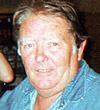
Mr. Richard Cullen decided to play what Mr. Ronson characterizes as a “peculiarly modern British” game of paying off debt via a credit card. This game involves using one “unbelievable good deal” offered by a credit card company to pay off a debt, followed by another decision to roll that credit card’s debt over to another “unbelievable good deal” from another credit card company, until the victim of this game, in this case Mr. Cullen, ends up accumulating twenty-two credit cards, with twenty-two different compounding interest rates.
If anyone reads through the list of Richard Cullen’s actions with the belief that the man attempted to enrich himself by playing this game, they are mistaken. Mr. Richard Cullen was a good and honest man who wanted to pay off a debt that arose as a result of a health crisis his wife experienced. Mr. Richard Cullen believed he figured out a loophole in the system that would help the Cullens remain debt free. The Cullens, it appears, were not so desperate that this was a last resort. It appears as though Mr. Cullen thought he could beat the credit card by rolling debt through the “unbelievable good deals” that credit cards offer was a more advantageous way of cancelling debt. We’ve all received mailings that suggest we will pay 0% interest for the first six months if we sign up now. Mr. Cullen thought he could use those offers, and subsequent offers, to eventually pay it all off. It would prove to be a series of fateful decisions that eventually led to Richard Cullen conceding defeat in this game, by taking his own life.
Was Mr. Cullen a victim of targeted marketing? Mr. Ronson’s meticulous research makes the case that Richard Cullen most likely was. Ronson’s research shows that that targeting involved deregulation of the industry, reported to allow members of the lower class greater access to credit, thus allowing credit card companies to give more loans to a greater number of people. This eventuated in a series of unintended consequences through government action that led to a group called list-brokers –aided by a complicated, computer algorithm called Mosaic– to provide lists of people considered “prime targets” to credit card companies for eventual lending. Mr. Ronson’s report does touch on the actions of government officials attempting to be wonderful without gauging the consequences, but Mr. Ronson focuses most of his piece’s content on the credit card institutions that took advantage of the lack of foresight by the government officials, and he backs up his thesis with an admirable amount of research into the process. The glaring omission in the piece is the amount of blame that we, the readers, should direct at the victim of this convoluted game: Richard Cullen. If, for no other reason, than to learn a lesson from it.
This approach might be viewed as a cold-hearted approach by the reporter, and it may have angered the Cullen family, that Ronson might have endeared himself to in the process of reporting on this story, but the greater lesson of what Richard Cullen tried to do, needs to be taught. How many of us are susceptible to “no interest (for a specified amount of time)” marketing campaigns, and how many of us are susceptible to their “one time only” campaigns? The lesson of Richard Cullen needs exposure, so that it makes a mark on those that learn the details of it.
Mr. Ronson describes Richard Cullen’s plight as beginning with a health crisis, his wife’s.
“There had been no splurging,” Richard Cullen said. “No secret vices.” Richard Cullen just tied himself up in knots, using each card to pay off the interest and the charges on the others. The fog of late payment fees crept up and eventually engulfed him.

One curious line in Mr. Ronson’s report states that, “Right now, nobody knows how Richard Cullen’s strategy fell apart.” At various points in the report, we learn that Mr. Cullen presumably went to a credit card company to help his wife pay off the $4,000 dollar health care bill, at 0% interest, and he proposed to her that he would “switch (her debt) to another one after six months.” He then took six weeks off work, during this period, to care for his wife, and he began “signing up for credit cards” to “cleverly roll the debts over from account to account.” This reader would suggest, having never attempted to play this game with credit cards, that the strategy fell apart right there, at the beginning.
Right there, at the very beginning, someone wiser than Richard Cullen should’ve stepped in and said something along the lines of: “Have you ever viewed the annualized corporate profits of these credit card companies? They don’t produce an actual product, yet their profits dwarf most of the blue chip companies that do. How do you think they accomplish this? How does the beautiful city of Las Vegas manage to build a big, brand new building almost annually? Have you ever heard the line: ‘There’s a sucker born every minute?’ Did you laugh at that line? Did you think of all those poor saps who don’t have the wherewithal to spot the scheme, and did you ever consider the idea that they might talking about people like you, and the “perfect” and “brilliant” strategies you have to beat the system?”
The point of the statement “Right now, nobody knows how Richard Cullen’s strategy fell apart” also has something to do with the idea that no one knows the specifics of what Richard was attempting to do, because as his wife, Wendy states, “He wasn’t a man who talked a great deal, and he never, ever discussed finances with me.” To answer the question of specifics, this reader would suggest that Mr. Ronson might want to troll through the man’s receipts and financial records to find the point where Mr. Cullen’s strategy fell apart. Mr. Ronson does appear to answer this question by prefacing it with the words “Right now.” Critical analysis leads this reader to wonder if these words permit Mr. Ronson a work around that allows him to avoid the discussion of Richard Cullen’s role in his own undoing. The implicit follow up, this skeptical reader reads, is that “In the future, we may know, but “Right now” we don’t, so let’s get to the point of this article.” The answer, the reader would assume, is in the accounting. Mr. Ronson decides, instead, to move to the question of marketing arms of the credit card companies providing alluring tag lines to the unsuspecting, a question Ronson appears to believe is answered by the following line from Richard’s wife:
“He (Richard) said he didn’t seek out all of the 22 credit cards he had somehow ended up acquiring between 1998 and 2004. On many occasions they just arrived through the letterbox.”
The question this quote prompts is how many people receive credit card offers in the mail, and how many respond? It’s entirely possible that the demographics of the Cullen home led them to being targets of the credit card industry, but how many in that area, my area, and your area are targets? How many of those same people respond? As they say of internet fraud and phishing schemes, those that swindle only need a success rate of one in one-hundred to be successful.
The Credit Card Addiction
As Tommy Lasorda once said of drug addicts, and I’m paraphrasing, “It seems to me that they make a decision to continue doing what they do every single time they do it. I don’t see them as victims.”
Without knowing the specifics of what happened to Richard Cullen, it would seem to me that he had many opportunities to correct the course at various points along the way. The decisions he made along the way led to him falling prey to the very human conceit of mental prowess, regarding a belief in his ability to master an otherwise unmanageable game. When future mailings arrived in the letterbox, in other words, Richard Cullen should’ve not only thrown these away, but he should’ve stomped on them and burned them in a ceremonial manner. He decided, instead to sign up for another one without asking the vital question: “What’s the catch?”
Those three words “What’s the catch?” seemed fatally absent from Mr. Cullen’s vocabulary throughout the chain of events that led to his demise, and those three words are not the province of highly educated, upper class types. These words seem, more often, to be the province of the lower class, and uneducated types who attempt to mentally out-duel one another with “gotcha” games. It seems indigenous to those who attempt to display their street smarts by engaging in the “What’s the catch?” line before the other has entirely finished their presentation. At the same time, however, some of us fall prey to the conceit that we know how to play the game so well that it might prove to be our undoing when we encounter the organizers of said game, because we have a strategy, or we fall prey to the belief that we have spotted the loophole nobody else has.
One victim can feel for the plight of another victim, amassing a debt $4,000 dollars (Mr. Ronson uses the British Pound), some could even see that as such a manageable debt that they go beyond that, and most would also admit that it’s entirely feasible that that debt could compound greatly with interest. Most would admit that at some point, before amassing a $130,000 debt that Mr. Cullen was eventually left with, that they would humble themselves, at some point in the process, and sit down with someone who “really knows what they were talking about” to discover how truly complicated the business of credit cards is. For most, this humbling part of the process occurs quite early on, and in this part of the process, I am quite sure that most readers would have nothing but empathy for the dire straits that Mr. Richard Cullen found himself in.
There have to be very few who wouldn’t empathize with the crushing realization that Richard Cullen must have realized when he couldn’t afford to pay one, simple health care bill at the age of sixty-five (the age of Richard Cullen on the day of his death). The crushing realization probably had something to do with the idea that life hadn’t worked out the way Mr. Cullen thought it would. Most of us figure that we’ll have a pretty decent hold on what our parents did right, and what they did wrong, and all of the twists and turns life offers us to a point where when we’re sixty-five we should be living fairly comfortably. Some might feed into the notion that we’ll be rich beyond our wildest dreams, but few of us considered that we’d still be living the 9-to-5, paycheck to paycheck, type of lifestyle that forced us to cut back and called upon us to sacrifice. We don’t know Mr. Cullen’s financial status, but we can assume that Richard didn’t want his wife to feel guilty about forcing the family to cut back further and sacrifice more. We can also assume that Richard Cullen was frustrated that he was unable to flip a switch and make it right. We can assume that this had something to do with the idea that his life had not turned out the way he thought it would. He might have thought that he found a loophole in the credit card game, and that his creative ingenuity would prove that he wasn’t a poor provider for his family.
The ultimate moment of vulnerability arrived, for Richard Cullen, when the envelopes with red boxes and “Date Due” letters were on his left and the promises of other 0% lending letters were on his right. Most people can find themselves amassing debt at this point. Almost all of us fall for these marketing campaigns to one degree or another. We may not even employ the “What’s the catch?” mentality initially, but there is a point where this mentality does eventually kick in. There is a point where everything our parents should’ve taught us should’ve wedged itself in the scenario. There should’ve been some sort of rationale that told us we’ve reached a point where enough is enough.
Jon Ronson informs us that the Cullen family’s attempt to reconcile the chain of events that led to Richard Cullen’s suicide, recalled for Mr. Ronson a song from Bob Dylan:
“I remember an old Bob Dylan song Who Killed Davy Moore? in which a boxer dies in the ring. In the song, the crowd says it wasn’t their fault (“It’s too bad he died that night, but we just like to see a fight”). The gambler says it wasn’t his fault (“I didn’t commit no ugly sin, anyway, I put money on him to win”). The opponent says it wasn’t his fault (“I hit him, yes, it’s true, but that’s what I am paid to do”). In the song, nobody killed Davy Moore and everybody did.”
Mr. Ronson’s Who Killed Richard Cullen piece is a well-researched, in depth, and well-written condemnation of the credit card industry, and I highly encourage anyone who has thoughts of signing up for a credit card –for whatever reason– to read it. His final, and most thorough condemnation arrives when he finds that the Cullens were conspicuously targeted because they lived in an area that the computer program Mosaic found contained individuals that would need money. The computer program targeted people who own their home (an important aspect in the program should the need to seize property arise), coupled with the idea that the people in this area probably might not be smart enough to read the small print and spot the pitfalls. Mr. Ronson also finds the man most responsible for the deregulation that freed up the credit card industry to allow lower class individuals the same access to credit that the other classes had. A Lord Griffiths of Fforestfach –the vice chair-man of Goldman Sachs International, a former director of the Bank of England, and once the head of Margaret Thatcher’s Domestic Policy Unit– admitted that he was in favor of breaking up the “classic cartel” that was the banking industry of December 1970. At that time, he says, credit was “very much a middle-class preserve and I believed that the democratization of credit had to be a good thing. Everyone in principle should have access to credit.
“The only way in which to make banking a competitive industry is to remove all obstacles to potential new entrants into the industry,” he says. It was, by all accounts, a key factor in the subsequent deregulation of UK banking.
He concludes by saying, “I don’t think anyone would have foreseen how innovative and aggressive and competitive the financial services would become in their techniques,” he says. “The whole lot of them are to blame.” He pauses. “I’m not advocating a return to the status quo. But the pendulum has swung much too far.”
The result, he states, was:
“The pendulum has swung much too far” in the other direction to a point where (a report Ronson found that Griffiths later wrote stated). “The sheer scale of consumer debt [1 trillion pounds] has made millions of households extremely vulnerable to shocks to the economy … such as oil price rises, acts of terrorism and wars … Debt is a time-bomb for the 15 million people who struggle with repayments.”
When an argument, such as the one Mr. Ronson presents in this report, is such a thorough, and convincing, condemnation of one side, I can’t help but think pink. There’s an old joke that involves an instructor telling a student to avoid thinking pink, because the instructor knows that will be the first thing the student thinks of when instructed to do otherwise. Mr. Ronson concentrates on the data that he believes relieves Mr. Cullen of blame in this situation. It makes for a compelling, compassionate story, and it bolsters Mr. Ronson’s apparent desire to “comfort the afflicted and afflict the comfortable.” His expose calls for structural changes to the integrity of the system, and this reader doesn’t doubt Mr. Ronson’s sincerity. This reader was, however, unable to avoid thinking pink.
We’re not supposed to think about Mr. Cullen’s role in this unfortunate debacle that Ronson characterizes as “no one is to blame and everyone is.” We’re not supposed to think about all the decisions consumers make along the way, when they fall prey to predatory lending. We’re not supposed to think about the recipient of nefarious marketing campaigns. We’re not supposed to think Mr. Cullen, and all of the unfortunate victims who fall prey these ploys, could’ve stopped at some point. We’re supposed to look at these matters in terms of bad guy versus good guy.
The “There but for the grace of God go I” line pops into my head throughout this story, for I know that my ego is probably as substantial as Mr. Cullen’s probably was. I also know what a blow it would be to my ego to realize that I cannot play this game as well as the average joe on the street, then to have to admit that my attempt to master this game has put my family in a position where my kids might not be able to satisfy this debt throughout their lives. I cannot imagine what a crushing blow that must have been to Mr. Cullen. As smart as I think I am, I’ve learned that it doesn’t matter when you begin playing on another’s home field. When I enter the turf of the used car salesmen, for example, I know I enter the underdog. As such, when I receive “no interest (for a specified amount of time)”, “once in a lifetime” deal, I don’t even open it. I place it in the trash can, rubbish bin, or whatever you call it. When I receive the phone call that offers “once in a lifetime” deal, I hangup. I’m not smarter than Mr. Cullen, the author, or anyone else for that matter. I will say that I am more aware of my limitations than Mr. Cullen was, for I would never flirt with the notion that I can beat a person, or a corporation, at a game that they created.
A quick read of this article might lead the reader to think the author lacks sympathy for Richard Cullen and his family. You might be surprised to hear, I think the opposite. I don’t care how much legislation various governing bodies pass, there will always be those who prey upon others. I don’t think it does us any good to call for more legislation, as the author appears to be doing in this story, or at least a reversal of a misguided bill. What does a legislation do, they pass laws, and most of those who prey upon victims are not impeded by laws. The best measure I think we can use to prevent more Richard Cullens is to tell his story, in a constructively critical manner that can seem harsh at times, to prevent future Richard Cullens.

 Rilaly