Tennis Shoe Thomas


“Why do you insist on wearing tennis shoes?” Thomas asked me.

That was how Thomas greeted me at the door of his home. Prior to his greeting, his mother told him what my name was, but that was of secondary concern to this kid who couldnt believe an eleven-year-old would wear tennis shoes. His mother chastised him quietly for being rude, but she did so in a way that appeared to quietly accepted him for who he was. He asked me that question as if he knew me for years, and he was bothered by my insistence on my foot apparel, but this was the first and only time we met. Thomas said tennis shoes with a level of disgust one might have for another who chooses to have leprosy. His question also laid a depth charge that would detonate throughout the course of this evening in the form of a theme: There was something I missed, some crucial element of being a pre-teen years that could hinder my preparation for the life beyond.
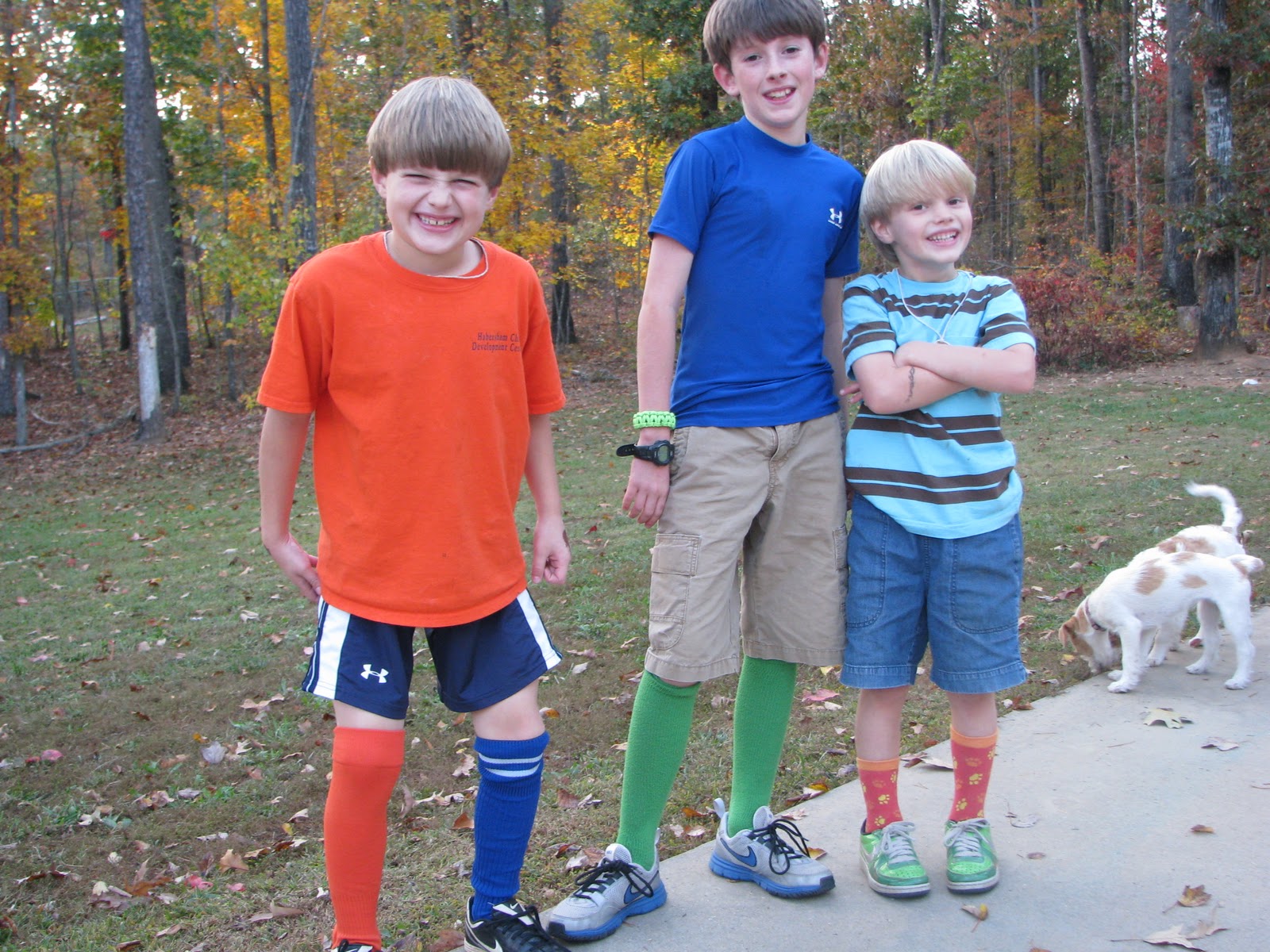
Thomas’ confidence was difficult to mirror, as we were on his home turf, and I was the visitor with all the insecurities of entering another’s home. I don’t think I was four steps in his home when he blindsided me with that scrutiny. I was vulnerable to what other kids thought as any other kid, and Thomas was an older kid to boot, which only increased my feelings of vulnerability thought, and he took full advantage. If I were better prepared for the question, I would’ve mentioned the fact that I didn’t pick my shoes out, but even if I did, I’d never given much consideration to the process of buying shoes. I was a kid, my dad bought my shirts, my shorts, and my shoes. I just wore them. My memory might be faulty, but I don’t remember focusing much of my attention on what I wore, and I don’t think anyone my age did either. There’s always the “cool factor” of course, and I knew my shoes weren’t cool, but the idea that tennis shoes were now considered a “tired” part of the kid ensemble never occurred to me.

It wasn’t the first time that my identity would be challenged, nor would it be the last, but this kid did a masterful job of placing me in a state of vulnerability. As soon as I formulated some kind of half-hearted answer to a question I had never been asked before, Thomas was onto something else. The theme of our conversation was that he had little time for me, because I was a kid, and even though he was only one year older, he obviously preferred to only speak to those he respected.

He was an older kid, and in the kid world older equals cooler, until we find out otherwise. Thus, when Thomas offered not so subtle hints that he had no respect for me I was not shocked. What did shock me was that his preferred audience, and the individual he turned to as a respected peer was my dad. What kid prefers to speak to adults? If my dad gave off vibes that he was cool, hip, or in any way attractive to young people seeking a mentor or a guide, I never saw evidence of it. Even as a kid, I knew my views of him were subjective, but no kid I met said anything along the lines of, “Your dad is actually kind of cool.”

I briefly considered that this might be Thomas’s idea of a devastating insult, “You’re so uncool, I’d rather talk to your father.” As their conversation played out, however, it became clear that Thomas’s goal was to impress the man. What were your dads’ questions, you might ask to get some insight into what prompted Thomas to direct his attention on someone other than me. He asked Thomas typical questions like, “How do you like school?” and “Do you have a girlfriend?” Thomas loved it. That told me more about Thomas than anything else that happened throughout the evening. My dad was just more his speed, and he asked Thomas questions that Thomas enjoyed answering. The typical response from a pre-teen to such questions, responses we learn from our cool contemporaries, is to be polite but dismissive, with a heavy dose of the latter.

Not only was this kid respectful, he appeared to prefer the company of my dad before knowing anything about him. He also appeared to vie for his approval. It was so out of the realm of my experience that I was fascinated, after I determined that this kid was in full control of his facilities. His answer to my dad’s typical question consisted of a verbal flowchart of the path he had planned for his adult life, built on various contingencies and variables that he could not foresee at that point. Thomas built himself to impress adults. The impression I had of Thomas was that his fashioned his life, his personal curriculum vitae, or resume, on getting cheeks pinched by aunts and hair mussed up by proud fathers. His views on eleven-year-olds “insisting,” on tennis shoes became clearer in that light. I realized that by asking that question, he hoped to impress upon the adults in the room that he was one of them in all ways but age, and I continued to think that, until he called me out on my hairdo.

“That bangs thang isn’t working for you anymore,” he said after his mother all but shoved him out of the room. There were no adults around when he said that. He was the first boy I recalled meeting who had a hairdo. As I said, he was one year older than me, and I wondered if this kid was emblematic of what I’d be facing in a year. He also had a girlfriend.

The girlfriend thang damaged the whole profile I had been building on him. I had been planning to tell all my friends about this kid, so we could laugh him, and they could join me in considering this kid a laughable aberration of the pre-teen world. The girlfriend thang would damage that presentation, I knew, for in the pre-teen world, having a girlfriend nullifies all other deficits of character, unless  that person cherishes her.

If a kid our age was lucky enough to have a girlfriend, he was to be dismissive of her. Among the fellas, she was to be a fait accompli. She was the “of course” that follows when we announce that we have a girlfriend. “Of course you do,” we want our friends to say, because you’re so cool that all of the ladies want to spend time talking to you. The average and typical pre-teen didn’t talk about the process, because the process usually involves asking her to be your girlfriend, sometimes pleading with her. The process involves talking about things she wants to talk about and doing whatever you have to do to get her to laugh and want to be around you more often. There’s little-to-nothing to be gained from describing the process, because saying you have a girlfriend was often more important, back then, than actually having one. A guy with a girlfriend also doesn’t talk about how he feels about her. He just carries his badge of honor among boys, knowing that no other fella is going to ask him for details. This Thomas kid not only told me that he had a girlfriend, but he said he was in love with her, and he wasn’t afraid to talk about how much he cherished her. He never actually said the word cherish, but he introduced me to the love letters he kept enshrined in a central location on a dressed, in his impeccably clean bedroom.

“Man, she must really have it bad for you,” I said, looking at the size of that stack of letters.

A dismissive “yeah” may have been called for at this point to keep it cool between the fellas, but this Thomas kid didn’t say anything of the sort. “They’re mostly letters from me expressing my love for her,” he said. “I keep copies. In those letters, I talk about my plans to marry her.” He added the latter with a big, broad smile that my aunt would’ve considered so cute and sweet that she might have pinched his cheek. “We’re in love,” he said. Had Thomas not set a proper foundation for that line, I might have searched for the hidden camera documenting my reactions. He said he thought about her all the time, and he maintained that gooney smile throughout. He talked about the fact that he badly wanted her to be his wife one day. He said that most of his letters detailed those long-term goals, and that some of the letters in that stack were from her, and they contained  positive responses to his plans. “And if that never happens,” he concluded, answering a question I never asked, “I’ll be just as happy with a kiss from her.” This was all said, I must reiterate, without any parents, or aunts, in the room. This was just two fellas sitting in a room talking. Thomas didn’t want to play with his Atari 2600, his Star Wars action figures, or “anything that involved the outdoors.” He didn’t enjoy playing. Thomas just wanted to talk about his girlfriend, and the plans he had of becoming a respectable and responsible adult. 

***

Thomas had a deeper voice that he reserved for conversations with adults, a voice I presumed that was an affectation he had developed to garner more respect from them.

“I prefer Thomas,” he said when I asked him if he went by Tom or Tommy. “My birth certificate says Thomas,” he said when I asked him what the fellas at school called him. “So, I prefer Thomas.”

Thomas was such a violation of everything I held dear that I toyed with the idea that I was missing out on something. I knew responsible kids who talked about getting good grades, eating right, and being respectful and nice, but Thomas’ violations of everything I held dear went deeper than the nerdiest nerd in my class. The theme of my evening with Thomas was that youth is nothing more than a way station to bigger and brighter things, and he was impatient for it to end, because he thought it sucked. 

I met tons of kids who thought being a kid sucked, but they hated it because being a kid meant that they were subjected to authority, going to school, eating vegetables, and the general idea that they didn’t have the freedom that adults enjoy. This kid hated the good stuff about being a kid. Without saying anything of the sort explicitly, he basically stated that he envied those with responsibilities. To illustrate his goal in life, he asked one of those open-ended questions we ask to compliment ourselves, “Why is everyone so surprised that I’m so mature?” In real life, most pre-teens ask why everyone considers them so cool, so attractive, and so athletic. We ask that to drop a depth charge in everyone’s brain to get them to think it’s such a burden in life to be the envy of the world. No one I knew placed the relative nature of their maturity on that mantle. 

If Thomas asked that of me now, I might say, “Maturity is overrated kid, enjoy your immaturity for as long as it lasts, because it doesn’t last long.”

This kid adored his parents so much that he envied them, he loved school and bragged about his grades. I didn’t see anything wrong with the latter, until he told me that he worked hard in school, because he wanted to prepare for his future. You say such things to an aunt, and you say it as if you’re reading from a Teleprompter. You repeat what your dad said when speaking to your grandmother, but you don’t say such things to another kid when there are no adults around. Once we were alone, and away from all parents, I half-expected this kid to let me in on the joke, ‘I just say things like that to keep my mom, the old bag, off my case.’ He didn’t say anything like that. He, in fact, upped the ante on such matters when we were alone, and we were supposed to be playing.

When I later learned that that the whole reason Thomas’ parents invited us over was that they wanted Thomas to be around kids his age, it clarified that whole evening for me. Thomas wasn’t technically an only child, but his siblings were so much older than he that he might as well have been. Though this was never discussed, and I wouldn’t have understood it if it was, Thomas was probably a whoops baby that older couples accidentally have. His parents were older, and my dad was older, but the difference between Thomas and I was that I had a ton of friends who taught me how to be a typical kid. Thomas obviously didn’t, and he liked his parents so much that he probably spent too much time around them. His parents rightly feared that their son didn’t know how to be a kid. Thomas obviously knew their intentions more than I did, because he rejected me, the idea that I was a kid, and his parents objective to teach him how to be more well-rounded. Taken in this backdrop, it would be obvious to anyone who wasn’t there that Thomas’s goal was more about his attempts to reject what his parents were trying to do than me. Except for that one little nugget that we’ve repeated so often throughout this article. Thomas rejected me and all of my typical kid notions in private, one-on-one, with no one else around. If we define character as what a person does when no one else is around, then Thomas’s rejection of me, the traditional norms of childhood, and his parents attempt to teach him how to be a kid was so thorough, complete, and personal that he tried to cajole me into rejecting it with him. 

I never saw Thomas after that evening, so I have no idea if one of the paths on his flowchart panned out, but we spent so much of that evening discussing how much Thomas had going on, and how much I’d missed out on by being such a kid that I can only guess that he spent a portion of his adult life trying to recapture what he missed out on. My guess is that the reason the two of us focused on how much I missed out on was a defense mechanism he developed to prevent those of us who enjoyed being a kid from focusing on how much he had missed out on. My guess, not knowing how Thomas’ life panned out, is that if one of the elements of his flowcharts panned out, and he addressed all of the variables that he couldn’t foresee as a kid, he began playing with his Atari 2600, or whatever system was popular at the time. He probably started watching cartoons, another element of childhood he vociferously rejected when it was just he and I, and he probably spent a majority of his adult years wearing nothing but tennis shoes. My guess is that at some point in his adult life he realized that being a mature, respected, and responsible adult isn’t all it’s cracked up to be. If he landed what he deemed a dream job, he realized all the stress and drudgery of being an adult that people could count on. The dirty little secret that Thomas didn’t know at the time is that becoming a mature and responsible adult that people can count on is not a one-stop shopping event. We have to prove ourselves so often every day that I have to imagine it eventually lost the allure Thomas assigned it, and he wished he could go back to those days of youth when he didn’t have to be so accountable for his actions, so he did just that. He probably started out by filling his free time with retro activities, and he indulged in some relatively curious and embarrassing pursuits that ostensibly helped him get in touch with his inner-child. At some point in his life, Thomas pursued the irresponsible and immature activities with as much gusto as he did responsibility and maturity, and he that probably put some divorces on his docket, some noteworthy issues with the substances that permitted him to act inordinately silly and immature without consequences, and he probably had friends and family who couldn’t stand to be around him when he acted like that. For all of the little jabs, cringes and lectures he gave me about wanting to be a kid, my guess is he rejected all of the little jabs, cringes and lectures people gave him about wanting to relive a childhood he felt he missed out on. He likely wouldn’t see it this way of course, but at some point, I think the Thomas I knew learned how let his hair down, live the life he rejected as a kid, just to have a little fun in life, and from what I saw all those decades ago, that would’ve been quite an overhaul.

That’s Me In the Corner


I never considered the possibility that I might be witnessing a physical manifestation of me –that speculative writers might call a doppelganger– dancing on the dance floor. I did not expect this kid to take to a corner, open up an NFL preview guide and eat an entire bag of soda crackers, while listening to the band Kiss. I don’t know what I would’ve done, if that happened, as I had already reached a frequency of thought I might never have reached on my own –thanks to that near impenetrable, crusted shell of good and bad memories that prevents, and protects, the human mind from seeing who we were when we weren’t paying attention– just watching the kid. By watching the kid, to the point of an unusual, momentary obsession, some part of me thought I might be able to answer some unanswered questions I had from my youth.

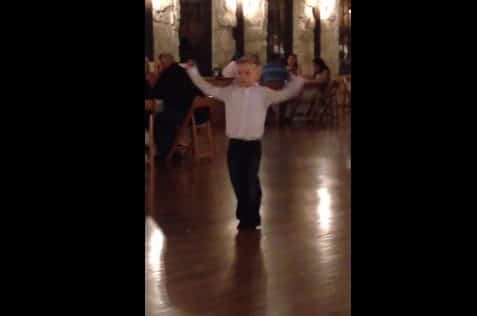
I wasn’t watching the kid at first. He was the bride’s son, from a previous marriage, and as distant from my attention as every other participant in the wedding ceremony. He did little to nothing to stand out, in other words, until he took to the dance floor.

“Look at the kid,” I heard some wedding patrons whispering to others. “Look at Kevin!” I heard others say. I was already watching him. I thought everyone was. How could one avoid it, I wondered, this kid was putting on a show.

There was a ‘something you don’t see every day’ element to this kid’s step that challenged the audience to look away. He didn’t look out into the audience, he didn’t smile, and he did not attempt to communicate with us in a manner I suspect a well-trained dancer might. There was, however, an element of showmanship in his step that should not have occurred in a normal nine-to-ten-year-old’s “conform as opposed to perform” step.

The kid’s shoulders dropped low in his dance step. I don’t know what this suggested exactly, but he did appear more comfortable on the floor than any of the other kids his age. His handclaps were also a little harder than the other kids were. I don’t know if it was the volume of Kevin’s claps, but the other kids appeared to be struggling to follow the beat, or his beat. His gyrations were so out of step with the rest of the participants that those of us not in the wedding party had trouble stifling our giggles. This kid was dancing.

“Who’s the kid?” I asked my uncle.

“That’s Kevin,” he said. “The bride’s son.”  His smile mirrored mine, and those of all of the whisperers watching.

After I asked that question, I realized I was one of those whispering and pointing at Kevin. My initial assumption was that everyone watched this kid in the same manner I was, with one bemused eyebrow raised, but the sheer volume of whisperers called to mind the first time I heard Miles Davis’ Kind of Blue. Some consider that album a masterpiece. Some called it Davis’ Sgt. Peppers. I liked it, but I wasn’t sure it was a masterpiece. The structure seemed so simple. I discovered its simplistic brilliance after repeated spins, but the point is I may not have listened to it a second time if group thought hadn’t conditioned me to believe that there was something I was missing out on.

It was this fear of missing out, FOMO in common parlance, that prompted to continue to watch this kid. I knew as little about dance as I did jazz, so I figured it was possible that I was missing something.

“Why are we watching this kid?” I asked my uncle.

“Because it’s cute.”

My Uncle gave me a look that informed me that we shouldn’t try to make more out of it than what it was. He then went back to watching the kid, and he even regained an appreciative smile after a spell.

There was no simplistic brilliance going on in this moment, in other words, it was just cute to watch a young boy carry on in a manner that suggested he knew what he was doing. The kid didn’t know how to dance, most nine-to-ten-year-old boys don’t, but the effort he put into it was cute.

Anyone that focused attention on the kid’s step –as opposed to the surprising amount of bravado he displayed by attempting to dance– knew that the kid didn’t know what he was doing. He had no rhythm, no choreography, and no regard for what others might think of the fact that he had no knowledge of the crucial elements of dance. The latter, I think, was the point, and it was the reason we were watching him.

My guess was that at some point, someone somewhere had informed him that free form dancing has no choreography to it. You just get out there, lower your shoulders a bunch of times, throw your arms about, pick your feet up, and jiggle every occasionally. It’s free form dancing. A trained chimp could do it.

When the kid made a beeline to his chair the moment this obligatory dance concluded –a dance I assumed his mother had forced him to participate in– I imagined that some people might have been shocked at the manner he exited. I laughed. I thought it added to the spectacle. I laughed loud, believing that those that laughed while he danced would share my laughter. They didn’t. I received confused looks from those around me. His beeline exit did not elicit shock, or any other response. They’d moved on. I tried to, but I was fixated on this kid.

Some may have characterized this kid’s exit as a statement regarding what he thought of the art of dance, but I didn’t think that captured it. I thought that a desire to watch how this party would unfold fueled this kid’s exit.

The kid’s exit suggested that he was one that preferred to watch. It was aggravating to those of us that watched his initial dance steps and thought he had something to offer to this otherwise routine wedding reception. He didn’t appear to be the least bit embarrassed by his performance, so why would he prefer to watch?   

Psychologists state that we have mirror neurons in our brain that seek enjoyment from another’s perspective, and that that enjoyment can be so comprehensive that we may reach a point where we convince ourselves that we’re the ones performing these actions. Others describe it as a frequency of thought, or a through line to a greater understanding of being: being funnier, more entertaining, and better in all the ways an insecure, young man thinks that his elders are better. Honing in on this frequency is something that TV watching, video game playing nine-to-ten-year-olds know well. It goes beyond the joy of watching others make fools of themselves, for entertainment purposes, to a belief that when watching better performers attempt to be entertaining, we’ve achieved that level ourselves without having to deal with all the messy details involved in the trials and errors to get to that point.

I knew, even while I was doing it, how odd others might find it that I was obsessing over the actions of a nine-to-ten-year-old boy, in such an innocuous moment of the boy’s life, and I attempted to look away several times. Every time a member of the party made some kind of misstep, however, this kid would draw my attention by laughing harder than anyone else would. My guess was that the relief that he wasn’t one of those in the position to commit such errors fueled that raucous laughter. This kid would laugh so hard at every joke that it was obvious he wanted to be louder than any others laughing.

“He’s attempting to cross over,” I thought.

“What’s that?” my uncle said.

“What?” I said. “Nothing.” 

My uncle’s ‘What’s that?’ is often characterized by a preceding pause. The pause suggests that either they know that you’re talking to yourself, and they’re looking to call you out on it, or they believed the comment was situational, until they chewed on it for a bit and realized they couldn’t place it.

Whatever the case was, I hadn’t intended for anyone to hear that thought. I was embarrassed. I was embarrassed, but I also wondered if I intended to think that aloud, so that I might have it on the record if it went down the way I thought it would.

What I would not tell my uncle, for fear of being deemed one that is far too interested in self-serving minutiae, was that this ‘cross over’ is the Houdini milk can of the observer’s world. It is an attempt to establish one’s self as a participant in the minds of all partygoers without participating.

The initial stages of a crossover are not a difficult to achieve. Anyone can shout out comments, or laugh in an obnoxious and raucous manner that gains attention. The crossover does require some discretion, however, for it can be overdone. When one overemphasizes an attempt, they could run the risk of receiving a “We know you were there. You wouldn’t shut up about it” comment. The perfect crossover calls for some comments and/or attention getting laughter interspersed in the emcee’s presentation to lay the groundwork for the stories the subject would later tell others regarding his participation.

“He knows what I’m talking about,” the groom, acting as the emcee of the event, said at one point. He was alluding to Kevin, and Kevin’s over-the-top laughter.

It would be almost impossible for me to know if this kid achieved a total crossover, for I had no familiarity with the family, and I would have no opportunity to hear the kid’s after-party stories. The kid did accomplish an excellent first step, however, thanks to a groom that, I assume, had spent the last couple years trying to have the kid accept him as an eventual stepfather.

The answer to why I was so obsessed with a 9-to-10-year-old crystallized soon after the groom’s comment. Kevin’s mother called upon Kevin for increased participation. The kid waved her off. He waved her off in the manner I waved off so many of my own calls for increased participation. It dawned on me that my preference for observation went so deep that it was less about fearing increased participation and more about a preference for watching others perform that was so entrenched that any attempts to have me do otherwise could become an obnoxious distraction.

That’s me in the corner I thought. That’s me in the spotlight, losing my sense of belonging.

“You were just integral to the party,” I wanted to shout out to that kid with such vigor that I would’ve revealed myself. “Why would you prefer to sit on the sidelines of your mother’s wedding?”

Could it be that this preference for observing has something to do with the idea that we’ve all been participants and observers in the audience at various points in our lives, and we’ve all witnessed this idea that those roles can somewhat interchangeable in people’s memories? Unless the participants are so over-the-top funny, entertaining, or in all other ways memorable, observers have can manipulate the memories of participants, if they know how to enhance their role as an astute observer.

When one is an athlete, for example, the members of the audience may cheer their athletic exploits in ways that display the pride they might feel through vicarious connections. When an athlete commits an error, or underperforms in any way, they may feel sorry for the athlete, but they won’t associate with them in any meaningful way. They may not disassociate themselves from the athlete, depending on the error, but the error allows them to believe that put in the same position as the athlete was at the time of the error, they would not have committed it. ‘All you had to do was catch the ball,’ is something they may say, ‘and it was hit right to you.’

Some may view the desire to view an activity, as opposed to partaking in it, as a bit of a cop out. It may have been a cop-out for this kid, just as it may have been for me, but I do have fond memories of various events that I refused to participate in, in the same manner this kid might have of his mother’s wedding. I laughed with my fellow party goers, as we all recalled those past events that took place with fondness, and I did offer funny anecdotes to those conversations, but my role was often limited to that of an observer. Actual participation in these events was the furthest thing from my mind.

If this kid shared as many traits with me, at nine-ten-years-old, my guess was that he was already documenting stories that he would retell for years. Some of these stories might involve slight exaggerations regarding his role in them, but my guess is that few listeners would have the temerity, or the memory, to dispute him. Some of his versions of the story may offer interesting insights, and if those little vignettes involve creative, entertaining nuggets, they might become a part of the narrative in a manner that listeners to join him in making the leaps of re-characterizing his actual involvement.

If this kid manages to accomplish this, and he gets so good at it that others start corroborating his version of other events, he may make the leap to an almost-unconscious discovery of a loophole in his interactions that provide him a future out on all requirements of participation.

If he already does this, on a conscious level, and his evolution is so complete that he’s already choosing vicarious participation over actual participation on a conscious level, then that is where the similarities end. I thought he was too young for all that however, but I did consider the idea that he might be slipping into an all too comfortable position where he is neglecting the importance of participation on purpose.

The problem that I foresaw for him, a problem I now see as a result of watching him act out a page in the first chapter of my autobiography, was that he was learning what to do and what not to do through observation alone. I considered this portal equivalent to the type of learning one can experience while watching too much TV and playing too many video games, with all the same vicarious thrills of victory and dissociative feelings of failure. I also thought that he would come to a point where he had problems learning the lessons, and making the vital connections, we only make by doing. If I had been in a position to advise this nine-to-ten-year-old of the lessons I’ve learned, but did not heed at his age, I would’ve shouted:

“Get back on the dance floor, kid! I don’t care if you were already out there. Get out there and do it. Then get out there and do it so often that you tailbone is on the line and you’re making an absolute fool out of yourself. Then, when that obnoxious observer steps up to laugh at you for making such a fool of yourself, you can turn on them and say, ‘At least I was out there. Doing it! What were you doing? Sitting on your can watching me!’”

If you enjoyed this piece, you might also enjoy the other members of the seven strong:

The Thief’s Mentality

He Used to Have a Mohawk (This is not a prequel to this piece, but it is another story that occurred in the same wedding.)

A Simplicity Trapped in a Complex Mind

You Don’t Bring me Flowers Anymore!

… And Then There’s Todd

When Geese Attack!

Scat Mask Replica (20)


1)  I never noticed how profoundly TV affects the culture, until I stopped watching it as often. I now hear people repeating common phrases I’ve never heard before. I hear people laughing at the same jokes, gesticulating and posturing in similar ways when they tell jokes, and they may start laughing at jokes others tell before the joke is even finished. They seem to know the same stories and the same jokes. They seem to have the same rhythm to their jokes, and they all land on the same note when they hit their punch line. It gives us all comfort to hear a story or a joke that we know, and to know where it’s headed. Our brain rewards us with a shot of dopamine when we figure out the pattern of a story, joke, or song before it’s concluded. Dopamine makes us feel good for a moment, so we all watch the same TV shows and listen to the same songs over and over again, because we know where they’re headed, and we hang out with people who say “okay, right” and tell the same jokes in the same manner and land on the punch line in the same note, because they make us feel intelligent and funny and we get our dopamine rewards, and we couldn’t do it without them, because we are the complex species who need companionship.

trout2) Movie studios spend big money to put attractive people in movie roles, and we pay big money to watch them walk and talk with one another on screen. It’s not about being gorgeous, however, because audiences often spend time trying to spot the flaws in the flawless. Those who appear on screens most often have a quality about them that we enjoy watching for 90 minutes. Part of this quality is beauty, but another part of it is that elusive, indefinable “I don’t know, but I know it when I see it” quality.

3) As a ten year old, I was able to fool most of the adults most of the time. I played the role of the innocent child who didn’t know any better. More often than not, I did know better. My peers knew that, but the adults were bent on understanding me better and being sympathetic. My fellow ten-year-olds would scoff in my general direction. We adults should be scoffing, but we don’t. We don’t because we want to be viewed as intelligent and sympathetic individuals. We want to understand criminals, but more than that we want to be seen as individuals who are trying to understand. We don’t want to believe in absolutes. We say there are no absolutes, and this makes us feel like our structures are complex. Maybe there aren’t any absolute 100% truths, but isn’t a truth that is true 50.1% of the time enough to act on? The ten-year-old mind deals more in absolutes than the progressive, complex mind of the adult, but there are times when the absolutes are a lot closer to the truth.

4) I had a friend who described himself as “very sincere some of the times.” How can one be “very sincere” some of the times? I can see how a person would be very sincere about some things and insincere about others, but how can one characterize themselves as very sincere some of the times in a general manner?

5) There is a struggle in every mind to be intellectual. There is also a resultant struggle to be perceived as an intellectual. Unfortunately, many forego the internal struggle of the latter and place too much value in the latter.

6) I’m toilet trained, but every once in a while I imagine what I would look like if I suckled breasts as big as mountains. Would I have crooked teeth and mongoloid eyes?

7) Some people complain that they have no choice in life. This is a fallacy, for the most part, but they lean on this to explain why they are not doing what they want to do in life. If it is true, in the present, the only reason they have no choice is because of the decisions they made in the past. This is true of most people, and you are not an exception to this rule.

8) Relaxing the mind during the respites of relaxation reserved for artistic venues (i.e. movies) can produce a Chinese water torture effect. What starts out as meaningless drips hitting your forehead can incrementally evolve into accepting ideas that we would not otherwise consider.

9) I’ve tried being one of those guys that changed his underwear every day. It never got me anywhere.

10) If all theory is based on autobiography, then what does it say about those who pose theories on why and how people think. On that note, what’s the most terrifying motive for slaughtering a bunch of people: nothing. We search for motive, because we need a motive, and the thought that a person could do kill people for the thrill of the kill might prevent us from leaving the home as often as we do.

11) I walk into a department store and I see aisles upon aisles of things I’ll never need, yet some of them are red and sparkly. I wonder if these products could change my life. What will happen if I don’t purchase this latest, greatest, and top of the line product that has resulted in happiness and peace on earth for those who weren’t afraid to purchase now at a new, low price. Would my stubborn decision not to purchase such products result in me being forever portrayed in black and white, with a miserable face that results in complete anguish and a degree of dissatisfaction in life that the rest of the human species was in before they decided to indulge in this incredible convenience. I need to be in color again. I need to be the guy in the after picture with a smile so bright he doesn’t mind the backbreaking work of this task anymore. This guy in black and white suggests a certain nutrient depletion that I simply can’t go back to. Look at the scowls that guy makes as he works with the product that has served me well for so many years. Was I ever that miserable? I don’t want to be miserable anymore. Look at that guy. He looks like the most miserable guy since that feller that had his chest picked at by the bird in Greek mythology.

12) Pet peeve: People who quote Hollywood stars and give that star sole credit for that quote. “You know it’s like Jack Nicholson says …” If that quote came from a movie, I want to say, it’s likely that quote wasn’t a Nicholson creation. More often than not, it was a line a screenwriter wrote for him. The primary reason this bothers me –other than the fact that few put any effort into finding the actual writer of that quote, and even fewer will give that writer the credit he has earned– is that when a naïve, moronic star (not Nicholson) says something political, we listen. Why do we listen to them, because if that star is smart enough, or lucky enough, or in the right place at the right time often enough, he can compile enough lines over time to achieve a certain degree of credibility with us that he can take off screen with him. After they deliver enough of these lines, over the years in movies and TV, our conditioning might be such that we believe that these stars are smart based on lines written for them by other people.

13) Some people look at total strangers and think they’re total idiots. Others look at total strangers and think they have life all figured out. I got a little secret for you though. Something that may change your life: Most of us aren’t looking back at you. Most of us don’t care about you. So, move on. Live your life and deal with it as it is. Quit worrying if anyone’s impressed with you or onto you. We don’t care about you, or what you think about us. 

14) One of the worst things Jerry Seinfeld and Larry David brought to the American conversation is the hygienic conversation. I heard these conversations sporadically before Seinfeld hit the air, but in the aftermath of the great show it seems every fifth conversation I hear involves the minutiae of cleanliness. People now proudly proclaim to their friends that they not only wash their hands, but they use a paper towel to open the door. “Oh, I know it!” their listener proclaims proudly. “It’s gross!” I have less of a problem with clean freaks. They can get out of hand, but it’s hard to find fault with the general principle of trying to be as clean as one can be. It’s the nonstop conversations we have about it that gets under my skin? Last week, I saw two fellas form a friendship on the basis that they both used disposable paper towels to open public bathroom doors. They both respected one another’s bathroom ethics, and they are now friends. It’s all a little silly at some point.

15) Another aspect of life we waste a lot of conversational time on is cell phones. We talk about our cell phone plans in a competitive manner. We talk about the ‘Gigs’ on our cell phone, the time it takes us to pull information off the web, the portability, the horrors of our prior plan, the ease with which we can text, and the apps our service offers, and we do it all with personal pride. We tell our peers that our phones are superior, as if we had something to do with their creation. We may not know where we stand on the various totem poles of life, and we may still have no idea what Nietzsche was going on about, but we know that our cell phone is superior to yours, and some of the times that’s enough.

16) Talking head types love to be unconventional as long as it ticks off the right people. I’ve always thought there was something conventionally unconventional about that.

17) I’ve always wanted to have a name like Bert Hanratty. When I do something wrong, my boss could scream: “Hanratty!” I would then walk to the boss’s desk like a 70’s sitcom star who is always messing things up in a comical way. My current name last name has two syllables in it, and there’s nothing funny about two syllables.

18) The anti-religious don’t have to think objectively, for they are objectivity personified by the fact that they are objectively objective.

19) What would you do if you scratched an itch on the back of your neck, and your hand came back with a tiny screaming alien on it? What would you do if another alien was perched on your other shoulder, and that alien said: “Quit living your life in preparation of disaster.”

20) The other day I laughed at the antics of our local radio show’s morning program. Scared the hell out of me. I ran to the bathroom and looked in the mirror, and I confirmed that I was, in fact, laughing. I cannot remember what it was that caused the laughter, but whatever it was I hurried up and shut the damn thing off. I picked up Finnegans Wake and read a few pages. This is my usual punishment for enjoying the idiotic humor of zany morning radio stars.