Seinfeld’s Unfrosted was … Not Bad


Jerry Seinfelds Unfrosted was … not bad. Screech! Spit coffee! Swear word! Screams! Car Crash! It is shocking, I know, to hear that coming from a Jerry Seinfeld fanatic. If you’ve read any of the articles on this site, you know how often I source him as one of the greatest comedic minds alive today. I consider him one of the best standup comedians of his generation, and his observations on what makes us weird have had a huge influence on this site. The show Seinfeld was my favorite sitcom of all time, I loved Comedians in Cars Getting Coffee, and I even enjoyed his Bee Movie. I didn’t love it, but I really liked it for what it was. Oh, and I laughed so hard during one of his standup shows that Jerry Seinfeld looked over at me with a look that suggested he was comedically concerned about my health. If the difference between fanatic and fan is excessive and intense, uncritical devotion, I am a fanatic. I never wrote to him, collected dolls, scripts, or took tours, but if there’s a hip term I don’t know for a passive fanatic, that’s me. I’m probably his idea of the perfect fan, a guy who quietly buys and watches anything to which he attaches his name. Which is why it pains me to write these five words: “Unfrosted is not as funny as I thought it would be.”

Watching the movie reminded me how we all want more of everything we love. We want more from our favorite artists, athletes, politicians, and plumbers, until they give us so much that we realize it probably would’ve been better if they left us in a state of wanting more. That’s the advice seasoned entertainers often leave young upstarts, “Always leave them wanting more.”  

And Seinfeld warned us, numerous times, that more is not always better. He’s said it in relation to why he decided to prematurely end his show Seinfeld, but he’s applied that principle to his career too. He’s informed us on so many days, and in so many ways, in the numerous interviews he’s done throughout his career, that he’s learned that he’s best when he stays in his lane, his lane being standup. He’s learned what he’s good at, and what he’s not, and he has proven to be the opposite of what makes some comedians so great, in the sense that he’s not daring, risky, or experimental.

If I were to pitch him a project, I would say he and Larry David should develop a sketch comedy in the Mr. Show vein, but we can only guess that he’s had hundreds of similar pitches from friends, fellow writers, and corporate execs, and he’s turned them all down. Some of those projects may have proved embarrassing, some may have been so far out of his lane that he didn’t even consider them, but we have to guess that some projects that were so close that he had a tough time turning them down. He did it all, because he knows who he is, what he’s good at and what he’s not, and he’s learned how to stay in his own lane.   
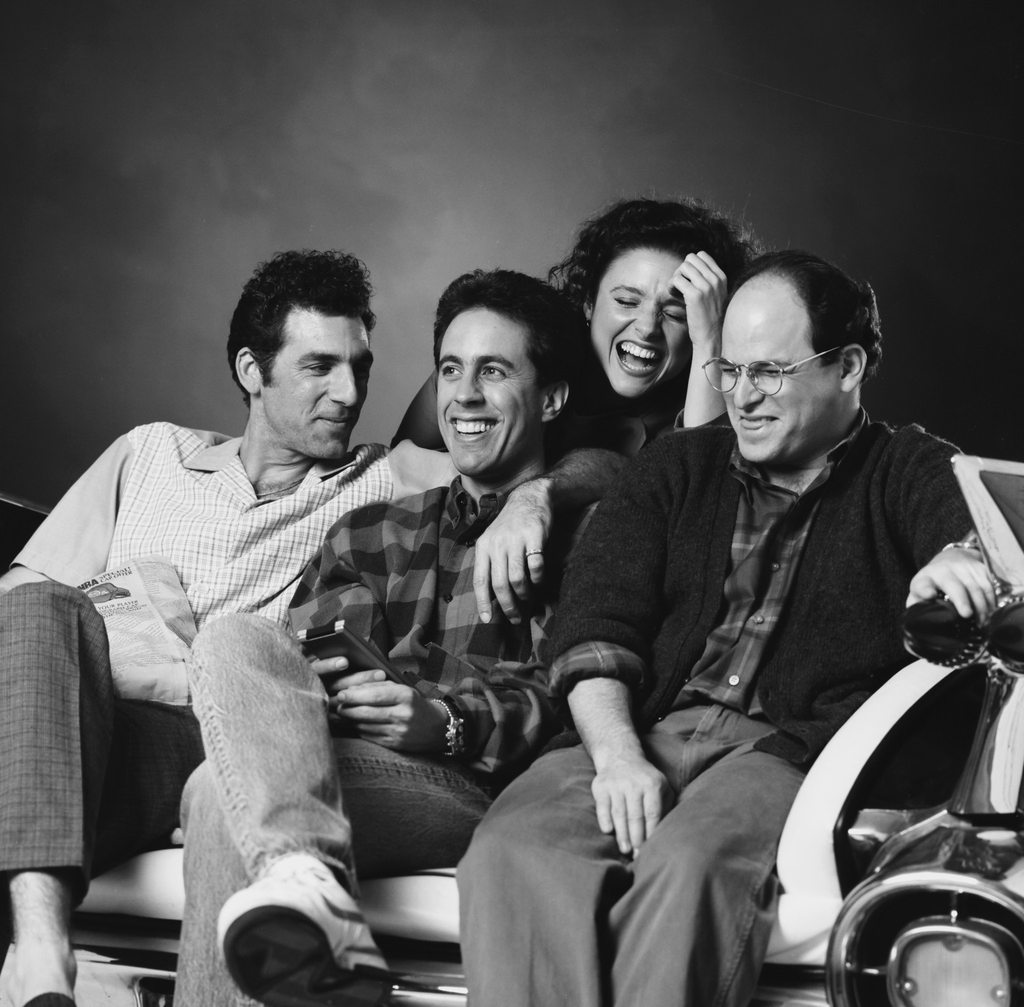
On the greatest sitcom of all time, Jerry Seinfeld surprisingly (to me anyway) credited the three actors (Julia Louis-Dreyfuss, Michael Richards, and Jason Alexander) for making the show so brilliant. He does not shy away from the idea that the writing on the show, of which he played a huge role, was great, but he admits that the actors brought that writing to the next level.  

“I did get caught in a beautiful, cyclonic weather event,” he said in an interview. “The actors, Larry David, the thirteen phenomenal comedy writers, and everyone on both sides of the camera was a killer. You know when you’re a part of it, but you know it’s not you. You’re a part of it, but if you’re smart, you know it’s not you. It’s not all you.”   

On Seinfeld, Jerry played the Alex Rieger of Taxi, the Sam Malone of Cheers, the center of the storm. He’s always been great at adding that final comment, lifting that eyebrow to exaggerated levels, and saying, “ALL RIGHT!” at the end of another character’s hilarious rant. He knows how to put a cherry atop the pie in other words. As long as that pie, or the acting required to nuance it, was filled in by someone else. He can write funny, he can deliver a short, crisp line deliver as well as anyone, but the nuances in the acting craft required to build to Seinfeld’s punctuation were always best left to others. I heard him say this so many times that I saw it, until I accepted it, but I always thought there was a bit of humility attached to it. Some of us were so blinded by enthusiasm that we never learned how to curb it completely.

When he decided to end Seinfeld after the ninth season, it felt similar to an athlete retiring at the downside of their peak, not the prolonged, sad tail end, just the other side of the peak. There were hints in seasons eight and nine, after Larry David left, that the show was on the downside of its peak, but it was still the best show on TV. Why would an athlete, or a successful showrunner, quit prematurely? I understand not wanting to outstay your welcome, or allowing us to see glaring levels of diminishment and not wanting to go out like that, but if you’re lucky, you might still have forty years on this planet. What are you going to do in the rest of your life to top that? Some of them, I think, are too worried about what we think. They don’t want us to see their downside, or because they love the game so much that they can’t bear playing at anything less than their peak. They can’t bear someone saying, “If you just called it quits after season nine, it would’ve been a great show beginning to end. Season ten was probably one season too many.” They, some of them, don’t want us to remember them as someone who stayed around too long.

When we were kids, we ached for another Star Wars movie, then we got one later, much later, and it ruined the legacy of Star Wars. After the second trilogy was complete, the almost unanimous opinion among those I know is they probably should’ve left us wanting. As Led Zeppelin did. Zeppelin broke up after the untimely death of their drummer John Bonham, in 1980. We spent our teens and early twenties talking about the possibility of a reunion and another Zep album. I understand they said it wouldn’t feel the same without Bonham, but the remaining band members were still in their early-to-mid thirties when they broke up. How do you leave a juggernaut like Led Zeppelin in your early thirties? The Beatles were in their twenties when they broke up. As Theodore Roosevelt said of being president so young, “The worst thing about being president of the United States so young, is that there’s nothing you can do to top that for the rest of your life.” Led Zeppelin left us wanting, and it was probably for the best. What could they have done to top those first six albums? They most likely, and in all probability, would’ve only disappointed.

In a career studded with comedy gold, Gold Jerry! Gold! Unfrosted has the feel of a sequel. It’s not a sequel, but how many of us walked out of a killer comedy, talking about how that movie just screams out for a sequel. We didn’t talk about how great that comedy was, we instantly wanted more. Then, when the sequel came out, it was, “That wasn’t bad, but it wasn’t as good as the first one.” That was the impression Unfrosted left on me. It felt like all the players were trying to recapture something that used to be really funny, and we were all prepared with our preparatory smiles on our faces, until the smiles slowly faded away.  

The characters have this feel of trying to repeat something that worked before, but it just doesn’t for all the mysterious reasons that some movies work and some just don’t. The jokes have a feel about them that suggests to us that they’re brilliant, but they’ve been done so many times before that we no longer need to figure them out. As someone who doesn’t know one-one hundredths of the knowledge Jerry Seinfeld has about comedy, I think the figuring out part is the reward of comedy. 

Unfrosted seeks the opposite tact. It goes for familiarity, and we all love familiarity. Familiarity with actors, themes, concepts, and all that. Unfrosted displays this level of familiarity in the beginning, to establish a through line to the audience, but it never branches out into that unique spin that kind of shocks us into laughter. The setting of the movie is the 60s, and what a foolish time that was, and even though this has been a million times before, we still think it could be great in the minds of geniuses.

It’s a mystery to us why some movies don’t work, because we don’t make movies, but you’ll often hear moviemakers, actors, and all the other players say, in interviews, that they don’t know why either. “We thought it was funny, but we had no idea how huge it would get.” We don’t often hear the players involved say, “We thought it would be huge, but we had no idea people would consider it a little boring.” What works and what doesn’t is a mystery to us, and it’s a mystery to them. Generally speaking, dramas and action movies are probably a lot easier to predict for those involved, especially when the star actor signs on to the vehicle. Comedies and horror have a super secret formula that even those involved in the finer details of the production involved don’t know whether it will hit or not.  

Unfrosted gave us all a be-careful-what-you-wish-for feel, because you just might get it. As much as we cried out for a movie, or any project, from Jerry Seinfeld, we walked away from it thinking that Unfrosted, unfortunately, should never have been made. What could they have done to make you feel better about it? “I don’t know, I don’t make movies, but they probably should’ve left me wanting more instead of giving it to me.”

Watching Unfrosted, reminds us of that elite athlete who retired on the downside of a peak, not the bottom, just the downside, and we clamored for his return. How can he retire at 37? He still had what two-to-three years left? If he lives to eighty, he’ll spend the next 43 years reminiscing and thinking he should’ve played two-to-three more years at least. Then he comes back, and we see how much his skills have declined. He didn’t do it for the money, I can tell you that much. He did it, because he loves the game, and what’s wrong with that?

The point some people make on various websites is that athletes and entertainers run the risk of ruining their legacy by staying too long. This line right here makes me almost fighting mad. So, you’re telling me that the athlete who made so much money for the league, the city, and the franchise shouldn’t be able to sell his wares to anyone who will take them? He shouldn’t try to get another paycheck for the punishment he put his body through for your entertainment, because you want to remember him the way you want to remember him? Isn’t that a bit myopic, even selfish? He wanted to get paid for his efforts, of course, but he didn’t necessarily do it for the money? Seinfeld, and most modern athletes, have so much money that that’s not why they’re doing it. They’re doing it for the love the game so much that they want to play at least two more years? What’s wrong with that, and what’s wrong with you for wanting to deny him that?

Did Seinfeld ruin his legacy by doing Unfrosted? No, first of all, it wasn’t that bad, but, then again, I never expected to say that a Seinfeld project “wasn’t that bad”. I don’t remember any of the elite athletes who “stayed one year too long” for those latter years, and I don’t begrudge them for taking as many paychecks as they could before they called it a career. I also don’t begrudge them the idea that they loved the game so much that they couldn’t walk away, until it was obvious to them that they truly couldn’t play the game anymore. I actually respect it, as I say it was for the love of the game. I respect the fact that Seinfeld’s friend pitched him on the idea of Unfrosted, and not only did he like the idea, but he didn’t think he was done yet. He thought he had one more big project in him, because he loves doing the things he does so much that he wanted to try it at least one more time. Good for you, Mr. Seinfeld, I say, and if he feels like doing another project, or projects, I’ll be there on the first day it’s released.  

Jerry Seinfeld has admitted that he doesn’t expect to be remembered after he’s gone, and he’s even gone so far as to say he doesn’t care, or that’s not his driving force. I’ll remember Jerry Seinfeld as a great, almost perfect standup comedian, the cocreator of one of the greatest sitcoms in TV history, and as a gifted natural when it comes to observational humor, but Unfrosted doesn’t do much to either lift or damage his legacy. It was just a marginally entertaining movie that they probably won’t list in his very lengthy resume when that final wave off arrives.

Rilalities


Dad and sonTo buy or to buy not.  When I was younger my dad did not buy me everything I wanted, and I hated him for it (hated being the harmless, preteen definition of hate). A part of me still believes that of part of him enjoyed saying no to me. A part of me also thinks that the constant “No’s” I received from him coagulated into the psychosis that plagued me through my teens and twenties. Another part of me wonders what kind of man I would be today if he gave me everything I wanted. Would I be a spoiled brat? Would I have some sort of obnoxiousness about me that expected to be able to buy everything I wanted —to have everything I deserved— regardless if I had to go into debt to get it? Would I be one of these ‘I deserve it’ adult babies that permeate our culture? Another part of me knows that no matter who our parents are, and whatever psychosis they inflict on us, we’ll have to work through it, and we’ll probably end up in the exact same place we’re at now.

Under-Estimate Children! It might be better for our society if we take a collective step back and start under-estimating children again. Rather than express the joy we should that this young mind is able to use their collective knowledge to state something relatively profound, we now say, “We can learn a lot from our children.” If they say something about chemistry, we think they should pursue a career as a chemist. If they say something about the geography of Salina, Kansas, we think they might have a career as a geographer. How about, it’s a kid who had a serendipitous thought in an opportune moment. Some of the people I know re-characterize these moments with the suggestion that they might be smarter than us. To retain my sanity, I choose to believe this is nothing more than a grandiose compliment, for I can’t wrap my mind around the idea that they think children are smarter than adults. It is a neat thing to say that we can learn a lot from their unfiltered view, but I don’t think I’m going to turn to a kid as a life coach any time soon. Therefore, when they say, “Kids say the most amazing things, kids are so innocent, and kids see things without the heavily tinted sunglasses we do,” I take it with a grain of salt. I have had friends further these cliches and leave me with the idea that some part of them believes it (as a result, this humble observer, believes can only arrive after all the other parts have lost so many wars over the years that they’ve simply given up). Kids are sponges and balls of clay. They see things we don’t on occasion, and they’re unflinchingly honest about what they see, but they have very few original thoughts, and the few original thoughts they have are usually gibberish. They know nothing, except what they’re taught, and when they’re caught, and every kid I know now is just as malformed and uninformed as every kid I knew when I was a kid.

Freaks are people too ya’ know. There was a daily parade of freaks that worked with me on an overnight shift. When I watched this parade exit the building one day, it dawned on me that each of these freaks had a story that was aching to be told. Most of them did not want those stories told though. Most of them didn’t think they had stories, or the kind of stories I tell. Most of them suffered from the Pinocchio syndrome, a desire to be normal boys and girls. The further away from normal these people of varying ages were, the more convinced they were of their normalcy. Most people won’t hear their stories, however, because there’s a fear that you’re too normal, and you will judge them harshly from your vantage point. They only tell their stories to their own. Call it a gift, a curse, or a truth that I am as yet unaware of, but I convinced them that I am one of them.

Psychology fills the gap. How do politicians and writers manipulate their audience? They know their psychology, or they hire someone who does. I cannot imagine a writer, or a politician, succeeding in their craft without first knowing a lot about psychology. Maybe a politician can, due to the fact that they’re usually figureheads among an enormous staff that has a finger on who you are and what makes you tick, and they feed that information into the politician’s Tele-Prompter. A big town writer, writing small-time blogs, can’t get away with that though. They have to have an insatiable hunger for what makes humans tock, and tick, and a progression to psychology is a natural one, for in most cases the science of writing, and the science of psychology are much the same science.       

idealisticIrrational Idealism. I was irrationally idealistic. “I agree that America is the best country in the world, but who’s to say that we can’t all make it better?” was one of my favorite replies. Those currently of an idealistic mind approach me in a manner I used to approach traditional thinkers, with the mindset that this is the first, idealistic thought I’ve ever encountered. Most idealistic thinkers believe that their individualistic twist on an issue is one that has never been considered before. Most idealistic thinkers cannot conceive of the idea that they’re wrong, for they’ve conceived of the idea on their own, based upon their relative influences. Most idealistic thinkers believe that the only reason traditional thinkers stubbornly cling to traditional thinking is that they have never truly considered the idealistic thinkers open-minded ideals before. Most idealistic thinkers cannot fathom the idea that you’ve “been there, done that”, and that you don’t believe their ideas and ideals are effective based on your experiences in life.

Money can Buy some Happiness. A 2010 study suggests that $75,000 a year is enough to make a person happy? Why? To be truly happy, the study suggests, a person needs only enough money to be able to afford certain products, a certain amount of freedom, and the ability to avoid worrying about bills. A person that makes $100,000 a year doesn’t necessarily have greater emotional well-being, and they have no extra day-to-day happiness, than a person that makes $80,000 when all of the individual variables are taken out to achieve a general rule. $75,000 appears to be the leveling off point, or what the researchers call a financiohappiness ceiling, at which an individual can afford all of the luxuries of life without worrying about bills. Or, as Henry David Thoreau once said, “A man is rich in proportion to the number of things which he can afford to let alone.”{1} Does this mean that a man should cease striving to be better, with more money in his pocket as a product of that increased stature, no, but the study suggests that his happiness will probably not increase in relation to his pocket book. While that is a provocative idea, some would suggest that contrary to everything Hollywood has ever told you, it is the striving to be better that makes one happy, and money is simply a happy byproduct that defines better. If your driving force in life is attaining more money, and buying certain products, you’ll probably not be happier with more.

The Pursuit of Happiness.  Hollywood movies teach us to never settle, and that we deserve better. Sports teach us to never be satisfied, and that we deserve more. The pursuit of happiness may break down to focusing on what we currently earn versus what we think we deserve. When asked if he felt he deserved a National Championship after all those years of near-misses, Nebraska Conhuskers coach, Dr. Tom Osborne, said: “There’s no such thing as deserve in college football. If a coach wins a National Championship, he has earned it in that particular year.” When one earns a dollar, there is often little question of its worth. The recipient may believe that they deserve more, but as the old saying goes, “You are only worth what someone is willing to pay.” With that in mind, we have a concretized grasp on that which we’re worth in life, but some part of us believes that we deserve more. Earned is something one works for and is rewarded upon receipt, and deserve is some existential definition of something we feel we should have based on the fact that we’re alive and trying. Controlling for variables in institutions of higher learning, and most union work, it is found that most institutions don’t pay one more for being alive another year. Most raises, given to those in the real world, are meritorious (i.e. earned).

When we see neighbors who don’t work as hard as we do, and we realize that they’re happier, we think we deserve to be happier too. We don’t know what it is that will make us happier, but we’re in a perpetual pursuit of it.  We’re usually unsatisfied with the result, because the relative definition of deserve is relative to that which we seek, which we don’t know and never will.  If a spouse questions this psychosis, we let them know that we aren’t the type to settle.  We also tell them that we deserve better, and we move onto those greener pastures.  In this selfish pursuit of a definition of happiness that we deserve, a definition usually steeped in stupid, self-serving decisions, we incidentally affect the ancillary victims (our kids) of our lives, so that they are perpetually unhappy in pursuit of this definition of happiness that we’ve passed onto them.

The Constraints of Monogamy. I used to claim that I would not conform to the constraints of monogamy, until I began defining myself within “my monogamy”. My monogamy is not your monogamy, and no one else can define it for me. Once I began defining my monogamy, I realized a degree of fulfillment that the single life could never achieve. Once I realized the inner core to my monogamy, I also realized something that couldn’t be defined by anyone else. That cliché that when you fall in love, you think you’re the only person that has ever been in love, is so true, because you get to define it month by month, day by day.

Why does this girl love me? I have no idea, but the inquiry challenges me. I, like most people my age, think of myself as a little, unruly child unworthy of love that will eventually be discovered once she unzips the zipper in the back of my neck to realize the monster that I really am. The truth is that she has defined me in certain ways, and I have evolved myself to meet a new standard. She has deprived me of that sense of emptiness I used to feel every day, that angst that drove me to write beautiful, provocative prose, but in its place is this sense of completion that only I can define.

I used to abhor holidays too, and though I didn’t go so far as to not participate in them, I saw all of them as false and conformist. I wanted something out of holidays and relationships that no one could give me … until I started giving to them. As they say, “It is far more rewarding to give than to receive.” Therein lies the key, once you start giving to a relationship, you start down the road to completion. Once you sacrifice that portion of yourself that used to define you as a strong, single, and rebellious person, you start to realize who you really are, and what you can be. The single life seems so rewarding in the rock star, Hollywood light, until that light begins to expose the underbelly of your empty existence.

I would never claim that my solutions are for everyone, but I can say that you’ll never know yourself completely until you are involved with another person long term. The “constraints” of monogamy actually freed me up more than anything else I’ve ever experienced. Trying to get another person to love me, every day, changed me in ways I couldn’t understand, until I began to experience them for myself. I realized that my definition of the constraints of monogamy were wrong once I began defining my monogamy with “the right person” to assist me through a life of consistency and normalcy.

The Search for Something Shocking. As our culture moves to a more permissive state, I can’t help but wonder if creativity will eventually become a casualty. Television programming is better now than it has ever been. I realize that every person believes in their own superlatives, but it’s my contention that there are numerous mid-level programs on the air now, that are superior in all ways to the top programs of the past generation. Is this a result of more competition, from internet programming and cable, or does it have something to do with the fact that the Federal Trade Commission (FTC) has loosened the standards on TV? Most TV watchers, of a given age, don’t think it’s even debatable that the FTC has allowed for more coarse language and more violence than they did in the 70’s. The question is if these shows are allowed to be more provocative in these ways, does that provide for more creative writing, or cover for the fact that the writing is not of the quality that existed at one time does it make the writing appear more creative, or is creativity not as necessary as it used to be when the FTC was more constrictive?

This leads us to the question the effect of something shocking. Is something shocking better? I don’t think many would debate that it is. As long as that something is not gratuitous, and it fits the frame of the story, something shocking can capture our attention better than the most creative writing in any venue, and it has us talking about the show the next day at work.  As provocateurs like George Carlin basically said, however, “Be careful what you wish for,” when it comes to tearing down all walls of constriction and small forms of censorship.  “Once they’re gone, they’re gone, and you’ll be left with nothing to rebel against.”  In other words, as the FTC allows for more and more shocking subject matter to be aired in the airwaves, something shocking may not be as shocking as it once was, and we find ourselves playing king of the mountain, until nothing seems as shocking as it once did.

Sprucing and Fluffing.  I got lucky, I say to those that wonder how I met my wife in an online dating forum. I would not say that my approach to her was any more skilled than anyone else’s. I would not say that I used my creative writing talents to appeal to her in anyway.  I would just say I got lucky.

“Just about every guy claims to be as adventurous as Bear Grylls, with Brad Pitt looks, and has a workout regimen that would cause Arnold Schwarzenegger to blanch,” says a friend of mine regarding some of online dating site profiles she’s viewed. She then goes onto provide hilarious examples of the attempts some guys have made to “spruce” up their profile. The import of her message was we’re all onto you fellas, and we think that you’re absolutely ridiculous. The jig is up, she basically says, so why are you continuing to make utter jackasses of yourselves? The answer: it works.

Why do politicians run negative ads every election cycle when everyone and their brother knows that negative ads don’t work. How many politicians say that one of the goals of their campaign is to avoid negative ads? How many polls state that “People don’t care for negative ads,” yet just about every political campaign runs them. How does the notion that “negative ads don’t work” persist? Perhaps it’s because losing politicians run negative ads too. Perhaps it’s because most election analysts don’t focus on the fact that our current leaders ran negative ads in their elections too, and perhaps that has something to do with the fact that we don’t like to be reminded about what that says about us. Some may say that this is a simplistic explanation of modern politics in America today, and it may be, but I would counterpoint with the question: “Which part of you are negative ads trained to appeal to? The complex??”

How many of us would tell a pollster that we want more infighting, more partisanship? What kind of person would say, “I love negative ads! I think that the polarization clarifies matters for me.” No, we prefer that that pollster consider us a wonderful person by saying, “I wish that we could end all this partisan bickering, and get back to creating jobs for the American people.”

How many of us have scrolled through Yelp postings to find what that one negative comment had to say? How many of us have read through positive reviews of products on Amazon.com with the mindset that all of the positive reviews seem to run together after a while, until we find that one negative one that seems to stand out? We all know that one negative comment is far more effective than one hundred positive ones, but when that pollster comes up to us and asks us what we think of one particular negative ad, we respond that we need to get them out of politics.

The point is that we want politicians to appeal to our better half, but other than the politician’s research team knowing that this is not a fundamental truth of human nature, they also know that positive ads can only take them so far, that they all begin to run together after a while, and negative ads about an opponent do provide an excellent distraction away from their politician’s limitations. Negative ads also feed into notion in the zeitgeist that going negative is being real and being more honest with the voters.

So, online dating girl, you go on believing that you know more about these unemployed, overweight guys that live in their mother’s basement posting positive ads about themselves that make them sound like Bear Grylls, and look like Brad Pitt, and they’ll go on posting these ads, because they work, and you will continue to fall for them. And the fact that you keep falling for them, and falling prey to the subject matter in negative ads, says more about you than it does them. The jig is not up, and as David McCraney said, “You’re not as smart as you think you are.”

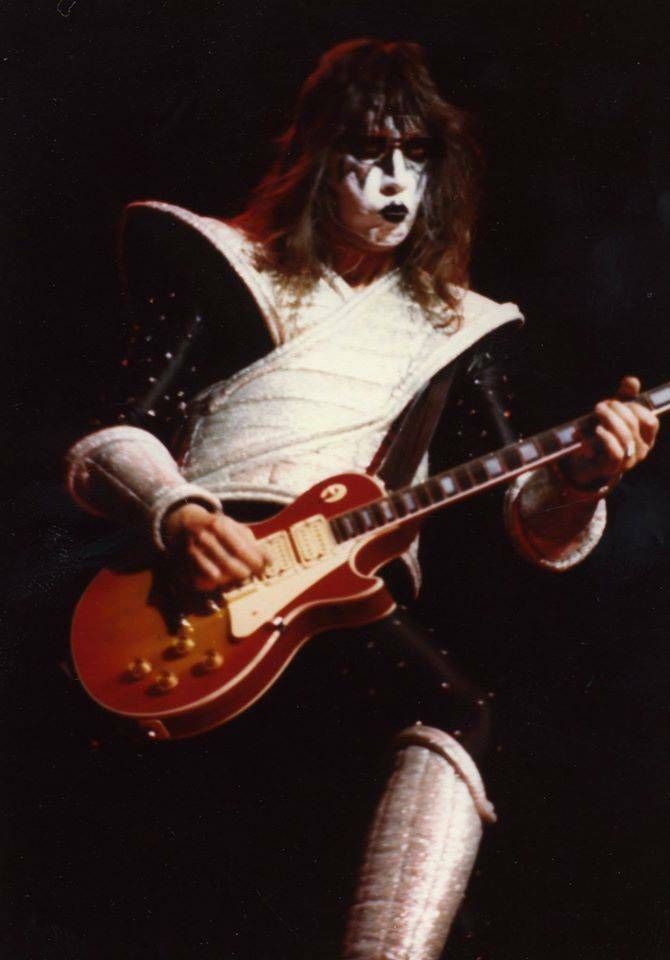
Ace Frehley’s book: No Regrets. A Review


Ace Frehley has No Regrets. It’s the title of his book. He has no regrets, apparently, about wasting whatever God-given talent he was given, and he has no regrets about doing little-to-nothing to make his “right place right time” moment in history a little better. That’s great Ace, you stuck your middle finger right up into what Gene and Paul have been saying about you, but what about those young fans who defended your legacy for much of their young lives? Do you have No Regrets about all that?

The author of this piece was a fan, a HUGE KISS fan, and more specifically an Ace Frehley fan. Like the Beatles’ fans of the 60s, we all had our favorite member of KISS, mine was Ace Frehley. Chicago Bears running back Walter Payton was my favorite person and Ace was number two. I still have a soft spot in my heart for the man, but Ace Frehley’s new book No Regrets has even tainted that.

Ace Frehley states that he is clean now, and like so many other rock bios that adorn the shelves of bookstores across America, Frehley takes the vantage point of an outsider commenting on his past debauchery. Alcohol and drugs were the way Frehley dealt with the ups and downs of stardom, but he has No Regrets about this. As comedians in the past (Pryor and Carlin) have done, Ace chooses to laugh at his lifestyle choices. He chooses the “now that I’m clean” theme to detail for us the hilarity of being so out of control that you don’t know what you’re doing. As a lifelong Ace Frehley fan, I found many of the Ace Frehley stories funny, troubling, and disenchanting, but Ace has No Regrets.

The “breath of fresh air” arrives when Ace details for us the tale of KISS. Ace is more honest and forthcoming about the formulation of KISS than any of the other members have been to this point. The reader begins to realize that Ace is going to be the first to tell the story of KISS without a marketing plan. There is no KISS mysticism attached to this version of the story, the KISStory, such as the stories faithful KISS readers have been inundated with by Paul and Gene. This is the KISS story as told by “the fun and spontaneous member”. This is the more “real” version of the story. Unfortunately, the more “real”, Ace Frehley version of the story substantiates many of the charges Stanley and Simmons made against Ace’s apathy and his poor work ethic. The No Regrets book also substantiates the charge that Ace wasn’t particularly elemental in the formulation of the eventual KISS product, that he was basically just along for the ride, and that he has No Regrets about any of this.

In one particular story, Ace says that the producer of the KISS album Destroyer, Bob Ezrin, began pushing Ace to come up with guitar solos for the songs on the album. Ace complains that Ezrin’s pushing proved counterproductive, because Ezrin didn’t understand the spontaneous nature of artistic creation. This, for me, is the most illustrative moment in the Ace Frehley story, because I understand the spontaneous nature of artistic creation, and I know how much downtime musicians have between albums. They might be touring, doing promo spots, and other forms of promotion, but there’s still a lot of time to sit around and fiddle with the guitar to create solos. If Ace entered the studio with around ten to twelve solos, it’s possible none of them would’ve fit the songs perfectly, and that’s where the whittling and tweaking come into play. To listen to Ezrin and Ace’s characterization of this confrontation, Ace walked into the studio with no solos, or any ideas for solos, and Ezrin expected him to come up with one to fulfill his contribution to the song. 

At that point in his career, Ace Frehley was one of most revered guitar players, known for his creative solos. Ace’s lone contribution on a majority of the KISS songs was a brief solo between verses, and he couldn’t even come up with that by the time KISS’ Destroyer album came out? At this point in the story, I would’ve been mentally lambasting Gene and Paul for presumably leaving out some necessary details of the story. That’s not the case here of course. This is Ace telling the story. As I said, it’s all troubling and disenchanting, but he had No Regrets.

The question that this reader has for Ace, on this particular issue, is, “How much time, between albums, did you have to work on these spontaneous solos?” Spontaneity can be tough to generate on the spot, of course, but how much better would those solos be if by the time he entered the studio, he had a pallet from which to choose? Talented artists, of which I think Ace is one, know better than to do nothing for months and then expect some sort of divine inspiration to strike when they need it. Most who depend on spontaneity for a living know that they have to constantly hone the muscle. Artistic creations take time, devotion, and discipline.

I’m not a blind fan don’t get me wrong. I recognize KISS music for what it is. I don’t put it on par with Monet or Picasso in the world of art, but even KISS music takes a degree of involvement, work ethic, and commitment. Ace Frehley was a significant part of a group that put out products that many of us spent our allowance on, but Frehley thought Bob Ezrin pushed his artistic sensibilities a little too hard, because Ezrin didn’t understand the gentle process of artistic creation. In this gentleman’s disagreement, we have the artiste named Ace Frehley who many have charged, and Ace basically substantiated in his book, had a very poor work ethic and chose to party when he wasn’t in the studio versus Bob Ezrin. Ezrin, to that point, worked with Aerosmith, Alice Cooper, and Lou Reed. Ezrin also produced albums for a wide array of artists including: Pink Floyd, Hanoi Rocks, Deep Purple, and many others before and after Destroyer. Even fan boy here, who wants to take Ace’s side in this episode, cannot side with him. My educated guess, based on the characterization of Ace Frehley by others, and by Ace Frehley in this book, is that he arrived in the studio totally unprepared, and Bob Ezrin got mad at him for it. Ace then got mad at Ezrin for getting mad at him about it. Yet, Ace Frehley has No Regrets.

Few have questioned Frehley’s God-given gifts, but he apprently did little to formulate and finesse the gifts that were given to him. What were you doing between albums Ace, other than touring? The answer: Sex, drugs, and alcohol. No Regrets. You read Ace detail this portion of his story, and you realize that Ace may have been paying a little bit too much attention to his press clippings. He may have been listening to those adoring fans that put him on a pedestal. He may have thought there was a degree of mysticism to his art that couldn’t arise as a result of a request from a meager human, but it had to be waited for in the manner of some divine artiste. Say what you want about Gene and Paul, and many have (Ace does in this book in good ways and bad), but Gene and Paul knew there was nothing divine about what they were doing. They simply worked their tails off for the legacy they eventually achieved (and I cringe a little taking Simmons and Stanley’s side here).

Ace chastises the KISS bassist Gene Simmons throughout the book as a man who took the KISS product a little too seriously throughout the process of building it. Ace talks about how he couldn’t do it. The movie KISS Meets the Phantom is an example of the “KISStory” that Ace admits he basically sat out. He looks good in hindsight for having sat that one out, because the movie is generally considered a bomb. Ace talks about how he didn’t enjoy making the album “The Elder”, and how he generally sat that one out too. Ace then talks about how he wasn’t much of a part of the making of the album Destroyer either. The latter is a little more painful to him, as evidenced in his words, but this may be due to the fact that Destroyer is generally considered to be KISS’ best album. Hindsight shows Ace regretting that he wasn’t a greater part of the successes, but he doesn’t mind telling us he had little to nothing to do with that which is generally considered less successful artistically and financially. How convenient.

Ace condemns Gene as a business man who has no friends. He says Gene needs to cut loose and have a beer every once in a while. To be fair to Ace, he does thank Gene and Paul for everything they built, and he’s not as negative as I thought he would be. I read where Gene leveled Ace in many areas, and I expected the return fire to be explosive. He pounded home the point that Gene has no friends by saying that the Gene Simmons Roast only had comedians in it (and family members), but he doesn’t have as many negative things to say about Gene as this review and others may lead one to believe. The point he’s trying to make is Gene isn’t very fun, warm, or an extreme joy to be around. Ace knows Gene better than most, and he makes an informed analysis, but I don’t really care that much. I met Gene once, and he was very nice, but who cares? Gene could argue that he devoted his life to an enterprise that a lot of people really enjoyed. Whatever talents in life Gene was granted, he made the most he could out of them. When the final epitaphs are written, the idea that Ace had a ton of friends, and he was a fun-loving, good time rock-n-roll dude, sometimes at the expense of his dedication to his craft, will prove a testament to his character, but Gene’s dedication to his craft, at the apparent expense of human relationships, will prove just as vital to his legacy. As Ace once sang, it was, “Two sides of the coin, which one should I choose.” Thanks in part to No Regrets, many hardcore Ace Frehley fans now know which side he chose, and it did some damage to his legacy.

Those of us who were Ace Frehley loyalists for much of our life, have one quick question for Ace. The question is based on the fact that we defended Ace among our friends and those who informed us what Gene and Paul said about him. Why would you write this? Why would you tell the world that you didn’t have as much play in the formulation of this KISS product as we thought you had. Why would you tell your biggest fans that you were basically along for the ride, for much of the time? Why would you say that other than some minor artistic differences, there’s no real huge story to your departure? Or, that you simply got sick of it?’ We know nothing lasts forever, and some of the times good things need to die. Most of us would agree with you that KISS overstayed their time on stage, but your notes on how little it meant to you when it meant so much to us, when we were kids, was a little deflating.

Ace does mention the fact that he may not be alive if he were still in KISS, but it’s clear that that was totally on him by that point. The only one who encouraged Frehley into greater debauchery, Peter Criss, was long gone by the time he quit, and Paul and Gene were basically dry as stated time and again throughout the book. Did Ace envy the success Guns N’ Roses guitarist Slash had with his autobiography? Did he know that his story was similar, and he wanted a piece of that pie?

In a promotional interview for this book, Ace did on The Today Show, Ace talked about how proud he was to add published author to his list of accomplishments. That’s great, some of us thought, and it’s a laudable goal for any high school dropout. The question is what did you accomplish? What did you publish? Was it a novel, a short story collection, or a bio that detailed for the American public a dossier of artistic accomplishments? What this published author managed to have published was a tome of a wasted opportunity, a waste of talent, and a largely wasted life. My guess is that Frehley saw all of acclaim and sales that went to Guns N’ Roses guitarist Slash and realized that his story was similar. It’s as entertaining as Slash’s was, and it’s received as much praise, but at what price?

The reader is left with the idea that Ace led a blessed and lucky life, but when it came to actually working, and finessing that gift to even greater heights, Ace got artificially turned on and tuned out. Ace will undoubtedly receive a lot more praise for being “more real” with his story, but those of us that considered ourselves true fans wish he had been a little less real to keep the myth of Ace Frehley alive. Don’t get me wrong, it’s a fun (and in spots a funny) read, stories of debauchery always are, but it’s also a little sad and disenchanting.