The Killing Kind: Caligula


The most powerful man in the world wasn’t just mad, he was raging. His furious anger stemmed from the fact that Roman law prohibited him from killing whomever he pleased. The law stated that he could only murder non-citizens, prisoners of war, and slaves, and he had Romans saying he wasn’t just wrong, but corrupt. He didn’t think the most powerful man in the world, at the time (AD 37-41), should have to put up with that. To right this wrong, the emperor of Rome, Gaius Julius Caesar Augustus Germanicus, better known as Caligula, created a law that would allow him to kill whomever he damn well pleased.

After issuing this law, Caligula didn’t just want to kill dissenters, detractors, and other enemies, he wanted to send a message. He commissioned the purchase and shipment of five of the largest lions that his minions could find to be shipped from North Africa to Rome. They found five five-hundred-pound lions. Reports suggest he ordered lions, based on what his advisors called “Their unique dietary habits. Tigers and panthers kill before consuming flesh,” they informed him. “Lions prefer devouring their prey while it is still alive.” We’ve all watched these scenes play out on TV, a tiger stalks their prey, and after catching them, they go for the throat to suffocate their victims before gorging on them. They do this, for the most part, to prevent getting injured during the skirmish. Caligula’s advisors informed him that Lions don’t have such concerns. They informed him lions “prefer devouring their prey while it is still alive.” While this is not necessarily true, the promise of excruciating agony thrilled Caligula, and he wanted that scene, and that amplified message, sent to all future opponents.

We can speculate that Caligula’s opponents informed some elements of the historical record, as often happens in the years following the end of a world leader’s rule. Some of it might be 100% true, some of it might be based on the truth but exaggerated, and some of it might be hearsay and outright fiction. If this characterization is even close to the truth, however, we can guess that Caligula also chose lions, because he thought they would provide great theatrical value. The record states, in numerous places, that Caligula had a particular fondness for blood and all of the screaming that comes from long and intense torture.

Caligula chose five lions for the five most pesky, annoying and frustrating dissidents who challenged his authority on a routine basis. He alleged that they were engaged in a plot to depose him. Caligula also knew that anytime we deal with nature, they’re unpredictable. He was probably advised that there is the possibility that these lions might do nothing when they see humans, and that his show could fall flat. To assure maximum entertainment for himself, and his audience, Caligula ordered the lions’ handlers to avoid feeding them for the three days preceding the event.

For all the theatrical torture Caligula planned, there were no public mentions of bloody carnage he planned. There were no mentions of it on the billboards Caligula commissioned scriptores (professional sign painters) to create, or in the pitches heralds were commissioned to shout in forums or streets. There was also no mention of whether this was a pay-per-view event, as Caligula carried on the tradition of making entry free for all audience members.

The billboard and heralds did not advertise violence for violence’s sake, as historians like Suetonius portray Caligula as craving chaos in the arena, such as beating a gladiator manager to death slowly or burning a playwright alive mid-performance. They characterize Caligula as someone who preferred spontaneity when it came to the violent scenes involved his shows. Did it make him feel more powerful to order a playwright to be torched in the middle of his reading, or did he just get bored? The historians characterize most of the violence occurring during Caligula’s events as those resulting from impulsive orders to liven matters up a little, as opposed to any form of proactive promotion to attract crowds.

When the event Caligula planned since the day he put the law in place finally took place, the five dissidents who dared speak out against Caligula were given short swords in defense, but as with most brutal sports, the purpose of giving them short swords was to prolong the event. They proved more ineffective than Caligula imagined, as the five starved, five-hundred-pound lions devoured the dissidents in twenty-five minutes, not as long as the average situation comedy of the modern era.

Caligula found the sight of the ferocious power of the lions, blood, and all the screaming, thrilling, but after all of the planning and work he put into the event, he was disappointed that it was all over so fast. As a man who enjoyed theatricality, we can only guess that he was divided over being personally bored and worried that his audience may have found his event boring.

During the intermission, Caligula summoned the arena guards to his private suite, and he ordered them to invite individuals in the packed, 15,000 capacity amphitheater to participate in a second act with the lions. (The record does not clarify if Caligula selected the individual audience members to invite, or if he allowed the guards to select them randomly. It does state that at times, he ordered entire sections to participate in events.)

How random was random might be the first question the invited asked. Did random mean that the arena guards selected some who were loyal to the emperor, others who weren’t, and everyone in between? If random is truly random, did the guards choose women and children? We don’t know. No matter who those first randomly chosen participants of the second act were, we guess that they had some questions for the guards, as they were being led through the chambers to the floor of the amphitheater. We can guess that they probably thought that they were all a part of Caligula’s wild and crazy sense of humor. They probably guessed that he would stop the proceedings at the last second and have a laugh at their expense. They may have flirted with the notion that this was a test of their loyalty to the emperor, and they probably tried to outmatch each other in displays of loyalty. Whatever the case was, they realized they were wrong when the lions began encircling them.

When they began screaming and pleading for mercy, Caligula found that as entertaining, if not more than the first act. He probably tried to remain stately, but as the lions began ripping them apart, he couldn’t control his laughter anymore, as they cried and screamed. Did the audience laugh cheer at the spontaneous spectacle of this second act, according to the record they did. The question is why? Did they have a bloodlust that enjoys any and all bloodsport, or did they fear if they didn’t cheer, they could be next?

If this is all true and not exaggerated, we could say that TV has saved countless lives since its invention, because an overwhelming majority of us just love violence. We have a need for violence coursing through our veins. It’s a part of our primal nature. We might watch it and cheer it on from our couch with some reservations, but we still cheer it on.

We have a couch, they had a sedes (Latin for seat) in an amphitheater. They watched Caligula’s show from a distance, we watch a TV programmer’s show from a distance. What’s the difference? Well, there’s fiction versus non, but what happens when a fictional shows’ creators fail to produce a realistic murder scene? We’ve all seen graphics that were a bit hokey, and an actor who failed to properly simulate the pain involved in their death scene. It’s a cheat, right? We say things like, “There’s ninety minutes of my life I’ll never get back!” We don’t mind it when creators use computer-generated-imagery (CGI) if it adds to our experience. If a creator can make it more real for us and provide us the satisfactory, vicarious experience of murdering someone, we’re all in. If the actor “Flopped like a fish out of water!” after being riddled with bullets, we might laugh in the same manner Caligula laughed at the screams and cries of the victims of the creative ways he found to cure boredom. And we may have both said, “Now that’s entertainment!” at the end of the show. If we say that and laugh in the company of someone else, they might say, “That’s just wrong on so many levels!” We might agree, but we both know that no one was actually harmed during this production, and we had our bloodlust for bloodsport satisfied. How many of us have left an excessively violent TV show or movie so satisfied that we no longer felt the need to commission the purchase of five, five-hundred-pound lions to rip our enemies apart? How many lives has TV saved?

When we hear people say we live in the best of times and the worst, the ‘yeahbuts’ talk about how they’d love to visit historical figures from the past. We get that, but what would we say to those historical figures? Would we inform a Caligula that history will not be kind to him? Would you tell him that that has a lot to do with his impulsive rage and the carnage that follows? Fortune telling and prophecy were so deeply woven into Roman life during Caligula’s reign that he might have viewed our claims as a visitor from the future as nothing more than a new branch of the whole fortune teller circuit. As evidenced by the historical record, Caligula did not deal with negative news in a rational manner, and our fact-based information about his legacy “from the future” could’ve landed us in the center of his show screaming and pleading our case with five, five-hundred-pound lions looking at us as an ideal way to curb their hunger.
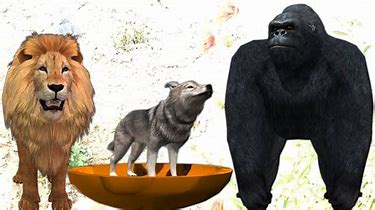
Gorillas and Lions and Wolves, Oh My


When I watched a gorilla scoop some dung out of his brother’s anus to eat it, it modified my thoughts on taste. This gorilla didn’t just ingest his brother’s dung, which is disgusting enough, he did so in such a deliberate process that the observer couldn’t help but note how much he savored that moment. He ingested that dung in the manner I might that one perfect strawberry I find in every bushel. We might think if he loved his brother’s dung that much he might suck it down quick to go in for another scoop before the other gorillas find out about it. He didn’t. This gorilla stopped for about three seconds moving it around his tongue to touch every taste sensor, with his eyes closed. And he closed his eyes slowly, and they fluttered. I didn’t imagine it. I saw fluttering. We all hate it when people assign human characteristics to animals, anthropomorphizing them, but there was no mistaking the idea that this gorilla was savoring the taste of his brother’s waste matter before going in for more. 

They’re our distant cousins right? How far removed from this species are we? We go on primal diets, like the paleo diet and the primal blueprint, and those diet entrepreneurs pitched their diet by saying that early humans had lower rates of obesity, heart disease, diabetes, and other chronic health conditions due to differences in diet. Dietitians now state that one of the problems with the paleo diet was that it can lead to cancer, heart disease, loss of bone density, and fatty liver. What’s the difference between the diet of modern man and Paleolithic man? What if we found that one key element to Paleolithic man avoiding such maladies was eating each other’s bodily waste? And did we invent toilet paper to keep our backsides clean, or were we trying to remove temptation? Out of sight, out of mind.

How far removed are we from scooping dung from our brother’s anus? If we listen to science, we’re not as far as we choose to believe. We all marvel at the good things they do, and we associate with them in this vein. When they do awful things, like eating the product of another’s bowel movements, we don’t claim them as one of ours.  

Why? Well, it’s disgusting. Who would want to associate with a species that eats another’s waste? What this points out, more than anything else, is that taste, flavor, and preferences are relative concepts. What sounds and looks disgusting to us is something to savor for our distant cousins.

Everyone is trying to appeal to our taste when they write, painting, cook, and changing their lifestyle to try to appeal to our taste, but what do we find appealing? Something that makes our brain tingle, does not do anything for our brother. Do you have this brother, raised in the same home, talk all the time, and he’s almost 180 degrees different. That’s an entirely different article, but the point is that taste is so relative that it’s almost impossible to create a flavor that has widespread appeal. The word flavor should have a capitalized (‘F’) on it, as it focuses on such a wide spectrum of taste. Food and drink have a flavor of course, but so do music, literature, and all of the arts in the sense that some of it creates the same but different brain tingles. 

Our own tastes are relative too, relative to need. Does water taste great? I dont think so, most of the time. If you played through a particularly grueling athletic contest, you know how great water can taste. Anyone who has run in a marathon knows water can taste like liquid gold. My guess, just looking out in the audience today, is that nobody here knows anything about that, but you do know what water tastes like after a night out. It’s the same but different, but the point is that need often dictates flavor. The polar bear prefers the seal over the fish, because of the fat content of the seal, something the polar bear desperately needs. 

Animals eat for survival right. They don’t enjoy taste, or if they do on some level, they don’t savor. They eat to fulfill their need to sustain life. Savoring requires a level of cognition that recognizes the limited quality of something extremely enjoyable. We all love the taste of a perfectly prepared rib eye, the perfect strawberry, and the clean, smooth taste of a cold drink of water. I think we can all agree that the strawberry is one of the best tasting fruits in nature, but there are always a few, in every bushel, that are perfect. Savoring that perfect strawberry, for just a second before eating another one, recognizes that limited supply. This gorilla not only ingested the dung slowly, he appeared to pause for just a moment to savor whatever that other gorilla ate and whatever that other gorilla’s digestive system added to it. That elongated, almost spiritual closing of the eyes might have been a coincidence, but I thought the gorilla enjoyed the concoction so much that he wanted to savor it for moment before going back to the dispenser. There was a full tray of food awaiting this gorilla, in the southeast corner of his enclosure, but he preferred to go back to the dispenser before him. Watching that gorilla appear to so enjoy it so much that he went back for more, I realized that individual tastes are so relative to the flavors we create that it’s pointless to try to fashion our work in such a way that it pleases everyone. We can only create whatever it is we create from our own dispensaries and hope that others enjoy it for what it is.   

The roles those two gorillas played in this enclosure defined for me what proved to be what I consider one of the most unusual and artistically successful pairings in music history that of Ben Folds and William Shatner. I’ve been a fan of Ben Folds for a long time, but my taste in music is such that I’ve never listed him one of “my guys”. He has some fantastic songs, but if I were to run into Ben Folds, and I informed him how frustrated I am that he comes so close to reaching me, I’m sure he wouldn’t care. Not only would he not care, he shouldn’t care. If I met him and told him that most of his music misses the mark for me, he should say, “That’s on you. I can only do what I do. I can’t worry about pleasing you, offending you, or entertaining you. If it pleases enough people that I can make a living at this game, that’s great, but I’m not going to change what I do to please you or Betty Beatle from Idaho.”  

William Shatner is not one of “my guys” either, but he’s always around. He’s the green bean casserole of the entertainment world. I doubt anyone who has yet to try green bean casserole would look at it and think, “Yum!” but it’s at so many family get togethers and potluck dinners that we eventually “what the hell” it, until we discover it’s ain’t too bad. As long as we don’t overdo it, repetition can even lead to a level of fondness for it, until we look forward to the next get together or potluck dinner that has a tray of it. Similarly, William Shatner has been in so many movies, TV shows, and other formats that we now look forward to seeing him in various productions.

No one should confuse the term “my guys” with a description of talent. I’ll drop the typical line that people drop to explain the discrepancy. “I respect the heck out of what Folds and Shatner do, but it just doesn’t reach me on a personal level.” I know people who love John Lennon so much that they suggest Paul McCartney is not talented. I understand that we all take sides in any rivalry, but to suggest that a talent on par with Paul McCartney has no talent is ludicrous. The Silly Love Songs vs. Important Songs debate rages on in some quarters, as Lennon fans suggest Lennon was not only more important he was more creative. These people relate more with Lennon, and because of that Lennon is “their guy”, but to prove that point, some try to so by belittling McCartney’s Silly Love Songs talent.

I missed Folds and Shatner’s collaboration for years, because they weren’t “my guys”. When I eventually heard the album Has Been, however, I was blown away. It reminded me of one of my favorite concoctions: cranberry granola and banana flavored yogurt. Banana flavored yogurt is too sweet for me on its own, and while the cranberry flavor of granola is tasty, I probably wouldn’t eat it as a standalone. When I put the two together, however, I enjoy it so much that I’ve considered submitting it to the overlords as my reward for living a decent, moral life. When I pass on, I want to meet my long-deceased relatives of course, and I wouldn’t mind it if someone played a Brahams Sonata on the harp to signify my entrance, but if you’re wondering how best to reward me for a life well lived, might I suggest that the floors and walls of my reward taste like the banana-flavored yogurt and cranberry granola concoction I created.

When we eat concoctions like these, we spoon too much of one flavor most of the times. Some of the times, we spoon too much yogurt, and some of the times, we spoon too much granola, but there are occasions, at least once a container, when we hit a Goldilocks spoonful. The album Has Been is the Goldilocks concoction of talent for me, and when I listened to it often enough to recognize its brilliance, I closed my eyes and savored the moment. I did so, figuring that this production would be a one-off. I loved Has Been so much that I went back to the other concoctions they’ve made together, and I went back to their solo work, but neither of them hit the mark in the same manner. On their own, Shatner and Folds create interesting, quality material that doesn’t quite hit that Holy Crud, brilliant mark, but together they created what I consider their Goldilocks moment. I would think that such moments are so fleeting in any artist’s career that when they hit one, they would immediately run back into the studio to dispense another collaboration, but perhaps they don’t think they can create another Goldilocks moment together. I know they did singles together before and after Has Been, but that album was so good that I would think it would drive them right back into the studio to do another collaboration. We know that Folds’ affinity for Shatner brought them together, and that their work together impressed Shatner so much that he called Folds a genius, but we don’t know why they never made another album together. Perhaps they think that fate and whatnot only permits one one Goldilocks moment a life.

Carnivores in Cartoons

Yesterday, I thought carnivores were the mean, bad guys of the wild. Today I realized that the cartoons we watched conditioned us to believe that when a lion, shark, alligator, or any animal at the top of the food chain eats one at the bottom, they do so with some sort of evil intent. We can find a definition of this in Aesop’s fable in which a mouse removes a thorn from a lion’s paw. After the mouse removes the thorn, the lion states that it will not to eat the mouse as a display of gratitude. The mouse does something nice for the lion, and the lion, in turn, agrees to do something nice for the mouse. The inference is that if the lion betrays this agreement, and the lion follows its instinct and eats the mouse, that means the lion is mean.    

In another fable, on the theme, a frog agrees to assist a scorpion across a pond. Before doing so, the frog says, “Wait a second, you’re going to sting me.” 

“If I stung you, we would both drown,” the scorpion responds. 

The frog reluctantly agrees to help the scorpion across the pond, and the scorpion stings the frog. As they’re both drowning, the frog says, “I thought you said you weren’t going to sting me.”

“What do you want me to say, I’m a scorpion. This is what I do.” 

Some allege that the moral of the story, for young people, is that there are vicious people in the world who, no matter how nice you think they are, will stab you in the back. While I think that is a valuable lesson to learn, the more valuable lesson is that which exists in nature. No matter how nice and cute that wild animal appears, and no matter how many cartoons we watch that display that animal as cuddly, they will probably scratch and bite us if given the opportunity. They might not understand why a seven-inch gash in our skin prompted our decision to stop playing with us. If they could talk, they might say, “C’mon, I was just playing.” The point is, in most cases, they did not intend to hurt us, and they’re not being mean. They’re relatively brainless creatures, compared to us, that operate almost entirely on instincts. Biting and scratching is just what they do. 

Think about all the cartoons we watched and books we read in our youth. They depict carnivores with jagged teeth and menacing growls. As we often do, we confused being scary with being mean or bad. Today I learned that they’re not mean, or bad, they’re just hungry, and like all other animals, they eat when they’re hungry. Regardless what it does to their reputation as a beautiful animal, wolves enjoy eating fluffy bunny wabbits. They do awful things to bunnies if they’re able to catch them, but that does not mean they’re mean or evil in the manner we define such terms. By teaching young humans lessons, using animals as main characters, some of us anthropomorphize these characters to such a degree that we assign them human characteristics. Lions, tigers, and bears aren’t nice, they aren’t mean, and they don’t make decisions on what to eat based on how other animals interact with them.   

Yesterday I learned that even if the animals at the top of the food chain are not the meanies we thought they were when we were kids, we should still consider doing everything we can to avoid one in the wild.

After watching videos that focus on animals biting humans, nature lovers qualify the instinctual actions of these wild animals by saying, “We are not on their diet.” The nature lovers then provide a number of theories regarding how these incidents often involve nothing more than a case of mistaken identity. These theories are true, of course, as most animals in the wild, and in the ocean, have never seen a human, and self-preservation is more important to animals than eating in most cases. Animals often take a pass on eating anything unfamiliar if they think they could get hurt in the process. Sometimes, however, they’re so hungry that they’re willing to eat anything that moves, especially if it moves slower than other prey.

Most animals don’t know what a human is, and that’s why they fear us, but we are also a point of curiosity for them. Thus, when they see us walking around in their domain, or floating on the surface, they’re curious, and that curiosity is almost exclusive to considering whether they should consider adding that slow moving case of meat to their diet. Yet, seeing, hearing, and smelling us might not be enough to satisfy their curiosity, and they obviously cannot communicate with us, so their last resort is to taste us to try to figure out what we are to determine if we are a delicacy they’ve never considered before.

The nature lovers further their argument by opening up the belly of a bull shark. “When we open up the belly of a bull shark, we find everything from license plates to cans of paint to packs of cigarettes. The bull shark, unlike other sharks, is not very discerning. They’ll eat anything they see floating on the surface of the water, even if it happens to be a human on a surfboard.” Translation: They do not intend to devour us. They’re just curious. They just want to taste us to see what we are. I see the nature lovers working here. I know they’re trying to relieve our fears about sharks, and in turn preserve the shark population, and I know wild animals are not bad or mean in the context humans define the terms, but it does not comfort me to know that all they want to do is taste me. If I happen upon one of these carnivorous beasts, and it’s clear that all they want to do is taste me, I’m still going to do whatever I can to get away. If I fail to escape, I’m probably going to shoot it, because I have to imagine that even though they’re just tasting me, it’s still going to hurt like the dickens.