The Quiet Quirky Clues to Our Core


A baby, in the arms of her father, watched a line of adults proceed by her in church. She watched them proceed past with little interest. She watched them as I watched her, both of us looking at nothing until something caught our eye. Something caught her eye. She went from absently looking at people to intense focus. I turned to see what caught her attention. It was another daughter being held by her father in a different manner. The watcher and the watchee locked eyes for a couple seconds, and the moment passed, or so I thought. The watcher then wriggled herself into another position. “What are you doing?” her father whispered, looking down at her movements and adjusting his arms according to her wishes. When she was done finagling her fathers’ arms to her wishes, she ended up in the exact same position as the watchee in her father’s arms. I found her exposé into the human condition fascinating, because it suggested that keeping up with the jonses is just plain human nature, as opposed to learned behavior.

What does it mean? Does her mimicry reveal our innate need to achieve conformity, or the thought that we, even when very young, believe everyone else is doing it better?

***

Ever shake hands with a young kid, say seven-to-nine-years-old? They put their hand out vertical, but they add no grip, and their completion of the ritual is almost robotic. Adults apply meaning to this superficial, symbolic ritual. Kids just do what they’re told, the way we did when we were kids. They don’t know any better, we do. Yet, if we know better, what do we know? We think we gain special insight into a man by the way he shakes another man’s hand, but what do we gain? How hard is it to fake a great handshake?

“I never respected a man who didn’t shake a man’s hand,” my father-in-law said. “If a fella gives you a firm, but-not-too-firm handshake, and he looks you in the eye while he’s doing it, you know he’s a man’s man, and a man you can trust” 

“Fair enough,” I said, “but can it be faked?” It was a leading question, but I was also so curious about this staple of the insightful man’s definition of a man he thought he could trust on sight. 

“You can feel it,” he said.

That seemed preposterous to me, but he had a closing tone that suggested further interrogation on my part would be viewed as disrespectful. It was not my intention to be disrespectful, as I knew this man knew ten times more about reading people than I’ll ever know. He spent a forty-year career learning the difference between honest people and deceitful ones, and he was, by all accounts, very good at his job. 

I didn’t think my other questions were disrespectful, but the more I thought about it, the more I realized that they were leading questions that asked him if he knew how wrong he was. So, I just shut it.

If I continued down this path, I would’ve told him about the weasel I met who knew how to shake a man’s hand, and he was so good at it that I thought, ‘Now that’s a handshake.’ I never put much stock in handshake readings, but this man had such a great handshake that it influenced my first impression. The weasel then spent the next twenty minutes trying to find creative ways to get me to part with my money. Piece of junk is what he was, but he had a nice, firm handshake, and he looked me in the eyes while he did it. I’ll give him that.

What does it mean? We think it’s a little cute that a young one doesn’t understand the complexities involved in the hand shake, and we dismiss the child’s failure to provide any data to our information-gathering exercise. As we age, we learn that a proper handshake conveys trust and respect, but some of us learn how to fake this customary ritual to mislead people. Relying on the knowledge we’ve attained from the meaning behind a great handshake is flawed. I’d much rather talk to them, watch them, and read them to learn the refrain in their brain.

***

“I wish I had all the money and love that guy had,” a young feller said referring to an NBA player who happened to be the son of a former NBA player. To paraphrase the Tina Turner song, What’s [Money] Got to do With It? Money can buy us all sorts of things, but there comes a point when the power of money ends.

At some point, money becomes an afterthought. Once we have enough money to support us for the rest of our lives, it’s “one less thing to worry about,” as the Forrest Gump character said. Name recognition is another powerful tool, as it can open doors for us, but once we’re in, we’re in. What do we do then? If we don’t have game, at some point, no one cares what our name is. Money can’t buy respect from our peers in school, at the workplace, or on the court. That’s where names are made and lost. When we fail, money won’t help people forget. Love and an excellent support system are the coin of the realm there. When I failed in school, the workplace, and in athletics, I would’ve loved it if someone said, “You’re going to fail, it’s what we do, it’s what we do the moment after we fail that defines us.” I would’ve also loved it if they added, “And when you fail, just know that you have me, the person who cares more about what happens to you than anyone else in the world, standing right behind you.”

What does it mean? We all know those cynical types who think that in one way or another, money solves everything. My guess is this is said most often by cynical types who never had any, because it is an excellent excuse to explain to ourselves why they haven’t measured up. We could list all of the players in our culture who never had a dime growing up, but that would be redundant. We all know that money does not help us deal with momentary failures, but we have to admit that if we didn’t have what we believed to be a quality excuse those temporary failures could crush us. If quality excuses help us get over speed bumps, what do we do then? Most of the successful people, I’ve met tell me stories of their no-money, no friends in high places rise, and I’ve heard a number of tales that detail trials and errors, and rock bottom, insomnia-rich, where-do-I-go-from-here failures that eventually lead to success. “How?” will be your first question, and your second question will be an unspoken, “What’s the difference between you and me?” Where did their inner drive come from? Their answers will usually be a frustrating amount of nothing really, except that they had an unwavering spirit behind them, often a parent, who provided support, guidance, love, and a whole bunch of other elements that taught them that momentary failure is nothing more than a learning experience.

***

I hear parents rewrite their past all the time at their kid’s baseball games. Mythologizing ourselves into an ideal image is just kind of what we do when we’re watching our kids play ball. This “They’re not as good as we were,” mentality helps us control the narrative of our lives by highlighting our character-defining moments to attempt to rewrite our character. Yet, when we’re telling our kids about the seminal, pivotal memories of our lives, how often do we “misremember” key details that never made it into our highlight reels? When we see our kids act in a somewhat less than aggressive manner, we’re despondent. “That’s not how I did it!” we say. Is that true? It is, because it’s how we remember it. It’s possible that we remember it correctly, but it’s more probable that we remember our highlight reels as opposed to our reality. It’s also possible that we’ve rewritten our past so thoroughly that that is genuinely how we remember it. I do this, you do it, we all do it. Our grandparents probably did it to our parents, our parents do it to us, and we do it to our kids. It’s so common that we could probably call this chain of rewrites human nature at this point. 

What does it mean? Our rewrites are an attempt to correct the past that we think might help us correct our present and future. They’re not lies, however, as we genuinely believe them after reviewing our highlight reels. Yet, the best rewrite we could possibly write is the one in which we try to escape the clutches of this chain. It could alter our kids future if we rewrote the mistakes our parents made with us. We may not want to recount our failures for them, but we could talk about how we dealt with adversity, moments of embarrassment, and humiliation. We could offer them a love and support rewrite that includes our own version of the “And when you fail…” note of support listed earlier that we wish our parents offered us?    

***
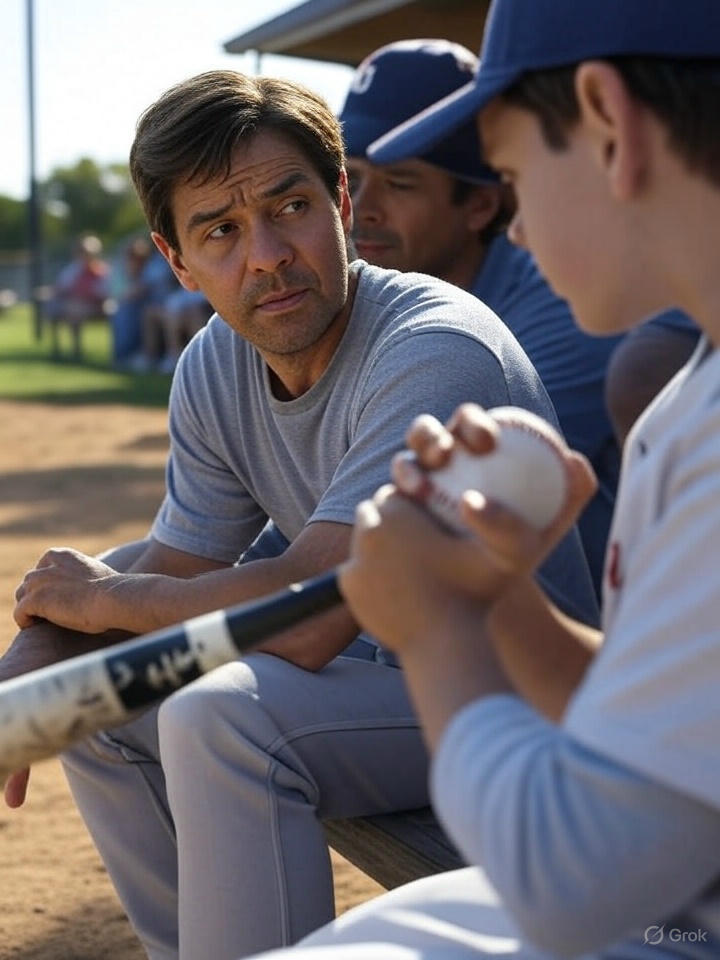
Alan “the neighbor” offered Ben “the neighborhood teenager” some advice on his game. The Ben, in our scenario, forgot everything Alan said two seconds after he’s said it, which made Ben the perfect repository for Alan’s otherworldliness worldliness. I wanted to tell Alan to “Save it” about halfway through his spiel, because other, more prominent types in Ben’s life offered him similar advice, and he didn’t listen to them either. Ben was all about achieving independence, or at least a level that made him immune to responding to advice. I didn’t say anything, because I knew this really wasn’t about Alan helping Ben improve his game. Allen just wanted to display his unique understanding of the human condition to us.

What does it mean? We all offer one another advice, and we all politely avoid listening to those who are kind enough to offer us some advice. Not only do I know people who act this way, I know I am one of them. There are a variety of reasons and excuses for why we don’t listen to anyone, but my advice to people who give advice is, “Save it! No one’s listening.” That’s dumb advice I know, because when we spot a flaw in someone’s game, or in someone’s life, some of us sincerely want to help them, and we can’t avoid trying to prove the knowledge we’ve attained along the way. The problem with us hearing such advice is that most of us believe doing the same thing over and over will eventually produce different results.  

***

We all try to help one another when we spot flaws, but you ever tried to get a senior citizen’s mind right on a passion project of yours? When I watch it happen a big, neon-flashing “SAVE IT!” crosses my mind. You have an opinion, we have an opinion, and the only thing that keeps some of us going is the belief that their opinion is uninformed, because it goes against our sources. Before we go about getting their mind right however, we might want to consider the demographic of our audience. Marketers have what they call a key demo, and they pay big bucks for ad space in a show that appeals to audiences between the ages of 18-49, because their intense market research suggests that they’re still susceptible to suggestion.

When we’re under 18, we’re even more susceptible to suggestion, but we don’t have any money. The 49+ demo have all the money, but advertisers don’t waste the corporation’s time or money trying to persuade them, because through market research they’ve learned that the 49+ mind is already made up. I’ve met the anecdotals, my aunt was an anecdotal. She thought adhering to the prevailing winds of change gave her a more open-minded presentation, and she hoped it made her appear fresh, hip, and younger. It didn’t, but she got a lot of mileage out of being anecdotal. Generally speaking, the +49ers stubbornly adhere to the patterns they’ve developed, and all the routines and rituals they’ve had for a majority of their lives.

What does it mean? Market research dictates that most of the 49+ demo is so loyal to the products they’ve consumed for years that they’re branded. So, go ahead and tell them your opinions, because that’s your right, but just know that you’re probably wasting your breath if you think you’re going to get their minds right on your pet topic, because they’ve aged out of anyone ever changing their mind on anything. If you disagree, go ahead and ask someone who spends millions trying to tap into the culture and reach the widest audience possible. The marketing agencies, and various marketing departments of corporations have decided that pouring millions into advertising to +49ers is equivalent to pouring money down the drain.

Once you’ve arrived at your conclusion, you might want to join me in my quest to get marketing teams to stop directing a portion of their advertising budgets to streaming services. If that fails, we should focus on getting them to offer a +49 opt out on button on commercials for those who’ve aged out of the key demo, because their beloved fast-forward thumbs are developing callouses.

My Advice, Don’t Follow my Advice


“Try to find someone nice!” is the advice I give young uns. They won’t listen, and we know they won’t, because we know we didn’t. We had to get over our attraction to the naughty first. The naughty are just more fun and fascinating, and they’re mean. No matter how hard “they” try to redefine funny, mean is just funny, when it’s not directed at us of course. Their violations of social protocols and etiquette, aren’t just funny they’re relatively informative, in the sense that their exaggerations of the opposite teach us a lot about ourselves. Nice comes in very low on our mate-o-meter when we’re young. Nice usually comes after all the bad boys and girls beat us down.

“I don’t want to play games,” we scream, they scream, and we all scream for ice cream. “I hate the games people play, and I try to avoid drama.” Then why did you date them? We dated them, because even though they were jackballs to everyone else, they were actually pretty nice to us, for a time and in small doses, and that made us feel special. We also enjoyed the vicarious attachments people made with us when we were around the mean and naughty. After dating those who made us laugh so hard that we cried, and cried so hard we laughed, we eventually decided to go out with someone who did nothing more than say something nice to us while we were watching TV with them, someone who appeared to enjoy cleaning the living room with us, and preparing a barbecue for a family reunion. We found ourselves opting for the stability and sanity of the nice. Some might call that boring, and that’s fine with us after everything we’ve been through. My advice is to date the tumultuous types for all of the excitement and fun they bring, but make sure to break things off before you start hearing substantial calls for commitment.

Save Your Money, Man, Save Your Money   

Those wild, good times cost money too, and the good times never last as long as we think. It’s Oh-So-Good right now, and we have no reason to believe it won’t last.

Someone pays us, and we don’t deserve it. We earn it! We earn it every day, and in every way. We work as hard as we play, but there will come a day when that will fade away, and things will happen. Things always happen, that’s the thing about things. They slap us from so many different directions that some of them aren’t even listed on Google Maps. What happened?

Save your money man. Save for that day. “Save 10% of every paycheck,” they say. Others suggest we save the equivalent of three-months of our salary. Both those figures are low, far too low for me, but I’m a saver. Most people can’t, or won’t, save, and living the spartan lifestyle in the present just seems like a waste of life. Carpe diem, seize the day, and save until the end of the year. When we do the latter, and it’s “all good”, we blow it all. 10% and three-months salary is a decent compromise for them. “It’s just money,” they say, “and I would rather live a life of fun and adventure than have a nest egg. Plus, isn’t money the root of all evil?” It is, if you have it. When we don’t, we see it as the necessity it is, and we learn the definition of penniless powerlessness. We’ll also learn what it feels like to depend on others for everything, and dependency can be humiliating. It almost makes us feel like a child all over again. My advice, do everything you can now, when times are good, to avoid slipping into that spiral.    

We should’ve and could’ve spotted the spiral before it started to swirl. We know that now, and we see the pivot points now that could’ve changed it? If we had the foresight, we never would’ve gone left instead of right or right instead of left, at that crossroad.

Think about where we would be right now if we had some foresight? If I only applied for that job/promotion that I didn’t think I was qualified for, but I probably was. I mean look who ended up getting it. If I had older siblings, better parents, and I made more friends, or dated more often just think what I could be now. And college, college! If I paid more attention in college, my life would be oh-so different. We can’t stop thinking about how that person, equally qualified, landed our dream job or promotion, because they threw a relatively worthless degree in basket weaving at the “theys”. The best explanation I’ve heard for why this happens is that attaining that sheepskin displays perseverance.

Experience teaches us two things, college degrees don’t mean as much as we thought they did, and it’s better to have one than not. But, and there’s always a butt, how many of us would probably be in almost-the-exact-same-space we’re in right now, if we attained the golden ticket? How different are the lives of the college graduates in our peer group? Generally speaking, they got a job, and we got a job. Even with all that, there’s a super-secret part of us that thinks if we just paid more attention in Mr. Crippen’s Astronomy class, we could all be astrophysicists by now. It’s possible, of course, but it’s more likely that if our academic accomplishments landed us a job on the Starship Enterprise, we’d probably end up a red shirt sent to investigate the spiky colorful plants that shoot out deadly spores.

The Bonkers

Avoid “The Bonkers” if you can. Our parents introduced us to the Bonkers multiple times. The Bonkers were our parents’ friends, which pretty much means our parents were bonkers too, as opposites don’t always attract. Some of the times, people make friends because they share a worldview, and some of the times it’s happenstance, but commonalities often weave their way into friendships. The Bonkers have ideas about how the world works, and their ideas are always nuanced approaches that are subjective to their worldview, fascinating, and wrong. If my parents were bonkers-free, they would’ve stepped up on The Bonkers at some point and said, “Hold on, that, right there, is just insane. I know you’re not willing to die on that hill, but if the Chinese are correct in saying that every adult leaves a mark on a child, I don’t want that influencing my child.”  

The primary characteristic The Bonkers share is resentment. They have an explanation for why they didn’t achieve in the shadow of their boogeymen. They were the child who didn’t get enough attention, who became an adult that was cheated out of the system for a reason so bizarre they feel compelled to repeat that reality-shattering explanation at every outing. In reality, they didn’t have the talent, ingenuity, wherewithal or perseverance to make the big bucks, and they spent their lives characterizing, and re-characterizing, those who do. I met their boogeymen more than once, and I knew some of them. When I unmasked them, I learned they weren’t the boogeymen of The Bonkers’ resentful narratives. They didn’t have near the money, power, or influence detailed in The Bonkers’ tales, and they didn’t make calculated moves to hold the little guy down. They were just as insecure, normal, and common as the people telling their tales. To move these findings from slightly funny to hilarious, I learned that most boogeymen have their own boogeymen. 

One of the best little tidbits I’ve ever heard came from a total wreck of a person. She said, “You raise a child to a certain point, and no one knows  where that ends, but at another point you learn to stop raising them and start guiding them.”

Another friend of mine dropped this nugget, “The number one rule to parenting is to spend time with your children and be there for them. The best element of my dad’s inept parenting was that he always made time for me. He made so many missteps and unforgettable mistakes, but he was always there for me. You’re going to make mistakes with your kid, we all do, but if you spend time with them, it will edit and delete some, if not all, of your mistakes.” Time, in other words, heals all wounds. 

How much time do we have for them? How much time do we have in general? Most narcissists are so into “me time” that they should’ve entered that data into their reproduction algorithm before going down that hole. Is it more narcissistic to require more “me time” or more time? We don’t even know the definition of narcissism, but we’re all narcissists and none of us are. “Yeah, you’re talking about that other guy.” 

I’m a storyteller, and I tell stories the way others play chess. I appreciate the fact that readers want a streamlined point of focus, but I cannot help considering the other side. When someone provides me a story from their day, I immediately think about the other side. (For those who want friends in life, don’t do this. People don’t like this. They want you to side with them in their story.) Learned, intellectual types suggest that it’s impossible for us to be objective, this is what learned, intellectual types call hyperbole. Of course total objectivity is difficult to difficult to achieve, but that doesn’t mean we shouldn’t try to achieve it. Some don’t, and when I hear their stories, I can’t help but think about this situation from the other person’s perspective.  

When we tell our story, it’s filled with faults and variables. We’ve all had primrose paths and well-marked minefields on the map of our crossroads, and most of us chose the well-marked, yet uncharted minefields. When we detail for our children the ramifications and consequences of our actions, we conclude with, “But I know you’re not going to listen to me, because I didn’t listen to my dad. Your best scenario is to experience everything yourself, then remember what I said here today. If you learn to couple your experiences with my advice, as I did with my dad’s, you might turn out halfway decent.” He listens to me now, at this age. That will change, of course, but our job is not to build the structure, it’s to create a foundation from which they build.

Money: A Love Story


“I spent most of my life making money for someone else,” Eduard Pennington said. “It wasn’t just one day, one week, or even one year, but at some point I realized I wasn’t just wasting my talent, I was wasting time. I enjoyed my time at the corporation, and they treated me better than they should have, but I wasn’t getting younger. I just got tired of doing it for someone else, and through a series of painfully slow, very boring investment platforms, I eventually had the money to do it for myself.”

Some people feel the passion when they hear tales of romance. I get the same charge hearing someone passionately talk about making money. I might be lonely in this corner of the world, but when I hear anyone talk about how they made theirs, I’m not the least bit envious. I’m inspired.  

Eduard Pennington is, was, and always will be a regular schmo. There was probably nothing fancy about his clothes or his car when he was a middle class employee, and nothing changed after he became the multi-millionaire next door. When we speak to him, we notice the confidence of a life well-lived, but we don’t hear the smug arrogance those of us who grew up on cartoons might suspect from such a character. Eduard Pennington is, as depicted in the 2010 book, The Millionaire Next Door.  

“When we look back on our lives, we remember the good, the bad, and the ugly,” Eduard said. “The years I spent working for myself were the highlights. It was so stressful, in the beginning, that it affected my health, and the idea that I made such an idiotic mistake leaving the comfy confines of the corporate world to do this kept me up many a night. I also worked so many hours, getting my business off the ground, that it took a toll on my relationships with my wife and my kids. I still regret missing out on some vital parts of their youth, but other than that, those were the best years of my life.”

Money is not the root of all evil. It is neither good or evil. It is contained wholly within the specimen on which it acts. We define it, and it defines us. If we are bad guys, the pursuit of money can make us worse. If we are good guys, the pursuit can make us better. In its finest form, money is a byproduct of human ingenuity, hard work, and entrepreneurial risk-taking.

“You can get rich working for money, my dad once told me,“ Ed said, “but you can get stinking I-hate-you wealthy when your money starts working for you. Money is power,” Ed added to his dad’s saying, “and power buys you freedom, and that freedom permits you to do what you want to do.”

In the middle of the decade Ed spent working for himself, his company eventually turned a profit. He began delegating most of the authority, and some of the work, to his employees as the profits increased. He trusted them to run the company the way he saw fit, but the resultant free time did not suit Eduard Pennington. He grew anxious and itchy, and in the the process of trying to find something more productive to do he “almost accidentally” developed a device (pre cell phone era) to help make the work of his employees easier. He did it for the money. He did it for the profit, and he did it so well that his company’s profit margin began to dwarf that of his nearest competitors’. After years of pounding them, the competition came-a-knocking. Eduard quickly patented the device, and he shared everything about it with them. He then permitted them to pour through his accounting books to determine the ins and outs of how he was beating them. They waked away believing the difference was this device, and they bought it. Then, their competitors bought it, and so on and so forth, until the device took off. It wasn’t long after the competition incorporated the device into their business that they couldn’t imagine how they got along without it.  

“Word got around, and they came-a-knocking,” Eduard said of a number of entrepreneurs who walked into with bountiful checks in hand. “They knocked loud and hard. I couldn’t believe the numbers they were writing down. I should’ve seen the bidding war that ensued, everyone said I should’ve seen it, but I didn’t. I was wholly unprepared. The problem for me was, they didn’t just want the device. They wanted my whole company. My company, my little baby, and the thing I built from a little granular idea was now a number. It was a gigantic number, for me, back then, but it was still just a number.

“I hated them for putting me through this, and I loved them at the same time,” Eduard continued. “Ten years into this company, and I never wanted to do anything else. My plan had been to see this company to its bitter end, my end, my retirement, or whatever came first. If I told you the number they wrote down, you might consider it an easy decision, but this was my whole life, my routine, and my identity that they wanted to buy. It was the hardest decision I’ve ever had to make, but I just couldn’t imagine, in my wildest dreams, ever turning down the kind of money they were offering.

“I took a month of long-sweaty nights mulling over the plusses and minuses of selling my company. They thought I was playing a card. They thought I was being strategically patient. I wasn’t. I was making sure giving up what I spent ten years building, was the right decision. I hired corporate analysts to project the growth of the company ten years, twenty years out, and I paid advisors, lawyers. I even contacted other owners in my industry to see what they thought.

“Even with all that, I still regretted selling it,” Ed continued. “I regretted it before I signed the documents, I regretted it after, and I regret it to this day. I don’t think I would’ve done with it what they did. Maybe I would’ve, I don’t know, but they took it to another level. God love them, they knew what they had, much more than I did, and I knew a lot, but they took it to the stratosphere. They gave me a lot for it, but if they ever decide to sell, they’ll probably get fifty times what they gave me, based on what they did.”

Eduard Pennington lived the last thirty years of his life The Millionaire Next Door. He took two extravagant vacations to celebrate the prize of his ingenuity, and he bought a verified and minted Babe Ruth-signed baseball to give his reward a tangible quality. Eduard then took care of every one of his immediate family members, in ways big and small, and he made sure they never had to struggle in life the way he did. Then, he did something revolutionary with the rest. He invested it.

“I went boring,” he said. “Boring, old blue-chip stocks with high dividends, bonds, and real estate. I have no creative investments, other than maybe the Babe Ruth baseball, and no sexy, innovative stocks are in my portfolio. My plan was to live on dividends, interest, and appreciation. My financial plan was to go so boring that you might fall asleep before I’m done telling you what I invested in, but that was my plan.”

There are a number of reasons I find Eduard Pennington’s story so beautiful, but one of them is purity. He pursued the American dream from his nook of the world, and he found it. His journey did not involve backstabbing, fraud, or deception. It involved some appreciation of his business, but that was thanks mostly to his hard work and ingenuity.

Eduard Pennington was a good man who worked his fingers to the bone, and he learned so much about his industry that he developed a revolutionary product that eventually went international. He surrounded himself with good and honest men and women based on merit, and they proved their value to his company for a decade and beyond. If you’re reading this with the notion that somewhere around right here in this article, the other shoe will drop to expose some of Eduard Pennington’s character defects, this isn’t that story.

The streamers and Hollywood would never pay one dime for Eduard’s tale, because he loved his wife and children, he didn’t cheat anyone, and he never hurt anyone. He wasn’t a bad guy, and they want bad guys, because we want bad guys. Bad guys are the angle, the promise they make in their summaries, and the selling point to get us to click on their movies. We want tears and pain from the side characters, and a ruthless bloodlust from our main character. No one wants to read a story about a man who loved his wife almost as much as he loved his mother. No one wants to read a story about a nice man who never faltered in his dream to make the most honest money he could, that’s just boring.

***

“Money is not the root of all evil,” someone far smarter than us once said. “Money provides definition. When a bad guy pursues money, it can make them worse. A good guy pursuing his dreams can become a better man in the pursuit.” The idea of money is intangible quality with no definitions of its own. We define money and money defines us.  

Once he took the money and ran, some might suspect that Ed did it all for the money. That seems so obvious to us now that it’s not even worth discussing for many of us. Yet, Eduard loved what he did, and he regretted getting out. “My friends and family said things like, you’re still a young man, and with that money you can do whatever you want,” Eduard said. “I thought that was right and logical and all that, but the truth was I didn’t want to do anything else. I still don’t, but I couldn’t turn the money down, because I didn’t want to be known as the person who turned that money down. I didn’t want people to there goes Eduard Pennington, the guy who turned down big money, and right after he did it, his business fell apart. Every industry, hell every business, goes through cycles, and it was possible that the value of my company could’ve gone down. It didn’t, but it was possible.”

Eduard Pennington did it all for the money. He worked for someone else, because they paid him. He opened his own business for the expressed purpose of making more money, and like all upstart businesses he skimped and saved during the early, desperate years. He even dipped into his nest egg to see to it that his employees were paid on time. He didn’t do this because he was a good man. He did it, “Because it was good business,” he said. “I interviewed and hired every single one of these talented men and women, and I paid them top dollar for their skills, because I knew they could make me more money. I don’t care how loyal your employees are, if they find someone who is going to pay them so much more than you, that will test their loyalties. It’s just good business to find the market for their talent and pay them more than that.

“Why else do you do anything in business?” Eduard asked when asked if he has any concerns that we might view him as a greedy capitalist. “I spent most of my life making money for others. When I went into business for myself, my goal was to make as much money as I could.

“Let me amend that slightly,” Ed said. “If you do it solely for the money, you’ll end up miserable. If you love what you do, and you’re good at it, money is more than a byproduct of all of your efforts, it’s the reward. If you’re not getting paid what’s the point?”