Beat The Beatles


“The Beatles are overrated,” wrote someone who probably wears black sweaters, prefers goatees, and still considers the ascot a mandatory fashion accessory. “While many find enjoyment in singing along to Hey Jude or I Want To Hold Your Hand, I find the vast majority of [The] Beatles’ lyrics insultingly simple, and [their] individual musical talent is surpassed in almost every regard.” Those who wear normal clothes don’t truly care about such accessories. To us, song is sacred. When we hear The Beatles, we might hear evidence of the critic’s complaints, but we view the songs they created as simplistic brilliance.  
It would be a fool’s errand to try to suggest that one artist’s artistic expression is superior to another, but the author draws many comparisons. She focuses most of her critique on the technical proficiency of The Beatles stating that three of the four musicians are inferior to their peers. The author conceded that George Harrison proved a gifted musician, but The Beatles restrained his abilities in most of their songs. This begs the question, does the sacred nature of the song require some level of restraint? We might enjoy hearing gifted virtuosos play their instruments, but how often does technical mastery lend itself to crafting great songs? We can all think of some songs where instruments commanded the music, but even the most gifted musicians learn to restrain their abilities for the sake of the song.     

When we attempt to examine our favorite songs dispassionately, we might acknowledge that some of the lyrics might be simple, and that a novice might be able to play them on a piano, but as Bill Murray once said, “It just doesn’t matter”. We enjoy a clever relationship between the lyrics and the music. Our favorite composers often write lyrics for the sole purpose of developing a relationship with the music.  

Most people will express awe over an eighteen-minute guitar solo at a concert. My question is do they really appreciate an eighteen-minute solo, or do they want to appreciate it? I might be alone, but I consider solos, in the midst of a rock concert, self-indulgent drivel. “Get back to the songs!” I want to yell. Unless someone wants to play guitar, and they want to learn from the masters, I don’t understand their appreciation. Unless they want to say they love it, so they can say they love it, because that’s just kind of what we do, I guess. Some of them, and I’ve met them, actually appreciate a big long solo so much that they time it. Perhaps they think a big, long solo from a guitar god gives them their money’s worth, or something, but I don’t understand it. 

***

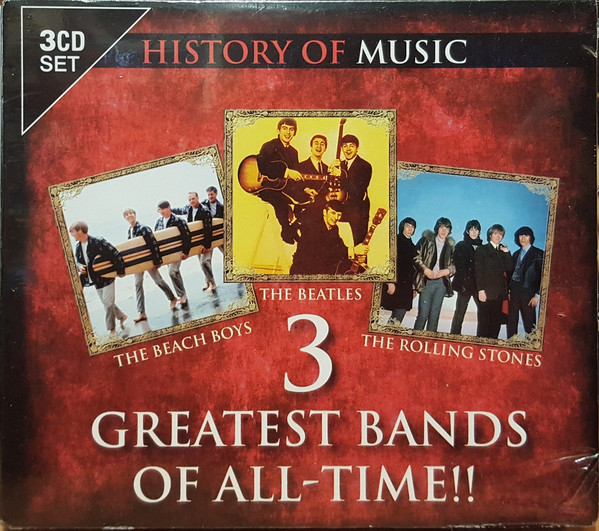
An argument put forth by Ashawnta Jackson, however, suggests that we don’t really consider bands like the Beatles, The Rolling Stones, and The Beach Boys great. By enjoying their music as much as we do, she writes, we’re just doing what we’re told. We don’t know any better. She appears to believe that the underlying reason 1965-69 bands are still part of the modern canon is a result of a multi-generational mass delusion based on an institutional, repetitive messaging. She writes that others chose this music for us, and we haven’t examined those who decided what music we are to enjoy well enough.    

The inference is that hundreds of millions of people throughout the world still love the music of these bands because everyone from the corporate types to the DJ’s constantly play them, and our parents and uncles and aunts have propagated this notion that we should continue enjoying listening to the music they enjoyed. This mass delusion is so entrenched now that listeners from all over the world, and from just about every demographic, now accept the fact that certain music “overrepresented in the 1965-69 era” is now considered so great we want to listen to it often. The cure, Jackson states, can be found “by examining the who chooses and why, the “dominant canon of the dominant” can be opened up as listeners reflect on their exclusions and “find their own ways off the beaten track.”  

Rick Moran’s piece counters that young people are falling under this spell too, as “[Media Research Center Sales data] states that “old songs” currently represent an astonishing 70% of the U.S. market.” Listening to music is often a solitary activity. Suggesting that those listed above do not influence our choices is foolish, but to suggest that it constantly influences what we stream in our cars, at our computers, and all the other times when we’re alone appears equally foolish. One might think that young people, who traditionally abhor everything their elders prefer, might be a demographic that Jackson could count on to put an end to these institutional decrees, but the data suggests they went and had their minds melded.  

Horrible & Important Music Snobs


“You listen to some horrible music.”

“What do you listen to?”

No answer.

Some of us listen to music others consider weird, strange, and just plain different music, but we’ve listened to it for so long that it no longer bothers us when they say it’s horrible. Who cares what anyone thinks of the music we play for our entertainment? We might have when we were in high school and college, but most of us left those insecurities behind us when we entered adulthood. We didn’t have anything to do with writing the music or the lyrics of these songs, so when people try to call us out in front of groups, we regard it as equivalent to Yo-Mama jokes. They’re the silly, inoffensive jokes we make about one another at parties and family get-togethers. We don’t make fun of someone’s appearance, their financial stability, or their children. No, we try to find a harmless subject on which the other has little-to-no vulnerability, and we drill down to the core. One guy lands a quality shot, the recipient hits back, and everyone keeps firing someone runs out of ammunition. It’s part of a fun little game we all play with one another.

Repetitive jokes like these only leap the fence from meaningless and harmless to competitive with repetition. When she first said, “You listen to some horrible music,” we laughed as hard as everyone else. We felt no need to respond. She could’ve been a little more creative, but it was a decent shot, and it was funny. 

We’ve found some jewels in the rough over the years, but we know that an overwhelming majority will never enjoy the music we do. It’s a thing, or a thang, we’ve known for so long that it doesn’t really matter to us anymore. It used to matter a great deal to us. We used to try to discover bands before any of our friends did, and the excitement we felt when we found such artistic musicians was almost physical. If the recipients of our recommendations grew to love the music, and they attributed it to us in some manner, it was thick and delicious gravy. That pursuit probably started us down these weird, strange, and just plain different musical paths, but whatever the anthropology of it was, when we returned to the chart-topping, traditional music that most enjoy, we were left with, “Is that all there is?”  

She would get such mileage out of this joke that she sought any strategic use of it that she could find. People would laugh, big belly laughs, because they knew about our listening habits. We laughed too, for years, until we thought about her music. “Wait a second,” we said. “What do you listen to?”

“Oh, I was just joking with you,” she said.

“I know you were,” we said, “but if you’re going to get in the ring, what you got?”

Nothing.

No one cares what kind of music she enjoys, because she doesn’t love music. It’s background noise to her. It’s what she turns on when it’s a little too quiet. She doesn’t ache for brilliance the way we do, great songs don’t alter her mood, and she’s never used the word masterpiece with emotional exclamation points. She lets a DJ select her music for her. Okay, but to what station does she tune? She prefers trite and simplistic tunes that are as far from difficult and challenging soundscapes as songs get. Her favorite music involves corporate production, computer enhanced vocals and a professional songwriter composing and editing lyrics. We have no problem with any of that on the surface, because we know 90% of the population prefers that music. They don’t seek out unique chord changes and complicated structures that no one else considered before. She’s not a musician or a music aficionado. She just wants a hummable beat that she can strum on her steering wheel. She doesn’t demand artistry from her favorite artists, and we suspect that most of the music we love involves more minds than we’ll ever know. Yet, her repetition suggests that there is some sort of psychological game going on that she’s won, because we considered this game so silly that we’ve yet to fire a shot.

That’s where the “What do you listen to?” snark was born. It’s fine if you crack on our music. We don’t defend our music, because we don’t think it needs defense, and because we find it silly to defend something we had no hand in creating. The only reason we said anything at all was because she spent the whole game on offense, and if we were going to find out if she had any game at all, we thought we should test her defense.

***

Someone stepped into her silence and stuck up for her. He was a gentleman who saw a woman flopping on the shore. She wasn’t embarrassed, and we didn’t really make her look bad, but he apparently felt the need to fill a void she couldn’t. 

He preferred important artists who created important music. He preferred cultural scribes who wrote meaningful music. He preferred musicians Rolling Stone told us that we’re supposed to like. As he spoke, we thought of all the articles that centered around the theme, “Why it’s okay to like this artist now.” This guy preferred to listen to the martyrs, the prophets, and philosophers of music who told us what to think. We told him that we sought our philosophical mainframe in other venues. He asked where, we told him, and we both viewed the other’s path to philosophical truths as simplistic.

“[My artist] has witnessed carnage and mayhem firsthand,” he said, “and he writes about it. He writes about tragedies, foreign and domestic, and he does so with heart-wrenching and illustrative prose and poetry.”

“It’s poetry without a punchline. He writes subjectivity as if it’s objectivity.”

“But he’s been there,” he said in a tone that suggested we don’t get it. The you-don’t-get-it crowd gets a lot of mileage out of that line without saying it. The power lies in the inference.

“On the yellow brick roads provided by the undersecretary of tourism development.” 

“But he writes from the soul,” he said. “His lyrics are deep and meaningful.”

“[The artist] regards it as the truth, but it is his truth. He regards it as challenging. It’s his important music. It’s the college thesis paper he never wrote, because he never attended college. It’s his “I’m smart. Not like everybody says … like dumb … I’m smart and I want respect!” moment.”  

“This is where you and I differ,” he said, “because I find his lyrics so intellectually stimulating that I consider him important.”

“But did he write it to be important?”

“Why does that matter?” he asked.

“My favorite artists don’t strive for importance in this vein, and when an artist does, it always sounds contrived to me. Did your favorite artist write your favorite important song for the purpose of artistic interpretation, or did he do it to be a star?” 

“I doubt that anyone writes a song with the hope that someone, somewhere will consider it important,” he said. “I’ve never written a song, and neither have you, but I have to imagine that it’s so hard to write a song that if you strive for a hit, or the level of importance that we’re talking about, you probably end up chasing your own tail.”

“You can hear it in the song,” we said. “You can hear it in the emotional triggers he uses to evoke and provoke. There’s nothing wrong with it of course, but it doesn’t move the needle for me. Listen, every musician wants to be successful at what they do, but what do they do to get it? I respect anyone who knows their limitations and battles them from within. Do some artists reach a peak of creative brilliance, and they witness the other guy constantly outdoing them? Does this idea that they can’t outdo their rivals compel them to go down the intelligent and important roads? I don’t know. Does the idea that they’ll never reach their creative peak again compel them to do it? I don’t know, but I can tell you that no musician has ever changed my mind on anything, and I find the never-ending attempts to do so a little tedious at times.”  

“So, who’s the music snob here?” he asked.

Our initial thought, after this conclusion of this conversation, was that this man was attempting to turn the tables on us. He chuckled after saying it however, and it was a reflective chuckle that suggested he was laughing as much at himself as he was us.

Demystify This!


Everything you believe in is some trumped up idea developed to foster your illusions. Don’t believe me, I’ll prove it. Give me something you believe in. Anything. Big or small. What defines you? What drives your passion? What makes you tick? Great, now back up and give me some room, because the shrapnel flies when I start in on dispassionate observations. 

Led Zeppelin was one of the greatest band of all time right? Yeah, they’re frauds, and I was onto them at a very young age. I knew there was no way one guy could come up with all that brilliant music. I know, the other guys came up with some of the music, but most of the credits for writing the compositions go to Jimmy Page. I knew, even at a very young age, that there was no way one man could come up with that much brilliance. I was a dumb kid at the time, so I thought he sold his soul to the devil. I was eventually vindicated when we all found out how much material he stole. They say he only stole some songs and some riffs. I read a report that suggested that of the first four albums, he/they stole ten songs by some measure, debatably, arguably, and whatever qualifiers we need to use to avoid incriminating lawsuits. I say we don’t know the full extent of his/their theft. I say they’re damned thieves who probably stole more than we’ll ever know. Look it up, there are lawsuits all over the place for infringements, unauthorized borrowing, and outright theft. I was so excited when I read that. It was vindication. All you silly idiots who believed that they were geniuses were wrong. Look at you! Are your crying? I enjoy the taste of tears. I don’t know if disappointment makes them extra salty, or if I just enjoy the taste of victory. Do you mind if I lick them off your face?  

Who’s your favorite actor? You know what, don’t answer that. We tell our people our favorite actor with pride. We talk about the best movie from their catalog, and we say that it was their movie. Have you ever seen the list of credits listed in your average movie? There are at least hundreds of names? How many people were responsible for that movie? What percentage of that movie’s success was due to the actor you love? They’re vehicles for the lines, the action, and the drama, but how much time do they sit in vehicles before they’re called upon to do a scene? They don’t call it the-hurry-up-and-wait industry for nothing.

The production crew hates calling the lead actor to the set, so they spend most of their day readying the scene for them. They hire stand-ins to get the shot right, and they work with the screenwriter to make sure the lines won’t cause the actor to have a hissy fit. The actor steps from their trailer, says the lines a couple times, and they all move on. Most actors hate walking onto an ill-prepared set. They don’t want to stand around to make sure the lighting is right, and the scene is perfect, so the production crew stresses each other out to make sure everything is perfect for the entrance of the actor. The actor finally enters and delivers the line, as if it’s on the fly. It’s not my intention to suggest that convincing a group of people that you’re another person is easy, or that I could do it. I’m talking about the audiences reaction to it. I’m talking about how we immerse ourselves in movies to such a degree that we believe they said the line they read. We do that. We all do it. We say, “You know it’s like Jack Nicholson says …” He said it, sure, but he read it. He memorized the line, but he didn’t think it up. A screenwriter thought up that line. Now, Nicholson probably said it with more flair and charisma than the screenwriter could’ve, but how many takes does the production crew have to sit through before he got the line just right? They’re frauds perpetuating a myth that we love.

My favorite recording artist was “hardly there” in the production of my favorite album. “What?” It was largely a creation in the minds of a producer, the guitarist, an expert mixer, and a number of other credited players who helped my favorite artist produce the product I’ve loved for decades. I learned an important lesson the day I read that: Ignorance is bliss. If we want to continue to love an artist, particularly an actor or a musician, we shouldn’t read websites or watch documentaries that dive deep into our favorite artistic creations from them. 

How about Stephen King? Do you read him? Yeah, he stole the idea for one of his most popular books Misery from an Erik Keene’s dead aunt? Our initial inclination is that Erik Keene was a delusional whack job looking for a way to harass King and his family, and while that might be true with Keene, how many struggling writers submit rejected ideas to publishers only to have the core idea of that rejected manuscript show up in that publisher’s favorite author’s library? How many authors simply run out of ideas? How many writer’s blocks have ended with a stolen manuscript? How many big time authors were so frustrated by their writer’s block that they threatened to retire? How many desperate publishers, bent on keeping a big name, help them come up with ideas? Where did they get those ideas? Have they ever sorted through the slush pile of rejected compositions and come up with an idea for your favorite author. I’m saying this happens all the time, I’m not, but has it ever happened? Does it happen more often than we know?  

How about Walter Payton? If you love football, you know he’s declared one of the greatest running backs in NFL history. Have you ever seen the guys from the 70’s and 80’s trying to chase him down and tackle him? They’re so little. With the size, strength, and speed of the NFL today, Walter Payton would probably be a third-down, situational back, nothing more. You might think that’s idiotic, but this is what we do when we attempt to tear down everything you believe in. We take your favorite bands, your favorite authors, and your favorite athletes, and we tear them apart. Nugget by nugget, brick by brick. This is our way of saying we don’t believe in you anymore, and we’ve broken free of any shackles we once had by believing in you. We have nothing to rebel against anymore, all of our parents are dead, so rebelling against you and everything you believe in gives us gas to dispel that feeling of individuality we never strove for in our teens in the manner most kids did.

There’s poetry in baseball, and baseball is poetry, punctuated by plays like “The Catch”. Willie Mays made “The Catch”. It was poetic right? Wrong. I’ve watched that catch so many times over the years, trying to figure out the big deal. I know it happened in the World Series and all that, but people say it was one of the greatest catches of all time. Have you seen that catch? I thought it was barehanded for whatever reason. It wasn’t. It was just a catch, and a catch we probably see a couple of times a year in major league baseball. Hell, I think I did it once in softball. It wasn’t a special catch by any means. 

You might not care about Willie Mays, but do you care about the Nebraska Cornhuskers? Yeah, they’re frauds too. You probably still celebrate the years they won three national championships in four years, but I say the only reason they won them is that they had such an easy schedule. Admit it, they were frauds. Everything you believe in is fraudulent.  

Demystify the past? What are you talking about demystify the past? I’m talking truth here brotha. I have no skin in this game. I want to know the truth? Why don’t you? You and the collective ‘we’ have trumped up these otherwise marginal people and accomplishments, and it sends a tingle up my leg when I’m able to pop a hole in your delusions. You’re all so ridiculous. You believe in things, and it makes you happy. Your passions breed a sense of fulfillment, even when what you know they’re false. That’s why I feel the need to correct the record. I don’t allow myself to believe in false things. Why do you? You can try to turn this back on me, but what are you going to squash? I don’t believe in anything. I have no passions, so good luck. It makes me feel smarter to know more than you and all of your silly idiot friends who believe in things and develop passions.  

The past wasn’t as great as you romantic types thought. It’s a narrative for the romantics. You’re not a romantic? Look at all the silly people you believe in. Why do we believe in people? Why do we trump up their rather routine accomplishments, because they’re about us. We’ve found a way to live vicariously through their accomplishments to idealize who we wish we could be. We treat diminishment of their accomplishments as a personal insult. 

What’s the flip side of the coin? You think that by diminishing others’ accomplishments, I hope to relieve myself of any disappointments I have in my life? All right, I’ll admit that my life didn’t turn out the way I thought it would but who’s has? I have some accomplishments in life, but they pale in comparison to these false gods you worship. They’re silly people. You’re silly, and we’re all quite boring, so we assign poetic majesty to the little things and these little people did who supposedly did big things, so we have something to believe in. 

I see what you’re doing though. You’re trying to find a super-secret part of me to analyze. You’re trying to find my motivation, so you can dismiss my findings. Go for it. Smarter people than you have tried. They were wrong, and you’ll be wrong. This is not about me. It’s about you. I’m a blank slate, an empty vessel, like the actors you adore. Have you ever heard the theory that the more devoid of a core personality an actor is, the better they are at filling that void with a fictional personality? That’s me. I have no motivation, except to prove you, and your fellow romantics, wrong. I find that so satisfying that it quenches a need. I don’t get passionate about silly things. Why do you? Why do you believe in anything? I seek to question that which you believe in, until it leads to an ultimate deconstruction, and I hope to help you ultimately reach a higher sphere of consciousness where nothing is real. It’s about you. It’s not about me. I have no skin in this game. I’m a dispassionate observer who believes that you romantics who seek poetry and majesty in the past are just plain silly. In the battle between mind and heart, most of us know that our passions will not withstand scrutiny. I dismantle these beliefs, because I think intelligence dispels belief.