The Disappointing Rock Star Bio


One of my favorite genres in the book store/library is the rock biography. I love learning more about those rock stars and musicians I grew up with and continue to play in all of the various machines we can now play music on. My favorite chapters involve their early years in which nobody believed in them, because “Why would they?” I love the stories about how the musician we know today wouldn’t be half of what he is if he didn’t end up with the four-to-five other guys we know as their band. The four-to-five of them developed an unusual level of belief and focus that eventually helped them attract an audience of 100 people in a dive bar that is now boarded up. I also love to hear about the unending hours they spent just jamming in a parent’s garage. These are the stories most of us don’t care about, because nothing substantial happened there. They were just jamming, in the manner the basketball athlete spent so many hours/years in a gym perfecting their jump shot. I love these chapters because they demystify the notion that they were just born different, and they bolster Malcolm Gladwell’s contention that we’re all capable of great things if we devote 10,000 hours to it.
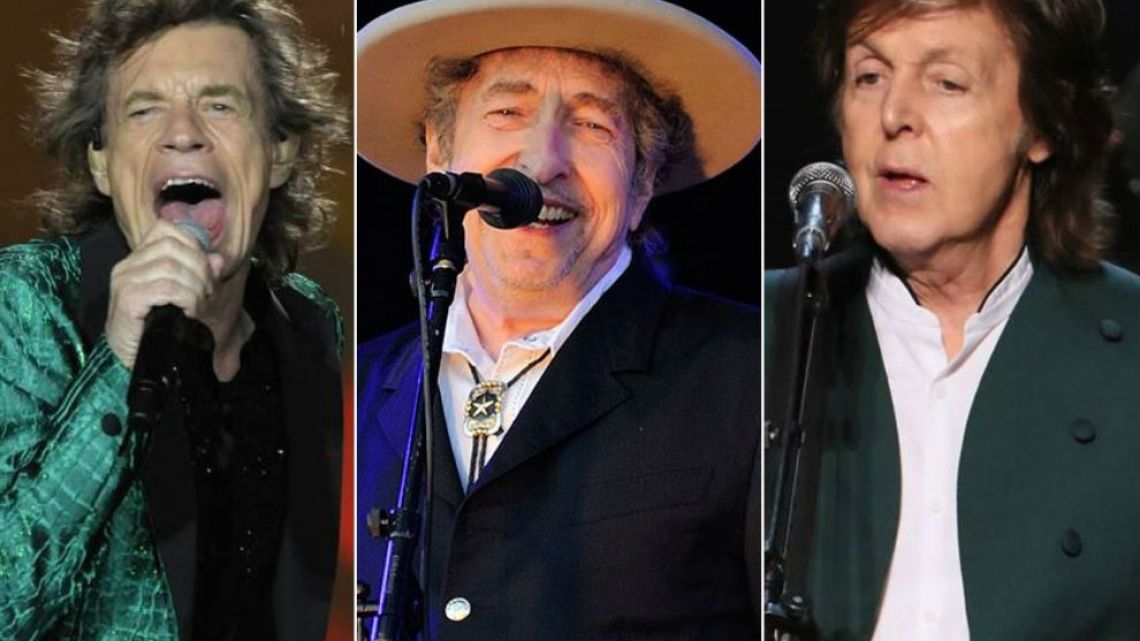
We all live with this notion that Paul McCartney, Bob Dylan, and Mick Jagger were just born with “it”, and they’ve always kind of had “it”, because they’re just different. The point of these early chapters is to illustrate that they might be different now, but that’s only because they’ve done it so often that it’s just easier for them to do now.    

Every top-notch singer-songwriter and musician we know and love had a point in their life when they strummed a guitar, played a piano, and sang some original creation from their heart, and someone they loved and cared about giggled and said, “That kind of sucked!” I love stories about that stench of failure, not based on some sense of schadenfreude, but to see what the musician did with that all of that frustration and pain. Why did they continue to create when everything they did, back then, was pretty sophomoric. They couldn’t see it then, of course, because they thought they were writing masterpieces, until someone a little heartless came along and said, “You’re not ready.” How did they maintain that belief in themselves when everyone who heard these “songs from their soul” and instructed them go back to school so they don’t end up in manual labor, until they achieved what we now know as their magnum opus?

After the “rise to stardom” chapters, most of those who write rock bios fall prey to the temptation of writing what’s called a hagiography, or a sympathetic, idealization of the subject. The hagiography term began as a description of a tome written about a person declared a saint. Thus, if a hagiography is the description of a writer anointing a man a rock god, then the opposite of a saint is a sinner, and the antonym of hagiography is synography or hamartography, meaning “in error, sinful”. There are some synographies, or hamarographies, written about rock stars that focus on drug, alcohol, and other forms of abuse, but their intent is to glorify the rock star through the lifestyle they led in their heyday.  

As much as we criticize the way the writer crafted their subject’s material, it has to be difficult to find the line between hagiography and biography when the primary reason we buy these books is that we all kind of worship the subject. Let’s face it, when we read a biography on Chris Cornell, we’re not seeking hardcore investigative journalism. We just want to know a few things about what made him tick, and how we can relate to him as a fellow human being who had huge dreams, but his just happened to come true. We don’t care if the writer tends to overdo it, and we even kind of expect that. We want to know the minutiae of how he overcame everything a teenager with nothing more than a guitar and a dream had to overcome to write and create Badmotorfinger.

The problem that would probably chase me through such an effort is how much material is there on the process and philosophy of creating a rock album. How many rock songs were inspired by “A time when I saw a chick in a red sweater and a tight, leather mini-skirt.” On the opposite side, we have the pretentious musician who tries to claim some sort of significant political, socioeconomic inspiration. There are also those obnoxious artistes who try to tell us every interpretation of their lyrics are wrong. “That’s so not what it’s about,” they say, but they never offer us the true origin of the song. This leads me to think the inspiration for the song was either relatively mundane, embarrassing, or at least not as creatively brilliant as we thought. They probably fear that anything they add to the discussion will only diminish our joy of the song, and they just prefer that we continue to regard them as misunderstood geniuses. Those who have offered a specific explanation, on the other hand, often leave me wishing they never said it. I can’t remember ever finding a songwriter’s explanation of their lyrics as an inspirational work of uncommon, creative genius, so I can understand why its sometimes better to leave it to our interpretation. 

Another disappointment I encounter when reading rock star bios occurs when the discussion of my favorite song begins. If you bought this bio, you love the band almost as much as you love man, but you can’t wait to read the discussion on your favorite song from them. Did you skip a couple chapters to get to it? Did you go to the table of contents to find the chapter that discusses it? I’ve done it, you’ve done it, because we want to get that chapter out of the way, so we can read the rest of the bio without anticipating the thorough discussion of it. How many times have you been disappointed to learn that your favorite track from an artist was a last second, “what-the-hell, let’s add another track” song? Out of everything Chris Cornell did in his relatively short life, in his brilliant Soundgarden albums, his Audioslave albums, and even his solo stuff, Temple of the Dog is, his deepest, most meaningful, and most beautiful album. Some of the tracks were written in honor of his then-recently-deceased friend and colleague Andrew Wood. At the end of their reportedly somewhat spontaneous production of this album, it reached a point of completion. The primary writer on that album, Chris Cornell, felt that nine tracks just didn’t feel complete. He wrote another song to have ten songs as opposed to nine, and that track was Hunger Strike. Hunger Strike would eventually prove to be one of Cornell’s most popular songs, but it was one of “my songs” from the moment I first heard it, and I couldn’t wait to read an in-depth discussion of it in a bio that ended up offering nothing but a short paragraph, and to be fair to the author there wasn’t much to say about Hunger Strike, other than it being a “what-the-hell, let’s add another track”.   

These artists mine their mind, heart, and souls for another song, and some of that material provides great material for the writer of their biography to explore with us, but the song everyone wants to read about? “Yeah that was a “what-the-hell, let’s add another track” song.      

The “after they made it” portion of the hagiography then talks about how “the star” always sang on stage with his shirt off, or how he once climbed atop a speaker one time and sang from there, and “It was a hell of a show.” Because he climbed up on something, or purposefully broke a guitar on stage, or purposefully jumped into a drumkit? We also read about how he climbed into the rafters of a concert hall, against the wishes of his manager and the Fire Marshall, and he swung from those rafters, which were thirty feet off the ground. I hate to be trite, but I could do all that. How is that artistic brilliance, or a brilliant interpretation of chaos? “Well, it’s better than some guy who just stands there and sings.” Okay, but I paid a lot of money to hear a man sing, and I don’t want to watch him climb on stuff the way my second-grade kid does, and I’ve also discouraged my kid from breaking his toys too, because it makes no sense. I understand that everyone is bored during guitar solos and drum solos, and the singer is just trying to maintain the audience’s interest, but I’ve never considered such antics mind-blowing or even interesting. I’ve always found them a little boring.

I honestly don’t know what I expect from a rock-star bio, but I’ve been disappointed so often that I’ve started thinking maybe rock-star bios just aren’t for me anymore.   
Beat The Beatles


“The Beatles are overrated,” wrote someone who probably wears black sweaters, prefers goatees, and still considers the ascot a mandatory fashion accessory. “While many find enjoyment in singing along to Hey Jude or I Want To Hold Your Hand, I find the vast majority of [The] Beatles’ lyrics insultingly simple, and [their] individual musical talent is surpassed in almost every regard.” Those who wear normal clothes don’t truly care about such accessories. To us, song is sacred. When we hear The Beatles, we might hear evidence of the critic’s complaints, but we view the songs they created as simplistic brilliance.  

It would be a fool’s errand to try to suggest that one artist’s artistic expression is superior to another, but the author draws many comparisons. She focuses most of her critique on the technical proficiency of The Beatles stating that three of the four musicians are inferior to their peers. The author conceded that George Harrison proved a gifted musician, but The Beatles restrained his abilities in most of their songs. This begs the question, does the sacred nature of the song require some level of restraint? We might enjoy hearing gifted virtuosos play their instruments, but how often does technical mastery lend itself to crafting great songs? We can all think of some songs where instruments commanded the music, but even the most gifted musicians learn to restrain their abilities for the sake of the song.     

When we attempt to examine our favorite songs dispassionately, we might acknowledge that some of the lyrics might be simple, and that a novice might be able to play them on a piano, but as Bill Murray once said, “It just doesn’t matter”. We enjoy a clever relationship between the lyrics and the music. Our favorite composers often write lyrics for the sole purpose of developing a relationship with the music.  

Most people will express awe over an eighteen-minute guitar solo at a concert. My question is do they really appreciate an eighteen-minute solo, or do they want to appreciate it? I might be alone, but I consider solos, in the midst of a rock concert, self-indulgent drivel. “Get back to the songs!” I want to yell. Unless someone wants to play guitar, and they want to learn from the masters, I don’t understand their appreciation. Unless they want to say they love it, so they can say they love it, because that’s just kind of what we do, I guess. Some of them, and I’ve met them, actually appreciate a big long solo so much that they time it. Perhaps they think a big, long solo from a guitar god gives them their money’s worth, or something, but I don’t understand it. 

***

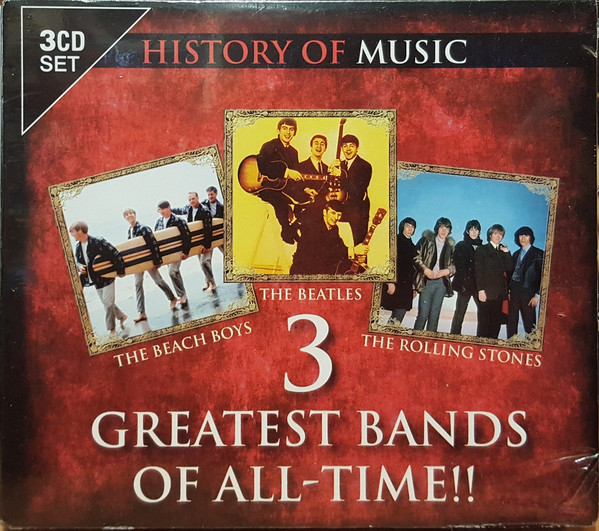
An argument put forth by Ashawnta Jackson, however, suggests that we don’t really consider bands like the Beatles, The Rolling Stones, and The Beach Boys great. By enjoying their music as much as we do, she writes, we’re just doing what we’re told. We don’t know any better. She appears to believe that the underlying reason 1965-69 bands are still part of the modern canon is a result of a multi-generational mass delusion based on an institutional, repetitive messaging. She writes that others chose this music for us, and we haven’t examined those who decided what music we are to enjoy well enough.    

The inference is that hundreds of millions of people throughout the world still love the music of these bands because everyone from the corporate types to the DJ’s constantly play them, and our parents and uncles and aunts have propagated this notion that we should continue enjoying listening to the music they enjoyed. This mass delusion is so entrenched now that listeners from all over the world, and from just about every demographic, now accept the fact that certain music “overrepresented in the 1965-69 era” is now considered so great we want to listen to it often. The cure, Jackson states, can be found “by examining the who chooses and why, the “dominant canon of the dominant” can be opened up as listeners reflect on their exclusions and “find their own ways off the beaten track.”  

Rick Moran’s piece counters that young people are falling under this spell too, as “[Media Research Center Sales data] states that “old songs” currently represent an astonishing 70% of the U.S. market.” Listening to music is often a solitary activity. Suggesting that those listed above do not influence our choices is foolish, but to suggest that it constantly influences what we stream in our cars, at our computers, and all the other times when we’re alone appears equally foolish. One might think that young people, who traditionally abhor everything their elders prefer, might be a demographic that Jackson could count on to put an end to these institutional decrees, but the data suggests they went and had their minds melded.  

Guy no Logical Gibberish V


We’ve discussed the idea that the human inferiority complex could drive our belief that aliens from another planet are intelligent beyond our comprehension, but we’ve never discussed the basis of our comprehension. The natural instinct when discussing intellect is to gauge it by comparing it to our own. We could achieve some level of comparative analysis by giving the aliens an I.Q. test, but we might consider that an unfair standard by which to judge someone or something from another planet, depending on the test. Another definition of intelligence might be the ability of a being to harness their surroundings to use them for a designed purpose. An example of this might be when humans use every natural and manmade element at their disposal to create a product. When an alien aircraft lands on earth will the product that transports them be born of greater intelligence or just different intelligence, based on different elements from their home planet?  

Abbot and Costello vs. The Alien Amazons

Are individual, modern comedians funnier than the comedians of, say, the 1930’s? Or are they just different? When we watch Abbot and Costello today, we probably don’t find them as hilarious as our grandparents did. A current teen, who has an altogether different frame of reference, might not even find them humorous. Some comedy is timeless, such as the Who’s on First? routine, but Abbot and Costello had a different frame of reference, a different base, and a different mainframe from which they operated.

When a radically new comedian, such as a George Carlin or Andy Kaufman took the stage, they were so different initially that we consider them brilliant and ingenious. Are they that brilliant and ingenious, or do they just change (sometimes radically) the landscape and language of comedy?

Is a Jimmy Fallon that much funnier than Jack Benny was, or is the comedy of a Jimmy Fallon more of a product of a different era that Jack Benny helped define in some ways? If we were able to flip them around on the timeline, and Jack Benny was everything the modern Jimmy Fallon is, would we regard Fallon as funnier than Benny? This switch would have to incorporate the time and place elements of comedy, the influences that led Fallon to the stage, and all of the prior comedians who changed the face of comedy prior to Fallon. If we incorporated all that into a more modern Jack Benny, would we regard him as funnier than a 1960’s Jimmy Fallon?

When the aliens touchdown on our planet, will they be superior intellects, or will their knowledge be so different that we don’t know how to comprehend their intellect? Will they be carbon-based, as we are, or will they be silicon-based, as some science fiction films theorize? Some scientists deem that impossible, as a Scientific American piece suggests that “silicon oxidizes, and it cannot support life.” What if the aliens introduced us to their line of alien products, our intrigue would initially lead us to believe that they’re intelligent beyond our comprehension, but what if their home planet operated from an entirely different periodic table? We assume that all life, comes from the shared mainframe of the periodic table, but when we find out that’s not the case, it will shock us, and lead us to marvel at whatever they do outside human comprehension. When, and if, we find out our assumption that all life operates from a shared premise was incorrect, we’ll be shocked into believing that they’re better and superior, when it could be as simple as just being different.

***

If you’ve read as many interviews with musicians as I have, you’ve run across the one-more-song phenomenon. I’ve read numerous musicians say they sweat blood and tears to compile enough songs to complete an album, only to have some record executive say, “It’s great and all that, but there’s something missing. We need an oomph song to put it over the top. Do you have one more song in you? We want another song to help unify the album thematically. Put simply, we want a hit.”

The musicians greet this directive with resentment and disdain, as they regard the exec’s request as flippant, as if it’s so easy to just write another song, and a hit song at that. The idea that the record exec would approach the main songwriter in such a flippant manner builds resentment between the two, until the songwriter approaches the other musicians and the producer with the request, “It looks like we need to go back to write another song,” in tones that mimic and mock the record exec. “We need a hit, so let’s go back to the studio and write a hit, because we obviously didn’t do that the first time out.” If you’ve read as many interviews as I have, you know that this musician eventually reconvenes with the other players in the studio, and they resentfully write “another song to appease the masters of their universe” and they haphazardly, and almost accidentally, create a song that ends up defining their career.

The conditions of the creation of this throwaway song are such that the artists involved often end up despising it throughout their career. Almost every musician wants the deeper cuts they spent decades compiling to define them and their brand, yet every audience member wants to hear “the hit” that the band probably spent three days writing, composing, and singing. The song has no meaning to them, yet they’ll spend the next twenty years playing it in concert so the audience will feel like they got their money’s worth. 

I’ve read about this happening so often that I think there’s something to it. It can be as simple as the difference between writing a complicated song about the fall of the Roman Empire and a simple ditty they write about their walk to Burger King. For some reason the Burger King piece hits, and their artistic dissertation on the Fall of Rome falls by the wayside. I don’t think it’s breaking news that most silly, little ditties about love and rocking every day and partying every night sell well and the important pieces usually do not. It might have something to do with the fact that people work so hard in their daily lives that when they get off work, they don’t want to think anymore. It might have something to do with the messenger, as opposed to the message. “Who’s this guy, a rock star? I’m not going to take the views he develops between bong hits too seriously.” The difference might also have something to do with the artist, as they try so hard to write an important piece that they try too hard, and it shows.    

It’s so difficult to predict what will hit, and most of my favorite artists often say they don’t even try anymore. They probably started out trying to appeal to our interests, but they realized that the best course of action is to create the best art they can, and if the audience loves it that’s gravy. When it happens with a song, story, etc., that didn’t require any effort on their part, the artist can feel the frustration in their answer. The complicated, brilliant works required them to jump through all the hoops of creative expression, and it was as difficult for them to be covert as it is to be overt at times, so they seeded and spruced their creation through the gestation cycle, until they decided it was ready to enter the birth canal. Pffft. Nothing. Then they wrote that little ditty about something interesting that happened to them on a walk to the local Burger King, and everyone went crazy. Writing the former was hard, as the perspective changed six different times, and the artist went through as many as twenty-five edits before they finally reach some form of satisfaction. When they wrote the Burger King ditty, they did it in a day, and they didn’t care about it as much. They’re all their babies, of course, but the artist works so hard on some of their material that they find it depressing when no one recognizes them for how important, intelligent, and well-informed they are. What does any of this mean? No one knows, and fewer care. As I wrote, it might have something to do with an artist trying so hard to write important and meaningful art that their effort shows. It might also have something to do with the fact that these simple little ditties, filled with silly and stupid lines, are more pleasing to hear, and read, because all we really want in life is to do is dance.