Most of the planets in our universe were discovered by some guy looking up saying, “Hey, lookee there.” And another guy saying, “That right there, that ain’t no star, Jed, that’s a damned planet.” That’s how most planets were first discovered, as far back as 1,000 BC. Neptune was different. Neptune is too faint to be seen by the naked eye. Neptune had to be theorized and mathematically predicted. 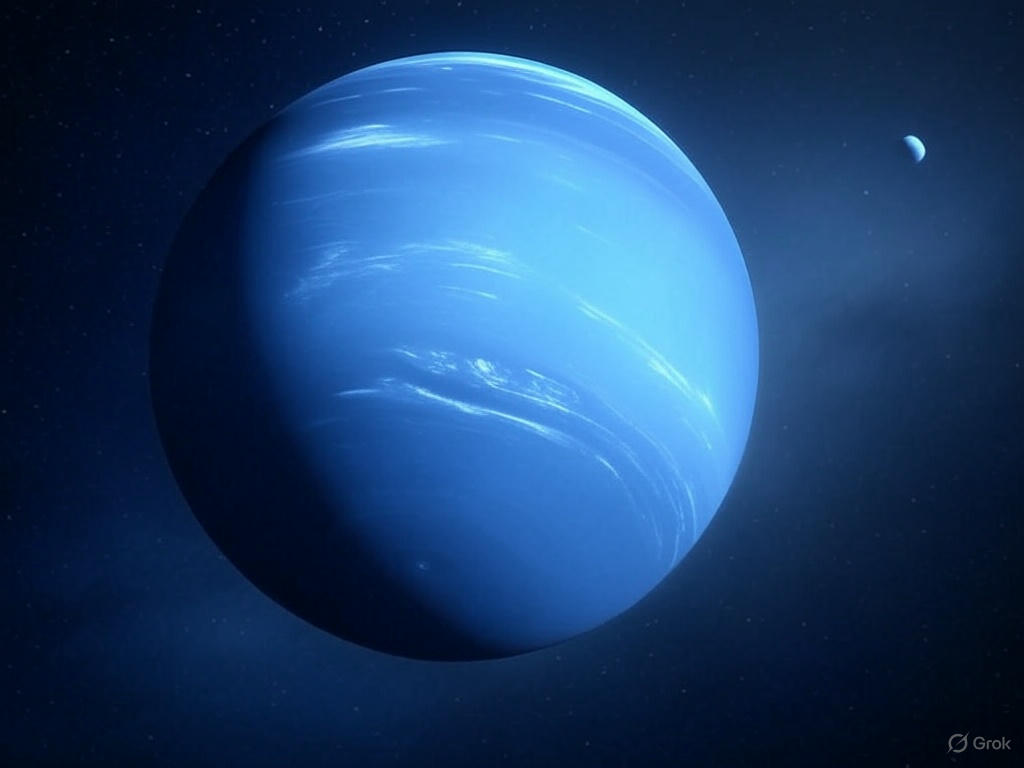
This probably reads like a perfunctory narrative at this point, because we now have the tools, technology, and gadgets needed to uncover numerous mysteries of the universe. It reads less like a “Whodunit?” and more of a “Who cares now?” story because it’s so over that it’s over now, but some of the my favorite stories from history aren’t necessarily about the event in question, but the mind over matter quest to achieve the unachievable. In 1845, they weren’t about what button should I push, they were about human ingenuity and/or the pushing themselves beyond what others could only imagine.
Two men used the science and all of the data available at the time, a pencil and paper, some mathematical theory, and little more than their brains to declare that there should be a planet should be … right about there! And they were wrong, initially, and then they were wrong by one degree! They laid in a bathtub with a pencil, paper, and some Mozart playing in the background while they uncovered the mysteries of the universe, and they were off by one degree. My takeaway from this story is this it illustrates the beautiful idea that every problem we face is one genius away from resolution.
When it comes to the discovery of planets, there’s basically two stories. There’s the story that we learn from the record and the one from the unofficial record. The hard-to-verify unofficial record involved some guy spotting what we call Saturn, but he was an ancient who didn’t know anything about “the record”. Once we went about establishing a record, some other guy beat all the other guys to get his name on the record for being the “first to spot Saturn.” We went back and checked the unofficial record and made some corrections, but sometimes we didn’t.
“Crock of stuff is what it is,” the naysayers say whenever we talk about the first to discover celestial bodies. “There was always someone who discovered it first, before the record existed, AND, and someone would’ve discovered all of these planets eventually. Most of these names we applaud and memorialize were just right time, right place opportunists. We’re not talking dots of light in the sky when we talk about planets. We’re talking about massive complex bodies that have their own geology, weather, and sometimes even their own atmosphere or moons. They’re huge honking worlds in their own right that would’ve eventually been discovered by someone. The whole idea behind celebrating the humans who first discovered a planet is so ridiculous that it’s hardly even worth talking about.
“It’s like talking about the guy who, according to the record, discovered the moon,” the naysayers continue. “You discovered the moon? That right there? You discovered that?”
 On July 26, 1609, Thomas Harriot discovered the moon. There is no record of the laughter, derision, or humiliation that followed Harriot’s discovery, but Harriot became the first known person in history to look at the moon through a telescope and draw what he saw. He made multiple maps, including recognizable features. Mr. Harriot either forgot to put his name on the record for his discovery, or his friends started mocking him so ruthlessly for trying to be the first guy to spot the moon that he decided not to submit his name for the discovery.
The father of modern observational astronomy, Galileo Galilei didn’t give a crud about all that. He knew how to bite that apple. Galileo was an ambitious fella who knew how to get history to celebrate his name, so months later he published findings that mirrored Harriot’s, and he got his name on the official, historical record as the first person to discover the moon.
How many of you have heard the name Thomas Harriot? How many of you have heard of the name Galileo? Exactly. Thomas Harriot fell prey to the “publish or perish” dictum that haunts history’s otherwise anonymous names, by failing to publish his detailed maps of the moon, and he died anonymously. In fact, Harriot’s July 26, 1609 findings stayed hidden in notebooks for centuries, until he received proper accreditation in the 19th–20th centuries. The Thomas Harriot story might sound like a miscarriage of justice, unless you’re one of those “I’m pretty sure someone would’ve eventually discovered the moon” naysayers.
The Perturbing Force
On March 13, 1781, a man named Sir William Herschel used his trusty telescope to discover the planet we now call Uranus. His observations found that it wasn’t a comet, but a planet, and after his findings were listed on the official record, the society of astronomists pretty much thought “Ok, that’s it, Woo Hoo and all that, we’ve discovered the end of the universe.” There was one problem; the astronomists who used Herschel’s findings to spot Uranus, could not correctly plot point Uranus’ orbital positions based on mathematical projections. Uranus was so all over the place that it made no sense.
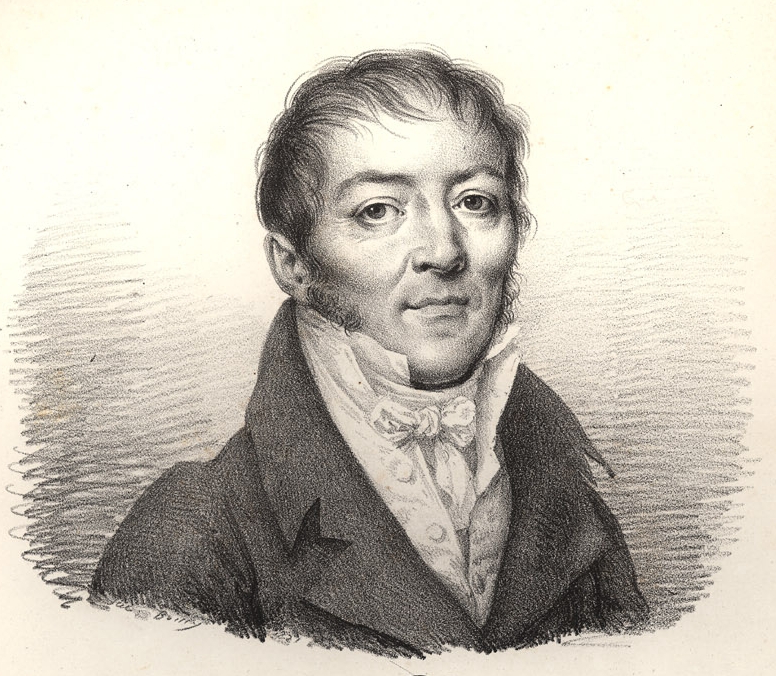
Using all of the technology and data available to him at the time, Astronomer Alexis Bouvard made seventy-seven projections on where Uranus should be at any given time of the year, but his fellow astronomers called him out. They told him all of his projections were wrong. We can guess that Bouvard called them ordures (French for trash), but he went through the projections versus the reality, and he found that they were right. Much to Bouvard’s humiliation, this occurred after he published his seventy-seven projections. He probably could’ve simply corrected the record and published again, but that would’ve meant finding his initial errors and correcting them.
We can only imagine how much time, sweat, and passion Bouvard put into creating those tables, and we can guess that he tried to save face by saying, “Hey, I didn’t just throw that out there. These were precise projections based on all the data I had at my disposal, coupled with Newtonian laws. I didn’t just guess, then publish those guesses to subject myself to this level of humiliation. There’s something more going on.” He initially blamed the data, but when that didn’t satisfy anyone, including himself, he came up with a “Perturbing Force” theory.
Bouvard’s Perturbing Force theory suggested that there was something beyond Uranus pulling and pushing on Uranus in a way that caused such irregularities in its orbital path. We can only guess that the astronomers enjoyed the errors of the esteemed astronomers errors so much that they initially listed his follow up explanations as excuses for imprecise projections. When Bouvard furthered that the perturbing force might be another planet, they probably laughed at him, thinking that it was evidence of Bouvard squirming. Unfortunate for the legacy of Alexis Bouvard, after he submitted the idea that Uranus might not be the end of the universe to the Paris Observatory, the member of the astronomical society who received that request for a follow up left his position soon after, and no one followed up on Bouvard’s submitted request for further findings. Furthering the unfortunate nature of Bouvard’s legacy, he died before anyone would substantiate his idea of a perturbing force gravitationally pulling and pushing Uranus off what should have been the precise data points dictating its orbit. Thus, we can only guess that Alexis Bouvard probably died believing himself a failure, or at the very least that everything he accomplished in life ended with a huge stain, in the form of an exclamation point, at the end.
Skeptics argued that since Bouvard’s projections relied on Isaac Newton’s theories, Newton’s theories must be flawed. Mathematicians, like John Couch Adams, insisted that Newton’s theories were sound and after studying Bouvard’s projections, Adams insisted that he could use Bouvard’s projections, and all of the data the man compiled, coupled with Newton’s laws to deduce the mass, position, and orbit to discover Bouvard’s perturbing force.
Couch Adams devoted four years of his life to studying, calculating, and projecting where a possible perturbing force could be, and he submitted that work to British Astronomer Royal George Biddell Airy. The esteemed Airy was understandably skeptical, as the mathematician submitting these findings was a twenty-four-year-old, and we can also guess that Airy was unwilling to put his reputation on the line without detailed computations. He did respond to Couch Adams, however, asking for greater precision, as Couch Adams’ findings turned out to be twelve degrees off, and unfortunate to the legacy of John Couch Adams he failed to respond. Some suggest that the failure to respond may have been due to Adams’s unprofessional demeanor, his nerves, procrastination, or that Adams did not have the numbers required for greater precision. Whatever the case was, Couch Adams’s failure to respond in a timely manner cost him sole credit on the official record for the discovery of the planet Neptune.
Some suggest that Frenchman, Urbain Jean Joseph Le Verrier, was unaware of John Couch Adams work, his subsequent submission, and his failure to complete the work, but Le Verrier was very aware of Alexis Bouvard’s work. He paid particular attention to Bouvard’s idea of a “perturbing force”, and it fascinated him. He thought he could find the missing link, and he thought he did. He thought he made the discovery of a lifetime, one that could make him famous.
 He first sent those findings to the French Academy of Sciences in Paris, but due to bureaucratic inertia and a lack of proactive observation, the Academy did not follow up. They did not reject Le Verrier’s math, as they found it rigorous, but his findings did not translate into instant acceptance as a confirmed discovery because it remained theoretical until it could be observed. The Academy also had “other concerns”, and they may have lacked the capacity to immediately follow up. Whatever the case was, Le Verrier took some of the complaints The Academy had about the absolute precision of his findings, and he refined his coordinates and submitted them to Johann Gottfried Galle at the Berlin Observatory on September 18, 1846. Berlin had a powerful new refractor telescope, and they provided a more agile response, partly because Galle and his assistant Heinrich d’Arrest were eager to test the hypothesis.
On September 23, 1846 Galle confirmed, through Verrier’s detailed calculations, that the perturbing force affecting the orbit of Uranus was possibly and probably a planet that we now call Neptune. Galle’s confirmation did note, however, that Le Verrier’s detailed calculations were one degree off. Here we reach another “think about it, before we move on” moment. The Frenchman took Alexis Bouvard’s precise projections, based on pre-discovery data, and he joined Bouvard’s mathematical calculations on his errors, coupled with some theoretical notion of a perturbing force, pushing and pulling Uranus off what should be its orbit, and it should be right there! And those calculating his math,using nothing more than their own math(!), found that he was one degree off! [Note: The international astronomy community eventually decided to settle the international dispute by giving credit to both the British Adams and the French Urbain for Neptune’s discovery, even though Adams unofficially discovered it first.] Astronomy.com also states that “Adams [eventually] completed his calculations first, but Le Verrier published first. Le Verrier’s calculations were also more accurate.” The lesson here for you kids looking to submit astronomical findings to a governing body, when they approach you for detailed calculations to support your astronomical findings make sure you either respond immediately, or maybe you should have your detailed calculations ready before declaring your findings.
The naysayers have a point when they say someone would’ve eventually discovered something as massive as a planet, but Neptune is different. Someone would’ve eventually discovered it, as the technology advanced, but a couple of guys, we’llsay three in total with Bouvard paving the way with his perturbing force theory, located Neptune by mathematically predicting where it would be based on the irregularities in Uranus’s orbit. Is that phenomenal? No? How about we put ourselves in their era and learn that when they went to the office to complete their theories, they road a horse on a dirt road to get there, if they were lucky enough and rich enough to own a horse. Also, their definition of the heart of the city was often just a bunch of wooden store fronts, like the recreations we see on the old HBO show Deadwood. Most of what these 19th century astronomers and mathematicians saw in the nighttime sky is what we can see by stepping outside and looking up into the sky. They had some technological assistance back then, in the form of relatively weak telescopes, and some theorize that astronomers, like Galileo Galilei in 1613, Jerome Lalande in 1795, and John Herschel in 1830 may have used this technology to spot Neptune first, but they didn’t know they were seeing a planet, because their telescopes were not powerful enough for them to know that. Those of us who write articles about such topics and the geniuses who made ingenious discoveries or theories that proved slightly incorrect or somewhat flawed should asterisk our modern critiques by saying, “I am smart. No, really I am, really, really smart, but as ingenious as I am, I don’t know if I could’ve done what they did with the primitive technology they had, primitive when compared to ours. So, before I go about correcting and critiquing their findings with the technology I have at my disposal, thanks to those who developed it for me, I’d like to say how impressive it is that they came so close that it’s impressive that they did what they did with what they had.”



 Rilaly