“How many penalties are we going to call in this game?” the National Football League (NFL) fan asks when they watch a game now. We know we’re not alone when we say, “Something has to be done here. This is just getting ridiculous.”
“Don’t complain unless you have a proposed solution,” my 6th grade teacher said so often that it’s so ingrained that I wouldn’t write this article without a proposed solution.
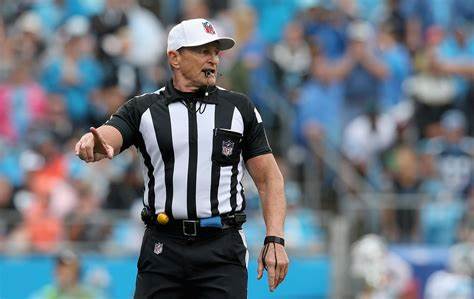
Have you watched an NFL game recently? Of course you have, we all have. Have you noticed the number of penalties called? Of course you have, we all have, dating back to our dads and our grandads. Our complaints usually center around three things: Too many rules, too many flags, and how all of the above often prevents the players from playing the game. We blame the on the field NFL referees, which is a little unfair, because it’s not their fault. They’re the face of the NFL rules developed and handed down by the NFL’s Competition Committee (NFLCC), and those rules are so numerous and restrictive that when officials don’t throw flags, players complain. They’ve become so accustomed to so many flags being thrown that when they’re not the players are shocked. We all are. In some ways, I think NFL officials would welcome a new rule by the NFLCC that takes some of the burden off them by reversing the current trajectory of annually adding so many rules that it inhibits the fans’ enjoyment of the game. Let these incredible athletes play the game to determine the outcome. The collective we should vie to go back to the day, not so long since passed, when the NFL, the NFLCC, and the NFL referee’s goal was for no one to know their name at the end of the game. That’s gone. It just is.
Another point of emphasis we should add here, to sympathize with the average NFL referee, is that they, like most of us, are graded on performance. They are heavily scrutinized. They’re graded on accuracy of course, on calls made, on the flow of the game, on proper positioning and general professionalism. In the 2021 regular season of the NFL, referees made 11.8 calls per game, up 4% over 2020. In 2023, referees average around 12.5 calls per game. That .7 isn’t a huge uptick, but it does feel higher.
The next question we have is has the NFLCC added .7 more penalties occurring on the field? Is there stricter enforcement of the rules, or are referees more scrutinized than ever before? After every game, referees are scrutinized on a play-by-play basis, and they receive a coaching session on how they could’ve called various plays better. At the end of the regular season, those referees with the highest grades make the post-season roster of referees.
 Somewhere, in the recent history of the NFL, the NFL’s Competition Committee (NFLCC) realized that they went too far making rules in favor of the offense. They realized that were making it almost impossible to play defense without some sort of penalty being called. It’s one thing to institute rules that protect players from injuries and potential injuries, but offense-friendly rules progressed so much that some former defensive stars of the NFL said things like, “I’m just glad that I don’t have to play in the modern game.” Some former defensive stars suggest that some of their hits, and the methods they used to defend a player, would’ve been legislated out of the game. (Think Rodney Harrison, Ronnie Lott, and Ray Lewis.) The NFLCC decided, in their infinite wisdom, to correct that unfairness, perceived or otherwise, by instituting more rules and more penalties, this time on the offense. That, of course, resulted in more flags, tons of them.
I don’t know if this was a general practice that dates back decades, but the current NFL players is now coached, in sessions, how to comport themselves according to the rules. In the past, I can only imagine, players went through drills and coaches said, “Yeah, that’s illegal now, according to the new NFLCC rules.” The players are now coached in closed-room settings put on by an instructor from the NFL. If this has always occurred and I’m unaware of it, that’s fine, but it appears as those there are so many rules now that the average NFL player has such a tough time keeping up with what’s legal and illegal that they need a closed-door session, put on by the NFL, just to keep up.
There are now so many flags thrown a game that not only does it inhibit the game, but it gives the officials far too much power in determining the outcome of games, power I would guess NFL referees would gladly relinquish. Rather than pass more rules to counter the counter, I suggest that they institute the two new words sizable advantage to the 2023 NFL Rulebook.
Anyone who has watched the NFL for as long as I have, has blindly accepted meaningless and ticky tack penalties for most of our lives. We’ve seen them so often and for so long that we accept the idea that officials are going to make certain calls. We’ve accepted that a twitch by a left guard is a five-yard infraction called illegal motion, for example, but does that twitch give the offense a sizable advantage in that play? As I wrote, we’ve accepted this for so long that it’s accepted. Yet, if there is no discernible advantage, and the left guard returns to a stationary position, the 2023 NFL should not require that the official throw a flag under the new, 2023 no sizable advantage rule. The NFLCC should require their officials to determine if that twitch gained the left guard an advantage against a D-lineman, or does the D-lineman gain an advantage, based on the idea that the left guard just tipped him off regarding what direction the play is headed in? In my sizable advantage rule, if a referee throws a flag, a three panel replay review board would determine, via expedited review, if the offense gained a sizable advantage by the twitch. If they decide there was no sizable advantage, the officials pull the flag. One asterisk: if a D-lineman spots the twitch, they can come across the line and force the official to throw the flag, but they run the risk of the officials missing the twitch. Whatever the case, if that twitch that doesn’t draw the defense offsides, the twitch rule needs to go.
My new “sizable advantage” rule would receive applause and boos throughout the league, as officials would be calling it both ways of course. The call would be “expedited review claims that the offense did not receive a sizable advantage for the infraction, no penalty.”
 The same process would apply to the “two men in motion” and “illegal formation” penalties. As long as both players become set before the snap, no “two men in motion” men in motion penalty will be called. As for the illegal formation penalty, one definition of it states that someone on the end of the line has to be equal to the center’s waist, near the line of scrimmage. As we saw in a Washington vs. NY Giants game, a touchdown was called back because a receiver was about a half a yard off the line of scrimmage. Say what you want about that penalty, but Washington received no “sizable advantage” by one of their receivers standing a half yard off the line of scrimmage. That particular play was a run up the middle, and the receiver played no role in it. The referee would then say, “Expedited review has declared no sizeable advantage for Washington on the illegal formation call, no penalty, touchdown Washington.”
In some instances, officials follow the current rulebook regardless the circumstances, and they slow the game down by doing so, in my opinion, because calling innumerable ticky tack rules often diminishes the game. The officials also make subjective errors all the time, and when they make such errors “we” call for more replay reviews. I don’t know why a fan would call for more replay reviews, but I understand that they, officials, and the NFL in general, want to get it right. If there are more replay reviews, they should all be by the new “expedited review” process we’ve witnessed in the playoffs in 2023. Expedited reviews can also be used to determine if the letter of the rules applied in this case, or if the subjective, discretion officials might be called upon to make when it comes to determining sizable advantage. The NFL needs to place three officials in the review room to make expedited reviews of various calls like, hands to the face, illegal contact after five yards, and all of the “ticky tack” holding calls on the offense and defense to determine if they provide a sizable advantage to one team or the other. If the advantage cannot be determined in an obvious and expedited manner, with a very specific and short time limit, the officials should probably, and unfortunately, default to the call on the field, as they do other replay reviewed calls. My standards of operations of NFL referees would be expressly interested in limiting the number of penalties, as such there would be no reviews, and no downgrades, of of referees for non-calls, unless they are deemed egregious missed calls.
We could go through each individual penalty to determine some of the silly, “ticky tack” calls, but we would be here all day arguing about the definition of certain calls vs. sizable advantage. Yet, there is a “we all know it when we see it” principle to on the field calls that can be meted out in an expedited review process.
There is some frustration we feel when an NFL analyst, and former rules official in the booth arguing that a penalty should’ve been called there. Some of us, and I dare say a progressively growing majority, were done with that about ten years ago. “You actually want more penalties?” I scream at these two from the comfort of my home. “Just let them play!” I scream that, even EVEN when the calls benefit my favorite team. For most NFL fans, I realize their complaints are relative to their team and situational, but my bet is if the NFL sent out a survey that asked the question, “Do you want to see fewer penalties called, even if those penalties benefit your team,” the result, I think, would hover somewhere around 100%. If not, the future viewer at home would start citing the sizable advantage asterisk as often as they do the roughing the passer rule now.
The old adage “The best official is the one you don’t remember” is gone, it just is. The typical, modern NFL fan thinks that the NFL official currently wields far too much power in the game, because there are far too many rules that we’ve accepted for so long that we no longer question whether or not they provide a sizable advantage. I suggest the NFLCC steer the NFL in the opposite direction, for the first time in NFL history, and limit the number of penalties called in a game. As long as said penalty doesn’t result in an injury, or the possibility thereof, I say the NFLCC starts to review the number of penalties called and invokes rules like this one to diminish them going forward. The NFLCC needs to make a concerted effort to limit the number of calls in a game by invoking the “sizable advantage” rule that referees will enforce on the field. We understand that this is a subjective review that might make it harder to gauge and grade an NFL referee, but something has to be done here. The number of calls has been arcing upward for generations now to the point that the NFLCC rules are just taking some of the most compelling and fun elements out of the game. Most NFL players know that it’s a privilege and not a right to play in the NFL, and if they want to continue to play there, they have to conduct themselves according to the rules, but the average NFL fan doesn’t view it that way. We want to see the top athletes compete against each other to see who wins the game, and in an ever-progressing manner, the NFL referee is inserting themselves into the battle and helping decide the outcome. That’s not fair, and it’s not right to characterize it that way, but that’s the consensus, and even though the current monster of professional sports organizations, they still need to address the complaints of their customers. The consensus also has it that the current NFL referee is the bad guy, and the referees know it. My guess is that the modern NFL referee would not only see the logic in the new and improved “sizable advantage” asterisk, and they would probably go behind the scenes to encourage members of the NFLCC to approve it.

 Rilaly