Ain’t Talking About Sports 


Baseball 

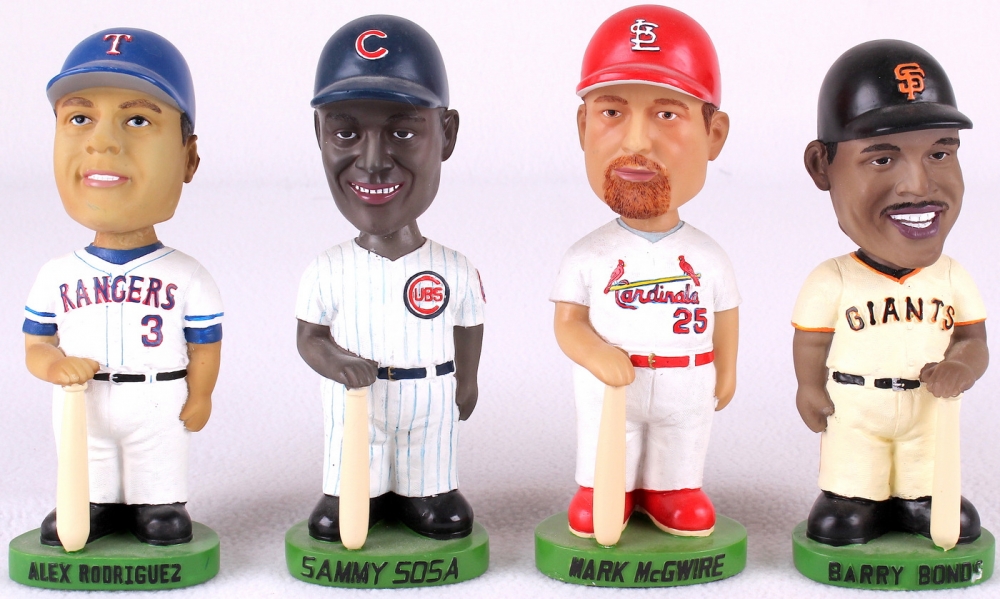
I used to be a baseball guy, a Major League Baseball fan, until I wasn’t. And it wasn’t the 1994-1995 strike either, as it was for so many of my friends. I was a long-suffering Atlanta Braves fan, and the Braves were in the World Series four out of six years in that era. I was then glued to the McGwire v Sosa v Maris run. I attended the 8/30/1998 game against Atlanta in which McGwire hit #55. I remember feeling torn, because he hit one off my team, but I felt a part of history. If he broke Maris’ record, I rationalized, I could always say I attended #55. No, from about 1985 to about 1998, I was a huge baseball fan. 
Something happened shortly after the strike that conspiracy theorists believe helped Major League Baseball regain popularity. Some suggest the steroid era loosely existed between the late eighties to the late 2000’s, but most baseball fans would suggest that it only became an issue requiring attention between 1997 and 2000. Some diehard baseball fans suspected that something was amiss early on. Something intangible and tangible changed about the game. It was no longer a secret, but many in my inner circle of MLB diehards chose to deny it was happening.  

I don’t remember ever considering the idea that an MLB player might take performing-enhancement drugs a moral issue in a larger sense, but during the 1997-2000 run, Major League Baseball became Sega, Nintendo, or Playstation baseball. In just about every console’s baseball game of that era, the obsessed gamer found ways to artificially edit a player’s attributes to monstrous proportions, and we believe the upper echelon either encouraged such actions in Major League Baseball, or they turned a blind eye. 

Some deniers argued that steroids can’t help a major leaguer see the ball better, and they don’t help a hitter turn his wrists quicker. Those arguments are true, but we argued that they could make an average major leaguer better, a good major leaguer can become great, and a great one can break every record on the books with steroids. The question of the era gradually shifted from why would they take steroids to why doesn’t every Major Leaguer do it? If everyone took steroids, it would level the playing field, right? Yes, until we measure their ability against past performance. The best argument against steroids I heard at the time was most barstool debates about baseball involve its storied history. Was Ty Cobb better than Babe Ruth? Was Ted Williams better than Joe DiMaggio, and has any modern star earned a mention in those debates? Other than some subtle changes involving spit balls and the height of the mound, the game largely remained consistent for over one hundred years, until the steroid era. 

The question I always asked, in debates with agnostic and apathetic friends, was are Mark McGwire, Sammy Sosa, and Roger Clemens that much better than Roger Maris, Roberto Clemente, and Sandy Koufax? Statistically, it appears as though they were, but to level the playing field Maris, Clemente, Koufax we probably would need to go into a time machine and give them some steroids. 

It was an era of “no one’s guilty, so everyone is” that stated “we all know that  Greg Maddux and Ken Griffey Jr. are on the juice. Every Major Leaguer was.” I didn’t believe that. I thought some of those big names weren’t, and I held them in high regard for avoiding that temptation. I honored them for playing the game clean, but we were never sure who was clean and who wasn’t. Plus, if everyone else was on the juice, why wouldn’t they join in, to level the playing field? This question of the morality of taking steroids was such a confusing, complicated one that baseball fans debated it ad nauseam, and it led to a level of cynicism that ruined the core of the game for some of us. 

FOOTBALL
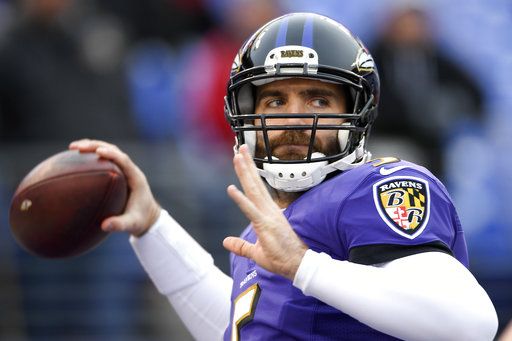
On a separate but similar note, the NFL passing and receiving records are now an absolute joke. Whatever barstool chatter we once had, regarding the comparisons of one generation’s superstars versus another’s is so ridiculous now that I can’t imagine anyone is still having them. On the current, NFL’s all-time passing yards list, Joe Flacco and Kerry Collins surpassed a man that many, who saw him play, declare the greatest quarterback of all-time Johnny Unitas. Flacco and Collins are also ahead of Joe Montana, a quarterback who many of my generation bestow that crown. Flacco and Collins had fine careers, but those of us who saw them play never thought they would end up in the top 20, and no one imagined that they would boot Joe Cool and Johnny U out.

At one point, we can only guess, The NFL Rules Committee decided that their game is not a tradition-rich game in the vein of baseball, and they eviscerated the comparative-analysis barstool discussions for the now. With NFL ratings constantly topping previous years, it’s obvious The Rules Committee made the right choice, and the collective ‘we’ have determined that we want now too, and the who’s better now is the only discussion we can have, as it’s ridiculous now to debate the statistical merits of current players versus the past.  

Writers and broadcasters state that Tom Brady’s highly disciplined regiment and diet are the reasons that he’s been able to have such a long career. That is a huge part of it, but no one asterisks that conversation with modern rules against a defense touching a quarterback outside legally designated areas. Couple that with the updated pass interference penalties, and the defenseless receiver penalties, and you open up the game, and make every passing record nonsense when compared to previous eras. Tom Brady, Drew Brees, and Peyton Manning compiled impressive stats throughout their respective careers, but were they that much better than Joe Montana and John Elway, Terry Bradshaw and Roger Staubach, or Jonny Unitas and Sonny Jurgensen? The NFL game is so different now that you just can’t compare different eras in true side-by-side comparisons, without adding five asterisks at the very least. 

Thanks to those rule changes, Emmitt Smith and Walter Payton’s records will never be threatened, because very few teams run anymore, except to throw the defense off. Why would you run? I’ve read well-researched articles stating even running to throw the defense off is a waste of time. I disagree with those articles, but I wouldn’t say they’re ridiculous.        

Lynn Swann played in an era when cornerbacks, safeties, and linebackers could maul a player at the line and rough them up throughout their route, and no receiver who valued their career went over the middle. Due to the rules at the time, Swann could only play nine years, and his opportunities to catch the ball often occurred only on third down. To catch Shannon Sharpe at #50 on the list of most receiving yards of all time, Swann would’ve had to double his career total. The NFL rules tightened up on that during Rice’s era, but they became ridiculous during Megatron’s and Julio’s current era.               

I’m a fan of NFL teams, but for some reason individual players ruin teams for me. I loosely cheered on the Packers for much of my life, but I really enjoyed the Brett Favre era. Favre was confident/brash/arrogant, but I loved it. The same characteristics could be applied to Aaron Rodgers, but I dislike him for his play on the field, and I’ve disliked him for as long as he’s played. It has absolutely nothing to do with anything else he’s done. I loosely cheered on the Matt Hasselbeck-led Seahawks, but I can’t stand Russell Wilson or Pete Carroll. My fickle nature is not based on winning or losing either. I liked Tom Brady and Peyton Manning throughout their careers, but I couldn’t stand Terry Bradshaw or Joe Montana. I also liked Ben Rothlisberger and Steve Young, so my preferences are not team specific either. Every time I think I’m above the soap opera of the NFL, then I go about disliking some players for no clearly defined reasons.     

HOCKEY 

As hard as I’ve tried to force myself to like hockey, I just can’t. I appreciate how grueling it is, and I respect the idea of how much mastery the game requires. I respect the idea that it might be one of the toughest sports to master, and how those playing it might be some of the toughest athletes in all of sports, but I just can’t force myself to enjoy a match.    

Basketball 

Magic v Bird was my entry point into the NBA. I followed the NBA loosely before Magic Johnson and Larry Bird were drafted, but I don’t remember ever sitting down and watching a game tip to :00. I knew of Kareem Abdul-Jabbar and Dr. J before Magic v Bird, but Magic v Bird was the beginning of the NBA as far as I was concerned. I watched their regular season matches with mild amusement, but their Finals’ matches were must-see-TV for me.  

Save for some Bad Boy years, a disruptor became the game in the form of Michael Jordan. I watched Magic v Bird from the comfort of my home, but Michael Jordan in the Finals was an event that required get-togethers, on par with crucial Cornhusker games and Super Bowls. The roles reversed and the Bad Boys, the Knicks, and Magic v Bird became the disruptors, or the side show. Every male and female I knew during that era loved or hated Michael or Jordan. Few called him Michael Jordan, and no one, other than a few announcers, called him Mike. He attained the one-name status previously enjoyed only by entertainers like Cher or Madonna. Just about every male I knew wore something with his iconic image on it, or they dribbled a basketball with his name on it, while sticking their tongue out.  

After Michael left the game, I gravitated to Chris Webber and the Kings v Lakers, but it just wasn’t the same. I also held on, somewhat, to watch Tim Duncan and the Spurs team game, then Chauncey and his defensive Detroit Pistons, but the epitaph for my love of the NBA was Game 6, 2002

Great NFL Coaches: Belichick and Walsh


“The Patriots won, because they cheated,” Patriots’ haters say when asked to explain the unprecedented level of success the Patriots enjoyed between 2001 and 2018. I am not a Pats fan, but I am not a hater. I did not enjoy the long-term level of success they achieved, but I did appreciate it from afar. As much as I’d love to join the chorus of the haters, the cheating charge doesn’t explain the nine Super Bowl appearances made in the Belichick, Brady, and Kraft era. Even if they were 100% guilty of the offenses the NFL found (“And those were the times they got caught!” haters add) it doesn’t taint their six (SIX!) super bowl trophies. Even the most outspoken Pats hater has a tough time explaining how underinflated balls helped the Patriots appear in eight straight AFC Championship games between 2011 and 2018. “Tom Brady could grip the ball better,” they say. So, underinflated balls explains how the Patriots managed to achieve the only undefeated 16-game regular season since 1972, and the fact that they came one miraculous play away from beating the hottest team in football that year? During the Kraft, Brady, and Belichick era, the Patriots completed 19 consecutive winning seasons from 2001 to 2019, and they boast a .784 winning percentage against their division opponents. In Brady’s 18 seasons as a starter, the Patriots played in 50% of those Super Bowls, and they won 33% of them. Charging them with cheating might make those of us who grew tired of seeing them in the Super Bowl feel better, but somewhere deep in our heart (in an area no one will ever be able to see) we know it doesn’t explain that level of success sufficiently.

Hockey fans gave me one explanation about a decade ago. Hockey fans, not hockey insiders or analysts, but fans suggested that they thought their team had a better chance of winning in the coming year based on some of the hierarchical changes their team made in the offseason. I always knew, in the back of my mind, how important everyone from the general manager down to the scouts was, but I didn’t consider how institutional they were to the long-term success of my team.

A professional team in sports might have a few winning seasons here and there if they’re lucky enough to draft some key players and surround them with enough talent. They might even win a championship or two if the ball bounces the right way. If they don’t have the organizational structure of talented people throughout the hierarchy, they’re not going to win long term. As Jeff Benedict’s The Dynasty points out owners, general managers, talent scouts, and everyone in-between build a dynasty. The owner, in the case of the New England Patriots, Robert Kraft, was a businessman who had an obvious eye for talent. He also knew that after he found and hired that talent, his job was to back away and give them enough room to succeed. Some professional sports’ owners display too much micro level management (Jerry Jones), and some are too macro (Arthur Blank). As The Dynasty points out, Coach Bill Belichick made unpopular and jaw-dropping moves throughout the dynasty years, and Kraft didn’t approve of many of them, but he allowed his hire as coach/general manager to make whatever decisions he needed to make to sustain success. Those moves, more often than not, panned out over the long term.

One thing The Dynasty does not cover (because it’s probably of no interest to anyone but the football junkie) is the plethora of talent that Belichick and co., managed to find in the late rounds of the NFL Draft and in the various groups of undrafted free agents (UDFAs) that the Patriots hired. Were they lucky? Luck is involved of course, as even the best NFL scouts have a poor batting average, but the sheer number of successful moves the Patriots made in this regard that eventually paid off is an astounding comment on their long-term success. A number of my Patriot hating friends would love to claim that the Patriots might have been the luckiest team in NFL history in this regard. For twenty years though? I heard that Tom Brady once looked around the huddle of his teammates on offense and said, “How many of us are late round picks and Undrafted Free Agents (UDFAs)?” Look at the Patriots’ rosters throughout those 20 years. How many of their players on their roster were late round picks and UDFAs? Now, take that number and compare it to the rest of the NFL? The Patriots used multiple sources, both inside and outside the organization to inform their moves, but how many of those in-house advisers went off to other teams? How many of them were able to maintain that level of success picking players for other teams? Is it all about Belichick’s final say, or were Belichick and his coaches able to take those players to another level? How many of those same players went onto other teams to achieve the same level of success? How many coaches, from Belichick’s tree, went onto success with other teams?

If Belichick is such a genius, why didn’t he do it in Cleveland? What author Jeff Benedict points out in Dynasty is that Belichick couldn’t do what owner Robert Kraft did, Robert Kraft couldn’t do what Belichick did, and neither of them could do what Tom Brady did. The dynasty of the last two decades was a matter of stars aligning perfectly. If Robert Kraft didn’t buy the team, Tom Brady probably would’ve left the team after a few years, as he and Belichick didn’t see eye to eye on some matters and Kraft did everything he could to keep them together as long as possible. If Belichick remained a Browns or Jets coach, Robert Kraft’s Patriots might have won a Super Bowl or two, but six? If Brady went to another team, the Patriots might have won a Super Bowl or two, but six? Tom Brady might have won a Super Bowl on his own, but six of them? As The Dynasty points out, the Patriot dynasty was all about the stars aligning from the top down and a number of people played a role, but most of those people came and went, and the three most important players stayed for almost twenty years.     

“Bunch of cheaters is what they are,” just about every Patriots hater says anytime the subject of Patriots’ long-term, sustained success over twenty years comes up. “Right on!” is what I’d love to say before giving that feller a mean, emotional high-five. I’d love to say that the reason the Patriots always beat my team is because they cheated in big ways and small ones, but it just seems too easy.

The Patriots were accused of filming the signals of the opposing teams’ defensive coordinators. An important note here is that the general practice of filming opposing coaches wasn’t illegal, but they couldn’t do it from their sidelines.  

Another element of what we called Spygate is that the Patriots filmed the Rams’ walkthrough practice before 2002 in Super Bowl XXXVI. If you call filming a team’s walk-through practice, before a game cheating, then the Patriots allegedly cheated, but this opposing team’s walk-through practice occurred on the field, in pre-game warmups. That practice was available for everyone to see, and if the other team suspected the Patriots of being cheaters, why did they reveal secrets about their game plan on the field for all to see? They should suspect the Patriots of cheating. They should suspect every team of cheating and adjust accordingly. If this practice provided the Patriot’s enough information to win a game isn’t it on the opposing team to prevent the Patriots from learning their secret game plan. “It was against NFL rules for the Patriots to film that practice session.” True, but if this action led the Patriots to win even some of the games they did, then I have to wonder why my favorite team didn’t do it.

Another cheating scandal is Deflategate. Deflategate is quite simply a joke that Patriots’ that haters cling to to diminish the Patriots’ incomparable level of success. In both of these cases, the Patriots faced unprecedented scrutiny in the aftermath of the accusations, and in the case of Spygate, they went onto lose the Super Bowl thanks to a play some consider one of the best, most fluky plays in Super Bowl history. In the aftermath of Deflategate, they went onto win the Super Bowl.

The first thing Patriots’ haters and lovers, and all sports’ fans should admit is that we take some of these issues much too serious. Sports is a pastime. The literal definition implies that we are supposed to watch football to pass the time until the more serious things in life come along. The human being has been distracting themselves from the daily drama of their lives for centuries. Romans called it the bread and circus effect. As long as Romans were supplied food and entertainment to their people, the politicians could get away with whatever they want. How many Americans know every single detail of these controversies, versus those who know similar minutiae about local, state and federal politics? With that level of apathy, how far are is America away from the fiddling politicians of Rome that some suggest led to the fall of that civilization? When I witness two grown men argue over politics to the point that they almost come to blows, I can’t help but think of The Simpsons’ kids saying, “Are we there yet? Are we there yet?” on a car trip.

Bill Walsh

When it comes to professional football, we consider former 49ers coach Bill Walsh a genius among geniuses. Some place him up on the Mount Rushmore of the greatest NFL coaches of all time. Bill Walsh had a long and storied career coaching in the NFL and college, and he earned many of the accolades he achieved in his career. As another coach, Bill Parcells, once said, “You are who your record says you are.” Parcells also said, “Once you win a Super Bowl, no one can ever take that away from you.” No one can take Bill Walsh’s three Super Bowl rings away from him, and no one can deny that the man won 60.9% of his regular season games. He won 10 of his 14 postseason games along with six division titles, three NFC Championship titles, and three Super Bowls. He was NFL Coach of the Year in 1981 and 1984, and in 1993, and the NFL elected him to the Pro Football Hall of Fame.

Bill Walsh headed a team while coaching the 49ers that selected some great players. A number of those players played in a number of pro bowls, and a number of them ended up in the Hall of Fame. Other than selecting Hall of Fame talent, some experts credit Walsh with developing the West Coast Offense, but he even admitted he based his system it on a system developed by Don Coryell, called “Air Coryell”. Still, Walsh took the influence, matched it to his talent on the field and won three Super Bowls and an overall winning percentage of 60.9%. Did Walsh coach those players up to the point that they were better than they were? Their winning percentage in the regular season and the post season, in a highly competitive National Conference, says yes. Walsh’s coaching tree also suggests he was a great leader. Walsh, like all great coaches, benefitted from talent, great advisers and scouts, and a whole lot of luck. 

As for the talent he/they selected, no scout can guarantee that a college player’s talent will translate to the pro game. In that vein, we can say that selecting Joe Montana was something of a gamble. Yet, Joe Montana led Notre Dame’s 1977 team to a national championship. He was hardly a jewel in the rough. Another heralded move by Walsh was the trade for Steve Young. Steve Young’s talent didn’t appear to translate well in the NFL, as he had some poor years in Tampa Bay, and various NFL insiders deemed him a bust. With that in mind, we could say that Walsh’s trade involved something of a gamble, but Young finished his college career at BYU with the most passing yards in BYU history, he finished second in Heisman votes in his senior year at BYU, and he was selected number one in the USFL draft. He was hardly “a find” by Bill Walsh.

When it came time to select what some considered a true jewel in the rough, in the 2000 draft, to succeed the recently retired Steve Young, Walsh advised the 49ers to select Giovanni Carmazzi. Bill Walsh loved Carmazzi. He said he thought, “[Carmazzi] was a lot like Steve Young, only bigger.” Prior to the Carmazzi pick, Bill Walsh rejoined the 49ers front office and encouraged the 49ers to take Carmazzi with the 65th pick. Who, in the 49ers organization, would go against Bill Walsh? With the difficult transition from college to pro, it’s unfair to put a “miss” on any person’s resume, but imagine if Walsh “spotted” a starting quarterback from a power five conference who made numerous comebacks in his collegiate career versus a quarterback who some considered extremely raw from a Division I-AA school. Imagine what “spotting” Tom Brady would’ve done to Bill Walsh’s otherwise impressive resume.

To be fair to Walsh, many judged Brady almost comically lacking in athletic ability. He was the prototypical definition of a drop back, stay in the pocket quarterback and many believed the game was “now” so fast and the quality of offensive lineman was dropping so precipitously that every NFL now needed a quarterback with Steve Young’s athleticism. Walsh’s thought process probably accounted for that on both players when he encouraged the 49ers to select Giovanni Carmazzi with the 65th pick. (Giovanni Carmazzi never played a down in a regular season game.) Not that it matters, but the Brady family were 49ers’ season ticket holders for 24 years prior to the 2000 draft, and Tom Brady was a die-hard Montana, then Young fan, and the Bradys were hurt when the 49ers did not select the local boy from San Mateo. Brady was, at the very least, a hometown kid gone good in the California area. We have to imagine that his athletic accomplishments at Michigan put Tom Brady’s name in the 49ers draft room, and we can only guess that Walsh tired of the “Tom Brady conversation”.

Imagine if this genius among geniuses saw something most people missed in Brady, and his recommendations involved the 49ers going from Montana, as the starting quarterback, to Young, and then to Brady. Imagine if Brady accomplished half of what he did in New England for the 49ers organization. Those of us who loathed the 49ers in the 80’s and 90’s wouldn’t be able to tolerate the “genius among geniuses” discussions. This article wouldn’t be possible, because there would be no denying that Walsh was an unqualified genius. Had the Patriots not selected Brady, we can only guess that Brady loved the 49ers organization so much that he may have accepted just about any undrafted free agent contract offer from the 49ers.

It’s not complicated. It’s football.


Sports reporters, sports broadcasters, and the sports media, in general, are up in arms. They don’t understand how you, the common NFL fan, can avoid caring about all these stories they’ve created to open your eyes to the true nature of the NFL. After all of the hard work they’ve put in to characterize your favorite players, your favorite team, the commissioner of the league, and the institutional culture surrounding them, you keep watching with your eyes wide shut. You don’t care. It’s the strangest thing.

This may be based on the fact that we don’t care about the NFL. We love the game, we love the games, and the teams and individuals who play those games, but we have disassociated them from the NFL, the league, and the daily soap opera that surrounds it. Perhaps that’s a small price that the NFL has paid for being so huge that some of us can do all of that and love the game, and not feel like we’re contradicting ourselves.

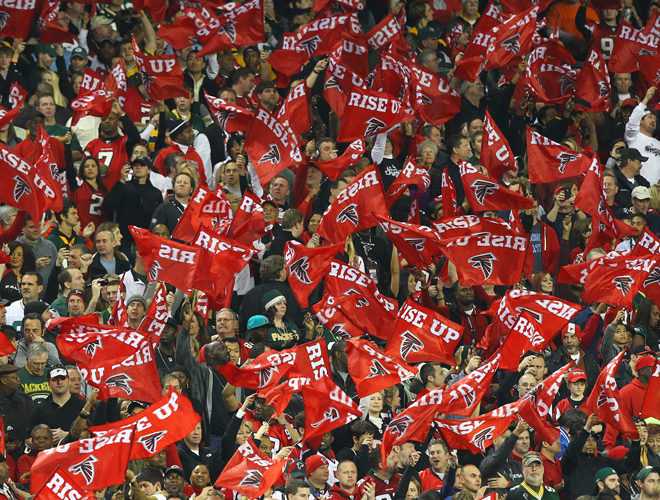
Atlanta Falcons fans wave “Rise Up” flags during an NFL Divisional Playoff game against the Green Bay Packers on January 15, 2011.

Those who have watched, read, and listened to the sports media over the last couple of years have been inundated with NFL stories that will “officially, and unquestionably, begin the ending our enjoyment of the NFL.” When those stories come out, and we don’t abandon the game, the sports media moved onto that next story “that will tick the general public off so much that I don’t see how the NFL survives this without lasting damage to their product.” Even after the members of the media make that proclamation, and the next one, the numbers don’t decrease in the least. We stubborn, fans keep watching the game in record numbers.

The NFL is still the king of all sports. It’s so far ahead of the other professional sports, still, that the competition might need a James Webb Space telescope just to read their corporate strategies, and this is in the wake of three-to-four years of almost nonstop, negative media coverage. What is going on, these sports reporters keep asking. The answer is that the NFL is big, and huge, but not so huge that it affects the daily lives of people watching the sport to the point that they care.

To illustrate this, we need only look at the contrasting conditions that exist in the socially conscious world. In the socially conscious world, socially conscious consumers care. Socially conscious consumers now have websites, blogs, apps, and podcasts devoted to informing them of the latest socially conscious gossip. The socially conscious pay attention, they scour various information resources before making financial decisions, and they punish those who don’t fall in lock step. It’s become a huge business for those “who care” about what they care about, a business that much to the surprise of the socially conscious in the sports media, the common NFL fan takes no part in.

In the socially conscious world, the media are king makers. They can make or break a corporation, or an individual, with a couple lines here and there. With the right story, or an accumulation of stories, the media can drive a corporation out of business. The corporation may try to adjust their practices to fit in with the prevailing winds of our culture, but in the socially conscious world once the damage is done, it’s done.

When socially conscious stories encroach upon the stature of the NFL, it attempts to adjust to the prevailing winds of our culture accordingly, as any other corporation worried about the prospects of their product will. They sit players for infractions large and small, they fine them, and then they blast their socially conscious reactions out into the worldwide media for contrition. Few NFL fans care one way or another. Few of them care about the transgressions in the report. Few care about the contrition. And the confusing simplicity of this is, few care about the NFL. They just want to watch football.

Most common, NFL fans are not socially conscious consumers, and I write that in the most complimentary manner possible. They are mostly male, between the ages of 35-54, making less than 100k a year. They are hard-working people who pay little attention to politics, world affairs, or social issues in general. Opponents may charge that they are head-in-the-sand ostriches, and that may be true in a larger sense, but in a more revealing scope, I think we can surmise that they don’t pick and choose the social issues to care about. They don’t care about any of them. They are one of our most consistent demographics in our country. They tend to their backyards, and they expect you to do the same, whether you are their neighbor or the NFL. They may think a little less of you when you don’t weed and water properly, but that doesn’t mean that the next time you lean over the fence, they’re going to avoid you.

The common NFL fan may know a few of the players’ names. Some of them may know the high draft pick at left tackle, the weak side linebacker that can cover as well as he can tackle, and the 4.2, 40 star cornerback, and everyone knows the quarterback, but for the most part NFL games are won and lost by players whose names they will never know. They’re not as attached to these players as the media believes, in other words. Their kids might be, but they have created enough distance from the players that no one player can ruin the game with their off the field activities. The love of the game is not as in-depth for fans, as it is for reporters. For fans, it’s just football, and it really isn’t all that complicated.

Those in the sports media make the mistake of assigning their own “age of enlightenment” social conscious worldview to their audience. They believe that socially conscious consumers are indicative of the evolved, new earthling, or at the very least that this idea of a socially conscious consumer has made its way to the NFL fan. They’re “wrong”, as Greg Cote says. “All of it.” We love the game of football. We appreciate watching talent at its highest level, but we don’t care about the NFL in a manner that if they don’t handle their controversies better, we’re going to abandon them. We’re not going to boo them when they take the field, depending on the charge, and we’re not going to applaud them when they come back … unless the collective they manage to violate one of our core tenets. 

We tune out when the NFL pregame shows start their broadcast with the latest “weight of the world” drama that has the whole NFL shook up. We don’t want to hear the perspective of this story from all four on-air personalities, and the sideline reporters’ latest quotes from the team’s equipment manager. We also don’t care about the human interest stories that follow these negative stories to inform us that not all NFL players are not as bad as inmate number 6843107347. We don’t care about the good, the bad, or the ugly. We want to watch a game of football, unless the collective they show display some sort of ingratitude for the fan that he or she can feel.

For the devout fans’ desire to learn X’s and O’s analysis, injury reports, and the occasional trash talk, we now have to turn to the internet. We turn to the place that allows us just the facts, or if they don’t, we have the option of only clicking on stories that provide just the facts and figures we want to know more about.

If I were a network programmer, I would experiment with a novel idea, a show called “Just Football!” It would be a jam-packed half hour (22 minutes with commercials) that contained two to three experts talking exclusively about the game. If a player was out, due to some drama, the anchor would say, “(That player) is out for the week!” He would say this with no more drama, and no more depth, than he would with a player that is injured for the week.

“No emotion,” would be the intro to my show’s commercial promo, “No political proselytizing, no jocularity between hosts, and no human interest stories!”

“Just football!” another, more charismatic voice would say to outro.

Word would get those two words out in the common NFL fan community, and the ratings would go through the roof.

We watch the NFL to escape the social studies of our culture. We don’t care if “our guy” is a good guy or a bad guy. We just want to know if he has the talent, and the physical or mental prowess, to get across a line, or to stop the other guy from getting across a line. If he committed a transgression, he should be punished accordingly, but we don’t care about the story, the intricacies of the story, or the social pressure that needs to be exerted to get these people to change. We just want football. It’s not complicated.

We’re not going to stop watching the game because someone did something bad, in other words, and we’re not going to start watching a game because a guy did something good. We’re not socially conscious viewers. If that were the case, we would’ve stopped watching this game long ago, because some of these players use excessive force when they hit one another.

Greg Cote, of the Miami Herald reports about this with some surprise:

“Voraciously, sports reporters and broadcasters keep sounding the first notes of the death knell of professional football. Forebodingly, they warn of the sport’s eroding credibility. Ominously, they say that player wrongdoing and Commissioner Roger Goodell’s missteps and mismanagement have served to fracture the public trust.

“Wrong, all of it.

“It turns out the public hardly cares.”

Greg Cote goes onto report, with an undercurrent of some surprise that NFL fans care about football.

The fan of the game didn’t care about concussion gate. All of the former NFL players –that now have on air personality jobs– preened themselves of the guilt of playing a contact sport by saying that they wouldn’t allow their children to play this violent game. This is now called virtue-signaling, and the anchors saying this were big time stars in their day. Those saying these things were the faces of the game … Pffft! didn’t make a dent.

We didn’t get mad at these former players, however, as we knew that their “look at me” editorials were simply attempts to establish their bona fides as a broadcaster that would help them transition away from being identified solely as a former-player. Those who lasted through the sermon, without flipping the channel, probably didn’t hold it against the former players. They likely didn’t care one way or another.

It also turns out, much to Mr. Cote’s surprise, that:

“Fans don’t need to trust (NFL commissioner Roger) Goodell to love football any more than most Americans need to adore a sitting president to love their country.”

Due to Goddell’s actions over the last couple of years, you would be hard-pressed to find too many common fans who haven’t heard of Roger Goddell, but you would also be just as hard-pressed to find many fans who care about him. I don’t pay attention to such things, but I’m guessing that if you polled NFL fans about the latest press release from the commissioner’s office, you would see figures like .04% see it as a positive for the league, .96% see it as a negative, 4% haven’t heard of it, and 95% don’t care.

Socially conscious consumers care about CEOs. They scour the position papers of these CEOs, and they read the analysis provided by socially conscious writers they trust. They focus a great deal of their attention on the CEO’s gender, race, and flossing habits. Most NFL fans don’t even know Roger’s middle name (Stokoe), because they don’t care. He’s not on the field, he’s not designing a defense, or an offense. He’s not the fan’s friend, or the fan’s enemy. He’s the commissioner of the NFL, equivalent to that fire hydrant on the end of their block. We know it’s there, and we know what it does, but we probably haven’t spent more than one accumulative minute of our lives thinking about it.

Some fans may have a love/hate relationship with Goddell, based on the players he and his commission decides to take off the field, but they’re not going to allow him to influence their enjoyment of the game. When the commissioner does step on the field to do a coin-flip, or whatever a commissioner does during the pregame, we might hear some cheers and some boos, but listen carefully to those boos. Those boos build, as the fans wake out of their pregame slumber. Every pregame ceremony involves three to four names, and 90% of the fans don’t hear the names being mentioned. They only look to the countdown clock that informs them when the game begins. When the booing begins, son turns to dad, dad turns to other fan, until heads around the stadium turn to the scoreboard to try and figure out why everyone’s booing. They join in, they laugh, and it’s fun. He’s an authority figure, and it’s fun to boo authority figures, but no fan of the game cares about him, unless he were to take part in violating the core tenets of the NFL’s core fan. My guess is if the more involved fans didn’t start the booing, the viewing audience at home would hear nothing as this lawyer/bureaucrat walks on the field. 

Greg Cote describes the bad seeds that have littered the headlines as “weeds in the garden, things to be uprooted”. I would go one step further. I would say that they’re checkers. Checkers, as opposed to chess, in that no individual pieces in the game of checkers are irreplaceable. The quarterback could be said to be irreplaceable for a game, or even for a year, but when that quarterback does go down, and his career is deemed over, the devout NFL fan’s focus shifts to the prospect of getting a great prospect in the next draft. That fan may visit that former player’s car dealership, or car wash, in the years that follow. He may even shake that man’s hand and thank him for providing the area’s fans so much joy over the years. For the most part, however, that fan will have already moved on to the next guy, and no member of the media, no commissioner, and “surprisingly” no player can taint that relationship they have with the game. Most of them know this. Most of the players, coaches, and fans know it’s not about them. The only ones confused by the conundrum of why the NFL remains so popular, regardless what they do, are those in the media, and they’re apparently up in arms about it.

[Editorial Update:] We still believe many of the tenets of this article, written on 8/15/2015, but recent evidence suggests this piece requires an asterisk. A complete rewrite is not necessary, in my humble opinion, as we still believe that no player, no matter how moral or immoral, can break the bond the NFL fan has with professional football, but we now add the asterisk that states, “Unless said player, or players, shows a level of ingratitude that the average fan considers a violation of said fan’s core tenets.”  

Most NFL stars have been stars for most of their lives, and they know a level of adoration most sports’ stars never will. These stars might assume that that love is unconditional, and for the most part it is, but as recent evidence suggests there are some principles that NFL fans consider such a staple that even their favorite star cannot violate it.

The average adult fan now knows that NFL stars are never going to be grateful to them for being a fan. The NFL star might pay symbolic homage to the fan, but we know that they take us for granted. We’ve come to accept this as the nature of the beast. As witnesses now know, it is possible to fray the bonds that seal this relationship. This article contains a note that suggests that no player, or players, can damage the bond NFL fans have with the league, but we now know that is not true.  

The media can try to make a dent, and the NFL commissioner can attempt to resolve that issue, and most NFL fans won’t care either way, but if the player shows an unprecedented level of ingratitude, most fans will leave, and some may never come back. We’ve all witnessed those TV’s permanently turned into the “off” position, on Sunday afternoons for a couple years now, even at Thanksgiving, and I don’t know when, or if, they will ever be turned back on. Congratulations, NFL players, you’ve proven me wrong. There is a way to do what I thought couldn’t be done. The otherwise ambivalent and apathetic fan base is now awoke, and they care more than I thought they would about a social issue.