“There’s this thing at the door asking for you?” the brother of Terence Michael Joseph “Geezer” Butler informed him.
“What do you mean this thing?” Geezer asked.
“You’ll see.”
Geezer didn’t get the joke, until he answered the door, and he saw a rain-drenched man with no hair on his head standing on his family’s doorstop. The man at the door had no shoes or socks on his feet, and he was wearing a gown that Geezer assumed was a pair of overalls that the man’s dad probably wore at a factory job. The man also had a chimney brush over his shoulder and a single sneaker on a dog leash. “I’m Ozzy,” the man at the door said. Geezer would later say he thought the man “was not the full shilling. (AKA off his rocker/crazy)” Yet he invited him in anyway — and changed rock history forever.
We can only guess how this interaction proceeded from there, as the two men tried to feel each other out, but Geezer was intrigued enough to invite this disheveled man into his rock band Rare Breed. The thing standing at Geezer’s door posted an ad in the Birmingham musical instruments store that read “Ozzy Zig Needs a Gig.” Geezer saw the ad, went to Ozzy’s house, Ozzy wasn’t home, so Geezer left his home address — and John “Ozzy Zig” Osbourne, or as we now know him Ozzy Osbourne, showed up later as that thing at Geezer’s door.
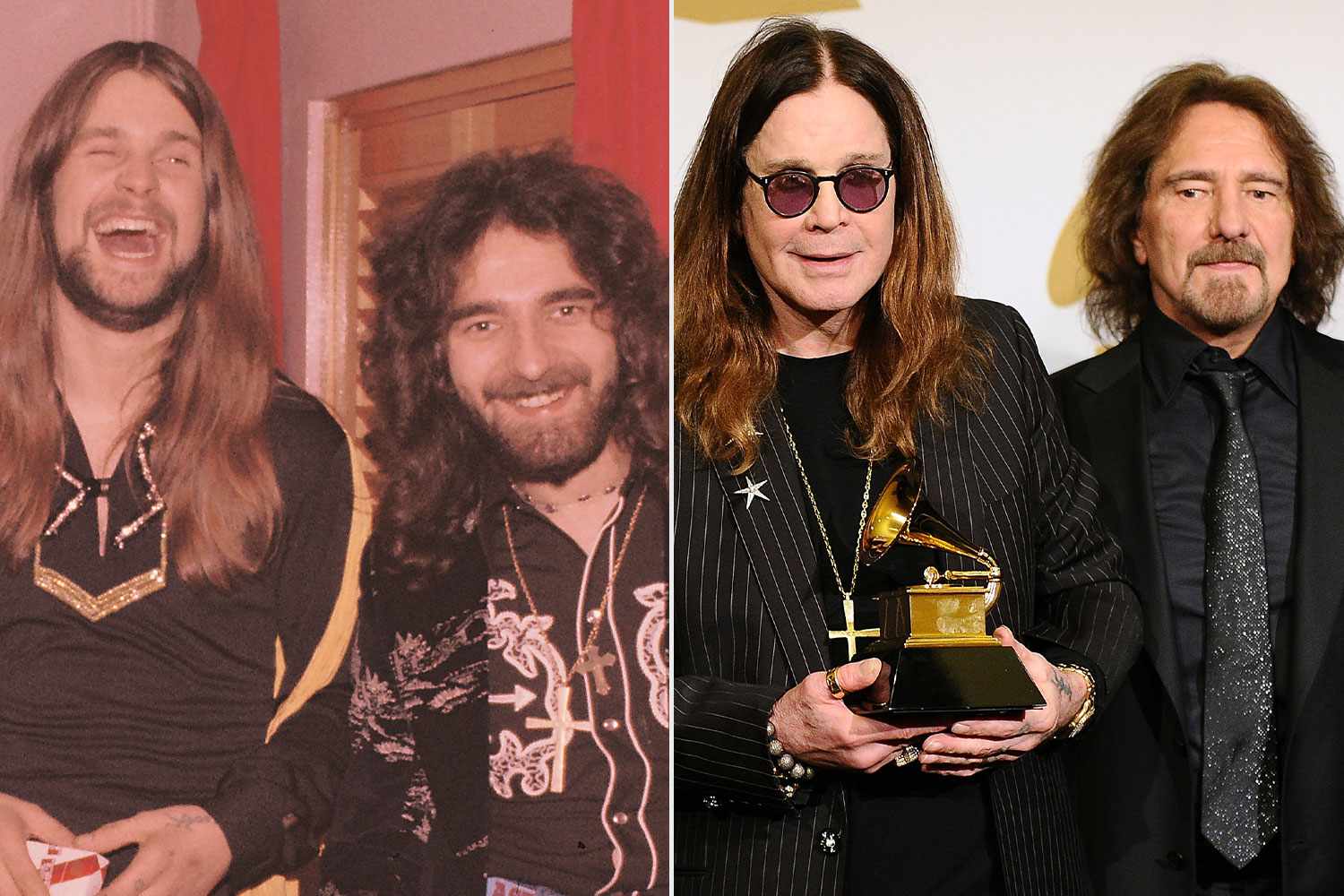
Geezer, like Ozzy, grew up in a low income, working class neighborhood, and they both had six siblings, but the Butlers did not experience the level of poverty the Osbourne’s had. Those of us who grew up in similar neighborhoods know that we don’t meet many who are lower on the socioeconomic totem pole, and when we did, we looked down on them. Geezer and the Butlers were poor, but Ozzy grew up without basic comforts like indoor plumbing, and he and his siblings often used coats for bedding. As Geezer’s brother alluded, the Butlers probably viewed Ozzy as a lower life form. His appearance suggested he couldn’t even afford a decent pair of shoes.
When Geezer met Ozzy, he had a predicament. He had always been an avid reader with a strong background in English literature, especially Shakespeare, so writing song lyrics came easily for him, but he was not a strong, confident singer. He needed someone to deliver his lyrics to an audience. He had a message, in other words, but he needed a messenger to sell it properly. When Geezer imagined his messenger, he probably dreamt up a Robert Plant, Rod Stewart rock-god type who could seduce listeners into falling in love with Geezer’s lyrics. Every songwriter who can’t sing, dreams up bullet points for the singer of their songs, and we have to imagine that an overwhelming majority of them would’ve rejected “that thing at the door” on appearance alone. Is that what intrigued Geezer? As we now know, Geezer was not what we call a conventional songwriter, so Geezer may have thought that this thing at the door might have been able to attract an audience in the manner the lobster boy and the bearded lady attract an audience to the county fair?
We could say that Geezer was desperate, but by historical accounts, Geezer only had one other lead singer prior to Ozzy, and that man quit Rare Breed once he heard how bad the band was. So, Geezer didn’t exactly exhaust all possibilities before meeting Ozzy. Geezer dresses this decision up by saying he was blown away by Ozzy’s audition, and that might be a fact, but it’s more likely that Geezer didn’t think he’d find a better lead singer in Birmingham, and his aspirations likely didn’t extend beyond the city at the time. He probably enjoyed seeing Ozzy’s unfiltered confidence and he suspected that Ozzy’s economic limitations and resultant gratitude meant that Ozzy would show up and help Geezer build and grow, regardless how bad the rest of the band was. Geezer’s suggestion that he could see Ozzy’s talent from the very beginning not only compliments his lifelong friend, but it suggests Geezer was gifted at spotting talent. My guess is Geezer wasn’t lying, but he’s rewritten this memory in his mind so thoroughly that this is how he genuinely remembers it. We can speculate further, but at the end of that debate we’d be forced to acknowledge that Geezer obviously made the right choice, as the two of them joined forces to create something no one else tried before, and it worked so well that we still talk about them almost sixty years later.
Within two years of meeting the “thing at the door”, Geezer and Ozzy would be joined by two members of a band called Mythology, a guitarist missing the tips of his middle and ring fingers, named Tony Iommi, and an anatomically complete and relatively well groomed drummer named Bill Ward. They would change the band name from Rare Breed to Polka Tulk Blues Band, Polka Tulk, then Earth, and then Black Sabbath.
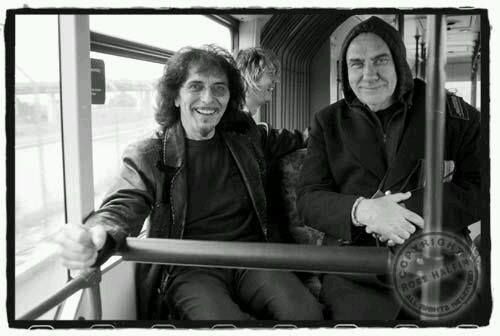
In case you don’t know the four of them would go on to sell roughly 60–68 million albums (including pure sales, streams, etc.) when they were all in Black Sabbath together. The music of Black Sabbath would also influence the creation of heavy metal and later the heavy, sludge side of the Seattle sound sometimes called grunge. They’ve also been called one of the influential rock bands of all time, and it all started with Geezer meeting “this thing” at the door.
***
“So, this Geezer Butler fella got lucky,” you might say. “He had one of the most influential front men in rock music history just show up at his door one day. That’s luck.” It’s true, undeniably true, that luck and/or chance played a role, but how often do these chance meetings happen in music? We could also say that it wasn’t exactly a chance meeting, as Ozzy posted an ad, and they both met before as fanatical fans of The Beatles. Still, it can be frustrating to learn that luck, and right place/right time elements play a role in defining history, but it happens. The counterpoint to this argument is that we have to be good to get lucky.
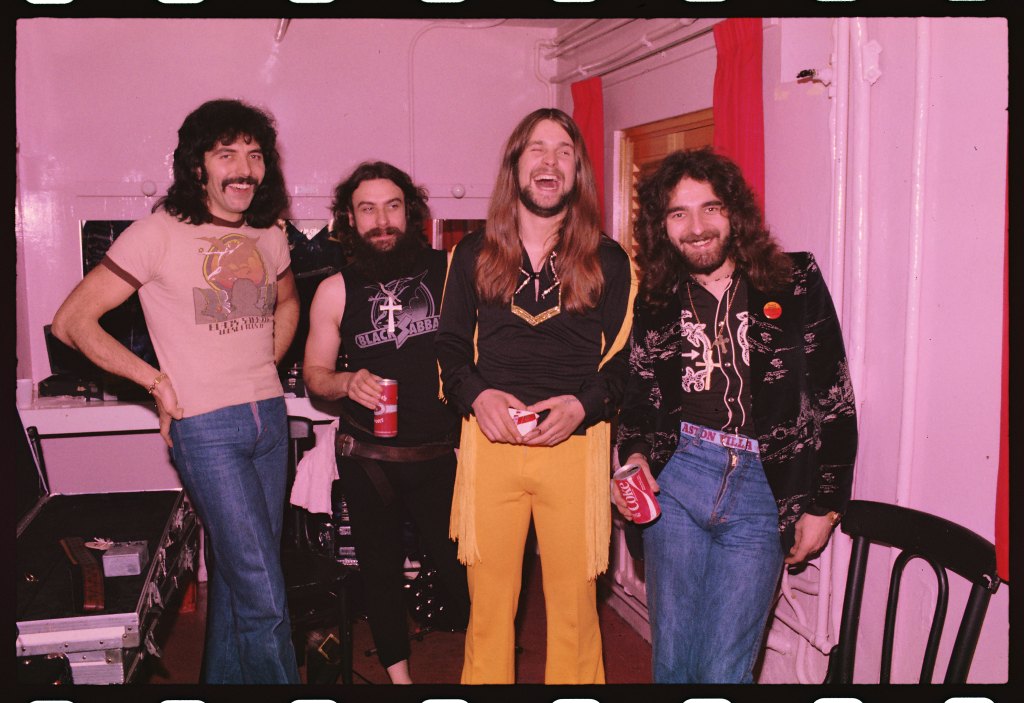
They, Ozzy and Geezer, also got lucky that their band, Rare Breed, broke up when it did, because another band named Mythology broke up at around the same time. The guitarist and the drummer, of that band, Tony Iommi and Bill Ward, were looking for another band to join at the same time that Ozzy and Geezer were looking for a guitarist and a drummer. (Geezer switched to bass when he saw how talented Iommi was.) Ozzy and Geezer just happened to find a guitarist who is now considered a master of riff‑craft, creating heavy, memorable guitar lines that became the blueprint for metal, and they happened to land a drummer who was a jazz‑trained, gig‑tested drummer whose unique style became a core part of the band’s identity.
For all of the talent that existed in Black Sabbath, Geezer Butler was the conceptual architect and the primary lyricist behind the dark themes that defined early heavy metal. His style was heavy and melodic at the same time, and he was considered unusually expressive for the era. His bass lines often acted as a second lead instrument, weaving around Tony Iommi’s riffs rather than simply following them. Geezer also developed a rhythmic partnership with drummer Bill Ward to create the distinctive “swing” that underpinned many of the early Sabbath classics.
As Geezer described the relationship that would develop between he and Ozzy, Ozzy created vocal melodies during the band’s jam‑based writing sessions, and Geezer would write the lyrics to those vocal melodies. So, they used their talents, gifts, and creative energy to land in the right place and right time of music history.
If we examine Black Sabbath on an historical timeline, we could also say they got lucky to land in a right time/right place hole in time where no one had ever tried to make gloomy and depressing, as opposed to sad, music before. Yet, when we read the quotes from the members, they didn’t seek out a different form of music to carve out their own niche in the industry, and they didn’t plan on being pioneers, it was just who they were, where they came from, and what they knew. (All of the members of Black Sabbath grew up in the aftermath of WWII, and the war-torn, devastation influenced the gloomy themes of their sound and music that just happened to appeal to a large contingent in war-torn Brits of that era.)
In the era of upbeat harmonies, sunny melodies, and that breezy optimism sunshine pop, sunny melodies, and harmony‑rich 60s pop of The Beach Boys, The Monkees, and The Mamas & The Papas, Black Sabbath was viewed as a dumb idea by the fourteen labels who rejected them. The market is so stratified that we usually accept the idea that there’s no such thing as a dumb idea, but those labels all agreed that the gloomy, bleak, slow, and depressing music of Black Sabbath was a stretch too far. The basic sales pitch behind Geezer Butler’s presentation was that in a world that wants to listen to music that makes them smile, we have created a form of music that is so depressing we might lose a percentage of our fanbase to manic depression. In a world of feel-good music, we’ve created feel-bad. So, whaddya think?
For all of the luck, the right time/right place elements, and everything else that defined them, Black Sabbath shouldn’t have worked, not to the degree that some relatively anonymous writer would be writing about them nearly sixty years later. Even a qualified, quality writer would have trouble properly capturing how unlikely their success was. These were four kids who grew up in various levels of poverty who believed that the pinnacle of success would involve them playing in local pubs that would hopefully pay them enough for them to be able to afford a decent meal and a couple of beers to follow. These guys had no formal musical training, absolutely no industry connections, and they decided to play a style of music that didn’t exist yet — slow, heavy, ominous, and socially bleak and depressing.
We can imagine that their immediate success shocked the 14 major labels who rejected Black Sabbath before their first album was recorded and everyone else who worked with Sabbath before their first album was completed, but no one more surprised than the four members of the group. They knew they worked well together, and they gelled to create the type of sound they were seeking, but the idea that it clicked and/or appealed to listeners to the point that it reached #8 on 13 on the UK Albums Chart and #23 on the US Billboard Top LPs shortly after its US release stunned the four fellas. They didn’t really have to “pay their dues” in a relative sense. They compiled a selection of five songs for their first album Black Sabbath, recorded them in one 12-hour session, and they released it. They were just happy that a label signed them, and they were actually able to record an album. That, to that point, was beyond their expectations. The idea that it would chart with no radio play, combined with the critics dismissing it as a crude, simplistic, or derivative effort was beyond their comprehension. Another source notes that Black Sabbath remained on the charts for over a year and sold one million copies in its first run (US + UK combined).
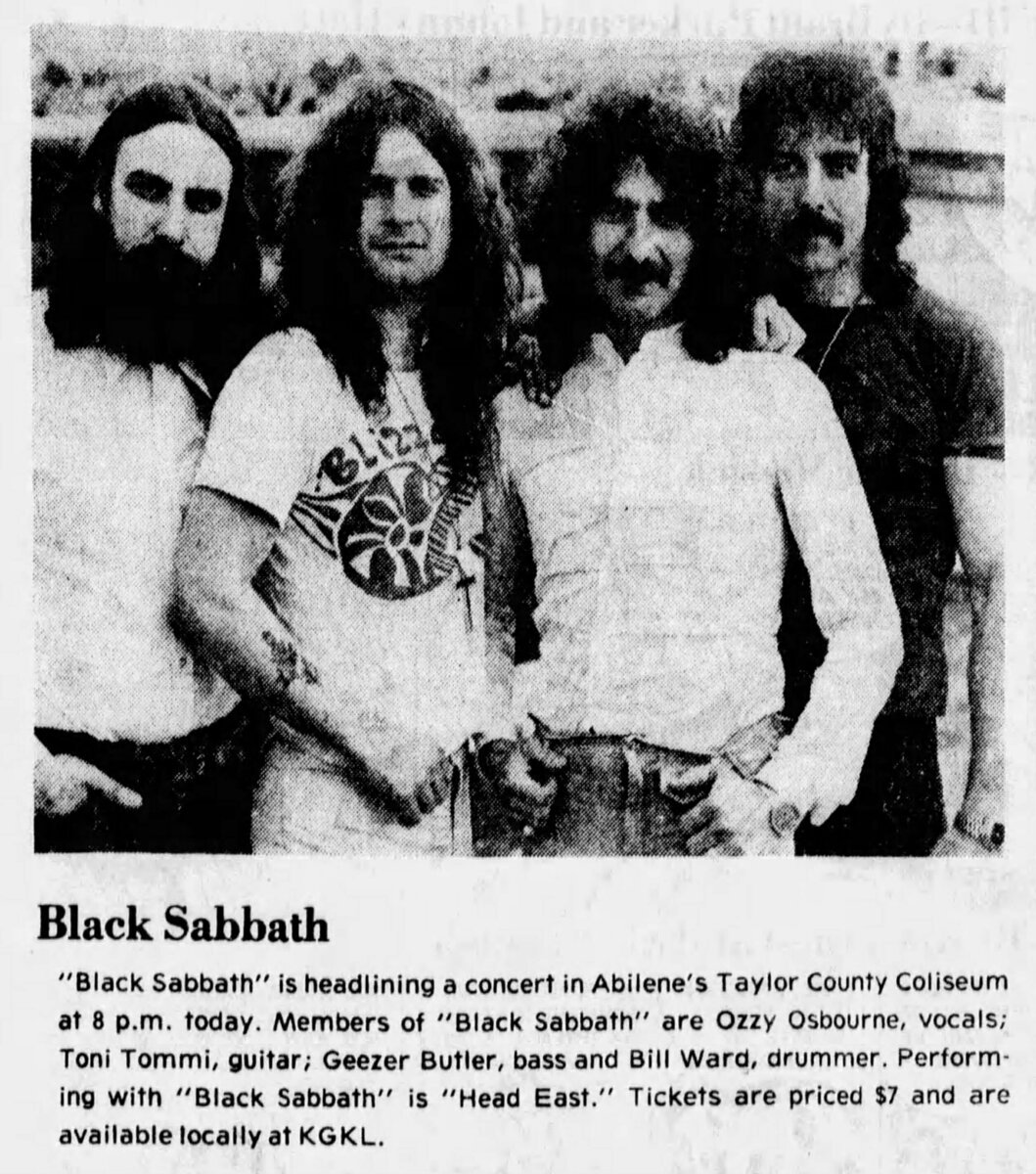
All four members have said, in various ways, that they couldn’t believe it when some people initially started treating them like a real band, then when their album charted it scared them a little, because they didn’t know what to do with that. When they were asked to tour the United States of America, it wasn’t mild surprise, as none of them knew enough to know logical progressions of this sort. They were genuinely stunned. Ozzy described his genuine reaction to this insanity by saying he was constantly waiting for someone to tap him on the shoulder and say “There’s been a mistake, a huge mistake.” Tony Iommi said, “We never thought it would go anywhere. Our goal was to avoid factory work, and we thought we could do so with a few gigs here and there.” Ozzy said that their goal was to eventually get in pubs, so that the pubs would pay them enough to drink their beer. “We never thought we’d get out of Birmingham,” Ozzy added. Bill Ward said, “We didn’t know what we were doing — and suddenly it worked.” Geezer said, “We were just four poor kids. We didn’t think it would last.” All four members were from lower class to absolute poverty, as Geezer said, and that probably led to the level of desperation necessary to make whatever they did work.
Anyone who has ever read anything about the recording industry of this era, knows how this chapter of the Black Sabbath saga ends. As poor and uneducated as the four fellas who comprised this band were, in general, they probably knew less about the recording industry, recording industry contracts, and the manner in which their management team should be handling their financial matters. They wanted to focus on creating the music and let management take care of the financial matters, and their creations 4.9 million copies of the first album, and the second album, Paranoid, sold between 10-12 million copies, by global sales estimates, they were almost as broke as they were before they recorded their first album. They signed a horrible contract, because they were so elated that someone wanted them to sign them that they probably thought if they haggled over the details of the contract, the management team might not sign them.
“We were one of the biggest bands in the world,” Geezer said, “and we were penniless.” One example cited stated that Black Sabbath were paid $250,000 to play at a 1974 California Jam festival, and each member ended up receiving $1,000. As stated, management teams and recording labels ripped off most of the artists of the era, including the Rolling Stones and The Beatles, but music historians suggest that Black Sabbath’s management disputes were some of the ugliest and most damaging in rock history. When the fog cleared, the members discovered that not only were they almost as broke as they were when they started, but their cars, homes, and other personal possessions weren’t theirs. In the most crushing blow, they then discovered that their music, that which they worked their tails off to create, hone, and perfect wasn’t even theirs. After years of litigation and lawsuits, it is suspected that the four members may have recovered 10-20% of the money their manager stole.
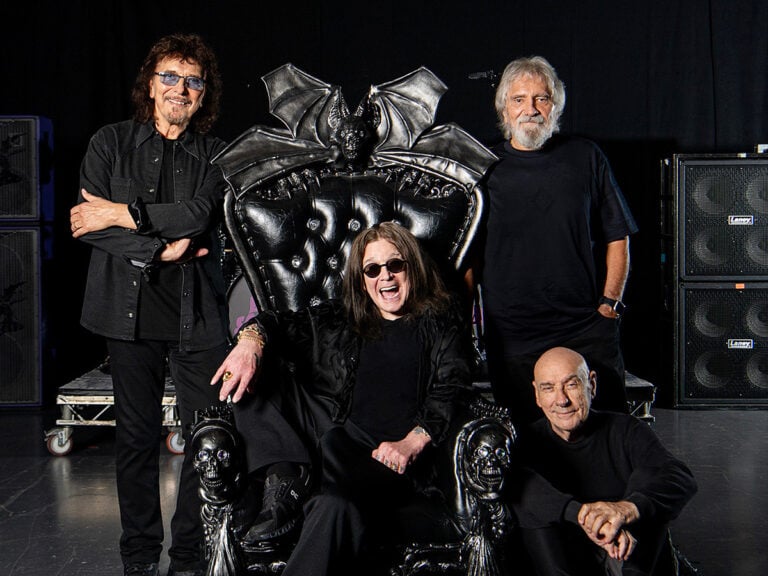
Black Sabbath worked for a whole host of reasons, of course, but they were dumb enough and desperate enough to make it work on a certain level. They had a Beatles-obsessed lead singer, who learned the art of melody from his beloved mop tops, a Shakespeare-obsessed lyricist, a guitarist who was missing the most important finger tips required to play guitar, and a jazz drummer who helped develop a new form of musical expression. Their eventual success suggest that some ideas are such a load of crap that if it’s gathered together, it could be used as fertilizer. The four members didn’t know enough about the system to know how to succeed in it, and they got lucky. The fact that they got so lucky that they’re unicorns, should not be discounted here. Most of us should spend most of our young life trying to figure out the system works to see how we can succeed in it, but some of us weren’t built like that, and some of the ideas we have might appear like “that thing at the door” to others, but the question that we should ask ourselves, is a question I’m sure Geezer Butler asked himself on the day he met Ozzy Osbourne, ‘what would happen if I invited this man in?’ What would happen if we invited that weird, strange, and just plain different idea in and explored the possibilities? If we drop an adamant no to all of that, we’ll never know. The story of Black Sabbath teaches us that some of the times it’s better to say no, unless...