To Parent or Not to Parent


When it comes to the prospect of parenting, an overwhelming majority of us hang between “I’m not sure if I’m ready” and a friend sitting us down with a “listen my friend, you’re definitely not ready”, but did you ever meet someone who was ready, at a very young age? Did you ever meet someone who was parent-material? I have, a couple times. I didn’t know it at the time, of course, as it’s not something that you can spot, but when you’re parenting, and you’re thinking “What the hell did I just do?” with that screaming kid on your shoulder, you think back on the Bills and Courtneys of the world, and you kind of wish you were more like them, sort of, and in a roundabout way.

They never complained about anything, and they never said a bad word about anyone. I’m not eulogizing them, because I’m sure they’re still alive out there, somewhere. They were just responsible, well-centered, strait-laced people who were so happy. As a student of cultural tropes, I expected to eventually find something scandalous about them, but there wasnt. They were just happy, well-adjusted people who really enjoyed life, but I found them so boring I couldn’t be around them. They probably made some excellent parents though.    

The rest of us hang somewhere between between dysfunctional and self-destructive on a graph, and we need to seriously consider our level of sanity before having children. If I had a kid in my twenties, like the rest of you, that kid would probably be in a straight-jacket screaming something awful about my parenting skills in repetitive cycles. He would know how to read, and his math skills would probably be somewhere around adequate by the 5th grade, but all those interaction cues that we pick up from our parents would’ve been so out of whack that his pediatrician would’ve rushed him to a place where he could be monitored 24-7, or on some radical, experimental drugs that I would’ve had to sign off on.   

One of the 10 commandments of quality parenting that I would’ve failed most miserably is the “don’t be selfish” one. Don’t be selfish with your stuff, and don’t be selfish with your time. I’m sure I would’ve seen to it that he was fed, and I probably would’ve made sure he had clothing and all that, but the minute he started touching my stuff or saw to it that I couldn’t go out boozing with my friends, because he decided to show some signs of diptheria, I would’ve resented him for taking my fun time away.   

I know I was selfish, but are you? “No!” No one says yes, and very few say, “Well, maybe a little. Maybe in some circumstances, I might be a little self-involved, but who isn’t?” No, we all but shout a gameshow-quick “No!” answers that suggest we think there there might be prizes for a quick answer. There’s no gameshow button here, and there are no prizes, unless you count feeling better about yourself a prize. 

If you watch the same sitcoms I do, those that loosely revolve around parenting, you see parents with all this free time. Kid walks in the room, says something cute, and exits stage left. I understand that the show is not about the kids, but when I see these parents standing side by side with a sweet smile, looking down at a sleeping child, cherishing him, I wonder what we did wrong. When we put our kid down and he eventually slipped off to the dream world, we exited the room on tiptoes whisper screaming, “He’s down! He’s fricking asleep, finally! Thank you God!!!”

These sitcoms are all about the joys and love of parenting, but those of us who know some elements of parenting now, know that no kid exits stage left in real life. They’re center stage, about twelve hours a day, more if they don’t nap, seven days a week. And if these dependent, little sacks of flesh are not center stage, they’ll find unique and creative ways to get it, until they soak up almost all of your precious and ever-dwindling free time. 

That’s the one thing prospective parents should be ready to give up/sacrifice, more than anything else, before before you agree to bring something so needy and dependent into the world: time. 

Most of us have a very narrow definition of selfish. “I had a big bag of pistachios the other day, and I gave some of them to Henrietta. You saw that. You know I’m not selfish. I share.” Okay, let me rephrase the question, how much of your life revolves around you? If we’re as self-centered as we think we are, we might not be able to answer that question objectively. A better question might be, how frustrated do we get when our friends have to back out, last minute, on a planned, fun-filled night, because of something their kid did? 

Do you have that want, that need, for a-night-o’-fun out of your system yet? Check that question hard, because that could be the proverbial switch in the track that decides it. I know it did for me. I had to get it all out of my system before I was ready. Most people answer one way on Sunday, the morning after, but that answer changes somewhere around 6:00pm, on Friday, when everyone is off work, they’ve finished dinner, and they’re headed to the bar. I knew I wasn’t ready for the end of it for a long time, and I would’ve resented the wife and child for taking up so much of my free time if I rushed that decision. If I had a kid back then, I may have enjoyed spending time with them on my terms, but I can now tell you now, ten years in, that it’s rarely on my terms. 

To be fair to everyone out there, and ourselves, the definition of quality parenting is so relative that it’s almost impossible to define in an absolute. Some of us might surprise ourselves in the beginning, by being a responsible, selfless parent, but we always revert to who we were before we met this kid. The shock and awe of seeing them for the first time changes us. It is, as the old cliche suggests, a moment when you realize your life will never be the same from that point forward. Once a parent, always a parent, and all that runs through our head when we make those vows and promises to this tiny, little thing that we can spin on a finger, like a Harlem Globetrotter, and we live up to those vows and promises…in the beginning. In the beginning, we put our best foot forward when we meet them, like we did its mother. Our brothers and sisters might be in awe of our parenting skills. “Never knew you had it in you,” they might say, and we bask in the glow of that compliment, but everyone who knows us knows that we will eventually revert to who we were/are before we ever met the kid. That’s the person we need to interrogate beforehand, to find out if we’re too selfish, self-involved, or narcissistic to have a kid.   

“Are you responsible now?” I hated the ‘R’ word growing up. Everyone threw it at me. “You really need to act more responsible,” they’d say. Okay, but I’m seven. You know that right? “You are only seven, but you still act like a six-year-old.” Okay, I realize I don’t know much about this real-world you’re always going on about, but this childhood thing doesn’t last forever. You might not remember that, because, for you, that was fifty-three years ago, but there’s something about this childhood thing that leads me to believe I should be focusing on enjoying this as much as possible before it’s over. I don’t think responsibility should even enter my purview here, at least not until I’m eight, and I continued to think that way until I was about thirty-eight. “You can’t do that, you have responsibilities,” or “You’re in a position in life now where you have to be act more responsible.” The ‘R’ word was that annoying itch they put in my hair that I ran away from, screaming, for much of my life, because I wasn’t ready. 

I eventually had so much fun for so much of my life that it wasn’t as fun anymore. We all know the burning the candle at both ends phrase, and I was doing that. Except it wasn’t work, as most attribute that phrase. I was burning the candle at both ends with fun, great conversations, and moments that last forever, until they’re about releasing all the tension and stress from the work week. Are you ready to call an end to all that? How ready are you to spend your Friday nights at home binging on Spongebob, playing Chutes and Ladders, and reading the same Dr. Seuss book for the thirty-ninth time? When your friend calls you up and says they’re headed to the 18th Amendment, how frustrating will it be to say, “Sorry, kid’s got the runs, and no one wants to babysit a kid with the runs.” How much of your precious fun time are you willing to sacrifice to the relatively unrewarding task of raising a child? 

They say it’s rewarding. They say it’s the most rewarding job on Earth, and it is, when it’s all over and we think back. The good times are rewarding, as is the element of how much they’ve added to our lives, but how long does it take to get there? The kid doesn’t even appreciate it. “It’s your job!” they might say on the rare occasion when we humiliate ourselves by asking for a little appreciation. We might conveniently forget all the crap involved, and dung and vomit in between, if we’re lucky enough to live long enough to see them parent someone themselves. At that point, they might appreciate how hard it was for us to raise them, and they might turn to us and offer that one glorious compliment we’ve waited our adult life to hear, but they’ll probably qualify that by saying, “You did a lot wrong too. Here’s what I am not going to do.” 

“Where should your focus be, working on the marriage, or rearing the child?” a priest once asked us. “The child,” we answered in unison. The priest obviously engineered the question to get a wrong answer, so he could explain, “Quality parenting flows from a quality marriage. Not only does a quality marriage give a child the definition of a quality marriage, the foundation of a quality marriage provides a general sense of stability in a child’s life, and it provides them a definition of love and life from both the female and male perspectives.” Anyone who has lived through the death of a parent, or a divorce, knows how seminal these points are in childhood and the subsequent adult life. 

As I wrote earlier, it’s impossible to define the difference between quality parenting and poor, because that definition is so relative, but there are extremes. We all have flaws, good days and bad, but some of us are not systemically sound, and some of us loved dating those types. Some of us are almost instinctually attracted to the dysfunctional, self-destructive types. We don’t exactly know why, but we thought they were so funny, so mean, and so mean-funny. We don’t know who they remind us of, or if they were so unique to our experience that their captivating qualities reside in the idea that we’ve never met anyone quite like them before, but we climb all over one another to date them. They make us laugh, cry, and we feel so alive in their company that we might unwittingly become attracted to their chaotic merry-go-round. They’re exciting, dramatic, and different from day to day, but those qualities often don’t lead to quality parenting. Dating them might be another thing to get out of your system if your plans involve having a family, you might want to find the closest thing to normal you can find. 

There are a number of sites that list top 10 qualities of a good parent, or top 10 signs you are (Or will be) a good parent. We could list those, and even add some things you could do to find out more about yourself, beforehand, but parenting is one of those roles in life that is so relative and so day-to-day that we won’t know the final answer until we’re doing it, every day for months and years. We can know who we are in the now, however. We can ask ourselves a bunch of questions regarding our level of maturity, and our ability to handle responsibility, multitasking, and stress. We can also look around at our friends and focus on those couples who never should’ve become parents in the first place, and we all know those who should’ve known. Every parent thinks this at one point or another, temporarily, but as with everything else, there are extremes. There are those who never should’ve had kids in the first place. Some are so dysfunctional and so self-destructive that they aren’t parent material. Some had such a toxic and dysfunctional upbringing that they should seriously consider ending that horrible legacy. Those of us who have relatively normal dysfunctions and a relatively low level of self-destructive habits, who are still questioning whether we have what it takes to be a quality parent, should consider that nothing answers those questions better than time, and in my case it was a whole lot of time.  

The Unwanted Heritage


“How many grown men in the audience tonight grew up wanting to be their dad? If TV is anywhere close to the truth, previous generations revered their fathers. They didnt call them their dad, they called them father. They did everything they could to impress their father. My dad often talked about how much he respected his father, and how the image he had of his father shaped his maturation. Those days are gone. They just are. We now actively work to disappoint our fathers by becoming artists, influencers on YouTube, writers and standup comedians. We don’t even mind disappointing our whole family now. Is that weird? I don’t know one guy, in his 20’s or early 30’s, who wanted to be anything like their dear old dad when they grew up. Our goal was to be everything but. I’m not just talking money, success, or anything like that. I’m talking about everything. 

“Have we changed this dynamic, or did our dads? The dads on those old fifties and sixties shows never had a hair out of place, and they wore a suit and tie at all times, even to dinner. It’s TV, idyllic images, all that. I got it, but if you talk to people from my dad’s generation, you’ll hear them talk about how different things were in their day. We all make fun of such talk now, but things were so different back then. They respected the people, places, and things around them. They respected personal property. I had no idea why our neighbor, Sam, kept yelling at me for stepping his grass. It’s grass, why do you care? They wore suits to work, to church, on airplanes, and at restaurants.

My dad, I’m not sure if he owned a pair of underwear that didn’t have at least one stain. I’m pretty sure he didn’t buy them that way. He just missed opportunities so often that he didn’t have one 100% clean pair of underwear in his wardrobe. I also think he committed every violation of decorum he could think up on an ear of corn. He’d breathe through his nose while eating it, he had to, because he’d suffocate if he didn’t. There were a couple of occasions when our eyes met, while he was doing it. It was so uncomfortable. “Take it easy on that thing Dad,” I said. “It’s not trying to get away.” Why would I strive to be that man?

“Then there were the farts. The opportunity to hear my dad fart was one of the primary reasons I had friends. They didn’t get in line to hear them, but once he started in, they didn’t want to leave our house. “This is funnier than anything on TV,” they agreed. 

“How many times can you hear a fart and still think it’s funny?” I asked them. It was an endless source of amusement to them, and my dad loved them as much as they did. He built material around his gastric releases. “I just blew her a kiss,” was his favorite. He said that once, when he accidentally let a loud one go on some innocent, unsuspecting woman in a grocery store, and my friend was laughing so hard he couldn’t walk right for minutes.

“Dad also learned what he considered an award-winning phrase, following any expulsion of gas from his intestines, “Better to let it out and bear the shame than hold it in and bear the pain.” It rhymed, so Dad thought he was doing Robert Frost or Shakespeare. It was as close as my dad ever came to citing poetry. I don’t know who came up with that phrase, but I’d have fantasies of doing vile, disgusting things to them, and I am not a violent man. I don’t view violence as a way of dealing with confrontation, but after decades of hearing that phrase, I developed some empathy for those in a desperate search to find something to end their pain. I’ve heard some talk about getting in a time machine to kill Hitler to save humanity from what he inflicted upon so many in the world at the time. I’ve thought the same about the originator of this phrase. Whenever my dad would say it, my friends would just devolve to gales of laughter, and those vile, disgusting thoughts of violence seemed like the only solution to me.

“When they’d turn to me with their laughter, I basically said, “I find him absolutely vile.” Yeah, I was the priggish old woman to my dad’s Rodney Dangerfield character in a movie. If you’ve ever seen one of those old movies, a rich, snobby old woman would say, “I find you utterly repulsive,” with her nose up in the air. Rodney would say, “It’s a party babe, loosen up.” To which the woman would punctuate her disgust with some final sound of revulsion. My dad was the Dangerfield character who stuck his thumb up the arse of the institution, and I was his institution. 

“I heard so many farts by the time I hit my teens that I could no longer find humor in the fart as a teenage boy. Does that strike you as profound, because I think about all the great jokes I missed out on, because I was so tired of the fart joke.

There was one time when our teacher, a prim and proper nun, let one go in church, and it was loud, and it was during the service. That’s funny now, right? To 99.9% of the pre-teen, male demographic that’s not just funny, it’s once-in-a-lifetime, you-had-to-be-there hilarious. Church is one of those places where every pre-teen gets the giggles over the dumbest stuff, but a nun farting in church might qualify as the most shockingly hilarious event in a pre-teen boy’s life, and to the 99.9% contingent, it is. There is a .1% of grade school-era boys who have heard so many farts in life, so many fart jokes, and so much fart laughter that our reservoir of fart laughter is so dried up that we can’t even smile at a prim and proper nun farting in church. We know each other too, we .1 percenters. We spot one another, down the pew, and we nod one of those closed-eye nods, amidst all the other students gasping for air. It’s the we-have-the-same-dads nod. We’re members of this very exclusive club we wanted no part in, so we smile and force laughter, all the while knowing that our flatulating fathers deprived us of our golden era of the fart joke. 

***

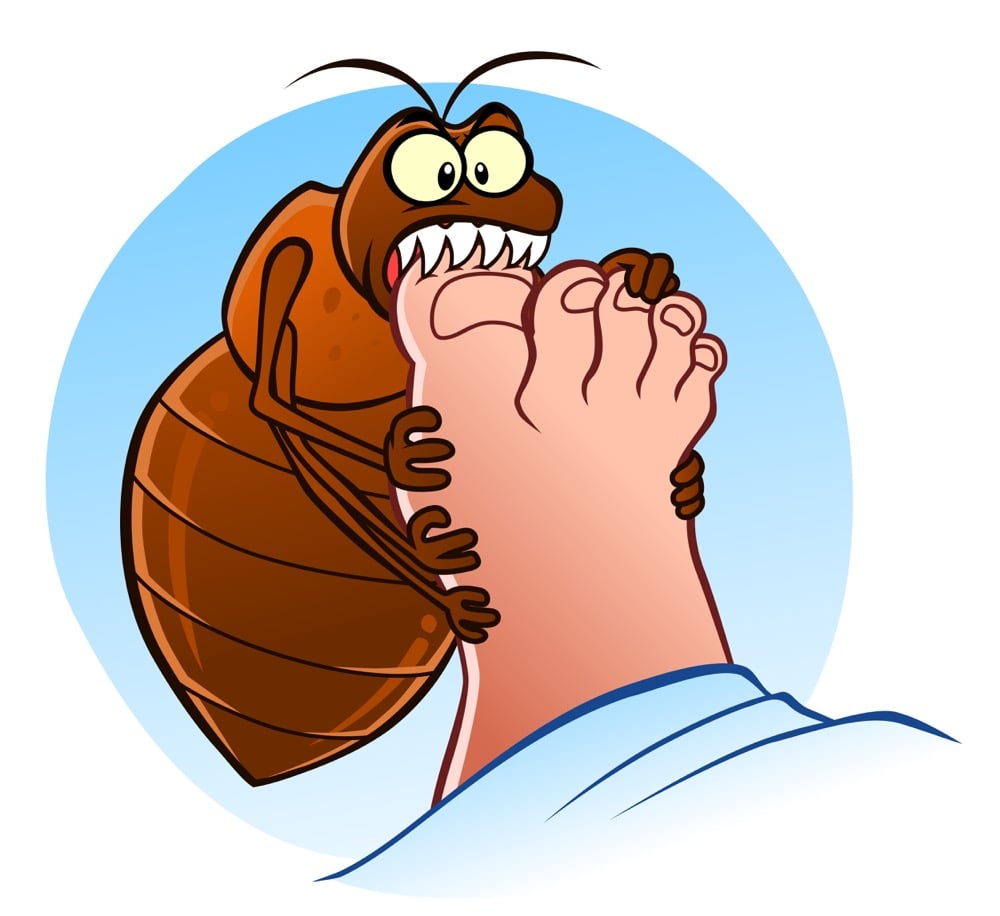
“My mom had her quirks too, and she had her own unusual sayings and traditions. The traditions she learned and passed down had nothing to do with farts, or anything as revolting as my dad’s. She was our version of a normal person, and we needed her dose of normalcy to combat everything being thrown at us. She used to read to us every night, she tucked us in, and gave us one of her sweet, motherly kisses before heading to the door. Then, right after she told us how much she loved us, and before she closed the door she’d say, “Sleep tight, and don’t let the bedbugs bite.” 

“I didn’t even know what bedbugs were back then. Are there really tiny, little bugs crawling all over my bed and my body? Is this common, and what do we have to do to prevent them from biting me? She didn’t intend to introduce this horrific thought into our already creative minds. She thought this familiar, little rhyme conveyed sentiment. I love you, and have a good night’s sleep. Oh, and don’t let the bedbugs bite. This was my mom’s idea of punctuating love. She did it so often that by the time I started thinking about what it was she was saying, it was already an accepted part of our parting ritual at the end of a night. I also think she just liked the phrase, because it rhymes, “Sleep tight, and don’t let the bedbugs bite.” 

“What you may not know, because I didn’t, is that fossils and early writings discovered that bedbugs date back to ancient Egypt and Rome and industrialization and colonization brought them here. So, when ancient Egyptians issued such warnings, they meant it. The mattresses they slept on were made of straw and feathers, and they were held up on a series of latticework ropes. The origin of the phrase sleep tight was probably made in reference to the parents warning their children to tighten their ropes to prevent sagging. Bedbugs cannot jump or fly, but they probably didn’t know that. Another theory speculates that sleep tight referred to keeping pajamas tightly wound to prevent bedbugs from getting in, but all these theories involve speculation over the origin of the phrase. The point though is that it’s possible that some form of this phrase could be hundreds to thousands of years old. 

“If we took a step back to realize what we’re saying about bedbugs, before we close the door to immerse our kids in total darkness, where their unusually creative minds spin just about everything we say into some form of horror that causes them insomnia and nightmares, we might want to give some thought to ending the tradition that suggests these nasty, little germ-ridden insects are probably going to bite us unless … unless they somehow don’t let them. That’s a question I never asked “How do I go about not letting them?” Seriously? “Are there proactive, preventative measures I should employ here, and why are you requiring me to do this alone?” Isn’t this basically what we’re saying when we say, good night, sleep tight, and don’t let the bedbugs bite? We’re saying that we’ve found proactive, preventative measures pointless, and you’re kind of on your own here. Now, good night, and don’t let them bite. Slam! We may have found the answer for why Joey always sleeps with his cute little Mattel swords and shields, he’s preparing for battle. 

“Traditions are what they are, thoughtless traditions,” Barry said, “but they are also an inner node of our family tree that we consciously, and subconsciously, use to connect us to our mothers, our grandmothers, and their definition of love. There’s also that added ingredient, in some weird and inexplicable way, that we see it as a definition of quality parenting. We don’t think about it. We just do it. It’s a set of parental instructions or system of rules written into our code and our peculiar programming language. It’s as much a part of our fabric as familial tales of our cranky old uncle swearing every time he has to stand up, the way our grandpa makes noises when he sits, and playing cars with our cousins on kitchen tile in our pajamas.   

***

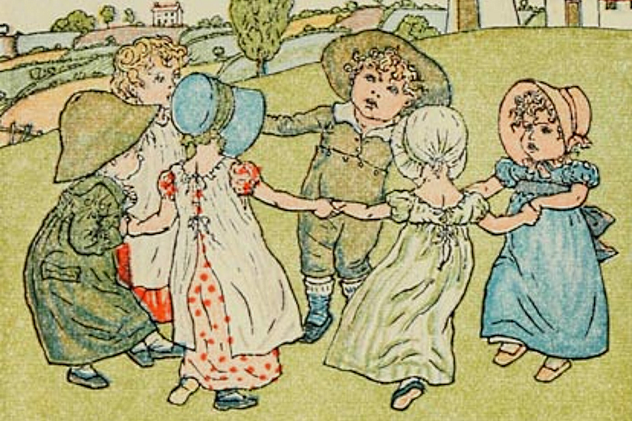
“These generations-old, odd traditions that influence and enhance who we are surfaced when I picked my kid up from school. Some kids, somewhere on the playground, began singing the borderline horrific song Ring around the Rosie. Everyone knows this singalong song, right? Why do we all know it, and who taught these kids this tradition? We did. Who taught us? We just sort of pick it up from somewhere, and no one remembers where. It’s a tradition that was, is, and probably will always be. I smiled when I heard them sing it. Ring around the Rosie, sing it with me now, pocket full of posies, ashes ashes, we all fall down. 

“Apparently, there are numerous versions of this song sung around the world, and some of you might know a different one, but that’s the one we sang in my pocket of the world. For as many versions as there are, there are nearly as many interpretations of the lyrics. As kids we sang it just to sing something while we did something else, but some folklorists suggest the lyrics ‘ring around the rosie’ might have developed as a result of kids teasing other kids when they spotted a red owie on their arm. Any owie, I assume, was subject to ridicule, and if you know a kid, you know they can get bruises, bumps, and red spots walking through an aisle at Walgreen’s. “Where did you get that bruise on your arm? Joey” “I don’t know,” and they don’t. They really don’t. It’s as much a mystery to them as it is to you.  

“When one of these 1665-era kids of London spotted an owie on one of their friends arm, they sang Ring Around the Rosie to tease him that he might want to consider the idea that he might have …. the plague. The plague! Some call it The Great Plague of London, others called it Black Death, and historical chroniclers called it last major epidemic of The Bubonic Plague in England. Some trace the origin of this little song to this Bubonic Plague that slaughtered over 100,000 Londoners at the time, and the total population of London, at the time, was around 460,000. So, it killed nearly one in four Londoners. 

“Ring around the Rosie! Yeah, we saw your little owie, Joey, and we’re pretty sure that means we’re going to be throwing your body in one of the local burning, plague pits soon. 

So many people were dying from the plague that they couldn’t keep up. If you’re from an area of the country that can be affected by wintry conditions, you know that there are times when police won’t respond to minor car accidents. They tell you to exchange information, and drive on. This is what was happening in 1665-England. If a loved one dies, just wait till nightfall and give them to a corpse carrier, who would stroll through the night with his agricultural cart, yelling out, “Bring out your dead!” Fans of Monty Python’s 1975 movie Holy Grail know this scene well. When his cart was full, the corpse carrier would take his load to a plague pit to burn and bury the corpses. 1665 England didn’t bother with funerals, ceremonies, caskets, or graves. There were just too many corpses in too short a time. So, unless you had the money to get a proper service, they threw your corpses in a plague pit, and we can only guess that little Joey probably saw a few of his cousins, aunts, and friends thrown onto the corpse carrier’s cart or into the pit. We all use various mechanisms to deal with the horror happening around us, and kids are more sensitive, thus more brutal, in trying to prevent the horror from getting inside their head, so they developed this cute, little rhyme to suggest that their friends, or that kid who sits two seats up and to the right in class, is headed for the burning corpse pit soon. Isn’t that just the cutest thing? What do you say we teach our kids to sing that for the next three hundred, plus years?

“Some folklorists suggest that the ‘pocket full of posies’ verse was used to mock those kids whose parents believed that if their Joey carried flowers in his pocket, it was a homeopathic remedy to prevent the onset of the plague. So, this portion of the song basically says, “Even though you had a pocket full of posies, you still caught the plague, Joey, SUCKER!” 

The conclusion of the song might be the most horrific, as the “Ashes, Ashes, we all fall down” lyrics suggest that Joey’s tormentors realized that they were acknowledging that they were going to get it too, we all will, and we’re all going to die en masse. One would think that in the age of COVID, we should consider ending the tradition that involves a sing-a-long about catching plagues, airborne or otherwise, that could slaughter hundreds of thousands.  

“I’ve heard that the folklore surrounding these interpretations of the lyrics might not be true, but even the most obnoxious, cellphone-checking sleuths will have to admit that there’s enough speculation among folklorists who’ve examined the lyrics of the song that we should probably stop teaching it as a sweet, pleasant “singalong” rhyming song our kids can sing on a playground. I mean, how can anyone spin “Ashes ashes we all fall down?” as anything other than a relatively disturbing dystopic image? A creative, young mind might even spin the lyrics as a warning for all participants to prepare for a nuclear winter? 

***

“Almost everyone here tonight is a complex, fully formed adult who has lived through several different, complicated eras of life, met thousands of different people, and read at least a few books,” Barry said. “Yet, we don’t know what we’re doing anymore than our parents did when it comes to parenting, and even if we did, we wouldn’t know what to do about it. I’m sure some of you are more confident in your parenting skills, have a master plan, or whatever, but most of us are just making it up as we go along. 

Have you ever had another parent look to you as a model of good parenting? It’s unnerving. You’re looking to me for some sort of guide for good parenting? What kind of dysfunctional and confused parent must you be to look to me? Good God man, I’m a mess. My model for everything I do, as a parent, is my dad, and he didn’t know what the hell he was doing. I mean, look how I turned out. I’m this big ball of the contradictions, hypocrisies, and family traditions that involve dystopic songs and nighttime warnings of bug infestations that my parents taught me. The greatest thing my dad ever taught me was independence, and there are a vast number of merits to teaching your children how to solve their own problems, play alone, and to prepare them for the reality that they’re going to spend most of their time alone, but the constant refrain of my dad’s parenting was, “You’re on your own kid.” I learned most of the strengths and weaknesses of total independence at 11. “Don’t get in trouble, keep your grades up, and don’t touch my stuff.” 

“One interesting byproduct fell out of my dad’s relatively dysfunctional definition of parenting, and that was that I learned that he didn’t care about me near as much as I thought he did. He didn’t attend my sporting events, so he wasn’t cheering me on from the stands, but he wasn’t booing either. This led me to the notion that no one’s cheering us on from the proverbial stands either. We’re on your own here. They might applaud an accomplishment of ours in the moment, but they really don’t care near as much as we think. But, and here’s the element of life it took me decades to fully comprehend, no one cares as much as you think about our failures either. It’s one thing to say people don’t care much about our success. That’s yours to love, cherish, and celebrate, but when we fail, we’re sure that everyone from our parents to that guy in the checkout line at The Supersaver knows too. The truth is, they’re not paying near as much attention as we think. This is not only a bizarre way of thinking, it’s wrong, right? 

The fact that people don’t pay as much attention as we think, or fear, is actually documented in various psychological studies. They’ve performed tests that involved a student walking in front of a huge college classroom to interrupt a professor and ask them a question. That student, in question, was wearing one of the loudest T-shirts he could find. The result, 10% of the people noticed that shirt. When a separate but similar test was done with a student wearing the finest suit known to man interrupting a class to ask the professor a question, 10% noticed that suit. We’re not paying as much attention as we think, and they aren’t either. 

Some might find it depressing to learn that we’re all alone in the world, but if you turn that study around, you might find that it frees you up to try things we otherwise wouldn’t if we thought anyone was paying attention. If you latch onto the idea that no one’s near as much attention to what you do, who you wear, or those silly jokes you tell, then just do what you do with the knowledge that no one’s really paying any attention. 

Ten Rules of Parenting


You’re a parent, congratulations and my condolences. It might be hard to picture now, if your kids are little more than screaming sacks of flesh but you will eventually be glad you had them. When that prospect becomes a reality, it’s a life-altering event to realize that someone is going to be dependent on us for everything for life, and for life. We’ve never had someone dependent on us for everything before, and we’ve all heard someone talk about that dependency, but we’re never prepared for it when it hits home. It’s a shocking revelation that occurs in phases and layers. The first layer of dependency involves money, food, shelter, and all of the superficial needs that humans require to survive. Those needs can be hard to fulfill, depending on the situation, but compared to the other, deeper layers of need, the superficial ones are cake. If you are a scared first-time parent, this formerly frightened, first-time parent of nearly ten years, offers ten rules to working through those layers.

Don’t Die

This first rule of quality parenting is a result of experience-based wisdom, because I survived, and I am a better parent for it. Neither of my parents followed this rule, but my step-dad did. He decided to not die of a massive heart attack one day, and he did that long enough to correct most of the errors he made as a parent. The explanations, descriptions, examples, illustrations and testimonials of why a parent should live has filled other books, but let’s just say that if my step-dad died as a result of that massive heart attack, I might be more wrecked than I already am. In the decade that followed that massive heart attack, and his eventual demise, my step-dad went from being a step-father to a dad. He was a flawed human being, but he taught me things that inspired this list.

Spend Time with Them

The second rule of quality parenting might be more important than the first, but if you’re dead, spending time with your kids will prove more difficult. Those of us who lived long enough to see it know that the steps involved in raising, training, refining, and redefining a small human into a halfway decent person requires a boatload of time. It’s also fraught with failure. First-time parents should know that they will fail, loudly, and often. If you don’t see this now you will, you will. If you want to correct the record now before that day of personal reckoning arrives, there is a cure. The best and worst model we have for parenting is our parents. “I might not be the best parent in the world, but I am light years better than my dad,” might be a refrain you tell yourself, and you may captain your ship in such a way that you don’t repeat his errors, but you’ll make others, and when you do, expect to hear time-honored laughter from your father, “It’s not as easy as you thought is it?” Quality parents will try to correct their errors, of course, but those corrections will be as flawed as we are. The best way to make a difficult situation better is to spend so much time around your kids that they’ll eventually weave our mistakes and flaws in with our admirable efforts and qualities that they mix them together in an big old soup bowl of memories. I normally despise new age terms like being present, but there is a huge difference between being in the same room with them and living in the present tense with them, and we cannot achieve the latter with a device-colored nose. I saw an illustrative example of this when I went to a friend’s house, and I saw my grade-school friend chatting it up with his parents. My friend and his siblings weren’t talking about awful grades, discipline, or sports, they were talking about stuff, interesting, uninteresting, and funny and funny stuff, and their parents were listening. There were no raised voices, neither party required the other to take them more seriously, and there were no clever, demeaning jokes about the other. Those parents knew things about their kids, and I’m not talking about the important things either. They knew about the stupid things their kids liked, and they appeared to enjoy talking about those things with them. They had what we call a relationship, a relationship that was outside what I considered the normal parent-child framework. I wasn’t jealous, because I didn’t really want a relationship with my step-father, but being among normal kids discussing normal matters with their parents did make me feel like a stranger in a strange land, and they accomplished that simple feat by spending massive amounts of time with one another. It was weird. 

Be a Hypocrite

“Do everything you can to make his youth last as long as possible,” someone told me when my son was too young for that advice to apply. I didnt know what that meant at first. How do I make their years of youth last longer? We’ve all heard that phrase, and we all know and don’t know what everyone is talking about.  What do kids, preteens, and teenagers prize more than anything else? That’s easy: Fun. Next question, what’s their definition of fun? We, as parents, will always be the primary influence on them, but friends provide their primary definition of fun, and that changes with age, sometimes dramatically. We might not even know about the progressive changes in his definition of fun as he ages, but it can change them and bring about a premature close to their naive, carefree youth. After a certain age, the only role, influence, or power a parent has in the arena of fun is adversarial. Our job, as their parent, is to sniff such situations out, slam the door on them, and take all the slings and arrows that follow.  “They’re going to do it anyway,” my friends’ parents said when we were teens. “I’d prefer that they do it around me, where I can keep an eye on them.” I had some great times in those cool parents’ homes and under those rules, and my definition of fun changed dramatically. I went from thinking that all I had to do was throw a ball around to have fun, to needing a beer, a girl, and whatever substance I could find to further explore the definition of fun. Now that I’m an old man, I no longer see those progressions as inevitable, and when I think about how damaging those inevitable progressions were to me, I cringe. Those years of innocent, naive youth could’ve lasted a lot longer if I made different friends in high school, and those kids had better parents. I heard my friends’ parents further justify their actions by saying, “We can’t tell them not to do it, because we did it. What kind of hypocrites would we be if we didn’t allow them to do it?” Wait a second here, how did you make this about you? It’s not about you anymore, and I’ve even heard you acknowledge that on different topics, but you make this decision based on you? If we take a step back and analyze that now, age-old excuse for not being a better parent, we could view our fear that someone, somewhere might see us as a hypocrite, as somewhat narcissistic. In lieu of the carnage I inflicted on my youth, as a result of these justifications, I now challenge other parents to be more hypocritical for their kid’s sake. “Call me a hypocrite, because that’s what I am,” we should say to our kids. “Give me the badge, or scarlet letter ‘H’, and I will wear it proudly. You might thank me one day when you’re old enough to appreciate what I’m doing here and why, or you won’t. I don’t give a bit! We can talk about the things I did at your age, and I will detail for you why I don’t want you to do them. I’m not going to allow you to do the stupid things I did to wreck my life and end my youth far too early.” I don’t know if the ‘they’re going to do it anyway’ message started in the movies, daytime talk shows, or if it simply passed down from generation to generation, but some parents I know suggest that they’re willing to permit their children to do the dumbest things, under their roof, with the hope that they never hear their children call them a hypocrite. “Why do you care if they call you names?” I asked one of them. You did it too!” they say, reminding me of what we all did together, and they say that with all sorts of exclamation points and index fingers pointed at me, as if I haven’t examined my life properly. “I did,” I say, “and I know how it wrecked me. Why would I stand back and allow him to wreck himself in the same way?” “Well, he’s going to do it anyway,” she said. I could’ve asked her how she knows that, or I could’ve said no he won’t, but the truth is she doesn’t know, and either do I. I do know that I’m not going to concede to that supposed inevitability to such a degree that I permit him to do it in my home, with the fear that he might one day call me a name, like hypocrite.

Respect Your Authority

You provide the definition of authority in your child’s life, and they will hold onto that definition of authority for the rest of their lives. I didn’t think any of my bosses knew what they were talking about, until they proved otherwise. Was this a reflection of how I viewed my step-dad, or was I just an overly skeptical person? Someone suggested that a child’s definition of an ultimate authority figure in life, reflects their definition of God. If they viewed their dad as the ultimate authority figure in their lives, and that dad was a mean, unforgiving man, chances are the kid will view God in the same manner. If their dad was loving and kind, they will view God in the same manner, generally speaking. So, if a parent wants to see how their children view them, they might want to ask their child how they view God. It’s an interesting theory, whether 100% true or not, and it is a nice addendum to the idea that you provide them the definition of an ultimate authority figure.

Needless to say, these are formative years for your child, and what they believe at six-years-old will have a profound effect on what they think when they’re thirty-six. This is why I dismiss those who view my definition of authority as ego-driven. I see it as the opposite. I see it as my job to provide my child with a level of consistency that will hopefully lead to a sense of clarity. He experiences confusion now, and he will experience inconsistency and confusion throughout his chase of happiness and success, but if he has a, “I know what my parents would do in this situation, and I know what they would think” base, it could help him make better decisions.

Thus, when he experiences confusion, I see it as my job to help him end that, and I try to answer him with as much objectivity as I can. My kid knows this particular answer so well that he repeats it with me whenever he has a question, “Some people believe this … Some people believe that, and I believe this …” I then back my answer up with as many facts and opinions as I know, and I try to provide as much information about “the other opinions” as I do mine. I try to answer his questions comprehensively and with as much objectivity as I possibly can, because I do not want someone else to tell him things he’s never heard before. I approach these questions from the perspective that other people don’t care about him as much as I do, and they will tell him the other, negative things for their own purposes. I try to tell him about all things beautiful and wonderful, but I also want him to know about the ugly and awful, and I want him to hear it from me first before some less responsible person tells him about it.

If you’re one who puts a focus on the beautiful and the wonderful, and you shield them from the awful, because they’re kids, and they don’t need to hear that mess. They’ll learn it from someone, somewhere. They’ll then consider that purveyor of the awful a cool truth-teller who treated them like an adult, and you’ll never be able to recover your role in that arena. 

I also try to keep it concise enough to adhere to the constraints of his attention span. (The latter can be challenging at times.) One of the simple keys to success and happiness, I’ve given him, is to try to enjoy being around people as much as they enjoy being around you.

One of the numerous challenges to your authority will be excuses. Excuses work, because we love and care for our child, and we know that they have challenges. One of the primary challenges in their life is, of course, grades. One thing we hear in our home is, “Well Jerry and Judy got worse grades than I did. Jerry got a 60%, and Judy got a 45%. I know this is hard to believe, but I actually got one of the best grades in the class.” This, of course, is the time-honored excuse for bad grades, and the time-honored response is, “I don’t care about Jerry or Judy, or anyone else in the class.” I’ve repeated that line a number of times, but I put an end to that excuse with one heart-felt response once, when I repeated that line, but added the addendum, “I only care about you. You might live your whole life and never run across someone who cares about you as much as I do.” I meant all that, and I looked him in the eye when I said it, and he held my gaze as I said it. He saw how true it was to me, and he hasnt tried to drop that meaningless excuse on me again. “She always had my back,” a friend of mine said at his mother’s funeral. “Even when I was wrong, she took my side.” He was right, of course, and I saw it on numerous occasions. His mom was as loyal to he and his sister as any parent I’ve witnessed, but by always taking their side without qualification, she failed to hold them accountable for their actions. It led the two of them to commit numerous criminal and self-destructive acts, and they were only held to account for their actions a few times. The only damage they received, in my opinion, was to their character. As one who has yet to manage the arena of excuses, the only thing I can add here is it takes a deft hand to learn how to manage their excuses and their challenges, because we can’t accept or refuse to accept excuses with a broad brush, for that would be a reflection on us, but we also don’t want them to use excuses as a crutch for not adhering to guiding principles or performing to the best of their ability.

As a child of an older parent, who spent most of his life as a bachelor, my dad wasn’t exactly honed in on parenting. As long as I didn’t embarrass him in front of other parents, teachers, or any other authority figures by doing something awful, I was on my own. My friends envied me for that, and I loved it for a while, but I began to view my step-dad’s laissez faire style of parenting as him not caring as much as my friends’ parents did.

Get Old

If it’s too late for you to get old, physically and mentally, because you’ve already had the kid, I suggest you try getting old spiritually. What’s the difference between old parents and young? We can answer that question with another question, what’s the difference between parents and grandparents? Older people, in general, have more of a ‘been there, done that’ mentality that suggests they no longer have that unquenchable need to do ‘it’ so often that they become ‘it’. Older people, generally speaking, are satisfied, settled, and they tend to be happier. Older parents and grandparents give young kids more time and attention. They actually listen to the nonsense that comes out of a kid’s mouth, and they interact with them on a level younger parents rarely do. Older parents also don’t resent this new ball of flesh and bones standing before them asking stupid questions and taking up so much of their time and limiting their freedom with such nonsense. If we boil all of the elements of parenting together, the big difference between older parents and younger ones is resentment. Younger parents love their children from beginning to end, and they probably love their child as much as any older parent can or will, or it’s so relative to the person that it’s often tough to suggest that one is better than the other. The younger parent still has an almost incurable itch to do things, see things, hang out with their friends, and pursue their career to its fullest extent, and they can perceive that child as inhibiting them from enjoying their younger years as much as they could. If I had a child as a young adult, my guess is that resentment would’ve influenced my relationship with them. How much of an influence would it have had? Impossible to know, but I still had a lot of youth to get out before I got old. Having a child as an older man was perfect for me, because I already had most of that out of my system by the time he arrived. So, my advice is to get old before you have a child, and if that’s not possible, get old mentally and spiritually. 

It’s Not about You Anymore

This fourth rule of parenting is more of a mindset than anything else. Your life’s not over of course, but if you’re going to try to be a decent parent, you should at least concede that it’s not all about you anymore. “It was never about me,” a parent said. “My parents never paid attention to me, my whole life, and I turned out just fine.” The very idea that you would say such a thing tells me that even if your parents didn’t pay attention to you someone else did. Someone felt so sorry for you that they filled the gap. They showered you with sympathy, because your parents didn’t pay enough attention to you, and you now want us to feed your sympathy fix? We’re talking about devoting attention to your kids, and you want us to pay more attention to you? My first response to someone who offers me such a figure eight is, ‘So, due to the fact that your parents did nothing for you, you’re going to compound that error by doing nothing for your kids?’ Before I say that, however, I realize that as confused as I am by such a reply, I’m probably not half as confused as the person who gives it. If it’s possible, I suggest we try to stop the narcissism and realize that in the grand scheme of your life, it’s not about you anymore.

Do no harm

“My actions aren’t harming the kids,” one parent said. I’m going to make an outrageous, bold, and opinion-based (as opposed to fact-based) statement that just about everything we do affects our children. They might not be paying attention to us, and they might not react to what we do, but some of the whims we have to be something other than a good parent have a collateral damage effect that might not be apparent on day one or week one, but like those old dot-matrix selfies we used to make of ourselves in the 70’s, the tiny, insignificant things we do, could end up forming a relatively dysfunctional child over time.

Read, Listen to, and Talk about Parenting

The very idea that you’ve read this far suggests that you’re probably a good parent. The idea that you’re open to considering another person’s ideas on parenting, no matter who they are, suggests that you’re interested in learning, developing, and eventually becoming a better parent today than you were yesterday. Being interested in others’ ideas suggests that you’re trying, and you’re probably already doing a relatively good job as a parent.

Become Wise

The difference between intelligence and wisdom is the that latter involves learning from experience. Our grades in school suggest that if we had any intelligence in our youth, we rarely applied it, and some of the moronic decisions we made after school suggests that our scores haven’t improved much. The eighth rule of parenting suggests that if we learn anything from our past, and we’re able to pass that along, we’re imparting wisdom. Parents are the beacon in their darkness. They’re as confused about the way the world works as we were at their age, so they ask us questions, and we answer, and they learn the ways of the world from us. Your kid is not an online message board for all of your ideas. Be careful and as thorough as possible with the ideas that you plant in their head. It’s almost impossible to be objective, and some say it’s impossible. We all have knowledge, ideas, and positions that are subjected to us and our upbringing. If it’s near-impossible-to-impossible, why try? If we don’t make some effort to teach them in the most objective manner we can, they might end up making all of the same mistakes we did.

Keep it Simple Stupid

The ninth rule of quality parenting leans on the eighth in that our kids view the world through our lens. They will learn from teachers, their friends, other family members, and they’ll learn various nuggets of information from too many people to list, but we are their primary influence. If we’re doing it right, every piece of knowledge they learn will pass through you, both positively and negatively. “Don’t underestimate them,” was the piece of advice a three-time parent told me when I became a first-timer. I valued that advice for a time, until I realized that a better course of action might be to underestimate them and let them surprise us. If we underestimate them, we keep it simple. This is not to suggest that we dumb it down for them, but that we exhibit some patience for the gradual time frames it takes a young human to learn. I’ve heard social commentators talk about the learning process that animals go through. “How long does it take a horse to learn how to walk after it falls out of the womb?” they ask. “How long does it take for a young chimp to learn what it needs to know? It takes the human being eighteen years, sometimes longer, to be able to competently exist in the adult world of their species.” I considered that a humorous profundity, initially, until I compared what those other species’ need to learn and what a young human needs to learn to compete among their peers. If we choose to underestimate them, they will surprise us with their knowledge, and when they drop those big questions on us it could be a hint that they’re ready. That’s when we leap to action. I prefaced my answer to one of these big questions about the reproduction process with a word of caution. “I’m going to launch, until you tell me to stop, and I want you to stop me when this becomes too much for you.” He did tell me to stop, and he added, with a pained expression, that he thought he probably waited too long. “Ok, when you’re ready for more, don’t go to your friends, or any other adult. You come to me.” Another element to keeping it simple is to try to avoid introducing our confusion into their thoughts. The confusion involves fact versus opinion and all of the variable truths we know that underly our definition of fact. We might think we’re helping them achieve some of the advanced intelligence it took us decades to achieve. Depending on their age, of course, they’re still trying to grapple with how one plus one equals two in math, and we’re trying to teach them our advanced knowledge on human interaction. There are all sorts of exceptions to the keep it simple rule, of course, as we need to test them and push them if we want to help them learn and advance, but if we allow them to dictate the pace of their learning, we might increase their retention level tenfold.

Lie to Your Kids

When one of my friends got pregnant, she was glowing internally and externally. One of the beautiful, wonderful things she whispered to her newborn was, “I will never lie to you.” The thing with beautiful and wonderful whispers is that they often turn out to be flawed. There’s nothing wrong with being honest with your children, but there’s honest and there’s brutally honest. There are some circumstances when the truth has diminishing returns. Example: Your daughter is a strong, independent woman who has strong ties to her flawed father, your ex-husband. She has become a relatively successful woman, and a well-rounded adult that other people enjoy being around, and although it grates on you, you know that 50% of her admirable qualities are due to her strong relationship with him. So, the next time she swerves into some sort of character assessment of your ex-, you’re going to drop the bomb on her. You think she finally deserves to know the truth about the man she reveres. If you view this in an objective manner, you’ll know that it does nothing for her to learn the truth, but you think she’s been in the dark for too long, and you think she’s old enough now to know the truth about him. Stop right there, before we go another further, does she love him, and will she love him forever, and does she need him, and will she need him forever? Will he make her so happy for the rest of her life that your testimony might actually do more harm than good? Are you going to drop this bomb on her for her own good, or yours? We all have competitive instincts in any given situation, and this is a situation in which our loved one does not know that we were the “good guy” all along, because we’ve been fudging the truth to her for so long for her benefit, and to promote the good relationship she had with him. These competitive instincts kick in when she constantly reminds you that she sees your messy, spiritually devastating divorce as an amicable one, and she’s done this for far too long in your estimation. She deserves to know the truth, you say to yourself, or do you want vindication, validation, and all of the terms you could loosely define as synonyms of narcissism? You tell her. You drop the bomb on her, and the bomb, and all of its shrapnel has a devastating effect on her. Now she won’t talk to him, and the other day she said something along the lines of “Why didn’t you tell me all this sooner? It feels like my whole life has been based on a lie.” And she now has a hole in her soul that’s as deep as yours that threatens to eventually mirror your wound, but you got all of the validation and vindication you wanted, as she now sees her dad as a father, and a bad guy. Congratulations, and my condolences. Some of the times the truth has diminishing returns. I write the latter, because I met a woman who would never disparage her ex-husband to her daughter, even though he wasn’t a good guy, and he was largely an uninvolved parent who was ambivalent to her existence for much of her maturation, and her daughter forgot almost all of that. The daughter apparently doesn’t remember examples of his negative attributes or characteristics, and her mother would never do anything to spark those memories. The mother considers her daughter’s uninformed relationship with her father as beneficial to the daughter, even when, EVEN WHEN, the daughter’s faulty memory has proven falsely detrimental to the mother. The daughter will also never have an epiphany on subject, and the mother has vowed to never remind her. “I think I’m going to nominate you for parent of the year,” I told this mother. “I know I couldn’t do it. I couldn’t put up with it. Especially when she ignorantly claims you were the one at fault. I would eventually break after one of her ignorant little comments, and I think there might be some infinitesimal nugget below 100% that wouldn’t eventually break. I don’t know how you do it.” She said something about doing it for her daughter, even though the daughter won’t speak to her, has rejected her mom almost completely, and she shows no signs of ever reversing her stance.

Bore Them with Consistent, Quality Parenting

“Parenting is one of the most difficult jobs in the world,” people will tell you.

“Really?” I say now, ten years in. “I really enjoy it.” There are times when it’s frustrating, confusing, and time-consuming, but I really like being a dad. I enjoy spending time with him. I like being there for him, and I love letting him know that I’m one of the few people he’ll ever meet who genuinely and comprehensively cares about what happens to him without conditions. He might take all that for granted now, but I have firsthand knowledge that taking a parent for granted is one of the best backhanded compliments he can ever give me. He knows I’ll always be on the sidelines, figuratively and literally, cheering him on. He knows I’ll always be there for him no matter what, and right now that bores him so much that he doesn’t want to talk about it.

If you are a first-time parent, and you’ve heard that it’s the most rewarding job in the world, it’s not. It’s not, if you’re seeking immediate rewards. That kid will probably avoid rewarding you with any forms of gratitude, compliments, or outward displays of love. And if you ever complain about that, someone will probably say something that is impossible to define like, “Parenting is its own reward.” I still don’t know what that means, but it might have something to do with the idea that you’ll always be there for them, as the consistent beacon in a world of confusing darkness, and you’ll always be “so you that I can’t imagine you doing what you said you’ve done.” If you do it right you’ll be so boring that you might become the one thing, the only thing, they can count on life.