The Big Lebowski and Philosophy II


[Editor’s note: This is the second part of a two-part review of the subject matter discussed in The Dude and The Zen Master. Part one can be found here.]

All wars, all conflict, can be resolved, and redefined, through interconnectedness—

“You might think it would be wonderful if we could go in and extract all the evil people out of this world, like we extract cancer out of a body,” Jeff Bridges says in the collection of philosophical anecdotes The Dude and the Zen Master he made with Zen master Bernie Glassman. “But as Solzhenitsyn says, evil runs through all our hearts, and who wants to cut a piece of her own heart? We are part of nature and nature uses violence and war to make its blade sharper and sharper.”

The-Dude-and-The-Zen-Master-Gear-Patrol-FullBridges expands upon this theme by describing cells and magnification, and how the magnification of a cell reveals that every cell involves two parties fighting for survival, and that those parties are both essential components of the same cell. “They are,” in his words, “an interconnected whole fighting for the same thing.” Bridges states that there is order within the perceived disorder of that cell, and if we were able to disrupt that order to such a degree that we were able to kill all of the germs, viruses, and bacteria in our body, we would cease to live. Germs have a right to live too, he concludes, –which when taken to Bridges’ extended analogy between the internal skirmishes that occur within a cell and the wars of human history– reminds one of Rosie O’Donnell’s line: “Terrorists have children too.”

Bridges then speaks about how the fight that occurs within a cell is equivalent to the fights between good and evil that have occurred throughout human history. Within a cell there is the constant division process that occurs in which the organisms fight, and who is right and who is wrong is less important than the fight for survival. When you alter the magnification even more, he says, you could equate that cell to the Earth, in which humans are fighting in the same manner, and each parties believes he is right, and when you alter the magnification even more, you have Space, where the simplistic differences between right and wrong are negligible in the grand scheme of things.

Taking such an analytical overview of humanity is a wonderful notion, if everyone agreed to debate the topic in that forum, planet earth would be a wonderful place to live in. Unfortunately, we cannot get some people to agree to that premise. They have petty grievances, team mentalities, and a stake in their own quest for power. If we took that premise and twisted it just a little to incorporate time, could we change perspectives even more? Petty grievances, both personal and geopolitical, often look even more petty over time. One of the reasons some writers refuse to write timely articles now is that we’ve looked back at those articles and realized not only are they not evergreen, what seemed so urgent at the time that we devoted days of writing, rewriting, and perfecting, seems silly now. It almost feels like we wasted two days of our lives. Team mentalities also seem silly in hindsight, in the “I didn’t say that” when they did. “I wasn’t that extreme” when they were. Killing other people, be they soldiers or civilians, over property lines, also seems not only horrific and a waste of human life, it also seems silly in hindsight.

We have to live on the sphere we call Earth, because no other sphere we’ve found thus far will have us. Doing so requires that we accept the realities of the place where we live in, and it also requires us to do everything possible to maintain livable conditions.

Bridges states that setting that forum to make planet earth a more wonderful place to live in should be the whole idea. He says that we don’t have to accept the realities of the place we live in, and that we can alter it. “Anyone that questions this,” says Bridges, “should look at how President John F. Kennedy set the course for landing a man on the moon. He said that at one point in our nation’s history, sending the man to the moon seemed a far-fetched idea, until the president changed the conversation by informing the nation that it would be done. After he did this, the conversation centered around how it was going to be done, not if it was going to happen. ”

Bridges general approach to war, conflict, and his specific approach to the attacks on 9/11/01, is that we should try doing nothing to see how that works. On the subject of 9/11/01, Bridges states that he was all for doing something to those responsible for that act, but that he didn’t agree that that something should involve such a global war on terror. He says that we should’ve spent more time examining our role in 9/11/01, and that we should’ve apologized for our role in making them angry. As anyone that has read the history of terrorism vs. America knows, we did try the tactic of holding those responsible in criminal courts, after the first World Trade Center attack, and al Qaeda saw that as a sign of weakness. They called us a “paper tiger” and decided to explore the idea of doing something more. We have tried apology tours to quell the animosity the world is purported have for America, and humanity has also tried appeasing the evil intentions of those that plan to do us harm. These procedures have not worked. We should, of course, continue to try every method at our disposal for maintaining peace on our planet, and just because one measure did not work, with one lunatic, doesn’t mean that it won’t with another, but there is a point where Albert Einstein’s definition of insanity comes into play, and Bridges fails to incorporate that definition into his line of reason.

A philosophical inconsistency later arises when Bridges begins speaking on the subject of slavery. He states that when we were forming our Constitution, it was a difficult chore for our Founders to find unity on the many subjects before them, but the issue of slavery proved to be so divisive that it threatened to end the proceedings, so they decided to shelve it for a later date. They decided that all of the other aspects of our founding were so important that they couldn’t be derailed. This, of course, came back to bite the nation in the butt, and Bridges believes that if the Founders had tackled this issue at the time, there may not have been the sense of disenfranchisement among blacks that lives on to this day. All of this is true, of course, and if we could go back in time, we might do that very thing. What Bridges doesn’t account for here are the intractable Founders, those who wouldn’t budge on the issue of slavery, and those who threatened to bring down the proceedings over this one, very sensitive issue. Hindsight shows us now what a grave mistake putting the slavery issue aside was, but The Founders probably believed, as former president Ronald Wilson Reagan later did that you try to get 80% of what you want now and worry about the rest later. Again, we do not intend to diminish the error, and the ramifications felt for the next three hundred years, but The Founders thought by laying the foundation of freedom, the people would eventually seek to have freedom for all. 

If peace could be attained in a manner where all the good guys had to do was view the human characteristics of their opponent as nothing more than an organism that wants to survive, and that that opponent would then appreciate that acknowledgement so much that they sat down at a peace accords table to engage in a serious and genuine discussion of their grievances, the Earth would be a more wonderful place to live on. Everyone wants to live in that world. Viewing this world through that lens, however, neglects the irrational component of evil people. Why would anyone want to set out hurt another person? They do. It’s irrational, but they do. Yet, it appears that ridding the world of evil, in this manner, would be like cutting out a piece of our heart out.

The danger of viewing evil people through such a simplistic lens occurs when we believe those humans, who happen to be evil, are evil. The thoughtful approach suggests that we view these people as people too when they enter into a Munich Agreement. It’s simplistic to view the individual that just wants Poland and Czechoslovakia as evil, and it’s much more thoughtful to pare back our forces and draw down our defenses with the knowledge that peace is the solution. The danger occurs when that evil person leaves that peace accord, and joins their generals at the planning boards with the knowledge that they acted their part so well that we’re now a little more vulnerable to their forceful persuasion. 

In a certain magnification of the historical lens, everything Adolf Hitler did may have been evil, but in another setting, say his, they could be viewed in another manner. Did Hitler wake up in the morning and think, I’m going to do something evil today, or was he eating apple fritters and drinking cocoa with his wife and dog? Hitler was a person too, and he had a quest for survival that was similar to the quest of germs, viruses, and bacteria. They aren’t evil, and they don’t invade our body’s cells with evil intentions. They just do what they do. If we happen to get cancer, as a result of their victory over our white blood cells, we may consider that a bad thing, but if we alter the magnification, and attempt to view it from their perspective, we could view it as their victory.

Modern day evil people may go home at the end of the day to watch Happy Days reruns, and laugh with their kids bouncing on their knees, but that doesn’t change the fact that the actions they engaged in that day left their streets littered with dead people, homeless people, and a greater portion of their population starving than there were the day before. If we view that from a different magnification, an objective view that accounts for their definition of these actions, we could see the mass slaughter of civilians as a victory for their cause. It’s all relative. 

If you’re one that lives with the relative notion that murdering an estimated eleven million people is a bad thing, or that a leader’s policies led to the mass starvation of his people, then you have to be willing to set a course of actions in motion that will, in a temporary fashion at least, set aside the fact that these evil people are just humans, with kids, for at least as long as it takes to either contain their evil, or to set a precedent in the minds of evil men that their evil acts will no longer be tolerated. 

Some peaceniks did not abide by the methods of achieving peace that The Dude did. His method alluded to the idea that the best way of achieving peace was through strength, and his record proved to be more successful than The Dude’s, Neville Chamberlain’s, or any other theoretical attempts at achieving peace in our time. We won’t talk about that person though, because he was icky, and his actions portend that there are icky, evil people that require alternative methods.  
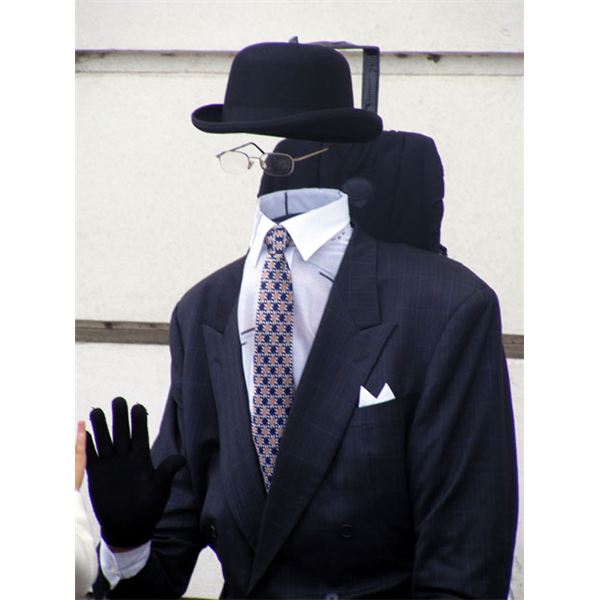
The Big Lebowski and Philosophy


Throw the [Damned] Ball

Throw the [damned] Ball is the title of the first chapter of Jeff Bridges and Bernie Glassman’s collection of philosophical anecdotes: The Dude and The Zen Master. This particular chapter details the deliberations that The Honeymooners character, Ed Norton, would go through when preparing to do things that the character Ralph Kramden would instruct him to do. When Kramden would instruct Norton to sign a document, for example, Norton would flail his arms out a number of times, and go through a number of other, hilarious deliberations in a presumed search for that perfect, inner place he had designed for signing a document that Kramden informed him was important. The joke was that it was just the signing of a document, but that the Norton character believed that it warranted a degree of importance he had a difficult time finding. These deliberations would carry on for an extended amount of time that the Ralph Kramden character found so exhausting that he would end up exploding with a “Just sign the thing!” comment.

Bridges brought this scenario to a bowling coach who was hired to inform the cast of The Big Lebowski on the mechanics of bowling in a manner that would appease most bowling aficionados that happened to see the film. The deliberations that the bowling coach went through –pausing to include the necessary notes on the intricacies involved– carried out in a manner that Bridges found reminiscent of Norton’s deliberations, until Bridges said:

“Anyone ever tell you to just throw the [damn] ball?!”

The bowling coach’s friends found that response hilarious. The bowling coach, being a bowling guy and a philosophy freak, had, at one point in his life, tried to find the perfect harmony between mind and body before throwing the ball down the lane. This search, he confessed, could take as long as five minutes, until his friends shouted: “Just throw the [damn] ball!”

The import of the tale is that some of the times, we can get so locked up in our search for perfection that we end up forgetting to just do whatever it is we’re trying to do. And, it could be added, the repetition of doing whatever it is we’re trying to do can prove to be far more instrumental to learning than thinking about it can.

We all fall prey to trying to perfect what we do by doing something different or something more this time out to rectify, or improve upon, what we did in the past. Our antidote is to do more, less, or less and more. When we write out a resume, we seek more information, but we know that headhunters want less, or more information in a more concise manner. When we write a report for our current employer, we try to stick to the less is more principle, but we often have to add more for clarity. When writing an informal email to a friend, or an internet article, we know we’ll lose them with too much information, but we can’t help adding that extra paragraph of complete nonsense that drags on too long. It’s funny though, interesting and educational. All right, educational is a bit of a stretch, but … what if we, flipped this whole thing around and added a little here and there, and we know we don’t need that exposition, because it’s… “Just throw the [damn] ball?!” 

There is this desire, in all of us, to add the perfect cherry atop the pie, or if that particular cherry isn’t perfect enough, we may try adding another cherry, and another cherry, until the pie is so perfect that it now has so many cherries, that it’s a cherry pie, and that’s not what we intended. Plus, all those other cherries have cost the cherry atop the pie its unique, special, and tantalizing quality.

“There is always more information out there,” Bernie Glassman said. 

Writers often have to fight this urge to add more, when they’re editing an essay, a short story, or a novel. All original drafts are incomplete in some way, but the question every writer struggles with is the idea of whether that incompleteness is as a result of quantity or quality? Most writers want their pieces to be more: more persuasive, more provocative, and more relatable, but as we all know more is not always more.

More characterization can feel necessary when a fiction writer is attempting to make their character more relatable, and it may be in some cases, but in other cases it can be redundant, counterproductive, and superfluous information that ruins the flow of the material. More is not always more. Some of the times, it’s too much.

This brings us to the fundamental question of when do we reach a point where completion can be considered established? I’ve often found a unique harmony in three. One piece of information, or one example of a pro or con, doesn’t feel like enough to establish a relationship with the reader; two feels incomplete in ways that are difficult to explain, but you know it when you see it; and four feels like it’s too much more. Three, in most cases, has a harmony that rounds a point out. I’m sure if I discussed this predilection with a therapist, they would inform me that most of the fairy tales my mom read me contained the magical power of three. I don’t know if that’s the answer, but I do think there is some form of subconscious power in three.

“We’re all looking for perfection,” Bridges says to conclude the Just throw the [damn] ball chapter, “but perfection is often a past and future tense that we’re not going to achieve in the present.”  

Bridges speaks about the difference between reading movie scripts in rehearsal and reading lines before the camera. He says that when he reads a chunk of dialogue in rehearsal, he might walk away thinking that he nailed it. If that happens, he might spend the time between rehearsal, and going before the camera trying to memorize the pitch, the rhythm, and the pauses he used when he nailed it.

“Once that camera clicks on,” he says, “it’s almost impossible to nail-it in the exact same manner you did in rehearsal, because the conditions have all changed, and until you can learn to adapt to the current conditions before you, you’ll never be able to repeat the lines with any proficiency. I nailed it in rehearsal, why can’t I find that same place?

“Because,” he continues, “That place may have never existed, or it may not have existed in the manner you thought it did. A person can go through all of the deliberations of trying to find that exact same, perfect place again, and they can go crazy with the thought that they never will. Some of the times it’s better to just throw the [damn] ball.”

 Be the man they want you to be

Bridges talks about a fan detailing for Bridges the idea that The Dude’s characteristics, are nothing more than a manifestation of another of The Big Lebowski’s character’s needs. The fan said that at one point in The Dude’s life (a theoretical point that preceded the time span of The Dude’s life documented in the movie), the Dude became the Dude in all the ways that this Donald character needed a Dude character in his life. The Dude liked those characteristics so much that he may have incorporated them into his personae. The fan’s suggestion was that we’re all becoming different people at various points in our lives, based on interactions, events, and time. Some of the times, we don’t like those characteristics, and we discard them soon after we’ve fulfilled someone else’s short term needs, but at other times they fit us like a glove, and we incorporate them into our spectrum of characteristics.

When a momentous occurrence happens in one’s life, such as becoming a parent, few can move forward without that event affecting their character in some manner. If this momentous moment doesn’t affect a 180 degree change on us, it changes us in a gradual way that an infrequent visitor of our life may recognize, but those around us do not. We may have had parental characteristics in us before, but they were never tapped, until someone (the child) needed them.

After becoming a parent, a good husband, a responsible homeowner, and a quality employee, we might want to revert back to that character that our beer drinking buddies knew on a Saturday night, but in the aftermath of tapping into all those other characteristics, the beer drinking buddy characteristics feel false. You may want to become that fella that all of your drinking buddies knew, at least for one night, but you have changed in ways that make that character irretrievable. You may not know how much effort you’re putting into this, but your drinking buddies pick up on it.

There are also characteristics that we display for the expressed purpose of impressing others. The popular parlance for this is an ‘A’ game. Our ‘A’ game may be something we reserve for our grandmother, prospective employers, or that incredible blonde that walks by our cubicle every day. Some may say that displaying an ‘A’ game, if we reserve it for these temporary moments, is the very definition of phony, but what is phony about it? I had a friend who engaged in lecherous behavior with the hot blonde. She enjoyed it, and they developed a relationship based on that character. He was very different with me, and he was a respectful, young gentleman around his grandmother. We might follow the latter two examples with an ‘of course’ reaction, but anyone who witnessed the exaggerations between the way he acted around the blonde and the grandmother might confuse them with being phony. I know I did, until I realized that he was able to tap into those characteristics for the benefit of all parties involved. His grandmother enjoyed it when he modified his character around her, because she considered it a sign of respect. He enjoyed it too, because he could be a young kid again in her presence, and in some ways, he could be the person he always wanted to be. The blonde obviously didn’t want him to act that way around her. If she did, she would’ve either corrected him or simply walked away. Instead, she engaged in a level of competitive banter that ushered him onward and inward to capitalize on whatever crude characteristics he had. 

What if, in the course of this temporary display, we find some nuggets of our personality that appeal to us, and everyone around us, so much that we incorporate them into our spectrum of characteristics in the way the fan suggested the dude did to please Donald. 

We’re all changing, in other words, and we’re all affected by conditions, circumstances, and the people we run across, that we all  achieve some sort of compilation of reactions to the people around us that informs our personality.

That’s just your opinion

The goal of any writer should be to write a book that causes one to think in ways they would not have if they never picked their book up. If this was the goal of the authors of The Dude and The Zen Master, then I say mission accomplished. One glaring example is the That’s just your opinion section. We hear this often in our culture, when another disagrees with our opinion. My reply has always been, “Of course that’s my opinion. Where do you think I got it?” Glassman’s twist on this trope is that some of the times a person needs to say this to themselves. If that person has failed to the point that they’re devastated by it, it could be said that the characterization of that failure is just one person’s opinion, theirs. Others may see our failures, and they might form an opinion of us based on that failure, but people move on. When the smoke of that opinion clears, there is only one opinion that matters and survives, our opinion of ourselves. That opinion, Bernie Glassman says, is still just an opinion, one person’s opinion. If the subject of that opinion can convince themselves that it’s not a fact that they’re a failure, but an opinion, it might help them move on. While this may sound like a bunch of gobbeldy gook to some of us, if it could be used in a productive manner to lead more people to just throw the [damned] ball again without all of the complications of previous failures involved.

Impressions and Loopholes in the War for More


Have you ever met that person that gets every joke they’ve ever been told and knows the answer to every trivia question put before them?  We’ve all met people that specialize in an area, and we’ve all met those that take that to the extreme and accidentally develop tunnel vision for that specialty.  There are others that appear to know a little something about everything but specialize in nothing.  Then you have those rare individuals that appear to specialize in knowing everything about everything, and no one can trip them up on anything.

3a96c8b34ace31e0321b289d7dcc23ed66edb244_largeThis façade didn’t bother me when it was first erected before me.  I’ve met this type numerous times before, and their ego has never had any effect on me.  Most of these types are usually so focused on creating the impression that they know everything that they avoid those people in the room that they fear might know something.  Another aspect of their psychosis that has usually led to them leaving me alone is that creating an impression in another person’s mind is hard work, and it usually involves a great deal of concentration on convincing yourself.  As a result of this, most of them have already convinced themselves that they’re so much smarter than me that they usually leave those that don’t challenge that impression alone.  When a friend of mine informed me, with a simple, relatively innocuous smile, that his façade was not only created before me, but for me, it got to me, in a competitive sense.

It happened one day when a third-party friend gave the two of us the impression that she thought my friend knew so much more than I did.  It happened, as a result of the small smile that he flashed at me after this impression was made clear.

It all began with a joke that this third-party friend told us.  I made the mistake of telling her that I didn’t get the joke, and when she proceeded to explain it to us, my friend began echoing her explanation to leave the impression that he got the punch line.  He didn’t, but he pretended so well that she was left with the impression that he did. She even went so far as to compliment him on this. She said something along the lines of: “Why can’t ever get you?” There were no specific allusions to the fact that I was any less intelligent, but that was implied, and in that vein, my friend issued me a competitive smile.  The smile began as a general one that one normally issues in the face of such a compliment, and then right before he turned to walk away, he flashed it at me.

I’m not here to tell you that I was completely innocent in the progression that would occur, and that I don’t have my own psychoses that can develop in the face of what could be called a perfectly innocuous smile.  My confidence in my intelligence is such that I can better deal with outright challenges, and I can wave those off with the idea that the need to challenge me in such an overt manner probably says more about the challenger than me, but those relatively innocuous, and I say competitive, smiles get under my skin.

“Don’t you see it?” I asked this third-party person, as my friend walked away with that competitive smile all over his face. “Don’t you see the game he is playing?” The third-party friend confessed that she hadn’t, so I laid it all out for her. The answers I gave her concerned what my friend did, but I would not get to the more fundamental question of why he did it for years.

Jokes. The what he did involved my friend uncovering various loopholes that all humans have in their interactions.  Most of these loopholes are not obvious, and they allow those that locate them to conceal the limits of their abilities. When I write the word ‘limits’ I hope that no one thinks this piece is written specifically for the purpose of exposing the limits of my friend.  We all have limits, after all, and we’re all scurrying about trying to prevent others from seeing them, but some of us are more successful in covering them up than others.  Some of us avoid issues that may reveal our limitations, and others simply learn how to roll with the crowd in such a fashion that their limitations simply aren’t considered.  My friend had managed to turn the latter into an art form by the time I met him, and it would’ve remained our little secret if he hadn’t gotten my juices flowing with that competitive smile.

The loophole that my friend found in leading a joke teller to the belief that he got the joke laid somewhere in the laughter that he provided them when their joke was complete.  It was in the thin “knowing” laugh that he had issued to this third-party joke teller to provide her a glowing compliment that she simply bathed in.  In the midst of this glow, most joke tellers don’t put the brakes on the laughter to find out why the laugher thought the joke was funny.  The joke teller will just join the laugher within the shared glow of appreciation, and they will remain in that glow while giving the explanation of the joke to that unfortunate soul that admitted that they didn’t get it.  During this explanation, the impression seeker will nod knowingly, and everyone will move on with their lives with the impression that he got it, until the joke teller says something along the lines of: “Why can’t I ever get you?”

Trivia.  My friend is smart, and he knows his stuff, but I don’t care how smart anyone is, there is always going to be someone, somewhere that will come up a joke, or a piece of trivia, that they won’t know. My friend found a loophole there too. After hearing a trivia question, my friend will sit back and offer no reaction. “Do you give up?” the trivia asker will ask after a time. “Tell me!” he will say. After they tell him the answer, he says, “That is where I thought you were headed,” and he will say that in a manner that gives the asker the impression that if they had only given him more time he would’ve come up with the answer.  At that point, he will increase their impression of him by showing a general knowledge of the chosen subject that basically provides them breadcrumbs back to the answer of the trivia question.  The breadcrumbs do not have to be specific breadcrumbs, but they’re breadcrumbs, and the asker is left with the idea that he knew the answer. The whole point is that my friend waits until after the answer is given before putting on his show, and this leads him to his impression of himself in the trivia world of being excellent at answering trivia questions.  Others believe this impression too, either because they aren’t so impolite as to suggest that he doesn’t get any of the answers before they give them, or they don’t spend enough time with him to spot the pattern.

I’ve laid out these breadcrumbs myself, I think we all have, but I’ve always prided myself on laying out my breadcrumbs in a specific manner that specifically points to the answer of the question. But, and this is the key distinction, I will always admit if I flat out didn’t know the answer the question, or if it was on the tip of my tongue, or something I feel I should’ve known.  I offer no illusions about my intelligence, in other words, but I’m more confident of my intelligence than my friend. I only get competitive when people point out that he’s more intelligent than I am, because he achieves that plateau in what I believe to be a false manner, and it’s that false manner that I want recognized more than my comparative level of intelligence.

Another loophole my friend has exploited in the human condition is the need most people have to be impressive. My friend initiates this loophole by turning your need to be impressive back on you.  You tell him something to impress him.  He’s not impressed.  Most of us are insecure in this manner, and most of us will then begin to focus our need to be impressive on that one person that isn’t impressed with us.  I fell for this at first. I felt an overwhelming need to leave him impressed. I would show him why I thought I was interesting and impressive, and I would try to show him that I was funny.  He wasn’t impressed.

It wasn’t too long before I realized that I had accidentally become more impressed with him, because he wasn’t all that impressed with me.  I had accidentally foisted upon him the status of being a barometer of what the two of us should deem as impressive, because (and here’s the key) he poked holes in all of my attempts to be perceived as impressive.  The one thing that neither of us had bothered to do was examine if he was, in fact, impressive. Our focus was on me, and by focusing on me, we provided him the status of being one that analyzes another’s attributes from on high. I allowed him this stature, until I figured it all out, and it annoyed me when others proceeded to do the same without putting any effort into studying how he had manipulated their interaction. I wanted this phony to be exposed to the world, and I told everyone we knew what he was doing, until I believed we had all achieved a degree of awareness.

Missing components. What I accidentally tripped on, years later, in the course of studying what he did was why he did it.  I wasn’t looking for an answer, when I interrogated him on an almost daily basis.  Anyone that has made the decision to be my friend can attest to the fact that being subjected to interrogations is the gift/curse of being my friend.  The answer didn’t occur in one “aha!” type of epiphany either.  It just kind of occurred to me over the course of years that my friend had a vital component missing that he concealed within all of the impressions he created for others.  There was a loophole here too, of course, a loophole that when you create your own impression others will either believe it because they don’t necessarily care if they’re wrong, or they are so involved in creating their own impressions that they don’t notice any of those occurring around them.  Sifting through all these impressions, I accidentally uncovered that fact my friend did not care for rebellion in any way, shape or form.  He would laugh when I described the various forms of rebellion I had engaged in, but when those moments came for him to display a little rebellion, he made it quite clear that he simply felt more comfortable within the confines that his authority figures had created for him.

This is not to say that rebellion completely forms a personality, or that a person that won’t rebel is always somehow incomplete.  I’ve seen those that refuse to rebel achieve happiness, and a sense of completion, within authoritarian constraints.  I’ve also seen those that solely define themselves through rebellion end up accomplishing so little in life that rebellion was all they had, and they used it in a competitive sense to define a sense of superiority against those that weren’t as rebellious.  This friend of mine was trapped somewhere in the middle, and it exposed an essential missing ingredient that suggested that the difference between him and those that he sought to deceive by manipulating their impressions of him was not so much whether or not he eventually decided to rebel against something, but why he wouldn’t.

What was the reason my friend hadn’t rebelled against everything he could find, like the rest of us had when we were teenagers?  Why hadn’t he as much to drink as a teenage body could handle?  Why hadn’t he tried to have sex with as many women as humanly possible?  Why hadn’t he tried drugs?  Did it have something to do with the fact that he was simply more responsible than the rest of us?  Was he simply smarter, and he understood the ramifications of such actions at an age when the rest of us were just stupidly going about doing whatever felt good?  Or did he just have a better parent?  And if his parent was better, was my friend’s aversion to rebellion based on the fact that he assumed that his dad provided such a sound case for not indulging that he wanted to follow his dad’s golden rules, to emulate this man that he so revered? Or did he simply not have the fortitude to rebel? Therein lies the essential ingredient that I believe is missing in my friend that most people, that don’t know him, don’t see. He was so scared of disappointing his dad that he failed to indulge in that time-honored, teen rebellion against authority that provides characterization to those of us that believed our parents were wrong about everything.

Those of us that rebelled against anything we could find, thought we were righteous warriors on the road to an ultimate truth that only we could define. We eventually found that we were wrong about most things, of course, and that we didn’t know everything, but something about traveling through that natural course of life defined us in ways that my friend lacked.  We discovered these truths the hard way, and these discoveries incrementally defined us.  Those, like my friend —that never rebelled in any substantial manner when they were young— walk around in their adult worlds with some necessary ingredient missing that they are never able to locate, so they just decide —over the course of failed interactions— to fill the gaps in themselves. They decide that no one is really looking at them with much scrutiny anyway, so no one will ever find out that they had simply created impressions of themselves for others to feed on —with fibs, and façades, and affectations— that gives those around them the idea that they are complete.  They never expect another individual to get so close that they notice.

This missing component was difficult to find too, even with someone scrutinizing him as intensely as I was, because my friend was guarded.  He talked about being guarded too.  He spoke about the fortress that he had created around himself, and how few were admitted entrance.

“You’re lucky I let you in,” he said. “I don’t let most people in.” I felt complimented by this.  Who wouldn’t?  It wasn’t until I sat back and thought about how few were clamoring for entrance that I realized that he said this for impression’s sake. The impression that most “guarded” people want to leave is that thousands are banging at the door, and that if those people don’t act right, they are denied entrance.  Most of us, like my friend here, actually have very few banging on our door, but what if they were?  How would we keep them out?  It is here that I believe my friend came up with the ideal barricade to his inner sanctum: he wasn’t very interesting.  If you don’t want people in your inner sanctum, states the logic of the ideal barrier, be boring, be quiet, and exhibit very few traits that people are interested in. If you can accomplish that, most people won’t notice you, they will not want in, and your inner sanctum will be protected.  If the Chinese had only considered my friend’s idea of displaying wares no one wanted, they would not have had to build that Great Wall thinger diller.

It should be noted here that my friend is a good guy, and I do not believe that he sat down one day and devised a strategy to create false impressions, and fool people into believing he was more than he was by exploiting all of the various loopholes that occur within human interactions.  He is not a dishonest man, and he never set about to mislead people into believing that he had a game show host’s type of charm.  He is simply an insecure man that has learned —through failed interactions that have exposed his weaknesses— how to protect himself from ridicule, scorn, or the idea that he might be inferior or limited in any way.  Other than learning through painful exposures, he probably took note of how others created impressions, until he became a hybrid of all of them.  On that note, some may think me cruel for scrutinizing him to the point of revealing him, and there were occasions when I did feel bad about all this, but any time I let my foot off the gas, my friend saw this as a moment of weakness that he seized upon to attack my character.  My friend was no wilting flower, in other words, and most of the intense scrutiny I directed at him was borne of the competitive exchanges he and I have always engaged in.

These missing elements in my friend became so obvious to me, after a time, that when he tried to turn our friendship back to the stage where I was hell-bent on impressing him, it no longer mattered to me what he thought, because I knew that that sword he used to prod my weaknesses was actually a shield he held out to prevent further investigation.