“Doesn’t he have cable?” Rodney asked, referring to our co-worker Russell Hannon. Some laughed hard, the rest of us tittered through our cringe. We couldn’t help but laugh, because it was spot-on, but it was so spot-on that we thought it could be misconstrued as a little mean, which made us uncomfortable. I tittered after a pregnant pause. I was so drenched in thought that I didn’t hear anything said afterward, because I thought Rodney nailed it so well that he probably didn’t know how hard he nailed it.
Russell was so weird, strange, or just plain different that we didn’t even bother analyzing it, discussing it, or devoting much thought to it. It was such a given that when someone dropped a “Man, he I weird,” or “He says such weird things,” we just dismissed it with a “That’s just Russ.” We never considered the idea, until Rodney alluding to it, that the man could be operating from a different frequency. We never considered the idea that with some small variations, we’re so on the same wavelength that we’re speaking the same language, and we don’t even notice it anymore, until a disruptor comes along and defines it by contrast.
Everyone liked Russell, he was a nice guy. Uncomfortable? Yes. Easily embarrassed, unsure of himself, needy, all that, but he was such a pleasant and unassuming type that we were all cheering for him. His over-the-top efforts to fit in with the rest of us were often so cringeworthy, however, that Rodney’s comment echoed what we were all thinking.
Prior to Rodney dropping that line, someone else called Russell Hannon “the round joke killer.” That joke didn’t land in the moment, in the manner Rodney’s would. It was true, but it wasn’t hilarious. “It’s what we call a snowball joke,” Clark Dunn said after a few of us began using it when Russell killed another one of our round of jokes. “It’s a joke that gathers as it gathers.” A round of jokes can be similar to singing in rounds in that they often start with someone telling a slightly humorous story from their day. These stories are often so true that they’re humorous but not laugh-out-loud funny, until listeners begin adding their comments and/or potshots directed at the storyteller. These rounds also gather as they gather, until they eventuate into a big old ball of laughter.
Anyone who has worked an overnight shift knows how starved the staff is for entertainment, and the rounds can be the cure for all what ails us. We cherish every joke, appreciate any decent form of entertainment, and we all want to add to keep the ball-a-rolling as long as we can. As such, it can be almost impossible to kill the momentum and the stop the laughter, but Russell brought all the laughter to a crashing halt, night after night. He often added comments that were so weird and so incongruent that we’d all stop laughing just to try and figure out how they fit. “The round killer strikes again!” someone whispered to another when he did it once. On another occasion, when someone started in on his story of their day, someone said, “Beware, the round killer!” in a voice as loud as the storyteller. We cringed. We didn’t look at Russell, fearing that any glance might give the joke up, but we cringed in his general direction. Thankfully, Russell was oblivious to the idea that the snowball joke was all about him.
Some of us laughed politely, sympathetically, at his round-killing comments, because we knew how hard Russell was trying. Others thought he was being obnoxious, but we knew better. We knew Russell Hannon, and we liked him. Our polite laughter must have encouraged him, because he kept killing our rounds. He did it so often, over time, that all of the round-killing and “lack of cable” jokes lost steam.
“What are you talking about?” Sherri Kudron asked him, and she had a mean face on when she asked it. “I swear you say some of the weirdest things, some of the times.” She later told me that she said that to try to encourage him to stop trying so hard.
Russell tried to explain his round-killing jokes at times, but most of the time, he tried to shrug off the silence that followed with notable embarrassment. Those of us who knew Russell better than Sherri knew he wasn’t trying to be weird, strange, or just plain different. He was trying to fit in. He just wasn’t very good at it, and I thought that was key to understanding the man.
The “Doesn’t he have cable?” comment didn’t put an end to our attempts to understand Russell, but it framed the situation so well that some of us thought it whenever Russell said something weird from then on. The comment also contained some multifaceted subtext that suggested one of the reasons we didn’t understand Russell was that we were all operating on the same mainframe, because we all grew up watching way too much TV. The brilliance of the comment, whether he intended it or not, was that it poked fun at Russell, Rodney himself, and us.
Whereas Rodney eased the confusion we felt by suggesting that the only reason we didn’t understand Russell was that he didn’t waste his life watching TV, I thought Russell’s oddities were more fundamental than that. I knew Russell better than Rodney did, and I heard him make so many odd, incongruent comments that I didn’t think a lack of cable growing up captured the essence of Russell’s nature. Russell, I thought, wasn’t just the odd duck Rodney made him out to be. Russell Hannon was a Platypus Person.
The Weird, Strange and Just Plain Different
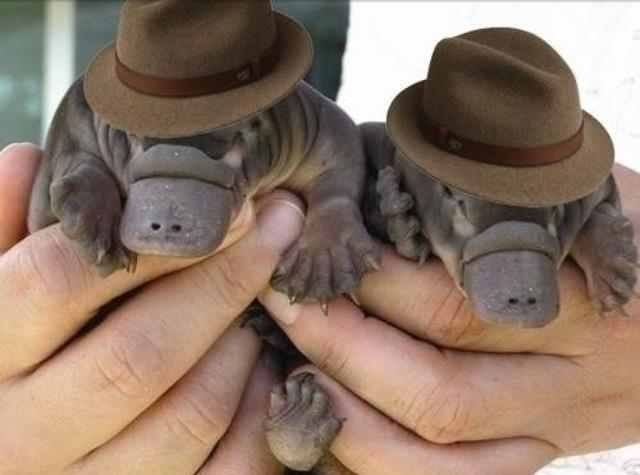
Platypus People do not have a duck’s bill or an otter’s body, but in many ways they are almost as foreign to us as the semi-aquatic, egg-laying mammals were to members of the scientific community in Britain when they were first introduced.
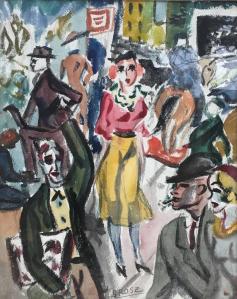 These weird, strange, and different people tend to stray from a premise we might not even know that we share, until we hear someone say something so shocking and so far outside the mainframe that we think it suggests they’re operating from an altogether different one.
Members of Britain’s scientific community were so rocked by the appearance of the platypus that they thought it was an elaborate and well-conceived hoax stitched together through taxidermy. It shocked them, because they thought they had a comprehensive catalog of the animal kingdom before its introduction. Those of us who have had some experience with Platypus People empathize, for before we met them, we thought we had a decent catalog of human nature.
We did not physically dissect the Platypus Person to try to discover the truth. We did probe, however, and we came away thinking they were genuine, unlike those Brits who remained skeptical even after seeing a live platypus, but we had no idea how to process the things they said. The more we learned more about our Platypus Person, the more that shock turned to intrigue as we began to think that their funhouse mirror perspectives might tweak our worldview.
The Different and The Different
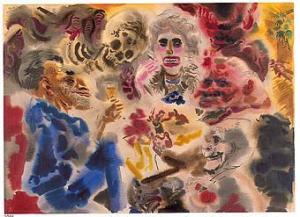
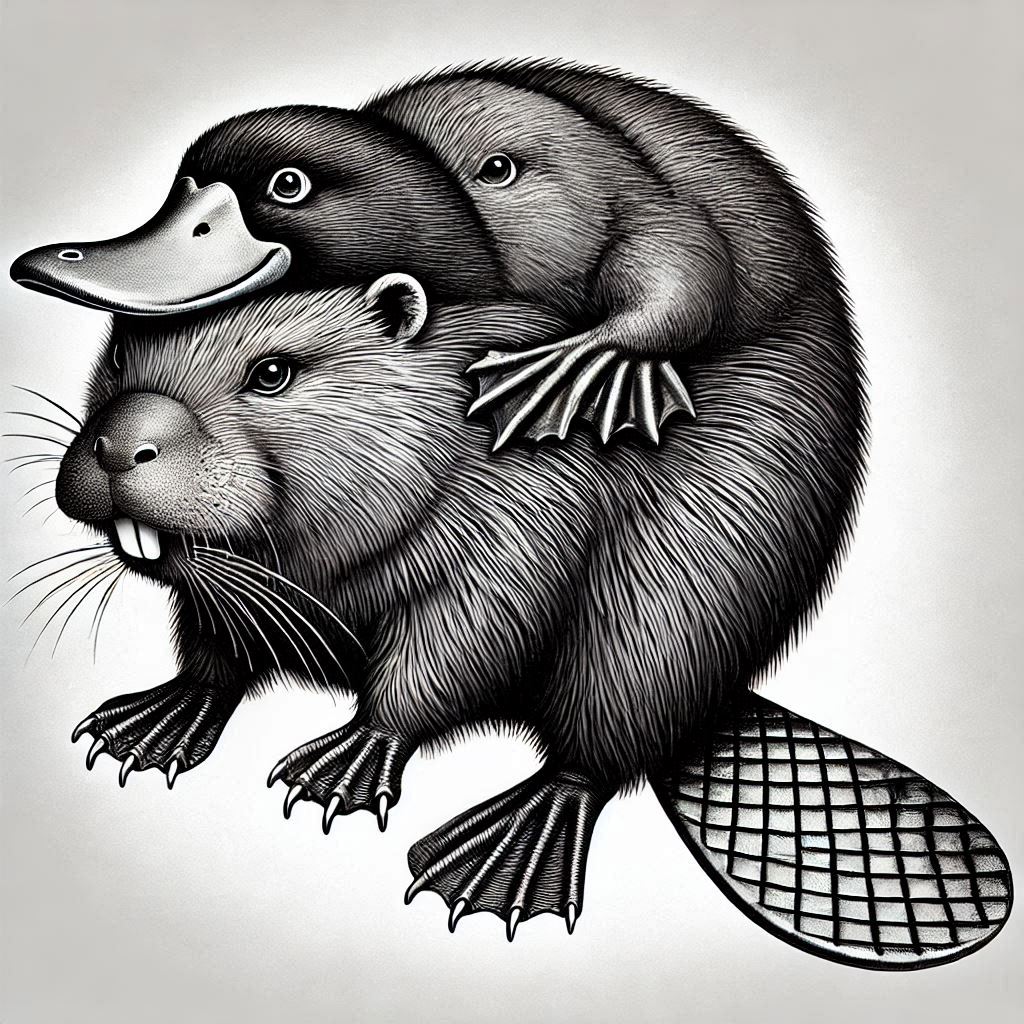
Platypus People are perfectly normal in their own home, but if we’re on the outside looking in, they appear weird, strange, and just plain different. We won’t know why they’re different if we see them in a supermarket aisle, but we know it when we see it. If we meet them in the workplace, at school, or in any venue where we can sit with them, talk with them, and really get to know them, we begin to see their duck-like bill, the webbed feet, and the beaver-like tail.
Through them, we also see the difference between those who exhibit organic differences and those for whom weird, strange and just plain different thinking is a bit more contrived. The latter are weird for the sake of being weird, they disagree just to disagree, and they follow the edicts of their overlords to become cool. “Dare to be different,” they say, but what is different? Their definition of different is often the same as everyone else’s, and we learn this by comparing and contrasting them to those who genuinely operate from a different premise. When viewed through this looking glass, we learn that if we’re all the manufactured the free-thinking, independent spirits we see on TV, then none of us are, and the channel the Platypus People are on affects us in a manner that motivates us to learn everything we can about their philosophy before we reach whatever version of a philosophy we consider our own.
When we meet someone who appeared to go through the same intellectual progressions we did, only to arrive at an entirely different conclusion, we want to know how they did that. When we meet someone who obviously went down so many different roads, we don’t know how to approach them, and they make us feel uncomfortable. Some of us shut them off. “He is just so weird,” they say when they explain why they leave the room as soon as he enters. Some of us enter that room he’s in, because we want to know what makes him tock (as opposed to tick), and we want to know the anthropological origins of his thought process.
As much as we tried to defend Russell Hannon, we knew he was “just so weird,” and operating from a different premise. The question was how did he arrive at such sensibilities? The reflexive reaction is to suggest that “he didn’t have cable?” growing up, but I thought it went deeper than that. I might’ve been wrong then, and I could be wrong now, but I wonder if someone as different as Russell Hannon, and his Platypus People peers, are born and raised from a different premise. If we were able to gain an intimate perspective on his parents and grandparents, would we see evidence of some of the hundreds to thousands of tiny, day-to-day adjustments he made to their vision of the world? Do the underpinnings of the Platypus Person lay deep in the roots, past the parents, to the grandparents, great-grandparents and beyond?
Such a discovery process would be complicated, fraught with a battle against subjective search for answers, and possibly a need for some large earth moving equipment to dig through the layers, but we might find an answer beyond “Doesn’t he have cable?”
Jokes, like those, help us avoid the need to understand better, it allows us to dismiss what we cannot understand. “You’re right. He is just so weird. Buh-bye!” It’s rare that we consciously dismiss another based on a couple jokes, but when those jokes are so spot on, we will have them bouncing around in our head in all future interactions we have with the Platypus Person. The next time he says anything off the wall, we can just say, “Aren’t you the guy who didn’t have cable growing up?” and walk away laughing.
Some witty types, like Rodney are so quick that they can sum up an hours-long discussion in one, quick hilarious line. Some of us are processors who need time to process information, and we enjoy hearing from numerous sources before forming a conclusion. We might obsess over such matters so often that we’re considering a search through their family tree for answers, but we can’t understand how someone can come up with a quick, almost-reflexive line like “Doesn’t he have cable?” and consider the matter settled. Do they develop this ability, because they are more comfortable in their own skin and that confidence allows them to swat different, complicated thoughts away? Or, do they develop this ability to come up with a quick assessment of a person, because they are so insecure that they need to thwart unusual thoughts before they question the fundamentals of their being? Is it a defense mechanism they use to help them avoid dwelling or obsessing on such topics, or do they consider most of the mysteries that plague the rest of us settled?
Being Weird is a Choice
 I realized this matter was far from settled for me when I met some weird, strange, and just plain different types in the years that followed my interactions with Russell Hannon. One of the best ways I found to define a relative term like weird is to define what it is not. It is not, for the purpose of this discussion, strange. The term strange, by our arbitrary definition, concerns those afflicted with natural maladies. They had a variance inflicted upon them that they could not control, and they could not escape its influence. As opposed to a person we might consider strange, a person who chooses to be weird, can easily find their way back to the premise. They simply choose, for a variety of reasons, to step away from it for a moment. Platypus people, however, have no natural maladies, but they cannot find their way back for reasons that are less philosophical and more anthropological, as their philosophical makeup has been passed down their genealogical tree.
We don’t define these separations to be nice, though we do deem it mean-spirited to mock, insult, or denigrate anyone who arrives at their differences in a more natural manner. We don’t create this rhetorical device for our readers to consider us wonderful, more understanding, or compassionate, but we deem those who go out of their way to poke fun at the strange to be lacking in basic human decency. We also don’t want to leave the reader with the impression that we might be more normal, or more intelligent, than any of the species on display in these articles. We design this arbitrary separation for the sole purpose of providing classifications for those who had no choice in the matter, against a backdrop of those who inherited their oddities or chose to be weird through the odd decisions they make in life.
The Strange Psychology
We might think anyone who chooses to be weird must suffer from a strange psychology. In my experience, it’s quite the opposite. For most of us, our decision-turned-need to be something different started out as a form of rebellion in our youth. Our parents, and various other authority figures, had a strong philosophical and spiritual hold on us. They set the premise from which we were to operate for the rest of our lives, whether we enjoyed it or not. Most of us didn’t enjoy it, of course, and we sought to break those shackles in any way we could. For some of us, this involved momentary and situational breaks, but the rest of us sought total philosophical freedom. We wanted to be perceived as weird, strange, and just plain different as those we were conditioned to dismiss and avoid by our friends and family.
My dad sensed this early on, and he did everything he could to guide me toward a more normal path. Through the decades that followed, he attempted to correct my weird ideas with more sensible, normal lines of thought. “That isn’t the way,” was a phrase he used so often that my refusal to acquiesce to his more structured ways of the world was one of my primary forms of rebellion. There were so many intense arguments, and debates in our household that no observer could escape it without thinking that it was, at least, combustible. Before we explore the ways in which the old man was strange, I would like to offer a posthumous thank you to the man for putting so much effort into trying to make me normal. I now know, through decades of reflection, that he did his best to overcome his own obstacles to provide his children the most normal upbringing he could.
I rebelled to the relatively strong foundation he built without recognizing the luxury I was afforded. The primary reason for my gratitude is that some of the more organic weird and strange Platypus People I’ve met since I left my dad’s home led chaotic lives that can be a little scary. They came from very different homes, with a less than adequate foundation, and they ended up expending as much effort trying to prove they were normal as I did to be considered weird.
This premise is often generational, as our parents pass on the fundamental knowledge they learned from their parents. As we age, we begin to see the cracks in that foundation. At some point, we assume our parents are so normal that they’re boring. They might have some quirks but who doesn’t? They might even have more quirks than others, but doesn’t that just make them quirky? When we add these quirks up, as we age and gain a more objective perspective, and we compare them to others’ parents, an uncomfortable, irrefutable truth emerges in this dichotomy: Our parents are very strange people. They aren’t just mom-and-dad goofy weird, like we thought, they might have some serious, bona fide, almost clinical, deficiencies. If we reach that very uncomfortable conclusion, we know we can no longer find comfort in the idea that our parents just have some different ideas about some subjects.
This revelation can shatter many of our “that’s just dad” illusions and delusions that we had when we witnessed, firsthand, so many confusing elements of their thought process, but it wasn’t until we put all the pieces together that that uncomfortable truth emerged.
After that relatively daunting epiphany clears, a sense of satisfaction takes its place. Our rebellion to their quirky ideas was the right course for us to follow, and we now see how justified we were. At some point in our various stages of processing this newfound information, we realize that for much of our life, our parents were our beacon of sanity in an otherwise confusing world they were charged with helping us understand. When we couple that information with everything else we’ve realized, it’s no longer as funny as we thought it was. We reach a point where we want/need them to be normal, and we ask them not to express themselves in front of our friends, because if our friends learn how strange our parents truly are, how long will it be before they connect those dots back to us?
My dad was abnormal, to say the least. Some might say he was a kook, and others might suggest he was an odd duck. In the frame we’re creating here though, he was a Platypus Person who was difficult to classify. Either he was born with certain deficiencies, or they were a result of self-inflicted wounds. One could say that those self-inflicted wounds were choices he made along the way, and if that is true, I believe he made them as a result of some of his natural deficiencies.
The point of writing about the man’s deficiencies is not to denigrate the man, but to point out what separated him from what one would call a normal man. Those deficiencies plagued him, and he put forth a great deal of effort to convince the world around him that he was as normal as they were. The trials and tribulations he experienced in this regard marked his life, and he didn’t want his children to have to go through what he did. He didn’t want anyone to consider us as abnormal as he was, so he tried to establish a normal home without too much chaos. In his subjective approach to life, he thought fitting in with others and being normal were the keys to happiness, and he tried to pass that along to us. I rebelled to those teachings, because I couldn’t see his efforts for what they were at the time. From his perspective, he provided us a graduated premise of a more normal premise, a luxury that we chose to violate by being weird.
Even after years of reflecting on this, and recognizing what my dad’s efforts for what they were, I still like to dance in the flames of the weird, but once the lights come up I’m as normal now, and as boring, as everyone else. As hard as my dad tried to force normalcy on me, however, he couldn’t control the impulses I had to indulge in the artistic creations that glorified life outside the norm. I knew weird ideas were out there, and I pursued them with near wanton lust.
When I left the relatively normal home my dad tried to create for us, I ventured out into a world outside the realm of his influence. I lived the life I always wanted to live, and I found weird, oddball philosophies so intoxicating that I had trouble keeping them in the bottle.
My dad’s overwhelming influence on my life was such that I preferred the company of normal people long-term, but I was always eager to invite weird people in for a brief stay to challenge my status quo. Their brief stay would present me with different and weird ideas of thinking, weird platitudes, and oddball mentalities that shook the contents in my bottle a little bit more. I needed to know what made them tock (as opposed to the ticks we knew all too well). I became obsessed with the abnormal to find out what made them different, or if they were, and I had to deal with him, my friends, and other family members telling me that I should be avoiding these people, because they weren’t just weird. They were strange. I couldn’t, I said, not until I consumed all that they had to offer.
A Piece of Advice to the Young Weird Wannabes
 If there are any young people seeking to disappoint their parents, and anyone else who has expectations of them, in the manner we did, we have one word of caution. Pursue the life of a freak, become that rebel that makes every square in the room uncomfortable. Violate every spoken and unspoken cardinal rule of our culture, and become that person everyone in the room regards an oddball. Before going down these roads, however, an aspiring rebel needs to consider learning everything they can about the conventional rules that they plan to spend the rest of their life violating. Knowing the rules provides us a blueprint for successful rebellion.
All rebels think they know the conventional ways of the conventional, and they might think there’s no point in studying them, but if there’s one thing that I learned as an aspiring rebel, and in the many conversations I had with other rebels since, it’s that a rebel needs to know the rules better than the squares do. The violation of rules and social decorum comes with its own set of principles and rules for those seeking to violate in a constructive and substantive manner. Failure to learn them, and the proper violation of them, will allow those who set the rules to dismiss a rebel as one who doesn’t know what they’re talking about, and a rebel without a cause.
Most rebels seek clarification and inspiration for the best way to rage against the machine, and their preferred source of inspiration are the screen stars who violate standards and upset the status quo in their presentations. These stars provide color by number routes to rebellion that are provocative and easy to follow. These manufactured rebellions also look great on a screen, but those seeking inspiration often fail to account for the fact that the screenwriters and directors of these productions manipulate the conditions and side characters around the main character to enhance their qualities. We all know this is true, on some level, but most of us do not factor it into our presentation. In real life, there are situations and forces that even a rebel with strong convictions cannot control. There are people who will present the rebel with scenarios for which they’re unprepared, and a failure to study the conventional rules from every angle possible, will often lead the audience of the rebel’s argument to forget it soon after they make it.
James Dean was A Rebel Without a Cause, though, and James Dean was cooler than cool. For ninety minutes he was, and with all of conditions and side characters portraying the perfect contradictory behavior he was. If you study films, books, and other stories from a perspective other than the offered one, we learn how the subtle art of manipulation can lead us to find the main character funny, fearsome, and cool. In these productions, the main character interacts with the side characters who represent the straight men, who represent the status quo. Those straight men are cast in their roles, because of their ability to sacrifice themselves to enhance a James Dean character’s rebellion as cool. The real life rebel cannot manipulate his conditions and side characters in such a manner to enhance their presentations in the manner all the behind the scenes players did in that movie. In real life, the extraneous players who outdo the uninformed rebel with corrections consider the rebel, a rebel without a cause, and a rebel without substance. They might even regard him as uninteresting, after the initial flash of intrigue with their rebelliousness subsides.
Our advice to all aspiring rebels is to listen to those squares who are so normal they make them throw up in their mouth a little, for they may teach a rebel more about what they’re rebelling against than those who feed into their confirmation bias.
Everyone has that aunt, uncle, or friend of the family who knew everything there was to know about “Good and honest living”. They teach us the elements of life that bore the (fill in the blank) out of us with their preachy presentations. They don’t know where it’s at, as far as we’re concerned. We seek entrée into the “Do what you feel” rock and roll persona that leaves carnage in its wake, and we debate her point for point in our ‘shake up the premise’ argument. We know the elements of our rock and roll lifestyle well, and they know their “Good and honest living” principles, but they can’t debate us point for point. When compared to the rock and roll figures of our culture, out aunt has poor presentation skills. She’s overweight and an unattractive child of farmers, and our favorite entertainers are attractive and thin who have strong jaw lines.
Our rock and roll philosophers taught us that life should be easy, judgment free, and fun. It shouldn’t involve the moral trappings of what is right and what is wrong. As long as no one gets hurt, a person should be able to do whatever they feel like doing. Viewing all of this in retrospect, however, we realize that our boring, pedantic, obese, and unattractive descendants of farmers family members taught us more in ten minutes than any of the entertainers did. The entertainers were just better at packaging their presentations.
The crux of our rebellion was that we wanted to expel whatever our body couldn’t use into the face of the mainstream. We want to be so weird that the “theys” could taste it. The responsible grownups who played such a prominent role in our development had a boring sameness about them, and the prospect of doing something different led to some growth in our undercarriage. They vied for this sameness in life, and they wanted the same for us, but no matter how hard they tried to make us normal, we continued to explore the abbie normal side of humanity.
A Conversation with the Weird
If we want to make friends and learn more about anyone who surrounds us, we need to gain their trust. The walls that Platypus People build around their vulnerabilities are more fortified than most. Building this level of trust requires spending quality time with a Platypus Person, and the only occasions I have been able to achieve an environment in which they feel free to speak their mind was in the prolonged confines of shared employment. On one occasion, I developed what we could call a cerebral crush on one of my fellow employees. We had numerous, fascinating conversations on a variety of unrelated topics. In one of our last non-work-related conversations, she replied to one of my stories with a, “Wait a second, did you just say you want to be weird? You actually want to be weird? People don’t want to be weird. They either are, or they aren’t.”
 Her response wobbled me. I thought she was trying as hard as I was to be weird. I thought we were soulmates in that regard, laughing at all the other people climbing all over one another to achieve absolute normalcy. I thought she was weird in all the same mechanical and inorganic ways I was. She laughed as hard as I did at some of the thoughts we shared. I thought she was being self-deprecating. I thought she was messing with peoples’ heads in the same manner I did. I thought she wanted to be considered weird too. I had no idea that the things she did and said were more organically weird, strange, or just plain different. Her response informed me that not only was this not a game to her, but I had no business playing with her toys. It also wobbled me, because I never heard anyone defend the organic nature of being weird before. The conversation went on for a couple minutes, but no matter what I said, she kept cycling it back to this two sentence theme: “People don’t want to be weird. They either are, or they aren’t.”
I would try, numerous times, after that conversation to steer her back to what I considered a fascinating topic, but she would have none of it. I wanted to know what she considered weird and what she thought it meant to be weird. I wanted her to point out all the differences she saw between between her and me, but unbeknownst to me, she considered that conversation over, and she found all of my subsequent questions on the topic condescending.
Therefore, I can only guess that the condemnation of my efforts was based on this idea she thought weirdness should be a birthright. It should be natural and organic. It was a ‘how dare you try to be one of us, if you’re not’ reaction to those who regard the organic nature of their oddities a birthright. She presumably regarded this as equivalent to a person who wears glasses to look sexier when they don’t have to wear them, an act that ticks off those required to wear them.
I felt exposed in the moment. I thought of all the attempts I made to have another consider me weird, and I thought of how inorganic they were. I felt like a fraud. As I said, my dad raised me in a manner that forced me to accept the norms, and I’m going to take another moment out of this piece to say something I didn’t when he was alive, God bless you Dad for forcing a foundation of normalcy down my throat. God bless you for teaching me the premise from which we should all operate and for creating a base of normalcy from which I rebelled, for without that base I wonder what I may have become if left to my own devices.
My guess was that this woman’s upbringing was probably chaotic, and she spent most of her adult life striving for what others might call normal. She was weird in a more natural and fundamental sense, and she condemned anyone who might dare play around in what she proclaimed her birthright, but there was also an element of sadness and misery in her being that was obvious to anyone who knew the details of her struggle.
Those of us who had enough involvement with her to know her beyond the superficial, knew that chaos dominated much of her life, and we learned that it led her to desperately seek the refuge of any substance she could find to ease that pain.
I realized through this friend, and all of the other Platypus People who have graced my life before and after, that there was weird and there was weird. There is a level of weird that is fun, a little obnoxious, and entertaining in a manner that tingles the areas of the brain that enjoy roaming outside the nucleus. The other level of weird, the one that we could arbitrarily define as strange, is a little scary when one takes a moment to spelunk through the caverns of their mind.
Was this woman a little weird? Was she so weird that we could call her strange by the arbitrary definitions we’ve laid out, or were her sensibilities so different from mine that she was operating from an altogether different premise from which I sought to classify her in some way to help me feel normal by comparison? Or did she just not have cable TV growing up?
When compared to all of my other experiences with Platypus People, she was an anomaly. Was she weirder than I was though? “Who cares?” we might say in unison. She did. It may never have occurred to her –prior to this particular conversation– to use the idea of being weird as a cudgel to carve out some level of superiority. In that particular conversation, it was for her, and she didn’t appear to feel the least bit unusual doing so. It appeared, in fact, to be vital to her makeup that I acknowledge that she had me on this topic. She was weird, and I was trying to be weird. Who tries to be weird? Phony people. That’s who. Check, check, check. She wins.
What did she win though? Some odd form of superiority? How long did she search for some point of superiority? How many topics did we cover, in our numerous, unrelated conversations, before she was able to spot one chink in my armor? If either of these questions wreaks of ego on my part, let’s flip it around and ask how many battles did she lose trying to appear as normal as her counterpart was? She needed a victory. I had numerous conversations with this woman before we drifted apart, and I never saw this competitive side of her again. She thought she had me on this one weird, strange, or just plain different topic, and I can only assume it gave her some satisfaction to do so.
Are you weird, strange, just plain different, or an unclassifiable Platypus Person? No one cares, you might say, and quit judging people with labels. Fine, but our subjective reactions to define anomalies helps us defines us. Some of us try to cut analysis short with a well-placed, quick joke, and others accuse anyone who obsesses over differences judgmental and lacking in compassion. Those of us who dwell (obsess) over these topics don’t understand how others can turn this part of their brain off, because we think our story lies somewhere in the sedimentary levels of the strange and weird Platypus People.
We all know some weird people, and we’ve encountered those who are strange, and some are so different that they’re difficult to classify. The one answer we could provide is that we all have a relative hold on the various truths of life, and those answers help us keep the idea of random chaos at bay. If you have had any prolonged involvement with a Platypus Person, however, you know that they have their answers too. Those answers might be different from everything we’ve heard before, but does that make them weird, strange or just plain different? The frustration that those of us who search for answers in life know is that some of the times there are no concrete answers to some questions. Some of the times, questions lead to answers and some of the times, answers lead to other questions, intriguing, illuminating questions. Am I weird, strange, or so different from everyone else that British naturalists might have trouble classifying me? Do these questions require the level of exhaustive analysis we devote to it, or does it have more to do with the idea that some of us didn’t have cable growing up?




 Rilaly