The Source Codes


“All I wanted to do was write a story about the Tortoise versus the Hare.”

I know but if you write that the tortoise is slow, won’t you be perpetuating a stereotype?

“We’re all just monologues, algorithms whirring, spinning tops bouncing off each other to build an unrivalled ensemble of narcissistic pathologies in skin suits,” he loved that line so much, he stole it. “We need to get back to our source code and dispense with all these other lines of machine code that programmers feed us to modify our thoughts and behavior.”

“We have a duty to be cheerful,” Martin Amis advised his daughters. “Be suspicious of the humorless.”

“We throw this line around a lot, but is anyone humorless? I’ve met some who come close, but I eventually found out their sense of humor was just more dark and cynical. Falling down was humorous to them, they enjoy bruises and blood, but for them to consider a joke hilarious, they want pain. They’re the type we could easily mistake for cheering on the downfall of humanity. Their sense of humor illustrates that the definition of humor is almost as varied as the sense of political identity, and it all boils down to this idea of a source code.”

What is a source code? According to built in “It is the foundation to a computer program and acts as written instructions that guide a program’s execution.” We have a similar code that basically guides our interactions with the nouns (people, places, and things) around us. Some call it our programming, but that word invites cynical speculation. Our definition of programming involves the detailed imprint left by the influential people from our maturation, and the experiences we have had that provide us our methods of dealing with the nouns we encounter. Our source code could be said to be the DNA of our programming. Depending on who we become, our sense of humor and political identity becomes intertwined as we grow into political animals. 

The reader might consider this a simplistic approach, but I think some political animals are born in the audience of situation comedies and comedians. It bothers us when we don’t get jokes that reference larger matters. It makes us feel immature and uninformed. It frustrates us when we didn’t get reference jokes, so we  study up on politics, until we arrive at this notion that “Everything is political.”

Say “Everything is political” to a large group of people, and most will say, “Well, it’s not to me.” Proponents of this notion will argue that if we drill deep enough into the sedimentary levels of everything, everything is political. I’ve met those who don’t even have to dig to find it. Some of them wish they hadn’t opened their mind’s eye to it, because they can’t turn it off now. They won’t laugh at a joke, unless it funnels appropriately. They hear, read and see it, searching for subtext in their never-ending search for points for their team, and they can only find humor in the vindictive and angry potshots volleyed at the other side. 

“How did that happen?” others might ask political animals. We can all offer simplistic and autobiographical guesses, but for most the answer to how we became so political is, “It happens.” We can’t properly source it, but we know it happens. The next logical progression to this question is, “Why would you do that to yourself?” Most of us will experience some semblance of an escalation to politics is everything and everything is political, as we learn more about politics and build a political identity around that knowledge. Our goal, at the peak of this mindset will be to convince everyone around us of the beauty of our newfound philosophy. As we hover around that peak, however, we will see the futility of believing and seeing everything as political. Not to mention the frustration. The frustration arrives when we realize that about 75% will never agree with us. There is political, and there is political. Everyone’s experience with this is different, but the quest for ‘everything is political’ puts us in a downward spiral that can lead to humorlessness and some perpetual sense of dissatisfaction that can lead us to this sense of being unfulfilled, and as Amis warned, we should be suspicious of them.

“I have a friend for whom everything from national to local politics dictates her mood,” he said. “If she greets me with a smile and follows it with a generally pleasant afternoon, I know something happened, usually on a national scale to vindicate, or validate, her worldview. I suspected that my search for her mood, relative to political events, may have been coincidental, until she greeted one of my happy days with suspicion. She and I don’t speak openly of our positions, of course, as it’s all feel and suspicion, but if we did, and I said, “No, I just happen to be very happy today,” something tells me that she would scour her newsfeeds to find the true source of my happiness. The “Everything is political” animals generally believe that everyone is as political as they are, but most of us are afraid to admit it.  

***

We all have different codes that we follow, pay allegiance to, and devote our lives, and most codes were written to feed the simple art of pleasing humans. Yet, some part of our innate reactions to their desire to please us leads to our almost instinctual dissatisfaction designed to require further appeasement. When we get our fast-food order, and we don’t find the errors until we get home, we complain, “They really need to slow down to make sure they get it right.” When we run across that fast-food employee who never gets it wrong, because he operates at such a methodical pace that it’s almost impossible for him to make an error, we complain, “I now realize I wouldn’t mind an error or two if that’s the price I have to pay!” 

If everything is political to us, we’re almost required to maintain a certain level of dissatisfaction. If we want progress, we can never be satisfied, lest we slip back closer to the status quo. If we want everyone to agree with us, we want them to hear our passionate argument fueled by dissatisfaction, frustration, and anger.    

“I note the etymology, the origin of words, and it’s always fascinating,” Martin Amis said. “‘Widow’, for instance means ‘be empty’, ‘torture’ means literally ‘to twist’. You look up a word … and find out more about it, then you feel a little grey cell burst into life in your head, as well as all the millions that are dying.” For Amis, language was a well from which he drew delight – and into which he gleefully, to our great pleasure, emptied sack after sack of melons.”

“You talk about the simple art of pleasing humans. Imagine finding a great word and being happy for a day? That’s a guy with a firm handle on his individual source code.”

“True, but the ‘everything is political’ animal has a firm handle on their source code too, and it makes them miserable.” 

“[But] I cannot make anyone understand what is happening inside me.”— Franz Kafka, The Metamorphosis

Why do political animals pursue that which makes them miserable? Why do we enjoy watching and playing sports and video games, when the pain of constant failure far outweighs the temporary satisfaction of accomplishment? It’s a statement that seems contradictory, or absurd, but in reality, it expresses a truth, and the truth about the paradox is that it’s all about us. It’s all about how we hear, see, read, and absorb information. As frustrating as it is, we keep feeding the beast. We’re the problem here, and we always have been. We’re the source of the problem, and the source code tells us that it’s we’re the ones who have been the making all of the mistakes all along.

***

Speaking exclusively to video games, my dad told us to “Just shut it off. If it makes you that angry, just shut it off.” It was so simplistic that we considered it hilarious. Just shut it off? Shut it off and presumably never play video games again? What my dad didnt understand, and we didn’t either, was that video games became a part of our hard wiring. Following politics, like playing video games, makes us angry and leaves us perpetually unsatisfied, but that’s kind of the allure. Quick question, what do gamers do after achieving the ultimate glory of solving a game? They/we restart the game to do it over again. Temporary losses don’t mean much to either animal, and temporary wins mean almost as little. They might not even take a moment to wallow in the glory. They just start over. 

We make mistakes when we chose to follow a source code. When we’re young and making messes where ever we go, they tell us to follow a code, then we see the errors of their code, and we rebel. If we want a reward, they say, we should follow their source code, but machine programmers whisper in our other ear that unless we want eternal strife, we’ll need to reject that particular source code. I didn’t believe those who coded me in my youth, because others helped me see that code for what it was, until I realized that their code required equal amounts of blind fealty. I went back and forth and forth and back, until I accidentally went so far beyond doing a 180 that I found myself turning 360-degrees to try to find what I considered a truth. 

Some coders can be quite charming, as they inform us that they, like us, don’t know fecal matter. They’re the “I’m not an expert, but …” crowd. They’re funny, we appreciate their honesty, and we find their presentation compelling and persuasive. When they say they don’t know what they’re talking about, it’s delivered with their clown nose on, and then they take that clown nose off to inform us that no one else knows what they are talking about. Thus, we’re supposed to believe them when they rip apart the foundation of our source code, because at least they’re being honest about it. 

“Have you ever tried following a source code?” I ask them. We get it from all corners. Everyone says we’re doing it wrong, even those following our code suggest that we’re doing it wrong, and some programmers tell us that we must be dumb for needing to follow a code in the first place. The only ones who seem to have any confidence in a code are those who don’t have one, and that is so much easier to defend. 

“I wish I could believe in something, but I’ve got nothing to believe in,” the unintentionally condescending tell us. “It would be so nice to know as opposed to having to think so much.” The latter is not an exact quote, but the sentiment and inference is that believing in something frees us from having to think and question matters as much as they do, which doesn’t account for those of us who question everything, until we eventually find some code for which we happen to disagree. Those who write code also suggest that other codes exist in an authoritarian realm that require blind fealty, without questioning whether the lines of code might agree our beliefs system as opposed to us agreeing with it. The question we should ask in the face of their certitude is “Are there any nouns (people, places, and things) for whom you express blind fealty?” Most will say no, but if we talk with them long enough, we will eventually find something. We will also find those who don’t believe in anything, and they find that their most admirable quality. 

Have you ever considered the idea that the source codes might not be the problem, and that it could be us? Our interpretations could be the problem. I thought I had all of my interpretations down, until someone offered me a new way of looking at what I thought I knew inside and out. It dawned on me that all of my interpretations were flawed, as flawed as I am. I knew everyone else’s interpretations were flawed, don’t we all, but I never considered the idea that I didn’t know squat. This has led me to a new interpretation of the qualifier: “…But that’s just my opinion, man. It’s what we were taught, and what we believe, but it could be wrong for all I know.” 

Courage in our convictions leads to comfort, but when we extend that confidence to denounce anyone who deviates from our code as those who will pay, “according to the source code,” it’s not time to denounce the source code, it an opportunity to question ourselves more, and our preferred interpretations. 

You have a code, I have a code, and it doesn’t matter what that source code is, it’s as flawed as you are, and as flawed as everyone who taught it to you and influenced you to add and subtract elements to it. Critics will tell us that the problem is not us, it’s our coders. Good for them, I say, you go girl, and all that, because the leader of any movement should welcome criticism, analyze it, and defeat it with performance. We shouldn’t dismiss it either. We should read it to determine if the critique is logical and reasonable. If it is, and it exposes vulnerabilities in our source code, we should adjust accordingly. We’ve all listened to leaders of movements, and some of those leaders have been taken out through irrational and illogical ad hominem attacks. The theme of these attacks is if we cut off the head of a snake, the body dies, but what does a quality leader do more than anything else? They codify the code. The make the complex understandable. They funnel all of the information into a focus that we use to funnel our focus.  

I’ve listened to everyone from the crotchety old, traditional professor to the young, emotional, and heartfelt avant garde artists. I’ve mocked both for their pursuits, and I’ve turned my back on each of them at various times, until, as I wrote, I ended up turning 360-degrees to where I am now. I can passionately speak with both sides to a degree they both think I agree with them, but running through it all is a ironclad beliefs system that is steeped in my source code.

Line cooks, bus drivers, and waiters and waitresses have all influenced elements of my source code, almost as much as the great thinkers of history. As with great athletes, great thinkers, leaders of movements, and influencers of a source code, make mistakes. These mistakes, and moments of failure, make them who they are. We won’t see their failures, or most of them, because they’re often committed in the gestation cycle, but they get better, and they learn. When a critic highlights those mistakes and failures, we shouldn’t question the leader or our movement as much as we question ourselves. Leaders and movements come and go, but if we’re doing it right, the critic’s allegations shouldn’t matter to us, even if true. We shouldn’t even have to delete the lines of code the leader influenced, because they’re ours now. Our message to the critic should be, the source code is not the problem, and it never was. It’s as flawed as we are, as flawed as that leader was, and as flawed as we all are. The problem that we’ve never considered before is that it might be us, all of us, and our interpretations. 
The Politics of Human Sacrifice


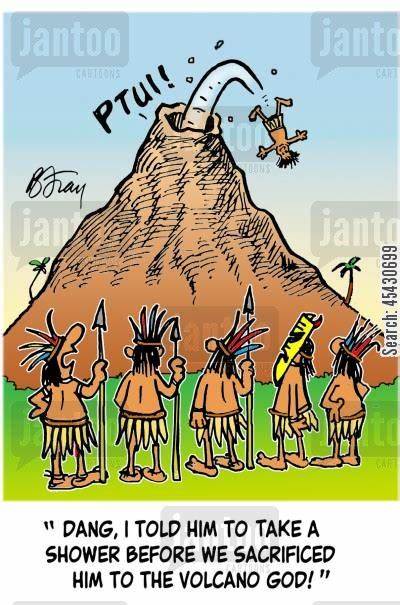
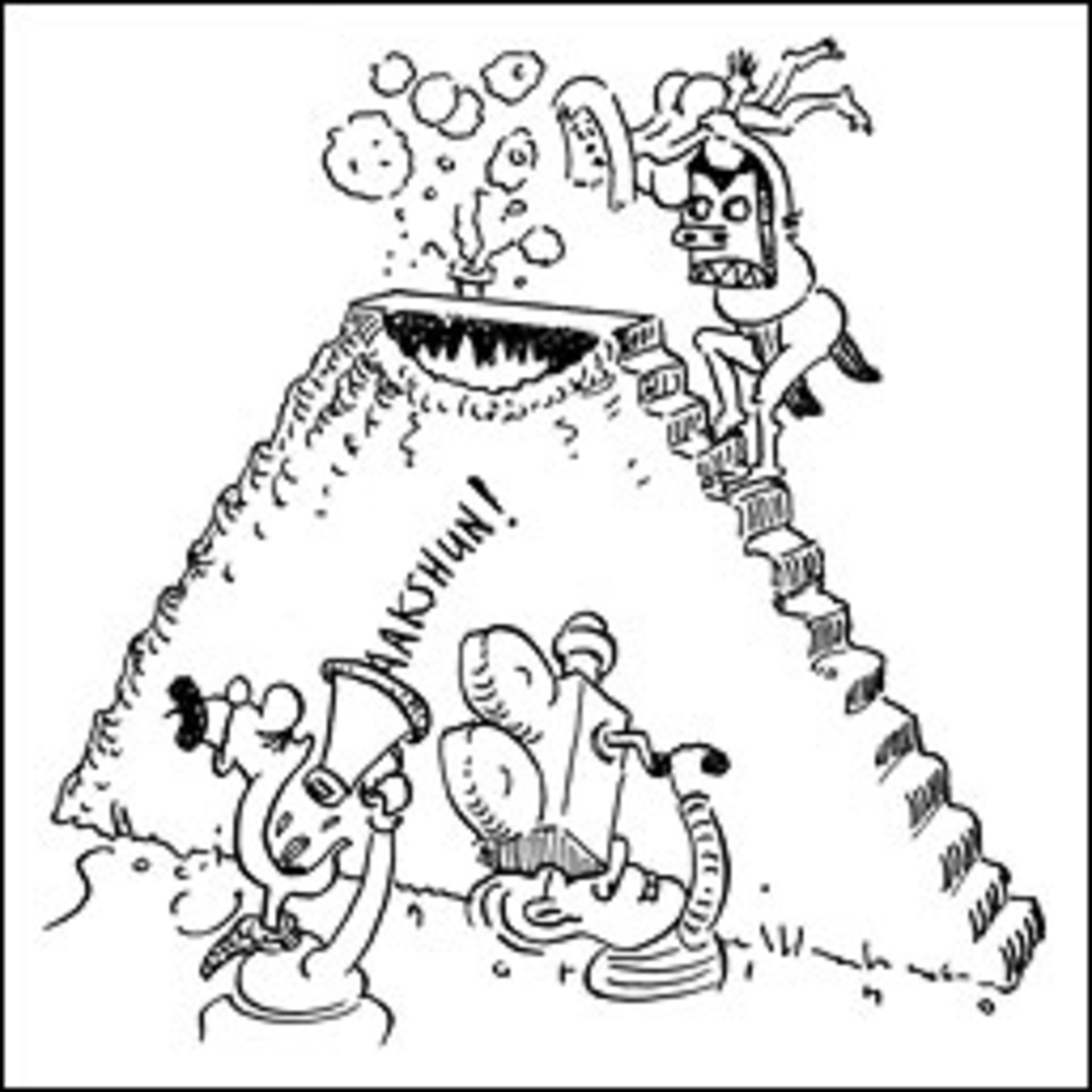
It might sound ridiculous to suggest that the history of human sacrifices involved politics, but to my mind, everything from human sacrifices to modern political theory boils down to the blame game. The United States has a long, documented history of national, state and local office holders blaming someone else for their failures. Inept leaders of other countries blame other countries for their failings, and some of them even seek to blame factions within their own country to explain away their failures, so no one holds them accountable. This version of the blame game often leads to the genocidal slaughter of their fellow countrymen, which often leads to civil unrest, civil wars, and wars with another country. Modern politics, and human nature, is such that politicians often take all the glory for everything good that happens during their reign, and they blame someone else, anyone else, for anything bad that happens, as a desperate means to shift blame and maintain power. If a group of people, a culture, or a society doesn’t know other countries exist, to whom do their leaders shift blame when situations turn desperate and dire: the gods. 

“The gods are angry,” Chief Emmitt says in his State of the Tribe Address. “I mean look at our year-over-year yields in corn and soybean, they pale in comparison to 2022. The Dore family, over here, have sacrificed more than their share of prized goats, and the Stanislavs tried all the rain dances they have in their arsenal to appease the gods, and they’re just not working this time for whatever reason. We’re not sure if we’re doing our rain dances correctly, but we have nothing to compare it to.

“The point is we’re trying,” the Chief  continued. “We’re all trying as hard as we can to bring rain. Our administration has tried as hard as could to do something, anything we can think of, but nine out of ten of our best and brightest economists are now saying that without citizen sacrifice some of their beloved family members all of our efforts will prove fruitless. No one wants to do this, but we need to look within ourselves and call on our friends and family to join together to help their fellow man through these dire times.

“To appease the gods, we all need to be more like our friend and neighbor, Barney Ruffalo. Stand up Barney! Barney told me, the other day, that he knows how much the gods have sacrificed to give the Ruffalo family the precious gift of life. He knows that the gods have blessed him with four beautiful daughters, and he has agreed to share his wealth with us by awarding our tribe his beloved Audra for appeasement. Barney told me, just the other day, that the gods have given him so much that he feels it’s time for him to give back. Please join me in giving Barney a huge round of applause.” 

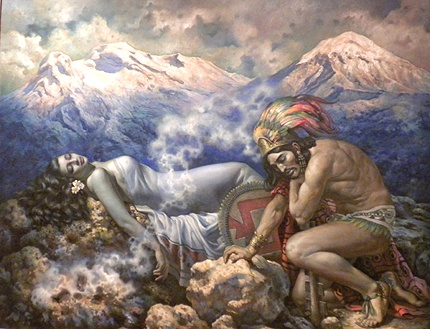
We can dismiss such notions, and ways of life as primitive, but they were still human, and humans have a whole lot of human nature in them. Human nature does not necessarily equal intelligence, of course, and we can debate whether the primitive things primitive man believed define how primitive they were, but they still displayed a level of intelligence greater than the other animals. They learned how to create fire, how to use tools, and they employed some mathematical principles and science to build homes, cities, and pyramids. They eventually developed complex forms of communication, and some of them engaged in various forms of art. They also developed various complex forms of trade and historically beneficial trade routes. We can also guess that even though we regard many of their practices as brutal, they displayed acts of sympathy, empathy, and some acts of kindness with their fellow countrymen and tribe members to elevate them intellectually and emotionally in the animal kingdom. No matter how many arguments we put forth in their favor, however, we can’t ignore the fact that they insisted that human sacrifices would help them improve crop yields. Why? The people were starving and desperate, and my guess is their leader needed a scapegoat. 

Group thought and historical traditions passed down from ancestors often inhibits rational thinking, but we have to believe that there were some thinkers in these cultures who considered the whole practice wrong, ill-conceived, and illogical. Those people were probably considered troublesome ninnies for focusing too much on the bottom line. 

“I know we’ve all arrived at this notion that sacrifices are mandatory, but if they are, shouldn’t we see some blanking results?” this ninny probably said after their initial sacrifices didn’t pay off. “We’re sacrificing our children, for what? Rain? I don’t see rain, do you? And why women? It just seems so arbitrary that we select our most beautiful young, virgin women for these sacrifices. Does Chief Emmitt select them because they’re more fertile and bountiful, with the hope that that will translate into greater soil fertility and more bountiful and consistent yields of high quality? Or, is it just sexier to sacrifice our young, beautiful people? Is it about soil fertility and consistent yields or is it more about the show?” 

Did they try sacrificing males in the beginning, and the gods replied was that those were just a bunch of fellas. “If you truly want ample soil fertility, through rain, to produce a better harvest, you’re going to have to fork over that gorgeous, little girl trying to hide behind her daddy. She would be a prized possession worthy of me.”

There were probably some, because there are always some in every culture, who enjoyed the inherent violence involved in throwing virgins into active volcanos. They probably wouldn’t talk about it in polite company, because how do you bring that up casually, but there was a secret part of them that found it kind of fun. There were probably others who considered the whole event, and the theater involved, a little exciting. We have to guess that these ceremonies were well-attended. I mean how often does one see a woman thrown into an active volcano? It was probably the antecedent to must-see-TV. Being the humans they were, we can also guess that some complained about their seats. “I was there, but I ended up behind that Monroe kid, and his over-sized melon, so I couldn’t see squat.” At that point in their history, they accepted the fact that sacrifices needed to happen, so why shouldn’t they be there to enjoy the show. 

“Hey, the Andersons are going aren’t they?” Mike Phillips said, during a disagreement with his non-compliant wife, “and they’re pretty smart people, right? Well, they’re basically convinced that it’s mandatory for the future success of our people. So, whaddya say we get the good lawn chairs out.” 

Were those who threw the virgins into volcanoes considered specialists in their field, or were they nothing more than anonymous and replaceable executioners? If it was the former, what kind of qualifications did the chief and his council seek for their specialists? Did the chief and his special advisers conduct numerous interviews and review resumes, or did they have tryouts? If Clark couldn’t hit lava with a ninety-pound woman, because he didn’t have the upper body strength, did they turn to Tommy, because not only did Tommy have the strength, but during tryouts he proved that he didn’t mind all the crying and screaming on the way up the mountain? If Tommy secured the position, how long could he do it? Even the coldest, darkest SOB eventually develops a conscience. They were primitive, but they were still humans with human nature in them. Did Tommy have an experience that sat on his soul? Did he still have nightmares about the time he was commissioned to throw a thirteen-year-old into a volcano after she developed such a cute relationship with his little brother? Did those constant images play on his mind so often that the nightmares led to a level of insomnia that played on his otherwise fragile mind until he was eventually fired? At some point, the Chief and his council knew that Tommy was no longer up to the job, but they were faced with the question, how do you replace such a sadistic person to carry this out?  

Why active volcanoes? I realize that they thought the volcano reached into a deeper part of the earth, but why did it have to be active? If the practice of human sacrifice was to fulfill a need, why didn’t they just shoot the virgin in the heart, or slit her throat? Some argue that while there is archeological evidence to suggest that human sacrifices happened, there is no evidence of the practice of throwing virgins in volcanoes. Proponents state that there is some documented evidence of third-party hearsay provided to explorers and missionaries, but opponents are skeptical, stating that the primary sources likely embellished the nature of the sacrifice to entertain these new faces.

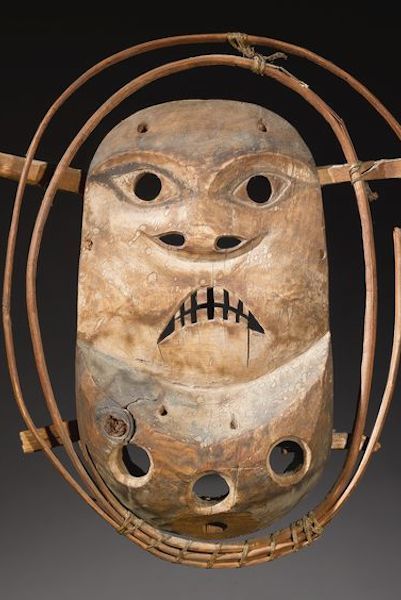
Regardless the method of human sacrifice, the archeological evidence suggests that most human sacrifices were quite theatrical. If they needed human sacrifices to appease the gods, why were they so theatrical? Any time modern man performs a religious service, they do so with some theater, or if you don’t care for the word theater or theatrical, how about ceremonial? Any time a human attempts to praise God or address Him in some sort of ritual, they feel the need to be ceremonial. Did primitive man perform theatrical rituals of this nature in the beginning, or did they amp up the theatrical nature of their human sacrifices over time, and did they do so to create a show that  entertained the people? Did the Chief and his advisers think that they needed more theater to etch “the show” into the minds of future voters, so they would remember the Chief’s efforts come election time? (There probably werent elections, but every leader faces some level of scrutiny from their people and they must always be wary of uprisings.) How did they progress to all future shows involving players wearing spooky and theatrical masks and war paint, and when did they decide to add musical enhancements to their production, to add an aura to the ceremony and complete the sensorial elements of current and future productions?

As with all leaders, Chief Emmitt’s reign was tumultuous and it remained precariously balanced on a fault line between factions seeking to unseat him. That also explains why the Chief, and his advisers, commissioned their laborers to create an ornate chair from which he would oversee the events. They needed to enforce, or reinforce, the Chief’s leadership mystique, and the memorable methods he used to try to solve their problems? No matter how great “the show” was, however, the Chief could not silence those factions vying for his throne. They continued to sow discontent among the citizenry.

“I know the gods sacrificed their lives to give us life, but why does Chief Emmitt always pick our Eastside daughters for sacrifice? Is it because we Eastside farmers traditionally produce lower yields? I mean, those Westside guys have natural advantages, living next to the basin and all. It just seems a little unfair, is all I’m saying.” 

###

“There had to be a first,” George Carlin wrote on the act of sacrificing humans. Human sacrifice was a traditional ritual that, in some cultures, dated back hundreds to thousands of years, but as with everything else, there had to be a first. There had to be a first leader, and a cadre of advisers, who persuaded their people that sacrificing prized livestock was no longer cutting it. How does that leader convince his group that, for the betterment of their society, mothers and fathers were going to have to step up and start sacrificing their children? How does a leader convince his people that sacrificing children is the next logical step?

My bet is Chief Emmitt had some smarmy policy adviser step up to reveal the harsh truth of the situation to him, “The people are against you, and our internal polling suggests that you’re going to lose your throne in the next election. To prevent that, we have to face some facts here. The whole bread and circuses campaign we devised has run its course, because the proverbial bread just isn’t there any more. Our people are starving, and no amount of entertainment will resolve their hunger. There’s obviously nothing we can do to make it rain, but I’ve devised a strategy we can employ to silence them until the next election, and hear me out before you poo poo it. We could try throwing our people into active volcanoes? We can start by throwing our more obnoxious people in, like that Murray kid, but we’ll evntually have to work our way up to our more precious people, people that everyone likes, such as women, young, fertile, and virgin women. It’s not a true sacrifice if you’re not sacrificing, right? We can tell them that by doing so, we’ll be appeasing the gods, so they’ll finally make it rain.” 

“What if it doesn’t work?” the Chief probably asked. “What if it doesn’t rain? The people will say I killed innocent children for no reason.” 

“That’s kind of the beauty of this,” Smarmy Adviser replied. “There’s no such thing as ‘it didn’t work’. If we throw a virgin into the volcano, and that doesn’t bring the rain, we can say that that means the gods aren’t satisfied yet, and yet is the key word. We will need to expound on yet, by saying yet means that we’re making strides, but the gods aren’t satisfied yet. It’s obvious to us now that they’re not satisfied with just one virgin. The gods are obviously calling for a second virgin, or a third, and we will probably have to keep throwing virgins into volcanos until the gods are happy, and they make it rain. You are, in essence, blaming the gods without doing it directly. The people will say, “Chief Emmitt is trying, but the gods obvious aren’t satisfied yet.

“And if we do it right, our administration will get all the credit when it does rain,” Smarmy Adviser continues, “They’ll say that thanks to Chief Emmitt’s patient policies we now know that one virgin a quarter doesn’t satisfy the gods. We now know that the gods require four virgins a quarter. All hail Chief Emmitt!”  

If Chief Emmitt finally achieves what his smarmy adviser suggests for his tribe, and it rains, and he’s the hero, the next question his award-winning economists will ask is what then? Is there an amount of rain the villagers and tribesmen consider adequate? More is always more, in the minds of most voters, as long as it doesn’t flood. And if it does flood, they’ll know that they probably sacrificed too many virgins, and they’ll cut back accordingly next quarter.

“It will involve a systematic approach,” Smarmy Adviser will say regarding the question of flooding, “and we might need to monkey around with it to hit a sweet spot for our base. We might eventually need to create some kind of human sacrifice to corn yield ratio over time.”

If they achieve the desired results, what then? If more is always more, wouldn’t some factions call for five sacrifices in the following quarter? If four produced the desired yield, what would five arrive? If Chief Emmitt, and his advisers, try to quell such talk, does that provide candidate Lloyd a campaign issue in their next debate? 

“Chief Emmitt employed the ‘hard times call for strong measures’ campaign, and I think we can all agree that he achieved what he set out to do,” candidate Lloyd opens, attempting to attract Emmitt voters without insulting them for voting Emmitt in the prior election. “I can do better. Let’s look at the PowerPoint presentation I put together. As you can see here, Chief Emmitt produced a quality yield for us in quarter four with four human sacrifices a quarter. Chief Emmitt achieved quarterly results that no one can balk at, but now, now, he calls for an end to all human sacrifices? An end? Why would you propose that Chief? Those policies worked. Human sacrifices worked. Look at the numbers. He wants to change policies, just when times are good? Shane, you farm what 84 acres? You cannot be happy to hear that.

“Now, let’s look at my prospective map, which consists of a projected eight sacrifices a quarter, and …” candidate Lloyd says flipping the page. “Take a look at those projected yields. Phillip, I know you’re the type of guy who always wants to do better. You believe in the more is more principle, wouldn’t you love to add a little something, something in your kid’s stockings at the end of the year? By my projections, not only will we be able to satisfy our needs, until we’re all fat and happy, but we’ll be able to begin exporting our excess crops to neighboring tribes. If you elect me, we will implement policies that will lead us into a bartering era with the hunting tribe with our excess crops. I think we can land enough buffalo and deer carcasses in 2024 to put meat on our tables three to four times a week. And I’m not just talking about putting meat on my table as your chief. I’m talking about all of us eating meat three to four times a week.

“Chief Emmitt is a great leader, and he knows how to make the gods happy. I would never question the results he achieved in 2022. I’m just asking you to ask yourself a question, as you look around at your neighbors, and as you look within your own home, do you think we can do better? I think you can, I think we can, and I think I can lead us into a level of prosperity we’ve never experienced before. Vote Lloyd for chieftain at our next fireside chat, and I promise you that if you’re willing and able to throw a couple more of your daughters into volcanoes, we’ll see a 2024 that we never dreamed possible.”    

If there had to be a first leader who enacted such desperately violent policies, there also had to be a first time a leader gave this whole sacrificing-for-better-harvests ruse up for what it was, in their transfer of power discussions with the incoming chief.

Chief Emmitt did just that with Chief-Elect Lloyd, “Just so you know, this whole human sacrifice for rain thing, was a ruse. I know it, and you know it. We developed it to maintain power over the people and focus their attention on themselves and their relationship to the gods, so that they wouldn’t blame our administration for things that we honestly couldn’t control. You can’t make it rain, I can’t make it rain, and even the rain dancers cannot make it rain. Our people are so irrational at times. Perhaps it’s our fault for convincing them that we were all-powerful, I don’t know, but they believed it. They blamed us for a lack of rain. Then, when it finally rained, they gave us all the credit for it. Your little campaign to increase human sacrifices per quarter, to produce more rain, won the election for you, congratulations and all that, but you basically took our ruse and advanced it. I just want you to know, and I hope you know it already, that if you sacrifice eight women a quarter, as you said in your campaign, you’re basically propagating our sham, and if you come for my daughters, I’ll expose you as the shyster that you are.”

Elon Musk and Billionaires v Politicians


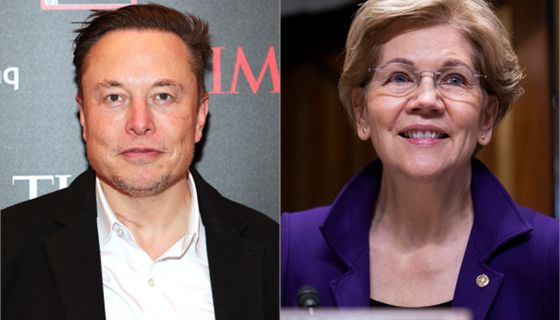
“Who do you trust less? Billionaires or Politicians,” Elon Musk asked in a tweet.

No one cares what I think. No one cares what you think. No one cares what Elon Musk thinks. Elon Musk doesn’t care what Elon Musk thinks, in this particular poll anyway. He wants to know what we think, but he doesn’t really care what we think either. If he asked, “Who do you trust more?” that might hint at some narcissism on Musk’s part, but “Who do you trust less” is intended to reveal to virtue signalers, in the political offices of both parties, that they’re not as popular as their fellow ivory tower dwellers tell them they are. I still believe Musk missed the mark however. He should’ve asked who can do you more harm?

“The billionaire, Elon Musk, conducted this poll on his Twitter page, so he received the results he expected. As MSN.com reported, As of Friday afternoon, the poll had amassed over 3 million votes, and 75.7% of participants selected “Politicians” as who they trust less, while 24.3% selected “Billionaires.””

Again, this was Elon Musk’s poll, conducted on his Twitter page with his followers, so the results are skewed. If a politician was bold enough to conduct a similar poll on their Twitter page, they would probably receive the results they expect. If we dug deep into these polls and analyzed the results, we would find that it doesn’t matter. Trust is often based on personal preference, and it doesn’t really matter who we trust less, if neither party can do us harm.

Without going into the details of the two parties concerned, because it feels unnecessary, the politician is obviously in charge of more levers of power that can do us harm. On the flipside, an individual who favors politicians could ask, “Which party can help us more the billionaire or the politician?”

To which we would reply, “All conditions being perfect, the politician.” That’s the bullet point, but the subpoints say, “As long as that politician is honest, and their prime directive is helping people in a purely altruistic manner. If that were the case, the politician would focus their efforts at problem solving. They would seek the best solution, regardless the politics, but how many politicians in  federal government do that?”

Some suggest the primary goal of every politician in Washington D.C., is to get reelected. If that’s the case, how many politicians help us solve our problems in a way that doesn’t serve their favorite special interest groups’ cause? When we see those three words, special interest groups, we naturally think of the other political party’s special interest groups, but special interest groups come in all stripes, and they influence politicians of all stripes. Just about every politician claims they don’t accept special interest money, but just about every politician does, Having said that, the relationship between the two might involve a genuine hand holding mission, but how often do politicians pick winners and losers in an industry, because one corporation aligns with their views better than the other? (Note: We can usually tell when a politician is picking winners and losers, if their primary defense is “We’re not picking winners and losers here.”)

Between the two, I think we could make the general point that politicians care more than the billionaire does. A billionaire, if they’re any good at what they do, is focused almost entirely on what’s best for their corporation. Their corporation provides a good or service that helps their fellow man, but their mission is not altruistic. They’re interested in whatever generates the most profit for their company. If their corporation happens to help their fellow man, that’s gravy, but it’s not their prime directive.

The very idea of entering public service suggests that the politician is more concerned with their fellow man, but how many of them know anything about private industry? If they’re going to solve problems, regardless the politics involved, they should be able serve public and private concerns, so some experience in private industry could prove helpful. Yet, some politicians consider working in private industry the equivalent of working behind enemy lines.

Most politicians, from both sides, appear to have the best intentions, but how often do they break what doesn’t need fixed? They might write, or vote for, legislation with the best intentions in mind, but they often campaign, in the next election, on the idea that they need to fix what they just broke.

It doesn’t matter if we trust or distrust a billionaire, because their ability to directly help or hurt our lives is minimal by comparison. Who’s the most powerful billionaire in the United States? What’s the most powerful move he could make? If they fulfill our worst fears, what recourse do we have? We can go to their competition.

Bashing billionaires and politicians is so easy. As much as we hate to admit it, both parties have accomplished more in their lives than most of us ever will, and that leads to jealousy, hatred, and a desire to boycott, protest, and demonize everything they do.

“Billionaires spend their own money, whereas politicians spend our money.” Stephen Crowder responded to Elon Musk’s tweet. “I think it’s obvious who we should be more concerned about.” Those who trust billionaires less could argue that they spend our money, because we give them our money for their products or services, but if those products or services are inferior, or too expensive, they won’t receive our money, and the marketplace will eventually crush them. If government officials provide inferior services, and we decide not to give them our money, based on their performance, we could face stiff penalties and possible jail time. As Crowder alludes, why would we be concerned if a billionaire is dishonest, greedy, or a criminal? How much can their actions affect our lives? Why should we be concerned about dishonest, greedy, or criminal politicians, because they can have a much more direct effect on our lives.

What happens if a billionaire goes on an irresponsible spending spree with their money? They can help the economy, create jobs, and they can spread the wealth around to those who create products and services around the world.

What happens if a politician goes on an irresponsible spending spree with other people’s money? They’ll need more of our money to spend, so they’ll take more. If they cannot find a way to do that, they’ll print money, or borrow it, which will create inflation, increase deficits and debts, and damage the long-term economy for their short-term goals. Even if some of their money reaches its intended source, how much of it will be siphoned off by various bureaucracies? How much of it will be wasted through various redundancies, fraud, and abuse? We’ve witnessed such examples through various stimulus packages that were ravaged by waste, fraud and abuse. In the meantime, money equals power and greater freedom, and the net result for the citizen they represent is less power and freedom.

It’s not the politician’s fault that we take advantage of their best intentions, right? We could analyze this from a number of perspectives, but the final answer should end with a big fat “no one cares what they intended”. The numbers show results. The numbers show the politician failed. We should hold them to account for their failings, so that future politicians might insert whatever oversight they can to prevent fraud, waste and abuse. They don’t, and we reelect the politician based on their intentions. The billionaire’s best intentions are often held in check by numbers and meritorious results.

Who can do you more harm? Circa 2014, the federal government raised corporate taxes in the United States to some of the highest in the world. American corporations began moving their operations to other, more competitive countries to escape those taxes. Some politicians proposed that the best way to combat these moves was to make them illegal. If a governor, or a mayor lost a business to another state, and they threatened to make it illegal for a business to move to another state, they would be laughed out of their reelection campaign.

When politicians pass legislation that affects lower-level operations that most of us will never see, this affects the cost of doing business, and that cost is then passed onto the consumer through higher prices of their products and services. Some politicians propose fixed pricing to solve the problem of higher prices. Their intent is to prevent the consumer from getting hit by the corporation raising prices, but the primary reason the corporation raised prices was to pay for the politicians’ rules, regulations, and taxes. When the government imposes costs on corporations, and those corporations pass the costs onto the consumer, economists call this an incidence tax.

The rising costs rarely affect the politician, because the natural inclination of most consumers is that when prices rise, it is due to a CEO’s whim of wanting more profit. Increase the price, increase the profit, right? This line of thinking neglects the market. If corporation A raises prices because they want more profit, it opens the door for corporations B through F to sell more of their products at market prices. Their volume of sales will increase, until such point that the CEO of A realizes they don’t control the market as much as they thought. If one billionaire CEO were to raise prices, we would go to the competition. When an entire industry raises prices, however, it is often due to politicians’ whims.

If a politician raises taxes to force us to help pay for their spending, where are you going to go? If the politician is local, we can move to another locale, city or state. If they’re federal politicians, we can go to another country. We have options either way, of course, but I don’t think we’d get much push back when we say the politician can do more harm in this regard.

What’s the worst thing a billionaire can do to harm your life? They can raise prices, they can avoid paying taxes, and they can create a monopoly that harms the marketplace. They can also contribute money, time, and endorsements to a politician, but in the competition between who has access to the more levers of power over the individual, it’s not much of a contest.

Does a politician employ people? We hear politicians talk about creating jobs all the time, but what jobs do they create? New York Times Economist Paul Krugman once talked about how he thought politicians should create temporary jobs to help the economy over the hump. He suggested politicians create ditch digging jobs, where one set of workers digs a hole and another set of workers fills it up. I should thank Krugman, because this is the first time I’ve heard of someone state that politicians can actually create jobs. The jobs Krugman proposes would be pointless, of course, but at least it would put people to work, temporarily. That needless work would also be funded by taxpayers who worked hard earned for that money. How about the politicians in the federal government temporarily lift some needless regulations or temporarily lower corporate taxes, so private industries can temporarily hire more workers to get us over the hump? Krugman’s proposal keeps the levers of power in the hands of the politicians, who don’t create products, services, wealth, or jobs.

If the billionaires appease local politicians, and vice versa, the billionaire can almost single-handedly revive a community, a city, and in some cases an entire state by deciding where to locate a plant. The local politician’s job is to placate the billionaire, in this instance, with tax breaks and real estate, and to be present for the ribbon cutting ceremony. Other than that, the ability of a politician to create jobs obviously pales in comparison to the billionaire’s.

In the current era, the billionaire also has to be in an industry that will help the politician get reelected. The modern politician has more bullet points than they’ve had in the past, so creating jobs is no longer the prime directive of most politicians, unless the politician favors the corporation or industry. The politician can then run to their phones to contact their broker to buy shares in that company with their insider information.

How much oversight does an enterprising billionaire have on his daily activities, as it pertains to his business? The billionaire has to answer to the consumer, the media, shareholders, the corporate board, the security and exchange commission, the IRS, local and state governments, and other federal bureaucracies, and all their rules and laws. The politician has to answer to much of the same, but whose oversight is more intense?

Everybody hates the billionaire. We don’t trust them. We think they attained their wealth through ill-gotten gains, and we don’t trust them to use their place on the stage responsibly. We won’t buy their products or services to prove our point, and … and it just doesn’t matter. The billionaire will go on to sell their products to those who will buy them. If no one does, they’ll go out of business, and no one will talk about them anymore a month later. It doesn’t matter if we trust billionaires to be responsible, honest, or quality managers of their company. If they’re incompetent, dishonest, or even criminal, their company will eventually fold up. Whatever consumers, shareholders, workers they have left will be deeply affected, and the city, state, and locale their corporation called home will also be affected, but that pales in comparison to the damage a politician can do before being turned out of office. As we’ve witnessed in bygone years and modern times, it is often very difficult to expose them and get them out of office if they’re popular enough. In the meantime, a corrupt politician can do grave damage to those that they’re elected to represent.