What the World Needs Now is Another Calvin Coolidge


President John Calvin Coolidge Jr. said “No!” He said “No!” so often, through vetoes, that he’s still, nearly 100-years since he left office, ranked 9th among presidents for most vetoes. Does his unflinching, non-prejudicial ability to say “No!” so often make him the best president the United States has ever had? “No!” but his courage in the face of mounting pressure does land him on my personal Mount Rushmore.  

Before we categorically dismiss this as “The guy said no, who care?” Think about who he said “No!” to. If we became politicians, our first job would be to gather coalitions, or a group of other people to help us amass power. Calvin Coolidge became a governor because he was the lieutenant governor for a successful governor. He became president by being a vice-president to a president who died. If this happened to us, we would probably be overwhelmed by the idea of it, but Calvin Coolidge went back to bed moments after he learned he would be president. When he awoke, he went about saying no to powerful members of Congress, Senators, and the most powerful power brokers in Washington. In every session of Congress and the Senate, there are always those scary politicians and power brokers to whom everyone is afraid to say no, but the historical record shows that Coolidge was not intimidated. He dropped nos on everyone in a patient, reasonable, rational, and nonprejudicial manner.  

“No!” carries a lot of power, as any two-year-old, who is just learning the rudimentary power of language can tell you, but “That depends on who you’re saying no to,” the seasoned politician might argue. “Saying no to the wrong person in Washington could just as easily render you powerless.” President Calvin Coolidge didnt care. He was either one of the least ambitious president in terms of amassing a power base, or simply fearless, as the record states he said “No!” to everyone.

In the near one-hundred-years that have followed that great president’s tenure in office, our politicians-turned-presidents have fallen prey to the seductive power of “Yes!”, and they have found creative ways to say “Yes!” to other politicians and constituents. Even the most ardent supporters of “Yes!” would have to admit that the seductive power of “Yes!” has led to more centralized government with the strongest power residing in the office of the president. Before you say, “No, that’s not true,” is your party in power in the moment? Will your opinion change when the other party assumes power? We should all succumb to the power of “No!”

We want to hear our politicians, our leaders, and other authority figures to learn how to say “Yes!” more often, and we throw childish temper tantrums when they don’t. “Yes!” builds affinity and loyalty that can evolve into love when we hear it often enough, but what we want versus what we need are two entirely different hemispheres. Before we categorically reject “No!” we should consider what “Yes!” has wrought us, annual deficits that have lead to a federal debt that is currently spiraling so out of control that economic forecasters predict that an inevitable disaster could happen at some point.

Psychologists say that we not only do we learn to adjust to hearing “No!”, but as much as we hate having any authority figures dictate how we live our lives, we do adjust, and those adjustments can lead to a sense of appreciation for the structure and parameters “No!” provides.

Political scientists might admit that a world of “No!” might be idyllic in terms of economic survival, but modern Americans are too far down the path of “Yes!” to ever elect a Calvin Coolidge President of the United States. The modern United States, presidential election is now a battle of the yeses. Only an unimaginable economic disaster could turn that around, political scientists might agree, but even then, even then, the power of “No!” would hold no sway. At this point in our history, the only difference between the parties, on this issue, is in the creative ways their candidates can find to say yes.

Historians suggest that even as far back as 1918, Calvin Coolidge’s “No!” policies may not have resulted in election victories, as Coolidge ran for Governor of Massachusetts as the sitting Lieutenant Governor, and he ran on the previous administration’s record, and he later assumed the office of the President when the previous president died an untimely death. If he were a relative unknown in either of those elections, it’s probable he wouldn’t have won either of them.

President Calvin Coolidge’s claim to fame was that he was all about budgets. Budgets, creative accounting, and numbers might win you an article on Rilaly.com, but to win a presidential election Calvin Coolidge probably needed to be viewed as an incumbent in a prosperous time period. After reading a Coolidge biography, we get the idea that he was more at home in the company of numbers such as two and zero than he was a Senator, Congressman, or a power broker addressing him as “Mr. President”.   

“I believe in budgets. I want other people to believe in them. I have had a small one to run my own home; and besides that, I am the head of the organization that makes the greatest of all budgets, that of the United States government. Do you wonder then that at times I dream of balance sheets and sinking funds, and deficits and tax rates and all the rest?”  

Read that how you want, but it’s pretty hard to chant in a convention hall.    

Coolidge Enters Stage Right

Calvin Coolidge
Calvin Coolidge

Following the Warren G. Harding/Coolidge ticket’s 1920 victory for the office of the president, President Warren G. Harding’s inaugural address set a dramatically different tone from that of the outgoing Woodrow Wilson administration:

“No altered system will work a miracle,” President Harding said, “Any wild experiment will only add to the confusion. Our best assurance lies in efficient administration of our proven system.”

Harding’s ego-less approach was that he would be nothing more than a steward of the American system that worked just fine in the 130 years of America preceding his election. Harding’s stance —as opposed to Woodrow Wilson’s— was that his administration wouldn’t try to outdo the prosperous model The Founders created. Put in this light, what kind of ego looks at the model of America —that was, and is, the envy of the world— and thinks they can do it better? How many of them succeeded in this venture? Harding was basically saying that he didn’t regard himself as a “miracle worker” who would step into office with his think tank notions to tell the nation that he has a “new and improved” model to cure what ails us? Isn’t that what politicians do, yes, but is “Yes!” the solution to our problems or the source of it? If I were running for an office, I would build my campaign around no, “No, we can’t! We can’t, because of the miserable mess we’ve all created. We have to clean this (expletive delete) up!” That campaign probably wouldn’t help me get a job as a drive-thru attendant as Hardee’s, but I would go down with that ship with a righteous right fist held high.

Harding was basically telling the American public that he wouldn’t present what we now call the “New Coke” formula that no one has ever thought of before. The actual “New Coke” campaign involved the Coca-Cola Company attempting to gain greater market share in 1985, by essentially copying the formula of its less popular competition Pepsi-Cola. Similarly, numerous narcissist U.S. presidents, before and after Harding and Coolidge, have attempted to impose formulas that have been tried and tested by other countries in history. The idea that those formulas have failed in those other countries, and America’s is the envy of the world, doesn’t stop “New Coke” advocates from believing they are the ones who can administrate this failed formula to success. The legacy of Coca-Cola’s “New Coke” campaign, and the “New Coke” ideas in politics are influential as a cautionary tale against tampering with a well-established and successful brand. By saying that he would act as nothing more than a steward for the prosperous model The Founders created, Harding was displaying what some call the pinnacle of intelligence by stating that he was smart enough know what he doesn’t know. 

One of Warren G. Harding’s first steps was to shepherd through Congress the Budget and Accounting Act of 1921. This bill allowed Harding to create a special budget bureau— the forerunner to today’s Office of Management and Budget— where Harding’s director of the bureau could cajole and shame Congress into making spending cuts. Unfortunately, some of Harding’s privatization policies, combined with some ill-advised appointments, led to bribery and favoritism, and ultimately to something historians would call the Teapot Dome Scandal.

Coolidge as President

After the untimely death of Harding, Calvin Coolidge became the 30th president of the United States, serving from 1923 to 1929. Coolidge sustained a budget surplus and left office with a smaller budget than the one he inherited. Over the same period, America experienced a proliferation of jobs, a dramatic increase in the standard of living, higher wages, and three to four percent annual economic growth. The key to this level of success was Coolidge’s penchant for saying “no.” If President Ronald Reagan was “The Great Communicator,” Coolidge was “The Great Refrainer,” a title Reagan gave Coolidge. 

Calvin Coolidge separated himself almost immediately from Harding with his willingness to say “No!” to appointees, Congressman, and to various, other “New Coke” bills. (Coolidge ended up vetoing fifty bills, a total that ends up being more than the last three presidents combined.) Coolidge summed up his penchant for vetoing these bills saying:

“It is much more important to kill bad bills than to pass good ones.”

How many of today’s issues would be resolved with that mindset, that philosophy, and that president? Calvin Coolidge was the type of president, the type of person, that if you asked him what time it was, he would tell you. Modern presidents get their tongues so tied up with advice from advisers, pollsters, and focus group testing, that they’re almost afraid to tell you what time it is based on the fact that a direct answer might be taken seven different ways by seven different networks that appeal to a 24-7 audience.

Within 24 hours of arriving in Washington after Harding’s death, Calvin Coolidge met with his budget director, Herbert Lord, and together they went on offense, announcing deepened cuts in two politically sensitive areas: spending on veterans and District of Columbia public works. In his public statements, Coolidge made clear he would have scant patience with anyone who didn’t go along:

“We must have no carelessness in our dealings with public property or the expenditure of public money. Such a condition is characteristic of undeveloped people, or of a decadent generation.”

Perhaps reflecting his temperament, Coolidge favored what more modern presidents could use to veto a bill without the political consequences of doing so, the pocket veto. This is a method a president can use to reject a bill without actually vetoing it, while giving Congress little ability to override it. Grover Cleveland, whom Coolidge admired, used this type of veto in his day, as had Theodore Roosevelt. But Coolidge raised its use to an art form. The New York Times referred to it as “disapproval by inaction.” Perfect, I say, ingenious. It’s what the world needs now.

The words “perhaps reflecting his temperament” paint a nice portrait of President Calvin Coolidge, for when given the choice between grandstanding on an issue and quietly advocating or dismissing a bill, Coolidge opted for the quiet approach. The most illustrative story on this theme of restraint involved one of the greatest tragedies of Coolidge’s presidency. The great Mississippi River flood of 1927 was the Coolidge administration’s Hurricane Katrina. Rather than appear in a photo op, Coolidge chose not to appear on the grounds of the devastation fearing that doing so might encourage federal spending on relief. Another issue that might define the Coolidge administration in an historical manner involved the Klu Klux Klan. When faced with the problem of how to handle the then powerful Klu Klux Klan, Coolidge quietly avoided appointing any Klan members to prominent positions in his cabinet, and he thereby decimated the power of that group in America. When faced with the dilemma of what to do with farming subsidies, the man from farming country, chose to veto the subsidies. He also vetoed veterans’ pensions and government entry into the utilities sector. What current politician would favor vetoing farming bills and veterans’ pensions? The man had no qualms with vetoing bills he likely, personally favored, because he didn’t want to set a bad precedent. 

If a modern politician for any office even flirted with doing any of these things (the maneuver with the Klan excluded), and they listed one of them in their campaign, how many of us would laugh them off the stage? The party’s leaders wouldn’t even consider them for their nomination. The only obstacle for modern politicians is how to find a creative way to say yes that doesn’t tick off too many constituents who might want them to say no. 

Yet, how many tragedies does a nation as large as America face every day? How many constituents suffer as a result? The impulsive reaction for any person, politician, and president is to do whatever they can to end their suffering, yet how many unintended consequences arise from a president’s, and Congress’s decision to provide federal aid? Before you reveal yourself as a person somewhat addicted to federal spending, imagine if a President Calvin Coolidge denied federal aid for even “logical” and “heartfelt” expenditures? Imagine if a president said, “I’d much rather not set the precedent of the federal government coming in to rescue all of the people, places and things. I’d much rather leave such aid to the states and local municipalities.”

How many of these problems could’ve been avoided if we had more presidents do whatever they could to train the country’s expectations to be more limited when the subject involves the federal government’s ability to fix their problems. As many informed politicos will tell us, it’s too late now. The country, thanks to nearly 100 years of conditioning from ego-driven, narcissist  presidents, seeking praise and adulation for their administration, has come to expect the president to do something. It’s a fait accompli now, and there’s little to nothing anyone can do to roll that back now. All of this may be true, but what if Harding’s special budget bureau survived the politics of the 70’s, and the president and Congress conditioned the country to accept the idea that the federal government has attained from taxpayer’s is finite? Would the American public let the locale drown, or would the most generous people in the world, Americans, do whatever they can to help their fellow American out? Would the American citizen learn to look to their state, local, and even their own communities to aid them in times of crisis? It’s easier and far more popular for a president to just say yes, but I don’t think many objective, dispassionate observers would argue that America would be in a far better place if the presidents who followed Coolidge invested more of their political capital in his politics of no?  

“Four-fifths of all our troubles would disappear if we would only sit down and keep still.”

What came first the chicken or the egg? Did the “yes” politicians condition us to expect more yes from them, or did we condition our candidates for the office to say “yes” to everything? How many candidates stubbornly insist that we need to say no more often? Long question short, are we in unprecedented debt, because of the ruling class, or because Americans have the country we want? I don’t know about you, but I would love to see that specific flowchart with historical bullet points.

The current barometer of the presidency is not set on “Yes or no” but “When, how much and how often” they spend other people’s money, Coolidge exhibited a level of restraint politicians often reserve only for their own money.

Despite the budget surpluses the Coolidge administration accrued during his presidency, he met with his budget director every Friday morning before cabinet meetings to identify budget cuts and discuss how to say “no” to the requests of cabinet members, and other politicians up and down the ticket. Think about that for just a moment before reading on. Think about how a modern politician, on any level and both parties, would react to even a momentary surplus. The impulsive reaction, some might even say instinctive reaction politicians have to surpluses is to find the best way to allocate that surplus for greater political gain, and to reward those who played a pivotal role in securing the surplus by allocating funds for a bridge or a hospital in the Congressman’s district. How many politicians, by comparison, would meet with budget directors, Congressmen, etc., to find further ways to cut. Most presidents give in after a time —Eisenhower being a good example— but Coolidge did not, despite the budget surpluses accrued during his presidency. 

In a conference call with Jewish philanthropists, Coolidge explained his consistency this way:

“I believe in budgets. I want other people to believe in them. I have had a small one to run my own home; and besides that, I am the head of the organization that makes the greatest of all budgets, that of the United States government. Do you wonder then that at times I dream of balance sheets and sinking funds, and deficits and tax rates and all the rest?”

Speaking of tax rates, in December 1923, Coolidge and Treasury Secretary Andrew Mellon launched a campaign to lower top rates from the fifties to the twenties. Mellon believed, and informed Coolidge, that these cuts might result in additional revenue. This was referred to as “scientific taxation”—an early formulation that would later influence economist Art Laffer to develop what we know as the Laffer curve. Coolidge passed word of this insight on:

“Experience does not show that the higher tax rate produces larger revenue. Experience is all the other way,” he said in a speech in early 1924. “When the surtax on incomes of $300,000 and over was but 10 percent, the revenue was about the same as it was at 65 percent.”

The more recent egos who have occupied the tax payer funded seat of president would likely show a blush at the mention of the power and prestige they have achieved by attaining residence in The White House. That humble blush would be shown in the manner a 70’s comedian would show one hand to reject the applause he was receiving, while the other, jokingly, asked for more applause. Calvin Coolidge rejected congratulatory mentions of his power completely. When Senator Selden Spencer took a walk with Coolidge around the White House grounds, the Senator playfully asked the president, “Who lives there?”

“Nobody,” Coolidge replied. “They just come and go.”

For all the praise that authors like Amity Shales heap on Coolidge, some of his critics state that his policies caused The Great Depression and others say he did not prevent them.

“That is an argument I take up at length in my previous book, The Forgotten Man, and is a topic for another day,” Amity Shales said. “Here let me just say that the Great Depression was as great and as long in duration as it was because, as economist Benjamin Anderson put it, the government under both Hoover and Franklin Roosevelt, unlike under Coolidge, chose to “play God.”

Three lessons we can learn from the Coolidge presidency

Beyond the inspiration of Coolidge’s example of principle and consistency, what are the lessons of his story that are relevant to our current situation? One certainly has to do with the mechanism of budgeting: The Budget and Accounting Act of 1921 provided a means for Harding and Coolidge to control the budget and the nation’s debt, and at the same time give the people the ability to hold someone responsible. That law was gutted in the 1970s, when it became collateral damage in the anti-executive fervor following Watergate. The law that replaced it tilted budget authority back to Congress and has led to over-spending and lack of responsibility ever since. On this note, one could say that Congressional control of the budget is outlined in The Constitution, and that Congress is more representative of the American citizenry. As I wrote above, however, Calvin’s budget director’s primary job was to cajole and shame Congress into making spending cuts. That wouldn’t play in the 70’s, and it definitely wouldn’t play in the modern era. As such, Coolidge’s quote, “I don’t fit in with these times” would definitely describe a modern day Coolidge, as he probably couldn’t be elected dog catcher. The American people have stated that they prefer an out of control budget with massive spending.

A second lesson we can derive from the Coolidge administration concerns how we view tax rates. Our natural inclination is to believe that higher tax rates produce larger revenue. As Coolidge states, “Experience is all the other way.” The reason behind this is a complicated formula that current supply side economists suggest raising taxes results in more people and corporations engaging in less taxable activity. Coolidge’s experience with the code suggested that we should consider lowering taxes, until we find that sweet spot in the tax code that encourages greater taxable activity, and thus more taxable revenue arriving in the government’s coffers. Tax policy can also be a mechanism to expand government. The goals of legitimate government —American freedom and prosperity — are left by the wayside. Thus the best case for lower taxes is the moral one — and as Coolidge well understood, a moral tax policy does not demand higher taxes but tougher budgeting from paid employees of the state that we call our representatives.

Finally, a lesson about politics. The popularity of Harding and Coolidge, and the success of their policies — especially Coolidge’s — following a long period of Progressive ascendancy, should give today’s conservatives hope. Coolidge in the 1920s, like Democrat Grover Cleveland in the previous century, distinguished government austerity from private-sector austerity, combining a policy of deficit cuts with one of tax cuts, and made a moral case for saying “no.” A political leader who does the same today is likely to find an electorate more inclined to respond “yes” than he or she expects. {1}

The point, I believe, is that in the current climate of “yes” in Washington D.C., we could use a little “no”. In the event of a natural disasters, there will always be “unprecedented” disasters in a land mass as large as America, “yes” ingratiates the president to the people of the area, the media, the nation, and history, but it is also “yes” that ends up contributing to the national debt, and the idea that the federal government is a parent that should clean up the messes of her children. It could also be argued that federal intervention discourages smaller scale charity and communities seeing themselves through a disaster of this sort.

“Yes” also lends itself to the already massive egos of those who will sit in our most prestigious seat of representation, and it leads them to believe they can invent “New Coke” formulas, until we’re swirling around the drain in it. These massive egos can’t withstand one commentator saying negative things about them, so they start saying “yes” to everything, because “yes” doesn’t have the political consequences of “no”. Saying no to Congressmen and Senators can bruise egos and cause negative sentiments and statements; saying no to Governors who ask for state aid will lead to political fallout in the media as every story on that tragedy of the day would be accompanied by their “no”; telling a woman who asks for a car in a town hall debate the meaning of the word no, and telling her exactly what time of the day it is, would lead to utter devastation for that candidate’s campaign. Why would a politician, in today’s media cycle, say no and expound on that by saying that’s not the federal government’s role, and refrain from engaging in photo ops that might encourage Americans to believe that it is the government’s role? By saying no, a politician puts his or her nose out, and it takes courage and humility for a politician to risk everything by denying a power grab in this sense. While Coolidge never faced the 24-7 news cycle modern politicians do, a decent search of his history will reveal that his “no” policies did face a relatively intense amount of scrutiny, and he continued to stubbornly say “no” throughout.

It would probably be a fool’s errand to try and find another person in our current political climate who has the temerity and resolve to say no as often as Coolidge did. The nation has stated that they would much rather live in the fairy tale land of yes, even if that means that the New Coke ideas lead to greater complexities, long-term consequences, and probable economic turmoil. The greater question, that appears to be approaching closer every day, is not whether a “a great refrainer” is a better president than one who believes the nation can “yes” their way out of every problem, but if the nation will ever be ready for such an answer without the assistance of a cataclysmic economic incident that affects them directly.

Calvin Coolidge’s obituary states that his prestige at the time of his impending third-term* was such “that the leaders of the Republican Party wished to override the tradition* that no President should have a third term.” His response was, “I do not choose to run for President in 1928.” When a “draft Coolidge” movement arose to select him for the GOP ticket, Coolidge said no. When they attempted to override his desire, believing Coolidge’s refusal to run was a shrewd attempt to avoid revealing his ambition, he told them no again. President John Calvin Coolidge Jr. may not go down as the greatest president who ever served the public, and judging by the quote that he was one of the few who managed to be “silent in five languages” Coolidge will never go down as one of the most charismatic individuals to ever sit in the seat. No, I have Calvin Coolidge’s face on my personal Mount Rushmore for his ability to say “No!”

***

*Calvin Coolidge ended up serving six years, as a result of Harding’s death two years into his presidency, so his re-election would not have been a third term, technically.

*In 1928, the idea of a president serving more than two terms was still a tradition, until the 22nd amendment passed to Constitutionally limit a president to serving two terms. This “tradition” began with George Washington refusing to run for a third term, Theodore Roosevelt continued the tradition, initially, before running again, and some suggest Harry Truman could have run for a third term, because the 1947, 22nd amendment only applied to presidents after the then-current one (which was Truman), but Truman was deemed too unpopular to seek a third-term.    

{1}http://www.hillsdale.edu/news/imprimis/archive/issue.asp?year=2013&month=02

{2}https://en.wikipedia.org/wiki/New_Coke
A President’s Day Guide Through Obscure Presidents, and Lincoln


To those, like me, who have lived their whole life in America, we take it for granted that America is the envy of the world. Some might view this as propaganda, some sort of hype, or marketing tool that America has generated on a false premise. America does have her faults, of course, for it is and always has been run by, and for flawed humans, but if you’ve ever run into a first generation American who knows how flawed humans running a country can be. They might even paraphrase Winston Churchill by saying, “America might be a horribly run country, but it’s better than anything else we’ve tried.

One thing that I think that should put naysayers, and those of us who might take America’s place in the world for granted is that it didn’t have to go this way. A couple of elections here and there might have changed the course of the country dramatically.  

There have been times, in our nation’s history when we needed a strong man who played with a bold hand at times and a soft touch in others to solve the country’s problems. Some would argue that no one did both better than Abraham Lincoln did during his tenure in office, in his quest to end the Civil War and slavery. There have been times when our nation laid in the balance, and we needed a Lincoln to come along and do what he could to preserve what George Washington, John Adams, and all The Founders envisioned. There have been other times, times far less documented in historical records, when our nation needed a humble leader who displayed restraint in times of national scandal and turmoil.

Whenever we talk about the history of America, we usually focus on Lincoln, The Founding Fathers, the Roosevelts, and the rest of the more prominent presidents who have shaped our country in profound ways, but there are many lesser-known presidents who have affected the nation in various, individual ways. If Lincoln lost his bid for president to Stephen A. Douglas our country might be very different. If Grover Cleveland lost his bid for re-election to Benjamin Harrison a second time in 1892 would our country be different? In what ways would the country be different if Calvin Coolidge lost his bid for re-election to John W. Davis? Some argue that no American legislation, and no executive orders are set in stone, and they can be righted, or sunk, by subsequent administrations. While that is true, there is the matter of precedent, and there is the question of how much damage could be done in the interim. If Lincoln lost to Douglas, and the Civil War and slavery lasted beyond 1865, how much further damage would’ve occurred in this country without the skilled Lincoln at the helm? Some of us might argue that America isnt as great as others suggest, and that it never was, but if Lincoln lost his election, it’s likely that there wouldn’t be a United States as we know it today. 

Were it not for the statesmanship restraint displayed by a Calvin Coolidge, we might be a less free nation. Quiet, obscure presidents, like Coolidge, quietly vetoed legislation and exhibited restraint throughout their tenure. Restraint, vetoing legislation, and acting in a manner to preserve individual freedoms is less sexy than winning wars, ending slavery, or passing sweeping legislation and pressing the thumb of government on the throat of individuals and businesses for the purpose of helping other people, but the imprint it left might be just as profound.

Our nation’s history is composed of the strong, Lincoln types and the quiet, Coolidge types who have shaped our country in unique ways, and on this President’s Day I thought we should all be reminded how we came to be the nation we are today, through the more obscure presidents (and Lincoln) that helped guide us to modernity.


Grover Cleveland
Grover Cleveland

1) Stephen Grover Cleveland (March 18, 1837 – June 24, 1908)

The 22nd and 24th President

Cleveland was a Democrat who served the American people from 1885–1889 and 1893–1897 in non-consecutive terms. President Grover Cleveland was the only president to do so.

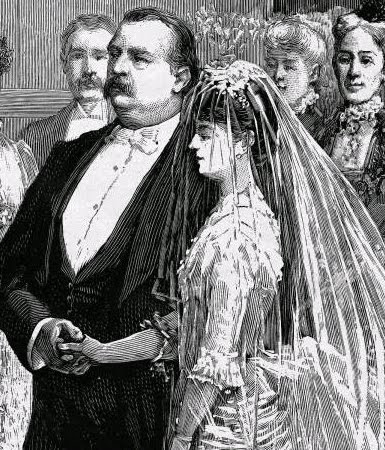
Stephen Grover Cleveland was one of three presidents (Jackson, FDR) to win popular vote for president on three different occasions, but he lost, in the second election, to Benjamin Harrison in the Electoral College tallies. He was the only Democrat to defeat a Republican for office during the period of Republican domination that dated back to Abraham Lincoln’s first electoral victory. He was the second president to marry while in office, and the only president (as depicted above) to marry at the white house. During his tenure, he and the Republican Congress, admitted North Dakota, South Dakota, Montana, Washington, Idaho, Wyoming, and later Utah to the union. His last words were “I have tried so hard to do right.”{1}

Ronald Reagan may have been the president who “tried to give the government back to the people” but some argue that Grover Cleveland was the first of two presidents of the 19th and 20th centuries –Calvin Coolidge being the other– to accomplish the feat. By the time their tenure ended, the size and scope of government was more limited than when they began their terms.

Others spoke of limiting the size of government, and the others failed. Cleveland’s first goal was to end the spoils of the political system. He did not fire the previous administration’s Republicans who were doing their job well, but he cut down the number of federal employees, and he attempted to slow the growth of what he perceived to be a bloated government. He attempted to always place appointments in positions based on merit, as opposed to the usual spoils system that dictated position holders in previous administrations. He also used his veto power far more than any other president of his day. Although Cleveland was a Democrat, he was one the few who sided with business. Cleveland opposed high tariffs, free silver, inflation, imperialism, and subsidies to business, farmers or veterans. His little battles for political reform and fiscal conservatism made him an icon for American conservatives of the era. Cleveland’s reform ideas and ideals were so strong and influential that a reform wing of the Republican Party, called the “Mugwumps”, bolted from the GOP ticket and swung to his support in 1884.

The great Abraham Lincoln

2) Abraham Lincoln

The 16th President.

Lincoln was a Republican who served the people from March 4, 1861 – April 15, 1865.

Abraham Lincoln, it could be said, is our most famous president. If one were to chart fame by the number of books written about an historical figure, Lincoln has had more books written about him than any other president. By some accounts, he has had more written about him than any historical figure alive or dead save for Jesus of Nazareth.

His fame is derived from serving as president during The Civil War, and the fight to abolish slavery. Lincoln’s fierce abolitionist views were so well known that some suggest that his election victory led the South secede. He used a heavy hand in some cases, such as the unconstitutional suspension of habeas corpus, and he used a deft hand in his attempts to end slavery. Fierce abolitionist Frederick Douglass viewed Lincoln with impatience initially. Douglass favored a firm hand. He wanted to, by whatever means necessary, quickly obliterate, on moral grounds, the Democrats who opposed ending the institution of slavery. As we discuss in another article on this specific topic, Douglass eventually saw the errors of that method. Ronald E Franklin characterizes Douglass as eventually, “Celebrating Lincoln as the perfect, God-appointed man for a task that, had the abolition of slavery been his first priority, he could not have accomplished.” This other article provides the full breadth of Douglass’ characterization of Lincoln’s political maneuvers. 

We now have a number of definitions of Lincoln’s motivations, but James Buchanan’s mismanagement of a decades-old disaster landed on President Abraham Lincoln’s desk soon after he took office. The country rested on a precipice of tearing apart. If Lincoln was too firm, he might have lost the country, and thus any sense of a mandate, if he was too soft, he might have lost The South. History will probably argue his tactics until they lay our great-grandchildren to rest, but through compromise and subtle, brilliant maneuvers, Abraham Lincoln managed to both end slavery and save the union. 

In the Washington V. Lincoln debate over who was the greatest president, the tale of the tape for both is long and mighty. In my personal opinion, Washington is given too much credit for being the first to set such and such a precedent. Washington was, indeed, a great leader of the country, but he was the first president, so I think we give him too much credit for setting precedents.   

Quick Quip: Democrat rival in the 1960 election for the President Stephen A. Douglas once called Abraham Lincoln two-faced. “If I had two faces,” Lincoln replied, “do you honestly think I would wear this one?”{2}

William Henry Harrison

3) William Henry Harrison

9th President

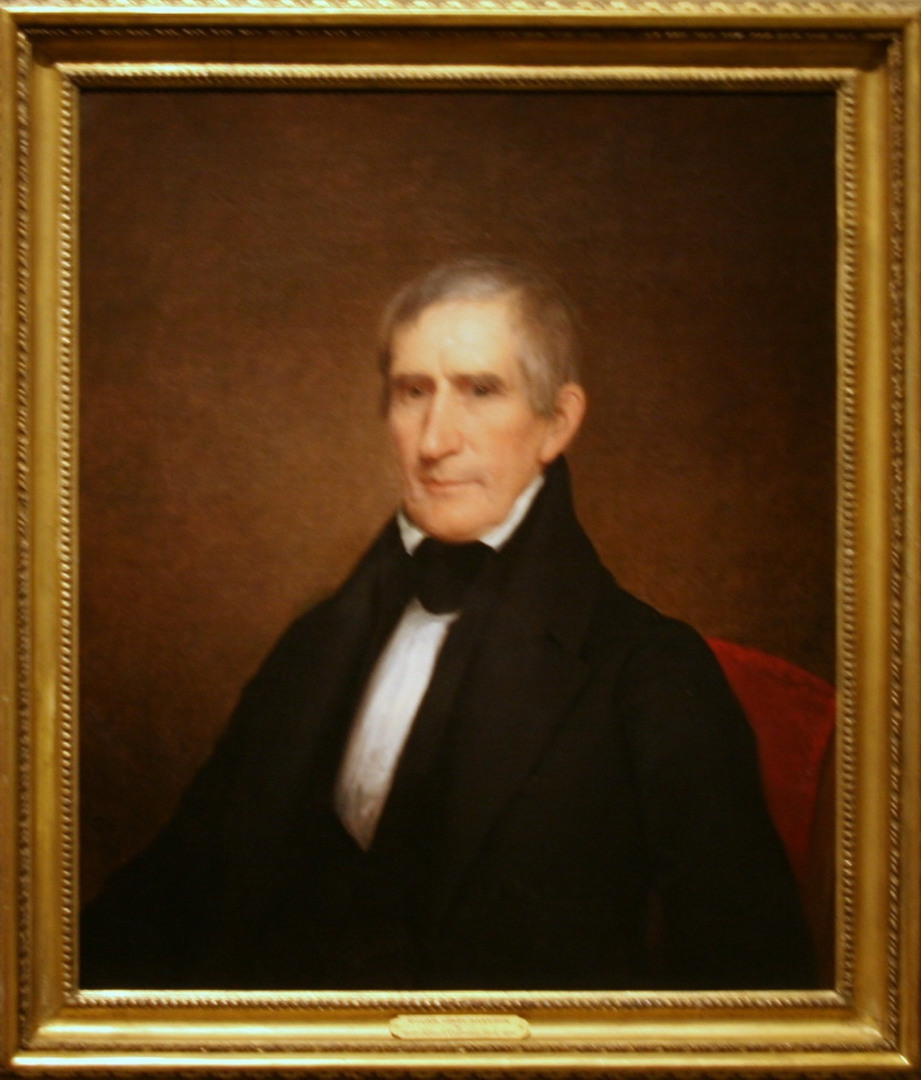
Harrison was a member of the short lived Whig party, and he served the people as president from March 4, 1841 to April 4, 1841

William Henry Harrison is most famous for dying after serving one month in office as president.  He took the oath on a cold and rainy day, and he refused to wear a coat or a hat. He also rode into the inaugural on horseback rather than in the closed carriage that had been offered to him. He then proceeded, after the oath, to deliver the longest inaugural in American history. It took him almost two hours to complete it. He then rode away from the inaugural on horseback. Some believe that this reckless regard for his health brought on the illness that his sixty-eight year old body could not recover from, but historians make note that the illness did not set in until three weeks after the inaugural. Regardless how he contracted the cold, it progressed into pneumonia and pleurisy. His last words presumed to be to his successor John Tyler were: “Sir, I wish you to understand the true principles of the government. I wish them carried out. I ask nothing more.” {3}

Quick Quip: There was some debate over whether W.H. Harrison’s 8,460 word inaugural address (the longest in history) led to his demise. Harrison refused to dress appropriate for the forecast cold rain, or follow any of advice of those concerned with his well-being. As a result of his demise, Harrison’s grandson Benjamin Harrison, made sure his own inaugural was a little over half what his grandfather’s was.

Martin Van Buren
Martin Van Buren

4) Martin Van Buren

8th President

Van Buren was a Democrat that served the people from March 4, 1837 to March 4, 1841.

Van Buren is regarded, in some quarters, as the father of the Democrat Party, even though Andrew Jackson was the first Democrat to be elected president. He was the first individual born as a U.S. citizen to be elected president. He was the first non-British, non-Irish man to serve as president. He was Dutch. He was also the first self-made man to become President: all earlier Presidents had acquired wealth through inheritance or marriage, while van Buren was born into poverty and became wealthy through his law practice. Van Buren’s presidency was marked by a depression, named the panic of 1837, that lasted throughout his presidency. As a result of this, Van Buren issued a statement that is also famous regarding his tenure as president: “As to the presidency, the two happiest days of my life were those of my entrance upon the office and my surrender of it.”{4}

James A. Garfield
James A. Garfield

5) James A. Garfield

20th President

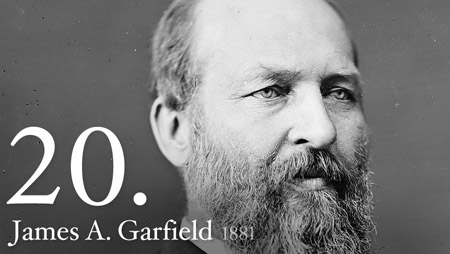
Garfield was a Republican that served the people from March 4, 1881 to September 19, 1881.

Garfield was another president known, in history, more for his death, than his life, or tenure as president. Garfield was taken down by an communist assassin by the name of Charles J. Guiteau. Though Garfield only had four months of health while serving the people as president, he did manage to give resurgence to the president’s authority over Senatorial courtesy in making executive appointments. He also energized naval power, he purged the corruption in the Post Office, and he appointed several African-Americans to prominent positions. During the eighty days in which Garfield suffered through the cruelty of the assassin’s bullet, he signed one, single extradition paper. Some historians have suggested that Garfield may have been one of our most talented and eloquent presidents had he lived long enough to expose this to the nation, but he was able to serve the nation in Congress having served nine consecutive terms, and he was able to do what he could in the short time that he served as president. Candice Millard’s brilliant book Destiny of The Republic captures the essence of Garfield with the quote: “Born into abject poverty, he rose to become a wunderkind scholar, a Civil War hero, a renowned congressman, and a reluctant presidential candidate who took on the nation’s corrupt political establishment.”

Knowing his death was imminent, James A. Garfield’s final words were: “My work is done.” {5}

Benjamin Harrison
Benjamin Harrison

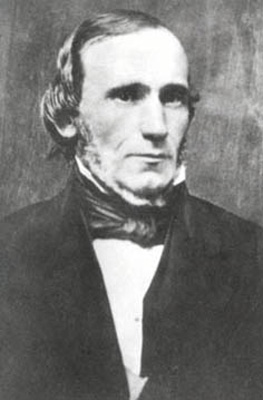
6) Benjamin Harrison

23rd President

Harrison was a Republican that served the people from March 4, 1889 to March 4, 1893.

Harrison is most notable for being the grandson of William Henry Harrison, and the man that defeated the mighty Grover Cleveland in the Electoral College vote in 1888. Harrison’s tenure was also famous for passing the McKinley Tariff and the Sherman Antitrust Act. He was also famous for allowing federal spending to reach one billion dollars. Harrison also advocated for federal funding for education, he was unsuccessful in that regard. He also pushed for legislation that would protect the voting rights of African Americans. The latter would be the last attempts made at civil rights in the country until the 1930’s. Learning from the after effects of a long inaugural, courtesy of his Grandfather’s record long speech that some believe led to his death, Benjamin Harrison kept his inaugural address brief. Though historians tend to disregard Harrison as a prominent president, they regard his foreign policies as laying the groundwork for much that would be accomplished in the 20th century. {6}

Calvin Coolidge
Calvin Coolidge

7) Calvin Coolidge

30th President

Calvin Coolidge was a Republican that served the people from August 2, 1923 to March 4, 1929.

Coolidge would not stand a chance in today’s 24-7 news network, internet definition of politics. In the current climate of celebrity presidential candidates climbing all over one another for more air time, a better sound bite, and a better image, “Silent Cal” Calvin Coolidge would have been run over. In this age of bigger and better governments, where politicians on both sides of the aisle try to flex their legislative muscle in bill signings that are celebrated media events, Calvin Coolidge signed legislation into law in the privacy of the office. In a quote that could be attributed to the current, progression of big government, Calvin Coolidge said: “The requirements of existence have passed beyond the standard of necessity into the region of luxury.” Calvin Coolidge would be a laughing stock in our day and age, a man on the outside looking in, a statesman that would’ve faded into the woodwork of our society.

Social critic and satirist Dorothy Parker once said: “Mr. Coolidge, I’ve made a bet against a fellow who said it was impossible to get more than two words out of you.”

Coolidge’s famous reply: “You lose.”

After hearing that Coolidge passed away, four years after leaving office, Parker remarked: “How can they tell?”

Although Coolidge was known to be a skilled and effective public speaker, in private he was a man of few words and was referred to as “Silent Cal” in most quarters. On this reputation, Coolidge said:

“The words of a President have an enormous weight, and ought not to be used indiscriminately.” 

Although known as a quiet man, Coolidge participated in over five hundred press conferences during his 2000 days as president, that is an average of one press conference every four days. Coolidge took over the office of president after his predecessor’s death, amid his predecessor’s controversy, that was called the Teapot Dome Scandal. The Teapot Dome Scandal was regarded as the “greatest and most sensational scandal in the history of American politics” until the media discovered the Watergate scandal. In the wake of this scandal, Coolidge told a reporter:

“I think the American people want a solemn ass as a President, and I think I will go along with them.”

Coolidge may have been the last statesman the American people had to serve as president. He was against the Klu Klux Klan, for instance, but he didn’t make grandstanding statements against the Klan, he just didn’t appoint Klan members to positions in his administration. This may seem to be such an obvious move that it’s not worth discussion, but the KKK had a lot of influence at this time in America, and Coolidge’s move caused them to lose much of it. Coolidge tried to take this one step further, calling for anti-lynching laws, but the attempts to pass this legislation were stopped by Democrat filibusters. He attempted to make war illegal in the Kellogg-Briand act, but that law proved ineffective. Coolidge was a laissez-faire president who didn’t believe that the federal government should have a role in farm subsidies or flood relief. As much as he wanted to help these people, he wanted to avoid setting the precedent of the federal government resolving problems that he believed could better be solved, on a case-by-case basis, locally. By the end of his administration, he achieved a tax bill that had all but the top 2% paying no federal income taxes. Coolidge disdained federal regulation and appointed commissioners that followed his philosophy that believed in state’s rights, and this caused a divide in historical opinion of his administration.

Some believe that this laissez-faire approach led to “The Roaring Twenties”, others argue that it led to “The Great Depression.” As with all matters such as these, the opinions are based on where the historian lies on the ideological divide. Some historians say that “The Roaring Twenties” was built on a bubble similar to the 1990’s tech bubble in that it wasn’t built on hard assets, and when that bubble did burst, as it did in the 90’s, a recession occurred as a result. That recession, say other historians, was prolonged into a depression that lasted to the forties by the recovery measures put in place by future administrations. The latter argument has it that the economy may have experienced a dip as a result of the bubble bursting, but the extended duration of this natural, down cycle was caused by the measures put in place by future administrations to recover from what may have otherwise been a temporary dip. Arguments such as these are impossible to resolve, however, because one cannot remove some facts to prove others.

Historians from both sides of the aisle have also defined his last words in varying ways. Those who oppose Coolidge’s actions, state that his last words were a lamentable admission that his limited government policies didn’t work. Those who favor his policies state that he was lamenting the course America was on, into a country of big government policies. They state that Coolidge’s administration was, itself, a temporary blip in a progression that Theodore Roosevelt started, and they suggest that based on everything Coolidge saw during his tenure, he foresaw this.

His last words were: “I feel I no longer fit in with these times.”{7}

Some presidents affected the course of nation in profound ways, others used underappreciated subtle, deft maneuvers to change the course of the nation and the federal government, and how it governs the people. Some of the presidents were overwhelmed and some were those right place, right time presidents who used their tenure to lay the groundwork for making this country the envy of the world. To those, like me, who might take this notion for granted, it didn’t have to go this way. Some of us find it interesting to note that if the wrong man were elected at the wrong time, even those presidents who don’t make “the greatest of all time” lists, this country could be a decidedly different one.

If you’re as interested in U.S. History through relatively obscure presidents as I am, read Obscure Presidents part II


{1}http://en.wikipedia.org/wiki/Grover_Cleveland

{2}http://en.wikipedia.org/wiki/Abraham_Lincoln

{3}http://en.wikipedia.org/wiki/William_Henry_Harrison

{4}http://en.wikipedia.org/wiki/Martin_Van_Buren

{5}http://en.wikipedia.org/wiki/James_A._Garfield

{6}http://en.wikipedia.org/wiki/Benjamin_Harrison

{7}http://en.wikipedia.org/wiki/Calvin_Coolidge#cite_note-128

Presidential trivia for President’s Day


With President’s Day approaching, we thought we would compile a list of relatively obscure facts, trivia, and some interesting stories about the forty-four men that have served in the office of president for the United States’ citizens throughout our nation’s relatively young history. These are not fun trivia questions, and one of my friends informed me that people enjoy questions that they have a chance of answering correctly. For those that sit in an office, and send out trivia questions to your team members, we thought we would provide some trivia for those that want one or two questions that office workers cannot Google up as easily. (Unless they cheat and Google up this page of course.)  

10) Which president was never on a ticket that won a presidential election?

Answer: Gerald Ford. Andrew Johnson never personally won a presidential election, but he was on the 1865, winning ticket as Abraham Lincoln’s vice-president. Gerald Ford was not present on Richard M. Nixon’s 1968, winning ticket. That honor went to Spiro Agnew, originator of the famous, erudite insult “Nattering nabobs of negativism”. A third trivia question spawns from Ford’s unsuccessful run for president in 1976. The vice-president listed on his 1976 ticket was future presidential candidate Bob Dole. The victor of the 1976 election was James Earl Carter, and his vice-president was future presidential candidate Walter Mondale. Both of these vice-presidents were unsuccessful in their future runs for office. 

9) Other than President Bill Clinton, what president was successfully impeached by the House of Representatives?

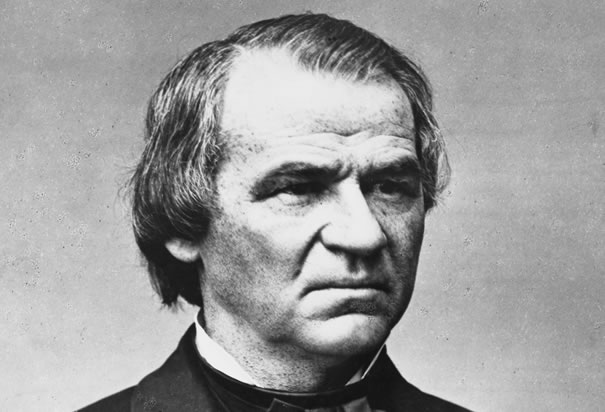
Andrew Johnson
Andrew Johnson

Answer: Andrew Johnson. Both were acquitted by the Senate, but Johnson’s presidency survived by a single vote, while Clinton’s presidency survived four separate charges of impeachment. Two of the charges passed in the House of Representatives, a vote that included five Democrats voting in favor of three of the four charges. As opposed to the House’s requirement of a simple majority to impeach, the Senate required a two-thirds majority to impeach. Both of the charges brought against Clinton failed to indict the impeached president. The obstruction of justice charge  failed by seventeen votes, and the perjury charge failed to reach the two-thirds majority requirement by twenty-two votes. Some say these votes were cast along party lines, and they were, almost exclusively, while others say that the charges themselves were partisan by nature. For those that suggest that Richard Nixon was impeached, he probably would have been, but he resigned from office before impeachment proceedings could begin.  

——————————————————————————————————————————————————————————————————————————————————-

8) Historians list President Donald J. Trump as the forty-fifth president, but he is the forty-fourth man to serve in this role. Is this a discrepancy or an error?

Grover Cleveland
Grover Cleveland

Answer: President Grover Cleveland served two terms that were non-consecutive. Thus, he is considered both the 22nd and the 24th president in U.S. History.

——————————————————————————————————————————————————————————————————————————————————————————————————————————————————————————————————————————-

7) We all use the idiom O.K. to inform others that we are doing well. “I’m O.K. How are you?” Some have stated that the idiom may have been mistakenly applied to a presidential candidate to describe his qualifications for office. What president was this?

Van BurenAnswer: President Martin Van Buren. The origins of O.K. are widely disputed, and there are many theories about its etymology. The most interesting one I’ve heard comes from the candidacy of Van Buren. He was from Old Kinderhook, New York. While in office, associates and voters began referring to him as Old Kinderhook, or O.K., as opposed to New Kinderhook, or N.K., and he continued to be referred to as O.K. in speeches and in print. O.K. clubs formed in support of Van Buren, and some began to believe that this idiom referred to his qualifications when supporters began chanting that Van Buren was “O.K.” at rallies, Voters soon began to believe that he was not as “O.K.” as they once thought when they booted him from power and refused him re-election on two other, subsequent bids for the office, but those losses did not affect the power of the idiom that some believed described his qualifications. Others state that the idiom predates Van Buren, and it only achieved national prominence through Van Buren’s successful use of it.

6) Is Abraham Lincoln related to Tom Hanks?

LincolnAnswer: Abraham Lincoln and Tom Hanks were first cousins and childhood friends. Lincoln’s Mother’s maiden name was Hanks, and there was a cousin on that side named Thomas, and the two of them were quite close. So, I cheated. The star of Forrest Gump that we know today was not the same as the one that Abe palled around, but Abe did have a first cousin named Tom Hanks. Recent genealogy tests have also revealed that the Forrest Gump actor, Tom Hanks, is a third cousin, four times removed, from Abraham Lincoln, so the question and answer works both ways for those seeking to trip their friends and colleagues up. {1}

5) Many people know that George H.W. Bush and George W. Bush were the second father-son presidents, following John Adams and John Quincy Adams, but there was one former Congressman that was the son of one president and the father of another. Who was that man?

John ScottAnswer: John Scott Harrison. Congressman John Scott was the son of President William Henry Harrison, and the father of President Benjamin Harrison. Unfortunately, William Henry did not live long enough to see his John Scott win his seat in Congress, and John Scott did not live long enough to see his son, Benjamin, win the presidency. The three of them did achieve quite a legacy in politics however, and we have to feel for all of the generations of Harrisons that followed in their attempts to continue and further such an historic legacy.

4) Which president was the most successful former president?

TaftAnswer: This is debatable, of course, but one-term President William Howard Taft was the only former president to achieve a nomination of Chief Justice of the Supreme Court. In an argument devoted solely to the positions former presidents  achieved, no former president matches Taft’s level of prestige.

3) Which president survived the first attempt at an assassination?

AndrewJackson(1)Answer: Andrew Jackson. This is primarily noteworthy, in history, because after two unsuccessful attempts to fire his pistol at Jackson, failed assassin Richard Lawrence secured his place in history as not only a failed assassin, but as a man that got beat down for his efforts by an angry old man. (It is reported that after the failed attempts at taking his life, Andrew Jackson participated in the subduing of the failed assassin by beating him down with his cane.){2}

2) Which president was the first to have an underwater car?

Answer: Lyndon Baines Johnson. This question is also included less for the mind bending quality and more for the story. History has it that LBJ loved to take unsuspecting aides and dignitaries for a ride in this submersible car to a lake. When approaching the lake, LBJ would begin screaming and hollering hysterically that the brakes were failing, only to say something along the lines of “Gentlemen, I’d like to introduce you to the world’s first submersible car” when they were all underwater together.{3} One has to imagine that the feminine shrieks these dignitaries would issue when approaching the lake would eventually give LBJ a lot of power in geopolitical negotiations.

1) Other than William Henry Harrison, which president served the shortest tenure?

GarfieldAnswer: James A. Garfield. Although Garfield technically served six months and fifteen days, he was shot four months into his tenure as president. He, then, suffered for eleven weeks following this assassination attempt, while attending doctors attempted to locate the bullet. Alexander Graham Bell was even brought in with an invention called the metal detector to try and locate the bullet. Most historians and medical experts now believe that Garfield probably would have survived had the attending doctors not placed their unsterilized fingers into the president’s wounds searching for the bullet. Some have even theorized that Garfield may have had a better chance at survival if these doctors did nothing, and that it was the anti-sepsis measures these doctors employed to locate the bullet that led to Garfield’s death.{4}

*bonus) The numbers:

  1. There have been 56 presidential elections.
  2. Five future presidents lost the popular vote and become presidents.
  3. Thirteen presidents have been reelected to office and served out that second term.
  4. The youngest president to ever take office was Theodore Roosevelt. He was not yet forty-three at the time. (The interesting note on this point is that Theodore Roosevelt stated that the one bad thing about being elected so young was that I had nowhere to go but down after that.) He was not yet fifty-years-old when he decided not to seek reelection. Roosevelt assumed office after President McKinley was assassinated, and Roosevelt ended up serving almost eight years. He considered that enough at the time, but changed his mind. This might be another mind bender, who was the last president to serve seven and a half years and decide not to seek reelection.   

{1}http://www.dailymail.co.uk/news/article-2207331/How-Tom-Hanks-related-Abraham-Lincoln-presidents-mother.html {2}http://en.wikipedia.org/wiki/Richard_Lawrence_(failed_assassin) {3}http://www.reddit.com/r/todayilearned/comments/17yg7l/til_president_lbj_owned_an_amphibious_car_the/ {4} http://en.wikipedia.org/wiki/Assassination_of_James_A._Garfield