My Proustian Moments


“Scent, emotion, and memory are intertwined,” experts say. 

“Smell and emotion are stored as one memory.” —Dawn Goldworm, co-founder of “olfactive branding company” 12.29

There was nothing extra ordinary about the ham sandwich I ate, but I thought it was extraordinary! Every ingredient was store bought from leading brands, and it was one thin slice of ham, with a thin layer of mayo on it, between two slices of ordinary bread. When I say I enjoyed that sandwich, I’m not talking about a “This tastes good” reaction. I’m talking about “Holy crap, this is so good that I forgot how great the ham sandwich can be.” If I said all that aloud, I probably would’ve received some looks, some long hard looks that measured my seriousness against my sanity. Years later, I had a similar experience with a piece of KFC chicken. Prior to that experience, I denigrated the unhealthy food from that chain for years, perhaps decades. That piece of chicken led me to rethink everything I thought about their original recipe. I tried them both again, days after those moments, and I realized I probably just had a moment, but it was quite a moment, a moment some call a Proustian moment.
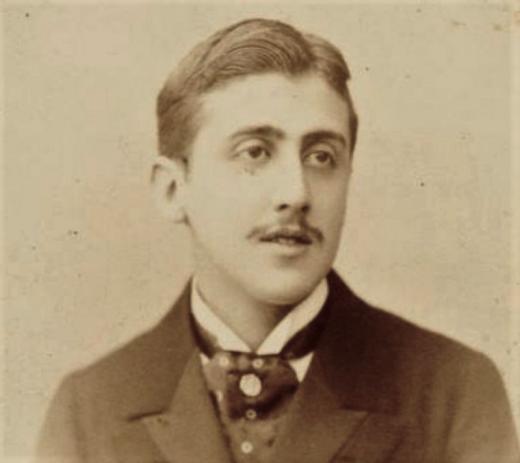
A Proustian moment, based on the writings of author Marcel Proust, occurs “when a sensory experience triggers a rush of memories often long past, or even seemingly forgotten”. The nature of Proustian moments suggest that we do not seek these moments so much as they find us. We cannot create Proustian moments, in other words, they just happen. They are similar to the tool a writer uses to set a joke up. The writer foreshadows the payoff with a subtle, unusual moment that has no conclusion. The writer then moves the narrative to a seemingly unrelated matter and combines it with that subtle unusual moment to form a rewarding payoff for the audience.  

If someone told me about the concept of the Proustian moment, I probably would’ve considered it so obvious that it was hardly worth discussing. If they defined it for me to further its alleged profundity, I would’ve said, “So, you see, hear or taste something that sparks a memory of something else? And someone developed a literary term for it to make it seem more profound? It’s called a flashback, and I probably have about one a month.” As a writer, I may have considered it a fascinating idea to use a ham sandwich to spark a distant, fond memory for one of my characters, but I would’ve dismissed it as a real-life profundity. The whole concept sounds like something overly complicated people do to add complicated intrigue to their otherwise simplistic lives. 

The Proustian moment in Marcel Proust’s novel Remembrance of Things Past involves the character experiencing a moment with a soupçon of cake in tea: 

“… I carried to my lips a spoonful of the tea in which I had let soften a bit of madeleine. But at the very instant when the mouthful of tea mixed with cake crumbs touched my palate, I quivered, attentive to the extraordinary thing that was happening inside me.”

Yeah, that ain’t me. I enjoy the sensory experiences involved in eating and drinking as much as the next fella, and I appreciate what they have done to help me sustain life for all these years, but if a ham sandwich caused me to “quiver, attentive to the extraordinary thing that was happening inside me,” I probably would’ve considered it a sign of gastro-intestinal turmoil. 

Those who seek literary terms to define their quivers are often complicated, dramatic types seeking spiritual connections, and they often define their creativity by doing so. To the rest of us:

“It’s a ham sandwich,” Gil Burkett said. “Let’s not over-complicate this.” Gil Burkett often said things like this to rein me in when I attempted to assign literary value to the mundane, and minds like mine need Gil Burketts to remind us that some ham sandwiches just taste better than others for real world reasons. A slice of ham of higher quality than we’re accustomed to make the sandwiches taste better, for example, an expert sandwich maker can perform their magic on the ingredients, and there are time and place situations that can influence the taste of anything. We might be hungrier than we were the last time we had a ham sandwich, and everything tastes better after a rigorous workout. I could’ve ended this debate by letting Gil try my sandwich, but that would’ve been such a violation of my constitution that I was willing to be wrong and allow his “It’s a ham sandwich” to be the final word. 

Ham is an overly salted meat, and salt makes everything taste better, but it is really unhealthy. I spent most of my life railing against the purveyors of what’s healthy, and I based my personal definition on how it affected me. For most of my life, I could eat and drink whatever I wanted, and the incredible machine that is my body helped me overcome most of what I put into it. As we age, that incredible machine begins to lose some of its superpowers, and the unhealthy nature of food or drink becomes more obvious. My body began reacting very poorly to these unhealthy foods, and I responded by not consuming them.

Thus, when I tried my first bite of a KFC chicken leg after years of abstaining, it was glorious. Why was it so glorious? Did I consider that KFC chicken leg, and that ham sandwich so delicious, because absence makes the palette grow fonder? Did I need more salt in my body to counter all the gallons of water I now pour into it now to try to stay in alliance with modern health edicts, or did their taste and smell remind me of something so long since passed that I didn’t even know that memory existed? After these experiences, I tried eating them both a couple more times before the unhealthy effects of eating them outweighed whatever caused me to enjoy them in those moments, and I realized, there was nothing special about them. I still don’t know why they tasted especially good on those occasions, but I didn’t try to make any connections, until my cousin threw out an offhand comment:

“Do you remember when your dad used to buy a bucket of KFC and take you and your mom to the city park, before they married,” she said. “He did that all the time. He did it in an attempt to win your heart.” (She was referring to my step-dad.) 

I was so young that I don’t remember the particulars of those days in the park, but I’ve always felt some kind of weird connection to the red and white stripes that KFC has on their buckets and signs. I initially thought it might have something to do with my fascination, bordering on obsession, with the colors, red, white, and black. This near-obsession goes so far back that I just assumed that it had something to do with the colors of my favorite college football team, the Nebraska Cornhuskers. (Side note: Psychologists suggest that our favorite colors can have a relationship with our favorite teams, as green cars sell better in Wisconsin than anywhere else in the nation, purple cars sell better in Manhattan, Kansas, and red, white, and black cars sell better in Nebraska.) My favorite album covers, my other favorite football team, and every car I’ve purchased are red, white, and black. I have always assumed that my affinity for these colors developed in the years I spent cheering on the Huskers, and I still think that, but I now consider it a possibility that some part of my associations with these colors developed much earlier, because they may have reminded me, on some subconscious level, of the time my step-dad stepped in to rescue me from a fatherless maturation. If you posed this notion to me as a possibility, before my cousin said that, I probably would’ve been laughing louder than anyone else in the room

I was so young when catastrophe struck that I can’t remember the catastrophic circumstances firsthand, but I wonder if those red and white stripes signaled some sort of salvation, or hope, in some way that a two-year-old couldn’t recognize at the time, articulate, or appreciate as a seminal moment. I think I just knew, on some level, that I was being saved by a generous man, and the strong, very distinctive smell of KFC chicken might have reminded me of a moment buried so deep in the recesses of my psyche that it took a period of abstinence to rekindle it.

When all that happened, and I dug through my psyche to try to connect the associations I made to the red and white stripes, I remembered that extraordinary ham sandwich.

When my step-dad eventually became my only parent, I grew to despise the ham sandwich. The ham sandwich was his answer to all my needs. When I was hungry, and I was always hungry as a teen, my step-dad said, “Make a sandwich.” The sandwich became a symbol for my dad’s insistence that I was going to have to learn to resolve every problem myself. In a rational world, that makes sense. We all raise our children to help them become self-serving adults. I was a teenager at the time, however, an irrational and emotional teen trying to make sense of the world, and in my world a parent not leaping to their feet to feed a child was a crime against humanity, and his desire to help me help myself sounded like an excuse for him to avoid doing anything. The ham sandwich, the bologna sandwich, and sandwiches in general became a symbol for my dad’s refusal to do anything to satisfy my greater needs. I was being unfair to my step-dad, but isn’t that the nature of being a teenager?

Toward the end of his life, my dad and I managed to bridge the many gaps that divided us, and I stopped negatively associating the ham sandwich with him by the time I ate the extraordinary one. Those connections are admittedly loose, but I wouldn’t have made them were it not for my cousin telling me about the through line I had with my step dad and KFC, and this idea I must’ve had that everything was actually going to be ok in my life. 

My recognition that I might have had a Proustian moment involved a series of click backs that occurred over years, perhaps five-to-ten-years. I’m a skeptic who is generally skeptical of all who play this game of connect the dots, and I reserve some skepticism for my own experience with this concept. I am intrigued with it as a writer, but I reject it as some sort of real-world explanation of something that might have happened to me. My primary influencers instilled in me the instinct to reject the idea that occurrences in life can be commingled with complicated and dramatic literary references, and they convinced me that it’s my creative mind that assigns that level of significance to coincidences. They taught me that most of us live such relatively boring lives that we seek complication and drama, but there are moments when we have small but significant flashbacks that are almost impossible to define in the moment.

“Wait a second, what did you say a Proustian moment was again?” I asked those who introduced me to the term, clicking back. “Now that I think about it, I might have had one of those.” That click was preceded by my cousin’s offhand comment, which clicked me back to my KFC experience that ended up clicking me back to my unusually enjoyable ham sandwich. I knew there was something noteworthy about that ham sandwich, but I didn’t go around telling anyone about it. It wasn’t that special, but when my cousin unlocked the KFC question, I remembered that ham sandwich. I write that to illustrate that I’m not the type who seeks connections to physiological memories. I am usually satisfied with ordinary explanations that align with the term coincidences. There is a reason, however, that smells and scents have an unusual effect on our brain, and it has everything to do with the nose and the olfactory senses proximity to the brain. Scents and smells affect taste, of course, but when we smell something it washes over the brain. As quoted at the beginning of this article, “Scent, emotion, and memory are intertwined,” and “Smell and emotion are stored as one memory,” as Ms. Dawn Goldworm asserts. They can trigger a memory of a situation in our lives, so completely, that we’re there in every way but physical. We might not know where we are, or where we were if we never clicked back, but there is a confusing, almost palpable feeling that for one fleeting moment we’re somewhere else in time. If you’ve ever seen the incredible movie Somewhere in Time, you’ve seen a man convince himself that he was back in time. Was it nothing more than a powerful and surreal dream he had as the film alludes, or was he really there? I’m not saying physical time travel is possible, but I’ve now had two Proustian moments that lead me to think that when a particularly distinctive smell washes over our brain it can take us back in time in a way that seems, and feels, so real that it can provide a “sensory experience triggers a rush of memories often long past, or even seemingly forgotten” that leads us to believe that we are there in all ways but physical, if only for one brief and very pleasant moment in time.
Yesterday I Learned … IV


Yesterday, I learned that taste is so relative that it must be impossible to make any money trying to appeal to it. “If you want to write a best seller,” experts say, “read through some books already on the list. If you want to make a living at this game, you need to know the trends.” The word flavor should have a capitalized ‘f’ attached to it in this article, for it focuses on the wide spectrum of taste. Food and drink have a flavor of course, but so do music, literature, and all of the arts in the sense that some of it creates the same but different tingles in the brain.

Yesterday, I thought I had a universal sense of humor. Today, I realized that most appreciation for humor is conditional and polite. If our audience is predisposed to find us disagreeable, they will not laugh at anything we say. Humor and laughter also involves a certain quid pro quo agreement that calls for us to laugh at their attempts at humor. If we fail to live up to our end of the agreement, they will not even laugh politely at our attempts to be humorous. Toddlers and other kids are not a part of this agreement. Kids are the very definition of honesty, and they have no agendas, especially the ones we’ve never met. If we’re behind one in our local Wal-Mart, we might try out our best “baby laugh” material to see what kind of reaction we receive. They will turn away at some point, but if nothing else distracts them, we’ll get a second glance followed by a reaction. If we don’t get a second look, or a subsequent reaction, we can go ahead and assume that we’re probably are not as funny, or as charismatic as the polite and conditional reactions led us to believe.

Yesterday, I thought people people were so unusual. “I’m just a people person,” they might say when we ask them why they enter a business enterprise just to chat with some of the employees. “I don’t know why, I just like being around a lot of people.” Today, I found the term people person an unusual, accepted description healthy men, and women, use to describe themselves. We all enjoy speaking with other people, we do it all day, but some people go out of their way for some quality conversation. 

When I was much younger, I hung around my friend’s liquor store, and I worked in restaurants, and hotels. I saw a wide array of people people who walk into an establishment and just start talking to whomever would speak with them. These people “stick around” for a chat that can last hours. They even endure long lulls, hoping that some provocative conversation will weave its way through it all. They just stand there silently, trying to think up something interesting to say. My first thought was that these conversations sprang up in a more organic manner, until my friend said:

“Nope! He stops in here, every other day, and talks my ear off about the most inane stuff.”

Some men would walk into the restaurant where I worked, alone, and ask for a table in their favorite waitress’ station. Most of them didn’t have a newspaper or anything to busy themselves while they waited for her to chat with them. They usually entered after the breakfast rush and before the lunch crowd, so the waitress would have a couple of minutes to chat.

“Why do you stop and chat with these guys who seem to be a little creepy,” I asked one of the waitresses.

“You can tell he doesn’t have anyone,” she said, “and he’s harmless … trust me. Plus, he adds a couple bucks to the tip when I take the time to chat with him.”

I thought they were wrong. I thought they underestimated these guys. I didn’t want anything to happen to them. They were my friends. I was wrong. I over-estimated these guys. They were, in fact, harmless, insofar as nothing ever happened in my time there. These men weren’t just alone in life, they were lonely, and they had holes in their soul. Some of them were old, but most of them were men in their prime who would get dressed up, perhaps sprinkle on a little cologne, and get regular, fashionable haircuts for the purpose of fostering the belief that they might have a chance to spend some quality time, between the breakfast crowd and the lunch crowd, to speak to young, attractive girls.

If the traveling businessmen who frequented our hotel were lucky enough to time their entrance into our hotel, so that one of the cute, young women on staff checked them in, they would remain at the front desk long after their check in was complete. They just wanted to chat with some young women, and hopefully make them laugh a couple times. I intervened in these conversations multiple times, but they made it clear they had no interest in speaking to me. They weren’t rude, but I was obviously not the purpose of their chats.

“So how you doing?” they would ask these women with all of the urgency removed from their voice. They, too, were harmless individuals who just wanted someone to speak with young women. Most of them didn’t want to date these girls, or see them in varying stages of undress. They just wanted to chat. They wanted these girls to think they were people people. They were so alone that they just wanted a couple of minutes of that girl’s time to break up the quiet, tedious monotony of their lives, and have just one attractive, young female on God’s green earth say:

“Hank Schwertley, how are you doing? How’s that God forsaken Cutlass Supreme holding up for you?”

Business needs often ended these conversations abruptly, and when they interrupted the conversations, I could see the beaming smiles on the customers’ faces collapse. Their face went back into the more customary expression of fatigue, sadness, and loneliness that the muscles in their face were used to supporting.

The customers at the hotels and restaurants appeared to be normal men, with normal and pleasant dispositions, and it seemed impossible to me that they couldn’t get some woman to pay consistent enough attention to fill that gap they needed filling.

“You want to be a traveling salesman?” one of these men, a traveling salesman who stayed at our hotel so often I knew his whole life story said when I expressed some polite, conversational interest in his profession. “The first thing you’ll need to do is forget about ever having a family,” he said. When I asked why, he added that, “It would be unfair to any woman, much less the children you produce, to be on the road about 200 hundred days a year.” My shock was obvious in his expression, as he sought to lessen the blow, but he could not redefine the impact of his statement. Prior to his cautionary description, I considered this man a successful, self-defined man. After it, I saw how lonely he was. From that point forward, I realized he was a second fiddle. I finally saw him as the Stan Laurel, Bud Abbot character he was, who bounced off the more charismatic centerpiece of the conversation. Even in the polite, time-filling conversations we had with him at the front desk of the hotel, this man was always a second fiddle.

When we have such conversations with the people who orbit our lives, they remind us how fortunate we are to have people who enjoy being around us. I’ve felt lonely before, but I’ve never felt so alone that I went into an establishment just to speak to someone for five minutes.

Who are these people, and what do they do in life to gain some separation from the lives they selected. They want moments in life to help them make it to Thursday, and they want to find someone to notice them long enough to achieve some level of companionship, even if it’s only for five minutes. My experience in the service industry also taught me that they are a lot more common than most people think.

The Expectation of Purchasing Refined Tastes


“One of the worst things a person can be,” purveyors of social commentary say in various ways, “is a consumer, and I say that word in the most condescending manner possible.”

Such statements often receive wild applause and raucous laughter from esoteric, refined consumers in the audience. An overwhelming majority probably consider such statements brave and bold, but they don’t consider the idea that the condemnation is directed at them too. No one, in such an audience, would stand up and say, “Hey, I’m a consumer. How dare you crack on my people?” These people probably picture that consumer they know, that ooky sap who actually purchases consumable products. They know that they purchase products too, but they’re not consumers in the sense that they appreciate capitalism. They define themselves against a mark of exaggerated contrast, and they’re often not objective enough to understand that the authors of such quotes intend to include everyone but the author.

“What is the difference between consumers who deign to purchase consumable products sold at McDonald’s and those sold at the local mom-and-pop shop?” I would love to ask such authors. The answer, of course, would be that one while one may be a consumer, the other is a consumer, and we are to pronounce the latter in the most condescending manner possible. This distinction became clear to me when I informed some friends of mine that blind taste tests showed that McDonald’s coffee tested as high as the coffee found in some of the small mom and pop coffee shops the more erudite visit.

“Pshaw!” they said without using that aristocratic word. They opted for more refined and somewhat polite (see condescending) words, but the message of their response was that they are more cultured than those involved in blind taste tests, and more posh and eclectic. They eat sushi and Thai, and they broaden their minds by listening to exotic podcasts and watching obscure documentaries.

I confessed to them that I probably couldn’t taste the difference between the beans, and most of the products I consume would be more at home on a 1950s table, before the research on food taught us what we now know. I confessed that I enjoy some broadcast television and I enjoy reading mainstream books sometimes. I may as well have admitted to being a Neanderthal.

These people are coffee aficionados. They enjoy an exotic bean exclusive to urban coffee shops that I’ve never attended. Their homes come equipped with exotic coffee makers that require minimal mixing times, gentle air pressure pushes, and low brewing times for professional cuppers and true coffee connoisseurs. I am not welcome in their world.

Their world involves community venues (see coffee shops in the Neanderthal’s lexicon) with artistic geniuses throwing brilliant ideas at one another under exotic Matisse paintings, all while learning to love various styles of coffee beans that are beyond me. Some of the community venue customers have goatees, and others have cornrows and dreadlocks, but they are all very Euro. They also feel a little sorry for bourgeoisie like me, who know little beyond the pleasures of a mundane McDonald’s cuppajo. “Pshaw,” they say, but they would never actually say pshaw, as I mentioned, for elitists say, “Pshaw,” and they abhor elitists.

They feel at ease when bracketed, alongside fine wine drinkers. They eat Foie Gras, black pudding, and organic foods. The posh, eclectic types don’t eat caviar anymore, beluga or otherwise. “Caviar is a product consumed by consumers with wealth,” they say in the most condescending manner possible. Their condescending caricature of consumers with wealth mirror those found in episodes of Scooby Doo, Captain Planet, and Gilligan’s Island. Caviar doesn’t provide prestige in community venues. Foie Gras is the new caviar.

“But Globe and Mail listed blind taste tests conducted by various institutions, including Consumer Reports and other online Canadian websites, and they found that the coffee offered at McDonald’s and Dunkin’ Donuts tested better than the products sold at Starbucks or Tim Horton’s,” I told my friends.

This didn’t shock them, as they heard tell of similar blind tests done with similar products, but that never led them to question their beliefs. They were confident that their tastes were more refined than Americans’ taste. (A phrase to read in the most condescending manner possible).

They answered my follow-up clarification with, “Oh, no!” and a titter almost leaked out in reaction to my lack of knowledge. That condescending titter may have made it out of the less refined. It was obvious to all of us that I knew nothing of coffee, and they appeared to be a little embarrassed on my behalf, for being so clueless to attempt to step foot onto their home turf.

“We don’t like Starbucks,” they said, “And we’ve never heard of Tim Horton’s.” 

They missed the general point I was trying to make, but it wouldn’t have mattered if the magazines performed specific blind taste tests on their specific brand of coffee. They would continue to consider themselves exceptions to the rule. They are posh and eclectic. I couldn’t know to whom I was talking when I was talking to them. No one could.

✽✽✽

In his book, You are Not so Smart, author David McRaney cites such blind tests with professional wine sippers. “The tests incorporated cheap wines as well as expensive, exotic wine to see if the connoisseurs could tell the difference. The results were quite shocking. Not only did they exhibit an inability to discern between the chintzy and the pricey, but the brain scans of the professionals also revealed that they were not lying when they stated their preferences. Their brains actually altered with excitement when they drank the more expensive wine. One particular test asked controllers to place the same wine in two different bottles. They informed the professional sippers that the wine in Bottle A was expensive and exotic, while Bottle B contained a bargain brand. The subjects’ brain scans lit up in response to the contents detailed in Bottle A, allowing the conclusion that the professional sippers grew more excited by the expectation of sipping something more expensive.”[1]

Elevated expectations are not limited to Pepsi drinkers, domestic beer drinkers, or those consumable products developed by corporations that spend billions on marketing to achieve brand name recognition. Some just prefer imported beer, expensive wine, and Colombian coffee. These allegedly high-end products define them in a manner they find pleasing, but we’re all products of marketing, packaging, and environment. Expectation might also lead us to believe a product we believe in.

“Have you tried the latest lager from Djibouti?” Gucci asks Dior. “You simply must! It exhibits an exceptional respect for the ancient art of brewing. It is a highly fermented lager with a light malt, corn, water, hops and a yeast that gives it a bright, golden hue with dazzling reflections.” When Gucci concludes his exotic narrative, Dior must have it. Is Dior so excited to try it because Gucci’s narrative elevated his expectation? Maybe, but he also wants the aura and the identity inherent to drinkers of lager from an exotic sounding place like Djibouti. He wants that prestige, coated on his epidermis for the attendees of the next party he attends to see. The fact that those who have even heard of Djibouti could not spot it on a map makes its lager even more alluring. Even if Dior doesn’t know anything about Djibouti, what’s a little pregnant pause between friends?

These types wouldn’t be caught dead sipping a McCafé drink, as those consumers who prefer a community venue that offers exotic coffee beans with exotic flavors for the exotic mind would define drinking that as consumerism in the most condescending manner possible. If they entered a community venue that offered an exotic coffee bean, and they saw paintings of cartoon clowns on the walls, my friends would consider the bean inferior. If, on the other hand, that same venue had Matisse paintings on display and all the consumers donned goatees and dreadlocks, I’m quite sure they would be sipping on that same bean with a satisfied smile.

The advertisements for such products might not show sports heroes clinking glasses or horses kicking field goals, but that’s not who they want to be anyway. As they pass by their local McDonald’s, en route to the community coffeehouse that offers an environment more suited to someone with esoteric and refined taste, they scoff at American consumers who are susceptible to such blatant marketing. They do this without recognizing that the stratified American marketplace appeals to consumers and consumers.

If an individual attempts to open a McDonald’s franchise, the franchise adviser will inform them that all McDonald’s franchises must be X number of miles from the next nearest McDonald’s location. They base this notion on the fact that the marketplace cannot sustain two such facilities too close together. Those in charge of mapping out franchise locations would inform a potential franchisee that the optimal location would consist of no fast food restaurants within X miles of the franchisee’s desired location, but with the ubiquitous nature of fast food restaurants they concede that is becoming a logistic impossibility. If that franchisee wants to open a McDonald’s right next to a community venue, however, the franchise locator will inform them that this is much more feasible, as they appeal to such different demographics. The point is that those who believe they are not susceptible to the crass marketing schemes employed by the famous Golden Arches franchise may be right, but those marketing schemes are too immediate for Foie Gras eaters. They prefer a more subtle marketing scheme that appeals to quieter sensibilities, an environment tailored to their personality, and a presentation that speaks volumes with no slogans. They are different from consumers, but they are really just another link in the chain of this huge, monolithic beast we all call capitalism.

There may be a difference between the taste of the exotic Kopi Luwak bean and the beans used in McDonald’s coffee, but most don’t know the difference, at least not to the degree that they can tell in a blind taste test. That may be an exaggeration of the extreme. Perhaps the Kopi Luwak coffee berry that passes through the digestive system of the Peruvian Civet Palm Cat, and is then picked out of that cat’s dung, is so refined that there is a discernible difference between that and McDonald’s coffee. On a more linear scale (say Starbucks) McDonald’s coffee proves comparable in blind taste tests, if not superior.

Even if I presented this information in conjunction with the tests that suggest McDonald’s provides a superior cup of coffee, I’m sure these friends would pshaw me. Whether or not they’ve ever tried a selection on the McCafé menu, they would know it to be an inferior product. Their pshaw would contain elements of the messenger within a message, for they would assume that it was Americans who were involved in those blind taste tests, and those Americans were likely truck drivers and church goers from Iowa or Nebraska. They would know that everyone they know knows better. They know I know little about coffee, and they know I have no idea to whom I’m talking when I’m talking to them.

I prefer to think I’m not one of these people. I prefer to think I’ve made conscientious choices that have made me a Bud man and a Pepsi drinker, based on the flavor of those drinks. I understand that the feds prohibited Budweiser and all alcohol producers from visually representing humans consuming alcohol in their TV commercials. In reaction to this prohibition, marketers of such products began selling a lifestyle to those who might consume their products. We all watched those commercials, and we even enjoyed a few of them. Some of us might have unconsciously selected our brand based on the lifestyle those commercials projected, but did we enjoy the products more because we enjoyed the affiliation? My friends would pshaw at such reflection, for they know who they are. They know they’ve made conscientious choices in the products they’ve decided to consume, but the fundamental question remains: Are we buying products based on flavor, discerning tastes based on trial and error, or a level of refinement we gather with experience and age. Or, are we all susceptible to the purported lifestyle the marketing arms sell to consumers and consumersWhen we begin to purchase a product to a point that we establish some level of brand loyalty, are we making the statement that we are informed consumers who choose one product over another based on our refined individual tastes, or are we attempting to purchase a lifestyle that some part of us knows we’ll never achieve, until we purchase it so often that we do?

[1] McRaney, David. November, 2011. You Are Not So Smart. New York, New York. Penguin Group (USA) Inc.