You could say I’m terrified of heights, but they’re just the delivery system. What I really fear is the rapid, involuntary reunion with the ground.
I’ve tried multiple variations of that unfunny joke through the years, because I want something to say when the questions, the teasing, and the antagonism starts. The best thing to say in these moments is something, because I’ve tried saying nothing, and it doesn’t work. I also need answers to the internal dilemma I experience when I encounter those who fear just about everything but heights. What’s different about me? If I had an actual phobia, an acrophobia, I wouldn’t be able to climb ladders, go on roller coasters, or zipline through a forest. I found an answer that states that I’m not in the five to ten percent of those who suffer from some form of acrophobia, but I fit within a broader, non-phobic category of twenty-eight percent who suffer from something called a visual height intolerance (VHI). This isn’t the answer I was searching for, but it is an answer.
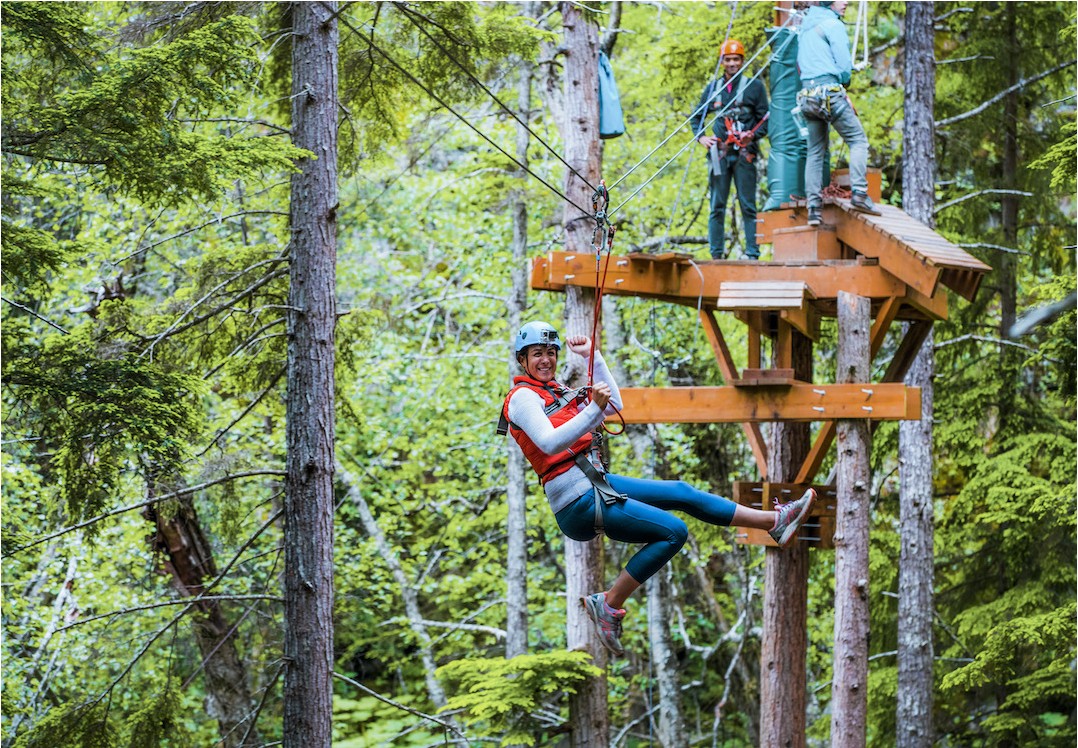
Even with that answer, those of us who suffer from VHI don’t understand why we have an irrational, emotional reaction to heights that frail, little old ladies and young teenagers don’t. It makes no sense to us that we struggle to stand atop a twenty-foot ladder and jump into a thirty-foot void tied to a zipline, and other people don’t.
As our group of eleven made our way through the various ziplines, we got to know one another in superficial ways, and we learned that some of us are doofuses, but even our doofus demographic weren’t as scared as I was. They were having fun. I wanted to believe they were too dumb to know how much danger they were in, but when the people who were more intelligent than me screamed with glee on their turn, the only answer left for me was that I was a fraidycat.
If you’re an awful, offensive person, you probably attract offensively awful people as friends, and if you don’t have answers for them, they’ll hit you with every mean-spirited, funny joke they know. I also have nice friends, but their sad, sympathetic looks hit deeper than my friends’ jokes, and I tell unfunny jokes to keep those looks off me. No matter which side of the fence they’re on, I suspect that most people enjoy tasting another’s vulnerability so much that they can’t hide their sympathetic, concerned smiles. I know this because that’s how I react to their vulnerabilities.
“You didn’t like the zipline? Because I thought it was fun!” they say. It’s humbling, embarrassing, and frustrating to be this scared of something that people who make no sense enjoy. We can drop our “C’mons!” on them, but after we algorithm their answers, we find that they genuinely enjoy ziplining. I realize I have no answers for that, other than I’m just scared. I’m scared of something that frail, little old women and teenagers aren’t. The idea that the zipline experience didn’t rattle the teenagers, in particular, really got to me, because I was the one who helped them get over their irrational fears. “Monsters don’t exist,” “Most bugs aren’t as big as your fingernail,” and “You can take control of your nightmares in a way that will prevent them from being as scary.” I taught them that if they are able to rationalize the irrational, they might not fear it as much. I helped them conquer their worst fears in life, and they’re the ones now giving me sympathetic, concerned smiles.
But I Did It!
One of the answers I have for why I fear ziplining so much is that the plot of most of the nightmares I’ve had since I was a little kid involved being high up on something, looking down, then falling off (or stepping off) a platform into nothingness. We now call this ziplining.
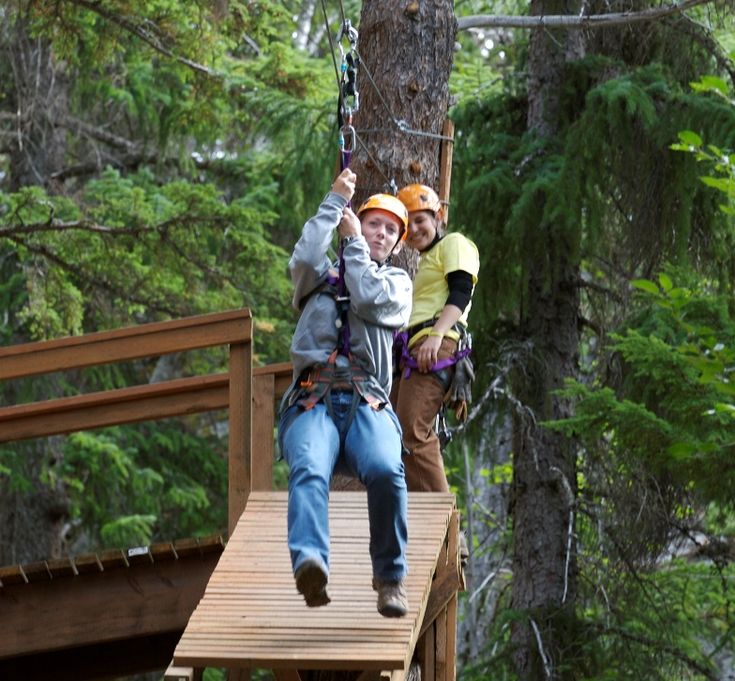
I did it though! Before we continue, I want it noted that I managed to separate myself from what researchers call a clinical case of acrophobia to one who suffers from what they call a visual height intolerance (VHI). Those with a clinical case, the roughly five to ten percent, would’ve never been able to step off that platform into nothingness secured to nothing more than a line with three reinforced nylon ropes. I did it. I braved my worst fears, and I tweaked those (to me, crippling) fears by ziplining through a forest. I jumped off five different ledges and zoomed 30 feet above the ground from tree to tree. It was one of the greatest accomplishments of my life, and that’s not hyperbole for me. I know that’s sad, but it’s sad but true.
Now, how many of my most beloved and loyal members of my friends and family do you think joined me in the celebration of my accomplishment of conquering what I considered the most terrifying experiences of my life? If you guessed zero, you are correct. I didn’t really need anyone to congratulate me, because when I finally touched ground, I experienced what Irvine Welsh wrote about in his 1993 novel Trainspotting “doing heroine [is] like having 10,000 orgasms at once”, except I would replace “doing heroine” with ziplining. I didn’t need anyone to intensify my reaction to completing the course, in other words, but when they asked me: “Are you going to do it again?” my disgust broke out:
“Who gives a crap! Right now?” I said. “We’re not even a minute away from me conquering my greatest fear in life, and you’re asking me if I’m going to do it again? Why don’t we take a minute to celebrate what I just did.”
I enjoy being human don’t get me wrong, and I’m not going to switch species based on one petty grievance, but why do we insist on asking someone if they have the skill, temerity, and resolve to accomplish something great, momentous, and unprecedented again? Why do we insist on doing it right after they did it? They don’t let us savor our accomplishment for one minute. When we graduate high school, which was an incredibly arduous accomplishment for me, the first question was, “So, where are you going to college?” When we receive a promotion, they ask, “Is this a stepping stone, or are you going to fly higher?” Who gives a crap about that now, right now? Right now, I think you should say, “‘Holy Larry!’ You did it!” The key to my frustration, if you haven’t guessed is the “right now” portion of this ubiquitous exercise, the present tense, as in just minutes away from our grand accomplishment. We can get around to all the other stuff when we get around to it, but for now, help me celebrate this accomplishment.
In the history of Super Bowls, there have been a little over 3,000 NFL players who have reached the pinnacle of winning a ring. As evidenced by the idiotic and obnoxious sideline reporters, we don’t want to let those elite athletes celebrate their enormous accomplishment for five minutes, as these reporters ask the star of the game, immediately after the game, ‘Do you think you can do it again next year?’ The player responds, “I’m just going to celebrate this one for a while.” Rather than focus on the incredible athletic achievement these fifty-three players, coaches, and the team’s hierarchy just accomplished, we want to know if they think they’re going to be able to win it all again next year. I want one of these players to look at these reporters with disgust and say, “Do you want to know what it took from us to get to this point? Do you have any idea what it takes to win what might be the most difficult and prestigious trophies in our country? Do you want to know anything about the sacrifices the fifty-three players on our roster made to make this happen?” I want this NFL player to add, “All those hours you spent watching Netflix, going to parties, and sitting around watching sunsets, I was in the weight room, in dark film rooms, and in grueling two-a-days, and doing it over and over again all year, and that’s not even accounting for everything we did in past years to get to this point. We haven’t had a drop of alcohol or smoked anything all year. I haven’t had a slice of cheese in three years. And we did it all for this moment, so could you, maybe, just give me a moment to celebrate what it took me and only about 3,000 other men to accomplish in life?”
I understand that some anonymous boob ziplining 30 feet off the ground doesn’t even come close to winning a Super Bowl, but conquering my crippling fear felt just as momentous in the moment. When I reached the final platform, and it was over, truly over, I felt an adrenaline rush that informed me that I could do anything I wanted to in life. When that adrenaline washed out of my system, I softened my stance a little, because I realized that my friends and family couldn’t understand how huge that moment was for me, but I added that it would’ve been nice if they asked me to try to explain it to them before asking me if I was brave enough to do it again.
I’ll admit that I likely won’t do what was one of the most terrifying experiences of my life ever again (insert your small smile of schadenfreude and sympathy here), but why does that matter? Correction, maybe it should matter at some point in the future, let’s say the one or two years from now when we talk about ziplining again. For now though, right now, let’s just let me celebrate my crowning achievement for a moment. Let’s just take a second and realize how hard this was for me, and let’s celebrate the fact that I did it all with a dry throat and quivering legs.
When they ask, “Are you going to do it again?” they usually follow our ‘no!’ with, “Really? Because I didn’t think it was that big of a big deal. It was 30 feet off the ground. That’s considered a minor to low-medium elevation zipline experience.”
Our ziplining experience was probably equivalent to a kiddie slope in skiing, and all people and companies that offer ziplining experiences know to go over the top with safety measures to make sure their customer base feels secure. This involves being secured in at three different points and various other procedures the employees require their customers to go through. Our lives were never on the line, in other words, but that’s all rational and reasonable. Those who suffer visual height intolerance (VHI) and a clinical case of acrophobia know that a fear of heights is irrational, unreasonable, emotional, and now we know that it’s partly psychological too.
Partly
If you missed the key word of that last sentence, go back and reread it and focus on the third to last word of that last sentence partly, for therein lies an answer.
The research states that the majority of my fear of heights is mental/ psychological, but there are physical elements involved too. That’s right, I found an answer to why some frail, little old ladies who fear things that go bump in the night, and teenagers who still have some remnants of fear of the boogieman haunting their dreams don’t experience crippling fear on a zipline’s platform, and I do. If you’re an acrophobic or one who suffers from VHI, and you don’t have an answer, you might not consider this a quality answer, but I’m okay with that, because like fear in general, the quality of answers are relative to the person.
Research has concluded that some brains are just different. That’s not a mind-blowing revelation, I know, but it opens up the idea that some brains, be they in the little old lady or teen demographic, adjust well to heights. Others don’t, and the fear that others experience might feel psychological, but its roots are partly physical too — and those roots vary from person to person. At certain heights, an individual’s balance system, their proprioception, or equilibrium, becomes less stable.
The sensory‑motor system (vision, vestibular organs, proprioception) of the acrophobic and VHI sufferer generates stronger instability signals at heights. The brain’s balance system—its ability to sense its position, movement, and force without relying on visual input, enabling balance coordination, and precise motor control—becomes less stable at varying heights. Some brains interpret that instability as danger; others don’t. It all depends on which side of that divide you fall. When visual cues are far away, those with a condition can’t use them to stabilize posture, so sway increases. Some people’s brains treat that sway as a threat, triggering fear. Others feel the same physical shift but don’t interpret it as danger. Put simply, some brains handle visual–vestibular mismatches smoothly; others become unstable and anxious. If the acrophobic and VHI person experienced frightening experiences, or they dreamt them up, they may have incidentally linked instability with danger. Others don’t make the same associations. The individual who doesn’t fear heights isn’t braver or made of a stronger constitution, their body just doesn’t send “danger” signals at heights, and their brain won’t amplify those signals.
We do it to ourselves, in other words. Some of us may have experienced real life incidents that forever shaped our reaction to heights, but most of us train our overly creative brain to react to heights in such a manner. If we have always imagined the worst, and/or experienced decades of nightmares where heights played a main character, our trained brain will not handle vestibular mismatches smoothly, and our body won’t stabilize posture very well when visual cues are so far away. As I wrote, sufferers might not consider that answer an epiphany, and it might not prevent the pack of wolves, we call friends, from whipping out their measuring sticks to prove superiority, but it is an answer.
It’s also an adequate answer to the question, “If you received such an adrenaline rush from tweaking your fear, why wouldn’t you want to do it again?” Adrenaline rushes are short term fixes. They’re not the answer, as we will be just as afraid next time as we were this time, because the portion of our brain that regulates proprioception, or equilibrium, when we’re high up is still going to be a little off.
My final word to those who suffer from these varying levels of fear when they’re high up is, there is something wrong with you, but it’s not what you think. You’re not a coward, a fraidycat, or a wimp. Your brain is just a little tiny bit off, and in the grand list of physical, psychological, and mental disorders this might be the one everyone would pick if they were forced to pick one at birth.
So, the next time someone calls you chicken, a wuss, or a fraidycat, you can now say, “Well, it’s partly that, but it also has something to do with my overly active sensory-motor system cranking out premium-grade instability signals the moment I achieve altitude. My brain simply refuses to handle visual-vestibular mismatches with any dignity whatsoever.
“And yes, it’s mildly embarrassing, as I’ve never actually plummeted from anything noteworthy. After mining the scientific research put into the study of me and my 22-28% brethren, the best answer I found is that I did this to myself. My overly creative brain has changed me into a certified neural drama queen who instantly routes even ‘minor sway’ into the ‘instability equals instant doom’ shortcut anytime I achieve at least twenty feet of altitude.
“You, on the other hand, haven’t trained your brain to broadcast or amplify overly theatrical danger signals. Congratulations, you calm biological member of the majority, but you’re not necessarily braver or composed of a stronger constitution, your hardware just isn’t quite as hysterically talented as mine.”
I’m not afraid of spiders, snakes, enclosed spaces, injections, germs, thunder and lightning, dogs, flying, or flying dogs, but I do have one highly irrational and emotional fear related to my visual‑vestibular conflict. When I started my research, I wanted to find that we have some gene variant or some sort of genetic clue involving the inner ear that helps us regulate balance. I wanted to be able to say that my condition was directly related to genetics, so I could blame someone or something else. The best answer I found is that modern scientific research finds that my system is likely over‑responsive to height‑related visual‑vestibular mismatch — something that can be influenced by genetics, but also by experience, conditioning, and neural wiring. I wanted something I could drop on my family members and obnoxious friends, but there’s no conclusive, proven casual links. I wanted to find satisfying clarity, but every study kept coming back to the idea that an overwhelming majority of my problem is all my fault, and the same level of creativity I use to write on this site is the culprit fueling my greatest fear. It’s an answer, but it’s not a very satisfying one.