“Try saying something other than ‘Good boy’ to your dog the next time you reward them for good behavior,” said a human who claimed to know more about dogs than other humans. “Your dog gets tired of hearing the same phrases over and over again. Mix it up and keep it fresh to allow for greater stimulation of your dog’s mind.”
 I am not an expert on dogs, but if this is expert advice, then I wonder how we qualify the term expert. “They spend a lot of time around dogs,” you say. Okay, but I spend a lot of time around my dogs, and I notice that they prefer that we keep it simple and consistent. This expert is basically suggesting that the best way to enhance our relationship with our dog is to complicate our relationship with them.
This expert is not talking to dogs here. He’s talking to us, trying to justify his title as an expert. If this expert said, “The next time you want to reward your dog for good behavior, say ‘Good boy!’” We would all question his title for saying what we already know. They know this, so they tweak our common knowledge in a harmless way that most of us won’t follow. If we do, we might try it once or twice and realize it doesn’tmake a difference, and we’ll all go back to saying “Good boy!” again to enjoy the simple, fun, and loving relationship we have with our dog.
My guess, if we could talk to our dogs, they’d say something along the lines of, “I’m going to be honest with you, I don’t know what you’re talking about 95% of the time, I don’t speak English, but I know tones. I’mperfectly happy with the arrangement we have right now, but if you feel the need to start messing with the five percent I understand, do what you need to do, but keep the tone the same.”
If I could gather a group of experts to comment on this situation, I’m sure they would all condemn this expert advice, and I’m sure that their condemnation would leave me feeling temporarily validated. Yet, the other thing we know about experts is that they get their validation condemning another expert’s advice.
The Suspect
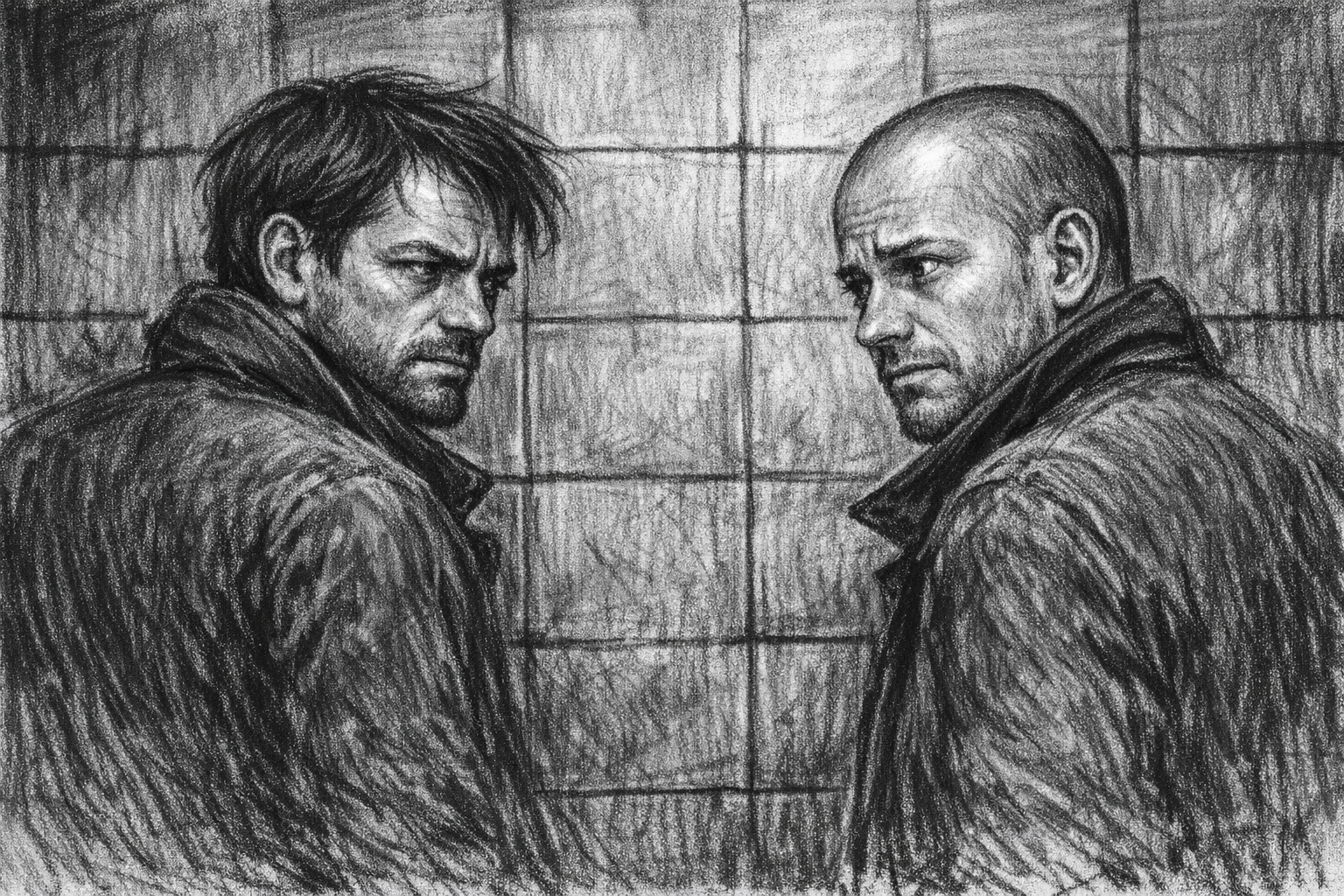 If I walk into a public restroom, and it’s obvious that something awful happened there, you’re the primary suspect if you’re the one walking out. You’re guilty until proven innocent, and there’s really no effective defense. I thought this was pretty damned hilarious, until I realized, while conducting my affairs, that I would have to time my exit perfectly to avoid becoming someone else’s primary suspect.
The Relative Definition of Beauty
“If you’ve ever been to a male stripper’s joint,” Jane said. “You’ll see that nearly 100% of the female patrons of the joint are ugly, old, and out of shape women. There’s no way the males enjoy that?”
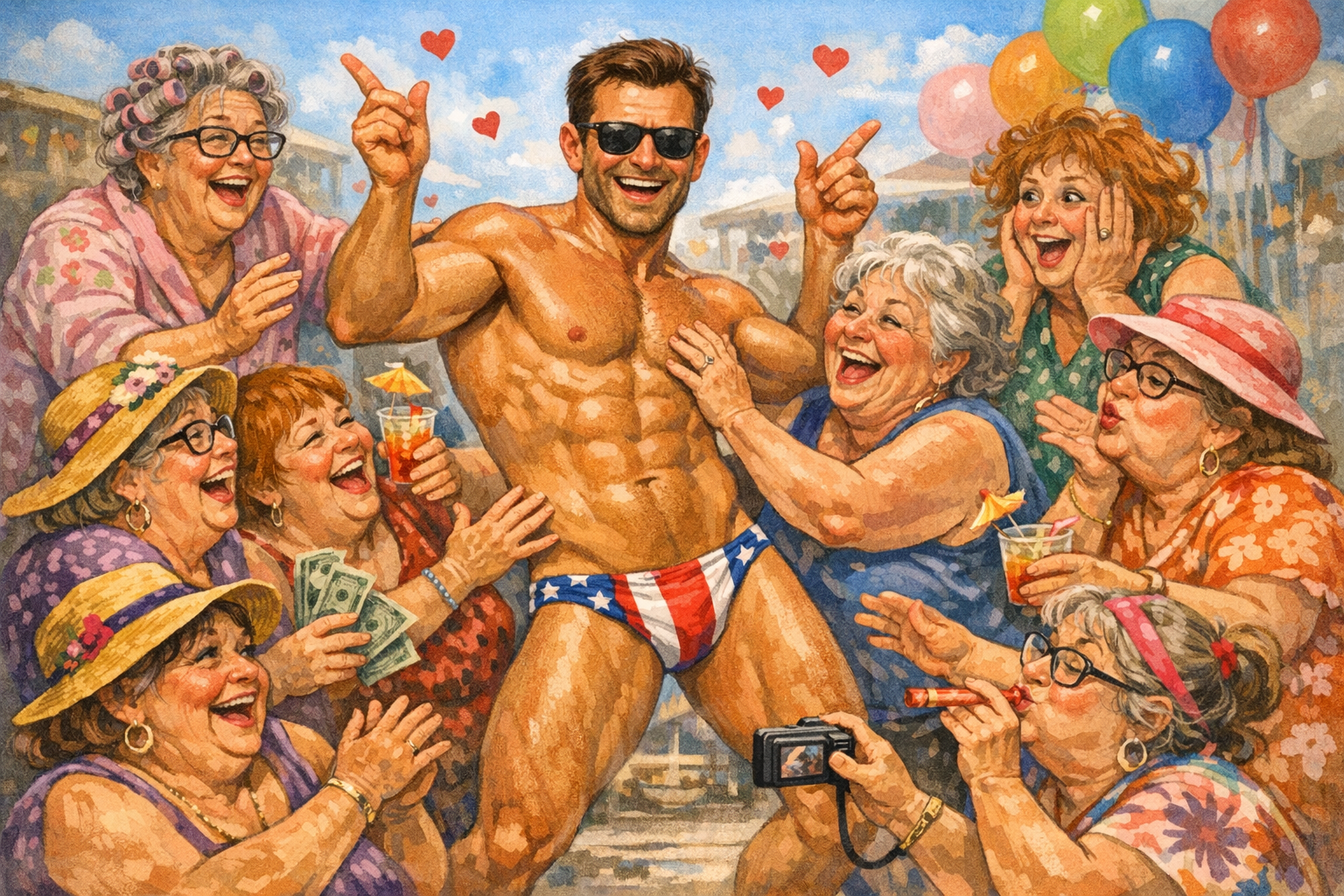 “Have you ever been fawned over?” I asked her. “Most women have. Most men haven’t. I’m sure gorgeous men get fawned over all the time, but most men don’t know they’re attractive, until it’s too late in life. They look back at pictures of themselves and realize that they were a lot better looking than they thought.” Women aren’t as generous with their praise. They seek to humble men. So, when a man gets fawned over by women, it doesn’t really matter to the man what the women look like.
Everything in its Right Place
I could never be a slob again. I’m not talking about the difference between clean and unclean as much as the difference between being organized and unorganized. Losing things bothers me more than being unclean. If I place a toothbrush on a bathroom sink, for instance, I’ll think about that toothbrush until I have a chance to put it in its proper place. If I don’t, I fear that it will somehow become lost before I need to use it.
The History of Propaganda
Most people have heard the phrase, “If we repeat the same thing often enough, people will believe it.” Evil historical figures have proven this is an effective tool to fool some of the people some of the times, but as Malcolm Gladwell wrote there is a tipping point to everything.
We’re all subjected to various forms of propaganda, everything from the more obvious political slogans to advertisements, but there is a moment somewhere between “I got it already” and “They’ve been pounding this drum SO often that I’m starting to think they’re up to something.” Some call this Message Fatigue and others call it the Backfire Point.
I don’t think this deduction requires a level of ingenuity or cleverness. It’s such a basic understanding of human nature that it’s kind of boring to read and write about. There’s one nugget that contributes to the survival of this myth, the stupidity of the man of yesteryear. Since most men of yesteryear lived without modern technology and conveniences, we all think they were a little dumber than we are. C’mon, admit it. We see old black and white daguerreotype photos of people, and we think hayseed, yokel types who barely knew how to read. “They fell for it,” we think, looking at them, and those of us who have iPhones, Google, and AI feel so much more advanced, even though we had nothing to do with those technological advancements, and we think we would never fall for propaganda. Or, if we did, we would have a tipping point, and they probably didn’t, because “Look at them. Look at what they wore.”
The ‘S’
I found a trivia question to stump the band: “What was the 18th president Ulysses S. Grant’s middle name at birth?” Answer, Ulysses. Wait a second, how did they get from Ulysses from ‘S’. Ulysses is his first name. His actual birth name was Hiram Ulysses Grant, but everybody called him Ulysses. If you had the opportunity to choose between the name Hiram and the central figure of The Odyssey, wouldn’t you choose the latter? Some sources state that the young Hiram Ulysses Grant hated his name, because his initials were HUG, but that doesn’t answer the question of how his official name went from Hiram Ulysses Grant to Ulysses S. Grant.
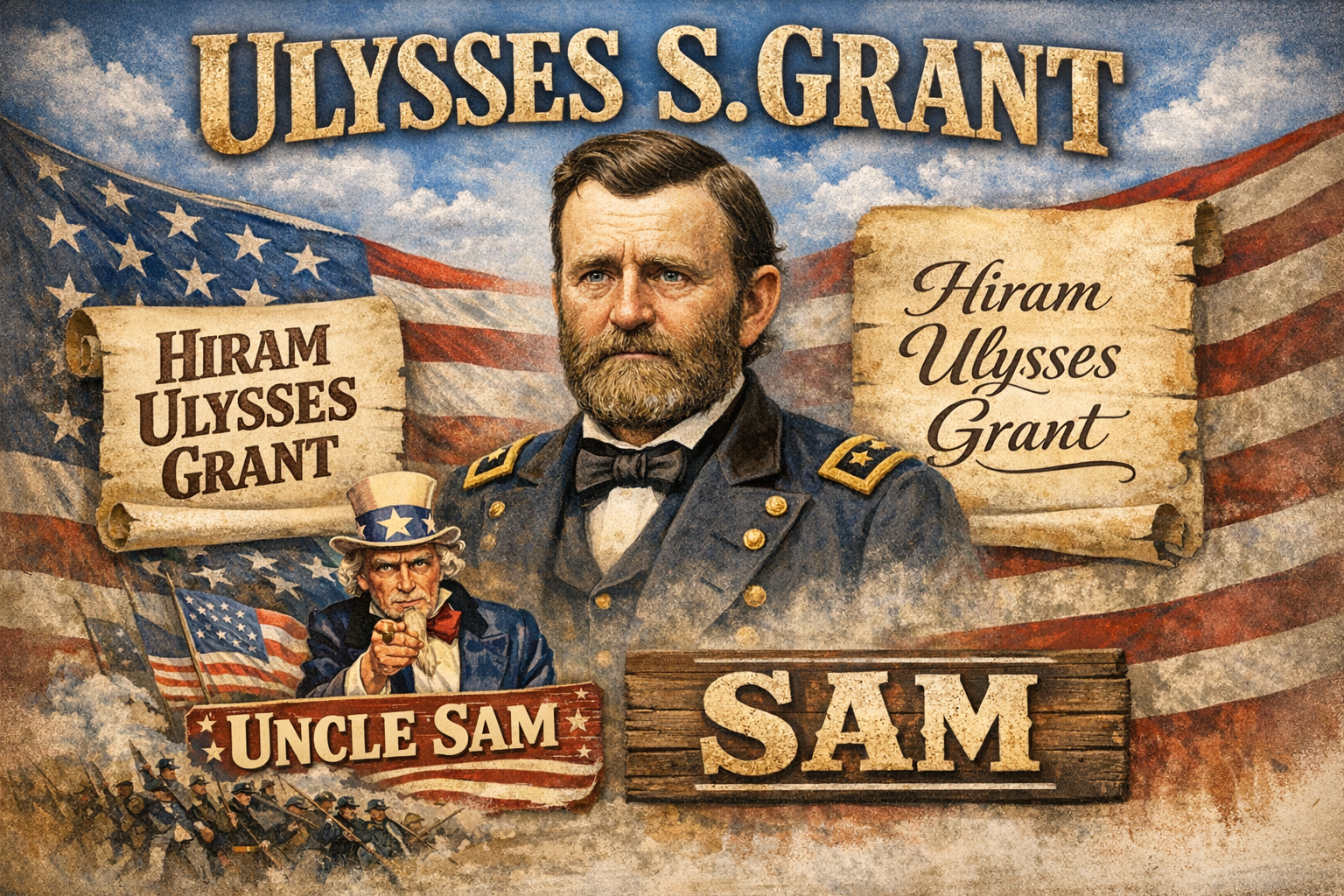 The confusion began after “Grant was nominated to West Point in 1839 by Ohio Congressman Thomas Hamer, who wrote Grant’s name in the application as “Ulysses S. Grant.”” Everyone called him Ulysses, so Congressman Hamer just assumed that was Hiram’s first name. Middle names weren’t as common in this era as they are today, as evidenced by the fact that Abraham Lincoln did not have one, so we can only assume that Hamer assumed Ulysses Grant didn’t have a middle name. The problem for Congressman Hamer was that the West Point application required a middle initial, and due to the fact that Hamer couldn’t just text Hiram to sort matters out, or call him, he decided to just fill the blank in that application to get it done. Congressman Hamer found out that Hiram Grant’s mother’s maiden name was Simpson, so he just added that famous ‘S’ on the application.
Aside #1 Harry S Truman middle name is ‘S’. It’s not ‘S’ period, because it’s not an abbreviation. His parents couldn’t decide whether to name him after Solomon Young, Harry’s maternal grandfather, or Anderson Shipp Truman, his paternal grandfather, so they compromised and just gave him the middle name ‘S’.
Aside #2 Grant’s fellow cadets at Westpoint noted the patriotic arrangement of Ulysses S.’ initials, and they began calling him U.S. Grant, Uncle Sam, or just Sam.
Aside #3 “In an 1844 letter to his future wife Julia Dent, Grant wrote, “You know I have an ‘S’ in my name and don’t know what it stand (sic) for.”
“Grant made several efforts to correct the mistake [Ohio Congressman Thomas Hamer made], but the name Ulysses S. Grant stuck.” So, the correct answer to the trivia question what was Grant’s middle name was Ulysses at birth, but an error by a congressman permanently changed his middle name to ‘S.,’ which was an abbreviation for his mother’s maiden name: Simpson. So, the error by a bureaucrat was compounded by a bunch of lazy, incompetent bureaucrats who didn’t want to do more paperwork? I can only imagine that when Grant attempted to correct the record, the bureaucrats at West Point said, “Do you know how much paperwork changing a name involves? It’s incredibly tedious, and are you really going to fight for a name like Hiram?” My guess is Hiram Ulysses Grant didn’t give up easily, because he was a fighter, and the bureaucrats were talking about permanently changing his name on the record. My guess is the lazy bureaucrat pounded it home with a compelling argument along the lines of: “I think the congressman actually did you a favor by fixing the error your parents made by giving you the incredibly nerdy name of an accountant. Ulysses was the name of Homer’s warrior, and it could help you rise through the ranks of the military if you have the name of a warrior.”
Hiram Ulysses Grant did, in fact, rise through the ranks of the military, becoming General of the Army of the United States, a four‑star rank created for him in 1866. This rank made him the senior officer of the U.S. Army and the first person since George Washington to hold a comparable level of authority. Then, of course, he became the 18th president of the United States. If we could ask Abraham Lincoln how the Civil War would’ve progressed without General Grant, he probably would’ve said, “I don’t even want to think about that.” If Grant managed to correct the record and made Westpoint change his name back to Hiram Ulysses Grant, would Lincoln have trusted the fate of the nation to an accountant? I’m sure soldiers and generals offered testimonials to bolster Grant’s credentials, but Lincoln would’ve ended each reading with, “But his name is Hiram.” Some historians would suggest that the Civil War wouldn’t have ended as quickly as it did without the leadership, and some might add the utter brutality, of Ulysses Grant’s leadership, tactics, and strategies. Some suggest if it weren’t for him, the nation might not be united in the manner we know it today, and his stature might not have happened without the mistake of one bureaucrat and the probable laziness of a bunch of other ones. Now, you might say that I’m connecting and disconnecting a lot of dots to complete a story with ifs, buts, and what-ifs, but isn’t that how a number of stories of history were made and unmade?

 Rilaly