“Try saying something other than ‘Good boy’ to your dog the next time you reward them for good behavior,” said a human who claimed to know more about dogs than other humans. “Your dog gets tired of hearing the same phrases over and over again. Mix it up and keep it fresh to allow for greater stimulation of your dog’s mind.”
I am not an expert on dogs, but if this is expert advice, then I wonder how we qualify the term expert. “They spend a lot of time around dogs,” you say. Okay, but I spend a lot of time around my dogs, and I notice that they prefer that we keep it simple and consistent. This expert is basically suggesting that the best way to enhance our relationship with our dog is to complicate our relationship with them.
This expert is not talking to dogs here. He’s talking to us, trying to justify his title as an expert. If this expert said, “The next time you want to reward your dog for good behavior, say ‘Good boy!’” We would all question his title for saying what we already know. They know this, so they tweak our common knowledge in a harmless way that most of us won’t follow. If we do, we might try it once or twice and realize it doesn’tmake a difference, and we’ll all go back to saying “Good boy!” again to enjoy the simple, fun, and loving relationship we have with our dog.
My guess, if we could talk to our dogs, they’d say something along the lines of, “I’m going to be honest with you, I don’t know what you’re talking about 95% of the time, I don’t speak English, but I know tones. I’mperfectly happy with the arrangement we have right now, but if you feel the need to start messing with the five percent I understand, do what you need to do, but keep the tone the same.”
If I could gather a group of experts to comment on this situation, I’m sure they would all condemn this expert advice, and I’m sure that their condemnation would leave me feeling temporarily validated. Yet, the other thing we know about experts is that they get their validation condemning another expert’s advice.
The Suspect
If I walk into a public restroom, and it’s obvious that something awful happened there, you’re the primary suspect if you’re the one walking out. You’re guilty until proven innocent, and there’s really no effective defense. I thought this was pretty damned hilarious, until I realized, while conducting my affairs, that I would have to time my exit perfectly to avoid becoming someone else’s primary suspect.
The Relative Definition of Beauty
“If you’ve ever been to a male stripper’s joint,” Jane said. “You’ll see that nearly 100% of the female patrons of the joint are ugly, old, and out of shape women. There’s no way the males enjoy that?”
“Have you ever been fawned over?” I asked her. “Most women have. Most men haven’t. I’m sure gorgeous men get fawned over all the time, but most men don’t know they’re attractive, until it’s too late in life. They look back at pictures of themselves and realize that they were a lot better looking than they thought.” Women aren’t as generous with their praise. They seek to humble men. So, when a man gets fawned over by women, it doesn’t really matter to the man what the women look like.
Everything in its Right Place
I could never be a slob again. I’m not talking about the difference between clean and unclean as much as the difference between being organized and unorganized. Losing things bothers me more than being unclean. If I place a toothbrush on a bathroom sink, for instance, I’ll think about that toothbrush until I have a chance to put it in its proper place. If I don’t, I fear that it will somehow become lost before I need to use it.
The History of Propaganda
Most people have heard the phrase, “If we repeat the same thing often enough, people will believe it.” Evil historical figures have proven this is an effective tool to fool some of the people some of the times, but as Malcolm Gladwell wrote there is a tipping point to everything.
We’re all subjected to various forms of propaganda, everything from the more obvious political slogans to advertisements, but there is a moment somewhere between “I got it already” and “They’ve been pounding this drum SO often that I’m starting to think they’re up to something.” Some call this Message Fatigue and others call it theBackfire Point.
I don’t think this deduction requires a level of ingenuity or cleverness. It’s such a basic understanding of human nature that it’s kind of boring to read and write about. There’s one nugget that contributes to the survival of this myth, the stupidity of the man of yesteryear. Since most men of yesteryear lived without modern technology and conveniences, we all think they were a little dumber than we are. C’mon, admit it. We see old black and white daguerreotype photos of people, and we think hayseed, yokel types who barely knew how to read. “They fell for it,” we think, looking at them, and those of us who have iPhones, Google, and AI feel so much more advanced, even though we had nothing to do with those technological advancements, and we think we would never fall for propaganda. Or, if we did, we would have a tipping point, and they probably didn’t, because “Look at them. Look at what they wore.”
The ‘S’
I found a trivia question to stump the band: “What was the 18th president Ulysses S. Grant’s middle name at birth?” Answer, Ulysses. Wait a second, how did they get from Ulysses from ‘S’. Ulysses is his first name. His actual birth name was Hiram Ulysses Grant, but everybody called him Ulysses. If you had the opportunity to choose between the name Hiram and the central figure of The Odyssey, wouldn’t you choose the latter? Some sources state that the young Hiram Ulysses Grant hated his name, because his initials were HUG, but that doesn’t answer the question of how his official name went from Hiram Ulysses Grant to Ulysses S. Grant.
The confusion began after “Grant was nominated to West Point in 1839 by Ohio Congressman Thomas Hamer, who wrote Grant’s name in the application as “Ulysses S. Grant.”” Everyone called him Ulysses, so Congressman Hamer just assumed that was Hiram’s first name. Middle names weren’t as common in this era as they are today, as evidenced by the fact that Abraham Lincoln did not have one, so we can only assume that Hamer assumed Ulysses Grant didn’t have a middle name. The problem for Congressman Hamer was that the West Point application required a middle initial, and due to the fact that Hamer couldn’t just text Hiram to sort matters out, or call him, he decided to just fill the blank in that application to get it done. Congressman Hamer found out that Hiram Grant’s mother’s maiden name was Simpson, so he just added that famous ‘S’ on the application.
Aside #1 Harry S Truman middle name is ‘S’. It’s not ‘S’ period, because it’s not an abbreviation. His parents couldn’t decide whether to name him after Solomon Young, Harry’s maternal grandfather, or Anderson Shipp Truman, his paternal grandfather, so they compromised and just gave him the middle name ‘S’.
Aside #2 Grant’s fellow cadets at Westpoint noted the patriotic arrangement of Ulysses S.’ initials, and they began calling him U.S. Grant, Uncle Sam, or just Sam.
Aside #3 “In an 1844 letter to his future wife Julia Dent, Grant wrote, “You know I have an ‘S’ in my name and don’t know what it stand (sic) for.”
“Grant made several efforts to correct the mistake [Ohio Congressman Thomas Hamer made], but the name Ulysses S. Grant stuck.” So, the correct answer to the trivia question what was Grant’s middle name was Ulysses at birth, but an error by a congressman permanently changed his middle name to ‘S.,’ which was an abbreviation for his mother’s maiden name: Simpson. So, the error by a bureaucrat was compounded by a bunch of lazy, incompetent bureaucrats who didn’t want to do more paperwork? I can only imagine that when Grant attempted to correct the record, the bureaucrats at West Point said, “Do you know how much paperwork changing a name involves? It’s incredibly tedious, and are you really going to fight for a name like Hiram?” My guess is Hiram Ulysses Grant didn’t give up easily, because he was a fighter, and the bureaucrats were talking about permanently changing his name on the record. My guess is the lazy bureaucrat pounded it home with a compelling argument along the lines of: “I think the congressman actually did you a favor by fixing the error your parents made by giving you the incredibly nerdy name of an accountant. Ulysses was the name of Homer’s warrior, and it could help you rise through the ranks of the military if you have the name of a warrior.”
Hiram Ulysses Grant did, in fact, rise through the ranks of the military, becomingGeneral of the Army of the United States, a four‑star rank created for him in 1866. This rank made him the senior officer of the U.S. Army and the first person since George Washington to hold a comparable level of authority. Then, of course, he became the 18th president of the United States. If we could ask Abraham Lincoln how the Civil War would’ve progressed without General Grant, he probably would’ve said, “I don’t even want to think about that.” If Grant managed to correct the record and made Westpoint change his name back to Hiram Ulysses Grant, would Lincoln have trusted the fate of the nation to an accountant? I’m sure soldiers and generals offered testimonials to bolster Grant’s credentials, but Lincoln would’ve ended each reading with, “But his name is Hiram.” Some historians would suggest that the Civil War wouldn’t have ended as quickly as it did without the leadership, and some might add the utter brutality, of Ulysses Grant’s leadership, tactics, and strategies. Some suggest if it weren’t for him, the nation might not be united in the manner we know it today, and his stature might not have happened without the mistake of one bureaucrat and the probable laziness of a bunch of other ones. Now, you might say that I’m connecting and disconnecting a lot of dots to complete a story with ifs, buts, and what-ifs, but isn’t that how a number of stories of history were made and unmade?
Those of us who are always on the lookout for edgy, racy content have heard the term “Joycean” thrown about with little discretion over the years. If you’ve heard this term as often as I have, you’ve no doubt asked, what does it mean to be “Joycean”? To listen to critics, it can mean whatever you want it to mean? They appear to be more interested in using the term than using it properly, but how do we use it properly? What does “Joycean” mean? If James Joyce were still alive, we would love to ask him if his last two books were two of the most erudite, most complicated pieces of fiction ever written, or were they a great practical joke you played on the literature community to expose reference makers and elitist, scholars for who they are?
James Joyce
Readers who seek to up their erudite status by reading “difficult” books, have all heard of Joyce’s final two works of fiction: Ulysses and Finnegans Wake, as literary scholars list these books as some of the most difficult, most complicated works of fiction ever created. Those of us who were intrigued, decided to pick them up that as a challenge of the mind, others attempt to read them to gain entrance into their subjective definition of elite status. Most are confused and disoriented by the books, but some have the patience, the wherewithal, and the understanding of all of the references made, and languages used, in these books necessary for comprehension. Those readers either deserve a hearty salute, or the scorn and laughter that Joyce provided, as a gift to the havenots, who are honest enough to admit that they don’t know what was going on in them. Was Ulysses such an ingenious book that it’s worth all of the effort it requires for greater understanding, or was it a book about nothing?
I don’t understand either of these books, and I have gone back numerous times to try to further my understanding. Some have said that Ulysses is the more palatable of the two, but I have found it too elliptical, too erratic, and too detail-oriented to maintain focus, and I have purchased three different aides to guide me through it. Some of the readers who claim to enjoy Ulysses, admit that Finnegans Wake is ridiculously incomprehensible.
Most people enjoyed Dennis Miller’s tenure as an announcer on Monday Night Football, but most of those same people complained that they didn’t understand two-thirds of the man’s references. I didn’t keep a journal on his references, but I’m willing to bet that at least a third of them were Joycean in nature (Ulysses specifically). Miller stated that his goal, in using such obscure references, was to make fellow announcer Al Michaels laugh, but any fan who has followed Miller’s career knows that he enjoys the motif of using complicated and obscure references to make himself sound erudite. There are, today, very few references more obscure than those that recall the work of James Joyce, a man who described his last book, Finnegans Wake, as “A book obscure enough to keep professors busy for 300 years.”
Andy Kaufman referenced James Joyce when trying to describe his method of operation. The import of the reference was that Kaufman wanted to be a comedian’s comedian, in the manner that Joyce was a writer’s writer. Kaufman wanted to perform difficult and complicated acts that the average consumer would not understand, and the very fact that they didn’t “get it” was what invigorated him. He wanted that insider status that an artist uses to gain entrée to the “in the know” groups. After achieving some fame, audiences began laughing with Kaufman in a manner that appears to have bored him, and he spent the rest of his career trying to up that ante. By doing the latter, we can guess that there was something genuine about Kaufman’s path in that he was only trying to entertain himself, and his friends, and if anyone else wanted on board that was up to them. Joyce and Kaufman, it appears, shared this impulse.
Anytime an artist creates a difficult piece of work, there is going to be a divide between the haves (those who get it) and the havenots. When Mike Patton formed the relatively obscure band Fantomas, he never did so with the illusion that he was going to unseat the Eagles Greatest Hits, or Michael Jackson’s Thriller, atop the list of greatest selling albums of all time. He knew that his group would playing to a very select audience.
What is the audience for such difficult subject matter? Most people seek music, as either background noise, something to dance to, or something to which they can tap their finger. Most people read a book to gain a little more characterization and complication than a movie can provide, but they don’t want too much characterization, or too much complication. Most people only buy art to feng shui their homes. Most people don’t seek excessively difficult art, and those who do are usually seeking something more, something more engaging, and something more provocative that can only be defined by the individual. The audience who seek something so different that it can be difficult generally have such a strong foundation in the arts that they reach a point where their artistic desires can only satiated by something different.
Yet, different can mean different things at different times to different people. Different can be complicated, and discordant, but it can also be limited to style. At this point in history, it’s difficult to be different, in a manner that cannot be called derivative of someone or something, so some people seek any separations they can find. When the latest starlet of the moment twerks in a provocative manner, has a construction worker find her pornographic video, or accidentally has her reproductive organ photographed, we know that these are incidents were created by the starlet, and her people, to get noticed after they have exhausted all other attempts to be perceived as artistically brilliant and different.
There are other artists who are different for the sole sake of being different. This is often less than organic, and it often disinterests those who seek a true separation from the norm, because we feel that this has been thoroughly explored to the point of exhaustion. Andy Kaufman created something organically different that can never be completely replicated, in much the same manner Chuck Palahniuk, Mike Patton, David Bowie, Quentin Tarantino, and Jerry Seinfeld and Larry David did. Can it be said that James Joyce’s final two books were different in an artistically brilliant, and cutting edge manner that all of these artists’ creations were, or were James Joyce’s writings more symbolism over substance? Put another way, was Joyce a substantive artist who’s true messages need to be unearthed through careful examination, or was he simply twerking in a provocative manner with the hope of getting noticed by the elite scholars of his generation after exhausting the limits of his talent in other works?
Judging by his short stories, James Joyce could’ve written some of the best novels in history. Those who say that he already did, would have to admit that his final two works were not overly concerned with story, or plot. Those who defend his final two works would probably say that I am judging Joyce’s final two works by traditional standards, and that they were anything but traditional. They would probably also argue that the final two works sought to shake up the traditional world of literature, and anyone who dared to take up the challenge of reading these works would probably say Joyce sought to confound us, more than interest us, and if they concede to the idea that the final two works were different for the sole sake of being different, they would add that he was one of the first to do so. Those who defend his final two works say that they are not as difficult to read, or as complex, as some would lead you to believe. These people suggest that reading these two works only requires more patience, and examination, than the average works. Anyone who states such a thing is attempting to sound either hyper intelligent, or hyper erudite, for it was Joyce’s expressed purpose to be difficult, complicated, and hyper-erudite.
To understand Ulysses, one needs an annotated guide of 1920-era Dublin, a guide that describes the Irish songs of the day, some limericks, mythology, and a fluent understanding of Homer’s The Odyssey. If the reader doesn’t have a well-versed knowledge of that which occurred nearly one-hundred years prior to today, they may not understand the parodies, or jokes Joyce employs in Ulysses. Yet, it was considered, by the Modern Library, in 1998, to be the greatest work of fiction ever produced.
“Everyone I know owns Ulysses, but no one I know has finished it.” —Larry King.
To fully understand, and presumably enjoy, Finnegans Wake, the reader needs to have at least a decent understanding of Latin, German, French, and Hebrew, and a basic understanding of the Norwegian linguistic and cultural elements. The reader will also need to be well-versed in Egypt’s Book of the Dead, Shakespeare, The Bible, and The Qur’an. They also need to understand the English language on an etymological level, for one of Joyce’s goals with Finnegans Wake, was to mess with the conventions of the English language.
Some have opined that one of Joyce’s goals, in Ulysses, was to use every word in the English language, and others have stated that this is a possibility since he used approximately 40,000 unique words throughout the work. If this is true, say others, his goal for Finnegans Wake, was to extend the confusion by incorporating German, French, Latin, Hebrew, and other languages into his text. When he did use English, in Finnegans Wake, Joyce sought to use it in unconventional and etymological ways to describe what he believed to be the language of the night. He stated that Finnegans Wake was “A book of the night” and Ulysses was “A book of the day”.
“In writing of the night, I really could not, I felt, use words in their ordinary connections . . . that way they do not express how things are in the night, in the different stages – conscious, then semi-conscious, then unconscious. I found that it could not be done with words in their ordinary relations and connections. When morning comes of course everything will be clear again . . . I’ll give them back their English language. I’m not destroying it for good.” —James Joyce on his novel Finnegans Wake.
This use of the “language of the night” could lead one to say that Joyce was one of the first deconstructionists, and thus ahead of his time by destroying the meaning of meaning in the immediate sense. Those obsessed with James Joyce could interpret the quote, and the subsequent methodology used in Finnegans Wake, to mean that Joyce had such a profound understanding of linguistics that normal modes of communicating an idea, bored him. He wanted something different. He wanted to explore language, and meaning, in a manner that made his readers question their fundamentals. Readability was not his goal, nor was storytelling, or achieving a best-seller list. He sought to destroy conventions, and common sense, and achieve a higher realm of perfect, in which timeless abstractions cannot be communicated to those who adhere to common sense. This makes for an interesting conversation on high art, and philosophy, but does it lend itself to quality reading?
“What is clear and concise can’t deal with reality,” Joyce is reported to have told friend Arthur Power, “For to be real is to be surrounded by mystery.”
In the modern age, there is much discussion of the widening gap between the haves and the have nots. That particular discussion revolves around economic distinctions, as it has for time immemorial, but in the Joycean world, the gap involves those who “get” his works, and those who do not. Those who get it usually prefer to have deeper meanings shrouded in clever wordplay. They usually prefer symbolism over substance; writing over storytelling; and interpretation over consistent and concretized thoughts.
The two schools of thought between the haves and the havenots can probably best be explained by breaking them down to the different approaches James Joyce and one of Joyce’s contemporaries Ernest Hemingway. Hemingway wrote clear and concise sentences. Hemingway stated that his methodology was to write something that was true:
“The hardest thing is to make something really true and sometimes truer than true.”—Ernest Hemingway.
Putting Joyce’s final two works through the Hemingway school of thought, one could say that Joyce’s methodology was: Some of the times, it’s more interesting to make it false and allow others to define it as true.
“Though people may read more into Ulysses than I ever intended, who is to say that they are wrong: do any of us know what we are creating? … Which of us can control our scribblings? They are the script of one’s personality like your voice or your walk.” —James Joyce
Those of us who have had a deep discussion, on a deep, multifaceted topic, with a deep thinker know that sooner or later a declarative distinction will be made if we stubbornly insist that we are not wrong. “You don’t get it, and you probably never will,” is something they say in a variety of ways. We all know what it feels like to be summarily dismissed as an anti-intellectual by a deep thinker? Those who aren’t snobbish in an anti-social manner, often avoid openly dismissing us when we’re around, but even the polite snobs give us a vibe, a look, or a chuff that is intended to let us know our place.
“Well, what do you think of it then?” is the response some of us have given, after being backed into an anti-intellectual corner by deep thinkers.
If they are an anti-social, elite intellectual snob, they will say something along the lines of: “I simply choose to think deeper!” It’s a great line, and it purportedly puts us stubborn types in our place, but it’s a self-serving non-answer. Those of us who are more accustomed to interaction with deep thinkers, will then ask them to expound upon their complicated, deep thinking? Pushing deep thinkers deeper will often reveal a lack of substance beneath their piles of style, and the careful observer will find that the results of their deep thinking is no deeper than the deep thinker cap they wear to the pub.
A number of attempts at reading Joyce has led me to believe that he probably didn’t have much substance beneath his piles of style, so he muddied the waters of his message with puns, songs, gibberish, abstractions, foreign languages, and overly complicated complications. He did this, in my opinion, to conceal the fact that when compared to his colleagues, he didn’t have all that much to say. If that’s true, he was definitely artistically accomplished in saying it.
Who can forget the many sayings that Finnegans Wake dropped on our culture, such as the transcendental sound of the thunderclap that announced the fall of Adam and Eve from the garden of Eden:
What about the mirthsome giggles we have had in social gatherings with the catchphrase:
“A way a lone a last a loved a long the riverrun, past Eve and Adam’s, from swerve of shore to bend of bay, brings us by a commodius vicus of recirculation back to Howth Castle and Environs.”
Or the ever present:
“(Stoop) if you are abcedminded, to this claybook, what curios of sings (please stoop), in this allaphbed! Can you rede (since We and Thou had it out already) its world?”
If you just read those sentences three or four times, and you still have no idea what it says, and you just went back to read them again, because you want to be a have that “gets it”, you’re not alone. If these passages were merely anecdotal evidence of the difficulty involved in reading Finnegans Wake, that would be one thing, but these difficulties litter just about every sentence of every paragraph of the book, as evidenced by the exhaustive assistance provided at the site Finwake.com for readers who have no idea what this writer is going on about.
Finnegans Wake is reported to be in English, but it’s not the standard version of English where words have specific meaning. The “language of the night” was intended for linguists who are tired of reading words that have exact meanings, and it was intended to be playful and mind-altering, and rule breaking. James Joyce made references intended to be obscure even to the reader of his day who may not have Joyce’s wealth of knowledge of history, or the manner in which the meaning of the words in the English language have changed throughout history.
“What is really imaginative is the contrary to what is concise and clear.” —James Joyce
James Joyce was a stream of consciousness writer who believed that all “mistakes” were intended on some level that superseded awareness. In the 500+ page book, Finnegans Wake, Joyce found 600 errors after publication. He was informed of some, if not all of these errors, and he was reported to have fought his publishers to keep them in. Later editions were written to correct many of these errors, and provide readers “the book in the manner Joyce had intended.” If Joyce didn’t believe in errors, however, how can those who corrected them state that the corrected edition is the definitive edition that “Joyce intended”?
“The man of genius makes no mistakes, his errors are volitional and portals of discovery.” –James Joyce
Throughout the seventeen years Joyce spent writing Finnegans Wake, he began to go blind, so he had a friend named, Samuel Beckett, take dictation over the phone to complete the novel. At one point in this dictation setting, someone knocked on Joyce’s door. Joyce said, “Come in!” to the knocker, and Beckett wrote the words “Come in!” into the narrative of Finnegans Wake. When this error was spotted by Joyce, and the confusion was sorted out, Joyce insisted that Beckett, “Leave it in!” On another occasion, when a printer’s error was pointed out he said, “Leave it. It sounds better that way than the way I wrote it.”
There are three different versions of the text: The first and second are the editions that Joyce submitted for publications with all of the errors intact. The third edition has the errors that the editors located, and the 600 corrections that Joyce spent two years locating, corrected. Some would have you believe that first two editions are the definitive editions, but you have to be a Joyce purist to appreciate them.
Can it be called anything short of egotistical for an author to believe that his subconscious choices and decisions, are somehow divine? If, as Joyce said, and Picasso later repeated in regard to his paintings, mistakes are portals of discovery, then we can say that’s great, and incredibly artistic in the process of creation. To leave it in the finished product, however, and subject your readers to the confusion, just seems narcissistic. “Here’s what I was thinking at the time,” Joyce is basically telling his readers. “I don’t know what it means, but this is a higher plane of thinking than simple conscious thought. Isn’t it magical? Maybe you can make some sense of it. Maybe you can attribute it to your life in some manner.” This method of operation may say something profound about the random nature of the universe, but when we’re reading a novel we don’t necessarily want to know about the randomness of the universe, unless it’s structured in a manner that leads us to your statement.
Not everyone can write a classic, and some realize this after a number of failed attempts. Once they arrive at this fork in the road, they can either write simple books that provide them and theirs an honest living, or they can grow so frustrated by their inability to write classics that they separate themselves from the pack through obscurity. The advantage of creating such an alleged contrivance is that beauty is in the eye of the beholder, and the beholder can assign their own relative beauty to it. Some would say this is the very definition of art, but others would say even that definition has limits. Some would say that the most obscure painting is art, because they “see it”, where others see only schlock for elitists to crib note to death, until meaning is derived.
James Joyce is considered the exception to this rule, fellow writers have told me, and if you are going to attempt to write an important novel in the 21st Century, you had better be familiar with him. I’ve tried, and I now believe that I’m destined to be a havenot in the Joycean world … even with Ulysses. The question that arises out of those ashes is, am I going a long way to becoming more intelligent by recognizing my limits, or should it be every aspiring intellect’s responsibility to continue to push themselves beyond any self-imposed limits to a point where they can finally achieve a scholarly understanding of difficult material? If this is a conundrum that every person encounters when facing challenges to their intelligence, is Ulysses, or more pointedly Finnegans Wake, the ultimate barometer of intelligence, or is it such an exaggerated extension that it had to have been a practical joke James Joyce played on the elitist literary community to expose them as the in-crowd, elitist snobs that they are when they “get it” just to get it. Do they really “get it”, or are they falling prey to Joyce’s clever ruse to expose them as people that “get” something that was never intended to be “got”?
 I am not an expert on dogs, but if this is expert advice, then I wonder how we qualify the term expert. “They spend a lot of time around dogs,” you say. Okay, but I spend a lot of time around my dogs, and I notice that they prefer that we keep it simple and consistent. This expert is basically suggesting that the best way to enhance our relationship with our dog is to complicate our relationship with them.
 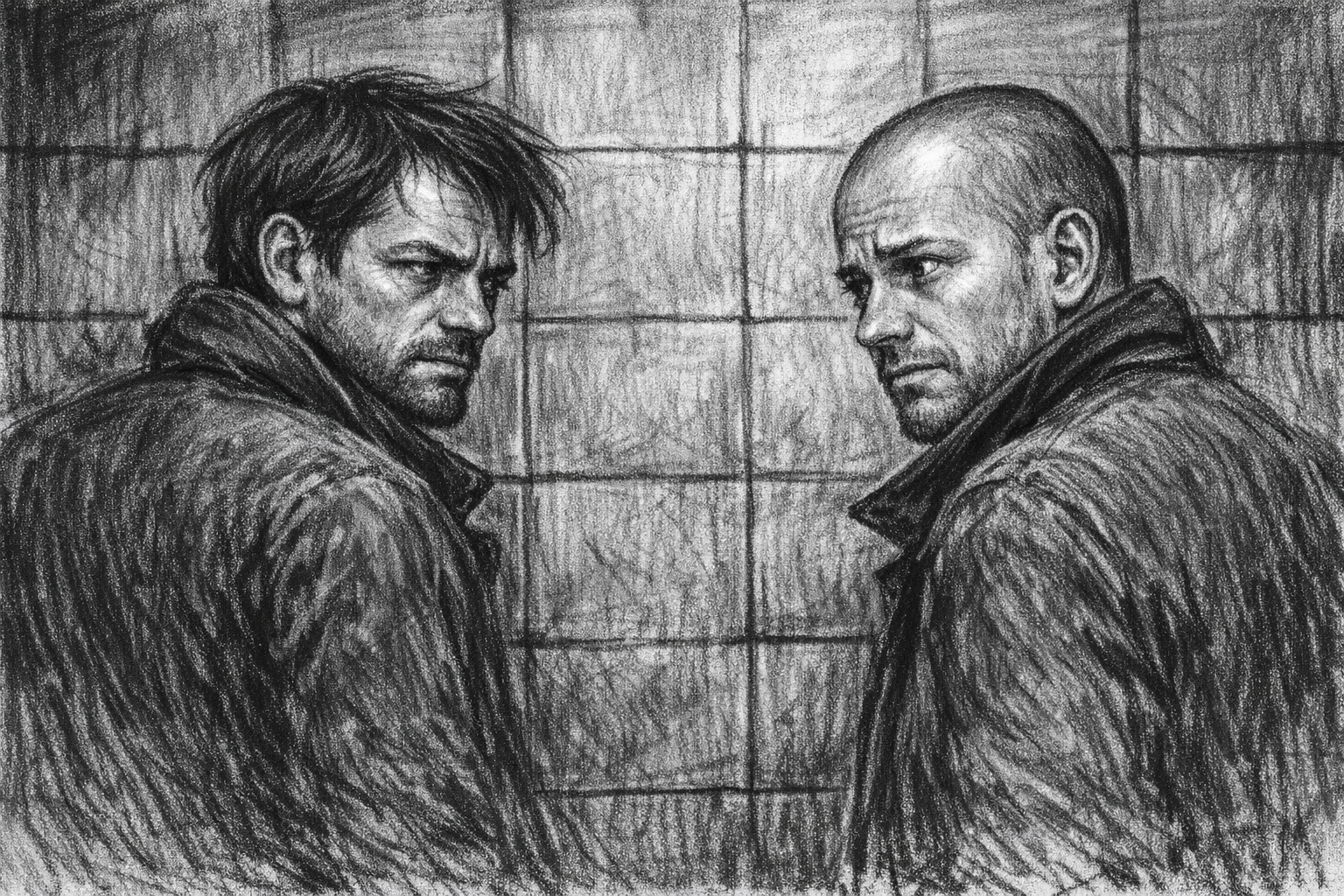 If I walk into a public restroom, and it’s obvious that something awful happened there, you’re the primary suspect if you’re the one walking out. You’re guilty until proven innocent, and there’s really no effective defense. I thought this was pretty damned hilarious, until I realized, while conducting my affairs, that I would have to time my exit perfectly to avoid becoming someone else’s primary suspect.
 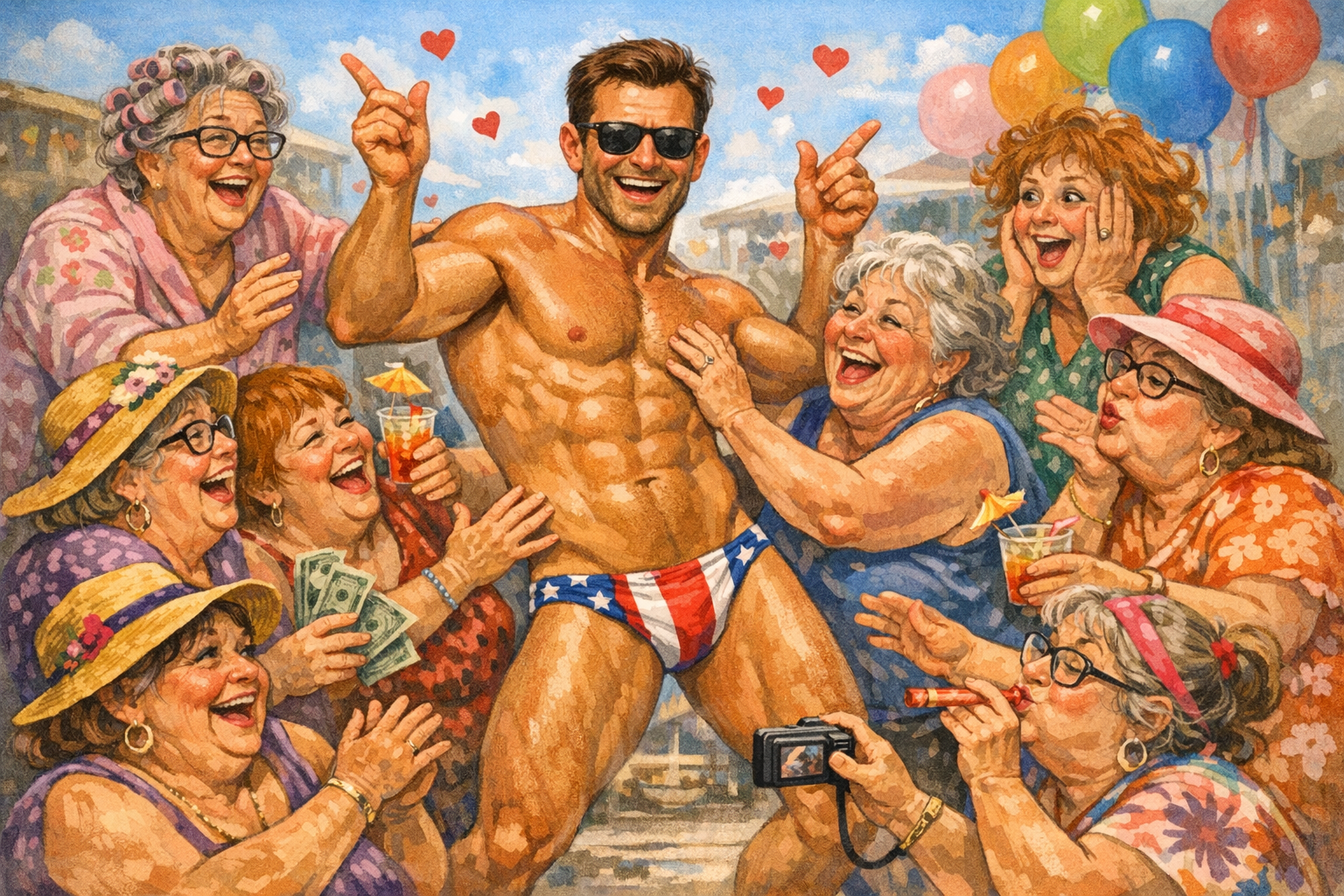 “Have you ever been fawned over?” I asked her. “Most women have. Most men haven’t. I’m sure gorgeous men get fawned over all the time, but most men don’t know they’re attractive, until it’s too late in life. They look back at pictures of themselves and realize that they were a lot better looking than they thought.” Women aren’t as generous with their praise. They seek to humble men. So, when a man gets fawned over by women, it doesn’t really matter to the man what the women look like.
 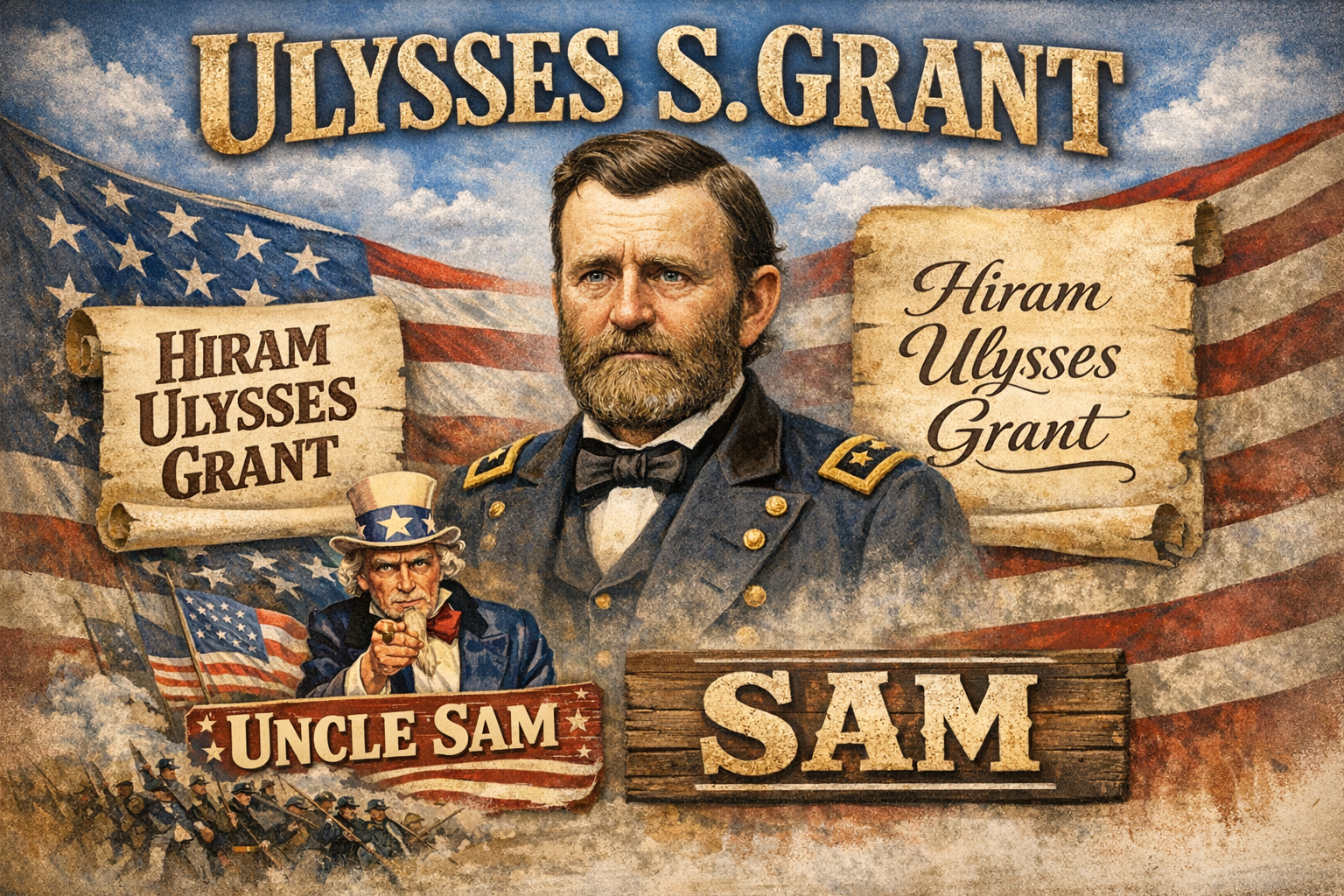 The confusion began after “Grant was nominated to West Point in 1839 by Ohio Congressman Thomas Hamer, who wrote Grant’s name in the application as “Ulysses S. Grant.”” Everyone called him Ulysses, so Congressman Hamer just assumed that was Hiram’s first name. Middle names weren’t as common in this era as they are today, as evidenced by the fact that Abraham Lincoln did not have one, so we can only assume that Hamer assumed Ulysses Grant didn’t have a middle name. The problem for Congressman Hamer was that the West Point application required a middle initial, and due to the fact that Hamer couldn’t just text Hiram to sort matters out, or call him, he decided to just fill the blank in that application to get it done. Congressman Hamer found out that Hiram Grant’s mother’s maiden name was Simpson, so he just added that famous ‘S’ on the application.
 Rilaly