An Unsually Unusual Mind


Have you ever heard someone say something so weird it shocked you? Have you ever heard someone say something that you thought not even a weird person would say? They might think it, but they wouldn’t say it. They’d fear everyone knowing how weird they were. 

“Doesn’t, he have cable?” someone asked in the aftermath of the shocking statement. We laughed. We all laughed, hard. We laughed because that line captured what we were all thinking. We had cable TV, and it shaped and molded our expectations of one another. We unconsciously expected everyone to know their station, and if one of us was unable to maintain a level of sameness, we expected them to conceal it beneath layers of shame and fear. Xavier McVie didn’t appear to care about any of that.

“He is not weird,” someone responded with some accusation in her voice. “He just says weird stuff.” She wasn’t defending Xavier. She didn’t like Xavier, so we knew she wasn’t defending him. She was implying that ‘he wishes he was weird, but he’s not’. Why would anyone wish they were weird, we wondered. There was something to it we knew, because Xavier seemed normal most of the time, but he’d drop these thoughts on us so often that her characterization of Xavier McVie seemed to be a decent category for him.

Some say that the need to label, categorize, or judge our peers is wrong, but it’s kind of what we do. Our brain is the primary weapon we have against powers foreign and domestic. It’s what separates us from the rest of the animals, and we use judgment to enhance our quality of life and in some cases our survival. If a lion slaughters a gazelle in an unorthodox manner, other lions might take note, but it doesn’t affect their perception of that lion. They don’t care how another lion takes a gazelle down. They just want to eat. Humans, on the other hand, care very much when, where, and why our fellow humans act the way they do. We want to know who to befriend, how to befriend, and if we should avoid certain people for our own self-preservation. 

Anyone who knows someone who is handicapped knows that most of us avoid them as if their ailment is contagious. We might sympathize with their plight in life, but we don’t want to be around them. We prevent our children from staring or asking questions, and we move away swiftly. We do the same with those we consider weird. “He’s just weird,” we say to explain why we avoid them. “He’s just too weird.” Why do we avoid the weird? Why do we tell others to avoid them? When they introduce weird ideas to us, we don’t want to know how they arrived at that idea. We don’t want to discuss their novel approach to living. We shield our children from them and move away swiftly. We think we have a certain hold on reality, and human nature, and anyone who introduces us to the depths of their experience provides us an outlook that if we stare too long at it, it might start looking back at us.

Most truly bent people don’t want to do this to us anymore than they want to do it to themselves. They don’t want people to avoid them. They strive to fit into our longitudes and latitudes and platitudes, but some don’t. Some don’t care what we think, and when it’s a punk ethos we respect it. When it doesn’t have anything to do with a militant need to shatter our illusions and delusions, we’re confused. We don’t know how to put our finger on it. We need something to help us understand. We develop something, such as a dartboard as a visual display, to explain it, so we don’t have to yawn our way through theoretical exposition. 

The center of this dartboard, the bull’s eye area, is absolute normalcy. For all that Xavier McVie said, we knew he was normal, so we placed him between the triple score area and the bull’s eye. Russell Hannon’s eccentricities, on the other hand, were more organic, and his efforts were geared toward being considered normal by the rest of us. This placed him between the triple score area and the outer reaches of the dartboard where the double score area lies. In each of the little boxes on the dartboard, we listed some of the characteristics that defined the individuals we attempted to categorize. Why are some people slightly off the trail? Some have minor brain malfunctions, others have brain chemical deficiencies in certain areas, and still others have such unusual upbringings that they accept certain other norms as truths. The rest of the little boxes contained a description of a different characteristic that leads to unusual thinking.

Another instrumental characteristic of the visual display the dartboard provides are the borders that divide the various rings and boxes. These borders not only helped us define normal vs. the abnormal, but they illustrate the obstacles an abnormal person must pass to achieve a more normal perception. Abnormal people know these borders well, and they’ve spent most of their life trying to overcome them. They’ve had unusual, strange, and absurd thoughts their whole life, and it takes some effort on their part to keep them unknown. They know that saying such things aloud might serve to reinforce their borders, so they learn to just stop saying them. To attempt to eviscerate the dartboard borders before them, they also exaggerate the normal characteristics they’ve learned by watching other, more normal people. Their goal, of course, is the middle of the dartboard, an arbitrary and relative definition of absolute normal, and to near it they begin to act hyper-normal. 

Normal is a relative term, of course, and it invites all sorts of questions about what is normal and abnormal. Defenders will suggest there is no such thing as absolute normal, as there are no absolutes. It’s a valid argument when it comes to characteristics, but for the purpose of this exercise let’s say that, at least by comparison, we’re normal.

The normal often seek anything but. We enjoy weird music, sayings, conclusions, and anything else that is weird excites us because it is different from everything normal. “Normal is boring,” we shout out to the spectators who wish they were half as normal as us. We don’t understand the plight of the abnormal, and we take our normalcy for granted. We want to escape what we consider its confining borders. 

The abnormal avoid anything weird, and they avoid it like the plague, which to them it almost is. It’s a mindset that has chased them throughout their lives. They seek an antidote in others. They watch us and imitate us, hoping that the rest of the world might consume them and confuse them with us, the more normal. They take our characteristics, the characteristics of their other friends and family, and the characteristics of that guy they ran into at the bar who seemed so normal that they almost envied him, and they stir them in a big pot and exaggerate them to display characteristics we might call hyper-normal, so someone, somewhere might accidentally confuse them with normal.  

Those of us who are fascinated by the borders between normal and abnormal among our peers don’t search for these characteristics. Our default thought is that everyone is at least as normal as we are, until we learn otherwise. The effort to achieve hyper-normal characteristics are often less than organic, however, and they have a way of eventually betraying their host when they least expect it. 

We all love music, and we use it as a barometer to gauge those around us. We use it to define who is cool and nerdy or hip and old-fashioned. We might think this is relegated to high school, but in many ways, we never leave high school.  

Our initial inclination might be that weird people love weird music, but here’s where the norms seeking the weird and vice versa come into play. This is where normal people say, “Normal is boring!” to escape their border. Weird music  satisfies their temporary aesthetic need for contrast. Those on the outside looking in, listen to more normal music with hope. By listening to normal music with normal lyrics that deal with normal hopes, they hope to keep strange and weird ideas out of their heads, because they’ve made so much progress toward the center that they don’t want to risk taking a step back, even if it is only in the arena of impressions. The music they enjoy is so normal that one might define it as hyper-normal. What is normal music? There’s no definitive answer of course, but if more people are listening to a certain kind of music doesn’t that make it more normal? It might not to you and I, but what does it mean to a person hoping to leave a more normal impression?  

The abnormal might consult Billboard charts or a listing of downloads. “Think about it, how many people listen to your favorite artist?” they might ask. “How many people listen to mine? Who’s the freak now?” The favored artist of the abnormal sell millions of albums and millions downloads. “That artist is my favorite, and I’m going to tell the world about it.” They don’t want to listen to weird music, but they also don’t want us to know they listened to it, because they fear someone, somewhere might think they enjoyed it. 

Those of us who competed with one another to find weird music grew up listening to the staples, and we eventually grew bored with them. We went through all the phases, perpetually seeking something different, until we arrived at the most unusual music you’ve probably ever heard.  

Most of those outside our tight circle of music aficionados did not enjoy the music we shared with them. They said they didn’t get it, and some of them said it was just too weird. “This is what you’re listening to?” they said with some disdain. Their rejections were mostly fun, polite, and the good-natured type of ribbing that says, “I don’t know how normal you can be listening to that. That ain’t normal.” 

Russell Hannon’s reaction to our music was not fun or polite. His reaction was so over-the-top obnoxious that he left us all silently staring at him, then one another in its aftermath. Did he just accidentally reveal everything he spent years concealing from us? We didn’t know at the time. At the time, we were left with ‘What was that?’ expressions on our faces. It was one of those type of reactions that everyone uses to connect all the various dots they saw before and after the reaction to form some sort of impression. 

“That’s the weirdest [stuff] I’ve ever heard,” he said so loud that we couldn’t help but look around to see who he was screaming at. “How can you listen to [stuff] like that?” Later, when others agreed to listen to our music, he privately warned them to avoid actually playing it in their disc player. “It’s just so weird. You’ll hate it.“

“Why didn’t you just say you don’t care for my music?” we said in the aftermath of all that. “Why did you have to make such a show of it?” 

He said some stuff that we can’t remember, but our initial inclination was to view his obnoxious rejection of our music as a personal condemnation, and that he wanted to make defamatory statements about us that he wanted our co-workers to echo. What we didn’t understand at the time was that it had less to do with the music or his preferences and more to do with his intent to use our music as a platform to inform those in our world that he was so many levels closer to normal than we were. He wanted to stand atop us in this world of perceptions and declare that he would never deign to listen to our weird music ever again, and they shouldn’t either. That music, he said through actions not words, is not for we normal folk. 

As a result, when Xavier McVie joined our team, we were a little sheepish about lending our music to him. Especially after he and Russell Hannon made something of a connection. We expected Xavier to reject our music in the same vein Russell did. When Xavier didn’t just enjoy our music, but he tried to top it, it surprised us all. He would lend us equally strange music that he considered better. We knew music as a barometer of cool and uncool, but we never considered it an indicator of the various levels of sanity. We still didn’t consider it a comprehensive reflection on Russell’s sanity, but it was a dot in a landscape of dots that informed us Russell’s hold on sanity was a lot more tentative than any of us suspected. If a truly weird person was off the cliff, in other words, Russell Hannon was clinging to the edge screaming for us to help him before he falls. We didn’t know where Xavier McVie was in this analogy, when he not only embraced our music but tried to top it with weirder music, but we thought he might have an unusually unusual mind. 

***

We met a number of unusual thinkers before and after Xavier McVie. When we met them, we were so fascinated and excited that we developed a bad habit of interrogating them. “Why did you do that?” we would ask some, and “Why do you think that?” we would ask others. These initial Q&A’s were friendly and polite, but our innate curiosity drove us to ask questions beyond the why to the how. How did you arrive at that line of thought, and most of the insecure didn’t react well to this line of questioning.

“I’m sorry, but your line of thinking is just so unusual that I want to know everything I can about it,” we said. Most of them were still insulted that we would insinuate that they were, in any way, weird.

“You think I’m weird? What about you?” they asked.

Until we could establish our genuine curiosity, most people were combative.

In the face of our unusual brand of polite, patient interrogation, some unusual thinkers begin to wilt and eventually become insulted. Most people don’t see anything wrong with their thought processes, as it’s the only thing they’ve ever known. Some, very few, became as intrigued with their thought process as we were.  

When we found the few willing participants we did, over decades of this casual intrigue, we found that it often takes unusual thinkers a long time to find the source their unusual thoughts, if they ever do. The one thing in our favor is that most people love to talk about themselves, even if they don’t consider themselves as weird, strange, and just plain different as we do.  

Of those who responded well to our questions about the source of their unusual thinking, some suggested that a break might have occurred as a result of an incident. Two of them cited a traumatic episode in their life that they considered so shocking that it might’ve changed their way of thinking. One was a shockingly horrific car accident, and the other suggested it might be the premature death of a loved one who guided them philosophically in life. Most of the people who agreed that they had an unusual take on life, and that it might be based on some experience in life, had a more difficult time arriving at a source than Xavier did. Xavier was quick with it, though he was as suspicious about it as we were.

“I don’t think I had some psychological break or bend away from the norm, as you put it,” Xavier McVie said. “If I did, I think it might’ve had something to do with a young girl enticing me to try some LSD when I was far too young and not equipped to handle it. She was a teenage girl. Her name was Mary, and when she offered it to me, and two other guys, I was barely a teen myself. I was the only one of us with the courage,” and he said that with air quotes, “and I now say stupidity, to take it. Mary was an older girl. She was probably two years older, but she had all the things boys like. I thought a lot was on the line when she offered it to me. I thought it might change the course of our friendship, in ways a teenage boy hopes to advance their friendship with girls. When I took it, it changed me. I know it goes against the science on we have on drugs, but I swear the reaction I had lasted years. The way I see it, I was a normal, happy boy on a Thursday, and on Friday I was an angry teenager who felt so abnormal that I hated myself.

“Some called it a bad trip,” Xavier continued. “I hated those two words for years. You don’t understand, I would say. I’ve read a lot about reactions to controlled substances since then, and I’ve read that reactions are so varied that there is no consensus on how people will react. The brain is so different that some say it’s almost impossible to know how someone will react. Some are more susceptible to bad trips than others are. It took about twenty minutes for the LSD to really hit, but when it did I went through a lot. I went through every horrible experience I had in life in real time, and when I say real time, I mean real time. I relived the experiences as if I was going through them all over again. ‘That’s the definition of a bad trip,’ they said as if I should just say, “Oh!” and move on in life. “You don’t understand,” I told one of the people who said that, “I came out of that experience different.”

“My mom even noticed it,” Xavier continued. “She said, ‘What is wrong with you these days. You used to be such a happy boy.’ She thought it was the teen years, or some after-effects from my dad’s death. She sent me to a psychiatrist and all that, but it didn’t help. I never told my mom or the psychiatrist about the LSD. I probably should’ve, but it scared me so much that I wanted to put it behind me, as if it never happened. It might’ve been the dad thing, the teenager thing, or all of those things, but that experiment with LSD changed me so much in such a short time frame that I think I came out of it different. I relived so much, and experienced such nasty effects on that drug that it scared me.”   

Three other willing participants of our polite interrogation cited an experience with drugs, similar to Xavier’s except one suggested it was the morphine a doctor prescribed and the other suggested she had a “bad reaction” to the lidocaine a dentist used before a dental procedure. The last one we talked to before he met Xavier, cited a shocking moment when an authority figure betrayed their relationship with them in a life-altering way.  

As we wrote, most of those we grilled in polite, casual, and lengthy Q&A’s didn’t think there was anything wrong with them. Most of those who agreed that they were unusual thinkers didn’t think there was ever an incident or episode that drove them to think different, but some of those who did eventually arrived at an answer. Whether or not it was the answer is debatable, of course, but they thought they had an answer. The idea that these people exaggerated the effect these episodes had on them is probable, as it’s difficult to imagine that one incident, no matter how horrific or traumatic, can change a person so completely, but they thought it did. The first question we asked ourselves was, what if it didn’t? What if they exaggerated their reaction to an incident, an episode, or a drug, for an answer? The question we ask ourselves now, looking back on all of these Q&A’s is, is it better and healthier for an Xavier McVie to have an answer regarding his break from reality, even if it’s not 100% accurate? Should we have informed him that his suspicions were correct and that the myth about a 20-year flashback is just that, a myth. Russell Hannon, would’ve never sat down for a Q&A. He was so convinced he was the absolute center of normalcy, the bull’s eye of normalcy, that it would’ve been pointless to even ask him about his mindset. Russell and Xavier were both unusual thinkers, but does Xavier have a better chance at maintaining a relative level of normalcy, because he lists an incident that led him to some bend in his way of thinking? Even if it could be proven untrue? Is it better for him to have answer to explain it, because if he knows the trail from, it might put him back on the path back to.
David Bowie was Just Too Weird


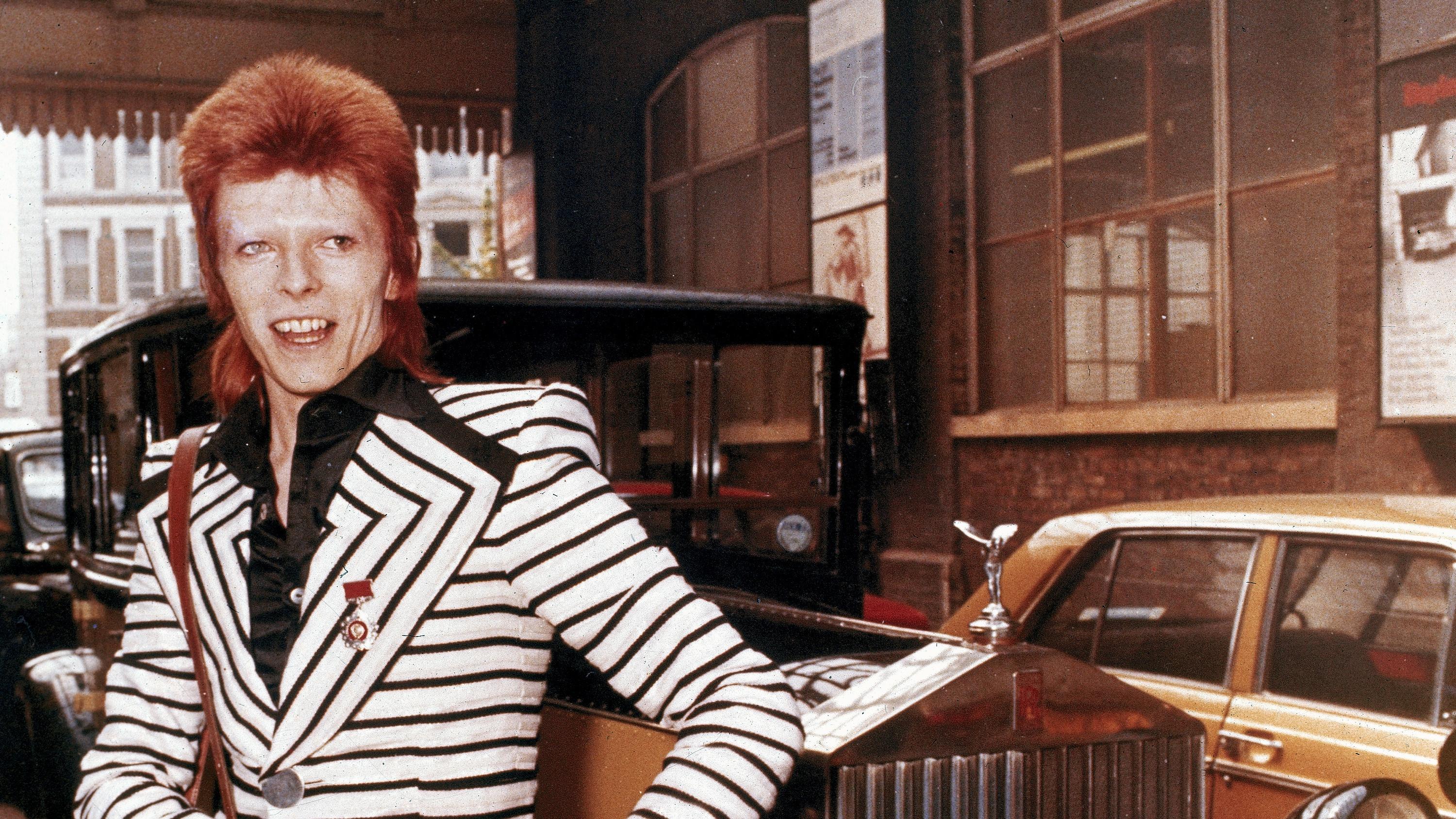
“He’s just so weird,” my mom said when David Bowie took the stage on a 1970s, variety show called The Midnight Special. Before the marketing teams learned how fascinating weird could be to us, being weird was not a good thing. We strove to avoid the weird, so no one would call us weird. I didn’t want my mom to think I was weird, I didn’t want my friends to think that, and I didn’t want to be seduced into thinking I could be weird if I watched him, so I shut it off. We writers love to rewrite our past to suggest that we were so hip that we were bucking the system at eleven-years-old, so we can fortify our artistic bona fides. I wasn’t. I was a normal eleven-year-old who wanted to learn how to be more normal, so other kids would like me, and my primary conduit to absolute normalcy was my mom.  So, when Bowie walk out onto the stage, I was floored by his appearance. My mom must’ve sensed how confused I was, so she quickly told me to turn the channel. I asked why, she said, “He’s just so weird,” and I turned the channel.

David Bowie was weird, there’s no point trying to argue, minimize, or qualify it. He even admitted as much, telling TV on the Radio’s Dave Sitek to, “Stay Strange.” Thanks to artists like David Bowie, we’re all a little weirder, stranger, and everything outside the mainframe. The typical narrative might depict me in front of that TV, experiencing an epiphany, with a “That’s me, mama,” explosion of excitement that she never could quell. It might just be me, but I needed to establish a solid foundation of normal before I could start exploring the weird, strange and just plain different avenues of my otherwise immature and fragile psyche. So, before we continue, let me send out a shout out to my mom for all the effort she put into giving me the most normal upbringing she could before I could explore the other side with more maturity. 

David Bowie feared he was a weird person at a very young age. He believed that he was susceptible to the schizophrenia that haunted his half-brother, Terry Burns. We can only guess that before he embraced the fears of falling prey to that mental disorder that haunted his mother’s side of the family Bowie sought the comfort of normalcy. This duality, as anyone who has worked their way through Bowie’s catalog can attest, would affect his artistic output.   

“I’m not so sure how much of it is madness,” Bowie would ruminate to Yentob. “There’s an awful lot of emotional and spiritual mutilation that goes on in my family.”

He was “too weird” for my people. He was even too weird for me when I was too young to fight that two-word condemnation. My mom told me he was “too weird”, and even if I had the moxie to fight everyone else, I couldnt fight her. I was too young to know how different I was, and even I if did, I wouldn’t acknowledge it, because I didn’t want to be weird. I wanted to have friends, and when my friends told me something was not only weird, but “too weird,” I backed away, into them, and their more comfortable groups.  

High brow, low brow, or no brow?

David Bowie shocked in an era that didn’t want to be shocked. Shock value was not commodity in Bowie’s peak years. The New York Dolls were shocking people in New York, Marc Bolan was doing it to England, and Alice Cooper and KISS were putting it to the United States, but shocking people was not yet part of an artist’s marketing package. Those guys tapped into a tongue-in-cheek definition of the weird, but it was all a part of their schtick. There was something unnerving about Bowie’s strain of strange that made it feel a bit more organic. When we saw it, we could tell he wasn’t having a laugh. It was a part of him, the alien part, and perhaps the schizophrenia part.   

Watch the shows of David Bowie on YouTube, circa 1972, and try to put yourself in that audience. It’s hard to do now, now that we’re so accustomed to performers playing around in the more customary borders of shock value now, but in 1972 Bowie had people actively avoiding him and his alien nature. 

Even after I made it past my mom’s “too weird” block, I still wasn’t attracted to him artistically. I thought he sang songs to make tons of money, become a rock and roll star, and then become a celebrity. All the power to those who do that, but it wasn’t for me. I thought he was the artistic equivalent of a beautiful person who is fun to look at, but doesn’t have much more to them. My attraction to his music is a love story, and to sum up that story, it wasnt love at first sight. It took him a long time to win me over, but I have been in a relationship with David Bowie’s music for about 30 years now.  

I already knew most of his hits by the time I discovered Bowie, so I wasn’t blown away by those songs. The genius of his deep cuts did not blow me away either, in the manner the Beatles’ deep cuts did. I don’t know how anyone else characterizes Bowie’s genius, but it wasn’t immediate for me. His subtle artistic creativity required repeated listens, until I found myself working through his constructs when I wasn’t listening to the music. 

I now liken listening to Bowie to sliding a foot into a great pair of socks. I’ve never met anyone who was absolutely blown away by a pair of socks. Slipping into a great shirt, and finding a pair of pants that fit just right can be mind blowing, but I never went nuts over a pair of socks, not when I slipped them on for the first time anyway. There are some socks that fit so well that when we put them on, they just feel like us, and we begin wearing them every day. When I began seriously listening to Bowie on a daily basis, I found philosophical artistry that fit me like a great pair of socks. Art is relative of course, and I’m sure some identify with Elvis Costello in the same ways, but I’ve heard numerous people recognize Costello for who he was in the music world for decades. Up until about the last ten years, very very few listed Bowie in their elite artists’ discussions. It didn’t affect what I thought of him, but I couldn’t understand it. The only answer I could come up with was that he was just “too weird”.

*** 

I appreciated Bowie’s reincarnation on MTV from afar, as a kid, but the Let’s Dance, China Girl songs seemed more like period pieces in the Madonna/Whitney Houston mold. Pop stars buy great songs from great songwriters, I thought, but a weird, music freak seeking deep, multi-faceted artists doesn’t dive deep into the catalog of pop stars like David Bowie. We wait until the radio stations play their singles. I thought David Bowie was just another good-looking pop star who bought great songs that were probably written by someone else. It was important to me, even back then, that an artist write their own music, because, to my mind, that was the difference between a star and an artist. I thought Bowie was just another 80s pop star who had a 70s catalog that I had no real interest in exploring, until an unusually perceptive friend of mine, named Dan, dropped this line on me.   

“This crazy, weird musical path you’re on all points to one man, David Bowie,” Dan said. 

David Bowie?” I asked with disdain. “The Let’s Dance, China Girl guy?” I couldn’t believe Dan, the guy who had a long history of introducing me to deep, powerful music, was now saying I should be listening to an 80s pop artist. I’d been on the other end of his “if you like those guys, you’ll love these guys” suggestion so many times that I always gave his recommendations a shot. Over the years, Dan proved to be one of the few people I’d ever met who knew more about music than I did, but he didn’t know “my music”. He introduced me to Miles Davis, King Crimson, and Frank Zappa in the past, and while I liked and respected those incredible artists, they didn’t reach me on that other, “my music” level.  

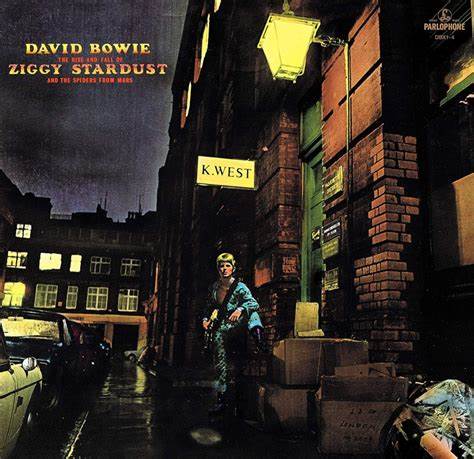
“I’m telling you,” he added, “Bowie is T. Rex, Hanoi Rocks, and Roxy Music, and that music is Bowie in a way that you won’t understand until you hear this.” He handed me a copy of a Ziggy Stardust and the Spiders from Mars (AKA Ziggy) compact disc. I’m not going to rewrite this section either and suggest that that compact disc glowed or that there was a sound equivalent to Heaven’s Gate opening when he handed it to me, but that is how I now remember it. “This is David Bowie 101, and when you start loving the alien, I’ll introduce you to other elements of the alternate universe he created.”  

I thought Ziggy was a quality album when I first heard it, but I couldn’t get passed the pop artist and “too weird” hang ups I had with Bowie. Those hang ups led me to think the single Ziggy Stardust was so immediate that it might be too immediate. After repeated spins, I started zeroing in on the other songs on the album, and I started dissecting them in the “parts are greater than the whole” mindset. Soul Love was the first song that nabbed me, and I put that song on repeat numerous times. At the end of that week, I forgot to return the disc to my friend. The music on Ziggy Stardust became “mine” in so many ways that I forgot the actual, physical disc was not. When he reminded me that I forgot to return his disc, I did and went out and bought one of my own. 

I was already a Ziggy freak by the time Dan suggested I listen to Hunky Dory and Diamond Dogs. I was hesitant, thinking Bowie might be a one-album wonder. After a couple weeks, I was hooked on everything Bowie. The “too weird” notions I had of Bowie began to fall away, and I stopped borrowing the discs from my incredibly perceptive friend. I bought them. I did something different with my Bowie-obsession than I did with every other artist to whom I became obsessed. I bought a Bowie album, and I inhaled it. I lived each album, until I knew just about every lyric and every beat of those albums. I thought there was something different to know, feel and experience on each album that I never had before with any other artist. Each album was so different that I could see what everyone was saying when they said he was too weird, but by this time, I recognized that I was a little too weird too, and I began to think David Bowie was singing about me. I listened to each album as an art enthusiast might when examining a painting, slowly ingesting every little nuance until they discovered what it meant to the artist.  

When my excitement to buy another album overrode my good sense, I moved onto the next album, only to discover I wasn’t as done with the previous one as I thought I was. Bowie, I realized, was one of the very few musicians who could have one foot planted in the pop world and another in the world of art. My peers told me the man was weird, “too weird”, and I listened. Soon after taking a deep dive, I regretted how much I missed by refusing to listen to him for so long. There are very few artists that affect me so much that I regret not listening to them sooner. I thought of all the years I wasted listening other artists when I could’ve been listening to Hunky Dory, Alladin Sane, and Diamond Dogs. I thought he could’ve changed my world just a little bit sooner back then, and I know that sounds silly, but the effect of his music on me was that profound. 

When I finally made it past the obsession, I had with what some now call the Five Years chunk of his catalog (Man Who Sold the World through Diamond Dogs), I graduated to his Berlin Trilogy; Low, Lodger, and Scary Monsters. We listen to music, albums, and artists for a variety of reasons, and I’ve had so many obsessions that I don’t have enough fingers or toes to count them, but there was something different about my obsession with David Bowie. We could label his music in all the pedantic ways, deep, meaningful, and spiritual, but that “not just weird, but too weird” characterization that influenced my refusal to listen to Bowie became the primary reason I listened to him in my adult years. 

Whereas most singers sang about love, sex, drugs, and rocking out, Bowie sang about estrangement, an alien nature, and various other themes we deem “too weird”. In places where an artist might go over the top, and be weird for the sake of being weird, Bowie displayed restraint. In places where an artist should shows restraint, Bowie went over the top. He could write a song that that would live on in the history of FM radio (Space Oddity, Changes, and Heroes), and on the same album he would leave a deep cut to cure our longing for great, weird, and offbeat music that only aficionados love (Alternative Candidate, It’s no Game (part 1), and Lady Grinning Soul). Bowie was the consummate artist who found a way to reach me as few artists could. Most music aficionados don’t intend to downplay the effects of hits, but most quality artists have some hits in their catalog. The difference between Bowie and most quality artists is that he spent as much time perfecting his deep cuts as he did his hits. He had a conventional side and an artistic side, as most of us do, but unlike the rest of us, David Bowie managed to cultivate his normal side, coupled with the “emotional and spiritual feelings of estrangement” from his mom’s side, and this duality led him to craft some excellent pop songs and some brilliant, “too weird” deep cuts. 

I started listening to David Bowie obsessively about 30 years ago, and I bought his new releases on the date of their release. I enjoy a majority of them, but Bowie captured magic in a bottle during the Five Years albums and the Berlin Trilogy. Hours…, Reality, and Blackstar were my favorite late Bowie albums, but they couldn’t compare to the great eight.  

Years before his death, David Bowie experienced something of a rebirth. All of a sudden, and seemingly out of nowhere, I began hearing his peers begin listing him as one of their primary influences. I heard one or two artists do this before, but not to this degree, and I was paying attention. Fans began listing Bowie just a bit outside the greatest artists of his era. They called him revolutionary, a pioneer, and all that stuff we’re accustomed to hearing now, but save for a few artists here and there, I didn’t hear the adoration society crown him in a way he richly deserved for most of my life. I’ve often wondered why, and how, this happened.

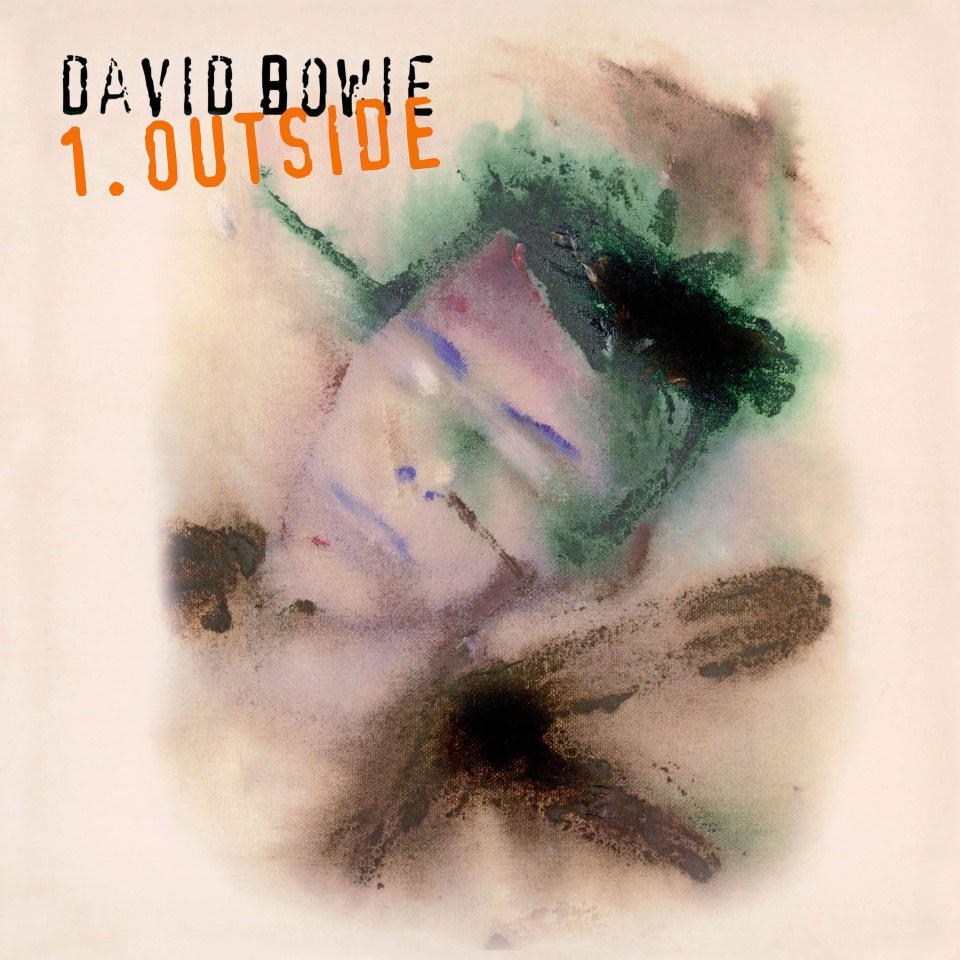
If an artist moves into the pulse of the zeitgeist after decades of being on the outer rim, we can usually pinpoint when and where this happened. The artist probably had that one song, movie, or another momentous event that put them over the top. Unless you consider Nirvana’s acoustic cover of The Man who Sold the World that momentous event, it did not happen with Bowie for most of his career. Some of the albums in the “back nine” (or in Bowie’s case the back eight– Outside to Blackstar) of his career were good, but they weren’t so great that they should’ve moved the needle on a retrospective analysis of his career. Before I get to the primary reason I think Bowie moved from just another artist putting out music to a cultural touchstone in the zeitgeist, there were years after 1980’s Scary Monsters and before 1995’s Outside when Bowie got lost in the artistic wilderness. Having said that, I don’t think Bowie moved to us as much as we moved to him in a cultural appreciation of everything he accomplished throughout his glorious career. I think we, as a culture, became more weird, or at least we embraced the weird far more in 2002 (roughly) than we did in 1972. As I wrote, I was already a Bowie fanatic by the time Heathen came out, but others were suddenly calling Heathen his best Bowie disc since Scary Monsters. I liked, and still like Heathen, but I didn’t think it was as good as Hours…. and I didn’t understand how everyone missed what I consider the Great Eight albums from Man who Sold the World and Scary Monsters.  

If you’re one who remains on the sideline for whatever reason, I suggest that you cast that cloak aside for as long as it takes to make an individual assessment of his material. My bet is that he reaches you on a level you’ve never considered before. Music, like every other art form, is so relative that his artistry might not appeal to you on the level he did me, but if you’re anything like me, you now know, as my friend Dan predicted it would for me, my definition of “my music” all goes back to Bowie.  

Other than providing me an excellent entry point to David Bowie, with Ziggy, Dan was notoriously poor at providing me an entry point to the artists he loved. To introduced me to Frank Zappa, for example, but he loaned me an advanced Zappa album that he loved as someone who had been listening to Zappa for decades. I eventually grew to love that album, but it took me a while. I needed to start at a better entry point to appreciate what Zappa did throughout his career. With that in mind, I thought about an entry point to David Bowie. I would compile the albums Hunky Dory and Ziggy into a playlist, and I would cut the songs Eight Line Poem and It Ain’t Easy (personal preference). Best of Bowie is another great place to start to learn the more normal side, as most people prefer normal pop songs, or hits, as a point of entry, and if you’re not familiar with those songs, it’s an excellent starting point. For those who know those the hits so well that they seek deep cuts, or songs beyond the hits, I’ve compiled a list of those songs that have made it onto so many of my Bowie playlists. Some of them were marginal hits in their era, but I still consider them so deep and meaningful that I had to include them.   

1) Alternative Candidate (It’s no longer on Spotify for some reason. It’s on YouTube though.) 

2) It’s no Game (Part 1) 

3) Lady Grinning Soul 

4) Sound and Vision 

5) Kooks 

6) African Night Flight 

7) Soul Love 

8) Dodo (This song is also not on Spotify. Here’s the YouTube capture.) 

9) Thursday’s Child 

10) Queen Bitch 

Embrace the Weird


Dan Elwes was a weirdo, we all were, but so was Stanford Days. We were all coming up with so many weird jokes, stories, and ideas that most of them got lost in the noise. Dan topped us all one day. He came up with an idea was so preposterous and absurd that some of us thought he might be brilliant, in a twisted, that-will-never-work, but what kind of mind comes up with such an idea, way. The reactions were varied, but the one thing we all agreed on was that no normal mind could think up such an idea. Then someone added that an abnormal mind wouldn’t come up with that idea either. “Seriously,” he said. “They might think it, but they’d never say it. They’d be afraid that the rest of us might know how abnormal they are.”

Weird-Americans have come a long way in the past couple decades. If a weirdo said something weird in the past, it could be a death sentence for them in some social circles. People would give them “that” look that would dismiss them from all future conversations. Thanks, in part, to the comedic stylings of weirdos like, Andy Kaufman, Peter Sellers, Chris Elliot, and David Letterman being weird is now more accepted. Those who used to dismiss weirdos as outcasts began to see them as creative provocateurs, but even the weirdest weirdos know that there is a difference between weird and strange and the just plain different.

Weirdos spent their high school years trying to put all of the unusual ideas, fantasies, and eccentricities of their youth behind them. We wanted people to laugh with us, not at us. We wanted them to take us serious, so they would like us. When we failed, we realized that we could only conceal who we were for so long. When we came together as adults, working for a company on the ideal shift for outcasts, the overnight shift, it didn’t take long for us to find each other and bond. Our time together didn’t last long, but we enjoyed it so much that we still talk about it.

We were a tight-knit group of the ostracized rejects who never fit into groups well, until Stanford Days joined us. When we first met him, we thought he probably should’ve signed up for the day shift. He was so normal there was no reason to notice him. He read books from the best-seller list, and his idea of good music was limited to what sold well. “You think your music is better than mine? I’ll have you know that this particular star,” he said mentioning the star’s name, “sold millions more copies with their last album than your favorite band has sold in total.” He quoted Lord of the Rings and Star Trek. He used math and science to make sense of the world. Yet, he didn’t fit in with the mathematical crowd, because he was too weird. He didn’t fit in with us, because he was not weird enough. He was an uncomfortable man, uncomfortable in his own skin, and it didn’t take a keen observer to see that he sought normalcy to quiet whatever vortex he had swirling around in his head.

The more we learned about Stanford Days, on those overnights, the more we thought the story was about him. Yet, he was a guy who was there, nothing more and nothing less than there. His path to being there ended when the management decided to shift our seating arrangement, and he ended up sitting next to Dan Elwes. 

Dan was the complete opposite of Stanford Days. Dan was the type a Stanford Days often loathes, because everything seems to come so easy to them. Dan loved to laugh, but everybody loves to laugh. Dan laughed so hard, so often, that some thought he might be simple-minded. Dan also wasn’t afraid to let his freak flag fly. He was everything Stanford wasn’t. Dan enjoyed being a freak and a weirdo in a way few do and he used to say different, weird, and strange things to pique our interest in a way that left us thinking he might be the story.

As anyone who has ever been in a corporate office, with no walls, knows your desk neighbor can become one of your best friends for as long as that particular seating arrangement exists, and when management put Dan next to Stanford, he took a shine to the man. Dan Elwes had an influence on all of us, but his most profound influence was Stanford, and Stanford found himself a member of our clique, thanks to Dan.

We had no problem with Stanford, but he didn’t seem to be a good fit for our clique. He was so normal that we suspected he studied the habits and mannerisms of the normal to convince others that there was nothing weird, strange, or just plain different about him, and we figured he probably would’ve succeeded if he didn’t get all caught up in our cliques effort to outweird one another.

Thinking back on the normal world, Stanford Days built for himself, it had to be a dilemma for the man when he started seeing us let our freak flags fly. He probably always wanted to do it, but he spent most of his life concealing that desire. We don’t know how much thought he put into it, if any, but he began saying things to fit in with our clique’s attempts to outweird one another, and he won, and he silenced the room. The things he began saying were so weird that they didn’t fit even fit in with the weirdest people you’ve ever met. When Stanford finally let his guard down, it put what Hank Hill would call “extra stress on a structure that wasn’t up to code in the first place.” 

We thought we were abnormal weirdos, but we were just having fun being unusually provocative. Stanford introduced us to the difference between the weird and the strange. To put this into a visual display, think of a dartboard with absolute normalcy being the center, bullseye of that dartboard. Stanford’s eccentricities informed us that with all the effort we put into being weird, we were actually a lot closer to the triple point layer than we knew. Dan Elwes was probably closer to the double score area, and Stanford defined for us what off the board meant.

The goal of true weirdos, who we might classify as strange and just plain different is to convince their observers that they hit the bullseye, the arbitrary and relative definition of absolute normal. When they make it over one of the borders, preventing them from progressing, we assume that they continue to have strange thoughts, but they learn not to say them. The fear of public perception keeps them desperately clinging to whatever progress they make, and they do whatever they have to do to maintain their hard-fought place on the dartboard.

To progress over a border, people like Stanford Days watch normal people, and they impersonate them. As any skilled impersonator will tell us, quality impersonation requires hitting bullet points of familiarity in your presentation, so that your audience knows the target of your impersonation. If an impersonator is imitating Johnny Carson, for example, they say things that Johnny said most often. Similarly, an abnormal person seeking to imitate a normal person focuses their presentation on the habits and mannerisms of the normal that we all know well. It’s not hard to do, of course, but the level of difficulty required in maintaining a consistent presentation corresponds with their placement on that dartboard. Some slip up, and others turn ultra-normal.

Those vying for the ultra-normal can reveal their effort in a variety of ways, but when we loaned Stanford Days some of our music, he revealed himself in cinematic fashion. It might be a fault-ridden form of measurement, but Stanford accidentally informed us that music could be used as a barometer of sanity.

We all listened to Top 40 radio in our youth, but most of us grew out of it. As we matured, our tastes in music followed. We might have become obsessed with Heavy Metal at one point in our lives, and we might’ve switch to Jazz, Punk and Classical at various points, until we worked through just about every genre of music at one time or another. Most of us stop, at some point, and listen to one genre for the rest of our lives, but some of us love music so much that we spider web outward. The weird clique, in our office, went through all of these phases and arrived at the most unusual, weirdest, and just plain different music you’ve probably ever heard.

When Dan brought Stanford Days into our clique, we thought Stanford was a like-minded music aficionado who was always on the lookout for something deliciously different. Our clique was anything but exclusive. We welcomed anyone and everyone to love our adventurous music as much as we did. We mostly loaned our music to people in our clique, but some of the times, some music excited us so much that we loaned it to outsiders. Most of them said they didn’t get it and they politely said it was just too weird for them. They often littered their rejections with humor, “You must be an odd duck if you like that.” The music we loaned them was not what we considered on the outer fringes of that particular dartboard, we reserved that stuff for the insiders. We loaned them what we considered weird music 101, just to gauge their reaction. Our MO was to stair step them to our most difficult favorites. When Stanford Days entrenched himself in our clique, we didn’t think stair stepping would be necessary. We thought he was ready for the weirdest music you’ve ever heard.

Stanford was outraged. He angrily rejected the music we loaned him, and he proceeded to tell everyone in the office to avoid listening to any of our music too. “It’s just so weird,” was the refrain of his condemnations, and his warnings to others. By going so overboard with his condemnations, Stanford accidentally revealed to us how tentative his hold on normalcy was.

“Why don’t you just say you don’t enjoy listening to our music, and that you don’t want to listen to it again?” we said. “Why do you have to make such a show of it?”

Stanford said something unmemorable and irrelevant in reply, but the gist of his answer was that he didn’t know the answer. We initially thought his display was all about his personal condemnation of us, but we learned that the show was the show. The goal of Stanford Days’ show was to inform the outside world how normal Stanford Days was by contrast. When he said the music was “just so weird” he wanted to declare to the world that that music was too weird for him, because he was just “too normal” to understand it. He never said such things, but his wild, angry display implied it. He wanted to use his hatred of our music as a platform to declare to that our music was exclusively for the abnormal, and he wanted no part of it.

We thought the unusual, so normal he was abnormal Stanford Days was the story. The more time we spent around Stanford and Dan Elwes, the more we realized that Dan Elwes was such an unusual thinker that no normal mind could come up with his unusual ideas, and no abnormal mind would either. As our mutual friend said, “[The abnormal] might think it, but they would never say it out loud. They’d be afraid that we might know how weird they are.” Most abnormal minds don’t want us to know how abnormal they are, and they don’t dare delve into their unusual thoughts either, because they don’t want to know how abnormal they are either. It takes a special mind to be so comfortable with their eccentricities that they embrace them, as Dan Elwes did just that when he heard our music. He didn’t reject it, as Stanford did, he tried to top it with his own brand of obnoxiously complicated and difficult music. We all knew that our music barometer was not a comprehensive indicator of the various levels of sanity, but Dan’s embrace of our music, and his subsequent recommendations prepared us for his personal embrace of the weird.