Wearing a Mask the Face Grows Into


Shooting the Elephant involves the struggle to find an authentic voice in the midst of ceding to authority and group thought. Shooting the Elephant is about a moment in Eric Arthur Blair’s (George Orwell) young life when he was forced, by a number of external forces, to shoot an elephant. The goal of a writer is to take a relatively benign moment in their life and translate it into a meaningful moment, and by doing so unearth the ideas and characters involved. In the course of discovery, an author might become obsessed with why they acted the way they did. What was my motivation at the time, a writer may ask, and what does it say about me, or what does it say about humanity as a whole? 

As a standalone, i.e., listing off the events that took place, I’m guessing that the aspiring Eric Arthur Blair considered the story incomplete and without purpose. I’m guessing that he probably wrote and rewrote it so many times, and introduced creative bridges, that he couldn’t remember which details took place and which details he created to support the bridge between actual events that took place and that which would make the moment transcendent.

We can also guess, based upon what Blair would achieve under the pseudonym George Orwell, that the search for the quality story, supported by a quality theme, was the driving force behind his effort. If the driving force behind writing a story is to achieve fame or acclaim, so goes the theory, you’ll have neither the fame nor a quality story. The mentality most quality writers bring to a piece is that fame and acclaim are great, but it should be nothing more than a welcome byproduct of a well-written piece. Shooting the Elephant is a really good story, but the thought provoking, central message is the reason Eric Arthur Blair would go on to achieve fame as George Orwell.

It’s possible –knowing that Shooting the Elephant was one of Orwell’s first stories– that the theme of the story occurred in the exact manner Orwell portrays, and he built the story around that theme, and he then proceeded to build a writing career around that theme. The actuality of what happened to Orwell, while employed as the British Empire’s police officer in Burma is impossible to know, and subject to debate, but the quality of the psychological examination Orwell puts into the first person, ‘I’ character is not debatable, as it relays to the pressure the onlookers exert on the main character, based on his mystique. It’s also the reason Orwell wrote this story, and the many other stories that examine this theme in numerous ways.

The first person, ‘I’ character of George Orwell’s Shooting an Elephant was a sub-divisional police officer of the town of Burma. Orwell writes how this job, as sub-divisional police officer, brought him to a point where he began to see the evil underbelly of imperialism, a result of the Burmese people resenting him for his role as the one placed among them to provide the order the British Empire for the otherwise disorderly “natives” of Burma. Orwell writes, how he in turn, began to loathe some of the Burmese as a result, while secretly cheering them on against the occupiers, his home country Britain. It all came to a head, for him, when a trained elephant went must<1>. Orwell’s responsibility, to those he swore to protect, and to those who commissioned him to protect, as a sub-divisional police officer, was to shoot the elephant.

Orwell describes the encounter in this manner:

“It was a tiny incident in itself, but it gave me a better glimpse than I had had before of the real nature of imperialism – the real motives for which despotic governments act.”

The escaped elephant gone must wreaked some carnage in his path from the bazaar to the spot where Orwell came upon him. En route to the eventual spot where Orwell came upon the elephant, Orwell encountered several Burmese people who informed him of the elephant gone must. Orwell then discovered a dead man on the elephant’s destructive path that Orwell describes as a black Dravidian<2>coolie in one spot of the story, and a Coringhee<3> coolie in another. Several witnesses confirmed, for Orwell, the fact that the elephant killed the man.

When the ‘I character’ finally comes upon the elephant, he sees it “peacefully eating, the elephant looked no more dangerous than a cow,” Orwell then describes the Burmese throng that surrounded him:

“It was an immense crowd, two thousand at the least and growing every minute. It blocked the road for a long distance on either side. I looked at the sea of yellow faces above the garish clothes-faces all happy and excited over this bit of fun, all certain that the elephant was going to be shot. They were watching me as they would watch a conjurer about to perform a trick. They did not like me, but with the magical rifle in my hands I was momentarily worth watching. And suddenly I realized that I should have to shoot the elephant after all. The people expected it of me and I had got to do it; I could feel their two thousand wills pressing me forward, irresistibly. And it was at this moment, as I stood there with the rifle in my hands, that I first grasped the hollowness, the futility of the white man’s dominion in the East. Here was I, the white man with his gun, standing in front of the unarmed native crowd – seemingly the leading actor of the piece; but in reality I was only an absurd puppet pushed to and fro by the will of those yellow faces behind. I perceived in this moment that when the white man turns tyrant it is his own freedom that he destroys. He becomes a sort of hollow, posing dummy, the conventionalized figure of a sahib<4>. For it is the condition of his rule that he shall spend his life in trying to impress the “natives,” and so in every crisis he has got to do what the “natives” expect of him. He wears a mask, and his face grows to fit it. I had got to shoot the elephant. I had committed myself to doing it when I sent for the rifle. A sahib has got to act like a sahib; he has got to appear resolute, to know his own mind and do definite things. To come all that way, rifle in hand, with two thousand people marching at my heels, and then to trail feebly away, having done nothing – no, that was impossible. The crowd would laugh at me. And my whole life, every white man’s life in the East, was one long struggle not to be laughed at.”

Orwell states that he did not want to shoot the elephant, but he felt compelled by the very presence of the thousands of “natives” surrounding him to proceed. He writes:

“A white man mustn’t be frightened in front of “natives”; and so, in general, he isn’t frightened. The sole thought in my mind was that if anything went wrong those two thousand Burmans would see me pursued, caught, trampled on and reduced to a grinning corpse like that (coolie) up the hill. And if that happened it was quite probable that some of them would laugh.”

In the aftermath of the shooting of the animal, Orwell describes the controversy that arose, and he concluded it in the following manner:

“I was very glad that the coolie had been killed; it put me legally in the right and it gave me a sufficient pretext for shooting the elephant. I often wondered whether any of the others grasped that I had done it solely to avoid looking a fool.”

The Hard-Ass Boss

At a warehouse-sized office I worked in, we had a supervisor who enjoyed the mystique of being a hard-ass. He enjoyed having those of us under him believe that he would do whatever it took to help the employees on his team achieve maximum efficiency. If we did well, he took credit for it. He was proud to take credit for it, and we were supposed to feel proud when we made him look good. Some of my team members were proud, for there are always some who enjoy autocratic rule. What they didn’t consider was what might happen if they had a poor quarter. Not only did he deflect 100% of the blame to the accused, but in a stylistic homage to Josef Stalin, he had them unceremoniously stricken from the record. We had a friend sitting next to us, laughing at our jokes and telling us stories from their life one day, and we had an empty desk sitting next to us the next. If he didn’t choreograph the chilling effect this had on the team, he might have taken credit for it if we asked him about it.

In this particular office, a sub-par employee had so many chances to recover from past performance that it was an ongoing joke among the employees that we could set the building ablaze and nothing of consequence would happen. If our perceptions of this climate were anywhere close to the truth, this supervisor stood out. In a corporate climate of managers defining supervisors on their creative abilities to retain employees and receive quality, employee review scores from those employees, our supervisor was an aberration. I do not know if the numbers we produced for him placed him above reproach among his superiors, or if my fellow employees were afraid to score low on their reviews during his tenure as their boss, but he managed to remain a supervisor of a team that hated him. If the reader knows anything about the corporate climate of America today, and the constant reviews employees and their bosses undergo, they know that is a near-herculean chore. 

The walk to an unscheduled, closed-door, one-on-one with this supervisor was equivalent to a criminal suspect being frog marched into a courthouse. The audience of it found themselves caught between trying to see the emotions on accused’s face and trying to look away to preserve the accused’s dignity. These moments informed us that in a world of supervisors claiming to have our back, in closed-door sessions with Human Resources and their managers, we had one that had so little concern for us that he did not even try to fake the support other supervisors did.  

Those of us who worked under this hard ass boss knew he would not defend us, even if we had verifiable reasons that warranted a defense. We figured that if we had that reason that we might have to go to our Human Resources department to mount our own defense, and there was also a sneaking suspicion that we might have to mount a defense against him in that meeting.

This resulted in most of us believing that he cared little about us and only about advancing his mystique, until it advanced him within the company. Was this a fair characterization? It might not have been, but it was pervasive throughout the team, and he never did anything to dispel us of this notion.

Thus, when I was frog marched into my first unscheduled one-on-one session with him, I was astonished to find out that not only did I receive the least severe punishment possible, but I didn’t receive the punishment specifically proscribed for my offense. He informed me of the charges against me, and he provided print outs of my action in the event that I might mount a defense, and then he cut my punishment in half. He did so in a congenial manner that I found unsettling, and his unassuming smile of sympathy was so shocking that I experienced an inexplicable disappointment.

Another inexplicable emotion I experienced was a diminished respect for him that I couldn’t avoid pursuing. My characterization of him, compiled data furnished by him and the group thought that pronounced such characterizations after all of his actions, left me with blanks to fill that included pleasant and unassuming characteristics.

He offered me another pleasant and unassuming smile in the silence that followed.

“See, I’m not such a bad guy,” he said.

Had he had asked me what I thought of this side of him, before I left the boardroom, I would’ve told him that he would have been better off refraining from all that smiling. “Smiles look weird on your face,” is something I might have said. I would have added that there was nothing unusual, or unattractive about that smile, but that it just looked odd on him. I also would have informed him that we both would’ve been better off if just gave me the proscribed punishment for my offense. I would’ve told him that the mystique he had a hand in creating, and that which was so firmly entrenched by the time I entered this boardroom, placed him in a no-win situation … “If,” I would add, “it is your hope that I like you, or in anyway consider you to be something other than a bad guy.” I would’ve informed him that once you establish a firm, hard-ass leadership mystique, doing otherwise will only lead the recipient of your leniency to believe that you are flexing an authoritative muscle in a condescending reminder to those under your stewardship that they will forever be subjected to your whims and moods, until they leave the room loathing you more than they had when they entered.

I would’ve ended my assessment by informing him that he’s so worked hard to foster this image, and sustain this mystique, that he should probably just sit back and enjoy it. The employees on your team are now working harder than they ever have, because they fear that you won’t do anything to help them if they don’t. They are also putting a great deal of effort into avoiding anything that could even be reasonably perceived as wrongdoing, based on the idea that if they get caught up in something that you won’t defend them. I would tell him that by firmly establishing yourself as a hard-ass boss you’ve given up the freedom of latitude in your actions. We’ve adjusted our working lives to this mask you created, and any attempt you make, going forward, to foster a “nice guy” image will be perceived as weakness, and it will not redound to the benefit for any of the parties involved.

It’s too late for you, and your current mystique, I would inform him, but if you want to escape this cycle in your next management position, clear your desk library of all of these unread “how-to lead” guides that you have arranged for maximum visibility and pick up a copy of Orwell’s Shooting the Elephant. In this story, you will find the true detriment of creating a hard-ass boss mask, until your face grows into it, and while it may impress your superiors to be this way, the downside will arrive when you try to impress upon the natives” the idea that you’re not such a bad guy after all, and you spend the rest of your days trying to escape the spiraling duality of these expectations.

<1> Must, or Musth, is a periodic condition in bull (male) elephants, characterized by highly aggressive behavior and accompanied by a large rise in reproductive hormones.

<2> A Dravidian is described as any of a group of intermixed peoples chiefly in S India and N Sri Lanka

<3> A Coringhee coolie” refers to such an Indian immigrant working in colonial Burma as an unskilled laborer in the nineteenth and twentieth centuries.

<4> Sahib –A name of Arabic origin meaning “holder, master or owner”.

‘P’ is for Potential


“You have to create some dung to fertilize the flower,” Martin Sheen said when he was asked how he could only be proud of three movies in a career that listed 69 titles.

The fact that this was my favorite quote, for years, should’ve told me something about the dreams I had of becoming a writer. I believed that I had a capital ‘P’ emblazoned on my chest, until I realized that everyone else did too, and I hadn’t done enough to separate myself from the pack. The thing with the ‘P’ word that those in the card carrying ‘P’ world don’t know is that there is another ‘p’ word in the vocabulary of those that watch you. This is an evil ‘P’ word to those in the card carrying ‘P’ world. That ‘P’ word is performance.

HaloSome may have their ‘P’ word swinging before their face, in the manner a farmer puts a carrot on a stick before their horse. They may also wear it in every smile they give you, and those smiles tell you they are meant for something more, but they just don’t know what yet. When one runs across a true ‘P’ word, they know it when they see it, and it diminishes their capital ‘P’ a little by comparison. Most people are not unusually jealous, they’re happy, and they lead a great life, but when they run across one that carries a true ‘P’ on their various smiles, they decide that they would do just about anything for just one of those smiles.

When they speak of events that have occurred in their life, and they speak about them in a casual manner, the observer knows that the career that we currently share with them is just a way station for them, and we can’t help but be genuinely jealous in that moment.

Others wear this letter ‘P’ as a costume, in conversations, to cover for the fact that they haven’t achieved as much as they once thought possible. We’ll know these people when we see them too. All of these people teach us the various definitions of the ‘P’ word. We see the beauty in their smiles, and we perceive their limitlessness, but we’ll also see the evil ones. We’ll see that these definitions are defined by how the user uses it, and if they use it.

I thought I had a capital ‘P’ branded into my chest at one point. I didn’t. I thought I did though, and that thought prompted me to work my tail off to convince myself, and others, that it was truer than true. The idea that I pursued something, for which I had so little talent, amazes me now in retrospect, when I look back on the actual performances that convinced me that there was, at least, a lower case ‘P’ somewhere on my chest.

Those that manage their ‘P’ word correctly, rarely comment on it. They don’t have to say it. It is the conclusion their observers reach soon after getting to know them. Those that wear the letter ‘P’ on their chest, as a costume, know this also. They know that most in their audience are so loaded with insecurities that those insecurities can be translated into a variety of ‘P’ words, and ‘P’ word synonyms, if they do it right.  In order to do it right, however, they know to avoid performing in front of them. Give them silence, and let them fill in the rest.

“I can’t hang out with those two anymore,” a friend of mine told me one day after an outing with co-workers. I initially thought he was being a cool guy. A cool guy tells those around them that a fun and exciting night was boring; a cool guy tells those around them that a great movie, or album, sucked; and a cool guy stops all the plastic people, with all of their plastic proceedings, and drops a quick quip like: “The world sucks!” Cool guys can also reveal those nerds around them by saying that what we thought was such a great time, was time spent with nerds. I attempted to dispel what I thought were my friend’s cool guy condemnations by saying that those two were fun and entertaining, and that fun and entertaining people don’t usually hang out with two drips like us. He said that wasn’t it. He said his concern was work-related.

I attempted to dispel this notion by saying that our company didn’t discourage senior agents hanging out with employees, only managers. My friend believed he was born with a capital ‘P’ on his chest, and I thought this was another moment where his delusions of grandeur had gotten away from him. “It’s not that,” he concluded. “It’s that, they know what I think now.” Here I thought that all the symptoms I was witnessing added up to the fact that my friend had come down with a simple case of delusions, but as it turned out he was suffering from a complex case of grand delusion.

What his last sentence told me was that he knew his thoughts were never as complex, or as complicated as he wanted them to be, but those two didn’t have to know that. He was despondent. They knew. He told them what he thought. All those weeks and months he spent quietly sitting in the background cultivating, harvesting, and weaving the idea of his brilliance into gold by allowing these people to fill in the blanks for him were gone, shattered, in one night.

He feared that the grand delusions he had perpetrated in their world, had just been popped, and he feared that when Monday rolled around, they would know that he was just one of them, in the present, with a future that probably wouldn’t be that much different than theirs. On Monday, they would see him quietly typing away at his keyboard, in an office, and that visual would take on an entirely different meaning than it had on the Friday before our weekend outing.

The other employees around him took their jobs less seriously. They always got their work done, but they played, and talked, and joked. He didn’t. He was serious. He even went so far as to shush employees when management walked by. He had always been a quiet guy with few friends, and in the real world this defined him as an awkward person that had a difficult time mixing with other people. In the office world, these characteristics can lead to an employee gaining a mystique of being a model employee with a serious future. That night, spent with our two co-workers, revealed him as more of a quiet, socially awkward guy that feared authority. It made everything he had done to procure those grand delusions in their head feel pointless.

He feared that they would now believe he was what they saw, nothing more. The idea that he didn’t mix well with others, was once a silence thing, but silence begets the ‘P’ word if one does it often enough and allows others to fill that silence in with their own exciting and intoxicating words. Why does he behave so well? Why doesn’t he mix well with others? I’ll tell you why, that boy’s got the ‘P’ word in spades. They fill that silence with words that you wouldn’t believe, until you accidentally fill those blanks in for them one night, while drinking, and there’s no turning back after that, or so he feared.

There were times when he spoke his mind during that night, and our two co-workers realized he didn’t know everything. He wasn’t as wise as they feared in their silent, insecure comparisons. There were other issues he wouldn’t discuss with them that he found too revealing, because he said he couldn’t discuss it with them. In the latter, he attempted to convey the notion that he had proprietary information that he could not divulge, due to his position in the company. When we reminded him that he was not management, and he could reveal whatever he thought on the matter without fear of recrimination, he went silent. It was revealed that he simply didn’t know what we were talking about. We accidentally took away his shield of silence. He thought these co-workers had given him a capital ‘P’ followed by an exclamation point, and he feared that that ‘P’ had replaced by an ‘R’ word, reality, that would shatter all the myths he had worked so hard to create.

My friend wanted to be like a politician that stood for nothing, but allowed his constituency to fill in the blanks that he left for them, until they had other ‘P’ words dancing in their head, and ‘P’ words that had question marks behind them, as opposed to his preferred exclamation point.

The thing with the ‘P’ word is that it can be beautiful. It can drive a person to become better tomorrow than they are today, if they’re willing to engage in the naughty ‘p’ word of the ‘P’ world vocabulary, performance. The reason that most card carrying ‘P’ words regard performance as a naughty word is that performing can lead to another ‘R’ word, revelation. It can reveal if the card carrying member truly has a ‘P’ word or not. It can tell reveal whether a person is truly special, gifted, and meant for more, or if they’re just a regular guy, collecting a regular paycheck, with as many limits on your ‘P’ word as everyone else.

I identified with my friend. I thought I had a capital ‘P’ behind my name that was followed by a big, old gleaming exclamation point. I thought God whispered things in my ear, and I wrote down everything I heard. I wrote short stories. I wrote novels. I wrote anything and everything I could fit in one mind. I thought it was my job in life to see this calling to its end. I thought I was a few steps below Stephen King and Dean R. Koontz, and Robert McCammon. I thought I just had to perform my way through that hole.

I’ve read through all those whispers recently, and I realize that if they happened today, I would turn to my wife and say, “I just had a thought.” I would then say those two sentences, and be done with it. Back then, a part of me believed that those whispers were telling me to be a writer, and I listened to these whispers, until I had enough material that it should’ve come true, and then I wrote some more, until I reached a point where I may have fertilized that ground so well that all the cultivating, harvesting and turning of those lies might have accidentally produced a truth.

How to Succeed in Writing IX: The Influential Writers, and Other Influences


Like any other person who has attempted to create something artistic, an artist’s appreciation of another’s work is limited and unique. An artist’s appreciation of another’s work is similar to an athlete studying game film on a future opponent. After repeated viewings, you understand their modus operandi. You are able to pinpoint what they do well, and their failings, and you’re able to learn from all of them. One author’s ability to characterize may impress another artist in one reading, and another may impress them with their particular brand of engaging dialogue. After another artist gets it, they’re usually bored with it, and they move onto another author. To use the sports analogy once again, the artist can usually spot the stitches on another’s fastball long before the casual observer can. This isn’t what artists are trying to do, it’s who they are. They would love to simply read another’s work and appreciate it in the same manner a casual reader would, but they can’t turn that portion of their brain off. An artist reading another’s work can get so hypercritical and appreciative of the little things another author does to move a story along, or characterize, that they can’t enjoy that simple, little story in total until they have thoroughly explored, and drained, whatever value they believe another’s work has for them.

Most writers will claim that their writing is now entirely free of influence once they’ve found their voice. Some might judge this self-promotion, and others would say it’s just impossible to believe. As any writer who has written a great deal knows, it’s almost impossible to escape influence. Whenever a writer turns a phrase, completes a block or dialogue, or characterizes, there was some influence there. If it wasn’t Chaucer, or Hemingway, that influenced the writer in this manner, it may have been their freshman Composition 101 teacher. If it wasn’t Stephen King, or Faulkner, who taught them how characterize, it may have been a movie or a television show that embedded that particular brand of characterizing deep in their brain. Something, somewhere influenced them in some way they may not know now that they’ve reached their twentieth year of writing, where their writing material that is so fresh, and unique, that they can’t even spot the influence anymore. They may have worked so hard, for so long to achieve a unique voice that they feel they’ve achieved it, and they may have to some degree, but there was a starting point that formed a foundation that is now so embedded in the manner in which they write that they can’t see the influence anymore.

Those who belong to the latter group believe they have reached the pinnacle of individualistic style, that contains no influence. They might dismiss this article as nothing but a point of curiosity, but the new writer wants to learn how we arrived at point D in the process, the following is a list of those influences who lubricated the slide:

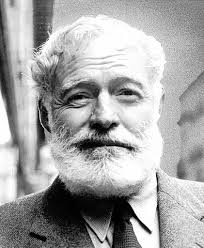
10) Brevity. If “Brevity is the soul of wit” no one was funnier than Ernest Hemingway. An economist of words, Hemingway avoided complicated syntax, and it has been determined that seventy percent of his sentences were short, simple sentences.{1} Hemingway was the anti-Joyce (James Joyce) in this regard. Whereas Hemingway “KISSed” us (keeping it simple for we stupid people) with his prose, Joyce dangled complicated, multi-syllabic, and invented words before us, and he often teased us with a carrot on the stick of his words’ meaning. Whereas this may have made Joyce’s fiction wonderful, historic, and transcendent, most of us didn’t know what the hell he was talking about. Whereas most readers need translation, and transports in time via a well-written guide, and a degree in Joyceisms to understand Finnegan’s Wake, Old Man and the Sea can be enjoyed in an otherwise carefree afternoon. This isn’t to say that Hemingway’s prose is not complicated and carefully structured for meaning, but with Hemingway’s fiction, meaning is derived upon reflection and through personal interpretation. The meaning of Hemingway’s prose is established through dialogue, action, and silences —a fiction in which nothing crucial or at least very little— is stated explicitly. He purposely avoided outright symbolism in what he called “the theory of the iceberg”. This theory stated that facts float above water, but the larger, supporting structure and symbolism that build the foundation do so out of sight.

Hemingway“No good book has ever been written that has in it symbols arrived at beforehand and stuck in,” says Hemingway. “That kind of symbol sticks out like raisins in raisin bread. Raisin bread is all right, but plain bread is better.” He opens two bottles of beer and continues: “I tried to make a real old man, a real boy, a real sea and a real fish and real sharks. But if I made them good and true enough they would mean many things. The hardest thing is to make something really true and sometimes truer than true.”

Hemingway was more of a storyteller than he was a writer. The interested reader, who doesn’t have a whole lot of time on their hands, may want to consider reading either the short book Old Man and the Sea or The Short and Happy life of Francis Macomber. The latter is a short story that captures the essence of Ernest Hemingway, and it teaches every writer the greatest principle every writer should employ in their daily activities: Story is sacred and flowery prose is largely self-indulgence.

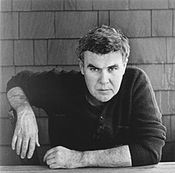
Carver9) Images. Raymond Carver was also a minimalist. Most of my favorite writers were. Carver employed evocative and provocative images to tell a story. Short stories were his forte. The short story Feathers captures the essence of Raymond Carver, better than any of his other stories in my humble opinion.

Carver’s stories, and poems, focused on misery and dirty realism. His characters were low class, beer drinking, hardworking, slobs that readers can’t help but picture in stained tank-tops. Carver claimed that he was inclined toward brevity and intensity. His writing focused on sadness, loss, and alcohol in the everyday lives of ordinary people — often lower-middle class or isolated and marginalized people.

8) Characterization. John Irving engages in the flowery prose of his mentor Charles Dickens, but he does so (for the most part) effortlessly. Irving is not a minimalist in other words. Irving’s John_Irvingworks teach us, more than any of the authors listed here, to work your tail off to hide your effort. One read through his magnum opus The World According to Garp teaches us that it shouldn’t be a chore to read through one’s work. No other authors listed here, save for maybe Hemingway, hides his brilliance better than Irving. The reader gets to know Irving’s characters in what I call a “Holy Crap!” manner. Irving doesn’t use physical characteristics to describe characters, and he doesn’t use the inner voice techniques that most of us do, yet the reader learns their characteristics in a story after story and a passage after passage manner, until we know them so completely that we say, “Holy crap, this author’s brilliant.” I realize this methodology is borne of the “show don’t tell” basic of storytelling, but in my humble opinion, no one does it better than Irving.

Irving has chapters of setting, primarily in the Northeast, and his settings can appear a bit laborious at times. Unlike all of the authors on this list, there can be large chunks of Irving’s narrative where nothing happens, as he frames you up for what’s about to happen. Irving does “a story within the story” as well as anyone in the business. As I said, though, Irving achieves his stature in the world of literature through effortless characterization.

It appears, unfortunately, that the drive to tell a story no longer drives Mr. Irving. His more recent books have become more and more political. Some could say that Mr. Irving has always been political, and if you read A Prayer for Owen Meany and Garp again, you’ll see that. If that’s true, he used to be a lot more subtle. Story used to be sacred to him, and politics used to be a secondary concern to him.

It’s almost become a cliché that writers of my generation claim Irving as a primary influence. Like most clichés though, there’s a reason claiming Irving as an influence has become so prevalent among those in my generation. It’s because he has achieved the bestseller list through almost effortless, beautiful writing, and by not conforming to current norms. Irving just does what he does, and we have all accepted this to a degree that he can do whatever he wants, and we’ll all greet him with open arms. Claim King or Koontz as an influence, and artistic writers will dismiss you with a yawn; claim John Grisham, and they’ll dismiss you with a laugh; but Irving has managed to keep a foot in both the literary and best-selling world, and he does it with rich, rewarding, and effortless characterization.

7) Asides.  Some may dismiss Chuck Palahniuk as a splatterpunk writer that engages in shocking prose that grosses out and titillates the reader. It is true that Palahniuk goes for the jugular in much of his writing, and some may say too often, but anyone that has read, or seen, Fight Club (they’re strikingly similar) knows that Palahniuk (almost) always has a story to tell amid the chaos in his works.

PalahniukPalahniuk may have some of the best, most interesting vignettes and asides in the business today. He is heavily influenced by Stephen King, as evidenced by his heavy use of refrain style use of repetition, but one should not mistake this influence as outright mimicry. Palahniuk has carved himself quite a niche in the literary world, with works like Fight Club, Choke, and Rant. Rant proved to be especially valuable to those writers on the lookout for a new way of telling a story. While the style is not unprecedented, Palahniuk used it in such a unique manner that those that have read the story considered it revolutionary.

Chuck describes his style of writing as “transgressive” fiction. Transgressive fiction, as defined by Wikipedia, “is a writing style that focuses on characters who feel confined by the norms and expectations of society and who break free of those confines in unusual and/or illicit ways.”

After the novel Lullaby, Palahniuk began writing satirical, horror stories. His work is big on unusually dark and absurd philosophical asides that are so farcical that the reader can help but think of them as true. These asides are non-fiction factoids within his fictional works that, according to the author, “Are included in order to further immerse the reader in my work”.” {2} This author hates metaphors and similes. This author loves to mess around with the traditional styles of storytelling to presumably keep it interesting for him and us. Some of the times this methodology works, as it did in Rant, and some of the times it doesn’t, as it didn’t in Pygmy and Tell All. His forays into illogical, but fun, splatterpunk writing, works in most of his books, but anytime a writer puts their stock in shock they are going to try outdo themselves every time out, until they produce a book like Snuff in which the novelty of the over-the-top shock wears thin quickly.

6) Pace and Formula. No writer, in modern fiction, displays the virtues of pace better than Dean Koontz. I challenge anyone to read the first half of his book Intensity and say that this man is not in the upper echelon of thriller writers today. Koontz knows all he needs to know about architecture, gardening, and all the other minutiae of his Southern Californian locale to make his setting interesting, but Mr. Koontz can cause a reader to flip pages on pace with any of the great suspense/thriller writers of our day. He may also be the safest writer on this list.

Dean-KoontzWhy is Koontz safe? He strives for the mainstream. His books have mass appeal to most age groups and both genders. He is a publisher’s dream in that he knows how to knock out a best-seller on an annual basis without offending anyone. If you’re a writer who seeks the formula to mass appeal, and the bestseller list, I can think of no better author to read … this side of James Patterson. That having been said, there is a formula to Koontz’s writing. How can there not be in a catalog that lists 112 titles, with twenty-eight bestsellers among them, without an inoffensive formula? A formula is good to some degree. To some degree, a formula will provide a reader a solid foundation of comfort that the author can shatter in the pages that follow. There is a formula, and a relative level of comfort that Koontz readers have come to expect, and while we should try hard not to dismiss Koontz on this basis alone, it’s difficult not to do so. All of his characters are much too safe. His female characters are incredibly and consistently intelligent, and his male characters are “safely” reliant on the female’s intelligence and ingenuity … Even his bad guys are safely bad. Then, Koontz exasperates whatever problems his works have in this regard by trying to be funny. His humor is so safe, conformist, and pedantic that it almost seems to be self-effacing, nerdy humor, until one reads enough Koontz to realize that this is this man’s sense of humor.

If you’re looking for edgy, offensive, different material that most people are uncomfortable reading, Koontz probably isn’t your guy. He does write some edgy material, but he doesn’t do so on a consistent enough basis. If one were to gauge mental health by a writer’s fiction, Koontz would likely score higher than any of the authors listed here, but that has resulted in less dangerous, less angst-ridden material. He’s mainstream, and there’s nothing wrong with that if you’re looking to write mainstream fiction. One of the other exceptions to this rule, aside from Intensity, was the novel Life Expectancy. These two books are the must reads in Koontz’s catalog for any writer seeking the edgy and different.

5) Writing fiction. What can be written about Stephen King that hasn’t already been written? If you are a writer that hasn’t read King yet, you’ll probably want to get on the train. He’ll teach you the good, the bad, and the ugly of writing. While it’s almost impossible to read everything he’s done, most writers have an extensive King library. If they don’t, they should probably have at least ten of his books.

KingKing has it all, and most honest, seasoned writers will begrudgingly admit that he has had an influence on them at one point in their process. If The Stand is too long for you, then the writing community will require you to read Misery, Gerald’s Game, It, or any of his classic, early works like The Shining. Some artistic writers may scrunch their nose at King, because he is so ubiquitous, but his influence on modern fiction cannot be denied in just about every novel written after 1990.

Some say that King invented the common man horror, but many say that almost every piece of fictional horror involves the common man. King did work the working joe into his fiction more than most however. As stated earlier, King builds horror through repetition. He usually has a nickname for his monster that gets repeated often enough that the reader feels a horrified endearment to the monster. He also may have not been the first to work music into his horror, most notably nursery rhymes, but he did it more often and with more mastery than most, and it influenced a generation of horror writers.

4) Hodge Podge. As written in the introduction of this piece, writers read other writers in a unique manner. There are so many varied ways that a writer can reach point D in the process that attempting to catalog all of the influential writers, and their influential moments in fiction, would be book length, and very few readers would be interested in all of the ways in which this writer achieved that point. So in the interest of interest, we will try to whittle these moments down to a few of the most prominent. In the area of the influentially absurd humor, there have been few that captured it as well as Robert McCammon did in Gone South, or Gary Shteyngart in his work Absurdistan a book that was heavily influenced by the monumentally influential book A Confederacy of Dunces John Kennedy O’Toole.

As for horror, there have been few, this side of King, that have been able to capture common man, suspenseful horror as adeptly as Scott Smith did in A Simple Plan and Ruins. Smith’s ability to build to horror in a casually sequential manner is almost unprecedented. The only problem with Smith is that he has only written two books in twenty years, and while there is nothing wrong with the man’s quality, his fans would love a little more quantity. Although Thomas M. Disch’s M.D. was not the greatest horror book ever written, and it ebbed and flowed more than the other books on this list, the work provided moments that have influenced this writer as much as any of the pieces described previously. Some of the imagery Thomas Harris created in the Red Dragon book, and in Phillip Roth’s Portnoy’s Complaint (not a horror but just as laden with images), have led many writers to pound the table in frustration with their attempts to duplicate their provocative imagery. For various reasons, and in various ways, all of these authors had a huge influence on this writer’s attempt to get to point D.

3) Mood. Nothing influences mood better than music. Listening to music gives the writer a certain setting from which “different” fiction can be achieved. If a writer wants to write a period piece, for example, they can select the music from that era, and attempt to achieve that mindset. This is similar to the attempts that the main character in Richard Matheson’s Somewhere in Time to achieve time travel. In this story, the main character wanted to go back to the year 1912 so badly that he attempted to hypnotize himself into the belief that he was. He surrounded himself with 1912 in his hotel room, and he wore 1912 clothes, listened to 1912 songs, and ended up believing he was in 1912. Music affects me in the same manner. I prefer non-traditional, non-linear music to shake my brain out of the patterns it might fall into in long settings, until I can convince myself that I am non-traditional and non-linear. I, of course, do not make the conscious efforts to do this in the manner Matheson’s character did, but through repetitive listening of certain music, I have been able to achieve something “different” on a number of occasions.

I listen to a wide variety of music when I write, always switching to keep it fresh, but some of my favorites are Mike Patton, John Zorn, and Trey Spruance’s Secret Chiefs. These musicians (not rock stars) create an aura I find conducive to writing edgy, “different” material. These artists, like so many of the authors described above, created something that that seemed impossible before they did it. They are truly skilled in making the listener feel different, and that anything can be accomplished in a certain setting. Miles Davis creates an aura that allows you to focus at times, but his music can be a little too aural at times, and David Bowie’s music can be a little too focused, and this causes me to be distracted when I listen to what his music is doing. The band Pavement can create some chaos in your mind and shake you out of your doldrums, but they, too, can be a little too focused at times for that atmosphere writers need to create.

Everyone’s mom told them that distraction-free silence was conducive to concentration. Yet, every mind works differently, and I have found —much too late for success in school— that I need distraction to achieve focus. It may not make sense to those blessed with normal brains, but I need a Goldilocks amount of distraction —not too hard and not to soft, and not too aural and not too structured— for me to concentrate and focus.

2) Movies.  Most of the best storytelling being done today, we have to face it, is being done in the movies. If a Quentin Tarantino were born in the late nineteenth century, he probably would’ve been a novel writer. He, like all great movie makers of this era, has the storyteller’s bug, but he doesn’t have the patience to sit behind a typewriter/keyboard and compose prose that can take months and years to produce. These storytellers of our era are taking advantage of the technology offered them and telling their stories on screen. One thing movie makers can teach aspiring writers, that reading the Russian authors won’t, is to get to the point. Their audience, our audience, and the audience doesn’t have as much patience for brilliant prose as previous generations. We have a short attention span, and with a few exceptions (David Lynch, Wes Anderson, and Tarantino of late) most movie makers whittle their scripts down to the germane.

1) My writing.  Most readers would consider it egotistical to list “my writing” as the greatest influence on my writing, but that is not the intent. It is only added, because I hold my best writing out as beacons in my career that I want to smash the next time I write something new. It is important that every writer examine what they’ve written on a consistent enough basis that they always try to write better, and different, stories every time they sit behind their keyboard.

{1}http://en.wikipedia.org/wiki/Ernest_Hemingway

{2}http://en.wikipedia.org/wiki/Chuck_Palahniuk