How to Succeed in Writing V: Anton Chekov’s guide to the editing process


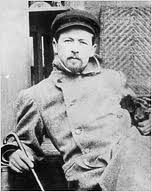
“Throw out your first three pages,” Russian playwright Anton Chekov advises writers.  Writers are a romantic, emotional, and sentimental lot, and they love every single one of the pages they’ve written, but they tend to be most sentimental about the first three pages of their stories.  Those pages are their babies, as beloved as any humans they happened to create.  They’re the pages—more than any of the others—that were the most fun to write.  They were the pages where their incredible idea—that magically turned into a story—was borne.  They’re crap, says Chekov, and they’re boring, and they amount to nothing more than circumlocution.

Circumlocution, for those, like me, who need to look up such a word, means using an excessively large number of words to express an idea.

Chekov also advises writers to delete as many adjectives and adverbs as possible, for “art must be grabbed at once, instantaneously.”  But Chekov’s most prominent editing advice for writers, regards deleting those first three pages.  Writers will call this bit of advice Chekov’s razor, and it’s well known in writer communities that take the goal of attempting to achieve literary perfection seriously.  If you have a friend that is a writer, and they have never heard about Chekov’s razor—and you’re feeling particularly nasty—let them know about this piece of advice, and you might be able to see a grown man cry.

Writing a great story, one that pops off the page, is hard.  If you call most writers to task, they will admit that very few of their stories pop off the page. It’s hard to do, and it doesn’t happen often for us.  When it does happen, it’s our natural inclination to try to inform our readers of some of the process involved in that magical moment.  It’s a selfish conceit we have to introduce our colorful cast characters that were borne entirely out of our imagination.  We want you to see how brilliant we are, but more than that we want you to experience the joy of our creation in the manner we did in creating them, and we have a difficult time trying to separate ourselves from that joy of creation and perfecting the story for your enjoyment.  We want you to feel the magic we felt in the process, because we loved the process, and if you ask us about our story we’ll probably concentrate our summary on those first three pages, because that’s where the twinkle in our eye was borne.

Objectivity was the point Chekov was trying to assist writers in achieving with this timeless advice he offered.  Objectivity that he presumably hoped would allow the creator the vantage point of viewing their material from the reader’s perspective.  Objectivity in that it should be a writer’s goal to distance themselves from the story just a tad to make it more palatable to a greater audience.  Writers, of all forms, attempt to send a message with their words.  Their stories are snapshots of the their view of the world, but it can get muddled in the closed perspective of personalization, and the first three pages, says this logic, is where most of this personalization occurs.  Take these pages out and you take out most of your personal entreaties into this world, and you’re more apt to leave a reader with the feeling that this story may apply to them too.

We’re trying to figure out what’s going to happen in these first three pages.  We trying to lay a foundation for a the story in these first three pages, and once we achieve that foundation we leap into an actual story world.  That foundation is, more often than not, where most exposition occurs, because we’re trying to explain our story to us.  If you’ve ever heard an experienced writer talk about the word exposition, you’ve usually heard them refer to it as the ‘E’ word, as if saying the full word aloud is equivalent to a Catholic saying the ‘F’ word in a cathedral.

“Exposition can be one of the most effective ways of creating and increasing the drama in your story,” says Robert Kernen.  “It can also be the quickest way to kill a plot’s momentum and get your story bogged down in detail.  Too much exposition, or too much at one time, can seriously derail a story and be frustrating to the reader or viewer eager for a story to either get moving or move on.”

Exposition is basically explaining.  Explain too much, or provide too much exposition, and we’ll get sad faces in the margins from our editors, our readers will yawn and mentally scream at you to get on with the action for the love of St. Pete, or they may not even read your story, because you’ve lost pace before you even started the story.  To paraphrase Chekov there’s too much circumlocution going on in there.

Have you ever read through your story and reached a point where you want to skip through parts?  Chances are those parts contained too much exposition.  Delete them now, says Chekov, before anyone else sees them…especially those instances that occur in the first three pages.  You’ll have most of what you need to have in an interesting story—if it is an interesting story—figured out by page four.  The first three pages were for you.

The latter line is important to those creators in the process of creating, for in the process of creating you need to know what you’re doing with this story, who your characters are, what your setting is, and where you’re going.  With that in mind, you may not want to delete these first three pages, until your story reaches the final stages.  Once you’ve reached that point, you can use Chekov’s razor, then go back in and add the germane sentences of those first three pages throughout the body of the work, and it’s at that point that you’ll begin to see that most of the information for what it was.

“Starting a story, we all tend to circle around, explain a lot of stuff, set things up that don’t need to be set up.  Then we find our way and get going, and the story begins … very often just about on page 3.” — Ursula LeGuin.

But the first three pages contains the thesis statement, you argue, that beautiful opening line that it took you a week to write properly, and the defining moment that crystallized who our character was going to be once this story got going.  Sure, my story takes off on page four, but the reader has to know the backdrop before the takeoff.  My story is the exception, you say, it just wouldn’t work without those first three pages.

Most people think that their story is so exceptional that it is the exception to this rule, but if most people think this way isn’t it reasonable to think that we might be able to separate ourselves from the pack by not thinking we are the exception to the rule?  It will break your heart, in the manner it broke your heart to dump the first lover that you liked a lot, but with whom you knew you had no future.  You knew that lover did nothing to advance your life, and you knew the two of you were wasting each other’s time in the greater sense of the word, but you liked being around them.  Once you dumped them, and you moved on, you realized that it was the best thing you ever did.  If you think there’s any merit to Chekov’s advice, try cutting the first three pages and placing them in a new file.  Once you’ve done that, try reading your novel without the first three pages, and you’ll find that you can place the germane material in the first three pages in a couple of sentences here and there throughout the body of the work.  Doing so will show you the idea that Chekov was trying to get across with his advice, and you’ll learn the true definition of exposition, and your readers will thank you for your efforts.

A short story would be an exception to the rule, of course, as some short stories are only three pages long.  If this is the case, you may want to try deleting the first three paragraphs, or any sentences that introduce your readers to the essay, or non-fiction piece, you are creating.  The important part of Chekov’s razor is that we delete the exposition that we have placed in the story to helps us understand what we’re trying to say in our artistic creation and get our readers straight into the story.

Chekov’s razor is, in my opinion, intended to assist writers in the process of attempting to create entertaining material, regardless what it does to your love of the creation.  It is also intended to provide the writer the tough love necessary to progress from a writer that loves to write to an author that readers love to read.  It is heartless advice that doesn’t take our romantic, emotional and sentimental needs into account, but like a child that exhibits some discipline problems writers need tough love too.  In the end, Chekov’s Razor may not work for your story.  It may be that your story is, in fact, the exception to the rule, but is has proven to be very helpful advice for writers all along the aisle.

How to Succeed in Writing part IV: Steal your Way!


“Where do your ideas come from?” has to be the dumbest question a reporter/interviewer can ask an author.  If they asked the author where did your idea for this particular novel come from, that might be a question that could yield some interesting results, but if an author were to give an honest answer it might take some of the mystique away from the piece their trying to promote in the interview.  The honest answer, most assuredly, would be that these stories had humble and inconsequential origins.

The more general question is a dumb one, because no writer has a personal vault of ideas from which they draw inspiration.  They’re just making stuff up as they go along like the rest of us.  They’re no different than us, they’ve just focused their energy in one particular area for so long that some ideas popped out. I don’t know what the interviewer expects, but the answer they receive is usually vague and long.  The author usually doesn’t know anymore what to do with the question than the interviewer.

Some authors use the question to mystique their piece up a bit, but most of these mystique oriented answers are as fictional as the writer’s pieces.  Hemingway liked to tell interviewers that he traveled to exotic hotels in Paris, France to write his novels.  It could, quite possibly be true, but I’m thinking that the birth of these novels was a lot more mundane.  I’m thinking that the truth is that his novels were born in dark, dusty basements where he sat alone thinking about all of his adventures.  I’m thinking that most of his grand ideas came from the same place most authors’ ideas come from: long, laborious hours spent doing nothing but writing–only to have some little gem pop its little head out of all of the clutter that he’d written through the years.  He did, after all, say that 99% of what he’d written was wastebasket material.  The truth, that is not as mysterious as most writers want to admit, is that great writing leaks out the cracks of laborious hours spent alone, reading and writing, and crafting, editing, and editing again.  That’s how it’s happened for me, anyway, and I think if you stripped away all of the promotion and mystique writers try to add to their productions, most writers would agree, but writer Austin Kleon doesn’t agree.  He says that all ideas come from other people’s ideas, and if you’re not stealing them now, you probably should be.

Originality is dead, Long Live Creativity

Austin KleonAuthor Austin Kleon has a book out called Steal Like an Artist.  The book declares there is no way to be original anymore.  It’s all been done before, so why is everyone climbing all over themselves trying to be original?  “Get over yourself,” he says, “and this idea that you’re a creative genius, and get busy writing something good.”

Author Christopher Booker’s book “The Seven Basic Plots: Why we Write Stories states that there are only seven basic elements to stories: 1. Overcoming the monster.  2. Rags to Riches.  3. The Quest.  4. Voyage and Return.  5. Comedy.  6. Tragedy.  7. Rebirth.

The Internet Public Library lists seven different types of conflict:  1. Man vs. nature. 2. Man vs. man. 3. Man vs. the environment.  4. Man vs. machines/technology.  5. Man vs. the supernatural.  6. Man vs. self.  7. Man vs. god/religion.   Some have listed addendums to these basic plotlines and conflicts, but the gist is that all of the basic plots and conflicts that can be dreamt up have already been dreamt up hundreds of thousands of times before, dating back to Homer.  Your voice should be in great supply in your novel, of course, but you can stop driving yourself up a wall trying to be brilliantly original.   It’s almost impossible.

Austin Kleon’s method of stealing is to take single words from newspapers or Google.com and use them as idea building blocks.  He chooses a word, at random, and he blocks out the rest.  He then tries to build an idea from a series of these words to try to create an image.  The incredible and Bowieincomparable Thin White Duke, David Bowie, used this method, as did William S. Burroughs.  You can get visuals, and a more thorough explanation, of this method on Kleon’s website in the link below.{1}

Have you ever read a novel, a plotline, or a scene that you thought you could do differently?  Have you ever thought:  “I loved that scene, but I wish they would’ve done this…”  We’re not trying to do the author one better when we do this, we’re just trying to personalize a scene that touched us in some manner, and every author that we steal from should be complimented by our theft.  Their brilliance inspired thought in us after all, and if someone stole from us in this manner, we know we’d feel complimented.  While it’s not important that we avoid our influences in this manner, we should do everything we can to conceal them.  We do want to edit them out as much as possible, so that they might not even be able to spot the influence

Where do my ideas come from?  My favorite brand of fiction involves idiots doing stupid things, and in that regard, I have found that I am a font of inspiration.  My friends also provide me great material, as most of them are as stupid as I am.  We all do stupid things.  TV shows have capitalized on this.  YouTube went from being a video-sharing site to a staple in our daily life based on this principle.  Phillip Roth once considered retiring from fiction with the idea that even his creative mind couldn’t top the non-fiction out there.  We can still write great fiction though, we can steal great fiction, and lift from life.  We just need to see it when it smacks us in the face.

I’ve stolen stories from the water cooler at work, from within the walls of my humble abode, and the bar where I sat trying to escape the walls of my home and the water cooler at work.  They’re dumb stories that no one wants to read.  They’re senseless stories that no one will care about, because they’re so senseless that no one can follow them.  They’re accidental stories, that no one will want to read unless we put enough pluck and circumstance into them to make them illustrative, intelligent, and hilarious stories about human nature and life in America today.

SeinfeldThese little stories are everywhere in life, they’re the minutiae that Larry David and Jerry Seinfeld opened up for the world.  Those two weren’t the first to do this, and they obviously won’t be the last, so we all need to jump on board and tell the world how stupid we are.  Stupid, little stories like “The Leans”{2} are the stories I’m talking about that we ignore in our attempt to write the next The World According to Garp.  There isn’t much to them, and they don’t necessarily feed the ego that writers have of being the next great writer, but there are times in our writing careers where we need to walk softly with our big stick.

You have to feed the female dog if you ever want her to fatten up is what I’m saying.  Creating fictional accounts of what “really” happened (my definition of creative non-fiction) taught me more about storytelling than crafting original stories did.  Crafting original stories is, of course, the goal, but if you can juggle the two you may be on your way to a behemoth.

But how many original ideas strike us in one month?  How many times do we have flurried inspiration that leads us to twenty pages of excellent fiction, and how many of these stories hit the proverbial brick wall after twenty pages?  Aspiring writers need to learn how to hone that muscle that will eventually get struck by lightning.  We need to learn how to flesh out ideas.  Is there a better way to hone that muscle than stealing another author’s idea and making our own, or fleshing out our foibles and our friends’?  If there is, I haven’t found it yet.

I’m all about getting over humps.  I’m all about writing anything and everything that is entertaining.  I don’t believe in writer’s block.  When I hear someone complaining about a block that has slammed down in front of them, my first thought is why don’t you just walk around it?  It’s not like it’s the great block of China or anything that has created a border to completion.  It’s just a block, and there are hundreds of ways around it if you just settle down and look at them for what they are.

{1}http://www.austinkleon.com/2011/09/24/steal-like-an-artist-at-the-economists-human-potential-summit/

{2}https://rilaly.com/2010/01/27/the-leans/

How to Succeed in Writing III: Are you Intelligent Enough to Write a Novel?


I write one page of masterpiece to ninety-one pages of (poor fiction),” –Hemingway confided to F. Scott Fitzgerald in 1934. “I try to put the (poor fiction) in the wastebasket.”

The key to writing great fiction is streamlining your story. Cut the fat! Some of the greatest authors of all time have admitted that the best additions they made to their novel were the parts they deleted. Somewhere along the line, in their writing career, they achieved objectivity. Somewhere along the line, they arrived at the idea that not all of their words were golden. Somewhere along the line, they realized that some of their words, sentences, paragraphs, and even some of their chapters were quite simply self-indulgent, wastebasket material. These self-indulgent portions, or the “ninety-one pages of (poor fiction),” of any novel are usually found in the asides.

There are asides, and then there are asides. Some asides are what we enjoy in a novel. Some provide setting, pace, and drama. Some also build suspense by taking us away from the train barreling down on the main character to form a cliff hanger. Some fortify the characteristics of a character, and kill a novel. Most asides are unnecessary in the grand scheme of things. As anyone who has read a novel can attest, most novels could be written in forty pages, but that’s a short story, and short stories don’t sell as well as novels. They don’t sell as well, because readers want involvement. Readers don’t fall in love with snapshot stories. They want a world. They not only want to know the humans that they are reading about, they want to be involved with them. They want to see them breathe, they want to hear them talk to an employee at a Kwik Shop, and they want to feel the steps these characters take from place to place. They want to know these people, so when something happens to them, they can care about them. They want to know the minutiae of the human they’re reading about, but they don’t want to get so caught up in the minutiae that they’re taken off pace, and they don’t want to read a self-absorbed writer who thinks it’s all about them. Cut the fat! Get to the point already!

“I’ve met a number of intelligent people throughout my life, and I’ve met a number of people I consider brilliant. I’ve met very few that were able to combine the two.” –Unknown.

One such aside involved the author trying to prove how intelligent they are. The desire to be perceived as intelligent is a strong, driving force in all of us. How many stupid and overly analytical things do we say in one day to try to get one person to think that we’re not a total idiot? This desire to prove intelligence is right up there with the drive to be perceived as beautiful and likeable. It’s right up there with the desire to be seen as strong, athletic, independent, and mechanically inclined. We spend our whole lives trying to impress people. Even those who say that they don’t care what others think are trying to impress us with the fact that they don’t care.

In my first era of writing, I wrote a lot of these self-indulgent asides that contributed little to the story. I was a new student to the world of politics, and I was anxious to prove to the world that I was one smart cookie. I also wanted to show that half of the world that disagreed with my politics how wrong they were. So, I put my main character through an incident, and he came out of it enlightened by a political philosophy that agreed with mine. In various other pieces, I wanted to inform the world of all of this great underground music I was experiencing. My thought process at the time was: “Hey, if Stephen King can get away with telling us about tired rockers that we’ve all heard a thousand times. Why can’t I tell a few readers about a group they’ve never heard before?” Copy the masters right? I wanted the world to know both sides of my brain in the same artistic piece. After taking a step back, I reread the novel, and I achieved enough objectivity to realize that it was all a big ball of mess.

If I was going to clean this mess up and start writing decent stories, I was going to have to divide my desires up. I was going to have to cut the fat. I was going to have to discipline myself to the creed that should be recited nightly by all aspiring storytellers: Story is sacred. I was going to have to learn to channel my desire to be perceived as smart into political and philosophical blogs. I was going to have to channel my desires to have people listen to my “discovered” music into Amazon.com reviews, and my stories, my novels, and my short stories would be left pure, untarnished stories with no agendas. By dividing these desires up, I would be able to proselytize on the role of the Puggle in our society today, and the absolute beauty of Mr. Bungle’s music, without damaging my stories or boring the readers of my stories. I learned the principle the esteemed rock band Offspring tried to teach the world when they sang: “You gotta keep ‘em separated.”

There’s one writer, he-who-must-not-be-named, who never learned this principle. This author presumably got tired of being viewed as nothing more than a storyteller. This author knew he was intelligent, and all of his friends and family knew he was intelligent, but the world didn’t know. The world only knew that he was a gifted storyteller, and they proved this by purchasing his books by the millions, but they didn’t know that he was so much more. This author achieved as much in the industry, if not more, as any other writer alive or dead (It’s Not King!), but he remained unsatisfied with that status. He needed the world to know that he wasn’t just a master of fiction. He needed the world to know he was as intelligent as he was brilliant, and he wrote the book that he hoped would prove it. It resulted in him ticking off 50% of his audience. 50% of his audience disagreed with him, and his politics, and they (we!) vowed to never read another one of his novels again. This is the risk you run when you seek to be perceived as intelligent and brilliant in the same work.

thomas-mannBut politics makes for such great filler, and to quote the great Thomas Mann: “Everything is political.” Well, there’s politics, and then there’s politics. If you’re one of those who doesn’t know the difference, and you don’t think your politics is politics, you should probably be writing something political. If you’re one of those who wants to write politics into your novel simply because it makes for such great filler, however, then you should try to avoid the self-indulgent conceit that ticks off that half of the population that disagrees with your politics. You’ll anger some with this, you’ll bore others, and the rest of us won’t care that you think it’s vital that your main character expresses something in some way that validates your way of thinking. We will just think it’s boring proselytizing from an insecure writer who needs validation from their peers. Stick to the story, we will scream, as we skip those passages or put your book down to never read anything you’ve ever written again.

You will need to be somewhat intelligent though. You’ll need enough to know your punctuation and grammar rules, you will need to know when and where to make paragraph breaks, and you will need to know how to edit your story for pace, but these aspects of storytelling can be learned.

“I am not adept at using punctuation and/or grammar in general…” A caller to a radio show once informed author Clive Barker. She said that she enjoyed writing, but it was the mechanics of writing that prevented her from delving into it whole hog. “Are you a clever story teller?” Clive asked her. “Do you enjoy telling stories, and do you entertain your friends with your tales?” The woman said yes to all of the above. “Well, you can learn the mechanics, and I strongly encourage you to do so, but you cannot learn the art of storytelling. This ability to tell a story is, largely, a gift. Either you have it or you don’t.”

Be brilliant first, in other words, and if you can achieve brilliance, you can learn the rest. You can gain the intelligence necessary to get a thumbs up from a publisher, an agent, and eventually a reader, but you cannot learn brilliance. You cannot gain artistic creativity, and it’s hard enough to prove artistic brilliance. Why would you want to further burden yourself by going overboard in trying to also prove intelligence, and thus be everything to all people?

Let the people see how brilliant you are first! Gain a following. Once you have achieved that pied piper Wildeplateau, you can then attend to the self-indulgent effort of proving your intelligence. I don’t understand why that is so important to those who achieve artistic brilliance, but if I could understand their mindset better, I would probably be one of them. The preferred method of achieving all of your goals is to ‘keep ‘em separated’, but there are always going to be some who need to prove their intelligence and brilliance in the same Great American Novel. Those people are going to say Stephen King is a much better example to follow to the best-seller list than I am, and he achieved his plateau with a little bit of this and a little bit of that sprinkled in his prose. The question you have to ask yourself is, is he the rule or the exception to the rule? If Stephen King’s model is your preferred model, and these political and music parts are so germane, so golden, and so uniquely special to your story, keep them in. As Oscar Wilde once said, “You might as well be yourself, everyone else is taken.”