Youth is Wasted on the Young


“Youth is wasted on the young,” a famous old person, who is now dead, once said. If they have the opportunity to see us now, I wonder if they say, “Life is wasted on the living.”

We can do just about anything and everything we want, but we don’t because everything is “SO BORING!” When we’re younger, we have the health and energy to do more, but we don’t because there is this “Is that all There Is?” mentality to doing extraordinary things. There are some exciting people to meet, places to go, and things to encounter, but most of what we experience in life could be characterized as mundane, trivial and meaningless to those with experience in such characterizations. To those who no longer have the energy of youth or the health necessary to do a number of things, they view youth as wasted on the young.  

Remember brooding in the corner, because that comically weak chin strap on your birthday hat snapped, while everyone else was running around laughing, screaming with joy, and just having a whale of a good time. Wouldn’t you love to redo that day and all of the other fun and frivolity that you missed because you thought life was “SO BORING!”   

I used to look forward to birthdays. I used to count the days until a bunch of people screamed “Happy Birthday!” to me with hats on, kazoos in their mouths, and party favors all around. I remember Batman-themed birthday parties, Scooby Doo parties, and a Shazaam! birthday party. My seventh birthday stands out, because I played my best friend, and biggest rival, in the most popular football video game of the era, and I beat him! It was such a great birthday party that it set a precedent that no future birthday could match. Every birthday after that “Sucked!” because they were “SO BORING!” Not even the “Welcome to the roads!” 16th birthday, the “Happy Bigenoughtobarday!” 21st, the dirty thirty, or the still-fun@40 birthday party could match that seventh birthday party. At some point, we all stop looking forward to birthdays, and we start to look back. No one knows what specific age this starts happening, but we lose our jubilant “This is my day!” smiles as our odometer clicks by.

The older I get, the colder I get. I’m freezing all the time now.

The older I get, the bolder I get. I used to pretend to love things they told me to love, “You don’t love The Lone Ranger?” they asked. I pretended I did, because I was a kid, and a boy, and they expected every boy to love their brand new, The Lone Ranger toys. Now that I’m old and bold, I want to go back in time and tell everyone I knew that I never loved The Lone Ranger. I was told to love it, and I was taught to like it, because every good boy does. I tried to like his horse Silver and his buddy Tonto, but everything they did was “SO BORING!” to me. I pretended to love Cheech and Chong later, because everyone expected me to love their risque, naughty brand of humor. Now that I’m old and bold, I can finally say they only had one joke that they did over and over in as many ways as they could think up, but it was one joke, and I never considered that joke that funny. Everyone expected me to love Animal House when I was in college, because laughing at that movie is what college-aged students do. Now that I’m older and bolder, I no longer have to pretend to like the guitar-smashing, the zit-popping mashed potato joke, or the uncomfortable in the blues bar joke that I’m expected to remember so fondly that I still get a tear of laughter whenever I think of it. I didn’t dare say any of that before, because everyone expected me to coat my love all over of it. I pretended that I did, because I wanted to fit in.   
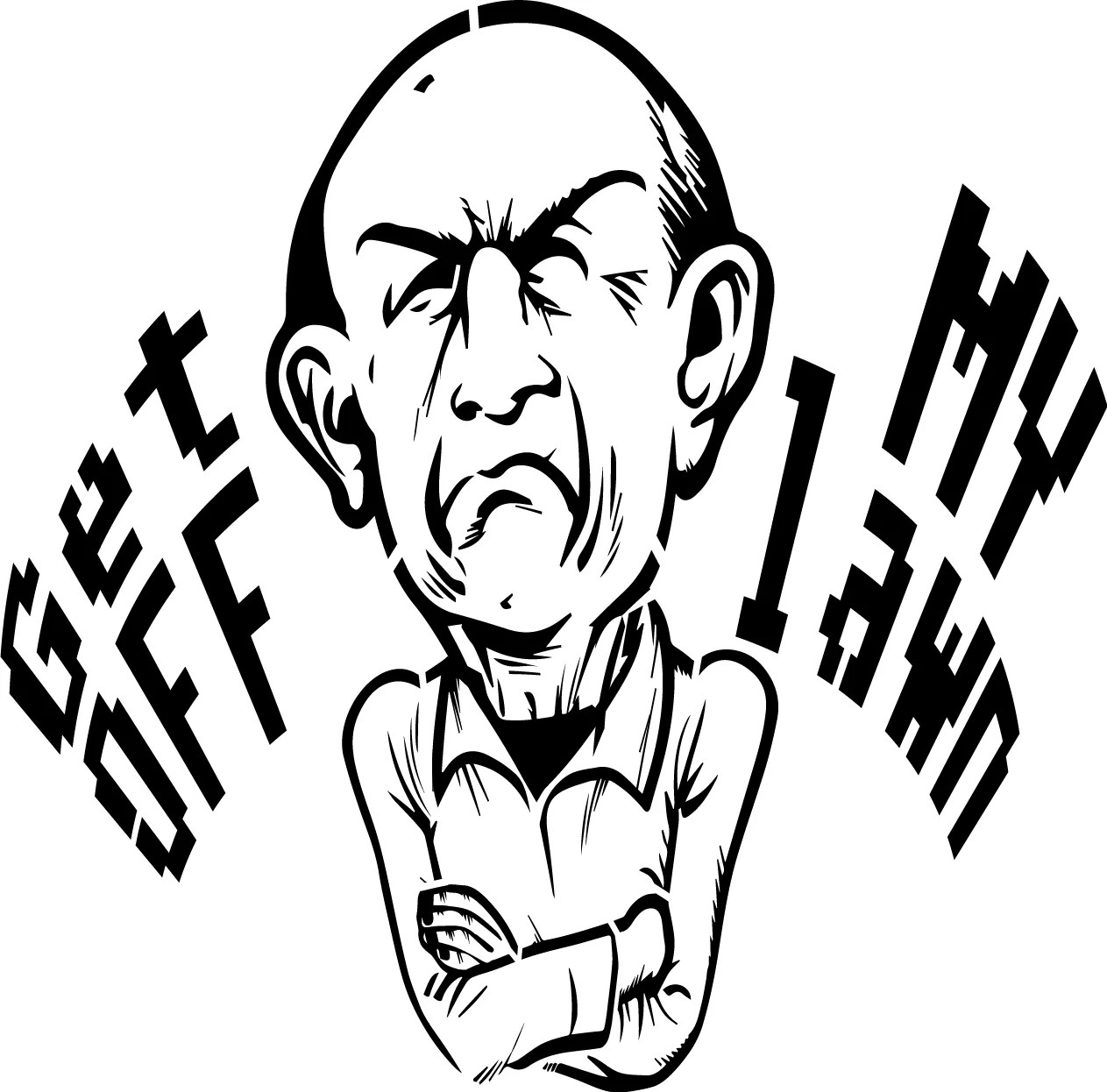
One of the few joys of getting old is that we no longer have to play pretend. We don’t have to say we love things to fit in, to spare someone’s feelings, and we no longer feel that need to constantly prove ourselves. I no longer feel the need to enter into that crucial, seminal argument on the issue of the day, because I want everyone to know how well informed I am. I no longer consider it my mission in life to change minds. I now see it as pointless. “You think you’re going to change her mind today at lunch?” I ask. “You’re going to battle against thirty-five years of conditioning. She’s been dying to prove her bona fides on this issue, and so have you. You’re not going to get anywhere if you sincerely hope to change her mind.” 

They no longer expect us to love inconsequential matters now. They expect us to grumble about food portions, the cost of living, how much better things were in “my day”, and something about kids getting off my lawn. 

I never thought I’d reach an age when I cherished life, but I never expected to be this old either. I didn’t expect to die young of course, but I didn’t expect I’d get this old either. I never thought I’d actually be grateful for decent health, because I thought that’s what old people did. I never thought I’d be happy to be alive, and greet each morning with a new-day smile. I never thought I’d try to make today better than yesterday, but I never expected to be this old either. “Youth is wasted on the young,” because they have the energy to live life and love it, they just don’t. 

We watch clocks when we’re young, because we can’t wait to get out of one place to get to another. We watch clocks to escape the great “youth-thief” we call school, and then we watch clocks until it’s time to get off work. When we finally get out of those places, we go to other places with the same faces, because everything is overrated, overhyped, and eventually, “SO BORING!” Do clocks move slower in youth and faster in our senior years? I don’t know, but I was never happier in life than I was when complaining about it. 

I remember when an old person told me that “We should be grateful for our health.” I was polite, and I said something like, “We do take good health for granted,” but I didn’t mean it. I thought good health was “SO BORING!” Now that my body is no longer the incredible, recuperative machine it once was, I appreciate moments of good health. 

Some moronic celebrity was going on and on about a late-in-life career choice they made, and I didn’t hear most of what they said. The late-in-life characterization stuck with me though, so I looked the idiot up and learned we were the same age? I’m late-age now? I’m over-the-hill? What’s the hill? What age is the crest of that hill? My boss confessed, “My better years are behind me now, I know that.” He was 40 at the time. If my better years are behind me, why do I enjoy life now more than I ever did? Why didn’t I enjoy my better years more? You don’t. We don’t. No one does. It’s natural, human nature, and the way of life. “Youth is wasted on the young.” You can mourn the lost years, regret that you didn’t do more, or you can try to live the best life you can live now to try to make up for it. 

“Life is what you make it,” an old stranger once told me. 

“Uh huh! Now, could you move aside!” I wanted to say. “I’m not going to appreciate my life or my good health, stranded outside Walgreens like this, where the weather is suboptimal. I can’t make it better, until my dad finally picks me up, and he’s already forty-five minutes late!” When I finally get to the place where I’m supposed to be I’m probably going to say, “This is SO BORING.”

To Parent or Not to Parent


When it comes to the prospect of parenting, an overwhelming majority of us hang between “I’m not sure if I’m ready” and a friend sitting us down with a “listen my friend, you’re definitely not ready”, but did you ever meet someone who was ready, at a very young age? Did you ever meet someone who was parent-material? I have, a couple times. I didn’t know it at the time, of course, as it’s not something that you can spot, but when you’re parenting, and you’re thinking “What the hell did I just do?” with that screaming kid on your shoulder, you think back on the Bills and Courtneys of the world, and you kind of wish you were more like them, sort of, and in a roundabout way.

They never complained about anything, and they never said a bad word about anyone. I’m not eulogizing them, because I’m sure they’re still alive out there, somewhere. They were just responsible, well-centered, strait-laced people who were so happy. As a student of cultural tropes, I expected to eventually find something scandalous about them, but there wasnt. They were just happy, well-adjusted people who really enjoyed life, but I found them so boring I couldn’t be around them. They probably made some excellent parents though.    

The rest of us hang somewhere between between dysfunctional and self-destructive on a graph, and we need to seriously consider our level of sanity before having children. If I had a kid in my twenties, like the rest of you, that kid would probably be in a straight-jacket screaming something awful about my parenting skills in repetitive cycles. He would know how to read, and his math skills would probably be somewhere around adequate by the 5th grade, but all those interaction cues that we pick up from our parents would’ve been so out of whack that his pediatrician would’ve rushed him to a place where he could be monitored 24-7, or on some radical, experimental drugs that I would’ve had to sign off on.   

One of the 10 commandments of quality parenting that I would’ve failed most miserably is the “don’t be selfish” one. Don’t be selfish with your stuff, and don’t be selfish with your time. I’m sure I would’ve seen to it that he was fed, and I probably would’ve made sure he had clothing and all that, but the minute he started touching my stuff or saw to it that I couldn’t go out boozing with my friends, because he decided to show some signs of diptheria, I would’ve resented him for taking my fun time away.   

I know I was selfish, but are you? “No!” No one says yes, and very few say, “Well, maybe a little. Maybe in some circumstances, I might be a little self-involved, but who isn’t?” No, we all but shout a gameshow-quick “No!” answers that suggest we think there there might be prizes for a quick answer. There’s no gameshow button here, and there are no prizes, unless you count feeling better about yourself a prize. 

If you watch the same sitcoms I do, those that loosely revolve around parenting, you see parents with all this free time. Kid walks in the room, says something cute, and exits stage left. I understand that the show is not about the kids, but when I see these parents standing side by side with a sweet smile, looking down at a sleeping child, cherishing him, I wonder what we did wrong. When we put our kid down and he eventually slipped off to the dream world, we exited the room on tiptoes whisper screaming, “He’s down! He’s fricking asleep, finally! Thank you God!!!”

These sitcoms are all about the joys and love of parenting, but those of us who know some elements of parenting now, know that no kid exits stage left in real life. They’re center stage, about twelve hours a day, more if they don’t nap, seven days a week. And if these dependent, little sacks of flesh are not center stage, they’ll find unique and creative ways to get it, until they soak up almost all of your precious and ever-dwindling free time. 

That’s the one thing prospective parents should be ready to give up/sacrifice, more than anything else, before before you agree to bring something so needy and dependent into the world: time. 

Most of us have a very narrow definition of selfish. “I had a big bag of pistachios the other day, and I gave some of them to Henrietta. You saw that. You know I’m not selfish. I share.” Okay, let me rephrase the question, how much of your life revolves around you? If we’re as self-centered as we think we are, we might not be able to answer that question objectively. A better question might be, how frustrated do we get when our friends have to back out, last minute, on a planned, fun-filled night, because of something their kid did? 

Do you have that want, that need, for a-night-o’-fun out of your system yet? Check that question hard, because that could be the proverbial switch in the track that decides it. I know it did for me. I had to get it all out of my system before I was ready. Most people answer one way on Sunday, the morning after, but that answer changes somewhere around 6:00pm, on Friday, when everyone is off work, they’ve finished dinner, and they’re headed to the bar. I knew I wasn’t ready for the end of it for a long time, and I would’ve resented the wife and child for taking up so much of my free time if I rushed that decision. If I had a kid back then, I may have enjoyed spending time with them on my terms, but I can now tell you now, ten years in, that it’s rarely on my terms. 

To be fair to everyone out there, and ourselves, the definition of quality parenting is so relative that it’s almost impossible to define in an absolute. Some of us might surprise ourselves in the beginning, by being a responsible, selfless parent, but we always revert to who we were before we met this kid. The shock and awe of seeing them for the first time changes us. It is, as the old cliche suggests, a moment when you realize your life will never be the same from that point forward. Once a parent, always a parent, and all that runs through our head when we make those vows and promises to this tiny, little thing that we can spin on a finger, like a Harlem Globetrotter, and we live up to those vows and promises…in the beginning. In the beginning, we put our best foot forward when we meet them, like we did its mother. Our brothers and sisters might be in awe of our parenting skills. “Never knew you had it in you,” they might say, and we bask in the glow of that compliment, but everyone who knows us knows that we will eventually revert to who we were/are before we ever met the kid. That’s the person we need to interrogate beforehand, to find out if we’re too selfish, self-involved, or narcissistic to have a kid.   

“Are you responsible now?” I hated the ‘R’ word growing up. Everyone threw it at me. “You really need to act more responsible,” they’d say. Okay, but I’m seven. You know that right? “You are only seven, but you still act like a six-year-old.” Okay, I realize I don’t know much about this real-world you’re always going on about, but this childhood thing doesn’t last forever. You might not remember that, because, for you, that was fifty-three years ago, but there’s something about this childhood thing that leads me to believe I should be focusing on enjoying this as much as possible before it’s over. I don’t think responsibility should even enter my purview here, at least not until I’m eight, and I continued to think that way until I was about thirty-eight. “You can’t do that, you have responsibilities,” or “You’re in a position in life now where you have to be act more responsible.” The ‘R’ word was that annoying itch they put in my hair that I ran away from, screaming, for much of my life, because I wasn’t ready. 

I eventually had so much fun for so much of my life that it wasn’t as fun anymore. We all know the burning the candle at both ends phrase, and I was doing that. Except it wasn’t work, as most attribute that phrase. I was burning the candle at both ends with fun, great conversations, and moments that last forever, until they’re about releasing all the tension and stress from the work week. Are you ready to call an end to all that? How ready are you to spend your Friday nights at home binging on Spongebob, playing Chutes and Ladders, and reading the same Dr. Seuss book for the thirty-ninth time? When your friend calls you up and says they’re headed to the 18th Amendment, how frustrating will it be to say, “Sorry, kid’s got the runs, and no one wants to babysit a kid with the runs.” How much of your precious fun time are you willing to sacrifice to the relatively unrewarding task of raising a child? 

They say it’s rewarding. They say it’s the most rewarding job on Earth, and it is, when it’s all over and we think back. The good times are rewarding, as is the element of how much they’ve added to our lives, but how long does it take to get there? The kid doesn’t even appreciate it. “It’s your job!” they might say on the rare occasion when we humiliate ourselves by asking for a little appreciation. We might conveniently forget all the crap involved, and dung and vomit in between, if we’re lucky enough to live long enough to see them parent someone themselves. At that point, they might appreciate how hard it was for us to raise them, and they might turn to us and offer that one glorious compliment we’ve waited our adult life to hear, but they’ll probably qualify that by saying, “You did a lot wrong too. Here’s what I am not going to do.” 

“Where should your focus be, working on the marriage, or rearing the child?” a priest once asked us. “The child,” we answered in unison. The priest obviously engineered the question to get a wrong answer, so he could explain, “Quality parenting flows from a quality marriage. Not only does a quality marriage give a child the definition of a quality marriage, the foundation of a quality marriage provides a general sense of stability in a child’s life, and it provides them a definition of love and life from both the female and male perspectives.” Anyone who has lived through the death of a parent, or a divorce, knows how seminal these points are in childhood and the subsequent adult life. 

As I wrote earlier, it’s impossible to define the difference between quality parenting and poor, because that definition is so relative, but there are extremes. We all have flaws, good days and bad, but some of us are not systemically sound, and some of us loved dating those types. Some of us are almost instinctually attracted to the dysfunctional, self-destructive types. We don’t exactly know why, but we thought they were so funny, so mean, and so mean-funny. We don’t know who they remind us of, or if they were so unique to our experience that their captivating qualities reside in the idea that we’ve never met anyone quite like them before, but we climb all over one another to date them. They make us laugh, cry, and we feel so alive in their company that we might unwittingly become attracted to their chaotic merry-go-round. They’re exciting, dramatic, and different from day to day, but those qualities often don’t lead to quality parenting. Dating them might be another thing to get out of your system if your plans involve having a family, you might want to find the closest thing to normal you can find. 

There are a number of sites that list top 10 qualities of a good parent, or top 10 signs you are (Or will be) a good parent. We could list those, and even add some things you could do to find out more about yourself, beforehand, but parenting is one of those roles in life that is so relative and so day-to-day that we won’t know the final answer until we’re doing it, every day for months and years. We can know who we are in the now, however. We can ask ourselves a bunch of questions regarding our level of maturity, and our ability to handle responsibility, multitasking, and stress. We can also look around at our friends and focus on those couples who never should’ve become parents in the first place, and we all know those who should’ve known. Every parent thinks this at one point or another, temporarily, but as with everything else, there are extremes. There are those who never should’ve had kids in the first place. Some are so dysfunctional and so self-destructive that they aren’t parent material. Some had such a toxic and dysfunctional upbringing that they should seriously consider ending that horrible legacy. Those of us who have relatively normal dysfunctions and a relatively low level of self-destructive habits, who are still questioning whether we have what it takes to be a quality parent, should consider that nothing answers those questions better than time, and in my case it was a whole lot of time.  

Turn and Face the Strange


“Don’t bendStay strange.” –David Bowie

“All children are born artists, the problem is to remain artists as we grow up.” –Pablo Picasso.

“We don’t grow into creativity, we grow out of it.” –Ken Robinson said to further the Picasso quote.

“Don’t bend. Stay Strange,” is such a simplistic and beautiful quote that if we heard it earlier in life, some of us might have stitched it out on oven mitts, T-shirts, and flags.

“What’s it mean though?” we ask,

David Bowie answered in an appearance on a 70’s show called The Midnight Special. It’s difficult to capture the effect that weird, strange, and just plain different appearance had on me all those decades ago. I was floored. I was flabbergasted. I craved the weird, even when I was young. Even before I knew the totality of what embracing meant. When Bowie walked out, I thought it was shtick. I waited for him to break out some Steve Martin-ish routine, and then he started singing. Bowie’s commanding voice informed me this was not an affectation. It was a full-on embrace of the weird. It made me uncomfortable, but it also confused me. I was so young, and so confused, that I considered his appearance unsettling, and I needed help dealing with it.

“He’s just weird,” she said. She was trying to comfort me. Her message was he’s so weird that he’s probably being weird for the sake of being weird, and that we should dismiss him on that basis. I argued that I didn’t think so. “If that’s the case,” she said, “we probably don’t want to peel that onion.” I didn’t want anyone to consider me weird, so I tried to dismiss him. I couldn’t look away though. I never saw anyone embraced the weird before. I thought weird was what we whispered when we saw it walking down the street, and we walked a lower case (‘b’) around it.

If Bowie dropped this quote on me, as a kid, it might have helped me through the swamp, but I don’t think Bowie would’ve dropped such a line on a kid. Rock stars are generally impetuous creatures, but I would hope that David Bowie wouldn’t be so reckless as to advise a child to embrace the weird. I think he reserved such notions for relatively stable, confident adults. If he followed that impulse, I think he knew it might cost that kid some happiness, for the world is so confusing to a kid that they need to embrace normalcy until their minds are strong enough to embrace the weird. I also think such a quote might mess with that young person’s artistic cocoon. I think Bowie knew, from firsthand experience, that the struggle to maintain the weird defines the artist in constructive, creative ways. To paraphrase the Picasso quote above, the problem isn’t how to become weird, strange, and just plain different. The problem is to maintain it as we work our way through the mire and maze of childhood.

The chore of the artist is to maintain the element of weird, while melding it with the normalcy of adulthood. Those of us who were weird had some weird ideas that were weird for the sake of being weird. We were passionately weird, and learning how to form an identity. We’re now glad there are no records of our strange thoughts. We needed seasoning. We needed to understand norms better if we were ever going to constructively mock, ridicule, or upend their conventions. This perspective is particularly vital to writers, as it gives them an outside perspective from which to report on those who followed their passion throughout life and embrace the weird, strange, and just plain different.

***

Some scholars, like Sir Ken Robinson, want us to violate this theory by changing school curriculum to accommodate the weird, strange, and just plain different. In his popular Ted Talk speech, Robinson cites anecdotal evidence to suggest that we should change the curriculum to recognize the unique and special qualities of weird, strange, and just plain different students.

Shouldn’t they learn the rules first? Most writers were wildly imaginative kids, and when our kids flash their unique fantastical worldview before us, we remember how weird we used to be. We fondly remember how imaginative and creative we used to be. Our kids reignite that internal, eternal flame in us. We remember how special it was to be imaginative without borders, but we also remember how unstable and confusing that time was. We were impulsively and instinctively imaginative without borders, and we smashed through whatever borders they put in our way, but most of the results of our beautiful and wonderful childish creativity was gobbedly gook.

We didn’t know what we were talking about because we were kids. We didn’t do anything worthwhile, even when we were wildly creative, because we didn’t know what we were doing. We were kids. When we think of the rules, we often think of some humorless school master enforcing discipline at the end of a ruler, but we often forget how many little, seemingly inconsequential matters we learned along the way to help form our thoughts into mature creativity, and how a stew of those little, relatively inconsequential matters and our wild creativity made us who we are today.

There will always be prodigies, but what percentage of the population do we consider prodigies? For the rest of us, there is a special formula to achieving final form. This painfully methodical process involves rebelling against our establishment, succumbing to it, recognizing its inherent flaws, and returning to our rebellion with an informed mind. As I wrote in the Platypus People blog, “one of our first jobs of a future rebel is to learn the rules of order better than those who choose to follow them.” The idea that the manner in which school curriculum deprives, stilts and discourages creativity is a strong one, but do these scholars remember how confusing the adolescent years could be for the kids who weren’t prodigies? Lost in this discussion is our need to understand that which we now deem unreasonable, irrational, and in need of change. Why does this work, how does that work, and how and why should we change this to that? 

“I welcome your complaints, but if you’re going to complain, you better have a solution,” our teachers told us. The crux of that line is the difference between weird for the sake of being weird and constructive oddities. How can we form a solution to the artistic complaints we have, if we don’t first understand the problem better than those who are just fine with it?

The perfect formula, as I see it for the creative artist, as Pablo Picasso said, is to remain weird after learning the curriculum and surviving the need to conform. When we learn how to read, write, and arithmetic, we use them to fertilize the science of creativity. If an artist can maintain their fantastical thoughts after learning, they might be able to employ the disciplines they need to enhance their creative and innovative mind to artistic maturity.

We don’t know many specifics of Sir Ken’s dream school, but one of the fundamental elements he theoretically employs is the need to play. The creative mind, he says, needs time and space to play. Throw them a block and let them play with it, and we’ll see their ingenious minds at work. He dots his speech with humorous anecdotes that serve to further his thesis. We know that Wayne Gretzky spent much of his youth playing with a stick and a hockey puck in every way he could dream up, and we learn that other kids develop their own relatively ingenious little theories by playing. We cannot forget to let them play. It is a well-thought out, provocative theory, but it neglects to mention how important discipline is in this equation. The discipline necessary to figure out complicated mathematical equations and formulas might seem frivolous to a dance prodigy, for example, but Geometry works the mind in many ways it otherwise wouldn’t.

“Why do I have to learn this?” we all asked in Geometry class. “What are the chances that I’ll ever use this knowledge? If I become the vice-president of a bank, what are the chances that knowledge of the Alexandrian Greek mathematician Euclid’s theories will come into play?” One answer to the question arrives when we meet a fellow banker who knows nothing but banking. For whatever reason our fellow banker knew she wanted to be a bank vice-president at a very young age. Her focus was such that she had the tunnel vision necessary to succeed in the banking world, but everyone who knows her knows the minute she clocks out for the day, she’s lost. She might be successful by most measures, but she knows nothing about the world outside of banking, because she never needed any knowledge beyond that which exists in banking.  

“How can you report on the world, if you know nothing about it?” is a question I would ask everyone from David Bowie to the twelve-year-old prodigy who wrote a fantasy novel. The kid’s story fascinated me, because writing a 200 page novel is so foreign to my concept of what it means to be twelve-years-old. I was trying to make friends and be happy at twelve-years-old. I read the news article about this kid with great interest, and if I ever ran into him, I would encourage him to see his talent to its extent, and I would applaud him for what he did, but I would never read his novel. I don’t think a twelve-year-old’s vision of the world would do anything for me.

Sir Ken Robinson doesn’t say that he wants to do away with the core curriculum directly, but in his idyllic world, we need to cater it to the talents of people like this twelve-year-old prodigy, the dance prodigies, and all the other as of yet unrecognized prodigies around the world.

We’ve all heard tales of these uniquely talented creative people and prodigies with tunnel vision. We marvel at their tales, but we’ve also heard tales of how former prodigies don’t know how to fit in the world properly. They’ve reached their goal by producing a relatively prodigious output, but they’re now unhappy. 

How could they be unhappy when people pay them to do something we’d pay someone to do? If the word unhappy doesn’t do it for you, how about unfulfilled? Their weird thoughts of the world are not an artistic affectation. 

Something fundamental is missing in them that they’ll never square properly. Being on the proverbial stage is the only thing that gives them joy, and they understand this as little as we do. It might have something to do with being in the spotlight their whole lives, but it might go deeper than that. It might have something to do with the fact that their authority figures never forced them to be normal, and they never had to learn the basic, core answers the rest of us learned by working through all of the pointless exercises that our core curriculum required. “So, if I take a Geometry class, I’m going to be less confused about the world?” No, but if you learn how to learn how to use your brain to figure out the tiny, relatively meaningless facets of life, it might help you arrive at answers that help you cope with the otherwise random world a little better.

Robinson might be onto something when he suggests that if we feed into a prodigy’s creative instincts, we might have more of them, and they might be happier people as a result. His thesis suggests that most people are unhappy because they have untapped talent that we neglect to foster. Let them play, he says. Fine, I say, but why can’t we let them play at a dance school, in art class, or in a school band? Why can’t we just throw a block at them in their free time? Do we have to devote our entire curriculum to helping them recognize their talent? A strong, confident adult is so difficult to raise that as much as I would’ve loved some devotion to recognizing my weird talent, I think I would’ve ended up deficient in so many other areas that I would’ve been miserable. Devotion to recognizing my weird talents would’ve made me happier in the short term, as I think I was always heading down a certain road I didn’t recognize for some time, but I think I’d probably would’ve ended up more confused than I already am.

“Don’t bend. Stay strange,” is the great advice David Bowie passed on, but I think it should only be used by those who manage to maintain some of the creativity they had in youth and managed to remain artists. Most artists think they could’ve been prodigies if someone came along, recognized their talents, and coached them up, and many think they wasted so much time in school learning things that didn’t matter? Robinson feeds into these fantasies with some anecdotal evidence that suggests if we would’ve just danced more, we might have discovered that we were dance prodigies. He suggests that if we, as parents, learn how to feed our child’s talent, they might be happier. If the child’s interests are satisfied, they might be more satisfied. Possibly, but if we devote our entire curriculum to dance, creative writing, painting, or one of the other art forms, how many failed upstarts might we have? Students mature at different rates, and while developing schools devoted to encourage more creativity, it will likely result in unequal amounts of misery among those we consider prodigies based on their wild imaginations, but they were actually engaged in nothing more than child-like gibberish.