“Show me the money!” I’ll say if I’m ever in the fortunate position of someone offering me substantial amounts of money. I’ll steal that line from one of Cameron Crowe’s screenplays, called Jerry Maguire. If I’m ever in a position of taking money now, versus the prospect, or potential, of making more on the backend, I’ll tell my high-priced negotiator to “Take the money and run!” Don’t ask questions, don’t try to be clever, get out of there with as much upfront money as you can possibly get me.”
There are other stories, and we’ve all heard them when “Big-Time” players play “Big-Time” games with the money and won. Jack Nicholson agreed to play the role of The Joker for $6 million dollars, but he had a clause in his contract that stated he would receive a percentage of the Batman’s receipts and merchandise. Some estimates suggest he ended up making $90 million off the movie. “Yeah, that, I want to be that guy,” we say when we finish reading those sentences. “He knows who he is, and how indispensable he is, and he used it to make some major bank. I want that all over me.” Of course you do, I do, and we do, but we’re not Jack Nicholson. I don’t write that to suggest Nicholson is more important than us, as I can’t stand it when people say, “You’re no Jack Nicholson!” about an actor or athlete who in many cases is simply more fortunate, as opposed to more talented than most. I write that because while we’re basking in the glow of the moment, we need to remember who we are to them and how relatively indispensable we are to them. Nicholson’s image was so important to Warner Brothers that they considered it essential to selling that movie to the public. Moral of that story, know your bargaining position, and ask your side to try to be objective when characterizing it for you.
On the flip side, is one of Nicholson’s favorite NBA stars of all-time, Magic Johnson. Magic had a deal all set for him from an upstart shoe company called Nike. Nike couldn’t offer Magic the big money that Converse could. Converse offered Magic $100,000 to sign a shoe deal, so Nike countered with $100,000 in stock options. The Nike stock was worth $.18 a share at that point. Estimates now have it that if Magic took the Nike deal, and he never sold a single share, his stock options would now be worth $5.2 billion.
It’s a provocative tale, but if Magic signed with Nike, Michael Jordan probably wouldn’t have, and with all respect to the great Magic Johnson, I doubt his image and persona would’ve sold as well as Air Jordan.
I don’t care what happened to Jack, Magic, or Michael, if someone offers us a boatload of money, take it. There might be some room for haggling, and we should probably, probably, consider it, as it might be the only time we spend any time in the Sun, but be careful. Spend too much time in the Sun, or getting too close to the Sun, and we’re toast, literally, figuratively, actually, and all those -ly words. The “theys” on the other side of negotiating table don’t always respect a crafty businessman or woman. Sometimes they get ticked off, and they remove once-in-lifetime opportunities. Don’t overthink their positions at the table or overestimate yours. Don’t think about backend percentages, equity stakes, or anything other than upfront money. Hire some guy who has a wall full of diplomas, and a track record that’s going to cost you if you want to hire his representation services and instruct him to get, “as much upfront money as you can possibly get.”
For those who think they might not never be in a position like this again, and you tends to be a person who thinks you can outthink the system, I give you Winston Groom v. Paramount. Author Winston Groom was offered a boatload of money for the movie rights to his book Forrest Gump. Forrest Gump? We’re talking about Forrest Gump, one of the highest grossing movies of its era? Yes, the movie that ended up making $683 million. Winston Groom sensed that he was in an excellent bargaining situation, and he probably had all kinds of advisors telling him that with this book, he was going to soon be living in the land of sunshine. Groom obviously loved that notion, and as an author of numerous books prior to Forrest Gump, he knew there wasn’t a lot of money in writing. He knew enough to know that a movie studio approaching a relatively obscure author money could be a once-in-a-lifetime moment.
Groom, probably influenced by his advisors, lawyers, and friends and family suggested that he should take the roundabout route. Why would you want a lump sum when the potential for this story on screen could make hundreds of millions. No one knew it would make over a half a billion at the time, of course, but we have to think Groom had such visions dancing in his head. That’s the idea of potential, potential earnings messing with our head. Potential can be an evil temptress, whispering sweet secrets to us. Forget potential, I say, get it out of your head, and “Take the money and run!”
Groom listened to those sweet secrets and took less upfront money $350,000 with the promise of receiving 3% of the backend profits. The movie made $683 million, but Paramount’s accountants, using “Hollywood accounting,” found out that Forrest Gump actually lost $80 million when all was said and done. A movie that made $683 million lost $80 million? How is that possible? Hollywood accounting. Groom never heard of Hollywood accounting, so he asked to see it, firsthand. Groom was so incensed, after seeing what they did with the numbers that he sued. We don’t know how much Groom spent on lawyers and accountants, or how long he spent threatening his lawsuit, but when Groom finally saw his day in court, the judge asked Winston Groom to confirm that he signed the contract she had before her. “Yes,” he said. She threw the case out in 15 minutes.
Years later, Groom wrote a sequel to Gump, called Gump & Co. (company). Paramount decided to purchase the rights to that sequel, and they offered a seven-figure sum for it, upfront money. Groom took that upfront money and ran away as fast as he could. Moral of the story: If someone offers you money take it!
Some of us have philosophical problems with “Show me the money” and “Take the money and run!” They think that we should consider a “Too much money” pause before signing. So, if you’re in a position to make massive amounts of money, you’re going to pause and say, “That’s too much money for the ability to do something with a ball.” There are people starving in the streets, teachers who teach the next generation how to survive in the world don’t make 1/100th of that money, and doctors, who save lives, don’t make 1/50th of that money. Why should I make that much, we might think, mired in guilt. To assuage your guilt, ask yourself a question, where’s that money going to go. It’s there, and it’s there for you. What are you worth? You’re worth what someone is willing to pay, and if you don’t take your slice of the pie, where is it going to go?
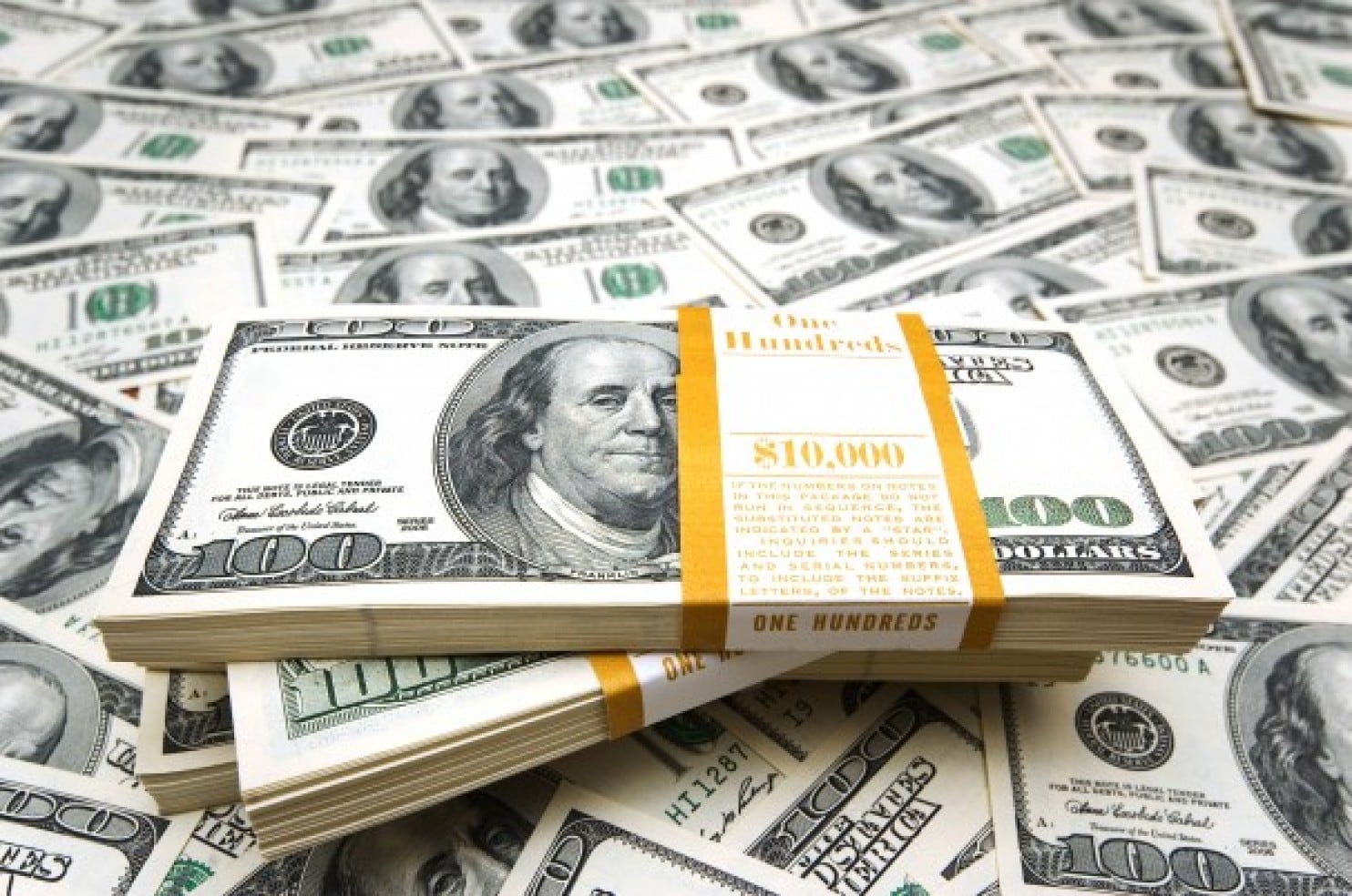 “It’s not all about the money for me,” earners often say. Then we hear cliches like, “Money isn’t everything, and money is the root of all evil.” These are things people who make a boatload of money say to those who don’t. It makes everyone feel better about ourselves.
Some of the best advice I’ve ever heard is, “Money isn’t evil, people are, or they aren’t, and making more money will help us further define whether they are or aren’t, which one could say, means that is the root from which evil blooms, but it isn’t the seed.” Money is the reward for our efforts, but if we’re doing it solely for the money, we’re doing it wrong. If we’re only doing it for the money, we’ll probably end up unfulfilled and miserable. That doesn’t mean that we shouldn’t do everything we can to take every dime we can from those on the other side of the negotiation table. If you’re ever in a position where something you’ve created leads you to be lucky enough to sit on the other side of a negotiation table, wipe all of the nonsense you’ve heard about money, your whole life, from your mind. This might be the only chance you have to make some real money.
If we hire someone to negotiate for us, and most people should, send them in with the instructions that you want them to bleed every last dime out of the other party. Once your team determines the other team of negotiators is not going to pay another cent, take it, take as much front-end money as possible, and run away as fast and as far as you can. Don’t think about the back end, the asides they offer in lieu of money, the otherwise symbolic, prestigious titles they offer, or anything but the money. The job of the other team’s negotiators is to pay you the least amount of upfront money possible, and they will use several creative measures to accomplish that. Ignore all of that and the voices in your head screaming about the prospect of making more money on another end, and remove those cartoon dollar signs from your eyes. As the negotiations between Winston Groom and Paramount suggest, “Show me the money,” should be the first and last things you say in any negotiations.
 Winston Groom was a writer, and though he probably experienced some level of negotiations selling Forrest Gump and his other books to book publishers, he probably knew negotiating the rights of his book with a Hollywood production studio was a different league. This was probably the most advantageous position Groom had ever been in his life, and he didn’t know anything about such negotiations. He probably hired a team of lawyers and other specialists to handle the negotiations for him. We can guess that negotiators on Paramount’s side were so eager for the project that they showed their hand at various points. Groom’s negotiators probably knew, at some point, how much Paramount wanted his book. We can guess that numerous advisors probably guesstimated how much money this story could make for both sides, especially if they knew actor Tom Hanks and director Robert Zemeckis would sign onto the project at the time of negotiations, and Groom’s team probably walked away from that table with several proposals from Paramount. Groom ended up selecting the proposal that gave him $350,000 on the front end, and while this is a sizable amount, sources report that it was less than the top proposal of front-end money. Groom chose the proposal with less on the front end because his negotiators worked out a clause that would give Groom 3% percent on the backend, movie’s net profits. Who wouldn’t take less on the front-end if they knew they could make 3% of $683 the million on the backend that, by my math, equals over $19 million? Groom and his team couldn’t know how much the movie would make, but we can only imagine that Groom had dollar signs in his eyes when he signed the bottom line.
We can also guess that Winston Groom was more than patient with Paramount after Forrest Gump raked in $683 million, and we can imagine that Groom followed the box office numbers with great interest, and excitement, and probably did so with some old, rare scotch bottles and celebratory cigars. At some point, further down the line, Groom informed Paramount that he hadn’t received a single dollar of those royalties. At some point beyond those initial letters, calls, and emails, Paramount sent Groom a “We regret to inform you …” letter. They regretted to inform Groom that Forrest Gump, the fourth highest grossing film of all time (at that time), that grossed $683 million, “didn’t make a net profit.” Paramount’s accountants found that not only did Forrest Gump not make a profit. After expenses, the movie actually ended up $80 million in the red. They probably concluded the letter with a “and gosh darn it, they found that it didn’t make a net profit.”
Winston Groom is Winston Groom, an author who wrote eight novels and fifteen non-fiction books. As with most authors, he was relatively unknown, until one of his novels ended up selling 30,000 copies, a relatively high number of copies sold for Groom. A producer for Paramount, Wendy Finerman, “discovered” Forrest Gump for Paramount, and she pushed it into production. Hollywood, slash Paramount, thought Winston Groom was Winston Groom, a writer of a book, among the hundreds of thousands of people who write books. He wasn’t a limited commodity in other words, and they didn’t care if they offended him.
If a Tom Hanks or a Robert Zemekis were ticked off about their compensation, if they signed a deal similar to Groom’s, we can rest assure that Paramount would’ve scrambled to do whatever they had to make them happy. Winston Groom was Winston Groom, a writer, see ya never again, Winston Groom!
We have to imagine that the star and director of Forrest Gump didn’t have to sue to receive their royalty checks, because Paramount didn’t want to upset them. They didn’t extend the same courtesy to Winston Groom, however, because they probably figured they wouldn’t have any future dealings with him. Groom declared that the other parts of his lawsuit against Paramount left him as “happy as a pig in sunshine,” but these deals don’t always end up this way. Thus, if you’re ever lucky enough to be seated at a negotiations table, pitted against someone who wants something you have, set aside your qualms about the evils of money and greed, and get the most front-end money you can while they’re all good and eager. They will dance the prospect of future funds in your fertile brain, “Because no one thinks short-term, right?” Wipe those words away, like Tom Cruise did in Minority Report and replace it with the name Winston Groom. That name should be highlighted and underlined in your brain, when they begin to offer creative substitutes. Don’t kill the deal with greed, and depending on your feel in the negotiation, don’t wait them out for a better deal. Walk in screaming “show me the money” and leave mumbling it with pride.
 Rilaly