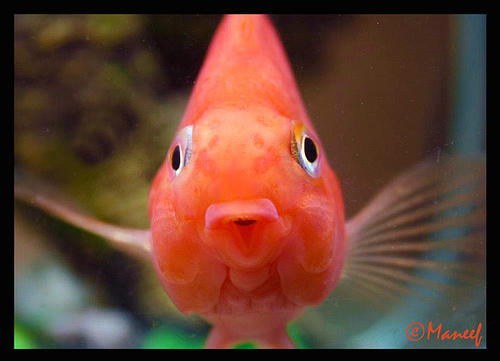
Some of us enjoy watching fish swim around in an aquarium, because it gives us some inexplicable sense of superiority, but most of us find it one of the simplest pleasures in the world. There’s nothing to analyze about a person who enjoys the simple pleasure of watching fish swim around an aquarium, there are no social attachments to it, no cultural definitions to be found, nothing political about it, and no one can attach double entendres to it. It’s not complicated, it’s simple, and that’s why we do it. For those of us who find some way to feel guilty about just about everything, we can find some very creative ways to feel guilty, but to my knowledge no one has been able to associate watching fish swim in an aquarium with something for which we should feel some guilt. Is this guilt-free pleasure based on our idea that most aquarium dwellers don’t appear to want more freedom. They don’t appear to love life or loathe it, as they seem to have a comparatively limited sense of their life, so is that why we feel no guilt watching them swim around in a limited space, or is it because they don’t look back?
 When we own a dog, we love watching them run free around our huge backyards, but there’s always some level of guilt we feel for fencing them in. We take them on long walks and to dog parks to allow them more freedom, but there’s always this sense that we’re depriving them of the full extent of a dog’s glorious life. There are some trade-offs of course, as we provide them food, comfort against the elements, and protection from predators, but when we compare them to their wild ancestors, we can experience some pangs of guilt.
It might have something to do with their comparative lack of intelligence, but we experience no such guilt owning a fish. Some even find some medicinal qualities to owning a fish. Some psychology articles even suggest that watching fish swim around has medicinal qualities, as it can provide some relief to those suffering from depression. Family physicians and dentists often find purchasing an aquarium a worthy investment, because it relaxes their clientele before visits. Some homeowners find feeding them and watching them so relaxing that they want an aquarium in their home. Are these properties attained in the relative silence of an aquarium, does the order of fish in an aquarium provide some relief to chaotic minds, or does it have something to do with the fact that fish rarely look back at us?
There are moments in life, and for some it’s more than moments, but most experience moments in life when they feel trapped. They feel trapped into high-stress, relatively confrontational jobs, but they can’t quit because they have responsibilities and obligations. Those people might enjoy seeing another being trapped by glass, because it makes us feel freer by comparison. Both parties know we are the superior being, but some fish look back, and some of those looks become stares, challenging stares.
We don’t expect fish to look back, but some of the times they do, and some of the times it’s quite cute. Sometimes, we tap on the glass to try to get one fish to give us one quick look to acknowledge us in some quick, meaningless way. They usually swim away in quick, jetting motions, but some of the times they look back. “Look at this, Myrtle, he’s looking back at me!” we say to their casual, happenstance glance they offer us. When that casual glance holds, and that cute, little look back becomes a stare, it can begin to feel unnatural. Even though it feels a little odd at the outset, we stare back. We don’t have any reason for continuing to stare back, but we do, until we achieve some inexplicable and unnerving connection. If this odd connection continues, we think that they’re testing the boundaries and borders nature inflicted upon them, regarding our respective roles in the food chain. We know it’s foolish to assign human characteristics to such a brainless creature, but the otherwise enjoyable stare can lead us to consider questions that which we’ve never asked before.
Our first instinct is to believe the fish just happens to be looking in the general direction we’re standing in, and that the stare we share is nothing more than a happenstance glance. Something about this particular stare unnerves us though. We remind ourselves that they have no eyelids. They might have a membrane to protect their eyes from water, but they have no eyelids, so they cannot blink. They have pupil, and they can move their eyes, but this particular fish doesn’t even move his pupil. It’s staring right at us and through us.
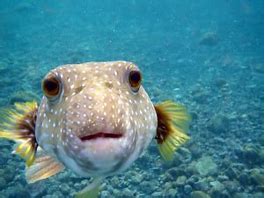 What does it think it’s seeing? Is it really looking at us, or just toward us? We make a jutting motion toward the fish to establish the fact, in our minds, that it is indeed staring at us. Another, relatively embarrassing component of that motion involves our need to establish dominance, so the fish doesn’t forget what we can do to them if driven to act. The fish will react to our jutting motion, but what happens in our interiority if after the fish flinches, it assumes its former position and resumes staring? Do we complain to the management of the pet store? What if the fish stopped staring the moment we brought the manager over to the tank and it resumed staring after the manager leaves? It looks at us, as if it thinks it knows us, and it’s unafraid. There are times when it’s okay to remind other creatures that we’re their superiors, and there are times when we consider it necessary to do so. You wouldn’t be so bold if I reached into your tank, grabbed you, and did awful things to you? we think its way. We think that hard, as if to send a telepathic message. If that message is receive, the fish remains unmoved by that threat.
We know we can’t do such things, no matter how long this thing looks at us. We know those looks the other patrons of the pet store will give us if we do. We also know what we would go through on the drive home, in bed, staring up at the ceiling, remembering what a fish drove us to do. We know no one would understand, and something about that fish’s stare suggests that it knows that too. At some point in this staring contest, it strikes us that the hundreds of thousands of years of our respective conditioning inform both parties who is superior. Yet, this means nothing to this particular fish. Its stare suggests that it is challenging that conditioning, because it knows there’s nothing we can do about it.
Pet psychologists tell us that if we own a dog who is particularly disorderly and disobedient that one of the ways to re-establish dominance is to engage it in a staring contest. If confronted by a wild animal, they tell us, the worst thing we can do is look that animal in the eye, because both parties know, on some primal level we know nothing about, that we’re challenging their essence, and any hint of this challenge enrages such beasts.
If we try to engage in a staring contest with a lion, in the lion’s den at the zoo, most lions won’t even bother looking back at us. They have hundreds of people confidently challenging them in this way every day, and both parties know there’s nothing they can do about it. They can charge the borders of their enclosure, and if you’ve seen a gorilla do this, it can be intimidating, but both parties know, on some level, that we’ll walk away laughing at their meager attempts to challenge us. That interaction is flipped by some measure, because we’re challenging their physical superiority. We’re informing them that we’re not afraid of them, but when we’re the superior in every way, as we are with the fish, what goes through us when they stare at us so long that it starts to become uncomfortable? Is it mere happenstance, or is the fish challenging our nature? Are we so confident in our stature that we continue to stare back? How long do we participate in this staring contest, to establish our superiority, and what happens if we lose?
After such a devastating loss, what happens the next time a host asks us what we think of their brand new aquarium? More often than not, we don’t invest ourselves in situations like these, but there are days when we’re feeling particularly vulnerable. There are days when the “theys” of our lives break us down, and we feel relatively small and insignificant, so we approach that trapped fish with a smile, because we know that they are a they that is unquestionably inferior to us, but there is always one fish who won’t bow down to us. These meager, inconsequential, and perhaps coincidental challenges that we dream up can affect us so much that the next time a friend invites us to look at their fish in the fish tank they have in their home, we hesitate. We know that if we begin shrieking, the fish wins. Our reputation would not only suffer at the hands of our host, but the ten people interested in her retelling of the story. Offering our host, a simple, “No thank you,” might open a big bag of questions we don’t want to answer. Yet, acquiescing to their request might bring us right back to that day at the pet store when a fish’s stare served to undermine our confidence. When we glance over at our friend’s tank, considering her proposal, we see those probing eyes, and we remember the day when we thought we knew our place in the animal kingdom. We remember how confident we were in our respective roles in the animal kingdom before that staring contest began, and though we know we can’t put all the blame for our insecurities at the fins of that fish in the pet store, its rebellious stare unearthed something in us that we never confronted before. We know how revealing it is to have a staring fish lead us to such existential questions, but it shook our confidence down to its foundation, and we politely refused our host’s request, fearing what another loss might do to our confidence.
 Rilaly