Story, Harrowing Story
“Our son overdosed on Tylenol,” a mom and dad said entering a hospital’s emergency department. When they were directed to a room, they informed the nurse that the family experienced a dispute in their home. Their teenage son didn’t deal with it well. “He overdosed to teach us a lesson,” the parents informed the nurse. The argument, it turned out, was based on a huge misunderstanding. After emotions subsided, the three put the missing puzzle pieces back in place and realized what happened. (The author doesn’t know the particulars.) The parents and their son concluded their Q&A with the nurse by telling her they were in the emergency room that day to get their son’s stomach pumped.
 “Okay,” the nurse said after the parents explained what happened in their home. “When did he take the Tylenol, and how much?”
“It’s been a couple days,” the mother said, “and he took almost an entire bottle.” She had the near empty bottle with her, and she informed the nurse that it was full before the incident. The mother finished that explanation with a compassionate smile directed at her son, and she mouthed, ‘It’s okay,’ to him.
The nurse made a mental note that she later shared with the doctor “that the three appeared almost happy, or maybe relieved in some odd way.”
The doctor agreed, and he said, “I think they were relieved that the heated argument was over, and they were just happy to have their son back.”
“The treatment for an acetaminophen overdose is a drug called acetylcysteine,” the doctor informed them when he sat in the emergency room, about a half an hour after the nurse left, “but it only shows maximum effectiveness within an eight hour window of the overdose. We will use acetylcysteine, and we will also perform a gastric lavage or nasogastric tube suction, or what you call a stomach pump, but there are similar time constraints on the maximum effectiveness of those procedures too. The problem with ingesting so much acetaminophen and leaving it in the system for so long, is that it has been absorbed by the liver.”
“So, so, what does that mean?” the family asked.
“Our medical team is going to do everything at our disposal today,” the doctor said, “but my job is to make sure you are well aware of the facts of the situation here.”
“And the facts are?” the mother asked.
The doctor had sympathy for the patient and his parents inability to grasp the severity of the matter, and he tried to describe the ramifications as delicately and with as much sympathy as he could. He chose his words carefully while repeating everything he said about the effectiveness of acetylcysteine and stomach pumps after a couple of days, and he repeated what he said about the medical team at that hospital doing everything they could do to help their son, “But if your son took as much Tylenol as you’ve described here today, this is going to be as difficult a situation as you can imagine.”
We can only imagine how difficult this was for the doctor, and we can imagine that the parents put the doctor through it over and over in excruciating detail, asking questions we might regard as obtuse, but what was, in fact, a couple of parents and a son having a difficult time digesting the grim reality of the situation. We have to imagine that they interrogated the doctor, until he finally broke down and said, “In cases such as these, the normal life expectancy is around two-three-days.”
After the initial hysteria broke down, we can also imagine that the parents and their child enjoyed their final moments together. The reports suggest that this is a painful way to die, but if the son was able to manage the pain to a certain degree, we can imagine that the three of them did everything they could to celebrate his last days on earth.
The team of medical professionals tried acetylcysteine, they performed the stomach pump, and anything and everything at their disposal. The teenage boy died two days later.
I heard this story decades ago, and it still haunts me. It’s the da Vinci of stories. It doesn’t matter the angle, or perspective, it stares back at you as hard as you stare at it. How could the parents not know their child overdosed? For a couple of days? Was the argument so intense that they were not on speaking terms? I don’t know much about overdoses of this nature, but how was he not showing concerning symptoms, concerning to him in particular? We can only imagine that the parents have dreams where they spot something and do something sooner.
As much as the parents probably went through, and still go through, we have to imagine that no one involved in this situation will ever forget it. Everyone from the nurse, to the doctor, to anyone else involved still have nightmares about it. It’s also a harrowing reminder that no matter how bad the fight, or how profound the disagreement, get it out, get it all out, speak to the ones you love, and straighten it all out before it’s too late.
Heart Attack
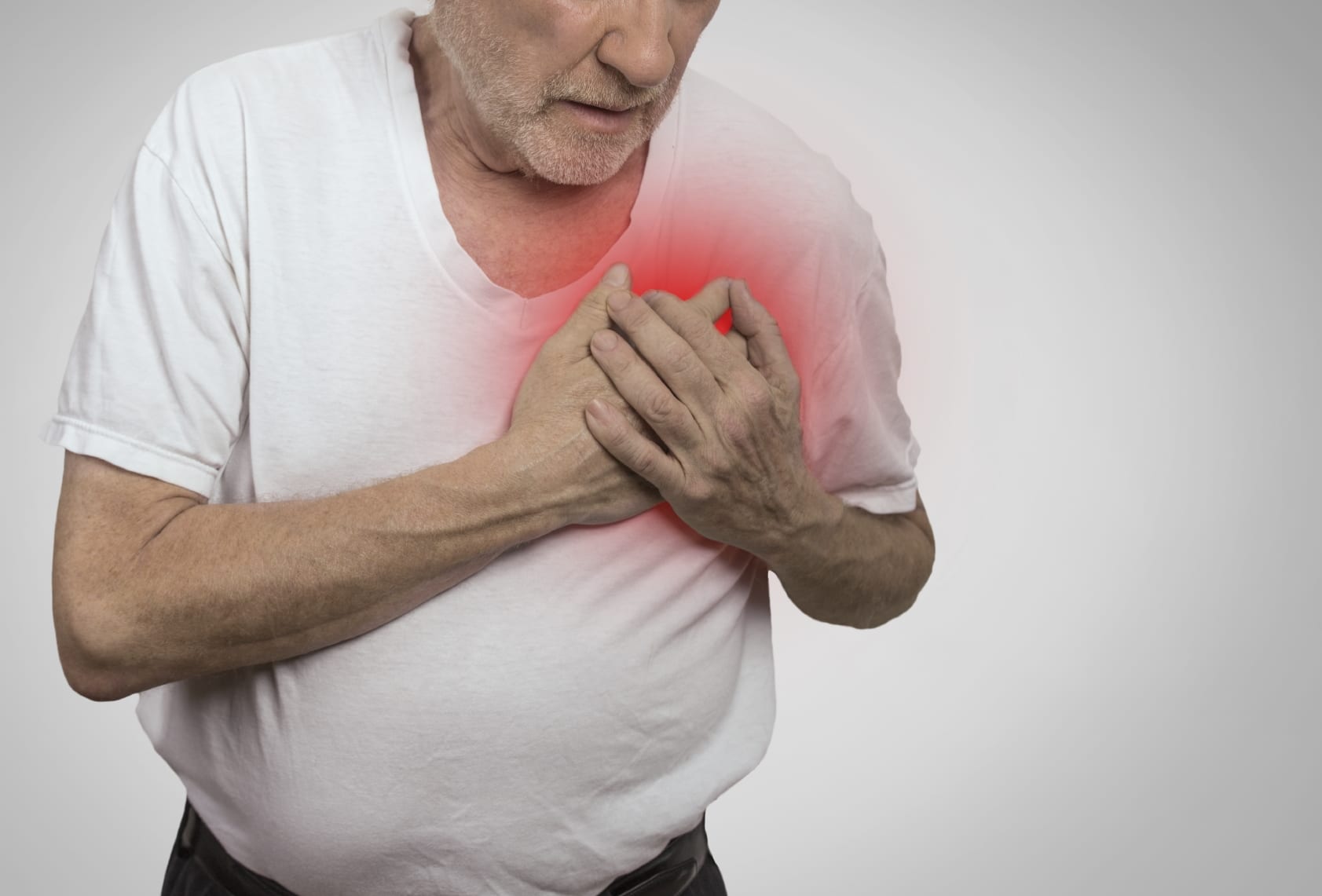 Those who were there know that I had a rocky relationship with my dad. We were two stubborn, ornery, Irish roosters butting heads. He kept me in check by threatening to kick me out of the house. I didn’t want to leave my home, and I didn’t want to be known as the kid who got kicked out of the home. My plan, once I got out on my own, was to never forgive him and never forget what he did to me. Years into the plan, my dad had a massive heart attack. His chances of survival were slim. I visited him and saw him hooked up to a variety of machines, and I realized that no matter how awful he was to me, he was the last parent I had left in life. He survived, barely.
We spent the next eleven years rectifying everything that happened during my youth. During these eleven years, I thanked him for assuming the role of step-father for me when I was two-years-old. That was so hard. It was difficult to avoid qualifying it, and placing “But you did this to me” type of asterisks. I left it as a standalone thank you.
It was the best thing I ever did. I wish he would’ve lived for another ten to twenty years, but he didn’t. When he eventually passed away, however, I said goodbye to him with a heart free of anger, without the need for some sort of retribution, and hatred. If he died after the first heart attack, I would’ve been an absolute wreck. The moral of the story is, no matter how bad the fight between you and your loved ones is, get it out, speak to one another, and straighten it out before it’s too late.
Why I Write
Ever drive down the road and see a bumper sticker with exclamatory statements on their car? How about that guy who wears a T-shirt, in public, that says something meaningful? And what about that guy we all know who debates his friends on a variety of topics, with a palpable sense of frustration. “No one will listen to me,” he shouts. Everyone who talks to that guy feels his underlying sense of frustration, and they know how angry he is. We begin to interact with him less and less, because we know he can turn everything from a discussion on geopolitics to whether or not the snap pea is a delicious food into an uncomfortably confrontational argument. Every time I meet that guy, I’m so glad I’m not him anymore. That guy has no venue. He needs to express himself all over you. Whether you deem the material I discuss valuable or not, I found my venue.
I always valued friendship over the temporary feelings one can derive through defeating another in an argument, but I felt a certain sense of frustration when no one would agree with me. When I expressed some anger and frustration, people would give me that extra look. If you’ve seen that look, you know it. That look follows you, and it says something uncomfortably revealing about you. It’s a double-take that precedes most rational, sane people just walking away. Others, who care about you, say, “Maybe you need some counseling.” Tried it, didn’t work for me. I wouldn’t say the counselor was stupid, or I am more intelligent, but she didn’t understand me. I didn’t understand me, until I found an outlet. I wouldn’t say I was complex, or anything extra ordinary, but there was no question that I needed to do something to get everything that was in me, out.
“Music sets the sick ones free,” Andrew Wood, lead singer of Mother Love Bone, once wrote. That was me. I didn’t just love music, I needed it. I could drop the cliché that I needed music, like some people need oxygen, but it wasn’t that severe. I prefer to think of my need for music to help balance my mental stability as one might view a farmer living out on the prairie with little-to-no law enforcement. I needed music the way those farmers need to be armed to protect their land, their livestock, and their family. The only issue was I never wanted to be anything more than a music listener. I didn’t know how to play an instrument, and I didn’t have the patience to learn one. Yet, I was in desperate need of some form of self-expression in some sort of artistic manner.
If “Music sets the sick ones free,” and I believe it does, writing was directed neurological therapy for me. Music was equivalent to a neurologist prescribing necessary over the counter pain medication. Writing, would prove the directed neurotherapy a neurologist might prescribe after repeated visits and extensive study of my reactions to everything prior.
I was never ill, compromised, or depressed in any substantial manner, but I had an internal itch that ruined days. Writing felt substantial to me. I wanted it all, but when it didn’t come, I kept writing. I was no prodigy. I wrote some awful stuff, but I loved it, needed it, and I kept wanting to do it no matter what. Writing anything and everything I could think up is what has led me to the definition of sanity I now know.
 No Hugging and No Learning
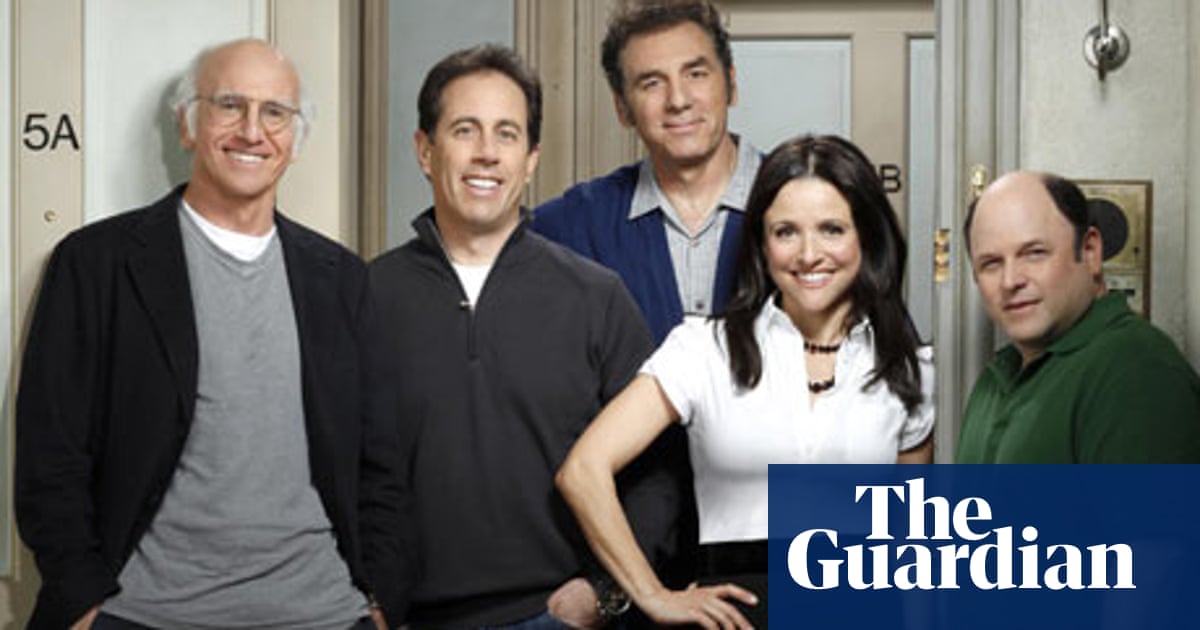
When I watched Seinfeld, I had no idea why it appealed to me so much. It was funny, of course, but there were dozens of situation comedies on the air at the time, and hundreds of them throughout history. Seinfeld was special to me, and I had no idea why. When I learned that the writer’s room had a “no hugging and no learning” thematic approach, I said, “That’s it” to myself.
Seinfeld was special, because it wasn’t “special”. Everyone from the creators, writers, on down to the actors made no effort to be special, nor did they add special ingredients into the mix. The special ingredients for most writers on most situation comedies involved the “very special episodes”. These episodes made special connections to the audience through special issues. A character, in their narrative, discovers that they’ve been so wrong for so long that they now question their foundation, and the audience understands, agrees, cries, hugs, and leaps to their feet in “clapture”. Clapture is a framing technique used by comedy writers to get the (Emmy!) audience to clap with laughter, or to agree with them more than laugh. I didn’t realize, until Seinfeld, how cringeworthy those special, meaningful messages were. The Seinfeld writers maintained that there would be no hugging, no learning, and if I might add, no special understandings in their show. They just tried to be funny. When we watch such shows, we always wonder if they reflect our values, or if we begin to reflect theirs. I think Seinfeld, more than any other sitcom I’ve watched, reflects my values. I prefer a good steak with very little seasoning and nothing else! Unless steak sauce is used to cover up the quality of the meat, I want nothing else on my steak. If you’re going to come at me and tell me what you really think of me, I prefer that you come bold with no qualifiers. I also prefer music that is complicated, fun, interesting, creative, relatively brilliant, unique, and utterly meaningless. Don’t tell me what you think of the domestic economy of Istanbul, the mating habits of the emu, or anything else that you wished you put in your college thesis. Just write lyrics that fit the music and be done with it. Seinfeld, in my opinion, met all of those standards.
 Rilaly