One of my favorite genres in the book store/library is the rock biography. I love learning more about those rock stars and musicians I grew up with and continue to play in all of the various machines we can now play music on. My favorite chapters involve their early years in which nobody believed in them, because “Why would they?” I love the stories about how the musician we know today wouldn’t be half of what he is if he didn’t end up with the four-to-five other guys we know as their band. The four-to-five of them developed an unusual level of belief and focus that eventually helped them attract an audience of 100 people in a dive bar that is now boarded up. I also love to hear about the unending hours they spent just jamming in a parent’s garage. These are the stories most of us don’t care about, because nothing substantial happened there. They were just jamming, in the manner the basketball athlete spent so many hours/years in a gym perfecting their jump shot. I love these chapters because they demystify the notion that they were just born different, and they bolster Malcolm Gladwell’s contention that we’re all capable of great things if we devote 10,000 hours to it.
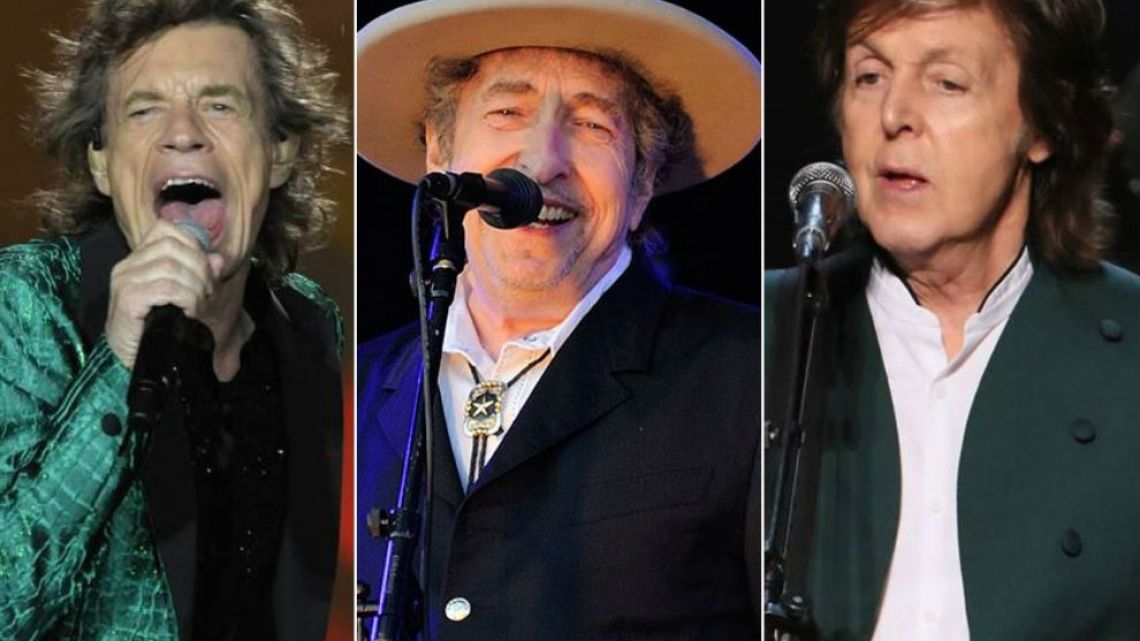 We all live with this notion that Paul McCartney, Bob Dylan, and Mick Jagger were just born with “it”, and they’ve always kind of had “it”, because they’re just different. The point of these early chapters is to illustrate that they might be different now, but that’s only because they’ve done it so often that it’s just easier for them to do now.
Every top-notch singer-songwriter and musician we know and love had a point in their life when they strummed a guitar, played a piano, and sang some original creation from their heart, and someone they loved and cared about giggled and said, “That kind of sucked!” I love stories about that stench of failure, not based on some sense of schadenfreude, but to see what the musician did with that all of that frustration and pain. Why did they continue to create when everything they did, back then, was pretty sophomoric. They couldn’t see it then, of course, because they thought they were writing masterpieces, until someone a little heartless came along and said, “You’re not ready.” How did they maintain that belief in themselves when everyone who heard these “songs from their soul” and instructed them go back to school so they don’t end up in manual labor, until they achieved what we now know as their magnum opus?
After the “rise to stardom” chapters, most of those who write rock bios fall prey to the temptation of writing what’s called a hagiography, or a sympathetic, idealization of the subject. The hagiography term began as a description of a tome written about a person declared a saint. Thus, if a hagiography is the description of a writer anointing a man a rock god, then the opposite of a saint is a sinner, and the antonym of hagiography is synography or hamartography, meaning “in error, sinful”. There are some synographies, or hamarographies, written about rock stars that focus on drug, alcohol, and other forms of abuse, but their intent is to glorify the rock star through the lifestyle they led in their heyday.
 As much as we criticize the way the writer crafted their subject’s material, it has to be difficult to find the line between hagiography and biography when the primary reason we buy these books is that we all kind of worship the subject. Let’s face it, when we read a biography on Chris Cornell, we’re not seeking hardcore investigative journalism. We just want to know a few things about what made him tick, and how we can relate to him as a fellow human being who had huge dreams, but his just happened to come true. We don’t care if the writer tends to overdo it, and we even kind of expect that. We want to know the minutiae of how he overcame everything a teenager with nothing more than a guitar and a dream had to overcome to write and create Badmotorfinger.
The problem that would probably chase me through such an effort is how much material is there on the process and philosophy of creating a rock album. How many rock songs were inspired by “A time when I saw a chick in a red sweater and a tight, leather mini-skirt.” On the opposite side, we have the pretentious musician who tries to claim some sort of significant political, socioeconomic inspiration. There are also those obnoxious artistes who try to tell us every interpretation of their lyrics are wrong. “That’s so not what it’s about,” they say, but they never offer us the true origin of the song. This leads me to think the inspiration for the song was either relatively mundane, embarrassing, or at least not as creatively brilliant as we thought. They probably fear that anything they add to the discussion will only diminish our joy of the song, and they just prefer that we continue to regard them as misunderstood geniuses. Those who have offered a specific explanation, on the other hand, often leave me wishing they never said it. I can’t remember ever finding a songwriter’s explanation of their lyrics as an inspirational work of uncommon, creative genius, so I can understand why its sometimes better to leave it to our interpretation.
Another disappointment I encounter when reading rock star bios occurs when the discussion of my favorite song begins. If you bought this bio, you love the band almost as much as you love man, but you can’t wait to read the discussion on your favorite song from them. Did you skip a couple chapters to get to it? Did you go to the table of contents to find the chapter that discusses it? I’ve done it, you’ve done it, because we want to get that chapter out of the way, so we can read the rest of the bio without anticipating the thorough discussion of it. How many times have you been disappointed to learn that your favorite track from an artist was a last second, “what-the-hell, let’s add another track” song? Out of everything Chris Cornell did in his relatively short life, in his brilliant Soundgarden albums, his Audioslave albums, and even his solo stuff, Temple of the Dog is, his deepest, most meaningful, and most beautiful album. Some of the tracks were written in honor of his then-recently-deceased friend and colleague Andrew Wood. At the end of their reportedly somewhat spontaneous production of this album, it reached a point of completion. The primary writer on that album, Chris Cornell, felt that nine tracks just didn’t feel complete. He wrote another song to have ten songs as opposed to nine, and that track was Hunger Strike. Hunger Strike would eventually prove to be one of Cornell’s most popular songs, but it was one of “my songs” from the moment I first heard it, and I couldn’t wait to read an in-depth discussion of it in a bio that ended up offering nothing but a short paragraph, and to be fair to the author there wasn’t much to say about Hunger Strike, other than it being a “what-the-hell, let’s add another track”.
These artists mine their mind, heart, and souls for another song, and some of that material provides great material for the writer of their biography to explore with us, but the song everyone wants to read about? “Yeah that was a “what-the-hell, let’s add another track” song.
The “after they made it” portion of the hagiography then talks about how “the star” always sang on stage with his shirt off, or how he once climbed atop a speaker one time and sang from there, and “It was a hell of a show.” Because he climbed up on something, or purposefully broke a guitar on stage, or purposefully jumped into a drumkit? We also read about how he climbed into the rafters of a concert hall, against the wishes of his manager and the Fire Marshall, and he swung from those rafters, which were thirty feet off the ground. I hate to be trite, but I could do all that. How is that artistic brilliance, or a brilliant interpretation of chaos? “Well, it’s better than some guy who just stands there and sings.” Okay, but I paid a lot of money to hear a man sing, and I don’t want to watch him climb on stuff the way my second-grade kid does, and I’ve also discouraged my kid from breaking his toys too, because it makes no sense. I understand that everyone is bored during guitar solos and drum solos, and the singer is just trying to maintain the audience’s interest, but I’ve never considered such antics mind-blowing or even interesting. I’ve always found them a little boring.
I honestly don’t know what I expect from a rock-star bio, but I’ve been disappointed so often that I’ve started thinking maybe rock-star bios just aren’t for me anymore.
 Rilaly