Bill O’Reilly’s Killing Jesus vs. Zealot, by Reza Aslan


Prior to the killing of Jesus, there was a much more monumental (at the time) killing of a leader named Julius Caesar. This assassination of Julius Caesar led, in a circuitous fashion, to the assassination of Jesus of Nazareth. The resultant, and relative, degree of chaos that occurred in Rome, as a result of Caesar’s assassination, spawned chaos in the many Roman territories, including: (what is now called) Israel, Jerusalem, and Galilee. Much of this chaos, and the subsequent insecurity of the rulers, and leaders of this era, led to the crucifixion of Jesus of Nazareth. This is the theme of Bill O’Reilly, and Martin Dugard’s book Killing Jesus. Reza Aslan’s book Zealot has a theme that “Jesus of Nazareth was a ‘politically conscious Jewish revolutionary’ whose kingdom is decidedly of this world,” and that much of what you’ve been told about Jesus is wrong.
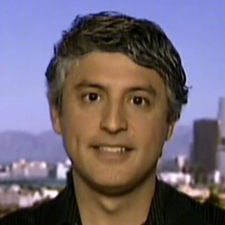
Reza Aslan
Reza Aslan

If your goal is to believe that much of what “you might have heard in a Palm Sunday sermon” is false, and you want to have those preconceived notions backed up, then you will probably love Aslan’s telling of the tale of Jesus of Nazareth in his book Zealot. If it’s your goal to uncover a truth about a violent, angry, and revolutionary Jesus of Nazareth, the theme of Reza Aslan’s Zealot will probably support that bias. This theme, as described in reviews in the Chicago Tribune, The Washington Post, The New York Times, The Nation, and the Jewish Review of Books, is pervasive throughout the Biblical passages and quotations that Reza Aslan chooses to illustrate the point that Jesus of Nazareth was a Zealot.

The point these reviews make, in varying ways, is that Aslan cherry picks Biblical passages and quotes to bolster his point, while ignoring, or being highly skeptical of, those that don’t. As Michael Robbins points out in his Chicago Tribune piece:

“It’s fashionable to claim that (Saul) Paul of Tarsus (the man that spread the word of Jesus, after Jesus’ death) watered down Jesus’ original revolutionary message, but the truth is that we just don’t know.”

This line: “We just don’t know..” the total historical truth of the actions of the man named Jesus, is the theme of so many of the reviews of Aslan’s book, that it borders on a total dismissal of the book. Jesus may have been an angry and violent revolutionary, or He may have been the passive figure that other authors choose to depict Him as, but in the end we just don’t know.

As Aslan, himself, wrote in his notes on Zealot, “(T)here is some truth in both views.” This line calls to mind the: “Both sides are to blame” line that talking heads issue, on political television shows, when they can’t properly defend the comments, or positions, of their favorite political leaders.

Michael Robbins uses Aslan’s line to conclude that: “Aslan is sometimes more confident in his pronouncements than is warranted.” If Aslan used this line in his text, it probably wouldn’t have led to Aslan achieving a best-seller, and it probably wouldn’t have made for a very good read, but it probably would’ve silenced all the criticism that followed.

Michael Robbins goes on to claim that it was wrong for a Fox News interviewer to ask, of Reza Aslan: “You’re a Muslim, so why did you write a book about the founder of Christianity?” (Editor’s note: I’m sure Aslan loved it, as that very question, when wrapped around the world via Youtube, propelled Zealot to the best-seller list, and it gave all of Zealot’s sympathetic reviewers a qualifier before dismissing the book.) Robbins also claims that all of the one-star reviews on the book, on Amazon.com, are unfair, as is the fact that far too many have condemned Aslan for writing a book that goes against scripture, but Robbins concludes all this condemnation with: “I just wish I didn’t have to report that the book itself is, well, not very good.”

In his second piece on the book ZealotThe New York Times writer Russ Douthat, attempts to defend Aslan by writing that the totality of Aslan’s research is not great, but it’s better than some of the ridiculous notions put forth by other, supposedly more credentialed, theological writers.  He then provides a list of examples of these ridiculous notions, before writing:

“To be clear, these examples are not intended to absolve (Reza) Aslan of the sin of writing a bad book; they do not suffice to make the argument in “Zealot” convincing; and they don’t justify its self-regarding author in his claims to extraordinary expertise. I agree with his recent critics on those counts and many others. All I’m saying is that by the standards of both the larger genre and Aslan’s specific academic influences, the book could have been a whole lot worse.”{2}

Washington Post writer Stephen Prothero, suggests that the theme of Aslan’s Zealot is built on two scenes: Jesus’s thrashing, and overturning, of the tax collecting tables in the public courtyard of the Jerusalem Temple, and Jesus’s ride into Jerusalem.

“The rest of the book,” writes Prothero, “is devoted to fleshing out this portrait.”

Aslan describes the scene of Jesus entering Jerusalem as:

“The moment that “more than any other word or deed, helps reveal who Jesus was and what Jesus meant.” This scene has been described as an illiterate peasant entering Jerusalem, riding on a donkey, as riotous crowds shout “Hosanna!” But Jesus of Nazareth is not demonstrating his humility, as you might have heard in a Palm Sunday sermon. He is demonstrating his kingship. “The long-awaited messiah — the true King of the Jews — has come to free Israel from its bondage” to Rome.

“In Aslan’s telling, these two scenes introduce a “revolutionary zealot who walked across the Galilee gathering an army of disciples” to rain “God’s wrath . . . down upon the rich, the strong, and the powerful.”{3}

The key line, of this particular portion of the text is: “As you might have heard in a Palm Sunday sermon.” This line basically suggests that one of Aslan’s goals is to tweak those who ascribe to religious doctrine and entice those who don’t. One would think that if Aslan’s goal was to simply factually refute everything we might have heard, he would not have been so theatrical in his verbiage. As evidenced by this particular line, however, Aslan knew who his audience would be, and he definitely appealed to them… Thanks, in part, to Fox News.

There have been so many books written on the life of Jesus that we can look at them, collectively, and say that the approach that any author takes on approaching the sometimes loose information we have says more about the author than it does about Jesus the man, or His story.

Aslan is skeptical of any Biblical quotes that depict Jesus as a peaceful revolutionary, while fleshing out the quotes and passages that make him appear violent. Aslan’s focus, in other words, are all those passages and quotations that support his theme. He is no more objective than those on the other side of the argument, who are routinely castigated as lacking in objectivity. Aslan’s objective is simply different.

The negative reviews of Bill O’Reilly and Martin Dugard’s Killing Jesus suggest that O’Reilly’s approach involved selections of Dugard’s research that focused too much on Jesus’s plight against taxation, and the moves He made to interrupt the money flow. The negative reviews suggest that O’Reilly cherry picked information that would’ve otherwise illuminated the idea that Jesus’s plight was more against the rich in general.

Bill O'Reilly
Bill O’Reilly

Candida Moss, in an article titled Five Things Bill O’Reilly flubs in ‘Killing Jesus’ for CNN, also suggests that O’Reilly and Dugard were in error when writing that (Saul) Paul of Tarsus was a Christian, “(Paul) was a Jew who moved from one branch of Judaism to another”; “that (the disciple) Peter chose to be hung upside down, because he didn’t believe himself worthy of being executed in the same manner as Jesus” (that was a 5th century interpretation); that O’Reilly sought questionable Roman records in his depiction of the pre-Jesus era Rome, that Mary Magdalene didn’t wash Jesus’s feet in oil, and that women weren’t treated better in Jesus’s time, if those women were slaves.”{4} Some of these criticisms have been deemed arguable, and others have claimed them to be outright false. Many critics have also condemned the style that O’Reilly uses to convey Martin Dugard’s research in “the Killing” series, but O’Reilly expressed, before the first of the series, Killing Lincoln, was on the shelves, that it was his goal was to make history interesting, by writing these books in the fast-paced style of a John Grisham book.

Those who have read Doris Kearns Goodwin, David McCullough, and H.W. Brands, among others, know the niche that Dugard and O’Reilly carved out. These top historians all write excellent books, but they also do most of their own research. The reason the latter half of this point is germane is that these authors feel compelled to show the readers the research, and the work that they’ve done. One has to sympathize with them, to some degree, for if a researcher has done five years of research, and they begin to realize that, say, six months of that research can be whittled down to a single sentence, the researcher in them cannot help but feel that those six months were otherwise wasted … if they don’t expand on the point a little. On the flip side of the coin, when that same researcher belabors a point that could’ve been whittled down to a single sentence, it leaves the reader feeling exhausted by detail. Therefore, when O’Reilly hires a researcher, and thereby avoids the conceit of displaying the researcher’s effort, it can lead to a much more interesting read, and a renewed interested in the subject of History for many.

Anytime an historical tome is written, it should be 100% accurate, and when it isn’t a Candida Moss, and anyone else, who offers these corrections (and others) should be applauded for their fact-checking. Having said that, none of the corrections that I’ve read from Ms. Moss, and others, take away from the overall effort put forth in Killing Jesus … in my humble opinion. Aslan’s Zealot, on the other hand, has been so summarily dismissed, by even seemingly sympathetic critics, that an objective observer can’t help but think that it has to be judged a failed effort.

Overall, these reviews suggest that O’Reilly chose information, gleaned from Martin Dugard’s research, that included some hyperbole from Popes, and other arguable interpretations, that led to what some critics have defined as factual errors, but the theme of O’Reilly and Dugard’s book has not been as thoroughly dismissed as Aslans. The errors that Aslan made, write these critics, were made to support his theme. He was skeptical of any quotes that made Jesus appear peaceful, but his theme was heavily influenced by those quotes and passages that made Jesus appear to be a violent revolutionary, and Aslan expounded upon them with interpretation.

{1}http://www.chicagotribune.com/features/books/ct-prj-0825-zealot-reza-aslan-20130823,0,3364171.story

{2} http://douthat.blogs.nytimes.com/2013/08/14/in-defense-of-reza-aslan/?_r=0

{3}http://articles.washingtonpost.com/2013-08-02/opinions/40991405_1_palm-sunday-scholar-jesus-s

{4}http://religion.blogs.cnn.com/2013/10/04/five-things-bill-oreilly-gets-wrong-in-killing-jesus/

The Inconsiderate and the Uninteresting


A show I watch asked the question has America become more inconsiderate? They immediately moved this discussion of societal etiquette to the use of cell phones. Does someone answer a cell phone in the middle of your meal? Do they answer that call without asking to be excused? I don’t know if my lack of interest on this particular discussion is based on the fact that it’s become cliche to complain about cell phone usage, if I still feel like something of an outsider looking in on the whole cell phone world, or if most of the people in my inner circle are not obsessed with cellphones. Whatever the case is, I have fewer problems in the cell phone discussion than most. My concerns are less micro.

Cell PhonesLarry David has an observation he calls being car conscious. Are you car conscious when you cross the street? How quickly do you walk when you cross? Are you ambivalent to the amount of time you have to cross the street, when you have the right of way, and do you walk at your own pace regardless of the amount of time you have to cross, or do you always walk expediently?

The primary influence of my life, my dad, was considerate. Some of the times he was too considerate in my opinion, but the exaggeration shaped me. I have my moments, just like everyone else has moments, but there are some people, and we all know them, that you can just tell are born inconsiderate.  It’s a way of life for these people, as opposed to a momentary slip.

Gene Simmons once said: “Most people are not very interesting.” What Gene probably meant to say, I believe, is that most people are not very attractive. Interesting is, of course, relative. What is interesting subject matter to one person can be dreadfully boring to another and vice-versa. Reading through some of Gene’s books, and listening to a number of his interviews, I’m willing to put money on the fact that Gene finds attractive women interesting, regardless their subject matter… Especially those attractive women that find the subject of Gene Simmons interesting.

On Alec Baldwin’s radio show, NBC News host Brian Williams said that he believes his political opinions have been cleansed from his reporting.  Brian Williams has been known to deliver such lines, in the guest appearances he’s made on 30 Rock and on the Late Show with David Letterman, with such an excellent dead pan that it’s impossible to know when he’s kidding.  For further clarification, some of us wish we were back in the 70’s when laugh tracks were the norm.  We find the fine line between comedy and tragedy too confusing at times.

In a line from Simon Vozick-Levinson’s Rolling Stone review of Thom Yorke’s Atoms for Peace, Levinson writes:

“Thom Yorke hates being predictable more than anything except maybe climate change.”

YorkeIf the rhythm of this line sounds familiar, it may have something to do with the author of the quote co-opting from those old Superman lines used to promote the corporate sponsorship of that show:

“If there’s one thing Superman hates more than crime it’s tooth decay, and to fight tooth decay Superman uses Crest.”

The only difference is that the author was presumably serious.

Answering questions directly can be a problem at times:

“Does (something) stress you out?”  This is a question that we humans seem to enjoy asking of one another, regardless of the topic.

“Yes, it does,” I answered.  The answer that I provided was so direct, and clipped, that the two of us stared at each other in silence for a second.

“How does it stress you out?”

I then describe for them how this stressful situation affects me.  I am very matter-of-fact in my description, for I know that I’m walking into their net when I do so.

“Well, that’s what happens,” is the smug answer.  “If you didn’t expect that, you shouldn’t have gone down that road.”  They then laugh smugly at my naivete with that response.

“Wait a second,” I say, “You asked me two direct questions that I answered directly.  I knew the answer to the question, but how do you get to be the smug one?  Do I have to qualify every answer I give, or can some of it be assumed?”

Inconsiderate in the Checkout Aisle


Are you inconsiderate? How inconsiderate are you? Are you one that is momentarily inconsiderate, or do you have bad habits? When you’re at a grocery store, and you need a moment to discuss the needs of your household with your significant other, do the two of you wallow in the middle of aisle during this discussion, or do you create a pathway for any possible oncoming shoppers? How considerate are you? Are you one that waits until the need for a pathway arises, or do you prepare for this eventuality beforehand? How many people have to say, ‘excuse me’ to get by you? Are there moments where this has happened, or is it an event that occurs whenever you’re at a grocery store?

Whenever a discussion of ethics arises on TV, or in literature, the audience is usually subjected to larger questions. How concerned are Americans with the world at large, are Euros so self-righteous that they think they’re better than most other countrymen, and what of the societal ethics regarding cell phones? Are Americans becoming more inconsiderate on the street, in their cars, or in their everyday life? These discussions are all very macro, and as such less interesting to me. I think we can get a better gauge of humanity, and their ethics, in the seemingly inconsequential manner in which we conduct ourselves in a grocery store.

When we’re at work, or church, we’re usually on our best behavior with the fear that the boss might see us at our worst. When we’re in bars, or sporting events, our behavior is usually altered to some degree, but when we’re at a grocery store, we are who we are, and the interactions we have with strangers define us.

The grocery store can be a breeding ground for selfishness and self-involvement, in that the only reason we go there is to satisfy our personal needs. It does require some effort, therefore, to avoid focusing too much on ourselves, and to remain considerate of those around us.

We’re all going to have moments in supermarkets, just like in life, where we slip up and become inconsiderate. When you’re discussing the benefits of beef broth and mushroom soup to your next meal, you and your significant other can get so caught up in that discussion that you momentarily lose track of the world around you. Some of the times, the two of you have to be shaken out of that world by a fellow consumer trying to get by, and if this happens to the considerate they are embarrassed by the momentary slip up, and they quickly move to rectify it with apologies.

There are others, and we all know them, that seem to be born inconsiderate. It’s a way of life for these people, as opposed to a momentary slip up. They’re the ones that walk gingerly through cross walks, ignore a person that’s speaking, and place their cart in the middle of an aisle while reaching for the peas. These people can be immersed in the broth/soup conversation, be jerked out of the conversation by a passerby, and continue that conversation while apathetically moving their cart aside ever so s-l-o-w-l-y.

Even these annoyingly ambivalent and methodical shoppers can be redeemed, however, if they know the regimented process involved in the checkout aisle. We also understand that some discussion is necessary when two people are making choices for a household, but that doesn’t mean that we are any less frustrated with you. It can all be forgiven, however, when you have made all of your selections, and your focus is acute in the checkout.

Anyone that has achieved the age of—to be generous—thirty, knows that there is an order to the manner in which a customer moves through the checkout aisle. Some of us have watched our elders and learned of the considerate order, that allows the consumer to make his stay in the checkout aisle a smooth, orderly, and quick transaction. This order is very regimented, to the progressions you physically make through the aisle, and onto the manner in which you prepare to pay. Those of us that have paid attention to our elders, and all the precedents we have witnessed with other customers, know this order. We may not expect every customer to follow this order down to the regimented progressions through the aisle, but when we see an example of the opposite, we grow impatient and frustrated with their inability to follow the codes and standards of our society.

To paraphrase Ice Cube’s line in Boyz in the Hood: “Either they don’t know, don’t show, or don’t care about the standards of the grocery store checkout aisle.”

How prepared are you for the total, when that cashier calls it out? If you’re writing a check, how much of it is written out before the total is given to you? Do you have your billfold in hand, if you’re paying cash, or are you one that waits until the total is called out? If you’re one of the latter, what did you think was going to happen? Did you not consider the fact that you would have to eventually pay, or were you simply not thinking?

I find cash to be the most considerate method of payment available to those waiting behind you, and I usually have a hand in the billfold ready for the total to be called out. I’m also, usually, within one to two dollars of the total. About the only inconvenience experienced by those behind me is the change thing. If I have an opportunity to get rid of some change, I will always do so. Some of the times, I will count my change beforehand, to know how much I have versus how much I may need, but most of the times, I am (unfortunately) totally caught off guard by the fact that I can dispense with some change in this transaction, and I will fish around in my pocket for any change that I have. It’s a minimal inconsideration, but I still have to put a checkmark by this if I’m going to be honest and objective on my consideration list.

I have little to no problem with you debit card people, as long as you know the process well enough to know which buttons you will be required to punch through without too much pausing, or too much instruction from the cashier. Most debit card people are caught off guard by the “change” question at the end of the debit card machine’s algorithm, and I’ve thought more than once that we might all be better off if this question were placed at the beginning of the algorithm, so that people are more practiced in that part of the process.

Other than my personal problems, involving dispensing with change, my progressions through the checkout aisle are honed and polished. My conveyor belt progressions are impeccable. For, not only do I push the items as far forward on the conveyor belt as possible, but once the checker has reached the halfway point in my number of items, I am halfway through the aisle. This halfway point places me in a perfect position to reach any items that the cashier might not be able to reach, and it makes me available for questions that she may have. At the point when she only has a few items left, I am at the little check writing outcropping, with cash in hand. This allows the person behind me to move forward so that they can push their items as far forward as possible, and prepare for their checkout.

Those of us that have studied the protocol, and understand it well, want no praise for our actions. We do not do it for the glory. We understand that as others drift through life, on the lookout only for the inconsiderate, they will accidentally ignore those of us that follow the procedure. If those same people watched us, and learned from us, and copied our procedures, we would consider it the greatest of all compliments, and we believe that it could leave a trail of ease for the rest of humanity that move through the checkout aisle.

We’re all going to experience some problems in the checkout aisle. Some of the times, we’re going to have to have a price check, and some of the times the verdict on those price checks are not going to go our way, and we will have to put some items back, and some of the times we’re going to have coupons that slow the proceedings, and some of the times the unexpected will arise that causes a severe delay in the lives of those behind us. Some of the times, all we need to do is apologize, and all will be forgiven. It may not mean much to those of us that have already reached a pique of frustration with humanity, as it usually does nothing than add an exclamation mark to the swear words we have in our head for them. We will accept their apology, however, and move on, knowing that that person has done their best to be considerate, and they have thus eased the suffering that I think they should be experiencing for their malfeasance.