Leonardo da Vinci’s Woodpecker


“Describe the tongue of the woodpecker and the jaw of the crocodile,” Leonardo da Vinci wrote as a reminder to himself in his Codex Atlanticus.

How many of you are curious about inconsequential matters? Let’s see a show of hands. How many of those curiosities will end up serving something greater? Some will and some might, you never know. We could end up studying something largely consider inconsequential that ends up helping us understand ourselves better, our relationship to nature, and all of interconnected facets of our ecosystem. What seems inconsequential in the beginning can prove anything but in other words, but what would purpose could the study of a bird’s tongue serve a 16 th century artist? 

“Everything connects to everything else,” a modern da Vinci might have answered. There is no evidence that the 15th and 16th century Leonardo da Vinci ever said, or wrote, those words, and it’s likely apocryphal or a 20thcentury distillation of Leonardo’s notebook passages on the unity of nature, such as the earth-man analogy he made in the Codex Leicester or water’s role in the Codex Atlanticus. So, the answer is da Vinci studied the woodpecker’s tongue to try to find a greater connection, right? Maybe, sort of, and I guess in a roundabout way. When we study da Vinci’s modus operandi, we discover that his research did involve trying to find answers, but his primary focus was to try to find questions. He was, as art historian said, Kenneth Clark said, “The most relentlessly curious.” That characterization might answer our questions with a broad brush, but it doesn’t answer the specific question why even the most relentlessly curious mind would drill so far down to the tongue of the woodpecker for answers. For that, we turn back to the theme we’ve attributed to da Vinci’s works “Everything connects to everything else.” He wasn’t searching with a purpose, in other words, he was searching for a purpose of the purpose of the tongue.

We’ve all witnessed woodpeckers knocking away at a tree. Depending on where we live, it’s probably not something we hear so often that it fades into the background. When we hear it, we stop, we try to locate it, and we move on. Why do they knock? Why does any animal do what they do? To get food. Yet, how many of us have considered the potential damage all that knocking could have on the woodpecker’s brain? If another animal did that, it could result in headaches, concussions, and possible long term brain damage. How does a woodpecker avoid all of that? Prior to writing this article, I never asked how the woodpecker avoided injury, because I never delved that deep into that question, because why would I? As with 99.9% of the world, I just assumed that nature always takes care of itself somehow. As curious as some of us are, da Vinci’s question introduces to the idea that we’re not nearly as curious as we thought.
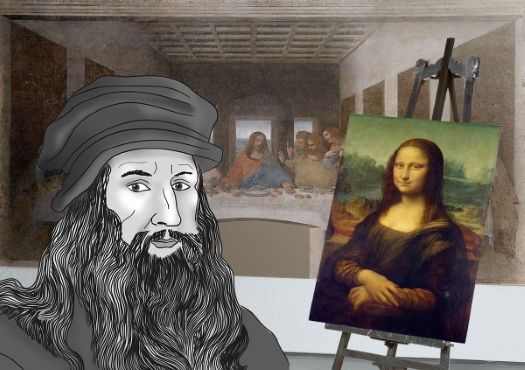
Was da Vinci one of the most relentlessly curious minds that ever existed, or was he scatterbrained? We have to give him points for the former, for even wondering about the woodpecker’s tongue and the crocodile’s jaw, but the idea that he we have no evidence that he pursued these questions gives credence to the latter.

Did he find the fresh carcass of a woodpecker to discover how long the tongue was relative to the small bird, and its comparatively small head? Did he initially believe that the extent of its functionality involved helping the bird hammer into wood, clear wood chips, and/or create a nest. If his note was devoted to what he saw the bird do, he probably saw it perform all of these chores, coupled with using it to retrieve ants and grubs from the hole its knocking created. If da Vinci watched the bird, he probably saw what every other observer could see. It doesn’t seem characteristic to da Vinci to leave his conclusions to superficial observations, but I have not found a conclusion in da Vinci’s journal to suggest that he dissected the bird and found the full functionality of the tongue. There were no notes to suggest da Vinci found, asIFOD.comlists: 
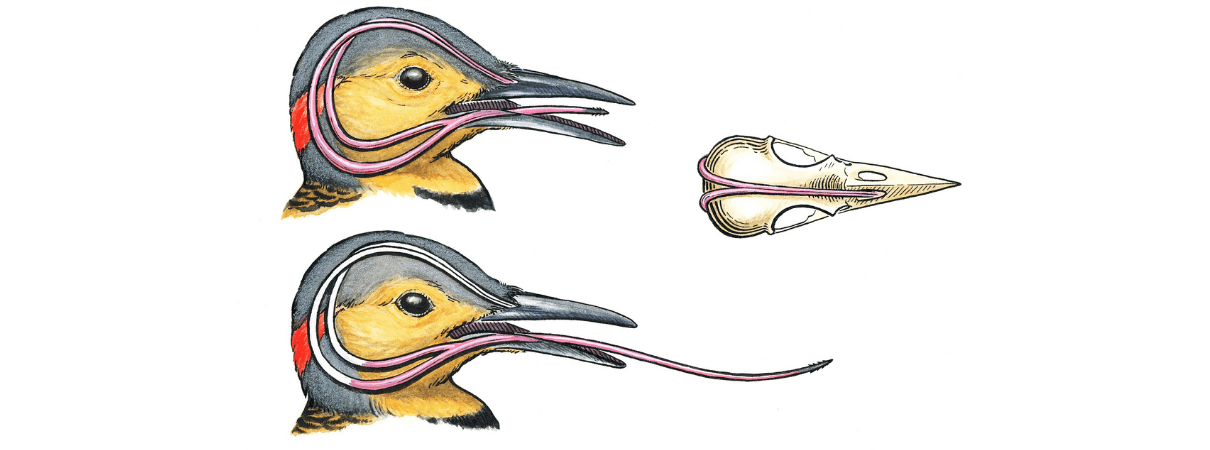
“When not in use, the woodpecker’s unusually long tongue retracts into the skull and its cartilage-like structure continues past the jaw to wrap around the bird’s head and then curve[s] down to its nostril. In addition to digging out grubs from a tree,the long tongue protects the woodpecker’s brain. When the bird smashes its beak repeatedly into tree bark, the force exerted on its head is ten times what would kill a human.But its bizarre tongue and supporting structure act as a cushion, shielding the brain from shock.”    

Brilliant musicians dive deep into sound, acoustics, and how they might manipulate them in a unique manner to serve the song. Writers pay attention to the power of words, as we attempt to hone in on their subtle yet powerful forms of coercion, and the power of the great sentence. Artists, in general, seek to achieve a greater understanding of little relatively inconsequential matters for the expressed purpose of gaining a greater understanding of larger concepts, but a study of the woodpecker’s doesn’t appear to serve any purpose, large or small.  

The idea that he was curious about the tongue is fascinating, as it details the full breadth of his sense of curiosity, but it still didn’t appear to serve a purpose. The only answer Walter Isaacson wrote for da Vinci’s relentless curiosity was:

“Leonardo with his acute ability to observe objects in motion knew there was something to be learned from it.”   

There is no evidence to suggest that Leonardo da Vinci regretted the idea that he didn’t create more unique paintings, but I would’ve. If I worked as hard as da Vinci obviously did to hone the talent he did, I would regret that I left so few paintings for the historical record. (Though he may have created far more than we know, art experts are only able to definitively declare that da Vinci created 15-20 paintings.) Thus the price we art aficionados pay for da Vinci for stretching himself so thin ( as discussed in Walter Isaacson’s Leonardo da Vinci), is relatively few paintings.

“You could say that,” we might say arguing with ourselves, “but if he wasn’t so relentlessly curious about such a wide range of what we deem insignificant matters, the relatively few works we now know likely wouldn’t have the detailed precision we now know.” If he wasn’t so relentless curious about the particulars of the manner in which water flows, and the effects of light and shadow, the techniques he employed (sfumato andChiaroscuro) might’ve taken future artists hundreds of years to nuance into its final form. Da Vinci did not discover these techniques, but according to the history of art, no one employed them better prior to da Vinci, and the popularity of his works elevated these techniques to influence the world of art.   

Arguments lead to arguments. One argument suggests that thirty quality artistic creations define the artist, and the other argument suggests that one or two masterpieces define an artist no matter how many subsequent pieces he puts together. An artist who creates a Mona Lisa or a The Last Supperdoesn’t need to do anything else.I understand and appreciate both arguments, but we can’t fight our hunger for MORE. When we hear the progressions that led to The Beatles “The White Album”, and then we hear “The White Album” we instantly think if those four could’ve kept it together, or Come Together one more time, we could’ve had more. If Roger Avary and Quentin Tarantino didn’t have a falling out after Pulp Fiction, they could’ve created more great movies together? If Franz Kafka could’ve kept it together, and devoted more of his time to writing, it’s possible that Metamorphosis and The Trial wouldn’t be the two of the far too few masterpieces he created.

The rational side of me knows that more is not always more, and that the “Everything connects to everything else” theme we connect to da Vinci’s modus operandi informed the art we now treasure, and I understand that his obsessive pursuit of perfection led to his works being considered the greatest of all time, but I can’t get past the idea that if he wasn’t so distracted by everything that took him away from painting, we all could’ve had so much more. Yet, I reconcile that with the idea that that which made him is that which made him, and he couldn’t just flip that which made him into the “off” position to create more art.

Why did da Vinci pursue such mundane matters? Author Walter Isaacson posits that da Vinci’s talent “May have been connected to growing up with a love of nature while not being overly schooled in received wisdom.” On the subject of received wisdom, or a formal education, da Vinci was “a man without letters”, and he lacked a classical education in Latin or Greek. As with most who rail against those with letters after their name, da Vinci declared himself “a disciple of experience”. He illustrated his self-education by saying, “He who has access to the fountain does not need to go to the water-jar.” He who has access to primary sources, in other words, doesn’t need to learn about it throughthe second-hand knowledge attained in text books. Da Vinci obviously suffered from an inferiority complex in this regard that led him down roads he may not have traveled if his level of intelligence was never challenged. His creative brilliance was recognized and celebrated, as da Vinci knew few peers in the arena of artistic accomplishment. We can guess that his brilliance was recognized so early that it didn’t move his needle much when even the most prestigious voices expressed their appreciation for his works. Yet, the one thing we all know about ourselves is that we focus on our shortcomings, and while we celebrate his intelligent theories and deductions, we can only guess that those with letters behind their name dismissed him initially. “What do you know?” they might have asked the young da Vinci, when he posed an intellectual theory. “You’re just a painter.” Was he dismissed from intellectual discussions in this manner early on in life? Was he relegated-slash-subjugated to the artistic community in his formative years, in a way that grated on him for the rest of his life? Did he spend so much of his time in intellectual pursuits, creating and defeating intellectual boogie men in a manner that fueled a competitive curiosity for the rest of his life? 

Even today, we see brilliantly creative artists attempt to prove their intellectual prowess. It’s the ever present, ongoing battle of the left vs. right side of the brain. The brilliant artist’s primary goal in life, once accepted as a brilliant artist is to compensate for his lack of intelligence by either displaying it in their brilliant works of art or diminishing the level of intellect their peers have achieved. Is this what da Vinci was doing when he laid out a motto for all, one he calledSaper vedere(to know how to see). He claimed that there are three different kinds of people, “Those who see by themselves, those who see when someone has shown them and those who do not see.” In this motto, da Vinci claims his method superior, which it is if one counts consulting primary sources for information, but why he felt the need to pound it into our head goes to something of an inferiority complex.

One element that cannot be tossed aside when discussing da Vinci’s relentless curiosity is that he was born into a comfortable lifestyle. The young da Vinci never had to worry about money, food, or housing. As such, he was afforded the luxury of an uncluttered mind. When a young mind doesn’t have to worry about money, food, or achieving an education to provide for himself and his family, he is free to roam the countryside and be curious about that which those with more primary concerns do not have time to pursue. Isaacson’s writing makes clear that although Leonardo da Vinci was an unusual mind on an epic, historical scale, the privilege of thinking about, and obsessing over such matters can only come from one who has an inordinate amount of free time on his hands. Perhaps this was due to his privilege, his comfortable lifestyle, or the idea that he didn’t have much in the way of structured schooling to eat up so much of his thoughts and free time in youth. 

Having said that, most modern men and women currently have as much, if not more, free time on their hands, and we could probably compile a list of things we wonder about a thousand bullet points long and never reach the woodpecker’s tongue, the peculiarities of the geese feet, or the jaws of a crocodile to the point that we conduct independent studies or dissections. We also don’t have to do primary research on such matters now, because we have so many “jars of water” that we no longer have the need to go to the fountains to arrive at ouranswers.  

Consider me one who has never arrived at an independent discovery when it comes to nature and animals, as I don’t seek primary source answers on them. I, too, am a student of the jaws of water that various mediums, be they documentaries on TV or books, but I am a student of the mind, and I do seek primary source information on the subject of human nature. On this subject, I do not back away from the charge that I’m so curious about it that I exhibit an almost childlike naïveté at times, but reading through Leonardo’s deep dives makes me feel like I’ve been skimming the surface all these years. I mean, who drills that deep? It turns out one of the greatest artists of all time did, and now that we know the multifaceted functions of the woodpecker’s tongue, we can see why he was so fascinated, but what sparked that curiosity? It obviously wasn’t to inform his art, and there is nothing in da Vinci’s bio to suggest that that knowledge was in service of anything. He was just a curious man. He was just a man who seemingly asked questions to just to ask questions, until those questions led him to entries in journals and paintings that we ascribe to the theme everything connects to everything else.

A Grandpa Aged Dad with Child


“Are you out with the grandson for the day?” is a question we hear when we take our children out for the day. Children are more direct, “Are you his grandpa or his dad?” 

I can see how the questions from adults might bother people, but they don’t bother me because I know how close I came to never having a child. It’s always tough to imagine oneself on different timeline, but I cannot imagine where I’d be, or who I’d be, if I never met my son. When I play ball with him, bike or swim with him, or just sit and chat about how we view life, I think about how close I came missing it all.  

One of the other reasons I’m unmoved by the grandpa questions is that I stood on the precipice of disaster. I was nineteen-years-old, holding my girlfriend’s hand, while a nurse read the results of a sonogram, “You’re not pregnant,” the nurse said. In the moments preceding those three glorious words, my life as a nineteen-year-old father flashed before my eyes, and an exaggerated “whoosh” of relief escaped me after she said them.   

“There is no being ready for a child,” a co-worker named Don informed me in the days before the sonogram, when I confided to him that I was not ready to be a parent. “When you have a child, you get ready.”  

“That’s great advice … if you’re a mature, well-adjusted person,” I responded, “but some of us are anything but.”  

“I was just as foolish and immature as you are when I became a father for the first time,” he said. “If I can learn anyone can.” 

“Okay, but were you angry?” I asked Don. “Were you a little angry about … everything, because some of us were. Some of us think we were cheated in life, and some of us think that everyone has it so much better and easier, and to be honest we’re pretty ticked off about it. What are the chances that we’ll pass that on to our kids?” Don argued that I was probably underestimating myself and being over-analytical. He maintained that he knew me pretty well, and he thought I was a pretty good kid who would ramp up when that special gift of a child graced my life.  

“Let’s put this way,” I said. “If I can somehow manage to mess up my life without harming or affecting anyone else, no one will care, but if I have a child how can I avoid effecting them with every malady I have swimming around in my head?” 

“When you hold that boy, or that girl, in your arms, it changes you.” 

“I’ve heard that,” I said, “but when that honeymoon period ends? We go back to who we are.”   

Thankfully, we never found out if Don was right, because my girlfriend was not pregnant, and I escaped that youthful relationship, I was in for all the wrong reasons, unscathed. No matter how generous Don was with his assessments, I knew I was unfit for fatherhood, but the question I now have is was I the exception to the rule?

I wouldn’t be able to answer that question until I began working at a hotel where I met hundreds to thousands of parents over the course of a decade. Most of the young parents I met were broke, stressed out, and at their wits end. They appeared as frustrated with the direction of their lives as I was, and they were dealing with the various pressures of life just as poorly. They were screaming as loud as their children were. They were screaming to get their screaming children to stop screaming, and I suspected they were on their best behavior in front of me. As we talked, I found myself identifying with their plight, but I didn’t have the added pressure of raising a child. In the brief window I had into their life, they appeared to parent as poorly as I feared I might.   

The older parents I met appeared to have answered so many of the “What am I going to do with my life?” questions answered, and they appeared more settled. They appeared happier, more satisfied, and they appeared to appreciate their children more. They appeared more financially secure, and they didn’t appear to take their frustrations out on their child. Their method of parenting was more reasoned, and more psychological. They corrected their children in a calm, more psychological manner, and their children responded well to that. These encounters provided anecdotal examples to bolster my argument, but I met so many of them that I no longer felt like an exception to the rule.

Not too long ago, people had kids to create cheap labor to help them out on the farm. Most people don’t farm anymore, so why do we have kids so young? Federal government statistics title national childbirth rates as the replacement rates. If they’re here to replace us, what are they replacing? If they’re here to pass on our legacy, what legacy are we passing on?

I’ve also seen people, young and old, who never should’ve had kids. I’ve seen parents who had personal, emotional, and spiritual issues, and I saw their kids bring out worst of them. I’ve seen unavailable narcissists who produced unavailable narcissists. I’ve also been a witness to some awful people who were great to their kids. They took great pride in their children, and they taught them that family is everything. That’s laudable of course, but they taught their kids to be awful to everyone else, under the dog-eat-dog philosophical umbrella. I’ve seen some of these kids relay awful stories about what they did to others, and I saw those parents celebrate the misdeeds. Celebrations of doing awful things to people are hilarious in thirty-minute Married with Children sitcoms, but when we reward children for being awful, there are going to be ramifications. I’ve even witnessed grandparents chastise their children for parenting their grandchildren in such a manner, and the first thing that comes to my mind is, “Where you do you think they got it?”   

The best way to raise children is to learn from the mistakes other parents make, including our own. The best way to learn how to parent is to learn what not to do, and that takes time. It takes time to see the harmful effects of parenting. Why did I turn out the way I did, and how can I correct it? Why does my friend’s kid do the things he does, and what is the antidote to that? We also need to shore up our own character in ways that are all but impossible when we’re young, because we don’t know who we are yet. Then, we need to be objective enough to recognize that we’re going to make mistakes, and that the best way to recover from them is to spend more time with our kid. Long story short, I probably learned more about what not to do from watching my friends, my friends’ parents, and others I encountered than I could ever learn from books or anything else. I also learned who not to marry and share the parenting responsibilities.  

That’s the best piece of advice I would offer anyone who wants a child. Make sure you pick the best, other parent you can find. Make sure you have a steady, unselfish, and patient spouse who is willing to hold your hand through the most difficult times. Make sure you have someone to consult on the most pressing issues, and try to find someone who can talk you off the proverbial cliff when the difficult times worsen.   

I’ve had friends who chose to go it alone. Before I became a parent, I found that surprising. “Why would you choose to do it alone?” I asked them. As a parent who has survived eight years of raising one child, I now find that decision incomprehensible. Why would anyone choose to do all of this alone? I know most people have it more together than I do, or ever will, but the idea of choosing to do it alone is just beyond my comprehension.  

Other than having a wife help me through the stresses, strains, and some of the madness involved in raising an infant, the best solution for me was to have enough age, experience, and maturity to deal with it all, and that took me longer than most to achieve. I didn’t recognize the totality of it at the time, but when I was younger, dating a woman with a child, I resented my girlfriend’s two-year-old girl for taking so much of my time and attention. I also resented her for taking away my free time, and my money. We can call this greedy, but I was nineteen-years-old, and I worked hard. It was my money that my employer gave me for working hard, and when I got off work I wanted to sit back and chill. Anyone who knows anything about raising a two-year-old knows, there’s no such thing as sitting back and chilling. The minute you’re chilling, it’s thrilling to them to break your stuff, and if you get mad, “She’s just a kid.” She doesn’t understand the value of your property. So, we yell and calm on our emotional roller coaster. I screamed at the dumbest things back then. I’m calmer now, and I’m far more rational, psychological, and objective than I was in my teens. I have no resentment for the child I now have. In fact, I spend a lot of time with him.   

I don’t blame my teenage girlfriend for my inability to parent her child effectively, and I don’t give my wife 100% of the credit for my current ability. In the space between the two, I became a different, better man. I lived the life of freedom I always wanted, and I got a lot out of my system. I also enjoy my life now, and I’m no longer as frustrated about how my life turned out. I wouldn’t say I have everything figured out, but I like myself now. You could say I should’ve striven for more, and I should’ve, I’m not denying that, but I like myself more now, warts, failures, missed opportunities, and all. I like myself, with that sad little ‘as is’ sign on it, better than I ever have, and that has made me an exponentially better parent. 

Some seasoned parents might regret the fact that they didn’t start a family sooner. They might regret that they don’t have the energy to keep up with their kids, and they might fear that the generation gap between them might result in them not being able to relate to their kids down the line. These are all noteworthy concerns that are relative to the person, but when I input all this data, in my personal computer, the little yellow slip comes out saying that no matter what the plusses and minuses of waiting as long as I did might be, I ended up making the best choice for me. Maybe choice is the wrong word, because the choices others made to not date me may have delayed my eventual parenting, but it all ending up working out for the best, and I do mean best.   

This, of course, doesn’t mean parenthood is the right answer for you, the reader, and I don’t think any article can answer the question for another, but I did find an interesting quote that swerves into the truth in a roundabout way. It comes from an episode of Larry David’s Curb Your Enthusiasm. In one particular episode of that series, Larry David is arguing with a fifteen-year-old. The fifteen-year-old claims (due to the particulars of the plot of that episode) that Larry owes it to him to fulfill his wish of seeing a woman naked. “I just don’t want to die without seeing a woman naked,” the fifteen-year-old says.  

“I almost did,” Larry David confesses.  

‘That’s it,’ I thought when Larry said that, ‘right there.’ One of the primary reasons most seasoned parents appreciate their children more than most young parents is that those of us who didn’t have any children when we were younger now live with this notion that we almost missed it. We can all discuss the relative definition of that idea, but it describes how I react to others thinking I’m a grandfather and any idea that I might be too old. I might be, but it frames my enjoyment of this time in my life to think it could’ve and probably should’ve been different.

The Seemingly Insignificant Lego: A Philosophy of the Obvious


“We don’t need no stinking instructions!” I said to the enjoyment of my son. “A trained chimpanzee could figure this thing out. Right? Give me some!” I said slapping skin with my son after we ripped the cellophane away and cracked open the little package inside to begin our Lego adventure. We felt like pioneer adventurers going it alone, because that’s just what we do. We’re the types who venture into dark forests without a map just for the adventure and just to say we did it.  

For those of us who aren’t great at building things, putting big blocks together correctly provides a sense of satisfaction so complete that it just feels so me and so right. “It looks just like it does on the cover,” we say, sharing a smile.

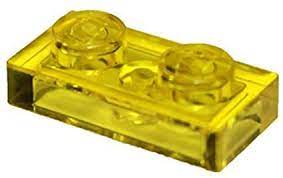
This idea, and I’ll say it, the fun of this adventure all comes crashing down about a fourth of the way through when one of the other large constructs doesn’t snap into another quite right. It makes no sense. It makes so little sense that we drop the ego and consult the instructions. The instructions inform us that we will now have to tear all of our hard work apart to insert a crucial tiny, seemingly insignificant, yellow, transparent Lego. In our frustration, we wondered why the Lego designer didn’t just include a little extension on the larger piece to render the little, yellow Lego unnecessary. 

After we complete the reassembly, and our frustration subsides, those of us who seek philosophical nuggets wherever we can find them, think there might be some sort of philosophical nugget in the requirement of the seemingly insignificant Lego. Some call these moments Eureka moments, or epiphanies, but we prefer to call them “Holy Crud!” moments. “Holy Crud, there might be a philosophical component behind the Lego designers making the tiny, yellow piece so mandatory for completion.” Movies might depict this as the lightning strikes moment, or they might put a cartoonish lightbulb above the head of the main character that leads them to look at the camera and say something to viewers at home that break down the fourth wall. 

The little philosophical nugget we thought we discovered, or imagined, that day was that in most real-world constructs, little parts are as important as the big ones, and sometimes they’re more important. The spark plug might be one of the smallest parts on a car, for instance, but if it’s not firing properly in a spark ignition system, proper combustion is not possible, and our car won’t run properly. Do Lego designers have an unspoken philosophy that they want to share with their customer base that some of the times, the seemingly insignificant is just as relevant and more vital at times?

“The unapparent connection,” Heraclitus said, “is more powerful than the apparent one.”  

“Life is filled with trivial examples,” Dennis Prager once wrote. “Most of life is not major moments.”

When developing a personal philosophy, some of us prefer to go it alone. We don’t want to follow instructions from our parents, or any of the other authority figures in our lives. We prefer the adventure of going it alone for the philosophical purity of it that often leads to greater definition on the other side. “We don’t need no stinking instruction manuals.” We enjoy putting large concepts and constructs together to figure various situations and matters out, and we want to design our own philosophies that discount the need for tiny, seemingly insignificant ideas. Do we make mistakes, of course, but they only provide lessons we can learn and greater philosophical purity and the resultant definition. This can also lead to individualistic ideas that might not be earth-shattering to you, but they lead us down paths we never considered before, and we take great pride in informing anyone who will listen that we arrived there all on our own. 

About a fourth of the way down that path, we make other mistakes, and those mistakes begin to compile, until we realize with frustration that we might need to consult our instruction manuals. At some point, we realize we might have to tear our big ideas apart to allow for the crucial, unapparent connections we failed to make the first time through. The frustrating part is that when we learn the solution to what ails us, it was so obvious that it was staring us in the face all along. We then wonder how much easier our lives might have been if we discovered it sooner.

The Philosophy of the Obvious

The philosophy of the tiny, seemingly insignificant, yellow, transparent Lego suggests that while big philosophical ideas and profound psychological thoughts often lead to big accolades, the philosophy of the obvious states that those advancements may not have been possible without the “Well, Duh!” or “I can’t believe you didn’t know that!” ideas that litter philosophy.

We can’t believe we didn’t know these ideas either, so we compensate by convincing ourselves that we knew them all along, and we make such a clever presentation that not only do we convince ourselves we always knew this, we can’t remember ever thinking otherwise. Yet, we lived a chunk of our lives without knowing anything about the tiny bricks in our foundation, and our mind somehow adjusted to those deficiencies.

How often do we subconsciously adjust to limitations or deficiencies? To answer that question, we ask ourselves another question, how many of us didn’t know we were colorblind, until our eighth grade science teacher instructed us to complete her colorblind test? Our eighth grade teacher gave us images and asked us to whisper to her what colors existed in the photo, and some of us failed it. Some of us learned we were incapable of properly distinguishing the color red for example, and we adjusted to that new reality going forward. We all talked about this test later and Pat Murray informed us that he failed the red portion of the test. Prior to that test, he admitted, he didn’t know he was colorblind. I heard him say this, but the full import of it didn’t register initially. As I gnawed on what this test revealed, I could not maintain a polite, sensitive stance.

“You had no idea that you were colorblind until today?” I asked. He answered that question and the string of questions that followed. He grew defensive the more I questioned him, but he did not grow angry. I don’t know if he thought I was making fun of him in some way, but I wasn’t. I was stunned that he had no idea he was color-blind for fourteen years prior to that day. My questions alluded to the idea that if I just learned, as Pat had, that I had been unable to distinguish red for fourteen years, it would rock my world. “Now that you know you’re colorblind, do you think back on all the adjustments you’ve made through the years?” How often did he adjust to his inability to distinguish red for fourteen years without knowing he was adjusting? What kind of adaptations did he make, in his daily life, to compensate for something about himself that he didn’t know. How many times did he leave his bedroom with mismatching colors on, only to have his mom say, “Um, no, you are not wearing that today, Pat, it doesn’t match.” How many times was he surprised? How many times did he say, “I thought it did.” Were there so many arguments on this topic that he just learned to concede, or did he always concede? We might say Pat figured he was just a dumb kid who didn’t know any better, and his mom always forced him to check with her before going out, but how did the mom not know? Did she just think he was a dumb kid who didn’t know any better? I know Pat had, at least, two brothers. Did she have to do the same with them, was there a pattern with her sons on this topic, or was Pat an aberration in the family? Either way, she probably shouldve noticed something. On that note, how long do some suffer through school before discovering that they suffer from some level of dyslexia? As one who was fortunate to have never suffered such deficiencies, I think it might find it earth shattering to learn such things after suffering in the dark for so long.  

The mind-blowing reactions I’ve witnessed from people like Pat is that they don’t have much of a reaction. Our instant assessment must be that the reason they act blasé about it, or attempt to downplay the news is to avoid any teasing or condemnation. I can tell you that with Pat, and the others I later met, who experienced what I would consider mind-altering information is a quiet and unassuming acceptance. They treat it like a person might when finding out they’re one of those who can’t roll their tongues.

“It makes sense now that the reason I was having trouble reading,” they say, “or the reason I couldn’t match my clothes well … was based of a deficiency.” I would’ve been so flabbergasted by the findings that I would’ve asked for a retake. I would’ve considered the tests flawed, but my personal and anecdotal experiences with sufferers is that they  don’t think about all the struggles they’ve endured, and they don’t think about how learning the diagnosis would’ve made their lives easier if they learned it earlier. They don’t consider the information impossible, flawed, or earth shattering, they just move onto the next phase of life that involves them approaching such matters with the diagnosis in mind.

How many tiny adjustments did we make prior to discovering the philosophical equivalent of the tiny, seemingly insignificant, yellow, transparent block? How many things do we now view in hindsight thinking if I just knew that sooner, I could’ve saved myself a lot of heartache and headaches? How are we going to use this information going forward? Most of us just adjust, adapt, and move on. “Nothing to see here folks, just a fella doing what he does.”

Regardless how we arrive at this place, or exit it, we gradually move to the philosophy of the obvious. It can take a while to uncover what we’re trying to write about in an article, on a website, but some of us uncovered our whole modus operandi (M.O.), or our raison de’etre (our purpose) while trying to do something else, something as relatively trivial as cobbling a bunch of Legos together. This otherwise trivial experience in my life proved a humbling and illuminating experience, and it changed the manner in which we think about such matters.  

We all have these moments that some call epiphanies, and others call “Holy Crud!” moments, that change the way we approach situations, philosophical conundrums, and life in general. These moments don’t move most people, as they illustrate what an adaptive species we are, regardless the circumstances. Some of us, perhaps those of us who can be too introspective at times, can easily be shocked by a unique approach to a common dilemma, a fascinating outlook on life we never considered before, and people who just think different.

We’ve catalogued the weird individuals we’ve met in life, but where we started cataloguing these weird people, and their strange ideas, for immediate entertainment. The more we wrote on the topic, the less rewarding that theme became on every other level. There were too many tiny adjustments to log here, but suffice it to say that we went from weird for the sake of being weird to understanding that some people genuinely think so different from some of us that the greater question is why. To make such a progressions, we initially considered it natural to move to large philosophical concepts and profound philosophical constructs, but as the philosophy of the tiny, seemingly insignificant, yellow, transparent Lego taught us, some of the times these progressions require us to move downscale to the tiny, little nuggets found in the philosophy of the obvious.