Is Elon Musk Rasputin or Cosmo Kramer?


How many of us thought we would not live long enough to see the mind-blowing innovations displayed in countless sci-fi movies? How many of us thought we’d live long enough to see portable communication devices as small as those in Star Trek? How many of us thought we’d see live to see phones where we could see the person on the other line? How many of us thought we’d have a computer in just about every home? How many of us thought when all these wild innovations hit, we would all be wearing silver suits while watching TV, mowing the lawn, or doing the dishes in the distant year 2000? If you watched movies or TV during the bygone era, you thought these were the visions of life on Earth in the future.

Photo courtesy of American Conservative

How many of us now laugh when we picture our deceased relatives trying to figure out how to use our current innovative gadgets? Our generation now knows that these sci-fi movies portrayed life in the 2000s correctly in some ways and incorrectly in others, but one thing they were right about is we know more technological innovation than our forebears did. Even the generation below us is more accustomed to life with such innovation than we were. Walk into any junior high in the country and you’ll witness work in robotics that is no longer speculative. You’ll also witness the work they do with computers that belies the fact that they are so accustomed to computers being a facet of human life that they’ve worked through any intimidation they might have had with the machines a decade before junior high. The question now is are we so accustomed to technological innovation that we’re more open to wild, crazy ideas than every generation before us, and are we so open to it that we leave ourselves susceptible to the possibilities of more from an ingenious charlatan?

The early 1900’s were another period of great innovation. Individuals such as Nikola Tesla and Henry Ford were at the forefront of innovations that intimidated most of their populations. How many of them had a difficult time initially conceiving of the extent of man’s capabilities? How many people thought the advancements made in medicine alone bordered on the heretical? How many of them feared that “modern medicine” was coming close to messing with God’s plan when it came to prolonging life? As the people of that era attempted to come to grips with the advancements man was making in the fields of automation and medicine, the image of Michelangelo’s Creation of Adam must’ve danced in their head. Over time, the people of this era became more open to mankind’s ability to make life easier and better for their fellow man through advancement, but were they so open to these ideas that they became more susceptible to proclamations of a charlatan?

Some say the time Grigori Yefimovich Rasputin spent on farms in small, obscure parts of Russia may have helped him understand the healing properties of some natural medicines better than most. Some say that he might have learned hypnosis techniques elsewhere in life, and he understood how to employ it before most understood it. Others suggest he may have learned autosuggestion techniques that some farmers used to calm their horses, and that Rasputin may have used one or all of these techniques to calm the nerves of the mother of the young heir to the Russian Empire. Whatever the case was, his ability to alieve the young heir of some of the symptoms of bad case of hemophilia was a cause célèbre in the nation of Russia. Some honored the great achievement, and others were in awe of the possibilities of what Rasputin could achieve. Some also fear him with that rationale. The largely ostracized Russians believed Rasputin displayed mystical powers, God-given powers. They thought he was a chosen one, and the Russian Empire gave him an influential role in the empire as a result. Some say that this precipitated the decline of the Russian Empire, but others say that implosion was inevitable.

Is Elon Musk our nation’s modern day Rasputin? Rasputin cloaked his rise in mystical wonderment, and Musk drapes himself in the speculative questions of what a genius in the field of technological innovation can achieve. Both men also used their newfound status to make wildly ambitious claims to cause the citizens of their nation to hold them in speculative wonder.

Columnist Norm Singleton paints a far less provocative portrait of Musk in his, Elon Musk is the Cosmo Kramer of Crony Capitalism” column. In it, Mr. Singleton details the wildly ambitious ideas Elon Musk and his fictional counterpart relayed to their respective audience. The difference between the two, of course, is that Cosmo Kramer never received the federal grants the taxpayer has given Mr. Musk to pursue his wildly ambitious ideas. Another difference, and one Mr. Singleton does not explore, is that Mr. Musk has achieved some results that have established him as a certified genius. He founded X.com, which later became PayPal. He has an admirable record of accomplishment at SpaceX and Tesla, and he has a list of accomplishments that no one can deny. Singleton’s column does not focus on that list of accomplishment, but it does challenge the current resume of Elon Musk in a manner that no politician dare explore by asking if Musk’s current accomplishments align with the continued, all too generous federal and state grants he receives. Some might argue that Musk is not a charlatan, because of those accomplishments, and because he actually believes in all of his ideas, but Cosmo Kramer believed his ideas too, and so did Rasputin.

Somewhere on the road to technological innovation, someone (likely a politician) convinced us that if our nation is fortunate enough to house a certifiable genius, we’re going to have to pay for the innovations he creates to make our lives easier and better. We’re not talking about paying for the final product of ingenuity at the proverbial cash register either, though there are some on the consumer end who don’t understand that concept. (They think the corporate responsibility suggests that all online innovation should be free.) We’re talking about taxpayers funding the creative process of the bona fide genius. For those who haven’t read as much as I have about the creative process, artists love to talk about it almost as much as they love creating. They love to talk about their influences, the structured method they used to bring their product to life, and the future projects they have in store for us. If someone were to pay these artists for such talk alone, I think most artists would give up the painstaking process of actual creation and opt for the life of describing their process instead.

Filing for government grants has been around for as long as I’ve been alive, and as one who has never filed for a grant, I will admit ignorance on this topic, but I would think that success in field of receiving successive grants requires constant proof of success on the part of the artist. Enter the technological genius. Many consider Elon Musk the rare innovative genius who should not have to worry about pesky concerns like money. Politicians, specifically, appear to believe that Musk should not have to provide continued results for continued money, apparently, for demanding as much from a technological innovator that promises breakthroughs in science, would be tantamount to career suicide for them.

Norm Singleton concludes his piece by saying that the best thing we could do for Elon Musk is to cut off all government funding for his ventures. Those who believe the concept that if we want technological innovation, we’re going to have to pay for the process, have never heard the quote, “The best we’ll ever see from an individual often occurs shortly after they’ve been backed into a corner.” Those who think the removal of financial support damages the creative process might want to go back and read that quote again. The politician who sticks their neck out to remove federal funding from Elon Musk would risk insulting Elon Musk, and Musk’s lobbying group might mortally wound that politician, but that insult might inspire Musk to prove the politician wrong, and that motivation might drive him to pursue greater profits as a result. Cutting him off from all state and federal funding might also force him to be a more traditional CEO, in that he would be more accountable to disgruntled shareholders, more cognizant of his companies’ profit margins, and it might force him to be more of a results-oriented man and less of a theoretical idea man.

I think Mr. Singleton has a great idea, but in order for his idea to work, he would need to find a significant number of politicians who have the fortitude to say no to an established genius in the field of technological innovation. That politician would also have to fight Musk’s powerful lobbying groups and the stigma of the “against science” label. No, Elon Musk carved out an enviable place by being an established genius. He has also developed an enviable formula for all artistic geniuses to follow. Once a person has established themselves as a bona fide genius (no easy feat to be sure) all that genius has to do is develop some ideas for wildly ambitious projects on a semi-annual basis to achieve headlines in major newspapers that no politician can ignore. Their projects may never see the light of day, but they will secure nonstop funding from easily intimidated politicians.

It may be a gross exaggeration to insinuate that the brilliant, innovative Elon Musk might be a charlatan, but when it comes to securing such regular, enormous chunk of the taxpayer’s hard-earned dollars, we the people, and our representatives, should hold the prospective recipient guilty until proven innocent.

I may be alone in this regard now, as those in charge of allocating our tax dollars appear unafraid of defying logic, but I hold an achievement devoid government funding in higher regard. As former president, Calvin Coolidge said shortly before his demise, “I feel I no longer fit in with these times.” Perhaps I no longer fit in with these times, but if an entrepreneur states that his or her project made it to the marketplace based on individual ingenuity and sheer grit, I respect that accomplishment more. I also appreciate the effort it takes to pound the pavement and secure private funding, but the Elon Musk methods of convincing a bunch of politicians to part ways with other people’s money seems far too beneficial to all parties involved and way too easy.

Octopus Nuggets II


“Beware the Kraken!”

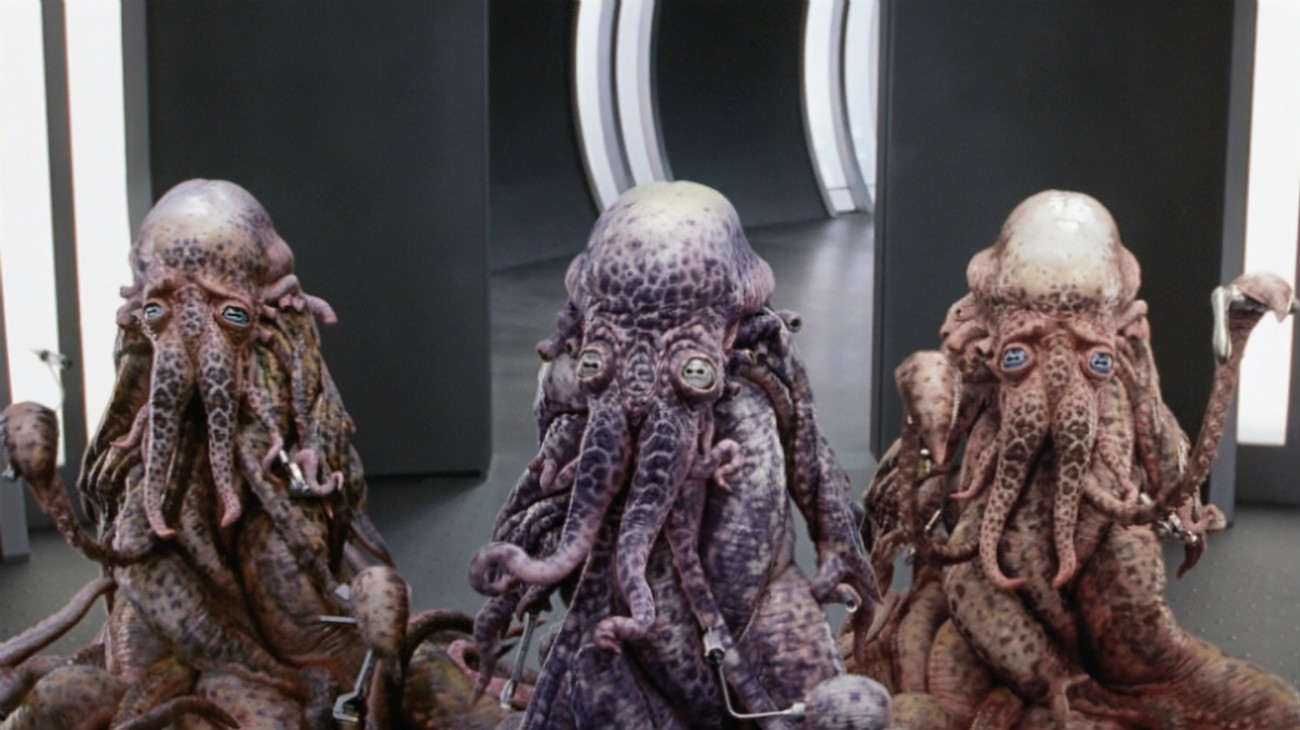
The Vikings of Nordic lore cried after encounters with the primal, savage beast we call the octopus, and to the uncharted waters in which they feared encountering larger and more primal, savage beasts, the Vikings added: “here, there be monsters”. They knew the extent of their travels and the beasts they encountered there, and anything beyond that excited their imagination in the most horrific ways. We can laugh at such assumptions now, as we know more about those uncharted waters, the octopus, the squid, and the various cephalopods that roam our seas, but we still have the propensity to fill in the gaps of our knowledge by designating anything we don’t understand as monstrous. The subjects of our fear might vary, but our animal instinct provokes us to fear that which we don’t understand.

When the Vikings witnessed these boneless sacs of flesh display high levels of intelligence and emotion, the cephalopods they encountered probably freaked them out so much that they assigned evil characteristics to it. When they didn’t understand it, they assigned a “here, there be monsters” moniker to their unimaginable extent of their intelligence. We know enough about the psyche of the octopus now that we’ve removed that moniker, but we’re still fascinated by the capacity for their levels of intelligence, emotion, and even friendliness.

The problem for those of us with more modern knowledge and understanding is that when we witness the characteristics that freaked the Vikings out, we tend to exaggerate our findings in the opposite direction, in our attempts to right the wrongs of the bygone era. “They’re not beasts or monsters. They are emotionally complex, very intelligent creatures,” observers of the octopus now report. “They’re sophisticated beyond our comprehension, and we just don’t know what we don’t know yet, but I can tell you what I know and what I saw.” Our propensity to exaggerate what we don’t understand can be equal to the Vikings’, in the opposite direction. The Vikings assigned primal, beastly, and supernatural characteristics to that which they didn’t understand, and we assign anthropomorphic, spiritual, and beyond our current comprehension’ qualities to fill in the blanks of what we don’t understand. As with the Vikings, we see what we want to see, and we deduce what we want to deduce from our observances, and the truth probably lies somewhere in the middle.  

“Octopuses may have originated from another planet!”

If you’re anything like me, you’ll click on any article that lists the octopus in its title. I don’t know if the popularity of such stories speaks to the popularity of the octopus, aliens from another planet, or our love of scary stories that play on our fear, but the story that someone suggested that octopuses may have originated from another planet was everywhere in my newsfeeds. 

Before reading these articles, I realized that the whole idea that octopuses-are-aliens from another planet, offers a very natural gravitational pull that links them together in our psyche. All we have to do is look at them to think there might be some link. If you’ve ever run your hands along their suckers, it doesn’t take much to imagine that they are not of this planet. As much as some of us love them, we don’t get defensive when someone suggests that the way they move is a little creepy. Then, when we hear that researchers suggest that the octopus might have a level of intelligence beyond our comprehension and alien enthusiasts always say that if we ever meet an alien, we’ll discover a level of intelligence “beyond our comprehension,” it makes sense that they might be from another planet. The latter is speculative, the former might be so exaggerated as to be speculative. I know, we don’t know what we don’t know, but that’s pretty much what speculative means when it comes to conjecture of this sort. If we take a step back and view these two separately, it makes sense that so many of us link them together.

The other thing these stories did for me was reignite my fascination with the octopus, and in my research I found a scientifically-backed theory that might blow your mind. I’m not going suggest that the reader take a seat, as I am almost biologically predisposed to avoiding clichés like, “You might want to sit down for this,” but if anything happens to anyone while reading the final third of this piece, I hereby absolve myself of any responsibility for injuries that occur if you’re not making sure you’re seated by the time you reach this info. Some readers might also want to consider purchasing the pelvic strap and waist restraints the medical supplier Pinel provides before continuing. 

Those of us who love stories about the surprisingly complex brain of the octopus have heard a myriad of stories regarding the ability the octopuses have to figure out puzzles and mazes. We’ve also heard tales of how they can escape the best, most secure aquariums, and we’ve heard about how a couple of SCUBA divers played hide and seek with an octopus, but have you ever heard that scientists now suggest that octopuses might be able to manipulate their molecular structure? Woh! What? I know, hold on, we’ll get to that. 

Why do We Study Them?

A writer for Wired, Katherine Harmon Courage, has presumably heard all of the stories, and she has an interesting, provocative idea for why we should continue to explore the octopus for more stories though research, as they might prove instrumental in developing a greater understanding of the human mind.

“If we can figure out how the octopus manages its complex feats of cognition, we might be closer to discovering some of the fundamental elements of thought –and to developing new ideas about how mental capacity evolved.”

Arms Have Rights Too!

As stated in the previous installment of this series Octopus Nuggets I, the octopus has more neurons in its arms than it does in its brain, and we all assume the arms and brain work in unison to achieve a prime directive, but what if one of the arms disagree? As Scientific American states, “Like a starfish, an octopus can regrow lost arms. Unlike a starfish, a severed octopus arm cannot regrow another octopus.” So, if the octopuses central brain directs one of the arms to perform a particularly dangerous task, do the arms have the cognitive capacity to rebel against the central brain? Do the arms ever exhibit self-preservation qualities? Does an arm ever say something equivalent to, “I saw what you did to arm four last week, and I witnessed you grow another arm, good as new, in such a short time. I do not consider myself as expendable as arm four was. As you’ve witnessed over the last couple years, I am a quality arm who has served you well,” the sixth arm says to brain. “Why don’t you ask arm number seven to perform what I consider an unnecessarily dangerous task? We all know that he has been less productive year over year.” I am sure that no arm has an independent consciousness of its own existence in this sense, and that they largely function to serve the greater need, but how much autonomy do these arms have?

Blue Bloods 

How many of us believed the tales our grade school friends passed around that human blood is actually blue, and that it only turns red when introduced to oxygen? I believed it in grade school, because why wouldn’t I? I could see my veins, and they were blue. One plus one equals two. The fella who dropped that fascinating nugget on me was far more intelligent than I was, and he was far more sciencey. Laurie L. Dove writes in How Stuff Works that the octopus actually does have blue blood, and it’s crucial to their survival.

“The same pigment that gives the octopus blood its blue color, hemocyanin, is responsible for keeping the species alive at extreme temperatures. Hemocyanin is a blood-borne protein containing copper atoms that bind to an equal number of oxygen atoms. It’s part of the blood plasma in invertebrates.” She also cites a National Geographic piece by Stephan Sirucek when she writes, “[Blue blood] also ensures that they survive in temperatures that would be deadly for many creatures, ranging from temperatures as low as 28 degrees Fahrenheit (negative 1.8 degrees Celsius) to superheated temperatures near the ocean’s thermal vents.”

Freakishly Finicky

A Wired piece reports, “If you asked Jean Boal, a behavioral researcher at Millersville University about the inner life of octopuses, she might tell you that they are cognitive, communicative creatures. To illustrate her claim Jean Boal told a story about how she attempted to feed stale squid to a row octopuses in her lab. She says that one cephalopod, the first in line, sent her a clear message: It made eye contact when she returned to it after feeding all the others, and it used one of its arms to shove the stale squid down a nearby drain, effectively stating that anytime Jean Boal attempted to feed it stale food in the future, it, too, would be discarded in a similar manner.”

Most animals are not finicky. Animals who fend for themselves in the wild, in particular, will eat just about anything they can find to sustain life, but depending on what they eat, it could cause disease and death. They don’t know any better, of course. The idea that a more domesticated animal, might display more preferences is not the fascinating element of this story, as for most of them food is not as scarce. 

The freaky almost unnerving elements of this story, for me, lay in the inferred details of the Jean Boal’s story. The idea that an animal might exhibit a food preference relays a higher level of intelligence, but I’m not sure if that level of intelligence surpasses that of the dog or the cat. The eerie part occurred in contemplating how the octopus relayed its message to Boal. Boal suggested that she fed the stale squid to a number of her octopus subjects, in their respective tanks, but after she finished feeding all of the octopuses, she returned to the first octopus she fed, and in her characterization of the episode, she declared that it waited for her to return. It looked her in the eye when she returned, and it established eye contact with her. Once it felt it established that it had her attention, the octopus shoved the stale squid down the drain, maintaining eye contact with her throughout the act. We weren’t there, of course, so we can only speculate how this happened, but Boal makes it sound as if the octopus made a pointed effort to suggest that not only was it not going to eat stale squid, but it was insulted by her effort to pass it off as quality food, and it wanted to correct her of engaging in such foolish notions in the future.

We all anthropomorphize animals. Even if it operates from a flawed premise, it’s entertaining. It helps us connect with some animals from our perspective on the world. Dogs and cats might display dietary preferences, for example, but how many of them wait for their human owners to return, so they can be assured that the message will be received that they don’t care for the food they’re being served, and how many will look the humans in the eye before discarding the food in such an exclamatory manner? I don’t know if you’re like me, but the thought that creeps me out is I thought I had a relatively decent frame for how intelligent these beings were, and that frame was a generous one. Boal may have been more generous in her characterization of this moment, but it remains fascinating to think the octopus might have these capabilities.  

Rewriting the RNA

The following section contains elements I warned you about in the disclaimer. If you’re anything like me, you’ve found the details of the research on the octopus as fascinating, illuminating, and a little unsettling as I have. I write unsettling, because we find comfort in the idea that humans are so much more intelligent than than every other species. In many cases, our superior intellect is the reason we’ve been able to survive so many scrapes with other animals, and it’s the primary reason we’ve survived so long. It’s for this reason, and others, that I consider this next part so mind-blowing that I feel the need to reiterate the need for the reader to set up some reinforcements behind you if you insist on remaining upright while reading. 

Recent scientific discoveries suggest that the octopus can edit their own ribonucleic acid (RNA). Boom! How are you doing? Did you forget to remove all sharp objects behind you? If the only thing keeping you upright is that you kind of, sort of, don’t know what RNA is? Don’t worry, I had to look it up too. The Google dictionary defines RNA as an enzyme that works with deoxyribonucleic acid (DNA) in that it “carries instructions from DNA for controlling the synthesis of proteins, although in some viruses RNA rather than DNA carries the genetic information.”

For those who don’t consider the octopuses ability to edit its RNA a “Holy stuff!” fact, think about this. The next time you’re in your man cave engaged in a spider solitaire marathon, some octopus somewhere is in their cave re-configuring their molecular structure to redefine their characteristics in a manner that they hope will help them survive their next shark attack. An example of this might be the defense tactic we discussed in Octopus Nuggets I: the pseudomorph. The difference between the regular ink cloud an octopus shoots out and the pseudomorph is a little murky, so let’s illustrate it with an octopus named Ralph who we’ll anthropomorphize for your reading pleasure. 

Ralph just barely escaped a harrowing shark attack unharmed. It scared him of course, and as he cooled down in his den, allowing his heart rate to slow, he realized that that shark was nowhere near as confused by his ink cloud as shark’s had been his whole life. Was that shark an aberration, Ralph wondered, or do I now have to develop an adaptation to the shark’s adaptation? Ralph didn’t know if what he just survived was a freak occurrence, in that one shark had such experience with ink clouds that it knew better, or if all sharks had adapted, but he knew he could no longer rely on a simple ink cloud if he wanted to survive. Ralph decided he needed to reconfigure his normal ink cloud settings. If Ralph were human, he might add texture additives to his paint, some kind of gel medium, or modeling paste, but as much as we want to anthropomorphize Ralph, he doesn’t have the ability to run out to an art store for supplies. No matter how much octopus enthusiasts speculate about their intelligence being beyond our comprehension, Ralph also doesn’t have the wherewithal necessary to earn the money necessary to complete such a transition, and even if he did, most enthusiasts would concede that Ralph doesn’t have the physical or cerebral capabilities necessary to complete such a transaction. Even if he does, one day, Ralph’s interactions with the clerk might lead to whole bunch of confusion, screaming, and possible violence that would inhibit Ralph’s attempts to get the materials he needs. Ralph’s store of supplies is almost entirely internal, and we add the word almost because some octopuses use tools. For this particular need, however, Ralph has few external resources. He knows he must create a more substantial cloud to fool predators better, because today’s narrow escape was way too close for him. Next time, he decides, he will need to add more mucus to his ink cloud to make it more substantial. He needs to make a better, more convincing self-portrait that we call the pseudomorph. As I wrote in Octopus Nuggets I, the pseudomorph may not be so rich in detail that anyone would confuse it with the pieces Van Gogh left behind, but as long as they’re able to confuse sharks for a necessary second, it will serve its purpose.  

Octopus researchers aren’t sure why they edit their RNA, but we have to assume it has something to do with predation, either surviving it or finding nuanced ways to perfect their own. If you’re nowhere near as fascinated with this idea as I am, at this point, you will have to excuse my crush on these cephalopods in the ensuing paragraphs.

An article from Business Insider further describes the difference between DNA and RNA as it applies to editing, by stating, “Editing DNA allows a species to evolve in a manner that provides a more permanent solution for the future survival of the species. When a being edits their RNA, however, they essentially “try out” an adaptation to see if it works. I consider this practice impressive on its face, but imagine how many humans fail to edit their RNA enough to practice the if one thing doesn’t work, try anotherprinciple. 

One other note the authors of this piece add to this subject is that “Unlike a DNA adaptation, RNA adaptations are not hereditary.” Therefore, we can only guess that if an octopus discovers a successful RNA rewrite that could be used as a survival tactic, they would have to teach it to their friends and offspring, or pass it along by whatever means an octopus passes along such information. (Octopuses are notorious loners who don’t communicate with one another well, and they’re often dead before their offspring reach maturation, so I don’t know who they might be teaching.)

A quote from within the article, from a Professor Eli Eisenberg, puts it this way: “You can think of [RNA editing] as spell checking. If you have a word document, and you want to change the information, you take one letter and you replace it with another.”

Research suggests that while humans only have about ten RNA editing sites, octopuses have tens of thousands. Current science is unable to explain why an octopus edits their RNA, or when RNA editing started in the species. If this is the case, I ask current science, how can we determine, with any certitude, that an octopus edits their RNA. I’m sure that they examine the corpses of octopuses and compare them to others, but how can they tell that the octopus edits their RNA themselves? How do they know, with this degree of certitude, that there aren’t so many different strains of octopuses that have a wide variety of different RNA strands? How did they arrive at the different strands? Did they edit them themselves, or did they come equipped with them by another means? This topic fascinates me, but I’m sure an octopus enthusiast, a researcher, and a geneticist can tell how ignorant I am on this subject, and I’m sure these findings are scientifically sound, but I’ve read numerous attempts to study the octopus, and almost all of them characterize the octopus as notoriously difficult to study. Some have described the octopuses’ rebellious attempts to thwart brain study as obnoxious. If that’s the case, then I have to ask if the conclusions they reach are largely theoretical based on these notoriously difficult studies of octopus corpses.

The final answers to my questions might circle us back to Katherine Harmon Courage’s provocative notion that “If we can figure out how the octopus manages its complex feats of cognition, we might be closer to discovering some of the fundamental elements of thought in general –and to developing new ideas about how mental capacity evolved.”

If we are able to do that, Gizmodo.com quotes scientists who suggest we might be able to root out a mutant RNA in our own strands to see if we can edit them in a manner that might aid in our own survival. 

We can marvel at the adaptations the octopus is able to make, and as the article illustrates, I will join you in that open-mouthed awe, but do they prove intelligence? They can solve puzzles though, and those who work with octopuses know that if they don’t provide an octopus mental stimuli the octopus gets bored, frustrated, and unruly. Most zoo patrons enjoy the experience of viewing otherwise wild animals, but they also feel sorry for them for being caged up. The latter is often misplaced, in my opinion, because I think most animals enjoy their experience. They no longer have to hunt for food, because they know they’ll receive a feeding at about three o’clock every day. Plus, most of them have never known a wild existence, as they’ve been semi-domesticated their whole lives. The idea that the octopus needs constant mental stimuli and cerebral engagement, even among those who have been semi-domesticated their whole lives, does suggest a level of intelligence beyond most in the animal kingdom, but how much do we glamorize and exaggerate our observances and findings to fit our narratives in the same manner the Vikings of Nordic lore did with theirs centuries ago?    

There are a wide variety of reasons the octopus has managed to survive, in various forms, for 330 million years. Is it intelligence, emotional intelligence, or an incredible, almost unprecedented, ability to adapt. All animals have a survival instinct, and they use all the tools at their disposal to achieve it. Some of the tools they have can blow our mind, such as those mentioned above, camouflage techniques, and the ways animals and plants mimic one another for the purpose of defense and predation. To equate those incredible tools to incredible levels intelligence, however, strains credulity at times. The species has survived 330 million years, but the individual octopus dies after five years, and they do not pass knowledge onto their offspring, so how much intelligence can they accrue and pass along?   

There is a conceit in the human brain (of the ever-present present tense) that these are the best of times in terms of knowledge, understanding and science, but some scientists concede that we just don’t know what we don’t know yet. We know our level of knowledge is great in the present tense, at least compared to the past, but some part of us knows that the leaps and bounds we’ve achieved will be achieved by leaps and bounds by future researchers and scientists to a degree that future scientists will regard our level of scientific knowledge as almost primitive by comparison. To those future scientists who seek guidance on the idea of further editing RNA, the authors of the Business Insider, David Anderson and Abby Tang suggest that they, “Can learn a thing or two from these cephalopod experts.”

We can now read the first article by clicking on this link: Octopus Nuggets

Scat Mask Replica III


1) The Rasputin Paradox. Are you involved in an enterprise in which one person’s alleged ineptitude is holding you back from realizing what you considered its vast potential? Is your enterprise one-step away from removing that alleged ineptitude? Those who know the history of the Russian Empire know to be careful what they wish for. Some speculate that Grigori Yefimovich Rasputin had far less influence in the Russian Empire (circa WWI) than history details, and they double down on that by saying that the Romanovs would not refute what others said about the levels of Rasputin’s influence, because the Romanovs presumably enjoyed letting Rasputin play the role of the scapegoat. If they did not know the level of blame others placed on Rasputin while he was alive, they definitely found out after his death, because after Rasputin was murdered the focal point for the Empire’s ineptitude was gone. Those in politics, business, and in personal crisis should note that casting blame on one particular person for the failure of your enterprise might prove cathartic in the short-term, but once that person’s gone, it might reveal more about the general ineptitude of that enterprise than any of the other players imagined.   

2) “If you have facts on your side, pound the facts. If you have the law on your side, pound the law. If you don’t have either, pound the table.” One of the more uncomfortable situations I’ve experienced involved someone pleading with me to accept them as a genuine person. It’s a gross over simplification to suggest that anytime someone pounds the proverbial table to convince me of something that they’re lying, but experience informs me that the more someone pounds the table the more insecure they are about the information they’re trying to pound into my head. We’re all insecure about our presentations, and some of us pound the table even when we have the facts on our side. I know it’s easy to say, but those with facts on their side should relax and allow them to roll out as they may. The truth teller who finds it difficult to avoid pleading their case should also know that after we reveal enough supportive evidence most will believe us, but some just enjoy watching us squirm.

3) Speaking of the genuine article, it has recently come to my attention that some pathetic soul stole at least two of the articles from this site. Some call this plagiarism, but I call it pathetic. If imitation is the sincerest form of flattery, I suppose I should consider it a compliment, but this is outright theft. It seems redundant to me to clarify the rules on this matter, but if a writer is going to “repost” they are required to provide attribution. (For those unclear on the definition of this term, it means that a writer is supposed to inform their audience that they didn’t write the article.) Not only did this pathetic soul avoid attributing the article to me, but they also didn’t provide proper attribution to the quotes I did in the article they stole. So, this person (who provides no discernible path back their identity) anonymously steals posts to presumably receive checks from companies that pay writers to sport ads on their site. I don’t care how much those sponsored ads pay, how does this person sleep at night knowing that the profession or hobby they chose is one in which they cannot produce their own quality material. If I were ever to reach a level of such a desperate act, I would seek another profession or hobby. 

4) The difference between selfishness and self-awareness. A complaint about young men and women is that they’re too selfish. It’s the root of the problem, they suggest. I don’t know if it’s true, but if it is I would suggest that those speaking out against it are delivering an incomplete message. My platform would suggest that these selfish types are focusing on self-awareness, and that they should seek it to achieve a level of fulfillment. We could view striving to achieve greater self-awareness as a selfish pursuit, but self-awareness can take several forms. Performing selfless acts, for example, can teach a person a lot about themselves, and it should be encouraged, as people performing many selfless acts can become more aware of themselves and more selfless. The process could lead to an antonym of the vicious cycle these complainers decry. If I had a pulpit, I would also declare that an individual could learn more about themselves through spirituality. I’ve been on both sides of the value of scripture, and I think this gives me greater perspective on the matter. I look at scripture and other Biblical teachings as a roadmap to personal happiness through reflection. Self-interest drives me to follow those teachings because I believe it’s in my best interests to follow them. In short, I would play my sermon to the selfish predilections of the young. I hear sermons that suggest otherwise, and I can’t help but think that the priest is missing a beat.

5) As a former service industry employee, I’ve encountered my share of disgruntled customers. I could provide a list of examples, but the material of their complaints is irrelevant. Most experienced service industry employees know that the most disgruntled customers are often the most disgruntled people. They might hate their kids, the spouse, and their life. Whatever the case is, the discrepancy they find causes them to unload, “What kind of Mickey Mouse operation are you running here? Your ad says this item is on sale today for two bucks. If you think I’m going to pay more than that, you must think I’m stupid! Or, are you singling me out based on my characteristics?” These statements are often a mere introduction to a heated exchange that reveals the effort of the disgruntled customer to achieve some satisfaction they can’t find elsewhere in life. A more confident customer would simply say, “Your ad says that this item is on sale today for two dollars.” Those of us who have experience in the service industry know how intimidating a confident presentation of the facts can be, especially from a more secure individual.

6) A new documentary captures an ant crawling down from a piece of cheesecake with a piece of it lodged in its mandibles. The makers of this documentary capture the ant’s progress, in stop action photography, as this permits progressed commentary from various filmmakers talking about the brilliance of each segment. Where does the ant go, and what will it do with the small, round ball of cheesecake? This is the plot line of an amazing new documentary called Posterula. (Spoiler alert) The ant makes it off the plate, but the viewers don’t know if the ant ever takes the piece to the colony to feed the queen. This leads this viewer to believe that an as of yet undisclosed plan for a sequel to this brilliant documentary is in the works.

(Hi, I’m Rilaly, and if I were to take you on a tour of my young mind, this would be but an example of what you would read. Some suggest that such humor is too niche, and if that’s the case I would’ve niched my way out of the market. If I had one of my stories published, customers at bookstores would’ve walked past my serious pieces, thinking that I’m nuts, too far gone, and unserious. They probably still think that. I’m niche.)

7) I landed upon the term “vague and flexible by design” the other day. The author of the term intended it as a compliment for the subject, but if they directed such a characterization at me, I would view it as an insult. I understand that we’re different people in different surroundings, and that we should all remain flexible with our ideals to prepare for new findings on the subject in question, but the “vague and flexible by design” compliment would register a ‘no core’ insult to me.

8) What hotel, or meeting space, first decided to serve a ball of meat as a solitary entrée? Someone somewhere should’ve stepped in and said, “Woops, you forgot the fixins.” Those who have attended more than twenty corporate galas, weddings, or any catered event are now more than accustomed to the items served in a buffet line. I now eat before I attend one of these functions, because I cannot eat another pinwheel, I’m burnt out on hot wings, and I hit my personal threshold on room temperature potatoes au gratin somewhere around 2004. I am not a finicky eater, but I can no longer stomach this list of dietary choices. I will acknowledge that being American provides me the luxury of making odd and unreasonable dietary choices, but if I’m going to limit myself to one meal a day to maintain a relatively plump figure, as opposed to fat or obese, I’m not going to eat something just because others provide it in a visually pleasing manner.  

9) There is a difference between writing a grammatically correct sentence and quality writing. I took college classes on creative writing, I’ve read the MLAs, and I’ve learned through word-of-mouth what leads to quality reading. I’ve fixed the passive voice sentences, deleted the word “had” as often as possible, and I’ve tried to avoid what fellow writers call “the you-yous”. The goal for the writer is to adhere to the rules of writing while attempting to maintain a stream-of-consciousness style that makes for quality reading. It’s not considered grammatically incorrect to write that you may not enjoy this sentence, but writing that the reader may enjoy it without the word you is considered a more pleasant reading experience. I’ve also attempted to write “who” instead of “that”, and I’ve attempted to limit my need to “that” too often. Example: “You don’t want to write that it was someone else that said something, when who said it is much more familiar to you.” In that sentence, fellow writers suggest using the word “Writers” to replace the first you, and “Readers” is an advisable replacement for the second you. Beta readers suggest that doing otherwise means the writer has a bad case of the you-yous. You is too familiar to you, and that is too unfamiliar, and you do not want to be too familiar or too unfamiliar. The first reason for following this rule is that the writer does not want to write in the manner they speak, because the way one speaks in one locale may not be as familiar to a reader in another locale. These standards set a common base for readers, free from colloquialisms. The you yous also creep up on a writer in free flow, and they may not notice how redundant the use of the word is in their document. The question that haunts me is do I want a perfect document to impress accomplished writers, or do I want to pleasure myself with a document that might have some flaws. The notion one writer lofted was every writer makes mistakes, we readers weave them into the cloth of our expectations, but is there a point when the mistakes distract from the whole.

10) “He’s such an idiot,” Teri said after her boyfriend left the party table to go to the bathroom. “He cheats on me all the time. For all I know, he’s arranged something in the bathroom. I’m serious. I can’t even trust him to go to the bathroom.” I find such honest and provocative comments hilarious.

“Why are you dating him then?” I asked. Room silencing, impulsive comments like these are my gift to the world. I can flatten the smile of any decent person from fifty yards with a single thought implanted in their brain. I don’t do it on purpose, but some of the times my curiosity gets out in front of my common sense.

The comment sat right with me, but the moment after I delivered it I realized it was so loaded with complications that no one in the right mind would deliver it to a table of people gathered together for the sole purpose of mixing in some laughter with their fun. I thought it was a leading question that might spur her into extensions on the joke, but I was wrong. I made her uncomfortable.    

As soon as she recovered from the blow, aided by my discomfort, she displayed the idea that she locked herself into a certain, cynical dynamic of life. She knew the world was full of it, and everyone around her was too, in one way or another, because she knew who she was. She thought her beau was full of it too, but “He’s a nice guy…most of the time.” I didn’t know if that was her final answer, but I overemphasized my acknowledgement of her answer to suggest that was what I sought.

No matter how often I affirmed her answers, Teri kept coming at me with answers. She said he was “Funny and fun to be around.” She said he was good looking, and she said he did “Sweet things for her.” I couldn’t get out of this uncomfortable spiral of my own making. I pretended to be interested, because I knew I put her in the uncomfortable position of having to explain one of life’s most illustrating choices, but I was trying to end the episode with every word she said to me.

Most of us cannot explain our life altering choices so well that we can weather interrogations. I knew this, but I thought I could explain most of my choices at the time. The question that even the most reflective must ask themselves is, is their base so solid that we make rational, informed choices in the impulsive moments? I don’t think many reflective types would pass their own interrogations, in the moment, for I think we color in the blanks later to make us believe we made informed choices.

Teri told me her boyfriend was a good man, with a good job, and he had an unusual curiosity about life that she found fascinating. I also learned that while it was obvious he had a restless, nervous energy about him, “He’s incredibly lazy. If he had his choice, he would spend his day on a couch.”

I still didn’t understand the dynamics of their relationship, even though she provided me numerous answers. I wouldn’t understand it for a while. I had no idea at the time that their relationship depended on the idea I had that she enjoyed playing the jealous girl, because, I can only assume, she considered him worthy of her jealousy, and in a world of average men with no discernible qualities, that is something. He was the naughty boy, and he enjoyed that role. “We fight like cats and dogs,” she said with a gleam in her eye, “but then we have makeup sex.” I wondered if she ever tried dating guys who wouldn’t cheat on her. I wonder if they wouldn’t fight with her. I wondered if they bored her. He provided her something to focus on other than herself. He was the dunce, but he was an amiable dunce. He provided her drama. He was always on the cusp of cheating on her. She also had a desire to date a guy that she could be better than, and she wasn’t much. Either that, or there is a desire to care for something that could break. “He’s an idiot, he doesn’t know how good he has it,” she said more than twice. The guy was fulfilling the age-old male need of feeling like a bad boy. Most guys need this coursing through their veins, and some girls apparently need a guy like this too.

11) Unhappy couples fascinate me. They don’t smile often, but smiles are a refuge of the simple minded. They don’t hug, kiss, or touch very often, but they’re not that type of people. They’re emotionally distant people, and happy people make them sick. Do they have a greater understanding about who they are than we ever will, or are they jealous? She didn’t date in high school, and he was a broken boy. Death of a loved one breaks some, divorce breaks others, and still others experience a seismic betrayal that creates an irreparable break. Yet, they found something in one another that they always wanted. As an outsider looking in, we can’t understand the allure, but the two of them stay together for years. Some stay in a job they hate, because they fear the unknown. Do people stay in relationships for the same reason? He doesn’t speak often, and relatives find it difficult to strike up a conversation with him. He gives off the vibe that he’s not interested in what others have to say, and this affects the way others react to him.

My initial instinct was that he wasn’t interested in what I had to say, for reasons endemic to our relationship, until others informed me they shared similar experiences with him. He’s more interesting when he drinks, but when the night is over, the participants realize he wasn’t really interesting in the truest sense of the word, but he was more interesting than they expected him to be. A couple of drinks loosen our inhibitions. A couple more might loosen them even more, until the potential exists for us to become interesting. That’s the mindset of the drinker anyway, I’m not sure if this is his mindset, but he does have a drinking problem. He is emotionally distant, because those that formed him devastated him emotionally. Yet, it many ways he appears satisfied with who he is.

12) No one is as boring as we think they are, but we’re not as interesting as we think we are either. How many of us look back to our authentic years with the belief that we weren’t nearly as authentic as we thought we were, especially with the level of authenticity we’ve currently achieved. How many of us will look back ten years from now with the same thought? One could say that the level of effort put into being authentic provides a corresponding level of diminishing returns. 

13) How many of us remember the first person who told us about America’s atrocities? Did they package it with a provocative statement such as, “This is something your moms and dads don’t want you to know about.” For those of us who are now parents, it’s probably been so long since someone introduced us to the dark side that we forget how intoxicating it was the first time we heard it. I don’t remember my first messenger because I’ve heard about these atrocities so many times since that they’ve all but drowned out my first messenger. Thanks to a myriad of resources I’ve encountered since, I am now able to frame those atrocities with the virtuous acts America has done throughout her history to arrive at the independent conclusion that America has been a noble nation overall. It did take me a while, however, to arrive at that conclusion. 

Some might think that learning of the atrocities for the first time might leave the recipient feeling cold, disillusioned, and/or depressed that their parents sold them a pack of lies. In the combative environment of my youth, one of the many focal points of ridicule was naïveté. “Don’t tell me you believed all that baseball and apple pie crap?” someone would say in the aftermath of a discussion on American’s atrocities. I did, and those early messengers in my life provided me information to combat the characterization that I was naïve. I considered them more informed, brave and righteous. I thought they were cooler than cool for speaking out against the marketing arm of America, and I thought they were treating me with the type of respect than my dad never did.

Now that I’m a seasoned adult, I know my dad wasn’t necessarily lying to me, and he wasn’t withholding a truth, but he didn’t give me the whole picture either. He didn’t know some of the atrocities these messengers told me, but there were incidents that he did know, and he neglected to tell me about them. Anyone who remembers their teenage mind knows how much we exaggerate the characterizations of our parents, especially when “truth tellers” package such information accordingly. Their presentations excited me in a way that’s tough to describe. I thought I was finally hearing the truth from someone.

A vital mindset for parents to have, while sharing our knowledge of American history, is that they are in a constant battle with their peers to avoid appearing naïve. For those worried about telling their children about the awful things the country has done, consider it ammunition to combat these stories with the stories of the country’s virtues. Our goal should be to instill a love of country in a comprehensive manner. To a certain point, we parents have told them what to think and how to think for so long that we may have a difficult time giving up those reins. On this particular subject, however, we need to present this information in a manner that allows them to decide, and we might even add that we understand it’s a lot to take in one setting, so we should allow them to think about it.

If we don’t do this, the truth will rear its ugly head when we least expect it. Those who provide them this information will likely not frame it in the manner we think they should, and our kids might turn around and accuse us of lying, telling half-truths, and not trusting them enough to deal with such sensitive information. Whatever the case is, we might never be able to win them back. My advice is we teach them the virtues of this country and couple it with a healthy dose of the horror some Americans have done since the country’s birth. Do some research on the atrocities and prepare for the follow up questions, because there will be questions. Once we’re done, we should repeat the cycle so often that by the time that cool, rebellious person tells our children, “The things we don’t want them to hear,” they will turn on that person and say, “I’ve heard all of this a million times, and to tell you the truth I’m sick of hearing about it.” If condemning your country in such a manner is difficult, much less teaching it to your child, ask yourself how you would prefer America’s atrocities framed? Would you rather provide your child with a more comprehensive narrative, or would you rather someone who hates their country do it for you? One way or another, your child will learn this information.

14) I’m about 15 years into using devices to stream music on a daily basis at this point in my life, so it might seem a little odd to show appreciation now. Anytime I take a very short drive, I gain greater appreciation for the freedom technology has offered when I turn on my local FM stations and I hear a DJ offer tidbits from their life. I’m not talking about morning show hosts, as I think I listened to one morning show decades ago, just to hear what everyone was talking about, and I never listened to another one. When a DJ informs me about a day in their life, I switch the channel so hard my fingers hurt later. I don’t care about the private lives of celebrities, but I understand that some do. No one knows who these DJs are, and I think even less care. Yet, when they are on the clock, moving from one song to another, they tell us about their day. They tell us about a party they attended, a soup they enjoyed yesterday, and something their significant other said to them in the movie theater. Nobody cares! The only line we should hear from a radio DJ is, “That was one song, and here’s another.”  

15) Most people have heard the quote, “The definition of insanity is doing the same thing over and over and expecting a different result.” The quote is widely attributed to Albert Einstein. Most people know this quote, but they only apply it to innovative qualities that appeal to them and their relative definitions of the status quo. When another innovator sticks their nose out and tries to revamp other things that might not fit within the established definition of change, they receive nothing but scorn and ridicule. “Do you know the quote?” we ask.

“Yes,” they reply, “but it doesn’t apply here. This proposed new way of doing things, just isn’t the way we do things.” Okay, but the way we do things hasn’t worked for decades now. The counter argument is that we’re on the cusp of it working, and they provide some details of that progress. Those details are often talking points, and they don’t detail, in any meaningful way, actual progress. They then conclude that this new person, with all of their new ways of thinking, might damage all of the progress we’ve made. Again, we’ve been on the cusp of their way working for decades, and it hasn’t worked. Why shouldn’t we try a new way? Because that isn’t how things are done?  

The thing that bothers me is we’ve been lopping off innovative noses off for decades, and it leads me to believe that many innovators have shied away from the spotlight, because they like their noses, and future innovators will be just as shy. We might even recognize some of the merits of this proposed solution, but we will cede to the better minds and continue to do things as they’ve always been done, because that’s the way we’ve always done it.