“It’s Hell Getting Old”


“It’s hell getting old,” was my dad’s answer to questions about how he was doing. “How you doing Hank?” they would ask. “It’s hell getting old.” He wasn’t trying to be funny, and he wasn’t changing the subject. He believed this was the answer to questions about his well-being. If age is a state of mind, my dad was old his whole life, or at least as long as I knew him. He was old in his eighties, but I remember him saying, “It’s hell getting old,” in his forties. We believed him too, because we were kids, and anyone who is older is old when you’re a kid. This response was the end of the discussion for him. It was his ‘learn it, live it, love it’ meaning of life. If he wrote an autobiography, he would’ve titled it It’s Hell Getting Old. 

I met a person his age, later, and she was quick, fiery, and alive. She was the type you just knew wouldnt be put down for eons. When we broke down the borders of our co-worker relationship and became friends, I violated the rules of social decorum and asked her how old she was. When she told me that she was the same age as my dad, I was stunned. How could she act so young? When I gained a different perspective, as I neared my fifties, I realized the forties aren’t hell or even old, and I asked him about it. “Well it’s hell now,” he said, in his eighties.

Friends and family were sympathetic to my dad’s “It’s hell getting old!” rants … in his eighties. They would nod, sympathize, and back up and give him the room necessary to develop his rant. I write the word develop, because he talked about his advanced age so often that it almost seemed like he was working out material for an act. He’d repeat lines and phrases so often that I could say them with him, as he delivered them to friends and relatives. I heard him provide different emphasis and strategic subtlety to his pleas, over the years, and I heard him employ different ways and means of convincing them of his plight. I don’t think there was anything artificial about my dad’s pitch, as I know he believed every word of it, but he did get better at it after practicing this presentation over the course of forty years.

When I told he might be able to defy the aging process, by some measure, with physical exercise, he dismissed me before I could finish the sentence. “I own a weight set,” he would say.

“I know you own it, Dad, but you have to use it.”

“Ok, Mr. Smarty Pants.” He often switched between Mr. Smarty Pants and wise guy to anyone stating the obvious, but no matter what he called us, he always concluded his argument with something about his age. “Old people aren’t supposed to work out with weights.”

“How about a walk then?” we said, and he silently gave us some points here, but what does a person do on a walk? My dad walked when he had a specific destination in mind. The idea of walking just to walk seemed dumb to him. What if someone saw him doing it? “Where you heading Hank?” 

“Nowhere. Just walking for the exercise.” My dad would never subject himself to such a revealing and vulnerable Q&A. 

Some cherish their youth, and the telltale signs that it’s slipping away freak them out. Some of us look forward to getting old, because while we know that while the physical side will falter, greater levels of clarity, sanity, and stability await us on the other side. I suspect my dad couldn’t wait to get old for all of those reasons, but he also knew that getting old grants one the freedom to talk about their “gross” and “funny” bodily functions without being called out for violating societal norms. When my dad would attempt to enjoy his newfound freedom, over the course of forty years, with our friends and family, we would try to rein him in. “No one wants to hear about your bodily functions.”

“Oh, grow up!” he’d say.

***

“What comes out of the rectum can be used an indicator of health, but it’s not the indicator,” I said when he provided me a particularly detailed update on the state of his health. “It shouldn’t be used in place of a handheld pulse oximeter, an ECG monitor, or a glucose monitoring device.” Unless his daughter-in-law, a nurse, administered these in-home tests, the devices his doctor sent home with him were never used. My dad thought that what came out of the rectum was a better indicator of health than all of those medical devices combined. Either that or he just enjoyed talking about them.

Knowing that his diet consisted of baked beans, Oscar Mayer Bologna, butter brickle ice cream, and Swanson’s Mexican TV dinners, it was no surprise to us that he began to face gastrointestinal issues, but knowing inevitability doesn’t make hearing about it any easier. 

“How you doing today Dad?”

“It was like pounding concrete today.” That was his favorite analogy. He’d replace the word “concrete” with “bricks” at times, just to keep it fresh. I don’t know where he picked it up, or what it meant, but I didn’t waste any calories trying to uncover the true meaning of his analogy. I understood what I needed, and more than I wanted.

My dad was a former military man who spent most of his life in a factory. I write that to note that he didn’t waste his time or effort in life on creative pursuits. Creative descriptions of his daily doody, to my knowledge, were his only forays into artistic expression, and he displayed such a rich, provocative vocabulary in this arena that the imagery was almost impossible to block. I write almost impossible, because my mind has chosen to forget the trauma of many of his vivid descriptions, but the “pounding of concrete” stubbornly clings to a place to my soft tissue. I thought of jackhammers destroying concrete.

When we hear people talk about jackhammers destroying concrete, or bricks, in an analogy to what happened that day in their alimentary canal, we might say, “I didn’t know whether to laugh or cry.” We say such things, some of the times, because we hear others use it to describe their uncomfortable moments of confusion. There are moments when we mean it. I saw this on the faces of those who heard Dad’s prognosis of the day. Few cried, of course, though I suspect that some of the third parties he and I sat with in diners may have considered it to try to get him to stop. I stepped in to solve their dilemma by saying, “Dad, that’s gross.” I’m quite sure he wanted to tell me to grow up, but whatever he saw on our third party’s face told him they agreed. Our third party companions didn’t know him like I did, of course, so they’d laugh uncomfortably. I suspect that they laughed, because they enjoyed our father-son interplay, and they might have falsely believed that he was tweaking me in some way for their entertainment. 

He tried his hand at more conventional ways of entertaining people, and it didnt go well, but those of us who struggle in this arena learned a lot about what not to do from him. That isn’t to say that he wasn’t entertaining, because he was one of the funniest people I’ve ever met, unintentionally and in his natural state. Friends and family found him just as entertaining as we did, and we flirted with taking our show on the road, but we knew it would be impossible for him to maintain a natural state. Anytime he thought he was funny or entertaining, he put forth effort, and he subsequently lost his audience. Smiles turned to confusion and confusion turned to polite laughter when they saw how hard he was trying.

The difference between an occasionally humorous person and an entertaining person is complicated and multi-faceted. One way to achieve short-term laughs is to repeat a joke. Achieving the vaunted title “entertaining”, requires the subject to know what everyone else knows so well that it challenges our understanding, our foundation, and everything we believe in. It requires us to examine ourselves, others, and others’ views of us so well that we briefly imagine an alternative universe if just for the moment it takes us to find laughter. We could even say that attempting to be entertaining asks us to be a little phony for as long as it takes to get a laugh. We might have certain beliefs, certain hard-core, concretized beliefs, but its considered entertaining to let our hair down and analyze from a partially fictitious, self-deprecating angle to challenge those beliefs.  

My dad was many things, but he was not phony. I’m not sure if he had that code in his DNA necessary to be a little phony even on those rare occasions when he probably should’ve been. If he did have the code the rest of the human population does, he didn’t use it often enough to hone its capabilities. I called him many awful, mean, and regrettable things in my tumultuous teens, but phony was not one of them. If one of my friends suggested that I might want to try the name out on him, I wouldve rejected them. He was a man of simple truths that he developed in life, and he could not waver on them, even to poke holes in them for comedic effect. 

He spent his whole life believing he was inferior, and he might have done some things in life to prove that he was not, but my definition of phony involves someone who acts in an artificial manner to convince others that he is superior. To those who stubbornly insist that the term phony refers to someone who tries to be something they’re not, then perhaps he acted in artificial ways in some instances, but my dad did everything he could to fit in so he didn’t stand out. 

When he got older and sicker, I suggested I interview him to provide his legacy a transcript. I suggested that his young nephews might never know who he was otherwise. He rejected me saying, “When I die, I want to be forgotten.” It’s illustrative, a little funny, and very frustrating to those of us who wanted others to remember him, but it’s not phony. Try to dissect that sentence for a trace of phoniness. To me, that sounds like a genuinely strange character who felt he was not fit for our world. 

He was a fundamentally flawed human being, stubborn, and one of the weirdest human beings I’ve ever met, but he did not put on airs to impress anyone. Anyone who suggests otherwise need only look to the shoes and socks he wore in life. They were not what a man, built to impress, wears.

*** 

“I don’t understand how you and your brother view the world so clearly,” he once said. “It’s always been so cloudy to me.” He was skeptical to the point of denigrating, regarding his abilities in life. Driving, for example, was such an “awful responsibility” to him. In many instances, Dad talked about the difficulties of life, the “horrible responsibilities” the “accountabilities” and the “misery of life” that he said we’d fully understand once we became responsible adults who were responsible for others. Some of it involved lessons he used to lift our eyebrows and prepare us for the “awful responsibilities” that awaited us, but the anxiety he experienced while driving was very real to him. 

We couldn’t play turn on his car stereo, for example, because that would’ve distracted him from his concentration on the road before him. We could talk and stuff, on most trips, but we didn’t have to “get so carried away” with it. If we laughed too hard, he put the kybosh on that, because it diverted his attention from the road too much. He didn’t care for uproarious laughter, in general, because he thought it made the laugher look foolish. 

Whenever we tried to divert him from 90-degree angled driving, my dad rejected that outright, as he feared he wouldn’t make it to our proposed destination. “You could take A street to 130th and take a right, but if you take Stonybrook, it cuts straight through.” Dad did not care for bisecting an angle. He was a tried and true 90-degree man. 

“We could get lost,” he said with tones that asked us to appreciate his predilection. We didn’t. “We could get so lost that we don’t know where we are,” he added in a fearful tone that suggested there is a point of getting lost that could lead a traveler to never being able to return to the existence they once knew. We didn’t understand the severity of our dad’s anxiety, until someone relayed a story to us of Dad being so lost one time that one of his commanders informed him that his actions could’ve started World War III.  

He was in charge of the map for a tank battalion. We all suspect that one of the great attributes of a military’s boot camp is to determine a soldier’s strengths and weaknesses. Why else would the military put a person through six weeks of intense physical and mental challenges. They want to see what we’re made of, and they want to how they can use our natural talents and gifts. How the military could put a man who lived his whole life in one city and didn’t know his way around it, in charge of leading a tank battalion with a map challenges my perception of the men in charge of the military at the time. Whatever the case, they obviously didn’t know my dad’s preference for neat and tidy 90-degree turns, because they put him in a position to fail, and fail he did. He led the tank battalion into enemy space, Russian enemy space, and he could’ve, in the words of his sergeant, started WWIII. 

I didn’t know any of that as a kid, of course, but I knew that the only time I saw my parents’ fights devolve to screaming matches occurred soon after the map was unfolded. Thanks to GPS apps, I no longer experience the deep seated anxiety I used to when someone pulled a map out. 

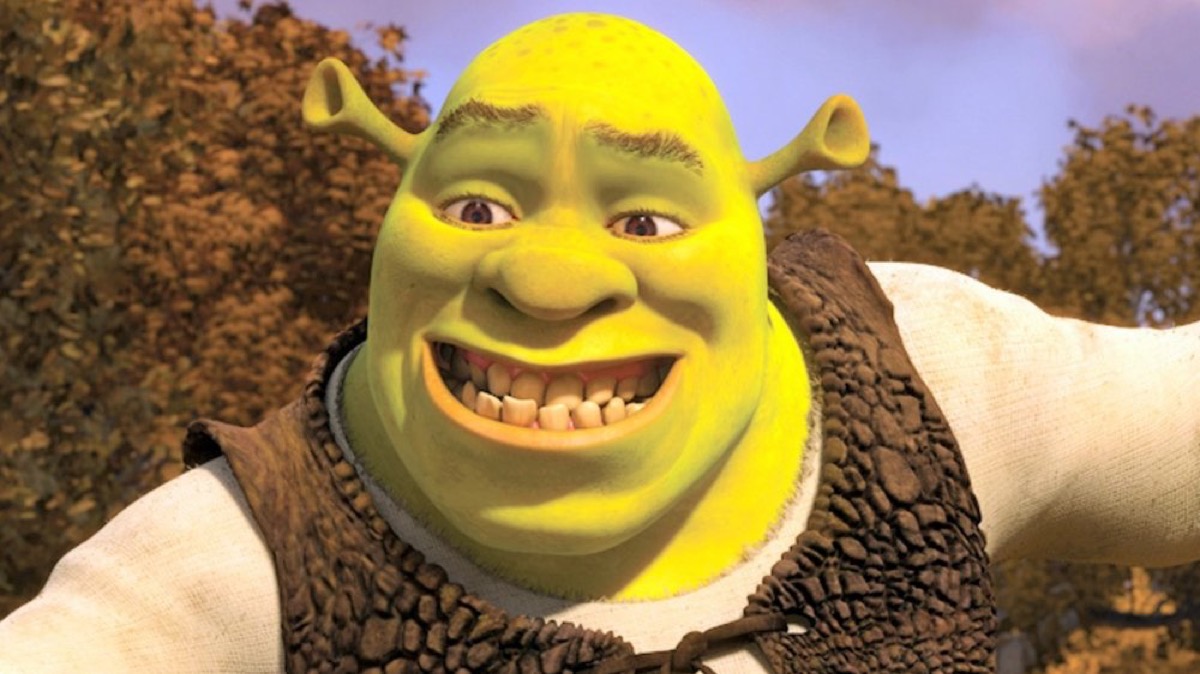
The first time I saw Shrek I enjoyed it with a strange sense of familiarity that I couldn’t put my finger on. Shrek was a lovable loser with huge ears, a large belly, and he could be unintentionally and habitually gross in ways he didn’t understand, because he spent too much time in solitude. Shrek also had a strange yet simple philosophy of life that could prove humorously wise at times. I couldn’t shake the sense of familiarity during the movie, and I couldn’t pinpoint it for many years, until someone said, “Shrek’s your dad.” I didn’t laugh, and I found it a little insulting at the time, but when I watched the movie again, in that frame, I realized that the writers of Shrek might owe my dad a  royalty for at least some tangential influence.

Think: Useless and Trivial


@) If we could talk to the animals, my guess is that we’d find that, among others things, we’re the only being that finds flatulence and bowel movements funny.

“Why do you find them funny?” Dabbi the deer might ask.

“Because we find them disgusting,” we’d answer.

“What?”

“It’s complicated, but it’s further complicated by the fact that you don’t have a sense of humor.”

“I don’t have a sense of humor?” she asked. “I don’t? I’ll have you know that I share the same sense of humor with the rest of the human population. Our sense of humor generates ratings, box office sales, and album sales. You’re the freak of nature.”

&) We never call out dystopian productions from their all-too-near future predictions for being wrong. Young up-and-coming lyricists are forever in search of meaningful and important lyrics. They can’t write about Lord of the Rings anymore. Led Zeppelin been there done that. Silly Love Songs were Paul McCartney’s domain, and we can no longer write ‘baby’ lyrics, because the 70’s and 80’s bands drained that vestibule. The only avenue left is war, anti-war, and anti-military, but there hasn’t been a real war by first world countries in about 50 years. So, while all of the lyrics written in the interim are meaningful and important lyric, they’ve also been false, so far. “True, but they weren’t talking about today, they were talking the all-too-near future.” So, when do we say they’re wrong. “You don’t!”

$) So, how do young, inexperienced artists craft “meaningful and important” lyrics and dialogue when they know nothing about the real world? Is it more important to be meaningful and idealistic or knowledgeable and realistic?

#) If you’ve ever met a truly tough guy, you know they’ve already done it. They wear a “nothing left to prove” garb for the rest of their lives. We know how tough they are, when we meet the other guys, those who talk tough to show it.

*) If we ever catch up to Alien technology, will medical professionals finally learn that the key to physical and mental health lies in the anus?

^) Too much sports knowledge is trivial and useless. Watching sports on TV is supposed to be fun, but some of us get so tied up in good guys vs. bad guys that we forget this is basically a reality show. It’s the best one we’ve ever invented, but it’s still just a show. The next time we meet that guy who knows so much about sports that we’re slightly intimidated by his fact-based opinions, we should liberate him by saying, “Who cares?”

!) You’ll know you’re one of these guys if a lighthearted disagreement over useless and trivial information boils over into you deciding that you’re never speak to the other ever again. At that point, someone needs to step in and say, “Clark, no one cares. You think you’re right, and she thinks you’re wrong, but no one here really cares. We just want to go back to eating our turkey, watching football, and talking about Mary’s Jell-O. That’s all we want to do today.

?) What if she says that your favorite sports star is actually a pretty awful human being? We defend him, because we’re nerds who sit in an audience of millions, and he’s the good-looking, athlete who wouldn’t talk to us in high school. If we pick the right one (he who wins) we want everyone to know our vicarious association. “I’ve followed that guy since he was a five-star recruit. I know his high school stats and college stats by heart.”

“No one cares, Clark!”

%) To counter those who say, “Today’s music ain’t got the same soul,” I would like to introduce you to the noise coming out of Britain. black midi (lower case for whatever reason), Black Country, New Road (one band), Squid, and a band named Famous. These bands are genuinely creative and innovative souls coming out with music that might be as brilliant as the music of past decades, and my guess is they’re only going to get better. Other bands that are also making great noise are Thee Oh Osees (or Osees), and just about everything Ty Segall puts his name on. As with all innovative music, we shouldn’t expect the noise to grab in one blow, and we shouldn’t expect one song to deliver the knockout blow either. Although I think the music from black midi’s Welcome to Hell (not the 23-year-old’s definition of meaningful and important lyrics) might change your interiority by about the tenth listen.

Pitchfork has a few nuggets from black midi’s lead singer Gordie Greep to dispel the notion we have that he wants us to view him as deep, meaningful, and important.

“It’s just fun man,” Greep said. “We’re doing this this stupid thing and somehow making the semblance of a living.” This might be false modesty, as we can be sure he hopes we take his stupid stuff seriously.

Greep also drops a fascinating description of his writing style. “When you want to do something original…use something as a model or inspiration that you know you definitely can’t do,” Greep has said. “Your failure will be interesting.” He talks about Clint Eastwood’s failure to act like Marilyn Monroe, and Tom Waits attempt at the blues. He says they both failed by relative measures, but he says we found their attempts interesting. I found a similar attempt to write like James Joyce interesting.

So, he writes what he doesn’t know, just to see what falls out? What an interesting and perplexing method of writing. My guess, and I have a pretty decent track record in this regard, is that Gordie Greep (whether with black midi or not) is a craftsman who has a relatively bright future.

() I got off on Queen when I was younger. Queen almost single-handedly introduced me to the concept that different can be so beautiful in the right hands, and then I discovered David Bowie. Once I got passed Bowie’s pop songs, I thought he was the most experimental artist in the mainstream, until I discovered Mike Patton. Mike Patton did things I never heard before, and I thought he was the most adventurous artist I ever heard, and I still think that in many ways, but Omar Rodríguez-López (ORL) is just as adventurous in different ways.

Omar Rodríguez-López (ORL) is one of the most gifted artists and musicians on the scene today, and he has played some role, most often leading it in some creative manner, in over fifty albums. I purchased an At the Drive-In album, and I purchased a couple of Mars Volta albums, but for some reason they never appealed to me. If it hadn’t been for Ipecac Records releasing his solo recordings, I never would’ve discovered the genius (and I do not use that term lightly) behind the music of those previously mentioned bands.

AllMusic.com tries to succinctly capture this genius writing, “His multivalent body of work derives inspiration from punk rock, prog, metal, funk, traditional Latin music, blues, jazz, film music, and avant-garde composition.”

As with any mercurial genius, much of ORL’s solo albums will not appeal to most palettes, but the true music fan will probably go nuts over about twenty-four of the fifty albums. When I approached Omar Rodríguez-López music, I had no idea what to expect, but he violated those expectations in the most obscene manner possible. Such violations are not immediate, as they rarely are. My first love was Roman Lips. Anytime a friend invites me to listen to complicated, difficult music, I suggest he do so by starting their most accessible album. Roman Lips is probably the most accessible ORL album, followed by Blind Worms, Pious Swine. Beyond that, the ORL solo albums are impossible to categorize, list, or breakdown by category. Suffice it to say that I was wary that the genius behind At the Drive-In and Mars Volta would appeal to me. I was also wary of the Ipecac Recordings, as they release a lot of material that major recording studios won’t, and a number of their albums don’t appeal to me, but ORL.

As with all of the artists listed above, it’s difficult to believe that these individual artists, and Queen, are capable of such wide-ranging music. I love some of the more major, mainstream pop acts, but there is a comfortable thread that runs through most of them. Their fifth album might sound more advanced than their first in production value and matured writing, but we all know what kind of music they prefer. Listening to the albums put out by Bowie, Patton, and Omar Rodríguez-López, it’s hard to believe the same artist created all these incredible albums. ORL is definitely the most prolific of the three, and he’s not even fifty-years-old at the time of this article.

Transmissions from the Outer Rim


“I know you’re going to consider me a spoiled Notre Americano, but I’ve decided I’m done trying to convince people that I have a diverse, worldly palate,” Zachary said. “I haven’t tried too hard to this point, to be completely honest. When we went to the most ethnic place my girlfriend could think up, I ordered the least ethnic item on the menu, and I quietly loathed every bite. I’ve tried to eat ethnic Chinese and Mexican food, and I’ve tried to say I enjoy it, just so I could say it, but I’m old now, and I’ve passed the finish line on that whole subject. I’m not just a meat and potatoes guy, but when I venture out from those inner circles, I prefer the Americanized, Anglo versions of what we might call foreign food.”  

“A food xenophobe is what you are,” Xavier said. 

“Call me whatever you want,” Zachary said. “I’m done pretending.”

“You’ve never been the worldliest fella,” William said.

“I’ll take those charges. I have a very xenophobic palate,” Zachary said. “But I fear the insomnia brought on by explosive diarrhea.”

“Did you have to add the modifier explosive?” Xavier asked. “Was that absolutely mandatory for your description? What’s the difference between explosive and other non-combustible forms of diarrhea?”

“It’s like pain,” William added. “Doctors ask us to scale our pain. On a scale of one to ten, how bad is your pain? I’d like to talk to a family physician to find out how many patients “off the chart” their pain with an answer like 55. My guess is most doctors try to rein that in for a more direct reading by asking them to remain within the parameters of our pain scale, but most patients are so dramatic and narcissistic that they can’t stay realistic . “I’m telling you Dawg, it’s a 55.”

“Pain charting cannot capture the pain I’ve experienced here Dr. Moreau,” Xavier added. “I’m experiencing a level of pain that might be foreign to the ideas you’ve learned in western medicine.”

“I think I can only talk about explosive diarrhea with someone who’s gone through the experience,” Zachary added. “It’s like old faithful blowing out the hole.”

“You can confide in me blowhole brutha,” Xavier said. “Been there dung that.”

“You’re lucky nothing explosive came out your hoo hoo,” Willam said.

“What exactly is a hoo hoo?” Zachary asked.

“The hoo hoo and the hee hee both make me wee wee.” William said.

“There is no hee hee,” Zachary corrected. “There’s a hoo hoo, but if we follow the grammatical gender words in the Spanish and Italian languages, the hee hee you talk about is actually a hoo ha. An ‘A’ is used in feminine words and the ‘O’ is used in masculine words.”

“But, if we follow modern political prescriptions for linguistics of those languages, shouldn’t we refer to them as the hohinx?”   

“The point I’m trying to make here is I didn’t just wake up and decide that I no longer enjoy ethnic food,” Zachary said. “It’s after decades of my enteric brain and my central brain battling over what food I should eat. I never wanted to eat ethnic food, but I joined in on the whole experience parade. The whole “you have to try everything once” crowd carries you to the “I love Thai, Vietnamese, or whatever the food of the day is” prescription to worldly that we’re required to follow into the in-crowd. I ate it, so I could tell people I just ate it. It’s something we say to impress our friends and make new ones. How many things do we do, so we can say we did it? “What did you eat again? Wow, you’re a lot more adventurous than I thought.” Yep, put it in my mouth and chewed it up is what I did. Please think more of me for that, because I didn’t enjoy it, and I’ll probably never do it again. I have to get as much mileage out of this as I can. Some people might genuinely enjoy ethnic food, but they talk about it so much that I think they’re trying to convince themselves they enjoy it. You enjoy Thai? Really? Or, do you enjoy the Americanized version? The exotic, ethnic food I tried was at a restaurant with a grill in the center of table. We cooked it ourselves. I put it back on the grill about three times, because I didn’t think I cooked it long enough. The woman I was with said I overcooked it. The only reason I did was because it tasted like a latex glove to me.”

***

“I don’t know if modern TV represents young people well, but all I see them do now is give us the bird. In the intros of the characters of a reality show, a mother complained that her daughter was so out of control. “She’s too opinionated,” the mother complained. It was obvious how much that characterization meant to the producers of the show, because they cut to the daughter in iso, with rock music playing in her background and hot rocking graphics around her image as she lifts her middle finger in defiance. What was she defying? As with most teenagers, she probably knows as much about substantive defiance as we did in our misinformed and malformed youth. The bird is not an opinion in and of itself. If she starts with the bird I have no problem with it, until she uses it as punctuation for the end of her rebellious statement. All she did was give us a bird sandwich without saying anything in between.” 

“And we all know that most birds don’t have much meat on them,” William added.

“We’re all about short cuts now,” Xavier said. “We have buttons to like and dislike, and we have emoticons. The idea of full expression is not only dying, it’s unnecessary. We just flip them the bird, and the discussion is over.”

***

“I had a shortcut conversation between two hep cats,” William continued. “They had it all figured out, as hep cats do. They knew I had no idea what they were going on about, and they enjoyed it. The two of them were good looking young men with fine hairdos and fashionable duds, and they spoke with a hep cat lexicon. I stood in the middle, a man without a hairdo, and a contrast to their hep cat world. I was the old man who didn’t speak their language. I was the normal shirt-wearing fella in between, trying to figure them out. I played right into it, as I have too many times in my life. I realized halfway through that we were all playing roles, all three of us were characters in a short, illustrative skit. Their questions were all leading questions that guided me deeper into their dark forest. I answered. They laughed. Well, it wasn’t a laugh so much as a condescending chuckle. You know the laugh I know the laugh. No matter what age we are, we’re all freshman in high school trying learn how to hold our arms when we stand around. They didn’t really know each other intimately, and they didn’t know me any better. No, this was a hep cat conversation with two of them trying to define themselves as know-somethings by using me as their definition, and they enjoyed watching me flop around on shore.”

“You should’ve flipped them off,” Xavier said. 

“They were pretending to know what it’s all about,” Zachary said. “The ones who talk rarely know the walk. What’s it about? I don’t know, and either do you, so we mimic those who think they do. And who thinks they know more about what it is than actors in movies. They have the force of a screenwriter’s research behind them, a director’s framing, and a supporting cast. So, we mimic their situations and statements, until our supporting cast believes in us as much as we believed the dialog of screenwriters.

“What’s the difference between a star and an artist?” Zachary continued. “Most celebrities are stars, nothing more than vehicles of light. It’s their job in life to make their stock profitable. If they go out for a bite to eat, they know they have to give huge tips to the servers who talk, it helps the value of their stock. There have been numerous genuinely intriguing characters in the history of cinema however. Marlon Brando, for example, displayed a dynamic personality, and he didn’t seem like the type who said what he was supposed to say. He seemed like a genuine person who happened to be one of the biggest stars in the world. I didn’t know half of what he was talking about, and I think he thought he was far more intelligent than he was, but he seemed like a very curious, observant person. He seemed to genuinely want to know how it all worked. Elvis Presley, on the other hand, was a star. You can tell me that he was bullied into doing what Colonel Tom Parker wanted him to do, but it seems to me he was easily bullied. I’ve heard people say he wanted to be Brando and James Dean, but I’m guessing that Parker told him you’ve not going to get there until you have box office, and those arthouse scripts aren’t going to get you there. Elvis wanted to be a star, and say what you want about the career-defining movies he did, almost all of them made money, and they made him a huge star. I liked Elvis. He had a preternatural charisma about him, a natural animal magnetism and an incredible voice. He seemed blessed with these attributes, but we don’t know how hard he worked at it. He put out some quality material, but he didn’t write his own music, and most of the movies he was in don’t hold up well. He was a star and Brando was an intriguing artist.”

“How many intriguing artists have been outshined by stars?” Xavier asked. 

“Exactly, but as I said, Brando wasn’t half as smart as he thought he was, as evidenced by the fact that controversial ideas seduced him,” Zachary said. “He was the type who thought controversial ideas made him appear smarter, worldlier, and so controversial that we wouldn’t view him as commodity. He might have genuinely believed what he said, and I’m not saying he was wrong, but if he were alive today, and I was afforded the chance to speak to him, I would say just because your ideas are controversial doesn’t mean they’re true. How many good ideas have been rejected, because they were too common, and so fundamental to good and honest living? They’re not all lies concocted by the establishment to keep us quiet.” 

“But, if everyone knows these ideas, where’s the juice?” Xavier asked.

“True. I guess my greater point is just because it’s negative doesn’t always mean it’s true.”

“Too many people focus on what it’s not,” Zachary said. “It’s not true that … they say, but how about we focus more of our energy on what it is? They don’t tell us what it is, because they don’t want to be wrong. Even Marlon Brando, who sat in the throne at one time, never had the courage to try to predict what it was all about. He devoted most of ramblings on what it’s not.”

***

“Someone, and for the life of me I can’t remember who, said that heaven didn’t exist until we created it,” William added. “It’s such a far-fetched idea that it’s intriguing. They said we created, through some kind of mass subconscious, consciousness, the ultimate reward for good living. We needed the hope, the focus, and the idea that it’s all for something. An extension of this far-fetched idea is that if we can physically create everything from our homes, to a McDonald’s franchise to skyscrapers, why can’t we create an equally impressive structure with our minds? The theory suggests that if there never was a reward for good living, we should probably create it.” 

“And we believed it so much that we manifested its creation,” Zachary said. “I have heard the theory.” 

“If that’s true, I’ve created a manifestation of another world of normalcy, so I can sit on the outer rim. Millions claw at one another for the center of absolute normalcy, and I use them as leverage to keep my position on the outer rim.”

“You’ve already created that world,” Xavier said. “Trust me.”