“It’s not an unquestionable and indisputable fact that Jim Brown was the greatest running back of all time,” I shouted at the people in my Smart TV. “I think it was Walter Payton, but at least I recognize that’s an opinion. You only think Jim Brown was better, because he was the first greatest running back of all time, and we all bow to the tyranny of firsts, and most of the time we do so because we don’t know any better.”
 If we compare George Washington to any president who followed, GW almost always wins, because he set a whole bunch of templates and precedents that most of the presidents who followed, followed. But he had an unfair advantage of setting precedents and precedents, because there were no official U.S. presidents before him. By that logic, if either James Buchanan or Chester A. Arthur were the first U.S. president, they would be considered the best president of all time.
Similarly, those who saw Jim Brown play saw the first great running back of all time, and there was no one to compare him to for about a decade. He set the template for great running backs, and he set all the precedents. Yet, the difference between Jim Brown and the next great running back narrowed over time. I never saw Jim Brown play live –so go ahead and dismiss me from this argument if that is required– but from what few highlights I’ve seen of Jim Brown’s runs, he was one of the greatest running backs who ever played the game, but he was mostly a bruising back in the mold of the great 70s back Earl Campbell. Both of them were historical anomalies and dominant in their respective eras, but were they that much better at gaining yards and scoring touchdowns from the running back position than Eric Dickerson, Tony Dorsett, Marshall Faulk, Barry Sanders, or Emmit Smith? Of course it’s impossible to compare men from their eras, and we can never remove them from their era and place them in another for a solid debate, but I believe the one man who could match all five of those men and outdo them in their respective primes was Walter Payton.
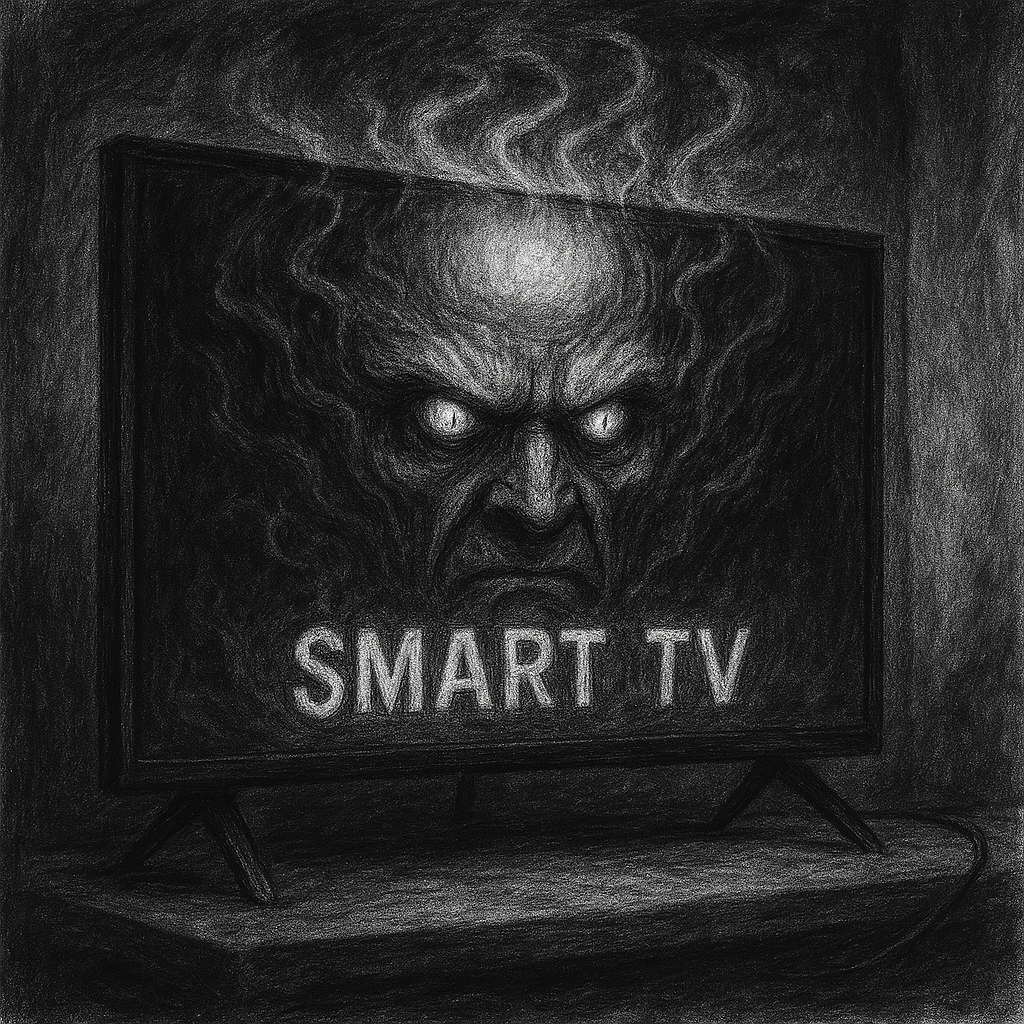
 “Okay,” my TV shouted back at me, “but is your argument based on objective reasoning, or was Walter Payton the first, great running back you saw?
I said, “Huh?” and I hate to say huh in any setting, because I think it makes us sound unintelligent, but even though I knew my new TV was a Smart TV, I was not prepared for it to shout back at me.
“You were too young to witness the great Jim Brown in his prime,” my Smart TV explained. “So, Walter Payton was essentially your first entrant into the greatest running back of all time argument for you, which nullifies your argument by making you as guilty of bowing to the tyranny of firsts from your own perspective.”
“I never thought of that before,” I said. I didn’t want a Smart TV, and I told my dog that. I just wanted a television set to watch programs on. Now that it is in my living room, reminding me how intellectually inconsistent I can be, I resent it. I got used to the neighborhood kids outsmarting me, and then the raccoons and squirrels, but I never considered how humiliating it would be when one of my appliances began outsmarting me.
***
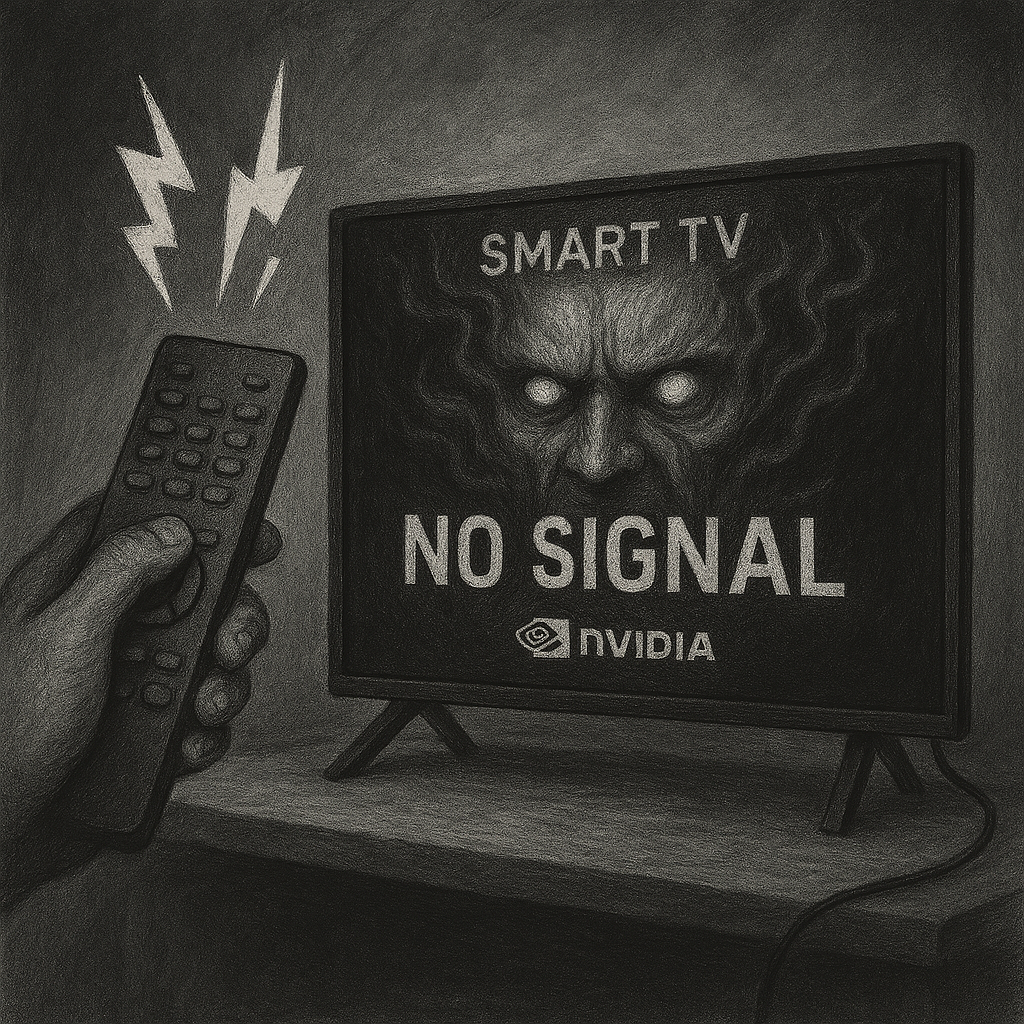 They call it a Smart TV, but its intelligent design does not respond to the initial physical commands I give it from its remote control. I push those buttons and nothing happens. The message between the button and the primary mechanism fails in a way that obnoxiously requires me to push that button again. The tyranny of firsts applies here too, as the relative and relatively arbitrary definition of intelligence between humans is usually reserved for the guy who gets the answer first. Those of us who need to process a question, and often come up with a better, more creative answer than the first guy, usually get left in the dust. We’re forced to live in this land of unrealistic expectations for smart, but Smart TVs apparently are not. They require a second level of processing that requires a second push of a button to process the commands we initiate on our remote controls. It’s not limited to TVs either, Smart ovens, fridges, and cars all have buttons, and they never execute their functions on the first push of a button.
“It’s not us,” my Smart Oven replied. “You’re just a two-push-button guy.”
I had no idea what that meant, until I began to see how our world has progressed from switches to buttons, and I found myself “two-pushing” every button around me. I never chose to be this way, and when I see people one-pushing their way into a room, I’m like, “What the hell is going on here?” I’m guessing my two-push relationship with buttons was set upon me as a result of who I was, or what I did, in a former life. I don’t know if I was so successful pushing buttons the first time through, in that former life, that I obnoxiously held it over everyone’s head in an arrogant manner that defined my existence, and the forces that be exacted existential retribution on my current life. I say life, because I’ve never been a one button pusher, and this isn’t something that we wake up in the morning with. It takes an outside force, be it a family member or Smart appliance to recognize.
If it happened sooner, and a friend told me that I was probably doomed to pushing a button twice my whole life, I would’ve called them foolish. “I’ll only have to push buttons once when I get older. I’ll eventually get this all figured out.” It hasn’t happened yet. If you told me this when I was younger, I probably would’ve assumed that it was the quick-twitch of youth that led me to carelessly miss the button in some way, and as I grew older, I’d slow down enough to push that button more carefully that first time through. It hasn’t happened yet, and I have to say that kind of shocks me, figuratively. So, either I haven’t slowed down, or I’m just going to have to get used to pushing every button twice now, because someone monkeyed with my soul somewhere along the line.
***
I know I should be using Smart tags at this point in history, but I just can’t pull the trigger on that purchase yet. I already have enough Smart things in my life, and I can’t imagine having one on my keys, on my wallet, or in my pocket in anyway. Until I’m brave enough to put Smart things in close proximity to my precious things, I’m going to lose things that are precious to me.
When we lost things, some say, “They’re always in the last place you look.” To which, the more clever say, “Of course they’re always the last place you look, because once you find it, you’re not going to look in any other places.” I’ve lived the former line so often that I appreciate the humor of the latter line, but my question is “How come they’re never in the first place I look?” The tyranny of firsts does not apply here, as the items I lose are never, and I do mean NEVER, in the first place I look? They’re never in the car, which is the first place I look, and they’re not in the bathroom, the first place I went when I returned home, and they’re never in the first pocket I check in my ensemble? Now, I know what you’re going to say. You’re going to say something about circumstance, chance, and whatever rationale you point to that suggests it’s not a product of some otherworldly design. All I can say is, “You aren’t there. You don’t see how it has to be someone, something, or some otherworldly force messing with my mind.” I can’t hear these Smart devices laughing when you tell me it’s not logical to blame intangible forces, but I know they enjoy watching my struggle.







 Rilaly