We’re Doomed! Long Live the Gloom!


“The planet’s not in trouble,” a comedian said onstage. “It has survived countless threats, tragedies, and catastrophes. The planet will be just fine. Human beings, however, we’re screwed.”

The End of The Road

We’re doomed, and we love it! If ratings, proceeds, and ratings mean anything, doom and gloom is big business. 

We want it in the all-too-near future, “Ten years from now…” Ten years is one of our favorite time frames. Twenty years is too far away and five years is too close. We want urgency, we need it now, but not too close. We might deem it hysterical if it’s too close, and we might not worry about it if it’s too far away, so we’ve deemed ten years the Goldilocks, sweet spot for dystopian rants. I think I can top them. I think future street corner bell ringers might want to narrow their hysterical rants for greater appeal among consumers. If you know anything about grocery store pricing, you know that consumers find round numbers too stark, too pricey, and generally unappealing. Their psychologist advisors have informed them that consumers find $9.99 more appealing than $10.00. It’s a penny right, what’s the difference? These psychologists say it’s everything to consumers, so we now see their items listed accordingly on all shelves, car salesmen do it, and everyone who wants to appeal to this mindset we all have. The chicken littles of our future might want to recalibrate accordingly and say, “Nine years and nine-nine days from now…” 

Ten years also seems like enough time for human ingenuity to develop a solution. If we’re facing a true cataclysm that will end the human population, we have to think it would become the sole focus of more than a few of our brightest stars in science, engineering, and just about every other focus we have to attempt to counter the sure-to-come devastation of life on the planet? 

How many times has human life faced extinction only to have some genius come along and devise an ingenious way of saving life? This time it’s different, of course. This time, no one can save us. We’re helpless. How exciting!

We’ve all been here before, in theoretical forecasts, but this is the future. We’re here to report that the ten years in the future that we’ve forecast for the last seventy years is now here. It is ten years in the future, and a moment, not the moment, but a moment we’ve feared for at least seventy years is here, and we don’t know what to do about it.

The reporters investigated and attempted to locate and expose a human culprit. They hopscotch between various narratives to find a bad guy before it’s too late. They join forces with the scientific community to narrow the focus of their study on human involvement. Regardless whether they’re wrong or right, they have the best intentions.
So Scary, It’s Beautiful!

There are no high-profile news agents ten years in the future. They’ve been exposed in one way or another, and relatively few read, watch, or listen to them anymore. In their wake, citizen journalists rose up on the internet and developed reputations for telling the truth in the years preceding the looming tragedy. Some of the more prominent citizen journalists provided a contrarian belief that certain scientists developed by studying the looming tragedy through various angles that focus on the math and science of the universe. These contrarian scientists eventually proved incorrect, and those with no knowledge of science rained fire upon them. 

“It’s you job to figure this out!” a reporter screamed at a contrarian scientist, as he walked to his car. This confrontation went viral and social media launched “It’s your job!” meme at scientists, and the citizen journalists who supported them.

The contrarian, non-human theories were rejected so often, and so publicly, that most become afraid to voice their concerns with their neighbors, lest they be called a denier. “There’s nothing we can do!” becomes the credo of the day. “The scientific consensus suggests there’s nothing we can do.” 

Teams of scientists hear this, of course, and they’re scared, but some of them brave the cynical firestorm to push this theory that the new, unforeseen, looming, and disastrous event involves a detailed and complicated natural occurrence that has nothing to do human beings. 

“It is,” they write, “an event that occurs throughout the universe on a relatively infrequent basis, and it is going to occur near Earth, unless we are able to do something about it.” 

Numerous scientists attempt to disprove their theory, as is their role, and most of them suggest that their findings are inconclusive. Some of those scientists who unsuccessfully attempt to disprove the theory, decide to pursue the theory in purely hypothetical mathematical and scientific forms. “If true,” they write, “then we could use an end around to avert the looming disaster.” Other scientists join in and posit theories around this new end around theory. 

“It’s time to say it, Science has failed us!” a major online news publication, that no one reads anymore, states in the title of an article they publish in a desperate attempt to remain popular. The article proves popular, of course, as a crude attempt to develop “if it bleeds, it leads” style click-bait articles that feed into the gloom and or doom themes. “As time continues to tick down,” the article states, “our most brilliant minds continue to fail to find a solution.” 

Scientists develop other theories, and other scientists disprove them. The lack of understanding of science, leads to mayhem all over the world as citizens the world over begin to panic over the delays. In the midst of that panic, as time ticks precariously closer, a scientific hypothesis emerges.

High profile scientists immediately reject the hypothesis, with no evidence, and popular sentiment follows suit. Prominent leaders of the world join the popular sentiment. With the lack of any government endorsements, and more importantly government funding, these teams of scientists desperately seek private donors to help them pursue the hypothesis that no scientist has been able to concretely disprove. The theory does not please anyone and everyone is torn, until it works. The event from the far reaches of the universe is thwarted, and the little dots in the universe, we call human beings, avoid extinction. Most of us feel weirdly disappointed when we realize that we get to live at least a little bit longer.

Science does not experience a popular upgrade in the aftermath, since so much of it failed, so often, when people were really scared. The citizen journalists do not experience more popularity, as the historical record suggests they backed the wrong horse more often than not. One citizen journalist, in defense of his record, and the record, suggests that this is the nature of science. “Most of science is as wrong, flawed, and incompetent as the humans who develop it. Scientists develop theories and other scientists disprove them, until the various teams compile a deeper knowledge of the harmony of math and science in the universe.” He continues, “Scientists are flawed human beings who aren’t large enough to qualify as a speck in the universe. Our/their knowledge and understanding of how universe the works wouldn’t qualify as a speck either. The failure of these brilliant minds only reinforces how little we are, and we can know what we know and still be wrong an overwhelming number of times, until some congealed form of human ingenuity, based entirely on observations, wrong educated guesses, and the infighting we now all know about leads, inevitably and almost accidentally, trip on a truth.” 

The politicians who said the end around theory would never work, because they wanted us to follow the theory that they supported, now attempt to embrace the end around theory as one they supported all along. The reporters and social media outlets who rejected and condemned anyone who believed in the theory move onto other, click-bait stories of the next looming disaster. 

When Tuesday rolls around, everyone forgets how close we actually came to extinction on Monday, as few appreciate a tragedy that never happens. The various teams of scientists who developed, pursued, and helped execute the end around theory are vilified by the scientific community, the politicians eventually join in the condemnation for those who saved the world, and the media seeks numerous angles to further vilify them. A major, online publication produces a series of pictures depicting the team of scientists most responsible for saving the world in mug shots. “They saved the world,” the title of the feature article says. “Why it’s not okay to like them.” 

Some of the scientists who braved the negative forces primed against them to save the world, quit their jobs, others finish out their career anonymously, because their names were never attached to the chains that led to the theories that saved the world, and one unfortunate scientist commits suicide. “Leave my family alone!” was the first sentence of his suicide note.

“He joined a team that wound end up saving the human race from annihilation,” the suicide victim’s friend said in the eulogy, “and they destroyed him for it.”

It is the future, it is the past, and it is the present. 

Mutually Assured Destruction

“He was the worst human being on the planet,” we now hear. “What he did was indefensible!” The definition of defensible involves flowcharts. Who is the alleged perpetrator? “Who are his victims?” What was the nature of his crime? “Was he well-intentioned or just awful?” It’s impossible to know, and we might never know. We base our conjecture on what team we’re on.

If we’re on his team, we qualify with excuses. We have so many excuses. Why? We don’t really know what happened, so why do we care so much about the accused that we’re willing to put our reputation on the line to see our guy go free or be penalized as little as possible? “What if he’s guilty?” What if he’s innocent? “All right, but what if?” We have no serious, vested interest. We’re just watching it on TV.

They don’t believe him. We know they’re on a certain team. If they believe him. We know they’re on the other team. The bad team. We know they’re capable of anything. We don’t know the truth, but we know if they pound the table harder than the other guy, they can sway popular opinion.

“What is the truth?” No one would openly say that the truth doesn’t matter anymore, “but someone has to be right,” and someone has to be wrong. Do we crush the importance of truth under the weight of what’s right? “I don’t know and you don’t know,” but let’s not study that subtle distinction. “Right.” We know that they’re wrong, and no one will be able to convince us otherwise. Our guys aren’t capable of wrongdoing, because like us, they come from better stock. “They would never do that.” We like our side, because they make us feel like a major component.

When we debate the other team’s proponents, we fear they might know something we don’t. We know our stuff, but we don’t have that haymaker to silence all debate. Everyone is searching for the person, place or thing that provides the haymaker. Yet, we don’t even bring it up, thinking that they might know something we don’t, or they could be offended. Saying our guy could be innocent might offend their sensibilities, and our friends might not be our friends in the aftermath.

The End of The Road

We can find the truth, as always, nestled somewhere in between. The lawyers in every industry define a truth. Not the truth. They manage information and disinformation so well that they push us further away from the truth through whatever means necessary. It’s called a quality defense, and we’re willing to pay buku bucks for it. Everyone is afraid of lawsuits, so we don’t question their version of the truth.

There are those who report a truth based on how they see it. Are they right? Who cares? We dismantle truth seekers based on past behavior to destroy them, so no one believes their version of truth. The truth seeker goes on defense, and our assumption of guilt and innocence depends on how much they defend themselves. The more they defend themselves, the guiltier they are. We think we’re onto something. As far as we know, they reported their side’s version of truth. Is their side’s version of the truth true? Who cares, destroy them before they destroy us in a pact of mutually assured destruction.

This might sound cynical, but how could anyone paying attention avoid some semblance of cynicism? Cynicism is the safe place for those seeking foolproof status. You can’t fool me, and neither can they, but while no one can call me a fool, I can’t say I know anything about the spaces in between.

Circa ’72: The Magical Musical Era


It’s been 50 years since the most seminal era of music. That’s a long time to remember, forget, and strategically distort some facts. I found that out as I started writing this article in my head, staring at the ceiling, unable to sleep. I am unable to sleep if I have a thought, any stray thought I can think up to keep sleep at bay for one more minute or hour as the case may be. This particular article haunted me, as I thought it was so good that I couldn’t, wouldn’t, or shouldn’t sleep, until it was done. It’s sort of a small, obsessive, and to my mind incurable, mental illness.  

(Now that I’m done with this article, and editing it, it’s not as great as I thought it would be, but read on.)

My original inspiration involved what I considered could be an award-winning title: 1972: The Magical Music Year. My inspiration involved telling you, my faithful reader, how many of our most beloved musical artists started in 1972, how many of the most influential bands of all time came out with their seminal works in 1972, and what an incredible year it was for the music industry. I was all ready to write about all of artists and bands from 1972 that would shape the music industry for decades, and in some small ways the world, for decades (50 year!) to come. I was ready to follow each entry with the words, “such and such did this in 1972 to further cement the notion that 1972 was, indeed, a magical year”, and I planned to write that line so often that the reader would grow sick of it. I found out I was wrong, somewhat, sort of. I found out that in some ways, and by some days, I was a little off. Instead of titling this piece 1972: The Magical Music Year, I edited the title to Circa 1972. The theme remains, but the word circa (approximately) gives me a three-year window, either way, to talk about one of the most incredible eras (as opposed to years) in music, and I also decided to continue writing this piece because I didn’t want to waste a night’s sleep for nothing.

22) Most of the folksy, Jim Croce music has not aged well, and he probably doesn’t make many “best of” lists, but my mom forced me to grow up listening to his tunes, and his 1972 You don’t Mess Around with Jim was one of the first albums, not created by Johnny Cash, that I heard top to bottom so often that it’s earned a place on this list. I heard it at my aunt’s house, when she wasn’t playing Johnny Cash, and I was heard it in my neighbors’ homes when they couldn’t find their Johnny Cash albums. As a result, I hated Croce (and Cash) for so many years, but when I hear this album now, I experience some nostalgia, remembering those years when I was so young that I had no control of the music they played in my vicinity.

21) As often as I was wrong about 1972, I was also right on the mark for some artists. Stevie Wonder, for example, wrote and released one of his many incredible albums in 1972, Talking Book.

20) Michael Jackson’s solo debut Got to Be There was released in 1972. This might not be his best album, but I dont think anyone would argue that it kicked off an incredibly influential solo career. 

19) Deep Purple did not form in 1972, but the album most argue their best Machine Headcame out in 1972.

18) Steely Dan’s debut Can’t Buy a Thrill was released in 1972, and two of their other more influential albums, Countdown to Ecstasy (1973) and Pretzel Logic (1974), were released during our arbitrary window.

17) Roxy Music’s debut was released in 1972. They also released four more of their best albums in this arbitrary window. All five of these albums contain singles that have made their way to various playlists I’ve created for decades.

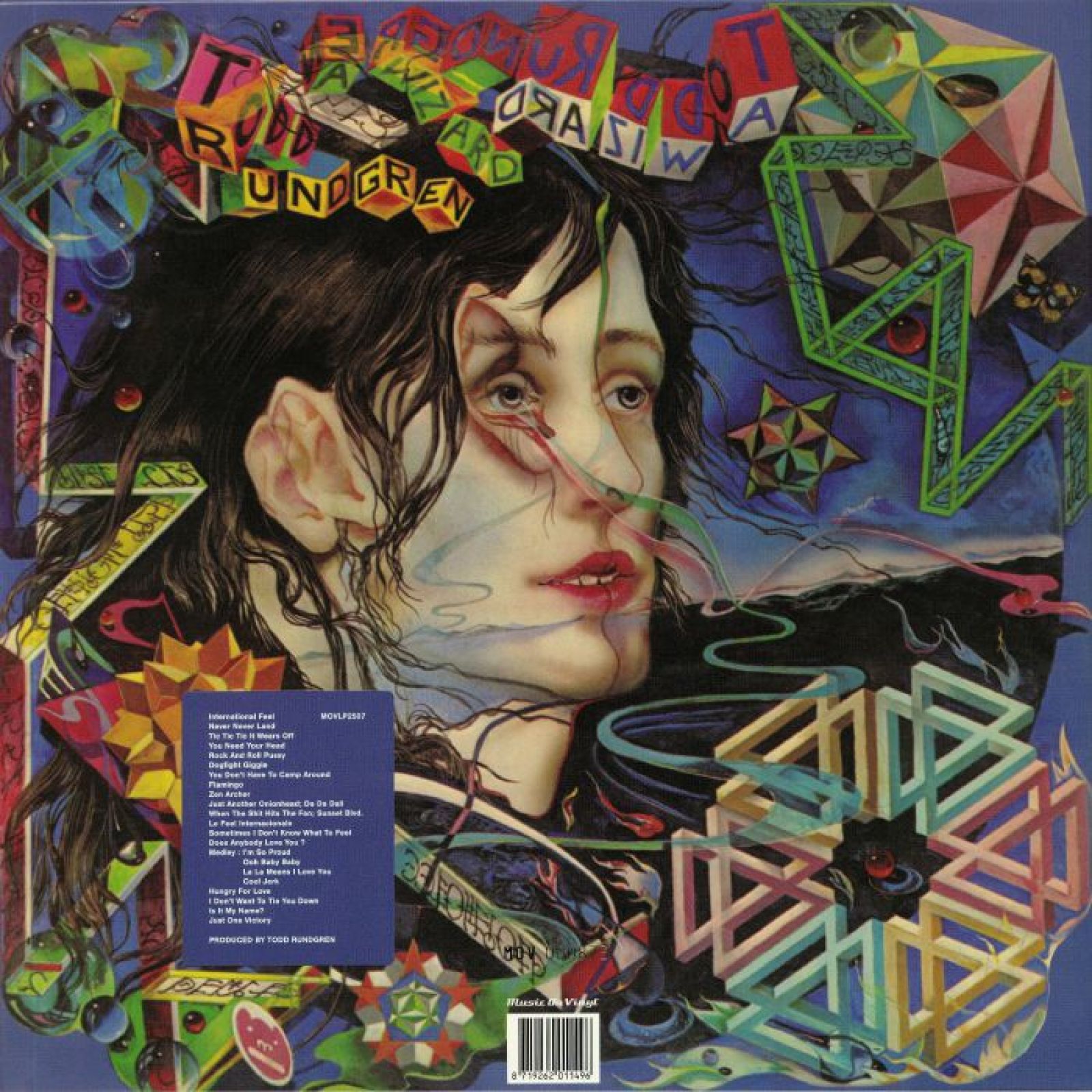
16) Todd Rungren’s weirdest and most creative album, A Wizard/ATrue Star, was created in 1972, as was his most popular album Something/Anything. As with most artists on this list, Rungren’s pre and post 1972 career is hit and miss, but I consider Wizard/A True Star his masterpiece.

15) Lou Reed put out his debut album, and the career defining album that David Bowie deserved a major assist on, Transformer in 1972.

14) Elton John and Bernie Taupin put together what Allmusic.com calls one of the most focused and accomplished set of songs they ever wrote in 1972, Honky Chateau.

13) I thought I heard somewhere that Billy Joel’s Piano Man came out in 1972, but it was 1973. His debut album came out in 1971, so to cement my conspiracy theory, Mr. Joel just happened to take 1972 off to make it seem like I wasted a night of insomnia for nothing. Are we supposed to believe that it just happened to happen that way? Are we supposed to believe that they didn’t get together to make me look foolish? I’ll leave that up to you.

12) The Rolling Stones did not start in 1972, of course, and some would argue that it wasn’t the beginning of their artistic peak, but the end. The Stones did put out an album in 1972 that many consider their best, and some consider one of the best albums ever made Exile on Main Street. The Stones would release better singles than anything on Exile on Main Street, in my opinion, but they never delivered a better album, top to bottom, than Exile. Sticky Fingersalso came out in 1971.

11) Queen loosely formed in 1970, John Deacon joined in 1971, and they recorded their debut album in 1973, but they wouldn’t reach their artistic peak until 1975 with their A Night at the Opera album.

10) KISS started in 1973, and they recorded their debut album in 1974, but they wouldn’t achieve worldwide stardom until the release of their Alive album in 1975.

9) Rush would form in 1968, but they were far from ready. They would experience lineup changes and several configurations before they became the band we know today. (Sidenote: I had no idea, until I began researching this piece that Alex Lifeson was the only remaining member from the original lineup. If I ever put any thought into it, I would’ve thought Lee or Peart was.) They didn’t release their debut album for six long years later in 1974, and they released Fly by Night in 1975.

8) Some of us argue that 1972 was the apex of Frank Zappa’s mainstream creativity, but Apostrophe (1974) and Over-Nite Sensation (1973) weren’t released for a couple years after that seminal year.

7) One of the greatest albums of all time, Pink Floyd’s Dark Side of the Moon, wasn’t released until March of 1973, but we can guess that the heart of this album was created in 1972, and most of the touch up, superficial tinkering work done on the album occurred in 1973. (I’m trying to keep a theme going here.)

6) I had it in my head that an album many arguably call Bob Dylan’s best Blood on the Tracks came out in in 1972, but it was 1975.

5) Likewise, Paul McCartney didn’t form Wings in 1971, and Band on the Run didn’t come out until December 1973. Due to the fact that McCartney normally writes so quickly, and so often, I suspect that he wrote Wing’s debut Wild Life in 1971, and he skipped 1972 before delivering Band on the Run just to mess with my theme here, and don’t tell me he couldn’t know I’d be writing this article 50 years later. He knew!

4) Aerosmith formed in 1970, but they didn’t release their debut album until 1973.

3) Led Zeppelin released their best album, IMHO, Physical Graffiti in 1974. The three-year window also includes Led Zeppelin IV (1971) and Houses of the Holy (1973). Notice the pattern of skipping 1972? You think that’s a coincidence?

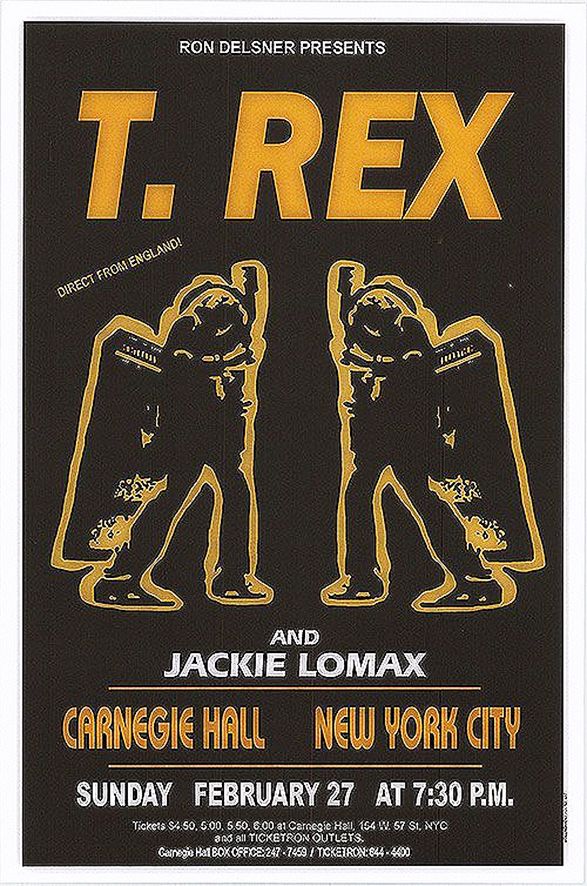
2) T. Rex’s most incredible album Electric Warrior was released in September of 1971, but the single from the album didn’t begin to chart until January of 1972. Marc Bolan’s second-best, stellar album Slider was released in ’72.  

1) And last but not least, we direct you to the reason I wrote this article in the first place, as I introduce you to a man that I consider one of greatest, most influential, prolific, and creative artists of all time. In 1972, David Bowie experienced what could be his most popular year, a year in which he produced what may not be his best record, but the one that had the most cultural impact. Before and after 1972, Mr. David Bowie created incredible music, but IMHO, he blew the damned doors open with his 1972 release Ziggy Stardust and the Spiders from Mars.

If you’re looking for a starting point on the otherwise daunting musical catalogue of one of music’s greatest artists, I can think of no album that initiates the uninitiated better than Ziggy.

We all go through phases with artists, songs, and albums, but I don’t think I listened to any album on this 1972 list more than Ziggy. In 1972, as the character Ziggy, David Bowie sat atop the world.

The album wasn’t adored by critics or fans at the time of its release (though it did peak at #5 in the U.K.), but after Bowie killed the rock star, he posthumously received accolades as Bowie’s breakthrough character, and one of the most important rock albums of all time.  

In this arbitrary window we’ve created here, Bowie also made Hunky Dory, Aladdin Sane,and Diamond Dogs. Bowie is one of the few on this list who didn’t peak in this arbitrary window of ‘72-‘75, as he created the ’77-’80 Berlin Trilogy, but ‘72-‘75 years were definitely one of his peaks.

Honorable mentions) Mott the Hoople, All the Young Dudes; Can Ege Bamyasi, Big Star #1 Record; Captain Beefheart, Clear Spot; Neil Young, Harvest.

I’m quite sure you just thought of about five-to-ten artists and albums I left out, but this is a list of artists who influenced my life the most, and though I was too young to listen to the music of 1972, when it came out, and I had no say in what music was played on record players and eight-track decks, I would eventually come to adore the music I thought they created in 1972.

Before reading on, go back and look at the list of emboldened names. Look at the names of the artists who either debuted between 1972 and 1975, or look at the albums these incredible artists created circa ‘72-’75 window. What kind of soup were they eating? What did they have in their water? If there was some sort of toxic substance with a byproduct of greater creativity, they probably would‘ve suffered long-term effects, but as far as we know they didn‘t, so how did this happen? 

Most of the artists of this era talk about one seminal moment, The Beatles appearance on The Ed Sullivan Show. Others talk about the other The Beatles albums that followed to inspire them to want to create a little magic of their own. Some also suggest that The Rolling Stones, Elvis, The Who, and Black Sabbath played seminal roles to influence their music careers. Whomever it was that inspired these guys, a window opened, circa 1972, for so many artists to take that influence to a different level that displayed a level of unique brilliance of their own. We can guess that some of them went to their mom’s garage, or whatever space they could find, and they started something that took years to develop after seeing The Beatles for the first time.

The artists on this list then created something that inspired those who followed to create their own influence. How many different algorithms can we create from the list of artists above who took their influence to another, completely different level? It‘s incredible to think how influential this small window in time was, and how it changed the musical landscape forever. It’s a window in time that I don’t think will ever recreate, duplicate, or defeat for sheer output, creativity, and intellectual brilliance. No matter how you square it, this year, and these three years, were some of the greatest, most creative three years in rock history.

Some Rules of the Modern Workplace: Elon Musk


1) It’s very important to like the people you work with, otherwise life and your job is gonna be quite miserable. – Elon Musk

I learned the hard way that when we get into an argument with a co-worker, it can make the work life miserable for as long as that argument lasts. Depending on the work we do, and how often we do it, employment situations can trap us into spending more time with people we can’t stand than those we love. With that in mind, if we get into an argument, we need to forgive and forget with strength.

“I won’t back down,” we say, “and I have a very difficult time admitting I’m wrong, especially when I’m not!” In interoffice squabbles, it really doesn’t matter who’s at fault. No matter how great people are, they will make mistakes, and if we want to be happy in the office, it’s important that we recognize that, especially when we enjoy the work we do.

It can make matters even more difficult when it’s the other party’s fault. If it’s our fault, and we’re living in absolute misery, all we have to do is apologize to end the stupid, irrelevant argument. When the other party refuses to apologize, it lengthens and strengthens the tension. I’ve done the wrong thing so many times that I learned that the best way to end relatively benign interoffice squabbles is to apologize, forgive and forget, and do it with a noteworthy level of strength.

I got into an interoffice squabble with a co-worker, and in this instance, she was in the wrong. She immediately called me to apologize. “I’m going to forgive you and forget this ever happened.” I said that with an unusual (for me) level of anger and force, “and I don’t want to hear your excuses or explanations, so I’m now going to hang up on you now.” I heard her say, “Wait, I just want to say …” before I hung up.

Who says, “I’m going to forgive you” with strength? The source of true power, we all believe, lies in refusing to forgive. We can lord their slip-up over them for weeks, months, and even years, if we do it right. Anyone who has tried to maintain an angry facade knows it can be foolish and a little exhausting. I’m not going to talk to this person at this time when I always do, we think, and when it comes to that party, I’m going to purposely walk by them without saying a word. That will get her. We have to teach people how to treat us, and this is going to extremely effective. There are only so many punctuation marks we can put at the end of a sentence. Do we pound the point home with three proverbial exclamation points, and how often do we do it before they truly understand that we’re mad!!! We’ve all been through these mistakes, and we’ve all missed out on the good times we witness across the party room floor when we see her laughing with the group we’re normally in, but we won’t step foot in because she’s there, and we’re mad at her. A simple, powerful acceptance of an apology can be so shocking that the recipient might repeat what you said in their head a number of times.

This co-worker was a very sweet, young woman who messed up big time. We both knew it, and we both moved on to have a very good relationship in the aftermath.

In another situation, I messed up bad. I was 100% to blame for committing an almost unforgivable transgression against a very sweet co-worker. I called her up the next day and apologized. She, being a very sweet person, offered me all sorts of outs and excuses. “I appreciate what you’re doing here,” I said, “but I’m not going to accept that. I want you to know that what I did was wrong, and I apologize. Full stop.” I allowed a few seconds to tick by, “Now that I’ve apologized in an unequivocable way, let me tell you what I intended to say.” I then told her that, and how it was intended to mimic what she said about herself previously, and how I mangled it up so badly. I told her how I would’ve interpreted what I said, if someone said the same thing about me and how horrible I would’ve felt. She agreed with my summation, and she offered me total and unequivocable forgiveness, and we are good friends to this day.

One of the biggest mistakes I’ve made, in such situations, is to enter into it from a position of weakness. Strength in the face of what should be a weak moment can be surprising, but if we remain strong throughout, we’ll experience long-term dividends for our actions.

Our relationships with our co-workers are just as important as our other relationships. If we want to have a happy work life, we need to work as hard at them as we do all of our other relationships in life, and accepting an apology with force and strength can be as effective as offering a strong, unequivocable apology.

Having said all that, there is a small percentage of horrible people in every walk of life, and some of them seem to enjoy making our lives a living hell. There are some people, as the quote from Cool Hand Luke says, “You just can’t reach. So, you get what we had here last week, which is the way he wants it; well, he gets it.”

2) Failure is an option here. If things are not failing, you are not innovating enough. – Elon Musk

What a great antonym to “failure is not an option.” That famous quote, I think, refers to ultimate or final failure, and I think it fails to leave room for small failings that teach us as we go. Musk’s “Failure is an option” almost liberates those who fail. As with the famous quote, it gives room for some failure, as long as we learn, but some of the times we read “failure it not as option” as a threat to avoid trying new things. Imagine being an employee in an innovative tech company, and your boss has a “failure is not an option” plaque on his desk. We might not try that adventurous idea, because we know it’s fraught with failure, so if failure is not an option, we might not explore the possibilities of our idea. It’s a subtle difference that might not deter a strong mind, but we’re all subjected to the opinions of authority, and we all try to please them in a way that creates vulnerabilities. Am I the right man for such a bold, adventurous idea? What if I fail? Try, fail, learn. How will we ever learn, if we don’t try. How will we ever learn if we don’t fail in the beginning and on the trail every once in a while?

The bassist from The Who, John Entwistle, once said of Jimmy Page’s idea of a New Yardbirds group, “That’s going to go over like a lead balloon.” Jimmy Page loved that condemnation so much he changed the name of his new project to match it. Instead of calling his new project the New Yardbirds. He called it Led Zeppelin.

3) Pay attention to negative feedback and solicit it, particularly from friends. Hardly anyone does that, and it’s incredibly helpful. – Elon Musk

How many of our friends and family tell us that our ideas are destined to fail. Some of them don’t know why we’re destined to fail, they just know a screwy idea when they hear it. Some of them know don’t know what we did wrong, but they know how to fix it. Rather than dismiss them entirely, because they’ve never tried anything so unique, weird, and adventurous, listen to them. In my experience, there’s usually a nugget, a 10% of the 10% advice they give that actually could, slip into your round hole and come out the other side looking quite different and more beautiful.

There is a certain percentage of people who are cheering you on in life. There’s a percentage who envy us, dislike us, and think we’re fools and morons for believing in ourselves in a way they can’t. Our job in life is to find that percentage who believe in us so much that they offer us the type of constructive criticism they think we need. They’re not always right, but their head and heart is in the right place, and if we listen to them often enough, we might find something we can use. It rarely happens in the moment, and some of the times it takes so long to see the merit of what they’re saying we can’t remember who said it, but every once in a while we can find a nugget to chew on.

4) Any product that needs a manual to work is broken. – Elon Musk

As with a joke, if a story requires too much explanation, then it probably wasn’t the Great American Classic we thought it was while writing it.

As someone once said of the great Russian authors. “Yeah, they’re great and all that, but some of the times I read them and think, ‘Just get to the point already.’”

I appreciate the need for character development and setting. Writers need to help us empathize with their character, and we have to be there, but as with everything else there is a tipping point. I’ve read 1,000+ page books, but I’ve rarely read one that couldn’t use at least a little trimming.

5) You shouldn’t do things differently just because they’re different. They need to be… better. – Elon Musk

I began my writing career, trying to be weird for the sole purpose of being weird. My favorite books, music, and movies were weird, and I wanted to explore the deep dark caverns of my mind for the weirdest possible plot lines I could think up.

The problem was no one understood it, and I enjoyed that. It felt great to say, “You just don’t get it,” because that made me feel like a complicated, misunderstood artiste. Yet, I’ve found that if no one understands it, then no one is going to understand it. If this is you, then you’re just writing for yourself. “Right, that’s what I’m going for.” The authors I love all said that, so I said it. Unfortunately, I neglected to learn how to intertwine writing for myself and writing for others. The authors I loved already conquered the latter, so they could go forward writing for themselves.

My advice, don’t forget the context. Context makes your writing so much more entertaining for the reader.

As John Hughes wrote for Steve Martin in Planes, Trains, and Automobiles:

“[In me you’ve] got someone who will listen to your boring stories. I mean, didn’t you notice on the plane when you started talking, eventually I started reading the vomit bag? Didn’t that give you some sort of clue, like hey, maybe this guy is not enjoying it? You know, everything is not an anecdote. You have to discriminate. You choose things that, that are funny or mildly amusing or interesting. You’re a miracle. Your stories have none of that! They’re not even amusing accidentally! “Honey, I’d like you to meet Del Griffith. He’s got some amusing anecdotes for ya. Oh, and here’s a gun so you can blow your brains out. You’ll thank me for it.” I-I could tolerate any, any insurance seminar, for days. I could sit there and listen to them go on and on with a big smile on my face. They’d say, “How can ya stand it?” And I’d say, “‘Cause I’ve been with Del Griffith. I can take anything.” You know what they’d say? They’d say, “I know what you mean. The shower curtain ring guy.” It’s like going on a date with a Chatty Cathy doll. I expect you have a little string on your chest. You know, that I pull out and have to snap back. Except that I wouldn’t pull it out and snap it back, you would. And by the way, you know, when, when you’re telling these little stories, here’s a good idea. Have a point. It makes it so much more interesting for the listener!”

6) I think that’s the single best piece of advice: constantly think about how you could be doing things better and questioning yourself. – Elon Musk

I see articles that provide updates: “Edited on May, 6.” Are we supposed to do that? If I did that, my articles would all be 10,000 words, and most of those 10,000 words would be the notations on all the updates, edits, and revisions. I change everything from the big to the small. I rarely read one of my articles and think that’s just complete. There’s always something to delete or add. I take time away and re-enter with a fresh perspective.

I went to another blog on the subject of errors, rewrites, and editing. Most of the writers wrote that their readers will accept a certain error rate, so they don’t go back to fix their article and correct every stupid, little thing. “Every passionate writer is going to commit some errors, so I don’t go back and edit,” they write. “I leave it raw, as is, and I think my readers understand.”

My first thought was that these people must be way smarter than I am to survive the fear of everyone seeing our there, their and they’re type errors. I see errors in big time writers’ articles every time, and I’m mortified for them. I see errors in my own work, the ones I catch anyway, and I shudder. How many readers saw this, I think. They’ll probably never be back. Every time I write an article, it’s edited at least ten times before I hit publish, then I go back and try to catch whatever errors I missed the first 309,000 times through, and I always find something. I don’t know how these writers, who presumably write something once and never go back, live with that fear that someone out there knows that they’re less than intelligent. All the power to them for being so strong, but I could never do it.  

7) People work better when they know what the goal is and why. It is important that people look forward to coming to work in the morning and enjoy working. – Elon Musk

I went to work for two promising, young companies at different points in my life. The only thing these companies had in common was they didn’t know what they were doing. I found this confusing and exciting when I was younger. I was on the ground floor of a ground-breaking company that would eventually become a Fortune 500 company. The rules would change on almost a weekly basis, and our method of operation, as employees, would have to adjust accordingly.

“This customer is telling me I’m doing it wrong,” I would tell the help desk operator. I called them for nothing more than confirmation of my knowledge.

“You are doing it wrong,” the operator would say. “Check your email from May 23.” The changes were so drastic, so often, that an employee could get dizzy simply sitting in their cubicle desk. Every supervisor and manager said, “The minute you get comfortable with a standard method of operation, it will change.” Working in various cubicles for as many years as I did, I got used to that overused line, but I never worked for a company where that was actually true. It was, as I said, confusing, dizzying, and a little exciting.

I went to work for another promising, young company again, later in life, and I quit quite early on. The sentiment in Musk’s quote was a primary reason why. I didn’t want to go through all that humbling humiliation all over again.