Elon Musk and Billionaires v Politicians


“Who do you trust less? Billionaires or Politicians,” Elon Musk asked in a tweet.

No one cares what I think. No one cares what you think. No one cares what Elon Musk thinks. Elon Musk doesn’t care what Elon Musk thinks, in this particular poll anyway. He wants to know what we think, but he doesn’t really care what we think either. If he asked, “Who do you trust more?” that might hint at some narcissism on Musk’s part, but “Who do you trust less” is intended to reveal to virtue signalers, in the political offices of both parties, that they’re not as popular as their fellow ivory tower dwellers tell them they are. I still believe Musk missed the mark however. He should’ve asked who can do you more harm?

“The billionaire, Elon Musk, conducted this poll on his Twitter page, so he received the results he expected. As MSN.com reported, As of Friday afternoon, the poll had amassed over 3 million votes, and 75.7% of participants selected “Politicians” as who they trust less, while 24.3% selected “Billionaires.””

Again, this was Elon Musk’s poll, conducted on his Twitter page with his followers, so the results are skewed. If a politician was bold enough to conduct a similar poll on their Twitter page, they would probably receive the results they expect. If we dug deep into these polls and analyzed the results, we would find that it doesn’t matter. Trust is often based on personal preference, and it doesn’t really matter who we trust less, if neither party can do us harm.

Without going into the details of the two parties concerned, because it feels unnecessary, the politician is obviously in charge of more levers of power that can do us harm. On the flipside, an individual who favors politicians could ask, “Which party can help us more the billionaire or the politician?”

To which we would reply, “All conditions being perfect, the politician.” That’s the bullet point, but the subpoints say, “As long as that politician is honest, and their prime directive is helping people in a purely altruistic manner. If that were the case, the politician would focus their efforts at problem solving. They would seek the best solution, regardless the politics, but how many politicians in  federal government do that?”

Some suggest the primary goal of every politician in Washington D.C., is to get reelected. If that’s the case, how many politicians help us solve our problems in a way that doesn’t serve their favorite special interest groups’ cause? When we see those three words, special interest groups, we naturally think of the other political party’s special interest groups, but special interest groups come in all stripes, and they influence politicians of all stripes. Just about every politician claims they don’t accept special interest money, but just about every politician does, Having said that, the relationship between the two might involve a genuine hand holding mission, but how often do politicians pick winners and losers in an industry, because one corporation aligns with their views better than the other? (Note: We can usually tell when a politician is picking winners and losers, if their primary defense is “We’re not picking winners and losers here.”)
Between the two, I think we could make the general point that politicians care more than the billionaire does. A billionaire, if they’re any good at what they do, is focused almost entirely on what’s best for their corporation. Their corporation provides a good or service that helps their fellow man, but their mission is not altruistic. They’re interested in whatever generates the most profit for their company. If their corporation happens to help their fellow man, that’s gravy, but it’s not their prime directive.

The very idea of entering public service suggests that the politician is more concerned with their fellow man, but how many of them know anything about private industry? If they’re going to solve problems, regardless the politics involved, they should be able serve public and private concerns, so some experience in private industry could prove helpful. Yet, some politicians consider working in private industry the equivalent of working behind enemy lines.

Most politicians, from both sides, appear to have the best intentions, but how often do they break what doesn’t need fixed? They might write, or vote for, legislation with the best intentions in mind, but they often campaign, in the next election, on the idea that they need to fix what they just broke.

It doesn’t matter if we trust or distrust a billionaire, because their ability to directly help or hurt our lives is minimal by comparison. Who’s the most powerful billionaire in the United States? What’s the most powerful move he could make? If they fulfill our worst fears, what recourse do we have? We can go to their competition.

Bashing billionaires and politicians is so easy. As much as we hate to admit it, both parties have accomplished more in their lives than most of us ever will, and that leads to jealousy, hatred, and a desire to boycott, protest, and demonize everything they do.

“Billionaires spend their own money, whereas politicians spend our money.” Stephen Crowder responded to Elon Musk’s tweet. “I think it’s obvious who we should be more concerned about.” Those who trust billionaires less could argue that they spend our money, because we give them our money for their products or services, but if those products or services are inferior, or too expensive, they won’t receive our money, and the marketplace will eventually crush them. If government officials provide inferior services, and we decide not to give them our money, based on their performance, we could face stiff penalties and possible jail time. As Crowder alludes, why would we be concerned if a billionaire is dishonest, greedy, or a criminal? How much can their actions affect our lives? Why should we be concerned about dishonest, greedy, or criminal politicians, because they can have a much more direct effect on our lives.

What happens if a billionaire goes on an irresponsible spending spree with their money? They can help the economy, create jobs, and they can spread the wealth around to those who create products and services around the world.

What happens if a politician goes on an irresponsible spending spree with other people’s money? They’ll need more of our money to spend, so they’ll take more. If they cannot find a way to do that, they’ll print money, or borrow it, which will create inflation, increase deficits and debts, and damage the long-term economy for their short-term goals. Even if some of their money reaches its intended source, how much of it will be siphoned off by various bureaucracies? How much of it will be wasted through various redundancies, fraud, and abuse? We’ve witnessed such examples through various stimulus packages that were ravaged by waste, fraud and abuse. In the meantime, money equals power and greater freedom, and the net result for the citizen they represent is less power and freedom.

It’s not the politician’s fault that we take advantage of their best intentions, right? We could analyze this from a number of perspectives, but the final answer should end with a big fat “no one cares what they intended”. The numbers show results. The numbers show the politician failed. We should hold them to account for their failings, so that future politicians might insert whatever oversight they can to prevent fraud, waste and abuse. They don’t, and we reelect the politician based on their intentions. The billionaire’s best intentions are often held in check by numbers and meritorious results.

Who can do you more harm? Circa 2014, the federal government raised corporate taxes in the United States to some of the highest in the world. American corporations began moving their operations to other, more competitive countries to escape those taxes. Some politicians proposed that the best way to combat these moves was to make them illegal. If a governor, or a mayor lost a business to another state, and they threatened to make it illegal for a business to move to another state, they would be laughed out of their reelection campaign.

When politicians pass legislation that affects lower-level operations that most of us will never see, this affects the cost of doing business, and that cost is then passed onto the consumer through higher prices of their products and services. Some politicians propose fixed pricing to solve the problem of higher prices. Their intent is to prevent the consumer from getting hit by the corporation raising prices, but the primary reason the corporation raised prices was to pay for the politicians’ rules, regulations, and taxes. When the government imposes costs on corporations, and those corporations pass the costs onto the consumer, economists call this an incidence tax.

The rising costs rarely affect the politician, because the natural inclination of most consumers is that when prices rise, it is due to a CEO’s whim of wanting more profit. Increase the price, increase the profit, right? This line of thinking neglects the market. If corporation A raises prices because they want more profit, it opens the door for corporations B through F to sell more of their products at market prices. Their volume of sales will increase, until such point that the CEO of A realizes they don’t control the market as much as they thought. If one billionaire CEO were to raise prices, we would go to the competition. When an entire industry raises prices, however, it is often due to politicians’ whims.

If a politician raises taxes to force us to help pay for their spending, where are you going to go? If the politician is local, we can move to another locale, city or state. If they’re federal politicians, we can go to another country. We have options either way, of course, but I don’t think we’d get much push back when we say the politician can do more harm in this regard.

What’s the worst thing a billionaire can do to harm your life? They can raise prices, they can avoid paying taxes, and they can create a monopoly that harms the marketplace. They can also contribute money, time, and endorsements to a politician, but in the competition between who has access to the more levers of power over the individual, it’s not much of a contest.

Does a politician employ people? We hear politicians talk about creating jobs all the time, but what jobs do they create? New York Times Economist Paul Krugman once talked about how he thought politicians should create temporary jobs to help the economy over the hump. He suggested politicians create ditch digging jobs, where one set of workers digs a hole and another set of workers fills it up. I should thank Krugman, because this is the first time I’ve heard of someone state that politicians can actually create jobs. The jobs Krugman proposes would be pointless, of course, but at least it would put people to work, temporarily. That needless work would also be funded by taxpayers who worked hard earned for that money. How about the politicians in the federal government temporarily lift some needless regulations or temporarily lower corporate taxes, so private industries can temporarily hire more workers to get us over the hump? Krugman’s proposal keeps the levers of power in the hands of the politicians, who don’t create products, services, wealth, or jobs.

If the billionaires appease local politicians, and vice versa, the billionaire can almost single-handedly revive a community, a city, and in some cases an entire state by deciding where to locate a plant. The local politician’s job is to placate the billionaire, in this instance, with tax breaks and real estate, and to be present for the ribbon cutting ceremony. Other than that, the ability of a politician to create jobs obviously pales in comparison to the billionaire’s.

In the current era, the billionaire also has to be in an industry that will help the politician get reelected. The modern politician has more bullet points than they’ve had in the past, so creating jobs is no longer the prime directive of most politicians, unless the politician favors the corporation or industry. The politician can then run to their phones to contact their broker to buy shares in that company with their insider information.

How much oversight does an enterprising billionaire have on his daily activities, as it pertains to his business? The billionaire has to answer to the consumer, the media, shareholders, the corporate board, the security and exchange commission, the IRS, local and state governments, and other federal bureaucracies, and all their rules and laws. The politician has to answer to much of the same, but whose oversight is more intense?

Everybody hates the billionaire. We don’t trust them. We think they attained their wealth through ill-gotten gains, and we don’t trust them to use their place on the stage responsibly. We won’t buy their products or services to prove our point, and … and it just doesn’t matter. The billionaire will go on to sell their products to those who will buy them. If no one does, they’ll go out of business, and no one will talk about them anymore a month later. It doesn’t matter if we trust billionaires to be responsible, honest, or quality managers of their company. If they’re incompetent, dishonest, or even criminal, their company will eventually fold up. Whatever consumers, shareholders, workers they have left will be deeply affected, and the city, state, and locale their corporation called home will also be affected, but that pales in comparison to the damage a politician can do before being turned out of office. As we’ve witnessed in bygone years and modern times, it is often very difficult to expose them and get them out of office if they’re popular enough. In the meantime, a corrupt politician can do grave damage to those that they’re elected to represent.

Jack McKinney: The Forgotten Man


“He created “Showtime!” Norm Nixon said. “That should never be forgotten. You can talk about me, Kareem, Earvin, and Pat Riley all you want. But Jack McKinney created “Showtime!”

If you were paying any attention at all in the 1980’s, you knew the Lakers, Earvin “Magic” Johnson, Pat Riley, Kareem Abdul-Jabbar, and “Showtime!” A fella didn’t have to watch the NBA to know the names Magic Johnson or “Showtime!” We didn’t even have to enjoy watching sports to know these names. They were in the news, on the news, and the news. Decades later, the names “Showtime!” and Magic Johnson still resonate so well that networks like HBO and Apple+ are willing to pay top dollar for retrospective broadcasts that recall how special this era was in sports and entertainment. 

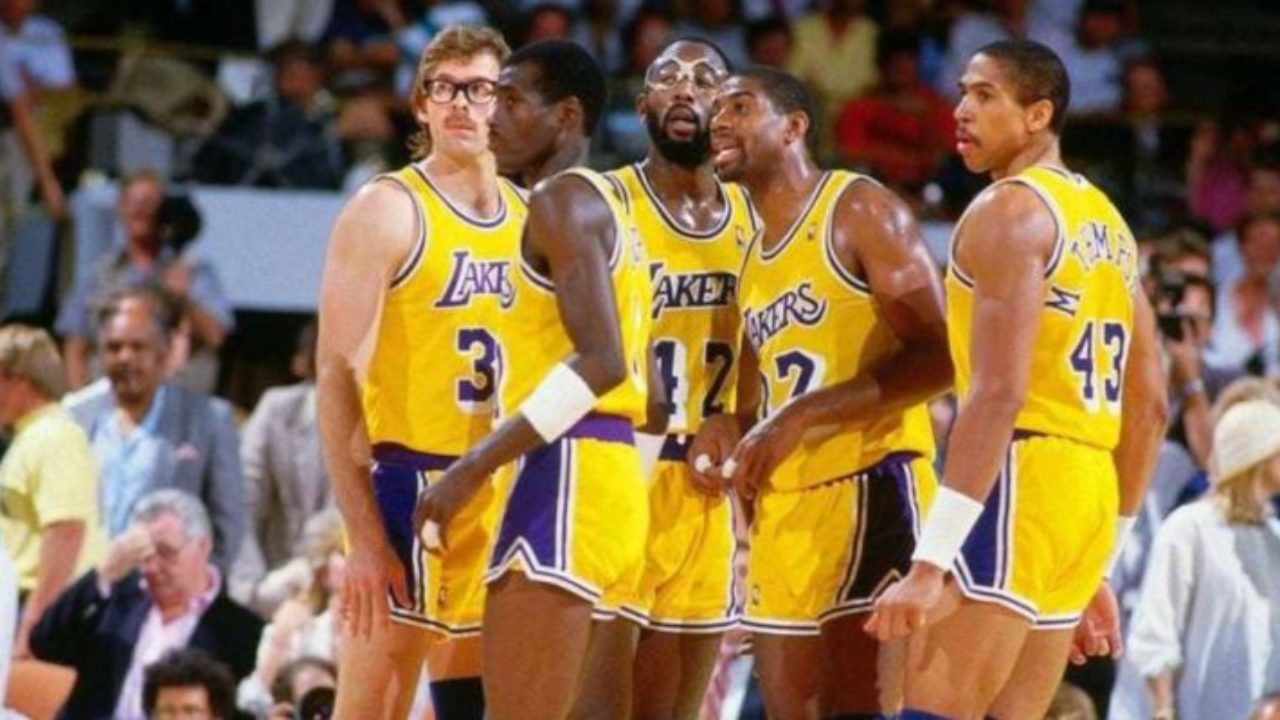
Lakers former head coach Jack McKinney on the sidelines cheering on the team from sidelines in first quarter action.

The term “Showtime!” is still so flashy that this writer feels compelled to surround it with quotes and follow it up with an exclamation point. Even though we weren’t yet teenagers, we knew the names Kareem Abdul-Jabbar, Norm Nixon, Byron Scott, Michael Cooper, Jamal Wilkes, James Worthy, Kurt Rambis, Pat Riley and Earvin “Magic” Johnson. We knew the big names, we couldn’t escape them, but as with all sports franchises, title runs, and dynasties, those names not in lights often contributed far more than we ever knew. The name almost criminally absent from this list was the architect of the “Showtime!” game plan of the run the Lakers enjoyed in the 1980’s: Jack McKinney.

Jack McKinney might be the last name we think of from this era, but the first name that comes to mind when talking about the Lakers 1980’s “Showtime!” run is Magic Johnson. He was the superstar, the smile, the face of the franchise, and a celebrity on and off the court. He was one of the few athletes of his era who lived up to such over-the-top billing. Prior to the ’79-’80 Laker season, Magic lead his college basketball team, the Michigan State Spartans to a college basketball championship, then he was the number one pick out of college. In his rookie season with the Lakers, Magic was one of the few to prove the hype machine correct when he awarded the Lakers for using a number one draft pick on him by winning an NBA Championship in his rookie season. He had some help, of course, including a man named Kareem Abdul-Jabbar, who many argue was the best basketball player of all time, and if statistics matter, Jabbar still has the most points ever scored by an individual over the course of his career.* In the 1979-1980 season, however, the 21-year-old rookie from Michigan State had every spotlight the national media owned on him, and he succeeded beyond all expectations. 

Just about every highlight of the Lakers in the 80’s contains something Magic did. Whether it was some crucial shot, powerful dunk, or one of his highlight reel passes. Magic Johnson could get anyone the ball at any time, at just about anywhere on the court.  

Was Magic the best fastbreak point guard of all time, perhaps, but we might also ask the question was Magic Johnson so great because he fit McKinney’s scheme so well, or did owner Jerry Buss hire McKinney, because he wanted the scheme, and he knew his first draft pick would flourish in it?

As Jeff Pearlman wrote in the book Showtime, the Lakers’ strategy prior to the arrival of Magic and McKinney, was “See Kareem, wait for Kareem, pass to Kareem, watch Kareem shoot and hope ball goes in.” 

Was Magic better in McKinney’s scheme than he would’ve been in Jerry Sloan’s with the Chicago Bulls? (The Bulls lost a famous coin flip for the rights to draft Magic Johnson in 1979.) Was Magic so great that he would’ve been great wher eever he played, or did the “Showtime!” game plan play to his strengths? If McKinney didn’t fall prey to the accident, and he coached a different team, with all of his facilities intact, would he have succeeded regardless? Or was the Magic/McKinney gameplan a marriage made in heaven? 

Would Joe Montana have succeeded regardless when and where he played? Was he so driven to be great that it would’ve happened no matter where he played, or did he fit the scheme the coaches implemented? We could ask this of any coach, scheme, and player marriage, but while most of the credit is given to the player, most sports nuts divide the credit more equally. How many sports nuts, the freaks of sports knowledge, know enough to know the name Jack McKinney. 

Prior to being hired by the Lakers, Jack McKinney was a basketball lifer who lived and breathed basketball. He was a college basketball assistant coach and a head coach, then he was an assistant coach for five years in the NBA. At the age of 44, he was hired to coach his first NBA team, the Los Angeles Lakers. It’s not an exaggeration to say his whole life had been leading up to that moment. How many hours, months, and years of his life did he sacrifice to one day see his dream to fruition? How many dark, quiet rooms did he sit in all alone, watching tape, learning the game, developing game plans, and correcting and perfecting it when others were out living a life? He sacrificed his life for basketball, and when all his work finally started to pay off, it was all taken away from him.

If Shakespeare were alive today, he would’ve devoured Jack McKinney’s narrative as a modern tragedy of epic proportions. He probably would’ve started his production with McKinney’s solo bike ride in which his gears locked up. Jack McKinney was thrown off the bike, and he landed in a manner that put him in a coma. The serious injuries he experienced would plague him for the rest of his life. It took him so long to recover that the Lakers named Paul Westhead coach, and then they named Pat Riley, the man credited with the Lakers fast break offense that we would eventually all call “Showtime!” This accident happened 14 games into Jack McKinney’s tenure as coach of the Lakers. He would never coach them again. 

Prior to the accident, Jack McKinney implemented his revolutionary fast break offense, and the Lakers used that game plan to win the ‘79-’80 NBA Championship, their first of that era. When McKinney’s successor Paul Westhead later tried to institute a different gameplan, it didn’t work for the talent on the court. Pat Riley took over, re-instituted McKinney’s gameplan, and the rest is history, Pat Riley’s history. The Jack McKinney story is interesting whether you are a Lakers fan or not, but it also interesting because prior to HBO’s retrospective broadcast Winning Time, based on Jeff Pearlman’s book, this sports aficionado had no idea how instrumental Jack McKinney was. The Jack McKinney story is interesting because it highlights the “forgotten man” in sports history.

“This is the guy who made my career possible,” McKinney said that Lakers’ coach Pat Riley always said when introducing McKinney, “This is the guy.”

The question author Jeff Pearlman put to Lakers’ point guard Norm Nixon decades later was, “Is Jack McKinney universally acknowledged as one of the greatest coaches in the history of the NBA?”

“I have no doubt that he would be [were it not for the accident],” Nixon said. “No doubt whatsoever.”

How many forgotten men and women, like McKinney, have changed the landscape in their world? How many little guys and girls helped the names in lights edit an otherwise flawed premise, or rescued an otherwise flawed scientific finding by disproving it so well that the genius had to go back to the drawing board to find a more perfect resolution? How many little-known advisors instructed world leaders to follow a different plan that resulted in a different outcome that defined history? We all know the names in lights, the names that sell newspapers and collect internet hits, but how many lesser-names who shunned the spotlight defined history as we know it. 

I don’t know these names, and either do you. I didn’t know the name Jack McKinney prior to this year, and unless you’re a die-hard Lakers fan, or you’ve watched the story of the Lakers in the 80’s Winning Time on HBO, you didn’t either. I heard some foggy details about a coach who started out with Magic, but I heard he died weeks into Magic’s rookie season. I didn’t know what role he played, if any, and I had no idea how instrumental he was. I just thought he was hired, and he died shortly into his tenure as coach. Jack McKinney didn’t die. He went onto coach a couple other teams, and he won coach of the year in ’80-’81 coaching for the Indiana Pacers, but after working so hard, as a coach in college and an assistant in college and the NBA, he never achieved the dream he could have with the talent Jerry West, Jerry Buss, and the rest of the Lakers’ brain trust amassed in ’79-’80, and the years that followed. McKinney is recognized by those in the know as one of the great basketball minds of his generation, but how many outside that very small world have even heard his name?     

“McKinney is not a bitter man,” Jeff Pearlman writes to close his intro on the now-deceased McKinney, “but he is human.” 

“Life isn’t always fair,” McKinney said. “I’m OK with how everything has turned out. I’m loved. But, well, it’s not always fair…”

“Jack McKinney is the man more responsible for the birth of the Showtime era of professional basketball,” Pearlman writes, “If only he could remember it.” 

If that doesn’t give you chills on how unfair life can be, then I don’t really know what I’m talking about. We talked about the scheme, player marriage earlier. Magic Johnson might not be “Magic!” today, were it not for Jack McKinney,  James Worthy might have been an all-star and nothing more, Jerry Buss might have been nothing more than an American businessman who tried and failed to resurrect the Lakers franchise, and Pat Riley might’ve ended up nothing more than a failed sports announcer. What if’s, and could’ve been, should’ve beens dot history, but the ’80’s Laker dynasty we know today, probably wouldn’t have happened were it not for one forgotten man in history, the late-great Jack McKinney. 

The Adoration of the Music of Pavement


Some people remember their first kiss, some remember the first dollar they earned, others remember when they first met their wife, the birth of their child. I remember the first time I heard Pavement’s new song Stereo. My irrational exuberance, after spending two years listening to Wowee Zowee,  was such that Pavement could’ve released a three-minute single of Stephen Malkmus clearing his throat, and I would’ve been singing that for the next month, in anticipation of the release of an album they decided to title Brighten the Corners. My passion for them was silly, inexplicable, and embarrassing, but who can explain love?

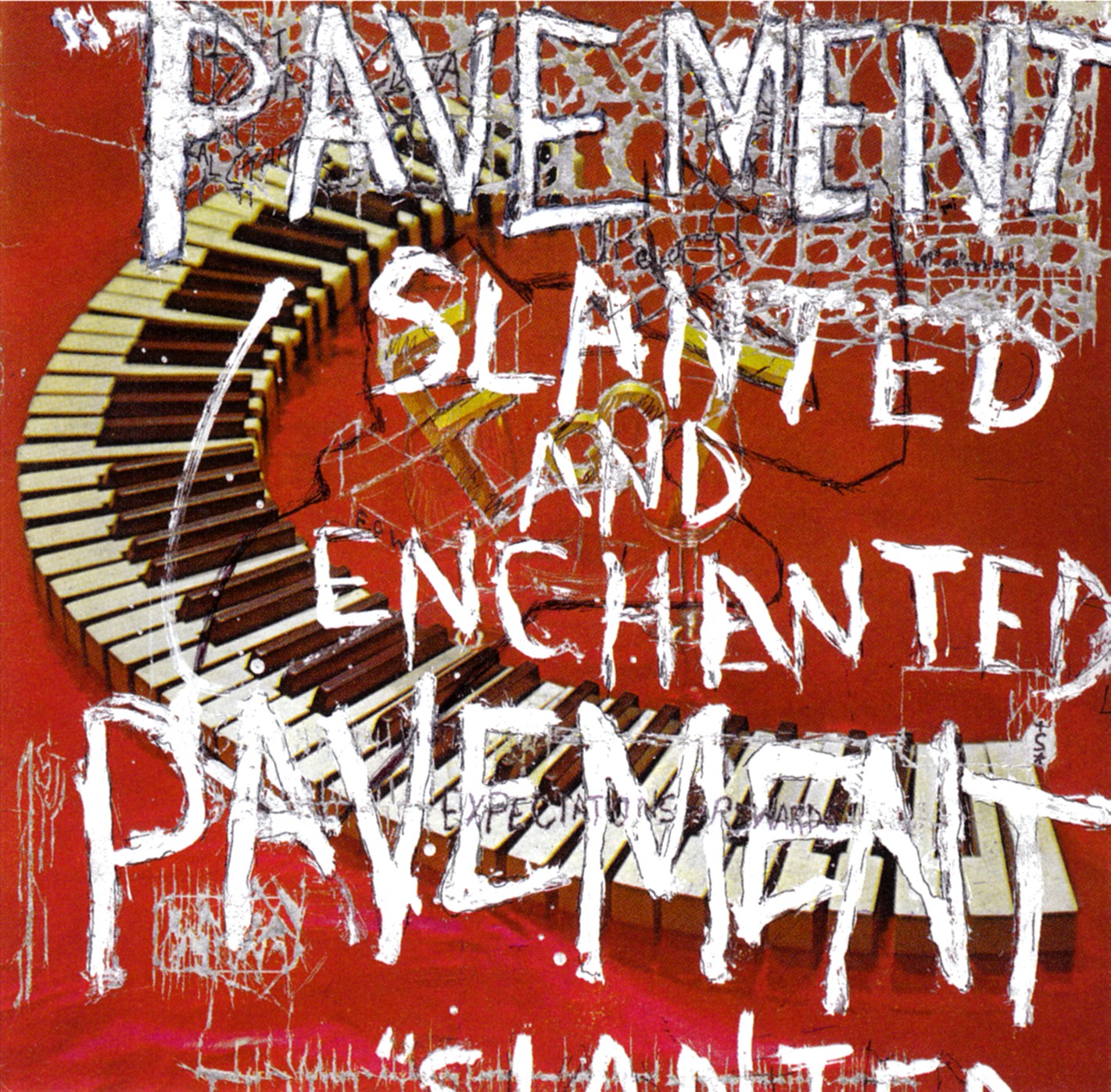
Before Apple Music, Amazon Prime, and Spotify, consumers had to take a shot in the dark on musical artists. In the early 90’s, there were no college radio stations in my area, and the radio stations we did have, played the songs their advertisers demanded. We could choose between Billboard top 40 and classic rock stations. The only outlet lovers of relatively obscure music was corporate music magazine music reviews, and most of them only reviewed top-tier artists. Every once in a while, however, the corporate chieftains would allow a reviewer to review some obscure album that didn’t  help the sales of the magazine. I never cared about the names of album reviewers. I just read the review, and some of them clicked, 99% of them didn’t. When I read a review for an album called Slanted and Enchanted from a group of nondescript fellas I’d never heard of before, I liked it so much I bought the album. I don’t know why I bought the album, but the reviewer said something along the lines of “Slanted and Enchanted is an undiscovered gem from a band who will be making some noise in coming years”. Did this guy know what he was talking about? I didn’t know, and I really didn’t care, but for whatever reason, I decided to give these guys in a band called cement, concrete, or something like that, a shot. 

Whoever that guy was, he knew his music. I listened to Slanted and Enchanted as often as I did the Seattle bands of 1992. I wasn’t around the Cali scene, when Pavement were paying their dues, but I was one of the first person I knew to own a Pavement cassette tape. It was not love them at first listen however. Slanted and Enchanted was so different and so complicated that it took a number of spins to click. To my mind, the raw Westing (by Musket and Sextant) only reinforced the idea that these guys could piece together some of the most original music I ever heard. I’ve heard some suggest that Pavement, like all artists, were a culmination, or a compilation, of their influences. If that’s the case, these cats grew up listening to music I never heard before. They weren’t punk (by my narrow and uninformed definition), hard rock, or any genre I heard. They were something different, and to my mind that’s the greatest compliment we can give any artist in the crowded field of music.  

“A genius is the one most like himself.” –Thelonius Monk.  

In 1994, Pavement doubled down on something different, when they released an album called Crooked Rain, Crooked Rain. I could go through this album and four-star and five-star the singles, but I won’t bore you with my narcissistic analysis. I will just say that I played this disc so often that almost all of the singles were playing during a seminal moment of my life between ‘94-’95. Crooked Rain, Crooked Rain cemented Pavement in the upper echelon of my favorite bands. 

As brilliant as these two albums were, top to bottom, they did not prepare me for the “Holy ‘it, these guys are it” effect Wowee Zowee would have on my psyche. As lead singer Stephen sang somewhere, “Song is sacred.” The brilliance on this disc floored me. After hearing it the first 100 times, I decided that everything Stephen Malkmus and Scott Kannberg wrote to that point culminated in Wowee Zowee. Slanted was the seed, Crooked Rain was the fertilizer, and Wowee Zowee was the flower. This analogy might be oversimplifying the evolution, and it might unintentionally denigrate the brilliance that can be found on the other two discs, but what Stephen Malkmus and Scott Kannberg (Spiral Stairs) put together on Wowee Zowee reached me on levels those other albums couldn’t.

When I write that Pavement were different that should not be confused with weird or strange. Compared to the other cassette tapes housed in my wall fixtures, Pavement were mainstream pop. When I would play their albums in my home, in my car, and in other people’s homes and cars, they were confused by what they were hearing. “I can’t believe you like this,” they would say. They were so accustomed to hearing obnoxiously complicated, noisy and difficult music coming out of my car speakers that they couldn’t believe I considered Range Life an absolute classic. The more they listened, the more confused they grew as each lyrical and musical stroke of paint Pavement put on their audio canvases had their own accessible inaccessibility.

The question Pavement, more than any other band I listened to, asked was how does we explain appeal? Why does one listener enjoy weird and obnoxiously complicated music, while another prefers a smoother flow? Drilling down deeper, why do most Pavement fans prefer one of the first two albums and I prefer the third? “Because the other two albums are superior,” you might say, “and you choose to be different for all the mileage you think that gains you.” I can’t deny that provided some initial appeal, but I’m still chasing the dragon of those obnoxiously complicated, noisy and difficult musicians, and I still love Wowee Zowee more than the other two. I don’t search for weird for the sake of being weird, but when a group like Ween can create contextual oddities, I’m all over that. If Pavement were in any way weird, it was so contextual that the listener had to dig through the cracks to find it.   

Back when the sole, mobile unit for playing music was the cassette, I think I went through three different copies of Wowee Zowee, as many will attest cassettes, and their players, weren’t built for hundreds of repeated plays. I also bought a CD version of the album later (you’re welcome fellas). After exhausting the albums, I bought all of Pavement’s cassingles (cassette singles), EP’s, and any and every musical production that had the group’s name attached to it. So, when it came time for a new Pavement album to come out, two long years later, I thought it would be the next logical step in Pavement’s evolution. (Spoiler alert: It wasn’t) I never stopped to think of artistic peaks at the time, and how Wowee Zowee just happened to dot all my personal I’s and cross my T’s in a way no album ever had. I thought if Slanted was great, Crooked Rain was even better, and Wowee Zowee had such personal appeal, then Brighten the Corners had to be an end product of whatever gap great, better, and ingenious left.     

Some people prefer to only listen to music outside the mainframe, some only listen to music that charts in Billboard top 40. There is a conceit relative to both parties, as the Billboard guy brags about his rock star’s record sales and top hits, whereas the obscure guy condemns the rock star’s audience for not knowing how deep to dig for true, quality music. I don’t know where Pavement sits in this paradigm, as I know they’ve had some record sales, some appearances on Billboard charts, and some play on MTV. I can’t deny dining out on the obscure side, but Pavement were one of the few bands that if everyone loved them, or no one did, I would continue to worship their art. 

This statement might shock those in other parts of the country, but I’ve yet to meet a tangible person who listened to Pavement at any point, and I’ve only met a few outside of my inner circle who actually heard of them. In my locale, Pavement was so obscure that people wondered how I heard of them, and other groups like Mr. Bungle and Captain Beefheart. Someone once asked me where I find such obscure music. I told her they could be found at a place called a record store.   

My frustration that no one had ever heard of these relatively obscure artists abated long before Pavement’s Wowee Zowee came out, and I put the whole “You have to hear these guys. They’re incredible” personal promotion machine behind me years prior. Very, very few people listened to my recommendations anyway, and on those occasions when I would loan my CDs out to them, they never came back saying, “You were right, these guys are incredible.” Between roughly 1992 and 1996, some Pavement album was spinning in a CD player, or spooling in a cassette player, and no one cared, and I didn’t care that they didn’t. 

The only problem for me then was that it was far more difficult to know when a relatively obscure band was coming out with a new disc in 1997. The internet has changed that dramatically. We can now subscribe to their site, check their Facebook page, or search the name of their band to learn about a new release. In 1997, we had a dry erase board at our local mom and pop record store with dates of releases and names written in fluorescent ink. “2/17,”, the whiteboard said one day, “Pavement: Brighten the Corners.”  

As a 27-year-old man, I was that kid who found out Santa was coming. I actually formed my own personal countdown that I would say to friends, “You know what today is?” I would ask, tongue-in-cheek. “Day 11, until the release of Brighten the Corners.”   

The people I knew and loved craved career advancement, money, romance, or some other form of concrete, identifiable advancement that defined them as a greater man. My identity was wrapped up in music. It’s almost embarrassing now to admit how much music has meant to me throughout my life. I had nothing to do with the music, or course, and I didn’t prosper in any way when one of “my artists” came out with a new disc, but I felt some kind of personal glory when they came out with a spectacular, spine-tingling release.  

When Pavement released the single Stereo, I grabbed a copy of it in the aforementioned record store in a manner that suggested I thought a melee might break out if others knew it was sitting on the shelf. When I listened to it, I thought it was a harbinger of the greatest album ever made. As I mentioned earlier, the progressive, five-year build up to that disc let my imagination go wild. I not only loved every album that built up to it, but their B sides were some of my favorite songs, and I dove deep into their EPs, particularly the Give it a Day/Gangsters and Pranksters EP. When one of Pavement’s songs appeared on a soundtrack or compilation tape, I snapped it up quickly, even if I didn’t care for any other artist on it. (My favorite single among those released in this manner was an R.E.M. homage called Unseen Power of the Picket Fence. It appeared on a No Alternative compilation, and it now appears on the Crooked Rain, Crooked Rain: LA’s Desert Origins anniversary edition.) With all that, I looked forward to Pavement’s next release as I would Quentin Tarantino’s next release after Pulp Fiction and everything that contained Mike Patton or David Bowie’s.   

The question I should’ve asked myself, in preparation for the release of Brighten the Corners, is how could Pavement possibly top Wowee Zowee? I didn’t ask that question, because they already established a track record of constantly topping themselves the next time out. I had such a nebulous understanding of artistic peaks that I didn’t even consider it. The artists themselves don’t understand them. If they did, they’d know how to duplicate it.

Some suggest that artistic peaks are a time and place phenomenon relative to the fan. The idea behind the time and place phenomenon suggests that a band such as Green Day wouldn’t have enjoyed the commercial success they did, if they released their first album ten years earlier or later, and if Nirvana’s Nevermind were released ten years earlier or later, it wouldn’t have had the enormous sales it did. While I find the idea thought-provoking and fascinating, it also suggests that if we somehow flipped the release dates of Brighten the Corners and Wowee Zowee around on another timeline, I might’ve consider Brighten the Corners the masterpiece and Wowee Zowee the comparative disappointment, because of the place I was in, in 1995. I don’t see it. Wowee Zowee just hit too many of my personal touchstones, and it crossed every one of my T’s and dotted my I’s so well that I considered it such an artistic peak that my anticipation for its follow-up was unprecedented, and I never looked forward to another artist’s future release so much before or since.  

As such, Brighten the Corners proved to be the most disappointed I’ve ever been in an album. Was it bad? No, not even close, but I didn’t know that at the time. I listen to the album now, and it has a number of classic Pavement songs on it. Aside from Stereo, the next three songs on the disc were, and are, really good, and Embassy Row might be one of my favorite Pavement singles. There really isn’t a terrible song on Brighten the Corners, but it had the unenviable chore of trying to follow one of my favorite albums of all time.      

The fact that I still remember the time and place I first heard Stereo shouldn’t suggest that the song was that great either. It wasn’t. It isn’t. It was good, really good, but it couldn’t possibly meet my expectations. It was the album before that, and the album before that, and the album before that. 

Some Johnny-on-the-spot, 1995 reviewers stated that with Wowee Zowee, Pavement seemed to be “self-sabotaging, of being afraid of success”. Prior to Wowee, Pavement were critical darlings, but the critics considered the disc a gigantic leap down from what they considered their legendary first two discs. I had to read those words three times to try to make sense of them. These critics weren’t jumping off the Pavement ship, but they thought it was a gigantic step down from five-stars to four and a half. Go to just about any site that reviews albums now, Allmusic.com in particular, and you’ll read unending praise of the first two discs, coupled with five-star ratings. More often than not, you’ll read that Wowee Zowee has a four and a half star rating. It doesn’t sway my opinion in the least of course, but it does lead me to wonder if the critics didn’t fall prey to the time and place theory or if I did, but I still view Wowee Zowee as the absolute pinnacle of Pavement’s artistic peak.

It seems to me that critics penalize Wowee Zowee by half a star for following Pavement’s epic releases. I also wonder if, in the critics’ minds, Pavement lost their indie/alternative cred by that point, and they viewed them as more established artists, even if they never managed huge sales. If the former is the case, should we penalize Slanted and Crooked for not being as good as Wowee. No, I still give all three five stars. I don’t know when it started, but many critics and fans have attempted to retroactively whitewash their initial reactions to Wowee Zowee by now calling it Pavement’s masterpiece. I honestly didn’t care why the critics slammed it then, and I don’t care how they try to clean it up now. I was so artistically moved by the album that I thought their next artistic adventure would break through whatever stratosphere Wowee Zowee didn’t. I never sat down and tried to imagine how it could, as I wrote, but Pavement did so much in such a short span that they made me believe anything was possible. If I were an obnoxious critic, I might retroactively assign Brighten the Corners four and a half stars, to assuage my guilt for initially calling it the most disappointing album I’ve ever heard.  

As Pavement puts a cap on their career with a now 23-year retrospective release of Terror Twilight, called Terror Twilight: Farewell Horizontal, those of us who loved them can say they released three incredible albums, one great one, and another that put a really good exclamation point on their career. Pick any artist who seeks artistic adventure, and you’re going to be able to pinpoint an artistic peak. “They’re not as good as they used to be,” is a phrase we love to say to build up an artist and tear them down, so we can identify with them better. We also think it gives us some form of critical panache to say such things, but in retrospect it makes us all look a little silly.