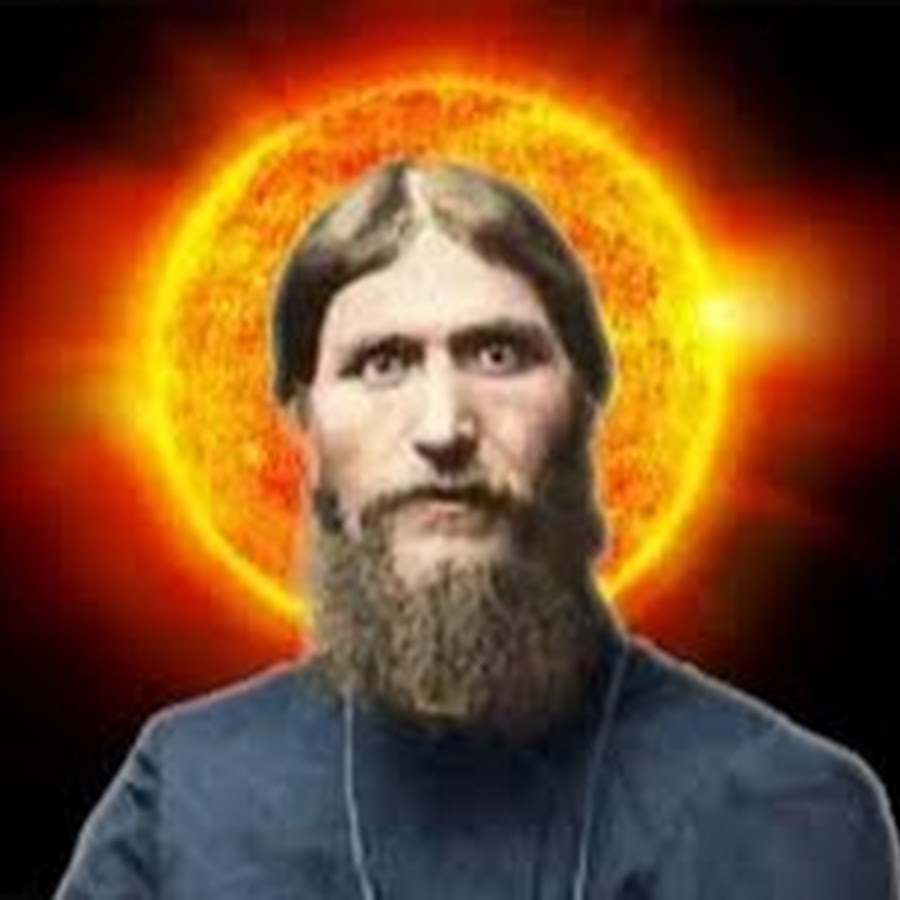
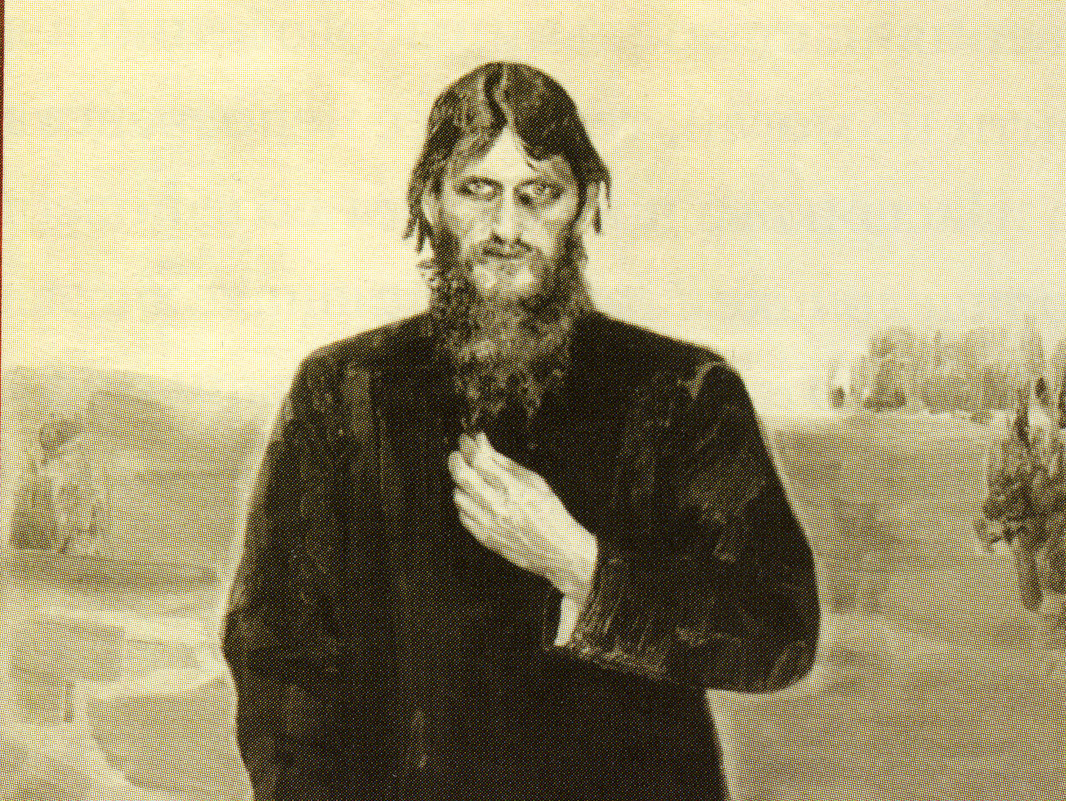
Grigori Rasputin V: Sorcerer or Charlatan?


“Was Gregori Rasputin really an occult mystic who used treacherous sorcery to ingratiate himself to Tsar Nicholas II by performing miracles on and curing the pain of the Tsar’s son? Or was he, no less impressively, a most gifted Counter-Agent who disarmed his country’s most powerful rulers through sheer charisma and manipulative charm?” –asks Adam Lehrer in the Safety Propoganda

“No!” say some historians. “Rasputin wasn’t any of those things. He was nothing more than a right time, right place charlatan.” Anytime one accuses another of absolute fraud, deceit or corruption, their first responsibility is to prove that the provocateur knowingly deceived. We can all read the conditions of the Russian empire at the time and see that they were susceptible and vulnerable to a charlatan. We can read through the health conditions of Tsar Nicholas II’s son, Tsarevich Alexei Nikolaevich, and know that the Romanovs were desperate for a miracle worker to spare him the pain and possible death of hemophilia. We can take one look at Rasputin, the ill-educated peasant from nowhere, Russia and know that if he didn’t do something spectacular, he was doomed to a life of anonymity, but there is ample evidence to suggest that Rasputin believed he had an ability, if not the otherworldly powers, to cure the Tsar’s son. To believe otherwise is to suggest that Rasputin knowingly deceived his family since birth, and the friends and neighbors who surrounded him in the early part of his life. There’s an old line on subterfuge that it’s not really a lie if you believe it. When we say this, we usually do so tongue in cheek, but Rasputin’s bio suggests that he truly believed he had God-like powers? “Christ in miniature,” Rasputin often said when asked to characterize himself. Was he a deceptive person? Did he attempt to deceive the Empress Alexandra, Tsarevich Alexei Nikolaevich’s mother, to weave a way into the empire, or did he attempt to prove to himself as “The Chosen One!”

At the moment of his birth, Rasputin’s mother believed he was the chosen one, and we can guess that she told him as much on a daily basis throughout his youth. We might cut her some slack for this fantastical notion, seeing as how Rasputin may have been her only child of seven, or eight, to survive childhood. (Evidence suggests she had a daughter who may have also survived for a time.) Anytime a mother has a child, they consider that child special, but in Rasputin’s Serbian village of Polrovskove death among children was so common that the miracle we know as childbirth was increased tenfold in that world of peasants. The idea that Rasputin was special may have grown in her mind as he did, until she was convinced that Grigori was a gift from God, and she eventually made a crossover to the idea that her son was the chosen one. 

What would we think if our mother told us we were God’s messenger throughout our youth? What if she bolstered her claim by telling us that at the moment we were born a rare celestial event occurred to mark the occasion of our birth. “A shooting star of such magnitude that had always been taken by the God-fearing muzhiks as an omen of some momentous event,” she said.

What if everyone we knew and loved growing up believed, as our mother did, that we were gifted with the ability to read minds, and/or “see things that others could not”. Rasputin grew up in a climate where everyone he encountered on a daily basis, and presumably throughout his life, believed he had divine powers. If we marinated in the thoughts of our own divine nature throughout our youth, how many of us would end our believing it? Our parents are powerful influences on our lives, and how we think, but as we age, we begin to see the errors of their ways. If Rasputin went through this natural course of maturation, his friends and neighbors in Polrovskove only bolstered his mother’s claims. Rasputin was also involved in a death-defying accident that took the life of his cousin. He spent years wondering aloud why he was spared and his cousin wasn’t. His conclusion, one which we can assume that his friends and family encouraged, was that divine intervention spare him, so he could go out and spread God’s message. 

When historians say Rasputin fell into a right place, right time era, they’re talking about an era that followed executions for anyone who attempted the heretical notions Rasputin espoused to a time when minds were just beginning to open up to the idea that man could manipulate his surroundings for the purpose of massive technological advancement. Those from the era also learned, mostly secondhand, of some of the advancements made in medicine that suggested man could wield God-like powers over life and death in a manner deemed heretical in previous eras. The early 20th century Russian citizen was likely more amenable than ever before to the belief that man could now manipulate the bridge between life and death, and generally make life better for his fellow man without necessarily being a heretic. Based on that, we could say that Rasputin was a right time, right place charlatan, or we could say he, more than any other, took advantage of this window in time. Those who call him a charlatan, however, must still address the notion that Rasputin knew he wasn’t the chosen one, and that he was lying to the vulnerable, desperate Empress Alexandra Feodorovna (Alix of Hesse) to convince her that he was. 

How did Rasputin discover that Tsar Nicholas II’s son, Tsarevich Alexei Nikolaevich was sick? The Russian empire, in the era of the Romanovs rule, was a vault. No state secrets, or leaks, found their way out, and the illness of the Tsarevich was one of the most guarded secrets. The Romanovs had nothing to gain by announcing their only male heir’s illness and everything to lose. Through the connections he made, as a man “known to possess the ability to heal through prayer” Rasputin was called upon to heal the Tsarevich by Anna Vyrubova, the empress’s best friend. Did Rasputin struggle with this newfound information, did he consider it his patriotic duty to try to save the young heir to the throne, or did he see this as an opportunity to finally prove himself to himself? If he failed to convince his family, friends and neighbors of his special powers, there was nothing lost. If he was a fraud, and he knew it, he would surely have a list of excuses he could use to explain it. If he failed the Empress, the embarrassment of trusting the health of her only begotten son to a lowly peasant could lead the Empire to try to silence any fallout by imprisoning Rasputin or executing him, and needless to say, this empire had no moral qualms executing peasants. Failing the empire, at the very least, would ultimately reveal to Rasputin and everyone else in the empire that he was a fraud and a charlatan. This presumed struggle goes to the heart of this article, because Rasputin eagerly accepted the invitation to try to heal Alexei. 

The arguments about what Rasputin did to eventually calm the conditions of Alexei Nikolaevich are wide and varied, but most historians agree that Alexei was never cured of his case of hemophilia, because there is no cure. To this date, modern medicine has yet to find a cure. Alexei had hemophilia the day he was born, and he had it when he was murdered, a month before his fourteenth birthday. The very idea that he almost made it to fourteen, and he could’ve lived well beyond that, had he not been murdered, was viewed as one of a series of Rasputin’s miracles. The fact that Alexei was relieved of his pain, and many of the symptoms of hemophilia, was also viewed as one of Rasputins’ miracles.

Some argue that Rasputin may have been so familiar with hemophilia that he knew certain techniques he could use to help calm the Tsarevich down, and thus give the illusion that he was cured. We still consider it something of a miracle that our body often manages to heal itself. Some call it the power of the mind, others call it the power of prayer, and still others call it the mysterious power of the miraculous machines in the human body to heal itself. No matter what we believe, it appears that in some cases, if our mind believes we are being cured, it can go a long way to encouraging us that we are. 

No matter the arguments, details, and conclusions, Rasputin did it. Rasputin did what the most brilliant minds of medicine in Russia, in the early 20th century, could not, and when he advised Alexandra on how to maintain Alexei’s health, and that advice proved successful, Alexandra fell under Rasputin’s spell. She thought he, more than any of the other men of medicine in the empire, could cure her son of a malady to which her side of the family was genetically susceptible. The idea that she believed Rasputin could cure her son, led her to convince her son of it, and that presumably led Alexei calming to the point that his hemophilia was not as debilitating as it would’ve been otherwise. So, Rasputin did help provide what Alexandra considered a miracle, but our modern understanding of the relationship between body and mind suggests that it was not as mystical or unprecedented as Alexandra and those who love the narrative want us to believe.

The interesting nugget here, and the import of this story, is that Alexandra may have followed Rasputin’s advice on how to cure her son so often that she may have also followed his other advice on greater matters of the Russian Empire, and she may have whispered that same advice into Tsar Nicholas II’s ear as if it were her own. 

“What was he?” “Who was he?” “What exactly did he do to spare the life of the Tsarevich?” “Was he the most gifted sorcerer the world has ever known?” How great was his influence over Alexandra? Reports suggest he had no influence over Nicholas II, but Alexandra did. Did Rasputin whisper things in Alexandra’s ear that she whispered into Nicholas II’s, as if they were her own ideas. British intelligence believed this, and some suggest that the Britain commissioned Rasputin’s murder, because they feared his influence in the Romanov Empire might prevent Russian entry into World War I?

We’ll probably never know the truth of any of this, because the Romanovs had a situation in their empire where they were able to control their narrative. They had very little in the way of leaks, and no one from the empire wrote a tell-all after the empire collapsed to detail what really happened within the confines of its walls. It was a situation modern politicians would salivate over, but historians, not so much. As a result of the tight Romanov ship, most of the literature written about this Russian era and the relationship between Rasputin and the Romanovs involves a great deal speculation. That’s the fun part for the rest of us, because we can use the base details of what happened and submit our own subjective beliefs into the story for fantastic and fantastical conclusions. One of us can speculate that Grigori Rasputin was a sorcerer with otherworldly powers, another can say he was an absolute charlatan, and the rest of us can say that the man landed in the perfect time and place for nature of his actions are almost impossible to prove or disprove. The one thing we can state without fear of too much refutation, is if we took all of these ingredients and threw them into a big stew of rhetorical discussion, is that Grigori Yefimovich Rasputin was one of the most enigmatic figures in world history.   
 

Was Y2K an Unfixable Problem, Hysteria, or an Easy Fix?


“You never get credit for the disasters you avert,” Technology forecaster Paul Saffo told the New York Times in 2013. 

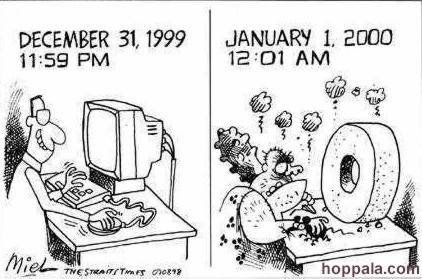
The greatest fear of the Y2K (Year 2000) bug was the fear of the unknown. In 1999, we thought the unfixable” Y2K bug was a first step in our dystopian future. We can all have a laugh about it now, but very few of us were laughing in December 1999. We didn’t know, and that’s what scared us.

The crux of the fear, for those who didn’t live through it, was that computer programmers didn’t bother listing the full four numbers of a year. 1995, for example, was listed by most computers as 95. 1996 was listed by computers as 96, and so on and so forth. The fear was that when the calendar flipped from 1999 to 2000, computers might not be able to distinguish between 1900 and 2000, because computers, in computer-reliant industries, might not be able to distinguish between the years, since they had, to this point, only listed years as two digits.

If it was fixed, did it require a collective effort from private companies, government expenditures that some estimate in the range of $400 to $600 billion, and independent engineers, or was this largely exaggerated problem a relatively easy fix? Was the problem greatly exaggerated and overhyped?

Some of us had our own, internalized doomsday clock in December of 1999, because we feared the unknown. Did we fear it from the comfort of our own home, because we were told to fear it? We were told it would affect every human’s daily life in one way or another. Large or small, we thought every day life wouldn’t be as great as it once was in December 1999. Some of us thought the electricity grid might go down, we heard planes might fall from the sky, our cars and unprepared computers would become inoperable, and our bank’s automatic teller machines (ATMs) would not dispense money. We all laugh about it now, but some maintain that tragedy was averted, and when tragedy is averted without a noteworthy event, we quickly forget how tragic it could’ve and probably should’ve been.

If any problem solver fixes a problem before it ever becomes a problem, they receive no credit for it. If they’re concerned with receiving some form of credit, the most advantageous route is to forestall a solution to allow noteworthy events to occur, and then fix it and save the world. As we all know, this did not happen in the Y2K scare.

I knew people who stocked their pantries with bottled water and grain pellets, I knew others who withdrew extra cash from their bank’s ATM, and I knew a number of people who bought Y2K software updates for their computers. No one knew everything, but we all knew some things, and everyone knew that we had to be prepared for anything. Our reaction to the scare defined us in 1999, but it further defined us on January 1, 2000, as it was noteworthy what we did to avoid becoming a victim of something that never happened. Whatever you did became the subject of ridicule.

The theoretical question we asked one another in 1999 was not when it would affect us, because we all knew that. The question was how much would it affect our daily lives? Few reasonable and rational adults asked the question if it would affect us. Due to the fact that computers were still relatively new to us, we considered it a fait accompli that it would affect us. We grew up with science fiction movies that revolved around a plot that that which can help man today could one day, and in some way, ruin man in a dystopian manner that no one saw coming.

In those movies, the proverbial, street corner bell ringer was always the best-looking actor in the movie (which lends their character more gravitas) warning the less attractive (and thus less aware) side characters of impending doom. None of the average-to-ugly actors in the movies recognized the true, impending threat for what it was until it was too late. We didn’t want anyone to consider us average-to-ugly, so we mentally prepared for the day when an attractive person lofted a preposterous notion to us.

In 1985, someone posed a theoretical question about how Y2K might affect computers when the century switched, but the problem for us was we didn’t know how attractive that theoretician was, so we didn’t take it seriously. Their theoretical notion hinged on the idea that for decades computer programmers wrote the year in shorthand. They didn’t write out the year 1985, they wrote 85. Some claimed the shorthand was done to save memory space. Thus, when the year flipped from 99 to 00, we feared that all of our computers would believe the year was 1900, 1800, or even year 00? Most of us didn’t believe that computers would transport us bedside, next to the baby Jesus, but we feared that our computers would fail to recognize the logic of the switch, and that the bug it created might introduce such internal confusion in the computer’s mainframe that they would simply shutdown. We feared any human input introduced to combat this inconsistency would prove insufficient, and that human interference could lead to some unforeseen complications, and we feared our computers would be unable to sort it out? The theoretical question reached hysterical proportions in the fourteen years between 1985 and 1999, as America grew more and more reliant on computers for everything from its most important activities (travel) to its most basic (ATMs and the electrical grid).

My guess is that the recipient of that first theoretical question brought it to a closed-door boardroom, and some of those board members took that question out to other parties, until someone in the media heard the question and thought it might prove to be an excellent ongoing question to ask an audience in ongoing features every week. They could start a Tuesday Tech story of the week in which they asked the informed and uninformed what they thought of a problem that wasn’t a problem yet, but could be a problem when the calendar flipped.

Media figures play two roles in our lives, they tell us what we need to hear, read, and see, and they tell us what we want to hear. We don’t want to hear eggheads talk 1s and 0s, unless they can make it apply to our lives with a quality presentation. That, in my opinion, provides stark clarity on our mindset, because we prefer the presentations inherent in science fiction to the hard science of the actual factual.

“Nobody cares about computer programming,” we can guess a network executive informed that ambitious reporter’s Tuesday Tech proposal. “Why should I care about this?”

“The angle we’re proposing is more granular,” this reporter said. “The first network focused on the larger question of computer technology in their Tech Tuesday reports. In our Tech Thursday features, we’ll explore how much of our lives are now dependent on computers. Our energy grid, the tanks at the gas station, and the ATMs. We plan on bringing this theoretical problem home to where people live. We will say this Y2K bug is not just going to affect Silicon Valley and Wall Street, it could have far-reaching implications for citizens watching from Pocatello, Idaho to Destin, Florida, and here’s how …”

As usual with hysterical premises of this sort, the one component most news agencies, and the word-of-mouth hysteria that follows, fail to address is human ingenuity. Rarely, do we hear a reporter say, “We’ve all heard the problem called the Y2K bug, but we rarely hear about proposed solutions. Today, our guest Derrick Aspergren will talk about proposed solutions to comfort the audience at home.” The problem for news agencies is that the Derrick Apergrens of the world are often not very attractive or charismatic, and they speak in ones and zeroes. Even though most computer problems and solutions involve a lexicon of ones and zeroes, no one wants to hear it, and few will remember it. As a result, news agencies rarely give Derrick Aspergrens airtime, and they focus on the dramatic and provocative, proverbial bell ringers standing on a street corner.

In 1999, we rarely heard the question, can hardware engineers and electrical engineers fix a problem they created? The learned fear we’re conditioned to believe, based on the plot lines of so many science fiction movies, is that if we dig deep enough, we’ll discover that this isn’t a human problem at all, but a problem generated by a scary conglomeration of ones and zeroes we call AI (artificial intelligence). We knew little-to-nothing about the potential of AI in 1999, but we feared it, and its potential, because we feared the unknown. “AI is here, and there’s nothing we can do about it!” was (and is) the battle cry of conspiracy theorists on radio, in our neighborhoods, and in our work place. The truth is often much less dramatic.

The truth, we now know, was somewhere south of the hype. The truth lived somewhere in the question of whether the Y2K fear was real. If it required a big, worldwide fix, as some suggest happened, how come there were no Nobel Prizes handed out? “That’s because it required a collective effort from so many minds, around the world that there was no individual to accord credit.” Or, was the fix so easy that any hardware engineer, worth half of his college tuition payments, was able to do it?

Was the Y2K scare a tragedy averted by hardware engineers enduring mind-numbing hours of editing, or was the entire affair hyped up through media mis, dis, or mal-information? I don’t remember the reports from every media outlet, but how much focus did the round robin hysteria generated by the media place on possible and probable fixes? Some suggest if there was a need for a fix, it could be easily accomplished by hardware programmers, and others suggest it was never this world-shaking threat we thought it was.

The problem for us was that the problem was so much more interesting than the fix. Take a step back to December 1999, and imagine this news report, “Here we have a man named Geoffrey James, who says, “If Y2K experts (some of whom have a software background but none a hardware background) ask some electrical engineers about date checking in embedded systems, they will learn that only a complete idiot would do anything resembling the conversion and comparison of calendar dates inside a chip. We use elapsed time, which is a simple, single counter; it takes ten seconds to add to a circuit.

“I may oversimplifying but ultimately the reasoning doesn’t matter,” Geoffrey continues, “the unfixable system problem either isn’t real or isn’t significant enough to spawn a disaster. Because there aren’t any.” That rational and reasonable explanation from someone purportedly in the know would’ve gone in one ear and out the other, because for some of us there are no absolutes, and there are no quick fixes. When someone dangles the prospect of a simple solution to the simplest problems, we swat them away:

“You mean to tell me that all they have to do is add to a circuit. I ain’t buying it brother, and if I were you, I wouldn’t buy it either. I wouldn’t go out into the world naked with the beliefs of some egghead. We all have to prepare for this, in one way or another, we must prepare.”

Some of us thought the Y2K bug would force us to back to the primal life of the cavemen, or at least to the latest and greatest technology of the McKinley administration of 1900. Friends of mine thought those of us who know how to hunt and forage for food would once again take their rightful place atop the kingdom of those who grew so accustomed to the comfy life of a visit to the neighborhood grocery store. More than one person I knew thought our appliances might explode, and that Americans might finally know what it’s like to live in the poorest third-world nations in the world. They thought we would return to our primal life, and our TV shows and movies reflected that fear, anxiety, and (some say) desire to return to our primal roots.

News reports stated that hardware engineers and other electrical engineers were working on the problem, but they’re not sure they’ll have a workable in time. We knew the line: “For every problem there is a solution,” but when you’re in the midst of hysteria, lines like, “This was a man-made problem that requires a man-made solution” provide no comfort. We all know that tangled within mankind is a ratio of geniuses who not only know how to propose solutions, but they know how to apply and implement them. We know this, but humans suffer from an ever-present inferiority complex that suggests no mere mortal can resolve a crisis like this one. We know this because no self-respecting science fiction writer would ever be so lazy as to suggest that a mortal, whether they be a military leader with a blood lust who wants to detonate a warhead on the monster, a policeman who believes that a bullet can kill it, or an egotistical scientist can resolve this particular dystopian dilemma.

Even though this was a man-made problem, few outside the halls of hardware engineer offices believed man could solve the problem. We heard about geniuses who brought us incredible leaps of technology so often that it was old hat to us. We knew they could build it, but there was this fear, borne in the human inferiority complex, and propagated by the sci-fi movies we loved, that technology had spiraled so out of our control that it was now beyond human comprehension to fix it.

Was Y2K overhyped as an unfixable problem, was the solution so elementary that it simply took a mind-numbing number of man hours to implement it, or was it a simple hardware fix? I don’t know if the numerous media outlets who ran their Tech Tuesday features ever focused on the idea that the Y2K problem, of two digits vs. four, was generated by a theoretical question someone asked fifteen years before, but I told my terrified friends as much. “If this whole thing is based on a theoretical question, what is the theoretical answer?” With fellow uneducated types, I furthered, “And if we search through the theoretical answers, we might find an actual one.” The theme of my response involved the hope that we weren’t so terrified by the questions that we failed to seek answers, and I was shouted down. I was shouted down by uneducated types, like me, and I was, am, and forever will be woefully uninformed on this subject. They told me that I didn’t understand the complexities involved, that this situation was far more serious, and that I was underestimating it. I’d love to say that I adjusted the focus of my glasses, as I attempted to adjust theirs, but when the screaming majority in your inner circle is convinced to consensus those who are relatively uninformed either silence or buckle. I cowered, and I regrettably conformed to some of their fears, but I didn’t know any better. None of us did. The one takeaway I have from the hysteria we now call Y2K is that we should use Y2K hysterica’s fears as a precedent. If we have theoretical questions based on theoretical questions we should ask them of the more informed, more educated “experts”, because theoretical questions could eventually lead to some actual answers. The alternative might result in us shutting down the world over some hysterical fear of the unknown.

Guiteau Gets Garfield


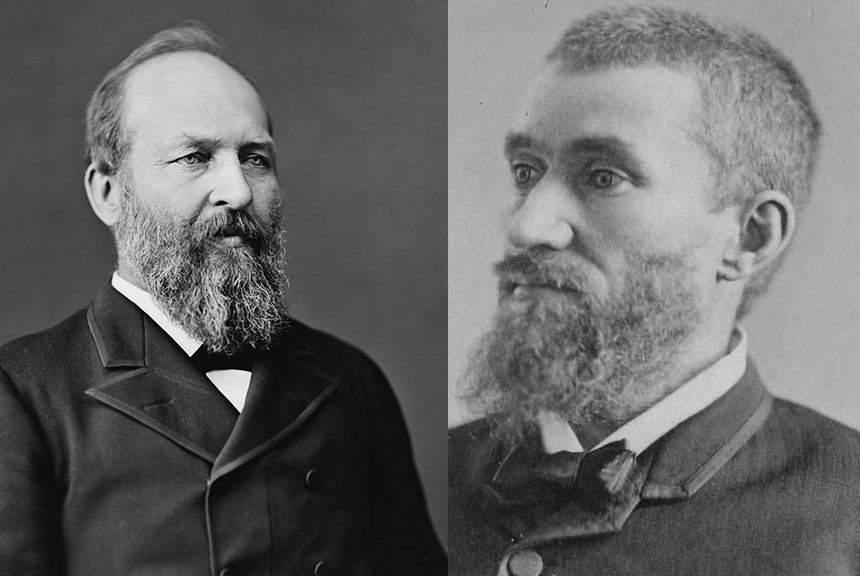
“I am a Stalwart of the Stalwarts … Arthur is President now,” an assassin named Charles Julius Guiteau said after shooting the 20th President of the United States, James Abram Garfield in the back at the Baltimore and Potomac Railway station in Washington D.C., on July 2, 1881. (New York Herald, July 3, 1881).  

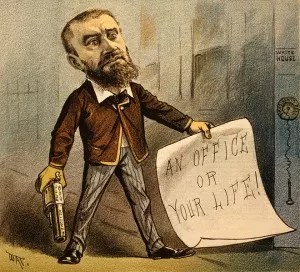
Charles Guiteau believed he played an instrumental role in the presidential election of James Garfield, and he thought the administration owed him a job. He believed he was a Stalwart, a hard working, supporter of the cause, and when the administration decided not to reward him for his efforts, he decided to shoot the president. He dressed the motive up later, saying that he was on a mission from God to save the party and the country, but the motive that drove him to borrow money for a gun, practice target shooting, and stalk the president arose because the president wouldn’t give him a job.  

There are no records of a meeting between Garfield and Guiteau, so there were no personal rejections, but Garfield’s Secretary of State told Guiteau to “Never bother me again about the Paris consulship so long as you live.” There are also no records of a direct relationship between Guiteau’s annoying persistence and the Garfield administration’s decision to end the practice of offering positions to Stalwarts, also known as the patronage or spoils system. Ending this practice, encouraged Guiteau to believe he should assassinate a president.  

Why did Charles Guiteau do it? What drove this man to want to commit such a violent? What was his motive? Inquiring rubberneckers of history want to know. We could say people just have a natural curiosity, but that would suggest that once we have our answer, we all walk away. We’re obsessed with serial killers, mass murderers, psychopaths, sociopaths, and assassins. We want to know what drives them to violence. 

Is our drive to find out what drove them all about intrigue, or do we have a motive behind wanting to know the motive? Who cares why a man kills people? Who cares why a man tries to assassinate a world leader? Some suggest that if we know the motive, we might be able to prevent future incidents of a similar nature. To do that, we need to understand the criminal mind. To do what? What if the violent perpetrator has no motive? What if he lies? What if he realizes that assassinating a president, because that president wouldn’t give him a job is a pretty stupid reason to kill a man? What if he invents a motive to assign some level of importance to what he did? What if the truth is that he always wanted to commit a random act of violence?  

Do we appreciate it when a killer provides a specific motive for his actions? Does knowing a motive provide us some level of comfort? Some accept the fact that someone shot a bunch of people, because a dog told him to do it. It’s better to believe that than it is to think that they did it because they just wanted to commit a random act of violence.   

In service to his Stalwart duties, Guiteau gave poorly attended speeches on candidate Garfield’s behalf. The audience to these speeches suggest Guiteau thought President Ulysses S. Grant was going to seek a third term. They thought he simply crossed out the name Grant and replaced it with Garfield. They said this because Guiteau accidently attributed Grant’s accomplishments to Garfield. The mentally unstable Guiteau still believed he proved instrumental in Garfield’s victory, and he wrote numerous letters to Garfield, and he visited the White House and the State Department numerous times, to argue that they should reward him for his efforts with a position in Garfield’s administration. When these efforts failed, the narcissist Guiteau decided he needed to assassinate the president to save his party and his land. 

“[S]aved my party and my land. Glory hallelujah!” Guiteau wrote in a poem he recited, as his last words before execution. “But they have murdered me for it, and that is the reason I am going to the Lordy.”  

Before the assassination attempt [Guiteau] wrote an “Address to the American People,” making the case for Garfield’s assassination. In his address, Guiteau accused Garfield of “the basest ingratitude to the Stalwarts” and said the president was on a course to “wreck the once grand old Republican party.” Assassination, Guiteau wrote, was “not murder; it is a political necessity.” He concluded, “I leave my justification to God and the American people.”  

Guiteau wrote a second justification for his planned assassination or, as he called it, “the President’s tragic death.” Guiteau, claiming himself to be “a Stalwart of the Stalwarts,” wrote that “the President … will be happier in Paradise than here.” He ended his note with the words, “I am going to jail.” 

Guiteau arrived at the station about 8:30. He felt ready for the job, having practiced his marksmanship on a riverbank on the way to his destination. Garfield entered the nearly empty station at 8:25 with Secretary Blaine and a bag-carrying servant. They walked several steps into the carpeted “ladies’ waiting room” when Guiteau fired his first shot. It grazed Garfield’s arm. Guiteau moved two steps and fired a second shot. The bullet entered Garfield’s back just above the waist. The president fell as the back of his gray summer suit filled with blood. 

After shooting the president, Guiteau tried to calm the onlookers, “It’s all right, it’s all right,” he said before the police officer on duty arrested him. 

“I did not kill the President,” Guiteau said during his trial. “The doctors did that. I merely shot him.” Though a laughable defense in a criminal proceeding, historians suggest that when used as a defense against execution in a murder in the first-degree case, it might merit some consideration. Esteemed historians, such as Candace Millard, author of the excellent Destiny of the Republic, suggests that if President James A. Garfield’s doctors did nothing, Garfield might have recovered. Her assumption is based on the idea that the doctors who attempted to locate Guiteau’s bullet were untrained in Listerian antiseptic methods that would be in widespread use a decade later. Historian, and Garfield biographer, Allan Peskin disagrees. He stated, “That medical malpractice did not contribute to Garfield’s death; the inevitable infection and blood poisoning that would ensue from a deep bullet wound resulted in damage to multiple organs and spinal bone fragmentation.” An autopsy identified the cause of death as a rupturing of an aneurysm in the splenic artery. 

In the hours after his arrest, Guiteau acted strangely. On the way to city jail with a police detective, Guiteau asked the officer if the detective was a Stalwart. When the detective replied that he was, Guiteau promised to make him chief of police. In jail, he balked at removing his shoes, complaining that if he walked barefoot over the jail’s stone floors “I’ll catch my death of cold.” When a photographer snapped his photo, he demanded a royalty payment of $25.  

Prosecutor John K. Porter demanded to know whether Guiteau was familiar with the Biblical commandment, “Thou shalt not kill.” Guiteau responded that in this case “the divine authority overcame the written law.” He insisted, “I am a man of destiny as much as the Savior, or Paul, or Martin Luther.” 

Guiteau approached his hanging with a sense of opportunity, but he eventually abandoned his plan to appear for the event dressed only in underwear (to remind spectators of Christ’s execution) after being persuaded that the immodest garb might be seen as further evidence of his insanity. 

The problem for Guiteau, as it applied to a first-degree murder case, was that he displayed the characteristics of malice and forethought. He stalked President Garfield, he practiced shooting the gun he purchased at a riverbank, and he abandoned a previous attempt to assassinate the president, because the president was with his wife at the time, and Guiteau didn’t want to upset the wife.  

The trial of Charles Julius Guiteau was what some call “the most celebrated insanity trial of the century” with many alienists (psychiatrists) debating whether Guiteau was sane. Many historians, and almost all neurologists, now agree that, by today’s standards, Guiteau was clinically insane. After Guiteau’s execution, public opinion on the issue of insanity shifted.  

Although modern and future readers, who sit in the proverbial jury room, might sympathize with some of the antiquated measures used to determine sanity in 1881, but they might also calculate some of Charles Guiteau’s premeditated calculations into the equation. Months prior to the 100-year anniversary of Guiteau’s assassination attempt (March 30, 1981), John Hinkley provided a case similar to Guiteau’s, as Hinkley premeditated his assassination attempt (on President Ronald Reagan), and he did not kill the president either (reagan would live 23 more years, but Garfield died 8 weeks after Guiteau’s attempt). We might consider a stereotypical clinically insane individual to act on impulse, but the more modern jury of his peers, declared Hinkley clinically insane, and he spent 35 years in a psychiatric institution before being released. Hinkley now uploads love songs on YouTube. 

Further Reading