Guiteau Gets Garfield


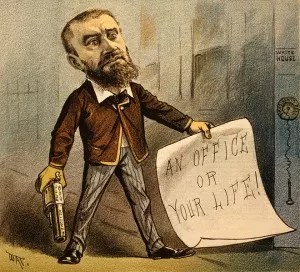
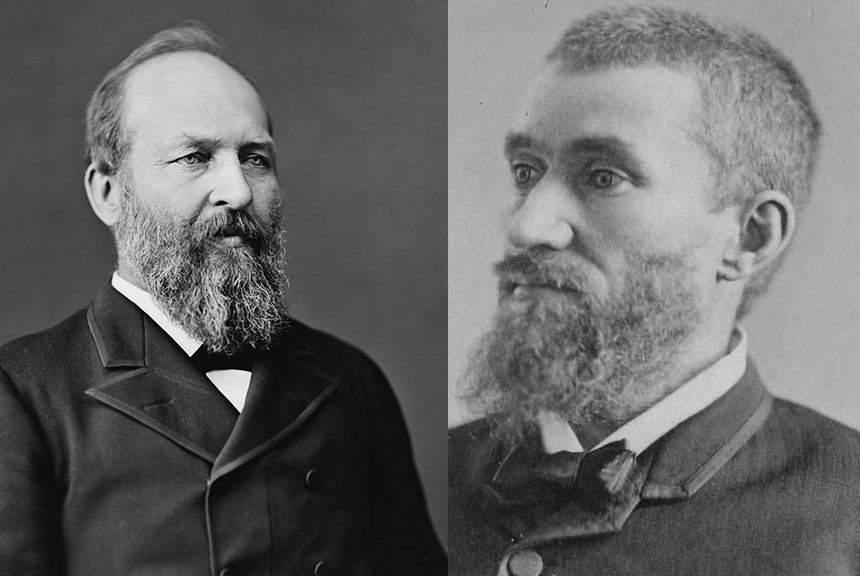
“I am a Stalwart of the Stalwarts … Arthur is President now,” an assassin named Charles Julius Guiteau said after shooting the 20th President of the United States, James Abram Garfield in the back at the Baltimore and Potomac Railway station in Washington D.C., on July 2, 1881. (New York Herald, July 3, 1881).  

Charles Guiteau believed he played an instrumental role in the presidential election of James Garfield, and he thought the administration owed him a job. He believed he was a Stalwart, a hard working, supporter of the cause, and when the administration decided not to reward him for his efforts, he decided to shoot the president. He dressed the motive up later, saying that he was on a mission from God to save the party and the country, but the motive that drove him to borrow money for a gun, practice target shooting, and stalk the president arose because the president wouldn’t give him a job.  

There are no records of a meeting between Garfield and Guiteau, so there were no personal rejections, but Garfield’s Secretary of State told Guiteau to “Never bother me again about the Paris consulship so long as you live.” There are also no records of a direct relationship between Guiteau’s annoying persistence and the Garfield administration’s decision to end the practice of offering positions to Stalwarts, also known as the patronage or spoils system. Ending this practice, encouraged Guiteau to believe he should assassinate a president.  

Why did Charles Guiteau do it? What drove this man to want to commit such a violent? What was his motive? Inquiring rubberneckers of history want to know. We could say people just have a natural curiosity, but that would suggest that once we have our answer, we all walk away. We’re obsessed with serial killers, mass murderers, psychopaths, sociopaths, and assassins. We want to know what drives them to violence. 

Is our drive to find out what drove them all about intrigue, or do we have a motive behind wanting to know the motive? Who cares why a man kills people? Who cares why a man tries to assassinate a world leader? Some suggest that if we know the motive, we might be able to prevent future incidents of a similar nature. To do that, we need to understand the criminal mind. To do what? What if the violent perpetrator has no motive? What if he lies? What if he realizes that assassinating a president, because that president wouldn’t give him a job is a pretty stupid reason to kill a man? What if he invents a motive to assign some level of importance to what he did? What if the truth is that he always wanted to commit a random act of violence?  

Do we appreciate it when a killer provides a specific motive for his actions? Does knowing a motive provide us some level of comfort? Some accept the fact that someone shot a bunch of people, because a dog told him to do it. It’s better to believe that than it is to think that they did it because they just wanted to commit a random act of violence.   

In service to his Stalwart duties, Guiteau gave poorly attended speeches on candidate Garfield’s behalf. The audience to these speeches suggest Guiteau thought President Ulysses S. Grant was going to seek a third term. They thought he simply crossed out the name Grant and replaced it with Garfield. They said this because Guiteau accidently attributed Grant’s accomplishments to Garfield. The mentally unstable Guiteau still believed he proved instrumental in Garfield’s victory, and he wrote numerous letters to Garfield, and he visited the White House and the State Department numerous times, to argue that they should reward him for his efforts with a position in Garfield’s administration. When these efforts failed, the narcissist Guiteau decided he needed to assassinate the president to save his party and his land. 

“[S]aved my party and my land. Glory hallelujah!” Guiteau wrote in a poem he recited, as his last words before execution. “But they have murdered me for it, and that is the reason I am going to the Lordy.”  

Before the assassination attempt [Guiteau] wrote an “Address to the American People,” making the case for Garfield’s assassination. In his address, Guiteau accused Garfield of “the basest ingratitude to the Stalwarts” and said the president was on a course to “wreck the once grand old Republican party.” Assassination, Guiteau wrote, was “not murder; it is a political necessity.” He concluded, “I leave my justification to God and the American people.”  

Guiteau wrote a second justification for his planned assassination or, as he called it, “the President’s tragic death.” Guiteau, claiming himself to be “a Stalwart of the Stalwarts,” wrote that “the President … will be happier in Paradise than here.” He ended his note with the words, “I am going to jail.” 

Guiteau arrived at the station about 8:30. He felt ready for the job, having practiced his marksmanship on a riverbank on the way to his destination. Garfield entered the nearly empty station at 8:25 with Secretary Blaine and a bag-carrying servant. They walked several steps into the carpeted “ladies’ waiting room” when Guiteau fired his first shot. It grazed Garfield’s arm. Guiteau moved two steps and fired a second shot. The bullet entered Garfield’s back just above the waist. The president fell as the back of his gray summer suit filled with blood. 

After shooting the president, Guiteau tried to calm the onlookers, “It’s all right, it’s all right,” he said before the police officer on duty arrested him. 

“I did not kill the President,” Guiteau said during his trial. “The doctors did that. I merely shot him.” Though a laughable defense in a criminal proceeding, historians suggest that when used as a defense against execution in a murder in the first-degree case, it might merit some consideration. Esteemed historians, such as Candace Millard, author of the excellent Destiny of the Republic, suggests that if President James A. Garfield’s doctors did nothing, Garfield might have recovered. Her assumption is based on the idea that the doctors who attempted to locate Guiteau’s bullet were untrained in Listerian antiseptic methods that would be in widespread use a decade later. Historian, and Garfield biographer, Allan Peskin disagrees. He stated, “That medical malpractice did not contribute to Garfield’s death; the inevitable infection and blood poisoning that would ensue from a deep bullet wound resulted in damage to multiple organs and spinal bone fragmentation.” An autopsy identified the cause of death as a rupturing of an aneurysm in the splenic artery. 

In the hours after his arrest, Guiteau acted strangely. On the way to city jail with a police detective, Guiteau asked the officer if the detective was a Stalwart. When the detective replied that he was, Guiteau promised to make him chief of police. In jail, he balked at removing his shoes, complaining that if he walked barefoot over the jail’s stone floors “I’ll catch my death of cold.” When a photographer snapped his photo, he demanded a royalty payment of $25.  

Prosecutor John K. Porter demanded to know whether Guiteau was familiar with the Biblical commandment, “Thou shalt not kill.” Guiteau responded that in this case “the divine authority overcame the written law.” He insisted, “I am a man of destiny as much as the Savior, or Paul, or Martin Luther.” 

Guiteau approached his hanging with a sense of opportunity, but he eventually abandoned his plan to appear for the event dressed only in underwear (to remind spectators of Christ’s execution) after being persuaded that the immodest garb might be seen as further evidence of his insanity. 

The problem for Guiteau, as it applied to a first-degree murder case, was that he displayed the characteristics of malice and forethought. He stalked President Garfield, he practiced shooting the gun he purchased at a riverbank, and he abandoned a previous attempt to assassinate the president, because the president was with his wife at the time, and Guiteau didn’t want to upset the wife.  

The trial of Charles Julius Guiteau was what some call “the most celebrated insanity trial of the century” with many alienists (psychiatrists) debating whether Guiteau was sane. Many historians, and almost all neurologists, now agree that, by today’s standards, Guiteau was clinically insane. After Guiteau’s execution, public opinion on the issue of insanity shifted.  

Although modern and future readers, who sit in the proverbial jury room, might sympathize with some of the antiquated measures used to determine sanity in 1881, but they might also calculate some of Charles Guiteau’s premeditated calculations into the equation. Months prior to the 100-year anniversary of Guiteau’s assassination attempt (March 30, 1981), John Hinkley provided a case similar to Guiteau’s, as Hinkley premeditated his assassination attempt (on President Ronald Reagan), and he did not kill the president either (reagan would live 23 more years, but Garfield died 8 weeks after Guiteau’s attempt). We might consider a stereotypical clinically insane individual to act on impulse, but the more modern jury of his peers, declared Hinkley clinically insane, and he spent 35 years in a psychiatric institution before being released. Hinkley now uploads love songs on YouTube. 

Further Reading

David Bowie was Just Too Weird


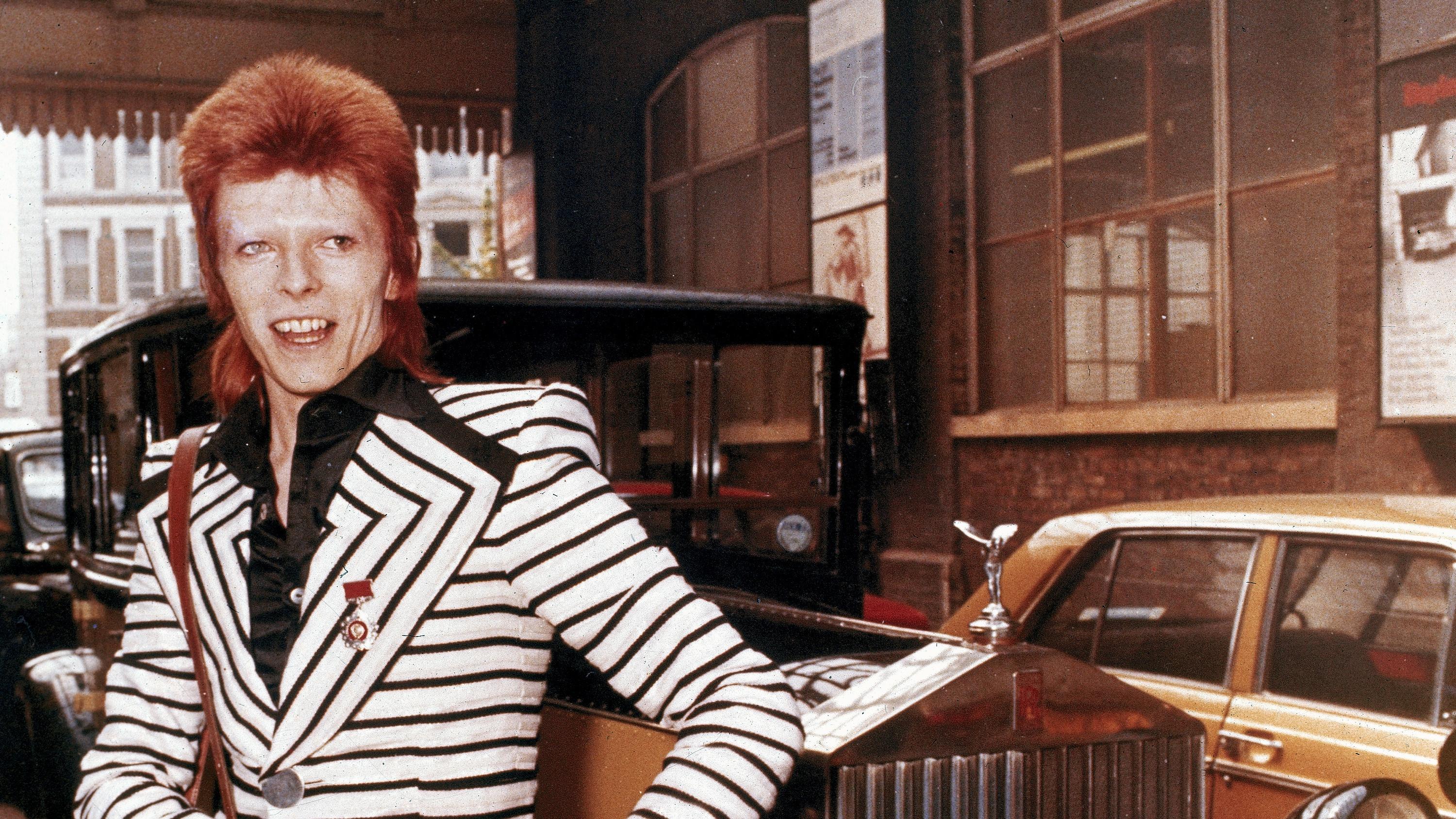
“He’s just so weird,” my mom said when David Bowie took the stage on a 1970s, variety show called The Midnight Special. Before the marketing teams learned how fascinating weird could be to us, being weird was not a good thing. We strove to avoid the weird, so no one would call us weird. I didn’t want my mom to think I was weird, I didn’t want my friends to think that, and I didn’t want to be seduced into thinking I could be weird if I watched him, so I shut it off. We writers love to rewrite our past to suggest that we were so hip that we were bucking the system at eleven-years-old, so we can fortify our artistic bona fides. I wasn’t. I was a normal eleven-year-old who wanted to learn how to be more normal, so other kids would like me, and my primary conduit to absolute normalcy was my mom.  So, when Bowie walk out onto the stage, I was floored by his appearance. My mom must’ve sensed how confused I was, so she quickly told me to turn the channel. I asked why, she said, “He’s just so weird,” and I turned the channel.

David Bowie was weird, there’s no point trying to argue, minimize, or qualify it. He even admitted as much, telling TV on the Radio’s Dave Sitek to, “Stay Strange.” Thanks to artists like David Bowie, we’re all a little weirder, stranger, and everything outside the mainframe. The typical narrative might depict me in front of that TV, experiencing an epiphany, with a “That’s me, mama,” explosion of excitement that she never could quell. It might just be me, but I needed to establish a solid foundation of normal before I could start exploring the weird, strange and just plain different avenues of my otherwise immature and fragile psyche. So, before we continue, let me send out a shout out to my mom for all the effort she put into giving me the most normal upbringing she could before I could explore the other side with more maturity. 

David Bowie feared he was a weird person at a very young age. He believed that he was susceptible to the schizophrenia that haunted his half-brother, Terry Burns. We can only guess that before he embraced the fears of falling prey to that mental disorder that haunted his mother’s side of the family Bowie sought the comfort of normalcy. This duality, as anyone who has worked their way through Bowie’s catalog can attest, would affect his artistic output.   

“I’m not so sure how much of it is madness,” Bowie would ruminate to Yentob. “There’s an awful lot of emotional and spiritual mutilation that goes on in my family.”

He was “too weird” for my people. He was even too weird for me when I was too young to fight that two-word condemnation. My mom told me he was “too weird”, and even if I had the moxie to fight everyone else, I couldnt fight her. I was too young to know how different I was, and even I if did, I wouldn’t acknowledge it, because I didn’t want to be weird. I wanted to have friends, and when my friends told me something was not only weird, but “too weird,” I backed away, into them, and their more comfortable groups.  

High brow, low brow, or no brow?

David Bowie shocked in an era that didn’t want to be shocked. Shock value was not commodity in Bowie’s peak years. The New York Dolls were shocking people in New York, Marc Bolan was doing it to England, and Alice Cooper and KISS were putting it to the United States, but shocking people was not yet part of an artist’s marketing package. Those guys tapped into a tongue-in-cheek definition of the weird, but it was all a part of their schtick. There was something unnerving about Bowie’s strain of strange that made it feel a bit more organic. When we saw it, we could tell he wasn’t having a laugh. It was a part of him, the alien part, and perhaps the schizophrenia part.   

Watch the shows of David Bowie on YouTube, circa 1972, and try to put yourself in that audience. It’s hard to do now, now that we’re so accustomed to performers playing around in the more customary borders of shock value now, but in 1972 Bowie had people actively avoiding him and his alien nature. 

Even after I made it past my mom’s “too weird” block, I still wasn’t attracted to him artistically. I thought he sang songs to make tons of money, become a rock and roll star, and then become a celebrity. All the power to those who do that, but it wasn’t for me. I thought he was the artistic equivalent of a beautiful person who is fun to look at, but doesn’t have much more to them. My attraction to his music is a love story, and to sum up that story, it wasnt love at first sight. It took him a long time to win me over, but I have been in a relationship with David Bowie’s music for about 30 years now.  

I already knew most of his hits by the time I discovered Bowie, so I wasn’t blown away by those songs. The genius of his deep cuts did not blow me away either, in the manner the Beatles’ deep cuts did. I don’t know how anyone else characterizes Bowie’s genius, but it wasn’t immediate for me. His subtle artistic creativity required repeated listens, until I found myself working through his constructs when I wasn’t listening to the music. 

I now liken listening to Bowie to sliding a foot into a great pair of socks. I’ve never met anyone who was absolutely blown away by a pair of socks. Slipping into a great shirt, and finding a pair of pants that fit just right can be mind blowing, but I never went nuts over a pair of socks, not when I slipped them on for the first time anyway. There are some socks that fit so well that when we put them on, they just feel like us, and we begin wearing them every day. When I began seriously listening to Bowie on a daily basis, I found philosophical artistry that fit me like a great pair of socks. Art is relative of course, and I’m sure some identify with Elvis Costello in the same ways, but I’ve heard numerous people recognize Costello for who he was in the music world for decades. Up until about the last ten years, very very few listed Bowie in their elite artists’ discussions. It didn’t affect what I thought of him, but I couldn’t understand it. The only answer I could come up with was that he was just “too weird”.

*** 

I appreciated Bowie’s reincarnation on MTV from afar, as a kid, but the Let’s Dance, China Girl songs seemed more like period pieces in the Madonna/Whitney Houston mold. Pop stars buy great songs from great songwriters, I thought, but a weird, music freak seeking deep, multi-faceted artists doesn’t dive deep into the catalog of pop stars like David Bowie. We wait until the radio stations play their singles. I thought David Bowie was just another good-looking pop star who bought great songs that were probably written by someone else. It was important to me, even back then, that an artist write their own music, because, to my mind, that was the difference between a star and an artist. I thought Bowie was just another 80s pop star who had a 70s catalog that I had no real interest in exploring, until an unusually perceptive friend of mine, named Dan, dropped this line on me.   

“This crazy, weird musical path you’re on all points to one man, David Bowie,” Dan said. 

David Bowie?” I asked with disdain. “The Let’s Dance, China Girl guy?” I couldn’t believe Dan, the guy who had a long history of introducing me to deep, powerful music, was now saying I should be listening to an 80s pop artist. I’d been on the other end of his “if you like those guys, you’ll love these guys” suggestion so many times that I always gave his recommendations a shot. Over the years, Dan proved to be one of the few people I’d ever met who knew more about music than I did, but he didn’t know “my music”. He introduced me to Miles Davis, King Crimson, and Frank Zappa in the past, and while I liked and respected those incredible artists, they didn’t reach me on that other, “my music” level.  

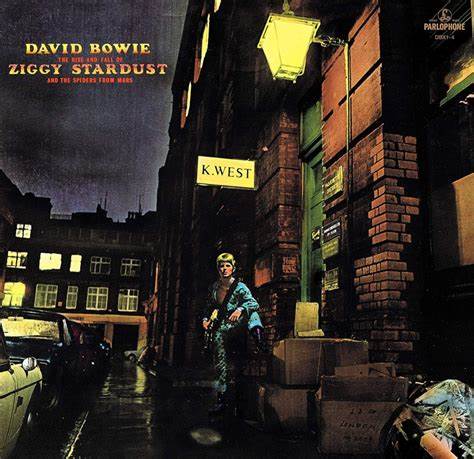
“I’m telling you,” he added, “Bowie is T. Rex, Hanoi Rocks, and Roxy Music, and that music is Bowie in a way that you won’t understand until you hear this.” He handed me a copy of a Ziggy Stardust and the Spiders from Mars (AKA Ziggy) compact disc. I’m not going to rewrite this section either and suggest that that compact disc glowed or that there was a sound equivalent to Heaven’s Gate opening when he handed it to me, but that is how I now remember it. “This is David Bowie 101, and when you start loving the alien, I’ll introduce you to other elements of the alternate universe he created.”  

I thought Ziggy was a quality album when I first heard it, but I couldn’t get passed the pop artist and “too weird” hang ups I had with Bowie. Those hang ups led me to think the single Ziggy Stardust was so immediate that it might be too immediate. After repeated spins, I started zeroing in on the other songs on the album, and I started dissecting them in the “parts are greater than the whole” mindset. Soul Love was the first song that nabbed me, and I put that song on repeat numerous times. At the end of that week, I forgot to return the disc to my friend. The music on Ziggy Stardust became “mine” in so many ways that I forgot the actual, physical disc was not. When he reminded me that I forgot to return his disc, I did and went out and bought one of my own. 

I was already a Ziggy freak by the time Dan suggested I listen to Hunky Dory and Diamond Dogs. I was hesitant, thinking Bowie might be a one-album wonder. After a couple weeks, I was hooked on everything Bowie. The “too weird” notions I had of Bowie began to fall away, and I stopped borrowing the discs from my incredibly perceptive friend. I bought them. I did something different with my Bowie-obsession than I did with every other artist to whom I became obsessed. I bought a Bowie album, and I inhaled it. I lived each album, until I knew just about every lyric and every beat of those albums. I thought there was something different to know, feel and experience on each album that I never had before with any other artist. Each album was so different that I could see what everyone was saying when they said he was too weird, but by this time, I recognized that I was a little too weird too, and I began to think David Bowie was singing about me. I listened to each album as an art enthusiast might when examining a painting, slowly ingesting every little nuance until they discovered what it meant to the artist.  

When my excitement to buy another album overrode my good sense, I moved onto the next album, only to discover I wasn’t as done with the previous one as I thought I was. Bowie, I realized, was one of the very few musicians who could have one foot planted in the pop world and another in the world of art. My peers told me the man was weird, “too weird”, and I listened. Soon after taking a deep dive, I regretted how much I missed by refusing to listen to him for so long. There are very few artists that affect me so much that I regret not listening to them sooner. I thought of all the years I wasted listening other artists when I could’ve been listening to Hunky Dory, Alladin Sane, and Diamond Dogs. I thought he could’ve changed my world just a little bit sooner back then, and I know that sounds silly, but the effect of his music on me was that profound. 

When I finally made it past the obsession, I had with what some now call the Five Years chunk of his catalog (Man Who Sold the World through Diamond Dogs), I graduated to his Berlin Trilogy; Low, Lodger, and Scary Monsters. We listen to music, albums, and artists for a variety of reasons, and I’ve had so many obsessions that I don’t have enough fingers or toes to count them, but there was something different about my obsession with David Bowie. We could label his music in all the pedantic ways, deep, meaningful, and spiritual, but that “not just weird, but too weird” characterization that influenced my refusal to listen to Bowie became the primary reason I listened to him in my adult years. 

Whereas most singers sang about love, sex, drugs, and rocking out, Bowie sang about estrangement, an alien nature, and various other themes we deem “too weird”. In places where an artist might go over the top, and be weird for the sake of being weird, Bowie displayed restraint. In places where an artist should shows restraint, Bowie went over the top. He could write a song that that would live on in the history of FM radio (Space Oddity, Changes, and Heroes), and on the same album he would leave a deep cut to cure our longing for great, weird, and offbeat music that only aficionados love (Alternative Candidate, It’s no Game (part 1), and Lady Grinning Soul). Bowie was the consummate artist who found a way to reach me as few artists could. Most music aficionados don’t intend to downplay the effects of hits, but most quality artists have some hits in their catalog. The difference between Bowie and most quality artists is that he spent as much time perfecting his deep cuts as he did his hits. He had a conventional side and an artistic side, as most of us do, but unlike the rest of us, David Bowie managed to cultivate his normal side, coupled with the “emotional and spiritual feelings of estrangement” from his mom’s side, and this duality led him to craft some excellent pop songs and some brilliant, “too weird” deep cuts. 

I started listening to David Bowie obsessively about 30 years ago, and I bought his new releases on the date of their release. I enjoy a majority of them, but Bowie captured magic in a bottle during the Five Years albums and the Berlin Trilogy. Hours…, Reality, and Blackstar were my favorite late Bowie albums, but they couldn’t compare to the great eight.  

Years before his death, David Bowie experienced something of a rebirth. All of a sudden, and seemingly out of nowhere, I began hearing his peers begin listing him as one of their primary influences. I heard one or two artists do this before, but not to this degree, and I was paying attention. Fans began listing Bowie just a bit outside the greatest artists of his era. They called him revolutionary, a pioneer, and all that stuff we’re accustomed to hearing now, but save for a few artists here and there, I didn’t hear the adoration society crown him in a way he richly deserved for most of my life. I’ve often wondered why, and how, this happened.

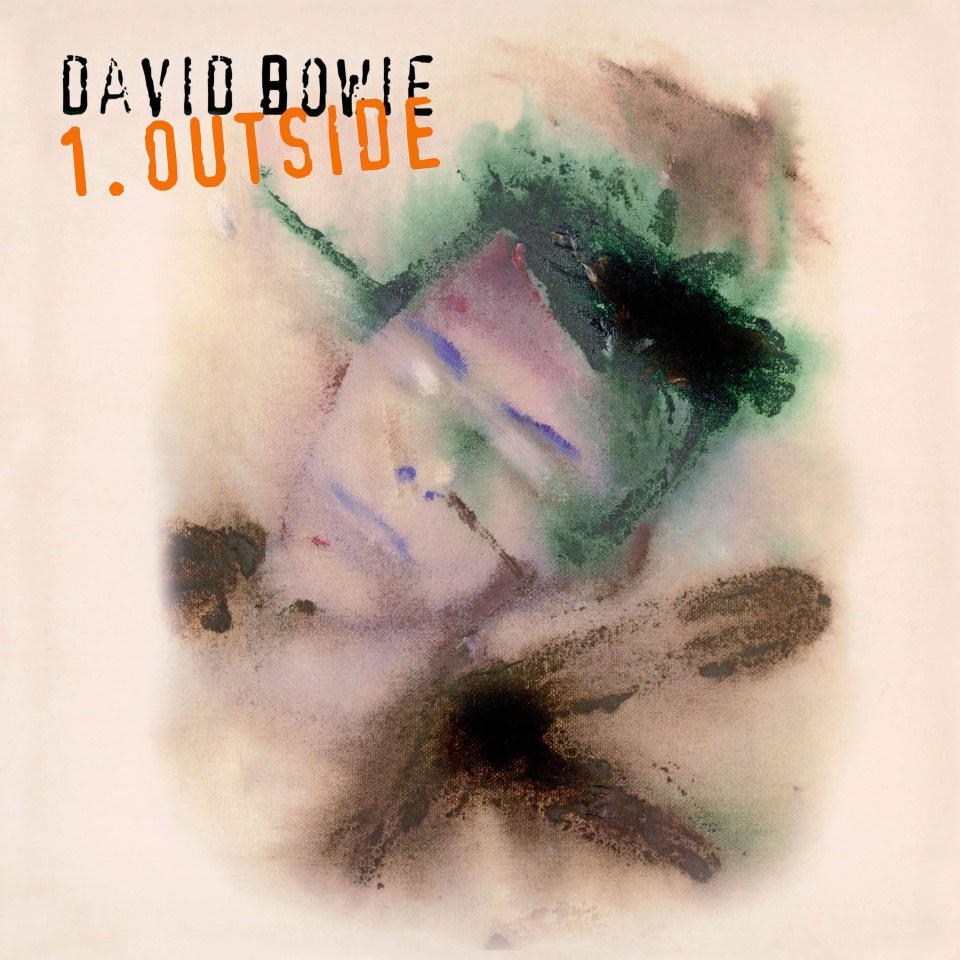
If an artist moves into the pulse of the zeitgeist after decades of being on the outer rim, we can usually pinpoint when and where this happened. The artist probably had that one song, movie, or another momentous event that put them over the top. Unless you consider Nirvana’s acoustic cover of The Man who Sold the World that momentous event, it did not happen with Bowie for most of his career. Some of the albums in the “back nine” (or in Bowie’s case the back eight– Outside to Blackstar) of his career were good, but they weren’t so great that they should’ve moved the needle on a retrospective analysis of his career. Before I get to the primary reason I think Bowie moved from just another artist putting out music to a cultural touchstone in the zeitgeist, there were years after 1980’s Scary Monsters and before 1995’s Outside when Bowie got lost in the artistic wilderness. Having said that, I don’t think Bowie moved to us as much as we moved to him in a cultural appreciation of everything he accomplished throughout his glorious career. I think we, as a culture, became more weird, or at least we embraced the weird far more in 2002 (roughly) than we did in 1972. As I wrote, I was already a Bowie fanatic by the time Heathen came out, but others were suddenly calling Heathen his best Bowie disc since Scary Monsters. I liked, and still like Heathen, but I didn’t think it was as good as Hours…. and I didn’t understand how everyone missed what I consider the Great Eight albums from Man who Sold the World and Scary Monsters.  

If you’re one who remains on the sideline for whatever reason, I suggest that you cast that cloak aside for as long as it takes to make an individual assessment of his material. My bet is that he reaches you on a level you’ve never considered before. Music, like every other art form, is so relative that his artistry might not appeal to you on the level he did me, but if you’re anything like me, you now know, as my friend Dan predicted it would for me, my definition of “my music” all goes back to Bowie.  

Other than providing me an excellent entry point to David Bowie, with Ziggy, Dan was notoriously poor at providing me an entry point to the artists he loved. To introduced me to Frank Zappa, for example, but he loaned me an advanced Zappa album that he loved as someone who had been listening to Zappa for decades. I eventually grew to love that album, but it took me a while. I needed to start at a better entry point to appreciate what Zappa did throughout his career. With that in mind, I thought about an entry point to David Bowie. I would compile the albums Hunky Dory and Ziggy into a playlist, and I would cut the songs Eight Line Poem and It Ain’t Easy (personal preference). Best of Bowie is another great place to start to learn the more normal side, as most people prefer normal pop songs, or hits, as a point of entry, and if you’re not familiar with those songs, it’s an excellent starting point. For those who know those the hits so well that they seek deep cuts, or songs beyond the hits, I’ve compiled a list of those songs that have made it onto so many of my Bowie playlists. Some of them were marginal hits in their era, but I still consider them so deep and meaningful that I had to include them.   

1) Alternative Candidate (It’s no longer on Spotify for some reason. It’s on YouTube though.) 

2) It’s no Game (Part 1) 

3) Lady Grinning Soul 

4) Sound and Vision 

5) Kooks 

6) African Night Flight 

7) Soul Love 

8) Dodo (This song is also not on Spotify. Here’s the YouTube capture.) 

9) Thursday’s Child 

10) Queen Bitch 

Walter Isaacson’s Leonardo da Vinci


“If you love that book on Van Gogh that much, you should try reading Walter Isaacson’s Leonardo da Vinci,” I told a person who was pitching a Vincent Van Gogh book to me. I normally don’t care for people who say, “You think that’s great, you should try this,” but I was so enamored with Isaacson’s book that I couldn’t keep quiet about it. 

“At some point in his younger years, da Vinci probably saw someone paint most beautiful eyes he ever saw. At some point, he probably saw someone paint the most enigmatic smile ever created, and he had to top them,” I said. “Either that, or he saw the extent of his talent at some point in his life, and he wanted to go deeper to better understand what he wanted to portray. 

“However he arrived at this point, Leonardo da Vinci became an artist who could no longer just paint a smile. He couldn’t just paint eyes. He wanted, needed, to understand the inner machinations of the muscles and tendons involved in the smile and the mechanics of the eye to make them appear as alive and realistic as possible. Due to constraints of his era, he had to hire grave robbers to exhume bodies for him (some suggest he ended up carving up thirty bodies), so he could dissect them to help him understand our anatomy on a deeper level to understand how these components of our face worked together to form something as complex as a smile. In the early years of this pursuit, the grave robbing had to occur under the cover of night, because it was deemed illegal by the Catholic Church to dissect a human body, unless it was being performed by a qualified physician.  

Da Vinci had to go deeper into channels that you and I would never consider to perfect his brand of visual manipulation that might lead us believe that the eyes were following us around a room. Leonardo’s methodology was that the difference between a talented artist, and one who seeks perfection is not the big things, it’s all the little, insignificant things that you and I would never consider. “It is necessary for a painter to be a good anatomist,” da Vinci wrote, “so that he may be able to design the naked parts of the human frame and know the anatomy of the sinews, nerves, bones, and muscles.”    

“Oh my gosh,” my Vincent van Gogh loving friend said. “I had no idea, and I’m an art enthusiast. I’ll bet most people who haven’t read that book don’t know that.” 

“His work on these cadavers was in service of his art,” I added, “but he became so obsessed with it that my guess is that much of what he uncovered was useless to him professionally. He might have started this process in service to his art, but I’m guessing that his curiosity overwhelmed him when he started finding answers. I’m guessing that he carved up the first cadaver to find an answer, then he found it, and he dug deeper and found other answers to questions he never asked before. He found some answers to irrelevant minutiae that intrigued him so much, and he became so obsessed that he probably forgot the original reason he paid the grave robbers to exhume bodies, and he became less of an artist seeking answers to artistic questions and more of a scientist.” 

The latter was an opinion that Isaacson would correct. “Da Vinci was never less of one or more of another. He sought to infuse science and math into his art. From the anatomical perfection he sought in the Mona Lisa to the mathematics of perspective he used in The Last Supper, da Vinci was always seeking a hybrid of the three.” 

“The point,” I would counter, “is there had to be a point of origin for his fascination with science and math. If there wasn’t, if he was always fascinated with science and math, there had to be a point where he decided to incorporate these disciplines into his grand visions of art. I understand that he eventually achieved a hybrid, but there had to be a point where he said if I’m going to realistically portray water flow, I need to gain firsthand experience and knowledge. In doing so, he was so fascinated with his findings that he forgot to complete the paintings he was commissioned to complete.”

Some say that Leonardo da Vinci was such a curious person that he made it his goal to ask himself one hundred questions a day. You’ll note that it wasn’t necessarily his goal to find one hundred answers a day, though that was, of course, part of it. Those who love da Vinci suggest that he thought questions led to other questions, and that if he asked enough questions they might lead to other questions, until he arrived at an answer to a question he never considered before. Da Vinci’s was an ego-less approach to problem solving that most of us can’t do without attaching our questions to personal beliefs, conventional wisdoms, and other such biases. My guess is da Vinci kept asking himself questions to attempt to drain them of any personal convictions he might have on a subject. Then when he arrived at answers, he immediately went about trying to disprove them. He didn’t invent the step we now include in the scientific method, but he turned the practice into an artform in his own pursuits.     

When Leonardo da Vinci approached something as simple as water flow, we can guess that by the time he seriously sat down to understand it, he had all of the conventional thoughts of the day running around in his head. He probably read as many books on it as were available to him at the time (if there were any), and he talked to any experts he could find whom he considered far more intelligent than he. At some point, he either thought they were all wrong on the subject, or he felt he needed to verify their answers for himself. Either way, Isaacson details some of the observations da Vinci made, and some of the experiments he conducted to understand it better. Da Vinci wasn’t the first to study water, of course, nor was he the last, but we have to believe that he was one of the few. We have to imagine that few have endured the hours, or an accumulation of months and probably years trying to understand it, because it comes equipped with one powerful deterrent: it’s boring. Even before the advent of radio, TV, the internet, and smartphones gave us all something to do to stave off boredom, studying water had to be pretty low on the list of things for anyone to do on otherwise boring Saturday afternoon. How much time did da Vinci sit outside watching water, how much time did he spend conducting experiments to understand the true nature of water? How much of his life did he devote to trying to arrive at an answer that no one would ever care about, even if he did publish his findings? Even if all he did was accurately portray the flow of water in one of his paintings, it probably only satisfied da Vinci and a small cadre of art enthusiasts who focus on the tiny minutiae that separates the talented from the brilliant. How many of his patrons would recognize such minute detail, and laud him for it? Was there anything more than a personal reward for the laborious study he put into making sure a couple of brushstrokes were accurately portraying what he discovered to be a truth about water? The only thing more boring than studying water to find the greater truths about it, as Isaacson’s book illustrates, is reading about it.  

Perhaps the only interesting element of da Vinci’s study of water is why was he inspired to pursue it when many considered the topic so thoroughly explored? At what point do relatively uninformed people become so informed that they are confident enough to question the conventional information of their esteemed peers on a subject? We can only guess that he was intimidated by the experts’ intellect in his formative years, but he progressed beyond that. We all go through these progressions in varying ways. We all accept what our parents say as fact, but we begin to question them when at a certain age. Our parents are our primary authority figures, for much of our lives, and they’re our go-to for answers. When we find out they’re wrong on some things, we naturally assume they’re wrong about everything. We know our parents, and we know their vulnerabilities. Most experts’ vulnerabilities are not as available to us, so we cede authority of a subject to them on the subject to which they claim authority. Some of us don’t. Some of us, such as Leonardo da Vinci, don’t pursue knowledge to prove anyone wrong, but we find intimacy with the truth when we investigate a matter for ourselves.  

The questions da Vinci had about water were probably just as numerous as the ones he had about achieving flight, nature, and the numerous other answers to such detailed questions that no one, in his time, had ever asked before. Thus, a number of his findings were so far ahead of their time that when we eventually discovered his journals, and we deciphered them in a mirror, because he wrote them backwards, we discovered advances he made that were centuries prior to the same ones made by renowned scientists. As Momento Artem writes in The Clocktower, “It’s believed that if [da Vinci] released [his journals] during his lifetime, they would not only have changed renaissance science and medicine but also the scientific and medical worlds we have today.”  

How many people died as a result of a procedure called bloodletting? If da Vinci released his journals on the heart, and his subsequent theories on blood flow, during his lifetime, or we discovered them sooner, they might have disproven the theories behind bloodletting and spared the millions of patients who followed the useless and hopeless pain of the procedure.”   

Knowledge can be a powerful thing. It can ingratiate people to us, in a “I can’t believe you know that” frame, but it can also turn people away “Mr. Smartypants here, thinks he knows everything.” Leading anatomists of his era probably would’ve done everything they could to discredit da Vinci for providing data that might prove them wrong, if he published these journals. The religious institutions of his era surely would’ve declared his views of the human body as a beautiful, self-sufficient machine blasphemous and heretical. How many political and medical industries would’ve been destroyed and presumably rebuilt, based on his findings? One thing we know about human nature, no matter the era, is that people don’t enjoy finding out they are wrong. Many of da Vinci’s tests, findings, and theories arrived at by scientific methods bore fruit, of course, but if he permitted publication of his findings, da Vinci probably would’ve been a pariah in his era. It’s possible he would’ve been exiled, excommunicated, or executed for publishing his findings, as they were the most popular methods those of his era had for dealing with those with whom they disagree, but the other method they had was various forms of book burning. Would da Vinci have been declared such a blasphemous heretic that the religious community, the medical community, and all of the politicians who supported them probably would’ve branded da Vinci’s work in such a way that we wouldn’t have any of his great paintings or his journals? How likely is it that popular opinion might brand da Vinci’s work in such a way that anything he did would be branded in such a light that they would’ve approached the owner of the work with torches to destroy it?  

No matter how we characterize da Vinci, it’s obvious he considered himself a one man show. He didn’t accept an idea based on politics, religion, or what was widely accepted in the scientific community as a truth either. Nor was he married to his own ideas. As with most great scientists, he made a number of false assumptions that led to numerous mistakes. When he recognized those mistakes, his journals note his frustrations by saying things like, “impossible to know”. Those of us who love reading about the brilliant minds of history, and have read almost all of Isaacson’s books, know that even acclaimed geniuses make huge errors, and/or declare a subject “impossible to know”. It’s as if they’re saying, “If I can’t figure it out, it’s impossible to know.” Unlike most people, however, da Vinci didn’t let himself get in the way of him eventually finding an answer, or the truth. His notes detail an impatience with the project and the very human frustration of not being able to find the answer quickly, but they also inform us of a resolve that might have superseded most of his peers in eventually arriving at answers that still shock the world. It shocks us that he arrived at some unprecedented conclusions, because we consider his resources and the conventional wisdoms of his era. He didn’t care, to some degree, if his findings offended the politicians, the religious, or his friends. I write to some degree, because there were reasons why he never published the work, and there were reasons why he wrote it all backwards.  

The knowledge I have on art, in general, and da Vinci in particular, barely scratches the level of novice. So, I assumed that my art enthusiast friend knew more about Leonardo da Vinci than I ever would. When you’re a novice with a particular obsession, you assume everyone knows more than you. Novices don’t know where they first heard the nuggets of information they share. We can’t remember where our fascination started. We read books, little nuggets on various websites, and we watched bios and documentaries, and we compiled so much over the years that much of Isaacson’s book was rehash. When I dropped these little nuggets on this art enthusiast, I expected her to nod and usher me forward with leading questions to information Isaacson unearthed that she didn’t know. Her amazement at what I considered elementary knowledge of da Vinci informed me that some of the times the relatively useless trivia we have swimming around our heads can be surprising bits of information to the unsuspecting.