The Complex Art of Lying


Are you an unusually good liar? Can you deceive people without much effort? As with anything else, we all know that effectively misleading people requires practice and trial and error, but if you believe a study by Theodor Schaarchmidt, summarized in Scientific American, not only does lying require peak cognitive function, it also involves cognitive peaks and valleys similar to those in our physical abilities.

“Lying is among the most sophisticated accomplishments of the human mind, and the complexities involved often require peak capacity of the mind.

“Young adults between 18 and 29 do it best,” Schaarchmidt found, “and after about the age of 45, we begin to lose this ability.”

Our physical peak is relative, of course, but even elite athletes who work out for hours a day, every day, will admit that their physical peak occurred somewhere around 25th birthday. Those who extend their professional careers, learn how to compensate for the fact that their ability isn’t what it once was, but most of us recognize a relative physical decline as we age. Those of us who aren’t as reliant on physical ability as a professional athlete, might not recognize our decline, or how we’ve compensated for it. If one of our eyes loses some functionality, for example, we learn how to compensate for it so well that we might not notice it for years? Does the same apply to our mind when it comes to the ability to lie? 

We’ve all witnessed seven-year-olds try to lie, and their tells are often so obvious when they do that they’re hilarious. They need to learn how to do it, and that knowledge only comes with experience.

When elderly people display the fact that they’ve lost some of the complex functions required to lie, we might make the mistake of believing they’ve voluntarily disregarded the filters we all maintain for polite conversations. “They’ve been on this earth 85 years, and they don’t care what anyone thinks anymore,” we say. “They’re done with trying to spare our feelings with the little white lies we all tell ourselves.” We think it’s funny and intriguing to see this live, but studies cited by Schaarchmidt suggest that there might be a U-shaped curve to truth telling, or an (‘n’) shaped curve to lying, and it’s all based on the complex functions of the brain that operate in some of the same peaks and valleys of our physical abilities.

It seems so odd to suggest that lying requires advanced cognitive function. Lying seems as easy as telling the truth, as it all comes down to a simple, snap choice. If we ask them, “Did you steal my copy of Journey’s Escape?” that’s a simple yes or no, regardless the truth. How about, “Do you think your nephew Mike has a bright future ahead of him?” That question requires careful consideration, as it’s entirely possible that Mike can turn it all around, regardless how it appears right now. Not only that, but most of us know that our answer will likely get back to Mike and harm future family relations. Our aunt obviously didn’t consider any of that when she said, “No, he’s a lazy, ambition-less, privileged piece of junk.” Wow, where did that come from?

How does advanced cognitive function affect our ability to lie? The Scientific American piece cites an illustrative story involving a man Theodor Schaarchmidt nicknamed Mr. Pinocchio. Mr. Pinocchio was a 51-year-old who “was a high-ranking official in the European Economic Community (since replaced by the European Union), and his negotiating partners could tell immediately when he was bending the truth [lying]. His condition, a symptom of a rare form of epilepsy, was not only dangerous it was bad for his career.” The article states that doctors found that a walnut-sized tumor that caused seizures whenever he told a lie. “Once the tumor was removed, the fits stopped, and he was able to resume his duties [his lying]. The doctors, who described the case in 1993, dubbed the condition the “Pinocchio syndrome”.”

Some, like Mr. Pinocchio, lie to serve an agenda, some tell white lies to be nice, and some BS to make others think they’re more successful, more adventurous, and happier. If we catch them in a lie, we’re likely to hear something along the lines of, “Everybody does it,” or “if you say you don’t do it, you’re lying.” Those lines are effective, because there is some truth to them. We all tell harmless white lies occasionally. We fabricate, and some of our lies require more creativity that truth telling does. Yet, we all know the difference between stretching the truth and lying, and we fear that greater acceptance of small, white lies can affect our relationships with these people, our society, or our culture. The latter might seem exaggerated hyperbole, but we fear that the society and culture cannot operate properly without some demand for some level of consistent honesty from our fellow man. We can’t help but think that such lines also give liars license to continue to lie without guilt.

***

“A lie is not a lie if you believe it,” the writers from Seinfeld wrote for the patron saint of all untruthers, George Costanza. The implication in this line is that the art of deception requires some effort on the part of the liar to convince himself of a falsehood if he wants to convince another party effectively. That line, right there, summarizes the theme of this article better than any of Theodor Schaarchmidt’s scientific studies, because convincing yourself of a lie you’re going to tell others obviously requires advanced cognitive abilities. How are you going to introduce your lie, how are you going to sell it, and what face are you going to wear to sell it? Liars also know that the art of deception lies somewhere between effectively selling it and avoiding the dreaded over-sell. They know we can see someone over-sell a lie, and they know we can see it. So, they might study their own delivery, in the manner an effective Major League Pitcher does to keep the batter off balance by making the delivery of their fastball appear exactly like the delivery of their curveball. The difference between the two, if you can spot it, for both the pitcher and the liar, is often called: “A tell.” A tell, often used in poker parlance, is the subconscious physical actions we make when we are trying to deceive. The final stage for the liar to execute, and that which most without peak cognitive function might fail, is the backdrop. When we create a new base, based on a lie, it forces us to create Shakespeare’s tangled web, and that, needless to say, requires even greater cognitive abilities. 

Schaarchmidt’s piece suggests that if the liar is between 18 and 29, they might not have to put forth as much effort, as the lie will flow more fluently, if there is no damage to the area of the brain required for the convincing lie.

Who’s lying, and why are they lying? How about we take the Costanza lie one step further and suggest that the liar believes what he’s saying with every fiber of their being. Is it still a lie? The separation of the two is, of course, that the liar doesn’t have to convince himself of the lie. He believes it. Even if it was technically a lie and we can prove its lack of merit beyond a reasonable doubt, it would be difficult to prosecute or persecute them in just about every court in the land, including the court of public opinion.

Perhaps, the liar is guilty of the “blind spot” lie. Blind spot lies are often momentary blotches on the liar’s otherwise stellar record of honesty. Blind spot lies are born in the bath water of the loathing they have for their adversaries. They loathe them so much that their competitive spirit gets the best of them. They cannot see the hole until they fall into it, and some of them cannot see even see it then, but their followers wonder if he hates his opponent so much that he can no longer see the truth with regard to their opponent. If he can see it for what it is, the blind spot lie often permits its purveyor to lie without compunction if it serves his goal to do so.  

Regardless, he can no longer view simple disagreements with his opponents on how to resolve pressing matters in an objective manner. He can no longer see an honest disagreement as a simple case of differing values. We don’t know if he has a personal grudge or a professional one, but it’s obvious to everyone but him that his is an emotional pursuit as opposed to a rational one. He is convinced that nefarious influences affect his opponent’s agenda. He views his opponents’ motives as impure. He views his opponents as uninformed, incompetent, selfish, and divisive. He does not view any of his opponents’ mistakes as genuine, of if he does, he capitalizes on them and characterizes them as intentional. He does not think that his opponents are prone to human failure, or if they are, he seeks to characterize them as some sort of institutional failing on their part. In his quest to seek motive, he incidentally accuses them of matters for which he has the most guilt. If he accuses his opponent of thievery, in other words, chances are he knows the thief’s mentality™ better than his opponents. Whatever form of deception lines his accusation, pay careful attention to the particulars of his charge for it might say more about him than it does his opponent. We call this psychological projection.

This blind spot is most disheartening to the liar’s believers, for they believed in him, and they might feel disillusioned and disappointed by his actions … if they find out the truth one day. If the blindspot liar is good at what he does, and he’s unusually charismatic, the chances are his followers will never want to see how he seduces, dominates, and exploits them for his gain. We enjoy it when “our guy” calls their guys names, and we might even repeat those names and those lies, until we arrive at the Svengali-effect, which is defined as “a person who manipulates or exerts excessive control over another.” As we all know, only “their guys” do this. Our guy never would. 

When “our guy” does it, We might enjoy the name-calling, and we might even believe it, but on some other level, we thought “our guy” was above such street games. We thought he was an intellectual, and that no other intellectual would dare seek battle with him. When we witnessed others challenge him, it shocked us to see him use his power to shut his opponents down to shut them up. He then called upon others to help him shut down dissenting voices, and it shocked those of us who thought he was a fellow dissenting voice. We didn’t think he would stoop to the other guys’ tactics of corruption, lies, and the ‘whatever it takes’ mentality to bring his foes down, but we found some of his actions troublesome. Some blind spot liars knowingly engage in wanton deception, but others have such an emotional blind spot of hatred that they can’t see it for what it is. Most of the times, it is difficult to see the difference, as we can’t know what’s in a man’s heart.

We all know that “the other guys” lie, and we all know an idiot who falls for it, but aren’t the lies our beloved guys tell more destructive? Some of us don’t see it, and others won’t see it no matter how often others show us. They’re our brothers, sisters, peers, friends, co-workers, and politicians. They are “our guys”, and we know them well enough to know that they wouldnt lie to us, so we repeat what they say, and we learn to live the lie, because we know the other guys are lying to us. 

Some famous writers suggest that it’s preposterous to suggest that even the most fair-minded among us are objective, as we don’t have the capacity for it. Our opinions, regarding the other side, are so emotional that they colorize how we view their lies. Our emotions, on the matter, blind us to facts, thus the term blind spot. The term blind spot and blind hatred are different, of course, but they intertwine when the former provokes the latter to view the other side as the most dastardly demons who are incapable of truth, and we write pieces like this with a certain person in mind, but we run the risk of having a reader read this piece with one of “our guys” in mind.   

We choose sides. In the never ending quest to determine who is being deceptive or virtuous, we believe our guys. Regardless how many white lies, and egregious deceptions our guys engage in we have reasons to believe them, whether they’re the Hatfields, the McCoys, the New England Patriots, or the Democrats, we choose to believe our guys over the other guys. Our side is right, and the other side contains villainous liars and corrupt cheats who are willing to do whatever it takes to succeed. The other guys don’t care about us. We can guess that disinterested parties chose sides during the infamous Hatfields vs. McCoys feud, and they proceeded to follow the newspaper stories from a specific angle. They probably developed loyalties that led to their own blind spots on the matter. Even though most of them never met a Hatfield or a McCoy, or ever saw one speak, we can guess that their interest in the story spawned certain loyalties on the matter that let them to believe “their guys” were incapable of having blind spots, lying, or any form of corruption bent on destroying the other side. We still have matters that divide us in seemingly trivial ways, as observers around the nation were intrigued, and divided, by an episode in history. We might never know the truth of the matter and in some ways, we don’t care. These episodes rarely affect us directly, so no one really suffers, until it dawns on us that everyone does when it becomes apparent that by picking sides we forego a quest for truth.

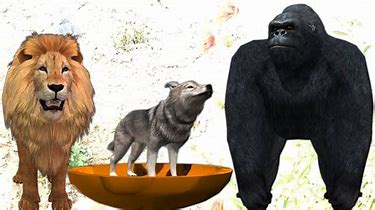
Gorillas and Lions and Wolves, Oh My


When I watched a gorilla scoop some dung out of his brother’s anus to eat it, it modified my thoughts on taste. This gorilla didn’t just ingest his brother’s dung, which is disgusting enough, he did so in such a deliberate process that the observer couldn’t help but note how much he savored that moment. He ingested that dung in the manner I might that one perfect strawberry I find in every bushel. We might think if he loved his brother’s dung that much he might suck it down quick to go in for another scoop before the other gorillas find out about it. He didn’t. This gorilla stopped for about three seconds moving it around his tongue to touch every taste sensor, with his eyes closed. And he closed his eyes slowly, and they fluttered. I didn’t imagine it. I saw fluttering. We all hate it when people assign human characteristics to animals, anthropomorphizing them, but there was no mistaking the idea that this gorilla was savoring the taste of his brother’s waste matter before going in for more. 

They’re our distant cousins right? How far removed from this species are we? We go on primal diets, like the paleo diet and the primal blueprint, and those diet entrepreneurs pitched their diet by saying that early humans had lower rates of obesity, heart disease, diabetes, and other chronic health conditions due to differences in diet. Dietitians now state that one of the problems with the paleo diet was that it can lead to cancer, heart disease, loss of bone density, and fatty liver. What’s the difference between the diet of modern man and Paleolithic man? What if we found that one key element to Paleolithic man avoiding such maladies was eating each other’s bodily waste? And did we invent toilet paper to keep our backsides clean, or were we trying to remove temptation? Out of sight, out of mind.

How far removed are we from scooping dung from our brother’s anus? If we listen to science, we’re not as far as we choose to believe. We all marvel at the good things they do, and we associate with them in this vein. When they do awful things, like eating the product of another’s bowel movements, we don’t claim them as one of ours.  

Why? Well, it’s disgusting. Who would want to associate with a species that eats another’s waste? What this points out, more than anything else, is that taste, flavor, and preferences are relative concepts. What sounds and looks disgusting to us is something to savor for our distant cousins.

Everyone is trying to appeal to our taste when they write, painting, cook, and changing their lifestyle to try to appeal to our taste, but what do we find appealing? Something that makes our brain tingle, does not do anything for our brother. Do you have this brother, raised in the same home, talk all the time, and he’s almost 180 degrees different. That’s an entirely different article, but the point is that taste is so relative that it’s almost impossible to create a flavor that has widespread appeal. The word flavor should have a capitalized (‘F’) on it, as it focuses on such a wide spectrum of taste. Food and drink have a flavor of course, but so do music, literature, and all of the arts in the sense that some of it creates the same but different brain tingles. 

Our own tastes are relative too, relative to need. Does water taste great? I dont think so, most of the time. If you played through a particularly grueling athletic contest, you know how great water can taste. Anyone who has run in a marathon knows water can taste like liquid gold. My guess, just looking out in the audience today, is that nobody here knows anything about that, but you do know what water tastes like after a night out. It’s the same but different, but the point is that need often dictates flavor. The polar bear prefers the seal over the fish, because of the fat content of the seal, something the polar bear desperately needs. 

Animals eat for survival right. They don’t enjoy taste, or if they do on some level, they don’t savor. They eat to fulfill their need to sustain life. Savoring requires a level of cognition that recognizes the limited quality of something extremely enjoyable. We all love the taste of a perfectly prepared rib eye, the perfect strawberry, and the clean, smooth taste of a cold drink of water. I think we can all agree that the strawberry is one of the best tasting fruits in nature, but there are always a few, in every bushel, that are perfect. Savoring that perfect strawberry, for just a second before eating another one, recognizes that limited supply. This gorilla not only ingested the dung slowly, he appeared to pause for just a moment to savor whatever that other gorilla ate and whatever that other gorilla’s digestive system added to it. That elongated, almost spiritual closing of the eyes might have been a coincidence, but I thought the gorilla enjoyed the concoction so much that he wanted to savor it for moment before going back to the dispenser. There was a full tray of food awaiting this gorilla, in the southeast corner of his enclosure, but he preferred to go back to the dispenser before him. Watching that gorilla appear to so enjoy it so much that he went back for more, I realized that individual tastes are so relative to the flavors we create that it’s pointless to try to fashion our work in such a way that it pleases everyone. We can only create whatever it is we create from our own dispensaries and hope that others enjoy it for what it is.   

The roles those two gorillas played in this enclosure defined for me what proved to be what I consider one of the most unusual and artistically successful pairings in music history that of Ben Folds and William Shatner. I’ve been a fan of Ben Folds for a long time, but my taste in music is such that I’ve never listed him one of “my guys”. He has some fantastic songs, but if I were to run into Ben Folds, and I informed him how frustrated I am that he comes so close to reaching me, I’m sure he wouldn’t care. Not only would he not care, he shouldn’t care. If I met him and told him that most of his music misses the mark for me, he should say, “That’s on you. I can only do what I do. I can’t worry about pleasing you, offending you, or entertaining you. If it pleases enough people that I can make a living at this game, that’s great, but I’m not going to change what I do to please you or Betty Beatle from Idaho.”  

William Shatner is not one of “my guys” either, but he’s always around. He’s the green bean casserole of the entertainment world. I doubt anyone who has yet to try green bean casserole would look at it and think, “Yum!” but it’s at so many family get togethers and potluck dinners that we eventually “what the hell” it, until we discover it’s ain’t too bad. As long as we don’t overdo it, repetition can even lead to a level of fondness for it, until we look forward to the next get together or potluck dinner that has a tray of it. Similarly, William Shatner has been in so many movies, TV shows, and other formats that we now look forward to seeing him in various productions.

No one should confuse the term “my guys” with a description of talent. I’ll drop the typical line that people drop to explain the discrepancy. “I respect the heck out of what Folds and Shatner do, but it just doesn’t reach me on a personal level.” I know people who love John Lennon so much that they suggest Paul McCartney is not talented. I understand that we all take sides in any rivalry, but to suggest that a talent on par with Paul McCartney has no talent is ludicrous. The Silly Love Songs vs. Important Songs debate rages on in some quarters, as Lennon fans suggest Lennon was not only more important he was more creative. These people relate more with Lennon, and because of that Lennon is “their guy”, but to prove that point, some try to so by belittling McCartney’s Silly Love Songs talent.

I missed Folds and Shatner’s collaboration for years, because they weren’t “my guys”. When I eventually heard the album Has Been, however, I was blown away. It reminded me of one of my favorite concoctions: cranberry granola and banana flavored yogurt. Banana flavored yogurt is too sweet for me on its own, and while the cranberry flavor of granola is tasty, I probably wouldn’t eat it as a standalone. When I put the two together, however, I enjoy it so much that I’ve considered submitting it to the overlords as my reward for living a decent, moral life. When I pass on, I want to meet my long-deceased relatives of course, and I wouldn’t mind it if someone played a Brahams Sonata on the harp to signify my entrance, but if you’re wondering how best to reward me for a life well lived, might I suggest that the floors and walls of my reward taste like the banana-flavored yogurt and cranberry granola concoction I created.

When we eat concoctions like these, we spoon too much of one flavor most of the times. Some of the times, we spoon too much yogurt, and some of the times, we spoon too much granola, but there are occasions, at least once a container, when we hit a Goldilocks spoonful. The album Has Been is the Goldilocks concoction of talent for me, and when I listened to it often enough to recognize its brilliance, I closed my eyes and savored the moment. I did so, figuring that this production would be a one-off. I loved Has Been so much that I went back to the other concoctions they’ve made together, and I went back to their solo work, but neither of them hit the mark in the same manner. On their own, Shatner and Folds create interesting, quality material that doesn’t quite hit that Holy Crud, brilliant mark, but together they created what I consider their Goldilocks moment. I would think that such moments are so fleeting in any artist’s career that when they hit one, they would immediately run back into the studio to dispense another collaboration, but perhaps they don’t think they can create another Goldilocks moment together. I know they did singles together before and after Has Been, but that album was so good that I would think it would drive them right back into the studio to do another collaboration. We know that Folds’ affinity for Shatner brought them together, and that their work together impressed Shatner so much that he called Folds a genius, but we don’t know why they never made another album together. Perhaps they think that fate and whatnot only permits one one Goldilocks moment a life.

Carnivores in Cartoons

Yesterday, I thought carnivores were the mean, bad guys of the wild. Today I realized that the cartoons we watched conditioned us to believe that when a lion, shark, alligator, or any animal at the top of the food chain eats one at the bottom, they do so with some sort of evil intent. We can find a definition of this in Aesop’s fable in which a mouse removes a thorn from a lion’s paw. After the mouse removes the thorn, the lion states that it will not to eat the mouse as a display of gratitude. The mouse does something nice for the lion, and the lion, in turn, agrees to do something nice for the mouse. The inference is that if the lion betrays this agreement, and the lion follows its instinct and eats the mouse, that means the lion is mean.    

In another fable, on the theme, a frog agrees to assist a scorpion across a pond. Before doing so, the frog says, “Wait a second, you’re going to sting me.” 

“If I stung you, we would both drown,” the scorpion responds. 

The frog reluctantly agrees to help the scorpion across the pond, and the scorpion stings the frog. As they’re both drowning, the frog says, “I thought you said you weren’t going to sting me.”

“What do you want me to say, I’m a scorpion. This is what I do.” 

Some allege that the moral of the story, for young people, is that there are vicious people in the world who, no matter how nice you think they are, will stab you in the back. While I think that is a valuable lesson to learn, the more valuable lesson is that which exists in nature. No matter how nice and cute that wild animal appears, and no matter how many cartoons we watch that display that animal as cuddly, they will probably scratch and bite us if given the opportunity. They might not understand why a seven-inch gash in our skin prompted our decision to stop playing with us. If they could talk, they might say, “C’mon, I was just playing.” The point is, in most cases, they did not intend to hurt us, and they’re not being mean. They’re relatively brainless creatures, compared to us, that operate almost entirely on instincts. Biting and scratching is just what they do. 

Think about all the cartoons we watched and books we read in our youth. They depict carnivores with jagged teeth and menacing growls. As we often do, we confused being scary with being mean or bad. Today I learned that they’re not mean, or bad, they’re just hungry, and like all other animals, they eat when they’re hungry. Regardless what it does to their reputation as a beautiful animal, wolves enjoy eating fluffy bunny wabbits. They do awful things to bunnies if they’re able to catch them, but that does not mean they’re mean or evil in the manner we define such terms. By teaching young humans lessons, using animals as main characters, some of us anthropomorphize these characters to such a degree that we assign them human characteristics. Lions, tigers, and bears aren’t nice, they aren’t mean, and they don’t make decisions on what to eat based on how other animals interact with them.   

Yesterday I learned that even if the animals at the top of the food chain are not the meanies we thought they were when we were kids, we should still consider doing everything we can to avoid one in the wild.

After watching videos that focus on animals biting humans, nature lovers qualify the instinctual actions of these wild animals by saying, “We are not on their diet.” The nature lovers then provide a number of theories regarding how these incidents often involve nothing more than a case of mistaken identity. These theories are true, of course, as most animals in the wild, and in the ocean, have never seen a human, and self-preservation is more important to animals than eating in most cases. Animals often take a pass on eating anything unfamiliar if they think they could get hurt in the process. Sometimes, however, they’re so hungry that they’re willing to eat anything that moves, especially if it moves slower than other prey.

Most animals don’t know what a human is, and that’s why they fear us, but we are also a point of curiosity for them. Thus, when they see us walking around in their domain, or floating on the surface, they’re curious, and that curiosity is almost exclusive to considering whether they should consider adding that slow moving case of meat to their diet. Yet, seeing, hearing, and smelling us might not be enough to satisfy their curiosity, and they obviously cannot communicate with us, so their last resort is to taste us to try to figure out what we are to determine if we are a delicacy they’ve never considered before.

The nature lovers further their argument by opening up the belly of a bull shark. “When we open up the belly of a bull shark, we find everything from license plates to cans of paint to packs of cigarettes. The bull shark, unlike other sharks, is not very discerning. They’ll eat anything they see floating on the surface of the water, even if it happens to be a human on a surfboard.” Translation: They do not intend to devour us. They’re just curious. They just want to taste us to see what we are. I see the nature lovers working here. I know they’re trying to relieve our fears about sharks, and in turn preserve the shark population, and I know wild animals are not bad or mean in the context humans define the terms, but it does not comfort me to know that all they want to do is taste me. If I happen upon one of these carnivorous beasts, and it’s clear that all they want to do is taste me, I’m still going to do whatever I can to get away. If I fail to escape, I’m probably going to shoot it, because I have to imagine that even though they’re just tasting me, it’s still going to hurt like the dickens.

Sprinting & Age


Yesterday, I realized we’re all sprinting to old age. Today, I realized that those lucky enough to make it to old age should probably refrain from sprinting. The aging process is a relative progression, as we’ve all met young sixty-year-olds and old forty-year-olds, but no matter how old we are, we occasionally receive reminders that we’re aging. The aging process rarely hits us in an “Oh, my God I’m (fill in the age here)!” one day in the mirror. Aging is often more of a gradual process that hits us in tiny, little, and seemingly insignificant hits, every day.

We fell on a Tuesday doing something we’ve done our whole lives. We tripped trying to skip a stair on a Wednesday, and we’ve skipped a stair since our legs grew long enough to do so. (Mental note, skipping stairs may no longer be in our repertoire.) On Thursday, we caught ourselves making old man sounds when we sat, but we can’t even remember when we started doing that. We admired a beautiful person on Friday, and someone informed us that we’re probably too old to continue doing that. “It’s just odd,” they said, “considering the age gap.” Someone considered it inappropriate on Saturday, and on Sunday someone found it “Absolutely disgusting” that we should admire the beauty of a 20-year-old. “Because you’re old enough to be her grandpa!” they say. The progression didn’t occur that quickly, within one week, but on some days it seems like it does.  

We all know we’re aging on a physical, superficial level, but mentally we’re not so far removed from that energetic, wildly enthusiastic 20-year-old who was afraid to talk to girls. When they add, “And you should know better than to stare at a 20-year-old woman,” we realize how far removed we now are. We do “know better” on one level, we know how old we are, but their scorn is a painful reminder of how much we’ve aged. We do the calculations in our head, and we realize they’re right. We are, in fact, that old now. The realizations that we’re that old now are not about any of one of the matters listed here. It’s about all of them. It’s about that big old snowball that’s been accumulating over the years without notice.

***

“You know you’re old when you fall and no one laughs,” a comedian once said. You know you’re old when they surround you after a fall, and they’re not there to point and laugh. They’re there, because they’re concerned. You know you’re old when their raised eyebrows suggest that you might want to refrain from such activities in the future. You know you’re old when no one laughs about it later, even behind your back. People didn’t laugh when we fell when we were very young, and somewhere along the way, it turned full circle. People aren’t laughing anymore. They’re concerned. It’s humiliating. The science of their silence involves a calculation of our age and the impact of your fall. It’s no longer funny. It’s so disturbing to some of them that they consider it alarming.

“What happened?”

“He was sprinting.”

“Ok, well, he probably shouldn’t be sprinting at his age,” they instruct one another.

You know you’re old when you’ve become the subject of group concern, and the group addresses the subject of their concern in the third person, as if to suggest that they’ll take care of this whole matter going forward, because it’s obvious that we can’t anymore. They addressed us in the third person when we were young, implying that an authority figure should’ve seen to it that that didn’t happen. Everything in between involved laughter, directed at us in the first person, because they knew we were old enough to know better but young enough to sustain the damage of our stupidity. We might feel some warmth when we realize how much these people care about us, but that fades when we realize their resolutions mirror those family members make when our loved ones reached a point when they were no longer capable of caring for themselves. They have no problem telling us when we’re too old to oggle, but no one instructs that we’ve reach a point where it’s considered ill advised to sprint until it should be obvious to everyone involved.

***

A game of ‘keep away’ developed organically. My nephew was in the middle, laughing as hard as the two adults were on opposite sides of him. He was laughing so hard, and apparently having so much fun, that another kid joined into help him defeat us. Another kid joined in a couple of throws later, then three, then four, then so much more. The game wasn’t young versus old, but it evolved into it. It started out friendly, but it evolved into a competitive definition of whatever remained of our athletic ability.

I started out tossing the ball from a stationary position. I was laughing and failing on purpose, giving the kids a chance, until one of them said a little something that I considered a provocative definition of my declining athletic ability. When it came time to catch the ball, I followed the same pattern. I went from light-hearted attempts to get open to employing quick, ankle spraining jukes. When I realized I couldn’t shake the nephew I once held as an infant, the quick movements evolved into some running. I ran every single day at one point in my life, so it was not a concern to me. I don’t know if I started losing, or if I sensed that the others were further questioning my ability, but I began sprinting to open spots to capitalize on the holes in their coverage. It dawned on me, while doing it that I haven’t done this in years. No one gave this a second thought for most of my life. Some people run, some people sprint. I didn’t see the spectators watching, but I could feel it. I even saw a couple stand with some concern. Did they see the game for what it was, or were they wondering if they should begin sprinting too? Did they stand to source the emergency that sparked my progression? I looked over to verify that they were watching me, but in that casual glance, I almost tumbled. I couldn’t look back at them. I had to be mindful of my feet. (Mental Note II, running now requires more focus.) Running was not my greatest concern. Stopping was. I had a myriad of little feet under mine, and I had to focus to avoid them.

I know I’m not as athletically inclined as I once was, but who is? I am smarter now. I know how to use my faculties much better than I did when I was younger. In the midst of these throws, my competitive juices got the best of me. I overdid it. I knew my best presentation could be found sitting on the lawn furniture with the other old people, talking about what old people talk about with lemonade in hand on a sunny day, but I didn’t decide to play this game. An impromptu game broke out and evolved into a character-defining match of my ability against theirs. I could not just quit. “Why did you quit?” I imagined one of them asking me. “Because I’m old and I can’t handle the physical requirements of such a game anymore.” Yeah, that’s not in my nature.

The nephew I once held as an infant was shutting me down in coverage at one point. I encouraged it verbally, but I also wanted to discourage it physically. I wanted to prove so dominant that he left our little game a little demoralized. To do so, I employed some of the know-how I picked up along the way, using the bag of tricks I developed in the decades I spent playing intramural football. Michael Jordan developed a fade away when his skills started to decline. I developed a few moves of my own over the years. “Youth is wasted on the young,” Winston Churchill said. What if I had this wide array of jukes when I was younger, I asked myself, would I have been better? I sprinted to the right, juked, and went further right. In doing so, my fellow old man led me well with a pass. My ability to stop on a dime and juke surprised my nephew. He went left to cover the traditional juke, and he did so right under me. To avoid taking him out, I had to adjust. (Mental note III, my ability to adjust on the fly has receded.) I tripped over his feet. (Mental Note IV: Studies show that the chances of tripping increase exponentially when we sprint.) Been there, done that. (Mental note V, watch out for ground, it hurts, but not near as much as a parked car.) I didn’t have much choice, in the stumbling and bumbling that followed. I decided to take on the car. (Mental note VI, the pain experienced from stationary objects increases when approached at top speed, and we should all try to avoid parked cars as often as possible. They can be unforgiving.) Hitting the car, and then the equally unforgiving concrete was humiliating, and I thought the people surrounding me with looks of concern was the peak of my humiliation, until my nephew called me up later that night to apologize for getting me so worked that I almost ended up impaled on a car.