Dream Crushers


“I have so many ideas rolling around in my head, some really great ones,” a man named Kelley told me. “I just need some money to make them work, and I’ve never had any money.” Some might laugh at such a foolish notion, and some of us might say, ‘If your ideas are so great, why haven’t you done anything about them?’ 

Kelley wouldn’t tell me what his ideas were. He avoided answering me when I asked for specifics, and he quickly changed the subject when he saw that I wasn’t going to let it go. He enjoyed my general level of intrigue, because most idea guys don’t even receive that, but my guess is he didn’t want to risk damaging that interest by telling me what his ideas were. I knew why Kelley did that, because I was Kelley on so many occasions, and I saw my listeners’ faces turn to ‘that’s kind of dumb’ disappointment when I actually told them what my ideas were. I knew the vulnerability, bordering on fragility, and I also knew what happened when we accidentally gave a cynical, once-bitten hyena one of our ideas. I knew what it felt like when they took a chunk of flesh. What Kelley didn’t know, because he couldn’t, was that I was so into the plight of the idea man that I often waited for them to finish to offer them blind encouragement. Since Kelley didn’t know me, he just assumed that I was one of those who consider it their responsibility to crush idea men at the gate.
“I don’t see it as mean,” former talent judge from the show American Idol, Simon Cowell, once said regarding crushing other peoples’ dreams. “I see it as freeing them from their lifelong dream of being a singer. No one ever told them that they couldn’t sing before. When I tell them, it frees them up to pursue all these other avenues in life.” This isn’t an exact quote, but it is so close that it gives us some idea what Cowell probably dreamed up one night to presumably free himself of the guilt that caused his chronic bouts of insomnia.

All these years later, we learn that that wasn’t the real Simon Cowell. Simon Cowell, we learn, wasn’t a mean man. He had to learn how to be one. A TV executive, named Mike Darnell, states that “In all the other shows before him, everyone was polite and nice, and I knew [crushing people’s dreams in the meanest way possible] was going to be [his] thing. Simon, to his credit, was willing to do anything.” Simon Cowell had to learn how to be a mean character if he wanted American Idol to succeed, and “He was willing to do anything”, including absolutely crush the dreams of the participants on the show to achieve his own fame and fortune. Is this supposed to vindicate the guy? Not only could I not be that guy, no matter what rewards awaited me, I couldn’t even watch his show. I watched it once, because everyone told me it was so fantastic, but I couldn’t bear to watch the glimmer of hope fall out of the eyes of my fellow dreamers when Simon Cowell’s mean-spirited character laid them out.   

I don’t know if I’m the opposite of Simon Cowell, when it comes to idea men floating their dreams to me, but I approach their pitch from an ‘I don’t know what the hell I’m talking about’ mindset. This mindset was born the day Beanie Babies hit our store shelves. The idea that we had a line that stretched from our hotel entrance to the gift shop, where they were sold, set my beliefs about the American consumer back by about ten years. If I were a toy executive, listening to the Beanie Baby pitch from the idea men who brought it to me, I probably would’ve said something along the line of, “I like them, they’re well done, cute, and all that, but if we buy your product, we’re not going to devote much of our resources to their manufacturing, and we’re not going to devote much to their marketing either. We already have a certain percentage of our budget devoted to the teddy bear market, and I don’t see how these products demand anything beyond our typical financial devotion to a product.” As we all know, this is but one bit of evidence that ‘I don’t know what the hell I’m talking about’ when it comes to the desires of the typical consumer, or ideas in general.  

Simon Cowell, I suspect, also “Learned how to be mean” to establish his bona fides as man who did know what he was talking about. To establish his status as an authoritative expert, the show’s organizers front-loaded it with talent that couldn’t sing. I could see that, you could see that, and Simon Cowell could see it too, and he was so frank in his assessments that some could mistake it as cruel. “Hey, he needs to hear that, because he is bad,” audience members said while they were laughing. Simon Cowell, his handlers, and the corporate execs obviously did their research on how to create a character that fed into the American definition of an authoritative expert who knew what he was talking about. If they were correct, and the ratings show that they were, the American definition of the man who holds the keys to the kingdom is a mean man. We see this in our movies and cartoons, and it’s become an affixed image in our brains. If the American public were going to take Simon Cowell seriously, he was going to have to be theatrical when informing those who lost in first round, and he would have to remain unconcerned with their feelings, because being nice and polite is boring, and it doesn’t feed into the American definition of an authoritative expert. 

We might think that an idea man, listening to the ideas of another man, would want to avoid every trait of the Simon Cowell character. We might think that after getting ripped apart by their own hyenas and jackals that they would be more sympathetic and empathetic than the average man to the tumultuous path of the idea. We might think they would want to be the confidant, the facilitator, or the one person that the idea man can count on to be supportive. We might even think that an idea men would strive to create mutual appreciation relationships to treat the ideas of idea men the way they want theirs to be treated. In my relatively limited experience, they do the opposite. They skeptically diminish, deride, and dismiss all others’ ideas to essentially clear the deck of ideas, so theirs is the only one left standing. It’s a “My idea might be flawed, but it’s not as flawed as yours” methodology of propping their ideas up by pushing everyone else’s down.    
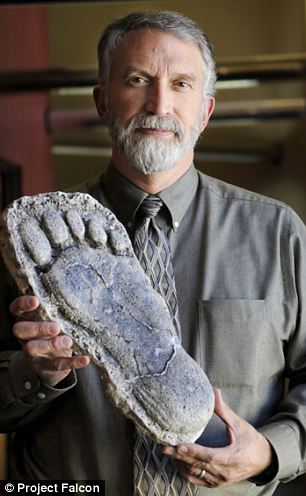
These clear-the-decks idea men share many characteristics with the Bigfoot experts. If you’ve ever watched an exploration of the Bigfoot universe, you’ve been inundated with the experts in this field of cryptozoology. As with idea men, the breadth of the various pitches they offer to establish their authoritative expertise on the subject often devolves to tearing down the competition. One expert, we’ll call him Tom, claims to be the Big Foot expert. Tom claims to have had numerous harrowing encounters. He provides details of those encounters (cue the actor in the hairy suit for the reenactment), and he shows us evidence of those encounters, such as the plaster cast footprint, a ripped tent, or a damaged car to show the wrath of the Bigfoot. Based on his numerous experiences, the evidence, and his particularly charismatic and convincing presentation, Tom is widely regarded as the Big Foot expert. This bothers Dick, the lesser-known but up-and-coming expert in this field. We might think Dick might try to rival Tom’s experiences with his own, but he chooses to try to poke holes in Toms’ stories, until it’s fairly obvious that he’s trying to destroy Tom’s legacy in the field. Dick claims that true cryptozoologists, with a Bigfoot focus, know Tom’s claims are “dubious to say the least.” Dick tries to establish his bona fides in the Big Foot community by scrutinizing Tom’s claims, as if they’re not rooted in the scientific method. Dick then lists some of his own credentials, his theories, and his firsthand experiences, but the breadth of his presentation focuses on bringing Tom, the widely-recognized expert in the field, down. Harry refutes Tom and Dick’s claims with a “If this is true then that would have to be true too” prosecutorial breakdown that leads the audience to believe that Tom and Dick’s presentations are basically nonsense. Thus, Harry claims to be the “real expert” by a last man standing process of elimination. In the end, no parties produce irrefutable information, because there isn’t any, and as a result the experts, like the idea men, end up dueling over the circumstantial evidence they gathered. 

Our ideas might be flawed. We might not be as funny as we think, we might not know how to sing, or we might not be able to write good(emoji), but our dreams and ideas secretly make us feel special. They’re what we think separates us from the pack. I could see this in the aforementioned Kelley’s eyes. He thought his very general pitch was a declaration that he wasn’t a low-level, blue-collar worker like me. He was (trumpet’s blare) an idea man, and the only reason he wasn’t there yet was he didn’t have any money. We all think if we just had a few thousand dollars, or the right connection to that person in the know, or that big break that the man had, everyone would know that we’re not just idea men. We’re the real deal, not like Anthony over there, who’s just a dreamer. “You have to know someone to get somewhere,” we frustrated types say when we don’t get where we need to be. “It’s all a game, and you have to know how to play it to get there.”

The idea that none of us are who you think we are, “a common blue-collar worker like you,” and we’re actually a lot more special than anyone knows, was brilliantly captured on the classic show Taxi. No one in the blue-collar dispatch area, on that show, was just a cab driver: one driver was also boxer who drove a taxi for the money, another an actor, a receptionist in an art gallery, and the last was a guy just working there to put himself through college. After each character went through their real roles in life, the character Alex Rieger declared, “It looks like I’m the only taxi driver here.” Their dreams, our dreams, are our way of getting through the rigamarole of the daily life of the worker, and the general tedium of life. They are our reason to wake up in the morning, and the reason we keep going through the routines of life, but some of the times our ideas aren’t as great as we think they are, and we’re afraid of meeting that Simon Cowell-type who will not only tell us the truth, but humiliate and emasculate us for ever dreaming in the first place. Simon Cowell-types can say that their goal is to free us from unreasonable ideas, aspirations, and dreams, but we all know that they enjoy laying out the harsh realities of life.

***

Did you ever have a dream? We all did, when we were all dumb and stupid in our twenties. Our dreams may have been delusional and a “total waste of time”, but they were all ours. Did someone come along and deliver a harsh dose of reality to you? Have you ever passed this knowledge on? Did it feel good? Okay, maybe not good in the literal sense, but how about justified? Some people, and we all know who they are, love to crush dreamers with a reality hammer, because they’re more than happy to help someone else in this regard. 

The trick is to hold onto your young dreams.” –George Meredith

Dreams are largely a refuge of the young. Talk to any kid, and you’ll hear about their dreams, all of them. If you fear that your kid might be headed down a delusional and a “total waste of time” path that you hate to see them spend one second pursuing it, wait a second, don’t say a word, wait, and be patient. They’ll have another, totally different dream tomorrow. Until someone comes along to effectively crush our dreams, we’re still in this dream-like state in our twenties. The only problem is we don’t have any money, no connections, and absolutely no path to seeing our ideas and dreams to fruition. 

If it’s true that our brains don’t fully formulate until we’re twenty-six-years-old, the twenties are our last vestiges of youth, but we’re old enough and mature enough to start seeking concrete paths for our youthful dreams. The thirties are a rough time for dreams, as the faint light at the end of the tunnel begins to fade in the decade we spend in the workplace, but we’re also not so old, yet, that we consider those dreams foolish notions. That usually happens in our forties, as we begin to whittle away at the idea pool to sort out the outlandish, never-gonna-happen dreams, and we become more realistic. Few of our dreams last into our sixties, as we begin to realize that we should’ve either focused our mind more on the more realistic dreams we had or given up on all of it sooner and focused on something that mattered so much more.

This general, and relative lifecycle of dreamers can be artificially altered and disrupted by dream crushers, and as I write, they think they’re doing a service to their fellow man. They don’t consider the idea that we all think different, and some of us can walk and chew bubble gum at the same time. When I hear a dream crusher brag about injecting a dose of reality in another’s head, and they always do with some measure of pride, I ask them, “Why would you do something like that?” When I ask that in an emotionally charged manner, I can see, in the manner in which they answer, that that was the last question they expected from us, or anyone else for that matter. You can also see that they failed to consider the other side of their advice, or that that person might just be different than them.    

“You heard their idea. It was ludicrous, and a total waste of time. Someone had to say something. I think it was for their own good that they hear that,” they say. They also add some variation of, “Better they hear it from me than someone who doesn’t care about them.”

“Okay,” I said, “but did it actually benefit them? I think we can both agree that he’s an upstanding man, good father, good husband, quality friend and employee.”

“From what we know, yeah.”

“And most of the time he “wastes” pursuing a dream “that was never going to happen,” was done with whatever free time he had left. If all that was true, and as you say from what we know it was, how did your dose of reality benefit him?”

“He was just wasting so much time and energy on it. I couldn’t bear to watch it anymore. Someone had to tell him the truth before he got his heart broken.”

“So, you broke his heart to prevent him from getting his heart broken? While you were smashing, did you ever consider the idea that some portion of the happy-go-lucky, unflappable personality that you and I know and love was based on those outlandish dreams and unrealistic goals? What if he believed you, or you made some kind of dent? What if he stops pursuing his lifelong dream, based on what you said? How would you feel if he come back to us as hopeless and cynical as you are? Would you feel vindicated, or would you realize that he’s probably not going to tell you, or anyone else, what his dreams are anymore, if he continues to pursue them. And what if he doesnt? What if he admires and respects your opinion so much that he realizes that pursuing his dream was a waste of time and energy, and he just gives up on them? It’s possible that he might come back to us a little more unhappy than he was yesterday.”  


John Coltrane is a Bad Guy


“John Coltrane is a bad guy,” they say. “He’ll be whoever you want him to be, when you talk to him, and all that, but the one thing that you should keep in the back of your mind is that he’s just a bad person.”

“I don’t think that’s true,” we say.

“If he’s not a bad guy,” they say, “Who is?”

“It’s complicated.”

Actor Ian McShane

“It’s not complicated,” they say. “He steals money, because he wants more of it. He hurts people too. Some bad guys say they aren’t afraid to hurt anyone who stands in the way. It’s more than that for John Coltrane. He enjoys it, and he always has.”  

“John Coltrane is a victim of circumstance,” we say. “Have you heard him talk about his childhood. His upbringing makes Oliver Twist read like a day at an amusement park, “and nobody ever talks about any of that,” he says. I think he’s right.” 

“If he’s not outright lying about his circumstances,” they say. “He’s exaggerating. He’s not a victim of circumstance, unless we count the circumstances of his own making. He doesn’t steal, hurt people, and kill to support a cause, and he’s not poor or hungry, and he never has been. He’s not desperate to feed his children. He doesn’t have any. He tells us he has a son. He doesn’t have a son. He’s lying. That’s what bad guys do?”

“Why would anyone lie about something like that, something easily disproved?”

“That’s what bad guys do.”

“What does he gain?” 

“He studies us,” they say. “He studies us a culture, and us individually. He tells us the tale we most want to hear. Has he ever prodded you? He prods me all the time, going deeper and deeper into an issue. I don’t think he prods to find weaknesses. I think that’s just what he does, but he uses the weaknesses he finds later. Finding our weaknesses is a byproduct of his constant prodding. The ‘I need to provide for my kid’ narrative is a powerful one, because it garners all types of empathy and sympathy from people like you. 

“As for the more general search for truth,” they continue, “I don’t think he cares about what we call the truth, to be quite honest with you. I think he’s beyond caring about all that, or what we think the truth is. When we catch him fudging the truth, you know what he says? He says something along the lines of, “All right, all right, if it’s not that, what about this? Have you ever considered this?” How does someone do that when you catch him in a bold, irrefutable lie? He does it. He does it all the time. I’ve caught him lying so many times that I no longer believe him. Others do. They continue to believe him even though they know he’s lying to him, they have to know, but he’s so charismatic and convincing that they want to believe him, which says more about them than it does him.”

“That is fascinating,” we say. “I’m not saying I agree, because I don’t know him as well as you do, but it’s fascinating to think that even the modern bad guy learns that he has to change with the times. We all have figurative schemes of thought. When we create a vision of the future, for example, the audience expects some characteristics, flying cars, over population, and corporate monoliths constructed in a manner that makes them look creepy. We also expect some sort of corporate takeover of the planet that removes homes and anything green to feed the corporate monster. Ok, but who’s going to give the corporation money if it takes all the city blocks and drives out the innocent people, its consumer base. The answer obviously is, the corporate monster doesn’t need money in the future, and it doesn’t need people to run it anymore. It is now a self-serving monolith. This is supposed to be a horrifying view of the future, and the movie makers provide guidance for how to avoid this dystopian future, but it makes no sense to me. The same is true with the modern bad guy. The modern bad guy doesn’t do anything but sit around and be evil. He might look and act creepy, and he might promise to do evil things, but he doesn’t do any of them. Every time he appears, creepy music ensues, and we’re convinced he’s a bad guy, but he doesn’t actually do anything incredibly evil to them.      

“Similarly Our definition of the modern bad guy requires that he follow all of the societal norms as best he can. The trope is that he can’t, because he doesn’t know any better, or he won’t, because he’s a bad guy, but the character adjusts to what the audience wants from a bad guy to fulfill their figurative schemes of thought. What the audience appears to want now is a bad guy who doesn’t do anything but sit there and be spooky. I was watching a fictional horror movie in which the bad guy kidnaps a kid, but he didn’t do anything to the kid, because that would’ve been too over the top for most audiences. So, he sat in another room with a weird mask on and acted spooky. We could probably say that everything, pro and con, boils down to John Coltrane’s youth,” we say. “You say he’s a liar, thief, and worse. I’ve known liars and thieves, and they, like Coltrane, often talk about how dumb and stupid they were. Coltrane often talks about how incredibly naïve he was, and how he found it so embarrassing.”

“Weren’t we all,” they say. “Didn’t we all stand at proverbial forks in the road. Didn’t we make decisions along the way that led us to where we are today? Didn’t we all have friends and family who point and counterpointed us to death? Did you ever have that guy, some guy you worked with at a dive restaurant, who told you everything you needed to know about the world from some deeply cynical and awful pocket of the world, his world? He told you that the world you were about to enter into was one big moral equivalence? Did you believe them, or did you see him as an embittered old man who got rolled over in life? Our lives are dotted with points and counterpoints from friends and family, and embittered dishwashers. Who takes advice from a forty-year-old who isn’t cut out for anything better in life than being a dishwasher. They have it all figured out, right? Some people, like John Coltrane, romanticize their notions so much that they begin to believe them. They think they’re cool and funny, and that they’ve unlocked some truths about life they’ve never heard before. If those who cared about him gave him counterpoints to correct the path he was headed down, he either didn’t hear them, or he decided not to abide them.”

“And you think John listened to them so much that he developed a life’s philosophy around them?” we ask. 

“Philosophy is a stretch,” they say. “I don’t think John Coltrane ever developed a philosophy. I think he’s more of a code fella. Whether right or wrong, a philosophy involves a deeper understanding of complicated, almost literary grasp of the way the world works. People like John Coltrane don’t have philosophies, they have codes. It’s a fine distinction, I’ll admit, but a code might be, be nice to your mother, don’t poop where you eat, and don’t eat yellow snow. People like Coltrane prefer superficial, cinematic sophistry that everyone from your best friend to your aunt Donna says to get you to laugh. Deep, complicated, and conflicted bad guys with a philosophical understanding of human nature and the way the world works are a reflection on modern writers hoping readers see the same in them. Their bad guy chracters have vast amounts of knowledge that leads some of us to say, “If he’s so smart, why didn’t he land himself some sort of prosperous career?” No, most criminals are rejected by the greater digestive system of the world, until they fall out the rectum a professional dishwasher, or whatever job title John Coltrane gives himself.”

“I’ll admit I don’t know John Coltrane as well as you,” we say, “but he does have a deep philosophical take on life. I’ve heard it in the hours we’ve spent together. He has a good head on his shoulders, especially when it comes to self-importance. He asked me the other day, ‘who’s the most important person in your life?’ I gave him some answer I thought he wanted to hear. He said ‘Wrong, bongo, you should be the most important person in your life. Who is most affected by your decisions?’ I like that general thread, because it’s so unique in the modern era.

“Hey, you’re not going to get me to say there’s something wrong with self-importance,” they say, “but at what point does it become delusional narcissism? We were all innocent and naïve at one point, and we were chiseled by the world around us. Some of us developed strong minds that could recognize the wrong read for what it was, and some of us didn’t. Some of us corrected our errors, and some of us developed excuses for who we are, but others just lash out at the world around them.”

“It’s the latter that really gets to me,” we say. “I don’t get the lashing out at the world in general. Let’s say you see an otherwise innocent bystander walking down the street by themselves. What prompts you, a relatively sound individual to rob him to rectify what everyone did to you as a kid? How would a John Coltrane square that?”

“Coltrane’s a big guy, tall, broad-shouldered, and all that, so my bet is no one would dare ask him that question,“ they say. “If they had, he’d have an answer. That answer might be meaningless to us as it is to him. It might deal with the general idea of innocence “Nobody is innocent,” is something his type often says. Here’s the most fundamental characteristic of John Coltrane that you need to know before you get to know him. The man always has an answer. If you asked him the question you just asked me, he’d give you an answer. He might give you an answer that strikes you as profound but strikes you as gibberish later, or vice versa. That answer would also be as meaningless to him as it is to him, and it might change if you ask him it a month later, or however long it takes for him to forget the first answer he gave you. Regardless the answer, he always has an answer. There’s always a quick, off the cuff answer that leads you to believe that he’s given this a lot of thought. He hasn’t. He just answers the question. 

“The comedy comes into play when the question of morality arises,” they continue. “John Coltrane knows moral values. He has codes by which he thinks everyone should live, if they want their society and culture to advance. He might even have a long, engaging conversation with your paragon of virtue, your dad, and your dad might find him so pleasant and respectful, and right. The two of them might share so many principles and values, over that steaming bowl of soup, that a friendship could develop. The idea that he doesn’t display his own values doesn’t seem to faze him in the least. If you called him a hypocrite, he’d have an answer. He always has an answer. The most important thing to him in life is finding happiness, and he doesn’t care what he has to do to get it. He’s just a bad guy.” 

“It’s Hell Getting Old”


“It’s hell getting old,” was my dad’s answer to questions about how he was doing. “How you doing Hank?” they would ask. “It’s hell getting old.” He wasn’t trying to be funny, and he wasn’t changing the subject. He believed this was the answer to questions about his well-being. If age is a state of mind, my dad was old his whole life, or at least as long as I knew him. He was old in his eighties, but I remember him saying, “It’s hell getting old,” in his forties. We believed him too, because we were kids, and anyone who is older is old when you’re a kid. This response was the end of the discussion for him. It was his ‘learn it, live it, love it’ meaning of life. If he wrote an autobiography, he would’ve titled it It’s Hell Getting Old. 

I met a person his age, later, and she was quick, fiery, and alive. She was the type you just knew wouldnt be put down for eons. When we broke down the borders of our co-worker relationship and became friends, I violated the rules of social decorum and asked her how old she was. When she told me that she was the same age as my dad, I was stunned. How could she act so young? When I gained a different perspective, as I neared my fifties, I realized the forties aren’t hell or even old, and I asked him about it. “Well it’s hell now,” he said, in his eighties.

Friends and family were sympathetic to my dad’s “It’s hell getting old!” rants … in his eighties. They would nod, sympathize, and back up and give him the room necessary to develop his rant. I write the word develop, because he talked about his advanced age so often that it almost seemed like he was working out material for an act. He’d repeat lines and phrases so often that I could say them with him, as he delivered them to friends and relatives. I heard him provide different emphasis and strategic subtlety to his pleas, over the years, and I heard him employ different ways and means of convincing them of his plight. I don’t think there was anything artificial about my dad’s pitch, as I know he believed every word of it, but he did get better at it after practicing this presentation over the course of forty years.

When I told he might be able to defy the aging process, by some measure, with physical exercise, he dismissed me before I could finish the sentence. “I own a weight set,” he would say.

“I know you own it, Dad, but you have to use it.”

“Ok, Mr. Smarty Pants.” He often switched between Mr. Smarty Pants and wise guy to anyone stating the obvious, but no matter what he called us, he always concluded his argument with something about his age. “Old people aren’t supposed to work out with weights.”

“How about a walk then?” we said, and he silently gave us some points here, but what does a person do on a walk? My dad walked when he had a specific destination in mind. The idea of walking just to walk seemed dumb to him. What if someone saw him doing it? “Where you heading Hank?” 

“Nowhere. Just walking for the exercise.” My dad would never subject himself to such a revealing and vulnerable Q&A. 

Some cherish their youth, and the telltale signs that it’s slipping away freak them out. Some of us look forward to getting old, because while we know that while the physical side will falter, greater levels of clarity, sanity, and stability await us on the other side. I suspect my dad couldn’t wait to get old for all of those reasons, but he also knew that getting old grants one the freedom to talk about their “gross” and “funny” bodily functions without being called out for violating societal norms. When my dad would attempt to enjoy his newfound freedom, over the course of forty years, with our friends and family, we would try to rein him in. “No one wants to hear about your bodily functions.”

“Oh, grow up!” he’d say.

***

“What comes out of the rectum can be used an indicator of health, but it’s not the indicator,” I said when he provided me a particularly detailed update on the state of his health. “It shouldn’t be used in place of a handheld pulse oximeter, an ECG monitor, or a glucose monitoring device.” Unless his daughter-in-law, a nurse, administered these in-home tests, the devices his doctor sent home with him were never used. My dad thought that what came out of the rectum was a better indicator of health than all of those medical devices combined. Either that or he just enjoyed talking about them.

Knowing that his diet consisted of baked beans, Oscar Mayer Bologna, butter brickle ice cream, and Swanson’s Mexican TV dinners, it was no surprise to us that he began to face gastrointestinal issues, but knowing inevitability doesn’t make hearing about it any easier. 

“How you doing today Dad?”

“It was like pounding concrete today.” That was his favorite analogy. He’d replace the word “concrete” with “bricks” at times, just to keep it fresh. I don’t know where he picked it up, or what it meant, but I didn’t waste any calories trying to uncover the true meaning of his analogy. I understood what I needed, and more than I wanted.

My dad was a former military man who spent most of his life in a factory. I write that to note that he didn’t waste his time or effort in life on creative pursuits. Creative descriptions of his daily doody, to my knowledge, were his only forays into artistic expression, and he displayed such a rich, provocative vocabulary in this arena that the imagery was almost impossible to block. I write almost impossible, because my mind has chosen to forget the trauma of many of his vivid descriptions, but the “pounding of concrete” stubbornly clings to a place to my soft tissue. I thought of jackhammers destroying concrete.

When we hear people talk about jackhammers destroying concrete, or bricks, in an analogy to what happened that day in their alimentary canal, we might say, “I didn’t know whether to laugh or cry.” We say such things, some of the times, because we hear others use it to describe their uncomfortable moments of confusion. There are moments when we mean it. I saw this on the faces of those who heard Dad’s prognosis of the day. Few cried, of course, though I suspect that some of the third parties he and I sat with in diners may have considered it to try to get him to stop. I stepped in to solve their dilemma by saying, “Dad, that’s gross.” I’m quite sure he wanted to tell me to grow up, but whatever he saw on our third party’s face told him they agreed. Our third party companions didn’t know him like I did, of course, so they’d laugh uncomfortably. I suspect that they laughed, because they enjoyed our father-son interplay, and they might have falsely believed that he was tweaking me in some way for their entertainment. 

He tried his hand at more conventional ways of entertaining people, and it didnt go well, but those of us who struggle in this arena learned a lot about what not to do from him. That isn’t to say that he wasn’t entertaining, because he was one of the funniest people I’ve ever met, unintentionally and in his natural state. Friends and family found him just as entertaining as we did, and we flirted with taking our show on the road, but we knew it would be impossible for him to maintain a natural state. Anytime he thought he was funny or entertaining, he put forth effort, and he subsequently lost his audience. Smiles turned to confusion and confusion turned to polite laughter when they saw how hard he was trying.

The difference between an occasionally humorous person and an entertaining person is complicated and multi-faceted. One way to achieve short-term laughs is to repeat a joke. Achieving the vaunted title “entertaining”, requires the subject to know what everyone else knows so well that it challenges our understanding, our foundation, and everything we believe in. It requires us to examine ourselves, others, and others’ views of us so well that we briefly imagine an alternative universe if just for the moment it takes us to find laughter. We could even say that attempting to be entertaining asks us to be a little phony for as long as it takes to get a laugh. We might have certain beliefs, certain hard-core, concretized beliefs, but its considered entertaining to let our hair down and analyze from a partially fictitious, self-deprecating angle to challenge those beliefs.  

My dad was many things, but he was not phony. I’m not sure if he had that code in his DNA necessary to be a little phony even on those rare occasions when he probably should’ve been. If he did have the code the rest of the human population does, he didn’t use it often enough to hone its capabilities. I called him many awful, mean, and regrettable things in my tumultuous teens, but phony was not one of them. If one of my friends suggested that I might want to try the name out on him, I wouldve rejected them. He was a man of simple truths that he developed in life, and he could not waver on them, even to poke holes in them for comedic effect. 

He spent his whole life believing he was inferior, and he might have done some things in life to prove that he was not, but my definition of phony involves someone who acts in an artificial manner to convince others that he is superior. To those who stubbornly insist that the term phony refers to someone who tries to be something they’re not, then perhaps he acted in artificial ways in some instances, but my dad did everything he could to fit in so he didn’t stand out. 

When he got older and sicker, I suggested I interview him to provide his legacy a transcript. I suggested that his young nephews might never know who he was otherwise. He rejected me saying, “When I die, I want to be forgotten.” It’s illustrative, a little funny, and very frustrating to those of us who wanted others to remember him, but it’s not phony. Try to dissect that sentence for a trace of phoniness. To me, that sounds like a genuinely strange character who felt he was not fit for our world. 

He was a fundamentally flawed human being, stubborn, and one of the weirdest human beings I’ve ever met, but he did not put on airs to impress anyone. Anyone who suggests otherwise need only look to the shoes and socks he wore in life. They were not what a man, built to impress, wears.

*** 

“I don’t understand how you and your brother view the world so clearly,” he once said. “It’s always been so cloudy to me.” He was skeptical to the point of denigrating, regarding his abilities in life. Driving, for example, was such an “awful responsibility” to him. In many instances, Dad talked about the difficulties of life, the “horrible responsibilities” the “accountabilities” and the “misery of life” that he said we’d fully understand once we became responsible adults who were responsible for others. Some of it involved lessons he used to lift our eyebrows and prepare us for the “awful responsibilities” that awaited us, but the anxiety he experienced while driving was very real to him. 

We couldn’t play turn on his car stereo, for example, because that would’ve distracted him from his concentration on the road before him. We could talk and stuff, on most trips, but we didn’t have to “get so carried away” with it. If we laughed too hard, he put the kybosh on that, because it diverted his attention from the road too much. He didn’t care for uproarious laughter, in general, because he thought it made the laugher look foolish. 

Whenever we tried to divert him from 90-degree angled driving, my dad rejected that outright, as he feared he wouldn’t make it to our proposed destination. “You could take A street to 130th and take a right, but if you take Stonybrook, it cuts straight through.” Dad did not care for bisecting an angle. He was a tried and true 90-degree man. 

“We could get lost,” he said with tones that asked us to appreciate his predilection. We didn’t. “We could get so lost that we don’t know where we are,” he added in a fearful tone that suggested there is a point of getting lost that could lead a traveler to never being able to return to the existence they once knew. We didn’t understand the severity of our dad’s anxiety, until someone relayed a story to us of Dad being so lost one time that one of his commanders informed him that his actions could’ve started World War III.  

He was in charge of the map for a tank battalion. We all suspect that one of the great attributes of a military’s boot camp is to determine a soldier’s strengths and weaknesses. Why else would the military put a person through six weeks of intense physical and mental challenges. They want to see what we’re made of, and they want to how they can use our natural talents and gifts. How the military could put a man who lived his whole life in one city and didn’t know his way around it, in charge of leading a tank battalion with a map challenges my perception of the men in charge of the military at the time. Whatever the case, they obviously didn’t know my dad’s preference for neat and tidy 90-degree turns, because they put him in a position to fail, and fail he did. He led the tank battalion into enemy space, Russian enemy space, and he could’ve, in the words of his sergeant, started WWIII. 

I didn’t know any of that as a kid, of course, but I knew that the only time I saw my parents’ fights devolve to screaming matches occurred soon after the map was unfolded. Thanks to GPS apps, I no longer experience the deep seated anxiety I used to when someone pulled a map out. 

The first time I saw Shrek I enjoyed it with a strange sense of familiarity that I couldn’t put my finger on. Shrek was a lovable loser with huge ears, a large belly, and he could be unintentionally and habitually gross in ways he didn’t understand, because he spent too much time in solitude. Shrek also had a strange yet simple philosophy of life that could prove humorously wise at times. I couldn’t shake the sense of familiarity during the movie, and I couldn’t pinpoint it for many years, until someone said, “Shrek’s your dad.” I didn’t laugh, and I found it a little insulting at the time, but when I watched the movie again, in that frame, I realized that the writers of Shrek might owe my dad a  royalty for at least some tangential influence.