The Mystery of the History of Zero


Zero has always meant nothing to us. It lurks in the shadows of something. It’s a number, but it kind of isn’t in some confusing, “I don’t want to think that much” way. It has its own identity, and it doesn’t. It’s complicated, and it’s not. It’s an odd number, but it’s not odd. It’s not even even, but it is and it isn’t. We don’t consider it prime or composite. It’s not positive or negative, as it separates the negative from the positive. It’s a number but it also represents the absence of a number. It’s so confusing to us that we have to wonder if teachers should even teach its advanced concepts, and if they do, at what age? We were taught the basic facts of how to add, subtract, multiply, and divide zero, but when we reached advanced mathematical concepts, we learned that certain mathematical answers cannot be answered. They’re undefined, which led us to say, “What do you mean undefined? It’s zero.” At this point, the mathematician explains that if we try to divide twelve groups of people into zero groups, it cannot be done. It’s undefined. It’s complicated, and it’s not.
As Andreas Nieder writes in a 2016 paper, “For a brain that has evolved to process sensory stimuli (something), conceiving of empty sets (nothing) as a meaningful category requires high-level abstraction. It requires the ability to represent a concept beyond what is perceived.” 
“We’ve now reached a point in our history where we have to describe nothing,” someone, with some sort of twisted brilliance, said at various points in human history to try to advance the cause of what we now call zero. “How can we properly appreciate the concept of something, without a concrete grasp of nothing?”   “But there’s always something,” his counterpart probably argued. “Is there nothing in the vast expanse of a desert? There’s sand, over one septillion of tiny grains of sand, and how many molecules litter the water of the vast quantities of nothingness in the ocean? Even in the vast expanses of space, there’s always something.”  Zero is not substantial when compared to the other numbers, and it’s not tangible, but how many of our current creations, and measurements for those creations, would be almost inconceivable without it? It’s been there for so long now that we take it for granted. Yet, it went through a long, slow, debated, and debatable gestation cycle. Even in the relatively limited historical record of ancient civilizations, such as those in Babylon, India, and the Mayan civilization, zero, or some semblance of zero, appears. We don’t know why it made an appearance numerous times in different civilizations. Its birth remains a mystery to us, because its purpose wasn’t defined. They invented the concept of zero, but there is no evidence to suggest that they developed it in a substantial manner. As with most theories, they appear to have failed to apply the concept of it to real world constructs, but we have to give them credit for developing the theory of it. Bottom line, their theory was probably as difficult for them to grasp as it was to explain, because there’s always something. Even if we laid four avocados on the ground and then removed them, there would still be the millions of granules of dirt beneath it, trees, leaves, and the micro organisms that feed on them. There’s always something. Scholars believe zero began its life as something to fill columns when humans advanced their attempts to count. When those who invented, developed, and applied a method of counting, they encountered a void after nine. Their question, how do we get past nine, and all the other nines that lead to ninety-nine without something to carry us to the next number. How do we get to eleven, twenty-one, and one hundred and one? India’s positional numeral system needed a zero to scale past 9, and their trade demanded it. They needed a placeholder, or something to fill the void. They didn’t start counting numbers with zero, but they wrote a placeholder in the tens, the hundreds, and the thousands to fill columns when necessary.   
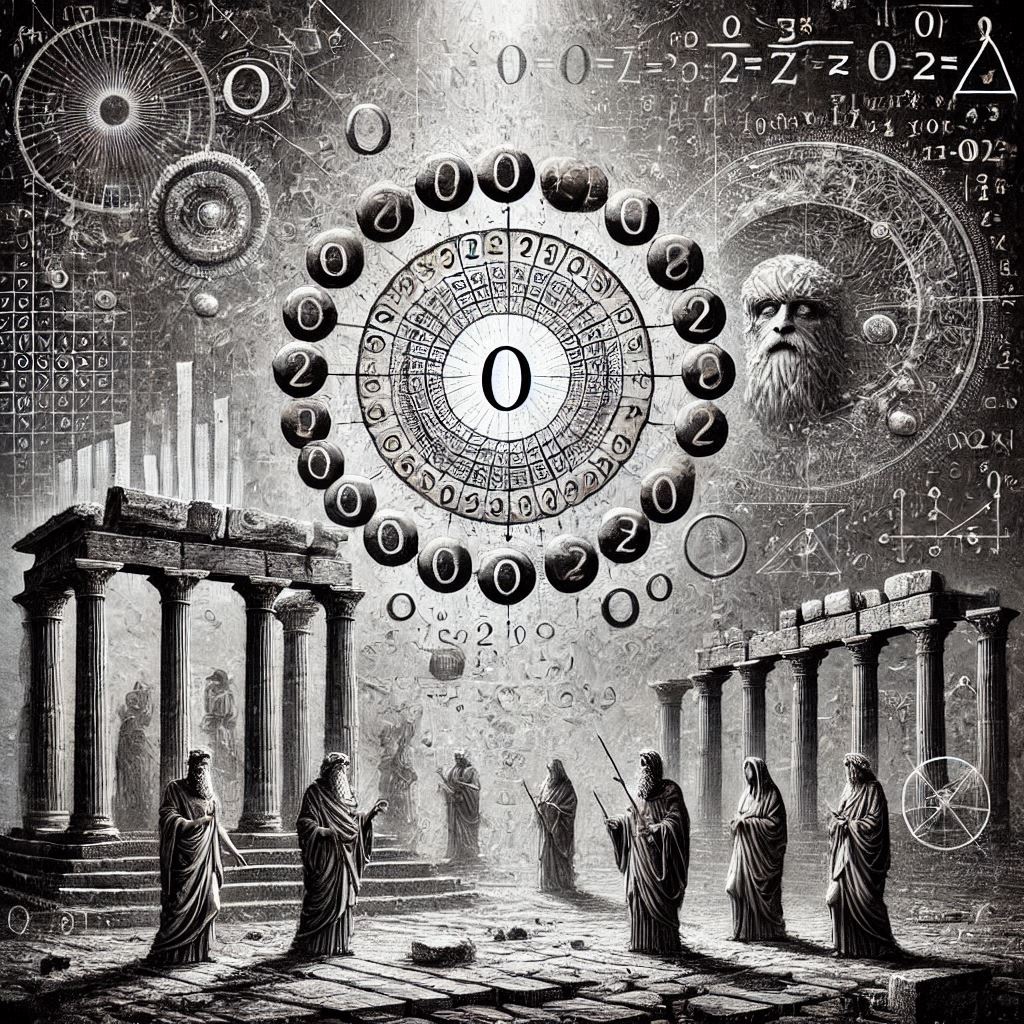
In a Scientific American article, Charles Seife, author of Zero: The Biography of a Dangerous Idea (Viking, 2000), says “Filling columns is not a full zero. A full zero is a number on its own; it’s the average of –1 and 1.” “The Number Zero began to take shape as a number, rather than a punctuation mark between numbers, in India, in the fifth century A.D.,” says Robert Kaplan, author of The Nothing That Is: A Natural History of Zero (Oxford University Press, 2000). “It isn’t until then, and not even fully then, that zero gets full citizenship in the republic of numbers,” Kaplan says. Some cultures were slow to accept the idea of zero, which for many carried darkly magical connotations.   But Seife is not certain that even a placeholder zero was in use so early in history. “I’m not entirely convinced,” he says, “but it just shows it’s not a clear-cut answer.” He notes that the history of zero is too nebulous to clearly identify a lone progenitor. “In all the references I’ve read, there’s always kind of an assumption that zero is already there,” Seife says. “They’re delving into it a little bit and maybe explaining the properties of this number, but they never claim to say, ‘This is a concept that I’m bringing forth.’” Kaplan’s exploration of zero’s genesis turned up a similarly blurred web of discovery and improvement. “I think there’s no question that one can’t claim it had a single origin,” Kaplan says. “Wherever you’re going to get placeholder notation, it’s inevitable that you’re going to need some way to denote absence of a number.”

The Revolutionary, Ancient Indian Dot
So, if the Babylonians developed a placeholder (a wedge) by 300 BCE, not a “full zero.” India’s leap—likely pre-Brahmagupta, with the Bakhshali manuscript (3rd-7th century AD)—was making zero a standalone number, and the Maya did it too, independently, by the 4th century AD, we might suggest that there is a well-defined trail but no clear-cut discoverer, inventor, or even a well-defined point of origin, of the number zero, as it was always just kind of there, but its functionality wasn’t even as clear to early users as the functionality of negative numbers appears to have been. If it was always kind of been there, but rarely used as a number, how did zero make the leap as a concept?   Why did the powers of the zero contain “darkly magical connotations?” As with all cultures, modern and otherwise, the unknown is beyond current capabilities to explain, so we assigned mystical, dark, and forbidden connotations to explanations of what we otherwise cannot. With that in mind, why did someone brave the “here, there be dragons” designation to further the concept, and what was the reaction among their peers?  What twisted, weird, and just plain different theoretician(s) sat in a bathtub and dreamed up ways to further the concept of nothing and zero. If he eventually managed to successfully sway his peers to accept the premise of this proposed furtherance, how did he answer their “And then what?” questions. Okay, we’ll accept the premise of your newfound importance of a zero, but what do we do with it? Theory is one thing, application is quite another. How do you propose we use it? What purpose will it serve? When we’re building a house, diagramming a structure, or figuring out how to use water in our fields, what purpose does a concrete explanation of nothing serve? Your point of reaching a greater understanding of something through nothing is a provocative one for pointy-headed intellectuals to consider in their philosophy caves, but how do we apply it to real world concerns? In my uninformed and admittedly limited search, I found no timeline specifically breaking down a concretized life cycle of the zero. Various points on the timeline state that it was discovered here, mysteriously listed there, and it appeared here, there, and elsewhere in the historical timeline, but in terms of some form of functionality it mirrors the resume of the misspent life of a cousin who did nothing in life. He was always there, but he never did anything noteworthy. No one knows how it happened, nor can they answer the when, where or why questions, but he became the star of the family one day.  The most interesting elements to the timeline of the zero are not the who and when, though they are interesting, but the philosophical push of how zero made its way into the halls of Physics, Calculus, Engineering, Geometry, relativity and quantum mechanics, and a large part of finance and economics to, in many cases, eventually lead the way to numerous modern advancements in these areas.  If dealing with natural numbers, i.e. 1,2,3 …, is dealing with tangible things and events, the zero provided more of an abstract idea for mathematicians. This provided mathematicians greater freedom from real world constructs and representational qualities into high-level abstraction. The eventual inclusion of the properties of the number zero was such that the advancements of modern mathematics would not be possible without it. Imagine being a renowned “genius” in one of the fields listed above, and you have a problem that has plagued you for much of your life. This genius has put this problem to a group of peers and his students for decades, and no one can solve it. The genius eventually labels this problem unsolvable, a 0̷, or no solution, until some egghead walked up to him in the town square, while he sipped on his brew and said, “Try putting a zero on it.” The renowned expert probably sent this egghead away with a “Yeah, great, Montenegro, now go home to your flock of sheep and your basket weaving, and leave me alone.” Until, the expert went home, and they hell’d it, and put that zero into his mind-boggling equation. Did the genius use the zero to solve the problem, or did he approach it in a way that he never considered before? Was the genius’ problem of solving for something only solvable by introducing the concept of nothing? It’s impossible to know if a representation of nothing had an epiphany affect on any one person soon after it was incorporated into theoretical or actual problems, but we have to imagine that the effects and affects were cumulative until we finally arrived at a collective epiphany that led us to fully incorporate it over time.
A very brief and succinct description of our favorite number/non-number zero is that it flickered in ancient Babylon as a placeholder wedge by 300 BC, but India’s Bakhshali manuscript (3rd-7th century AD) and Brahmagupta’s 7th-century rules made it a real number. The Maya mirrored this leap by the 4th century, while Al-Khwarizmi carried it to the Islamic world in 825 AD. Europe, stubbornly resisted until Fibonacci’s 1202 Liber Abaci, finally caught on—linking India, the Middle East, and the West in a slow, vibrant chain. The research suggests that if Aryabhatta, Brahmagupta, Al-Khwarizmi, and Fibonacci, and the other brave souls hadn’t weathered the storms to bring zero to absolute indoctrination, the progress we know today, “the opening of the universe,” wouldn’t have been possible. Zero defines nothing and everything at the same time. It can be used as a point of origin, in positive and negative ways, and some suggest that those brave souls ended up furthering knowledge to advance Physics, Calculus, Engineering, Geometry, relativity and quantum mechanics, and a large part of finance and economics. The very idea that the “nothing is something and something is nothing” complex identity of zero ended up playing a starring role in science. In Calculus, for example, zero provides a tease of limits, where functions flirt with the abyss as values approach it. In relativity, zero-point energy keeps the universe buzzing even at absolute rest, and in binary code, 0 as “off” teams with 1’s “on” to whisper digital secrets to us. Mr. Zero, as we should now address his highness, or lowness, depending on how we choose to view him, transformed computers from clunky gear-spinners to sleek bit-flippers, while revolutionizing physics and engineering. Without zero, we might have to work with Roman numeral guesswork to form the precise calculations necessary to build bridges and figure out planetary orbits. If the geniuses listed here hadn’t developed a theoretical counterpoint to something, in these fields and others, we might have to leave such matters to vague speculation and our imaginations. Imagine that!  Zero is also one of the primary languages of the computer. We’ve all heard the phrase ones and zeroes. Zeroes are needed to create code and messages that the computer requires for functionality. If the properties of zero were never invented, discovered, and advanced, is it possible we wouldn’t have the knowledge or the technology necessary for the computer?   Even after everything it’s been through and everything it has accomplished for us, we still have no love for zero. The full zero, standing on it’s own, and the average between -1 and 1, represents absolute failure in the classroom, a complete condemnation of athletic ability on a scoreboard, and desperation when it appears alone in our bank accounts (zero involves some desperation, but not the total devastation the negative numbers create in our equations). We considered calling someone an absolute zero to be worst insult we could say about a person, until Billy Corgan came along and reminded us of its positive, negative and abstract qualities. We also thought we had a firm grasp on the traits of nothing, until the writers of Seinfeld redefined it and showed us how brilliant nothing could be. Now imagine going back to a time before zero to explain to the most brilliant minds in math and science how zero and its resulting revolutionary concepts have reshaped our world. “Achieving something is just as important in our time as it is yours,” we might say, “but the most brilliant minds of the civilizations, since your time, couldn’t have achieved half of what they did without fully developing and realizing the properties and possibilities of nothing.”   

You Could Be the Entertainment. You Might Be the Genius 


“A genius is the one most like himself.” —Thelonius Monk.  

We’ve all heard jokes about you being original. “You think you’re original? I wonder what percentage of the nearly 8 billion in the world consider themselves original? What percentage of the billions who lived before us thought they were original?”

What is original? Is it even possible to be original? Was Homer, author of the Odyssey original? What about Leonardo da Vinci, Dostoyevsky, or The Beatles? Most music critics stopped using the word ‘o’ from their reviews, because anytime they drop the word, the snipers come out to talk about all the influences they hear. If it’s impossible to be original, is it possible to create something uniquely personal? Is it possible to take all of your influences, artistic and otherwise, and do your thing so often that you find you? Will it be without influence? What is? No work of art is free of influence, and no influence is free from personal interpretation. Should you even try to be original if it’s impossible? With nearly 8 billion in the world and billions who have preceded us in history, the chances of you being somewhat redundant or derivative are pretty high?

If you can get passed the lengthy confusing originality-is-not-possible algorithm, you could do something that is so you that you might feel naked when it’s over. You might want to consider deleting the vulnerabilities that incriminate you, or you might not. If you leave it all in, it’s possible that some long-dead artist, who many consider one of the most original artists to walk to planet, might’ve considered you ingenious.    

Everyone started out wanting to be somebody else. We don’t start out all pure and raw. We lacked knowledge, skills, and the sense of security necessary to expose ourselves completely. We felt icky about ourselves when we started. We were insecure, we feared we had no talent, and we thought we were boring, or at least we’re not as entertaining as that guy.

Look at him, he’s got it all figured out. Every woman I know wants to sit with him and chat, he’s got a wad of dough, and everybody likes him. And funny, ohmigosh, if I could be just a little bit like him for one minute of one day, people might want to be around me, they might like me, and they might read me. We add a pinch of ourselves along the way. The other guy over there, he’s all calm, cool, and collected. He’s radiating self-possession. If I could wrap his aura around my neck for just one night, it could all be different. We add a dash of ourselves to it. At some point, in the painfully gradual process, we shed their skin and become more like ourselves, and if we become more like ourselves than anyone else can, it might be ingenious. Monk’s quote might be my new favorite quote.  

2) “We might as well be ourselves,” Oscar Wilde said, “everybody else is taken.”  

“I wish I could be more like Jarod,” Todd said. “He doesn’t care if anyone likes him.”  

Most of us don’t say such things aloud. We might think it. We might think Jarod has something ingenious going on, but we don’t talk to him to find out what he has. It’s understood. We develop a construction from afar, and we try to become it.

I talked to one of my constructed images once. As much as I tried to avoid it, I couldn’t help but convey how much I thought of him. I didn’t say anything along those lines, but I was so obvious about it that I could see it on his face. We were walking away from football practice, and he started dropping a slew of swear words on me. He wasn’t cursing at me. He was swearing in the smoothest manner he could find. I picked up a strange vibe. He appeared to be trying to live up to whatever image he thought I had of him. The idea that he tried so hard confused me, because he was the guy everyone wanted to be, and I was the anonymous nerd who faded into the background of whatever room I was in. I needed to develop skills to stand out. This guy accomplished it by just being him, or so I thought. In our brief exchange, I realized that I didn’t want to be him anymore than I wanted to be me. I realized that if I was going to continue to try to live up to the constructed images I had of people, the pursuit was probably better than the prize. I also realized that if I was going to project images upon guys like him, I probably shouldn’t talk to them.  

“You’re the entertainment,” I told Todd after he wrapped up his gripes about Jarod. “You’re the entertainment in the room, and you don’t even know it.” 

3) “You are who you are when nobody’s watching.” ― Stephen Fry

My goal in life is to control situations as often as I can. If I encounter a situation fraught with failure, I take over, because I would rather blame myself for failure than someone else. I see parents put their kids in awkward situations, and when these kids fail, the parents are shocked. They evaluate their kid’s failure by their own standards. I might over correct at times, and I might be what they call a helicopter parent, but I either try to frame failure according to age, or I try to prevent failure by taking control of the situation.

When my boy went to the refreshment stand in a restaurant to refill his cup, every instinct told me to just take the cup from him and do it myself, but I knew he had to learn, and I wanted to see who he was when he didn’t know anyone was watching. I stood back where he couldn’t see me, and I watched him. As he refilled his cup, I took a step back. It was painful to stand back and watch, but I couldn’t stop looking. After he spilled, I stepped back further. I wanted to see if he would clean it up himself. I wanted to see if he would look around after the spill. I didn’t realize until I smelled it, but I accidentally backed into the sphere of influence of an elderly woman. My first thought, when she expelled gas on me, was this might be her defense mechanism, warning me that I was too close. I thought of the octopus expelling an ink cloud to thwart the approach of predators. She couldn’t know if I was a predator, because she didn’t know me, so she probably considered it better safe than sorry when she let it go. I abided by her silent admonition by giving her distance. My boy cleaned up his mess without looking around, and he double checked his work to make sure his mess was all cleaned up. I made the right move by allowing him to make his own mistakes, and he unknowingly defined his character for me, but I paid a price for it. 

4) “Be it a song or a casual conversation. To hold my tongue speaks of quiet reservations. Your words, once heard, they can place you in a faction. My words may disturb, but at least there’s a reaction.” Slash, Dave Lank, and Axl Rose. 

Back when I talked to my constructed image of the star football player, I considered offensive vulgarity the more honest approach. No matter how confusing I considered his effort, I thought he was being real with me. He fit the prototype teenager, but we don’t see that when we’re teens. We were influenced by movies, TV, and music. We had lists of which movies used swear words, and how many times they swore in such movies. If we were movie critics, we would’ve awarded stars accordingly. We also loved music, and while we all appreciated great pop songs, a song without at least a little vulgarity or innuendo, too safe. We wanted to hear dangerous, risky music, and we craved that in all artistic venues. We demanded the same of ourselves. The more vulgar and crude the more honest. We wanted to hand the holy grail up to the person who didn’t care if we considered them offensive. The truth is offensive, we thought. “I speak truth, and what does it say about you that you can’t deal with it.” What does it say about you that you said it? “I gotta be me!” So, you’re an offensive person? It took us a while, but we realized that a cup is handed down to the artist, filled with their offense.  

Due to the fact that the material nature of Rilaly.com is relative and subjective, we cannot guarantee our readers will be entertained or enlightened. We are introducing our new insurance policy that a reader can purchase if they don’t know if they want to take a risk by reading it. If you are not entertained, or enlightened, we will refund any amount the reader paid to us to read this, minus the cost of the non-refundable insurance.  

Platypus People Need to Watch TV


When my best friend’s mother pushed her husband down the stairs that wasn’t the only strange event I saw over the course of the years I spent in their household, but it was the exclamation point I needed to develop a new species to describe them. I called them Platypus People. They weren’t just weird, strange, and just plain different people. To my mind, they defied scientific categorization in the same manner the duck-billed, amphibious Australian mammal does. They were a housefire of strange, and I was the fireman, running into what everyone else fled. Yet, as with any veteran fireman who has run into so many fires that they become commonplace, I didn’t see their aberrant behavior for what it was back then.

When Ellis Reddick entered the room wearing his wife’s tattered, old wig and a pair of vampire teeth, I didn’t understand why it was so important to him to terrify us. He would walk slow, real slow to punctuate the terror. As a likely result, my favorite horror movies involve slow, subtle psychological terror that allows the viewer to fill in the blanks. 

His daughter, someone who knew him as well as anyone, was terrified too. If he did this on occasion, say on Halloween or something, that might make it funny, but he did this to us almost every weekend. When we grew too old to be terrified, he turned the show on my brother. We knew my brother was terrified, because he didn’t know what was going on, and that made it funny somehow, sort of, and in a roundabout way. We knew Ellis better than my brother did, but for reasons endemic to Ellis’ character, we were still a little scared. I don’t know what was going on in his daughter’s mind, but I always wondered how close he was to hurting us all. We would laugh when this was directed at my brother, as I said, but there were moments between the giggles when my mouth would freeze in a worried smile. I would look over at his daughter, with this look on my face, and she would have the same concern on her otherwise laughing face. We would take everything we knew about Ellis Reddick and put those facts and concerns in a hypothetical puzzle, and we would wonder how much truth there was in the in the otherwise comical horror we were witnessing. The pièce de résistance occurred soon after his daughter and I found his hiding place for the wig and the vampire teeth, and we tried to use them to scare my brother. He was so disappointed that he was angry. He chastised both of us, because he knew, kids being kids, we would overdo it and ruin the joy he experienced terrifying  us every weekend. 

The Carnelias were another strange brew. I met low-lifes before the Carnelias, but I never knew anyone who whole-hogged it. The philosophy of most of the low-lifes I knew was equivalent to that of cryptozoologists and conspiracy theorists. They believe some of what they say, but they form most of their ideology around the idea that the other guy is wrong. They define their rightful place in the mainstream by exposing their peers to try to push them outside the fringe. The Carnelias didn’t waste their time with individuals, they were out to get the world. I also met angry, bitter, and resentful people before, but I never met anyone who enjoyed pain so much. Painful mistakes exposed the fraudulent nature, and they delighted in it like no people I’ve met before. The Germans invented the word schadenfreude to describe the act of enjoying another’s pain but the Carnelias personified it. Most of us know about the fuzzy line between comedy and tragedy, but there was never a fuzzy line for the Carnelias. They considered all tragedy comedic. I never saw them happier than when someone else was falling, temporarily confused, stupid, and in pain. It was their reason for living, or as the French would say, their joie de vivre. 

“Your family is just plain weird my friend,” I told Matt after he apologized for an incident I witnessed in his home the day before.

“Oh, and your dad is normal,” Matt said. He was defensive. Why wouldn’t he be? I was insulting his family, and in some ways him, because some part of him knew that the peculiarities of his family would one day become his. The struggle to avoid familial institutions was best captured by the Alice in Chains lyric, “All this time I swore I’d never be like my old man, but what the hey it’s time to face, exactly what I am.”

“At least my dad knows he’s weird,” I said, “and he’s been fighting it his whole life. Your family doesn’t even see it.”

It was a harsh condemnation, and it was true. Matt’s family institutionalized their peculiarities in an inclusive manner that Matt would never be able to see without comparative analysis. Institutionalized peculiarities are as difficult for an insider to see as an accent for a native speaker.

“Everyone has an accent down here,” my very young brother innocently commented when we took a trip to see extended family members in Tennessee.

“Son, down here, you’re the one with the accent,” our cousin said.

Everyone laughed uproariously, until I innocently added, “No, you still have the accent. Don’t you watch TV? Everyone talks like us.” I don’t know what I expected them to say, but I wanted pushback. I didn’t mean it as an insult. I sincerely wanted someone to say, “Oh, and you think you speak without an accent? Just because you were born and raised in a certain locale, where everyone sounds alike, doesn’t mean you don’t an accent?” I wanted one of them to explain to me how they could think we have an accent.

They didn’t say anything.

An internet rambler said, “Middle Americans always try to say they have no accent, but …” After that but, they provided some anecdotal evidence that proved otherwise. It’s a natural inclination of ours to counter a generalized statement with extremes. If I say I don’t have an accent, you naturally point out some words or sounds to suggest I do in some cases. That’s fine and all, but I don’t think the argument is do Middle Americans speak without accents, but do they have the least? Is their language the most neutral, the most homogenous, and perhaps the most boring? An article I found, some years back, stated that actors who strive to appear in American movies and on American TV shows are taught to speak as Middle Americans, from a section of the country that stretches across Eastern Nebraska, Iowa, and Western Illinois. Most producers and directors want as little accent as possible in their productions to try to achieve mass appeal, so this is the most neutral form of speech they’ve found.

“You go around saying that everyone else is weird, but I could probably come up with about 100 people who think you’re weird.” Again, I wouldn’t say I’m not weird, but between the two of us, I would say I’m less weird. If you’re from areas of the country, such as Boston, Fargo, and Nashville, you might think you don’t have an accent, because everyone you know and love speaks the same way. There’s a certain inclusivity that prevents comparative analysis. As the old analogy suggests, they can’t see the forest for the trees. My innocent and naïve question asked our cousins if Tennesseans truly fail to recognize that they’re the ones with the accent? If they do fail in this regard, have they ever watched TV? I had a similar, unspoken query for the weird families I spent so much time around in my youth regarding their peculiarities.

I spent so much time around the Finnegans, the Reddicks, and the Carnelias that I recognized their familial peculiarities. They were some weird people. I can write that now, because I have decades of comparative analysis to back up that statement. At the time, however, I grew so close to them that I absorbed their peculiarities and developed my own lack of objectivity, until that conversation with Matt. When he pushed back with, “Oh, and your dad is normal.” I probably should’ve introduced him to the elusive baseline.

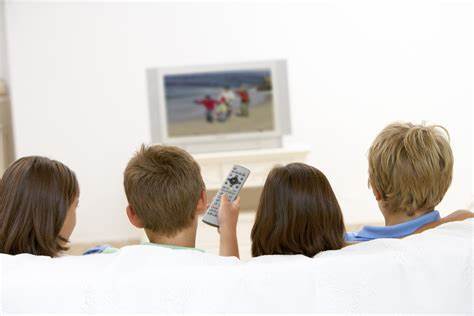
How do we compare one individual to another to derive a relative definition of weird. How do we compare A to B? Who’s the weirder of the two, and who’s closer to normal. We might take our question out to a third party, who establishes themselves as an agreed upon, baseline level of normal or relatively normal, on a day-to-day basis. Every region of the United States has some accent in their speech, indigenous to the area and the most common nationality of the settlers of the area, and everyone has quirks, but what person, or group of people, have the fewest quirks in the group we know, so we can establish an agreed upon baseline? We might say that B is definitely closer to C’s definition of normal than A is, and the best third-party, baseline barometer we have is TV.

I could see how someone might adopt a certain way of thinking, if that’s the way their parents and everyone else they knew thought, but at some point, they should’ve developed their own baseline and said, “Our whole way of thinking just isn’t right. I’ve seen the truth, and this ain’t it.”

These three families were weird, and they often failed to note anything unusual about their thought process, such that it leads to a philosophy, or their way of life. They couldn’t see it for what it is, because they were too close, and because their thought patterns were so institutionalized in their families they were  ancestral. I saw their weird, strange, and just plain different behavior at the time, so often I compartmentalized it and incorporated their reality into who they were. The Finnegans just did things like that, because they were the Finnegans. It’s just what they did, same with Carnelias, Reddicks, and my family. We all did what we did, and our actions and philosophies were reinforced by cousins, uncles, aunts, and our grandparents. I threw our big, old world soup recipes into a pot and arrived at what I thought explained the world.

My broken home was just as dysfunctional as theirs, but we had a big asterisk in our favor: my dad. Though he never said such things, and he abhorred analysis of any form, it was obvious to those of us who knew him intimately that he knew he was something of an oddball. If we sat him down and asked him piercing psychological questions about his mental DNA, we wouldn’t find it, because he would tell us everything we wanted to say and what he wanted us to hear. His oddball philosophies and psychology could only be found when he thought no one else was looking, and in the effort he made to appear normal.  

I went to receive Holy Communion one time, and my dad dressed me down psychologically for appearing in that line without a coat on, “Everyone else had their coats on, why didn’t you put a coat on?” That’s but a snapshot that I found quite humorous.

What difference does that make?

“You stood out like an oddball,” he said.

Thats but a humorous snapshot that provides some insight into the daily travails of my dad trying to fit in and be normal. I laughed about it then, and I laugh about it now, but I find myself examining the apparel of my peers before going out now. “All this time I swore I’d never be like my old man, but what the hey it’s time to face, exactly what I am.”

How many of us are able to objectively examine our way of thinking only to realize that we’re a bit off the track? How many of us can examine the way we’ve thought our whole lives and realize that we have some weird, strange, or just plain different ideas about the world? Due to the fact that just plain different people fascinate me, I’ve known more than my share in an intimate manner, and I can tell you that it’s rare for anyone to have substantive objectivity on these ideas and philosophies, because they’re often familial institutions. It often takes a number of people, a number so overwhelming that it becomes impossible to deny, from people we respect, to realize our thoughts are just plain different. By the time I was old enough to examine my dad with some perspective, it was obvious so many people told him “That ain’t what people think” that he knew he was an oddball. 

I didn’t think my dad had perspective when I was growing up, but I knew that term just crushed him. I don’t know if so many people he loved and respected called him an oddball, but we were raised to believe it was one of the the worst things we could call someone else. Most of us say, “You’re such an oddball” with a cringy smile, but my dad said it with the meanest face he could find. He also said, “That ain’t the way,” whenever I approached him with a relatively original thought. “That ain’t what people think.” He developed an unwavering trust of experts, and he repeated their lines word for word. By doing so, he probably hoped to mirror their baseline normalcy.

Original thoughts were outside his gameplan. He didn’t trust them, and he didn’t want to have them. Again, this reaction might have resulted from the pain he experienced whenever he tried one out and others told him that was oddball thinking. My guess is he lost those battles so often that he feared there was no hope for him, but he didn’t want his sons to have to go through what he did. He never said why it was so important to him that we fit in, and be normal, but he might have thought if his sons could turn out relatively normal, perhaps he could enjoy a legacy of normalcy posthumously. It’s possible, even probable, that his fears of others considering his sons oddballs altered the trajectory of his lineage.

The Finnegans, the Carnelias or the Reddicks obviously never had such fears, for they not only continued their institutionalized, familiar philosophies, they propagated them as the way, the truth, and the light. 

I had so many stories of these families lost to history, because I didn’t consider them noteworthy at the time. “Do you remember the time when the Reddicks did this?” I asked my brother decades later. He was there for much of it, as the Reddicks babysat us on weekends, and he remembered the stories. He spent time around the Carnelias too, and we both forgot more than we remembered about these people, but we both criticized each other for accepting their ways as commonplace.    

I didn’t tell the stories of the Finnegans, the Carnelias or the Reddicks the way I do now, because I didn’t see them the way I do now. Decades helped me remove myself from the limited perspective of seeing it so often that it felt somewhat normal to do them.

“I’m sorry you had to see that,” my friends would say the next day, following an eventful evening in which his family exhibited exaggerations of their weird, strange, and strange behavior.

“See what?” I would ask. They would explain what they meant. “Oh yeah, that’s fine. So … what are we going to do tonight?”

Kids accept, adapt, and absorb most realities they’re forced to endure, and as my brother and I learned, they can easily forget most drama and trauma. I don’t know how my friends, the children who were forced to accept these realities on a daily basis, turned out. We’ve only had brief get-togethers since, but my guess is they were unable to correct the weird, strange, and just plain different course their parents put them on. My guess is that they didn’t see the odd thought patterns, strange philosophies, and just plain different ways of viewing the world, because their parents didn’t see it when their parents taught it to them, until it became institutionalized in the family tree. I could see how children born in ancient eras, Biblical eras, or even the William McKinley-era might fall prey to believing they don’t have an accent, or act in institutionalized, familial ways, as most of them didn’t travel more than thirty minutes from their home, but we have easily-accessed modes of transportation now, mass communication, and TV and movies to provide a baseline normalcy and comparative analysis for our family’s ways of thinking. I understand that parents provide the greatest influence on a kid, and how extended family members might reinforce that influence, but how can you still try to maintain that your family is normal? Don’t you watch TV?